氢能

Search documents
氢能商业化关键一步:首份绿氢CCER方法学落地,激活环境资产价值
Zhong Guo Neng Yuan Wang· 2026-01-18 03:17
Core Viewpoint - The newly issued methodology for voluntary greenhouse gas emission reduction projects in renewable energy hydrogen production aims to standardize emission accounting for electrolysis projects, enabling them to monetize their emission reductions in the carbon market, thus supporting the commercialization and scaling of the hydrogen industry in China [1][2]. Group 1: Methodology Overview - The methodology is the first of its kind in China's hydrogen sector, providing a unified standard for calculating emission reductions from eligible electrolysis hydrogen production projects [1]. - It is designed specifically for new projects, excluding existing projects undergoing modifications or upgrades, and requires that renewable energy used for hydrogen production comes from the project's own renewable energy sources [2][3]. Group 2: Industry Development and Potential - China's hydrogen production capacity is projected to exceed 50 million tons per year by the end of 2024, with over 600 planned renewable energy electrolysis hydrogen projects, positioning China as a global leader in this sector [4]. - Currently, fossil fuel-based hydrogen production accounts for 98% of the market, while renewable energy electrolysis hydrogen represents only about 1%, indicating significant potential for growth and decarbonization [4]. Group 3: Economic Impact and Commercialization - The implementation of the methodology is expected to create a second core revenue stream from carbon asset income for green hydrogen projects, significantly improving their economic models and accelerating commercialization [6]. - Existing renewable energy electrolysis hydrogen projects are generally unprofitable, with costs typically 2 to 3 times higher than fossil fuel hydrogen production, highlighting the need for market incentives to enhance economic viability [7]. Group 4: Broader Industry Benefits - The methodology will benefit not only individual hydrogen projects but also the broader hydrogen industry chain, including project owners and renewable energy power plants, by expanding market demand and alleviating renewable energy consumption challenges [8]. - It is anticipated that the methodology will stimulate the release of green hydrogen capacity, providing stable sources for downstream industrial users, thereby supporting deeper decarbonization efforts [8].
绿色能源与新材料成为房山“双引擎”
Xin Lang Cai Jing· 2026-01-17 21:49
Group 1 - The core industrial transformation in Fangshan District is driven by new productive forces, with an expected industrial output value exceeding 80 billion yuan by 2025, primarily from green energy and new materials industries, projected to contribute 22.5 billion yuan and 18 billion yuan respectively [1] - Fangshan District has gathered 91 green energy enterprises, showcasing a growing industrial cluster effect, particularly in the new energy storage sector with leading companies like Haibosi Chuang and Xinyuan Zhichu [1] - The establishment of a new energy storage power station application demonstration area and a green energy industry park in Fangshan is set to facilitate large-scale application and innovation in energy storage technology [1] Group 2 - The new materials industry is positioned as a "hardcore engine" for driving "new quality manufacturing," with the establishment of the Zhongguancun Materials Industry Park and Graphene Seed Park attracting 179 enterprises and achieving an output value of 18 billion yuan [2] - Fangshan District leverages the educational resources of Liangxiang University Town to create a unique technology transfer center for green energy, fostering a collaborative platform for industry and academia [2] - Continuous collaboration between schools, local governments, and enterprises has led to the identification of 473 technological achievements, with 25 successfully transformed into practical applications, accelerating the conversion of technological innovation into productive forces [2]
低空氢动力技术研讨会在深圳举办
Nan Fang Du Shi Bao· 2026-01-17 15:02
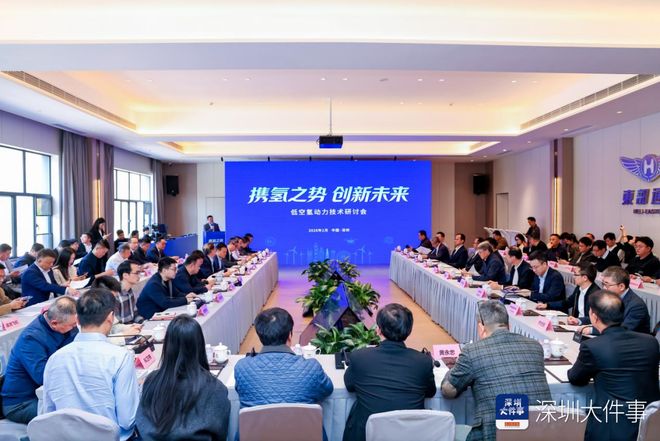
Core Viewpoint - The seminar on low-altitude hydrogen power technology highlighted the potential of hydrogen-powered drones for various applications, emphasizing their long endurance and heavy payload capabilities, which align with the goals of sustainable development and innovation in the aviation sector [1][3]. Group 1: Event Overview - The seminar titled "Harnessing Hydrogen Power for a New Future" was held in Shenzhen, attended by key officials and industry experts [1]. - A hydrogen-powered drone demonstrated its capabilities by carrying a specified weight for a continuous flight of 4 hours, showcasing its endurance and stability [3]. Group 2: Industry Insights - Experts discussed the current state of the hydrogen energy industry, its advantages, and the challenges related to endurance and technology, asserting that hydrogen power is essential for the future of long-duration, heavy-load low-altitude aircraft [3]. - Leading companies in the industry, including Yihang Intelligent, Xiaopeng Huitian, and JD Drone, expressed a strong demand for long-endurance and heavy-load power solutions, identifying hydrogen energy as an ideal answer [3]. Group 3: Application Scenarios - The Saltian District government outlined various application scenarios for low-altitude hydrogen power, including marine inspection, port operations, emergency support, and low-altitude logistics [5]. - The district's deputy mayor emphasized the core advantages of hydrogen power, such as 3-5 times the endurance, zero emissions, and strong adaptability to low-temperature environments, aligning with the district's goals for high-quality and green development [5]. Group 4: Company Initiatives - Zhonghuan Aviation Energy, a key player in the hydrogen and low-altitude sector, signed agreements with upstream enterprises and manufacturers to enhance technology integration and system development [5]. - The company aims to accelerate the certification of hydrogen-powered drone systems and expand their application across various scenarios [7]. Group 5: Standards and Collaboration - The president of the Shenzhen Low-altitude Economic Industry Association highlighted the importance of a scientific and comprehensive standard system for the safe and sustainable operation of hydrogen power technology [5]. - Future efforts will focus on collaboration among industry partners to strengthen the research and development of relevant standards, ensuring the stability and replicability of hydrogen power applications [5].

“十五五”未来产业发展提速 杭氧股份氢气零售业务同比翻倍增长
Quan Jing Wang· 2026-01-17 14:29
Core Insights - The company expects its hydrogen retail business to achieve a year-on-year growth of 100% by 2025, expanding its customer base across key strategic sectors such as semiconductors, advanced materials, and biomedicine [1] - The Luoyang hydrogen production project is anticipated to commence operations in the first half of 2026, with a projected annual hydrogen supply capacity of 22.6 million cubic meters, significantly boosting the company's hydrogen business and market share [1] - The "14th Five-Year Plan" emphasizes the strategic layout of future industries, positioning hydrogen energy alongside nuclear fusion and quantum technology as key growth points for the new economy [1] Industry Overview - Hydrogen is recognized as a crucial substance for transitioning from traditional to clean energy and supporting the upgrade of high-end manufacturing, with applications spanning energy, industry, transportation, electronics, and biomedicine [1] - Hydrogen serves as an ideal clean energy carrier and is essential in modern industrial systems, particularly in the production of ammonia and methanol, as well as in semiconductor manufacturing and advanced materials processing [2] - The company is expanding its industrial chain into high-value sectors, having established a comprehensive competitive capability from core equipment development to scenario-based solution delivery [2] Market Dynamics - According to Fortune Business Insights, the global hydrogen energy market is projected to grow from $229.53 billion in 2025 to $353.52 billion by 2032, with a compound annual growth rate of 6.36% [3] - The Asia-Pacific region is expected to dominate the global hydrogen energy market, holding a market share of 47.91% in 2024 [3] - The company has developed a synergistic model of "investment + manufacturing + sales + service," driving sales performance and diversifying application markets in the hydrogen energy sector [3] Strategic Positioning - The company is leveraging its full industrial chain layout to capitalize on industry development opportunities, aiming to solidify its benchmark position in the industrial gas sector and seize opportunities in emerging strategic sectors [4]

海德氢能胡骏明:绿氢生产已能商业化,全生命周期成本仍待解
Jing Ji Guan Cha Wang· 2026-01-17 09:09
Group 1 - The core viewpoint is that while the production cost of green hydrogen has become affordable due to technological advancements, challenges remain in scaling transportation and making it a viable energy source through global trade [2] - Haide Hydrogen, a green hydrogen solution provider, has partnered with major energy companies such as Shell, Total, Sinopec, and Goldwind, and is involved in the electrolytic technology for Maersk's Inner Mongolia green fuel project [2] - The levelized cost of hydrogen (LCOH) from Haide Hydrogen's electrolytic water technology has dropped to 14 yuan per kilogram, with expectations to decrease to 10.5 yuan by 2028 and 7.7 yuan by 2030, while the industry average production cost is around 20 yuan per kilogram [2] Group 2 - Goldwind Technology has announced plans to invest 18.92 billion yuan in a wind power hydrogen ammonia project in Inner Mongolia, with a total capacity of 1 million tons, and is also planning a green methanol project with a revised capacity of 850,000 tons [2] - The shipping industry is entering a phase of substantial execution for fuel decarbonization, with the EU Maritime Fuel Regulation set to take effect on January 1, 2025, aiming to reduce carbon emissions from ships over 5,000 tons [3] - Over 400 new green methanol/ammonia fuel ships are being built globally, which will create a demand for 10 million tons of green fuel annually [3] Group 3 - Green hydrogen is expected to be first applied in the transportation sector, including shipping and aviation, before expanding into industrial decarbonization [4] - The initial investment wave in green hydrogen has shifted towards the actual demand for green fuels, as the commercial viability of green hydrogen was not fully considered during the initial investment phase [5] - Despite the low production costs of green hydrogen, its competitiveness compared to other fuels remains weak [5] Group 4 - The commercialization of storage and transportation for hydrogen remains unresolved, with potential delivery challenges for some hydrogen orders, as various companies are exploring pipeline, rail, and road transport methods [6]

中国式「双碳」路径,有了现场坐标系
36氪· 2026-01-17 09:07
Core Viewpoint - The "dual carbon" goals are transitioning from a conceptual framework to a practical constraint, necessitating immediate action and verification within industries as the 2030 deadline approaches [3][5][49]. Group 1: Transition from Concept to Reality - The sense of urgency around the "dual carbon" goals is increasing as the 2030 target approaches, leading to a need for concrete answers on implementation strategies [3][4]. - The shift from narrative to structural capability is evident, requiring validation in real-world industrial settings [5][6]. - The costs of misjudgment regarding technology feasibility and replicability are rising, emphasizing the importance of real-world testing [7][8]. Group 2: Industry Engagement and Collaboration - The "Carbon Index Plan" has evolved to focus on real-world industry engagement, moving beyond mere innovation showcases to address practical challenges [9][11]. - The collaboration between government, leading enterprises, and capital is crucial for validating and implementing "dual carbon" strategies [11][12]. - Feedback from enterprises indicates that successful implementation often hinges on access to real resources and government support [11][12]. Group 3: Sector-Specific Insights - In the transportation sector, the focus is on whether "dual carbon" can enhance system efficiency within established manufacturing frameworks [18][20]. - The hydrogen energy sector faces unique challenges due to its reliance on infrastructure and standards, necessitating long-term validation of its economic viability [22][23]. - In the technology sector, the emphasis is on the stability and operational capacity of AI technologies as foundational elements for achieving "dual carbon" goals [28][30]. Group 4: Key Questions and Insights - The transition to low-carbon practices is increasingly viewed as a source of efficiency rather than a compliance burden, highlighting the need for integrated ecological conditions [34][36]. - The ability of institutions and markets to support the scaling of technologies is a critical uncertainty that needs to be addressed [38][39]. - The evolution of low-carbon economies will depend on the integration of technologies into existing systems rather than isolated innovations [40][41]. Group 5: Future Directions - The current phase is characterized by a need for effective judgment capabilities in complex realities, rather than isolated innovations [47][50]. - A credible framework for navigating the "dual carbon" path is emerging, emphasizing the importance of continuous calibration of strategies [49][51].


金帝股份:公司与保时来新材料科技(苏州)有限公司共同打造在氢能等领域具有核心竞争力的协同产品
Zheng Quan Ri Bao· 2026-01-16 15:15
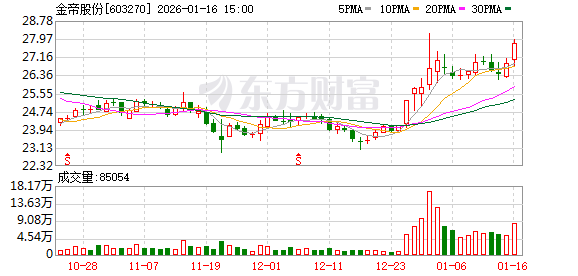
Core Viewpoint - The company, Jindi Co., is entering a strategic partnership with Positron New Materials Technology (Suzhou) Co., Ltd. to leverage their respective strengths in hydrogen energy components and related technologies [2] Group 1: Strategic Cooperation - The partnership is based on principles of "equality, mutual benefit, complementary advantages, long-term cooperation, and joint development" [2] - The collaboration aims to integrate Jindi's manufacturing capabilities in hydrogen energy components with Positron's technological advantages in electrodes and nickel mesh products [2] Group 2: Product Development - Both companies have agreed to prioritize the bundling of Jindi's precision components, such as plates and end plates, with Positron's core components for hydrogen electrolyzers to create "joint products" or "coordinated assemblies" for market promotion [2] - This strategic alliance is expected to enhance their competitive edge in the hydrogen energy sector [2]

【奋进的河北“十四五”答卷】辛集:加速构建现代化产业体系 发展质效稳步提升
Xin Lang Cai Jing· 2026-01-16 13:31
辛集市梅花皮业有限公司企管部经理 罗恒祎:这样从源头上解决了铬污染的问题,既符合我们当下对 绿色生态制造的要求,也通过了进入欧盟市场严苛的准入门槛,让我们在国际贸易当中站稳脚跟。 梅花皮业的转型源于辛集市皮革企业的一次抱团发展。五年前,包括梅花皮业在内的15家辛集皮革企业 发起成立河北省皮革产业技术创新战略联盟,依靠集体的力量,完成全球首个无铬鞣皮革团体标准,并 被列入国家团体标准应用示范。 河北辛集经济开发区制革中心常务副主任 谢鲲鹏:无铬鞣团体标准引导辛集皮革产业向生态化、绿色 化方向发展。目前我们园区有4家企业获评国家级、9家企业获评省级"绿色工厂"。 "十四五"时期,辛集市坚持传统产业转型升级、新兴产业培育壮大,着力发展智能装备制造、绿色化 工、皮革服装等重点产业,现代化产业体系加速构建,发展质效稳步提升。 记者 王丹:从一张原始的动物皮毛到一件精美的皮革制品,最关键的是哪一步?答案就是鞣制工艺, 我今天来到的辛集的这家制革企业,就是通过对鞣制技术的绿色创新,走出了一条传统产业转型升级的 新路径。 辛集市梅花皮业有限公司的鞣制车间里,一张张羊皮正经历从皮到革的质变。驱动这一质变的,不再是 传统的铬鞣剂 ...
“硬科技”孵化显成效,盐城盐南打造苏中苏北科创孵化新高地
Yang Zi Wan Bao Wang· 2026-01-16 05:31
Group 1 - The event "Benchmark Incubator On-site Observation Activity" was held in Yancheng, Jiangsu Province, focusing on the role of benchmark incubators in fostering new productive forces [1] - Over 70 participants, including officials from technology departments and key incubator leaders from Suzhong and Subei regions, gathered to exchange incubation experiences and explore paths for technological innovation [1][3] Group 2 - Yannan High-tech Zone in Yancheng has been actively developing high-level incubation carriers, particularly in the digital economy and green energy sectors, making it a focal point of the observation activity [3] - The Yancheng Big Data Industry Incubator, recognized as a national A-class excellent incubator, has nurtured over 500 enterprises and attracted more than 50 high-level talents, providing quality physical space for the development of the digital economy [5][6] Group 3 - Yannan High-tech Zone has implemented a classification and gradient cultivation plan for incubators, focusing on upgrading quality carriers and forming a high-level carrier matrix, with both big data and hydrogen energy incubators recognized as provincial benchmarks [8] - The hydrogen energy technology incubator focuses on the entire hydrogen energy industry chain, establishing a closed-loop cultivation system that includes research and development, pilot testing, and industrial transformation [8][9] Group 4 - Yannan is exploring new models for incubators to enhance self-sustainability, including state-owned capital guidance and professional operation, while promoting a model that links investment and incubation [9] - The next steps for Yannan High-tech Zone include deepening the incubation of "hard technology" and enhancing the professional service capabilities of incubation carriers to cultivate competitive hard technology enterprises [11]
中国石化与佛瑞亚集团资本携手驱动中国氢能产业发展
Zhong Guo Qi Che Bao Wang· 2026-01-16 03:52
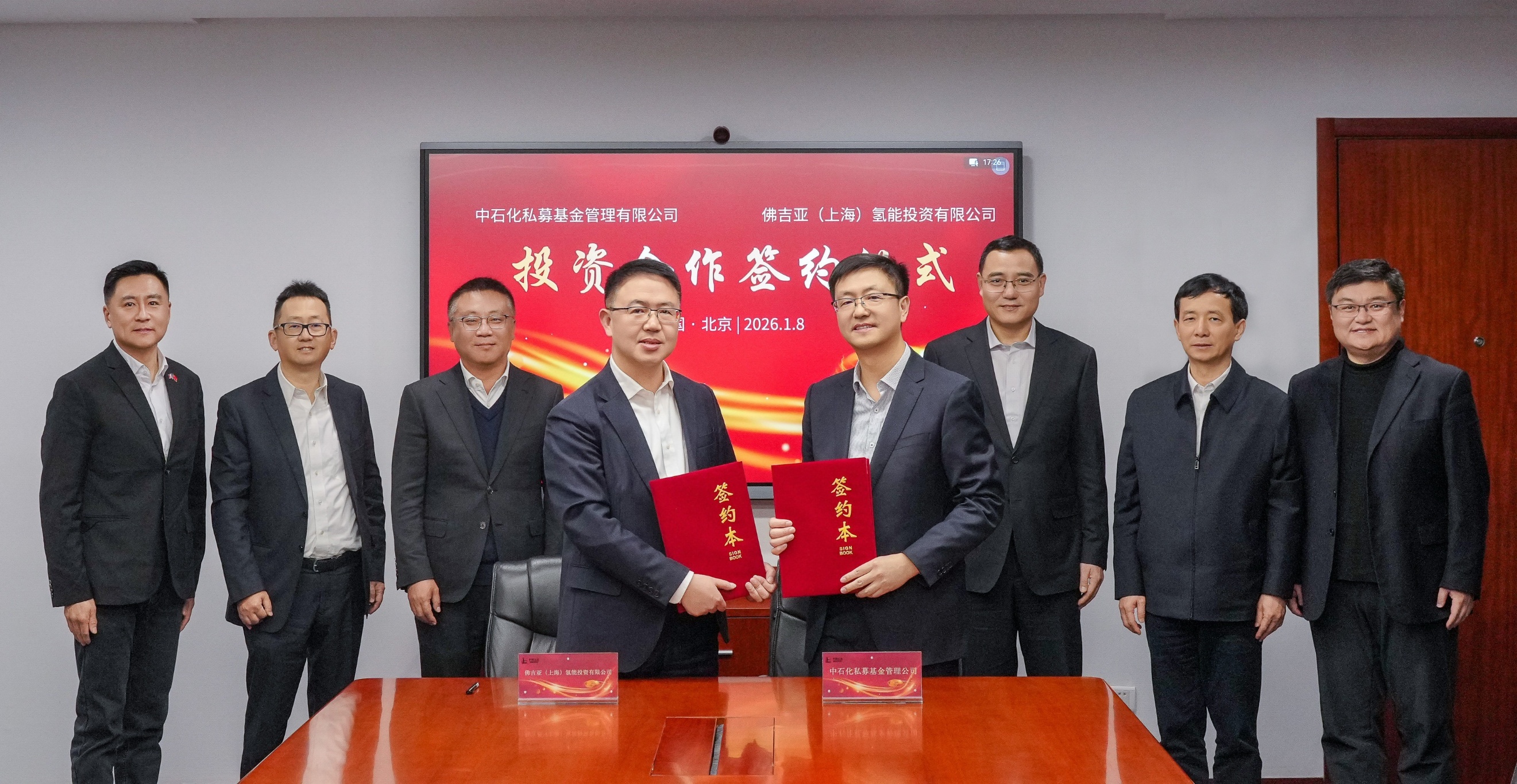
Group 1 - The strategic investment of 300 million RMB (approximately 40 million Euros) by Sinopec Capital through its private equity fund into Forvia's hydrogen investment arm in China highlights the commitment to optimizing the hydrogen market in China, which is experiencing rapid growth supported by government initiatives [1][3] - The partnership with Sinopec Capital is expected to enhance Forvia Hydrogen's market positioning and improve its capabilities in securing key government projects and industry collaboration [3][4] - Forvia aims to leverage this collaboration to create a clear roadmap for accelerated growth and value creation by optimizing its supply chain, including materials like carbon fiber and resin [3] Group 2 - Forvia's executives emphasized that this collaboration will help expand their market presence in China, improve cost competitiveness, and position them among global leaders in hydrogen solutions [4] - Sinopec Capital's leadership expressed a commitment to becoming the leading hydrogen company in China and aims to foster extensive equity investment collaborations with top global hydrogen enterprises [4] - The strategic investment is seen as a step towards promoting high-quality development in the global hydrogen industry through deep business cooperation between the two companies [4]