
花卉种植

Search documents
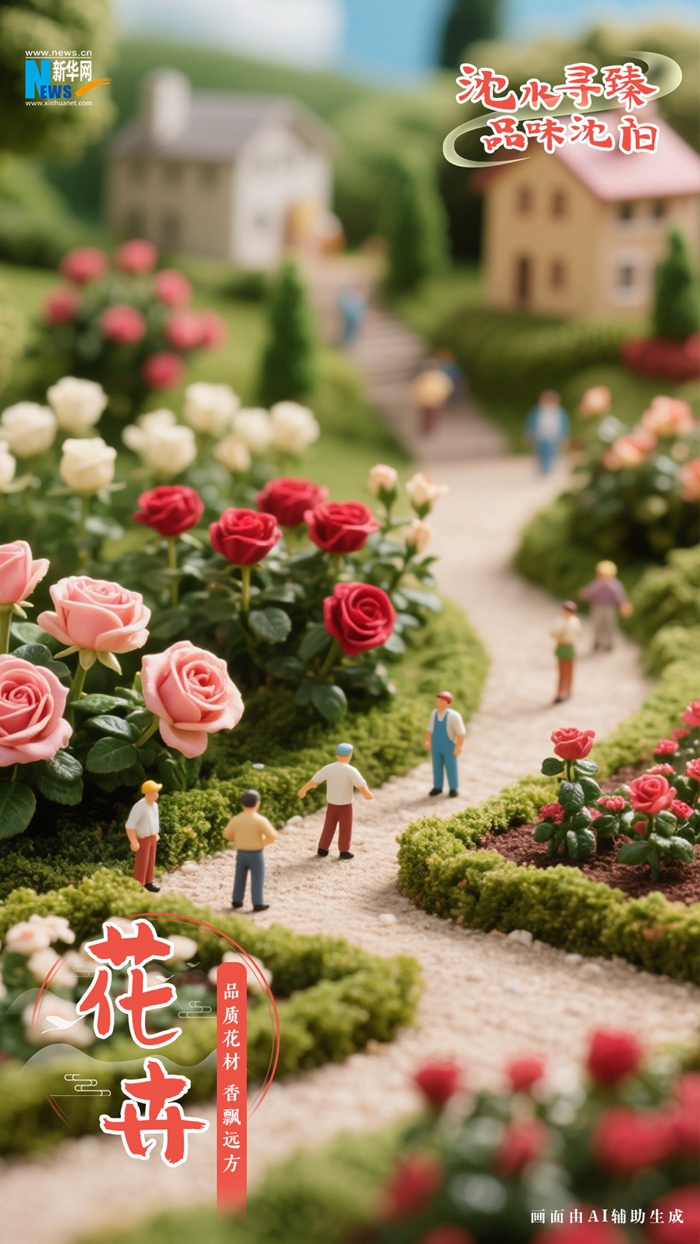
沈水寻臻 品味沈阳丨花卉:品质花材 香飘远方
Xin Hua Wang· 2025-10-24 01:12
Core Viewpoint - Shenyang is focusing on becoming a leading modern agricultural development area and a strong agricultural city, emphasizing high-quality development of its agricultural industry, particularly in the flower sector [3] Group 1: Agricultural Development Goals - Shenyang aims to promote a high-quality development model centered around "1+8" agricultural specialty industries, which include edible fungi, facility vegetables, soybeans, and more [3] - The city is committed to injecting strong momentum into rural revitalization through these agricultural initiatives [3] Group 2: Flower Industry Development - Shenyang is leveraging its resource advantages to significantly develop the flower industry, thereby activating the flower economy [3] - The development strategy will focus on "technology empowerment, cluster development, and brand value enhancement," with an emphasis on differentiated and specialized flower cultivation [3] Group 3: Key Infrastructure and Production Bases - The city will concentrate on "two towns, two flowers, and three bases" as core carriers for flower industry development, specifically highlighting rose cultivation in Liu Jian Fang Town and orchid cultivation in Shen Bei [3] - Shenyang plans to establish a central trading and logistics hub by utilizing three major bases, creating a spatial pattern of "north-south research and production, central distribution and radiation" [3] Group 4: Industry Chain Enhancement - Continuous optimization and upgrading of key links such as breeding, production, operation, and industry integration will be prioritized to consolidate planting scale advantages [3] - The goal is to enhance the overall development level of the entire industry chain, establishing a new highland for the flower industry in Northeast Asia [3]

实现高质量发展,“风”从何处起?
Ren Min Ri Bao· 2025-10-18 23:31
Core Insights - The articles highlight the opportunities and advancements in Yunnan's development, particularly in wind energy and tourism, leveraging natural resources and community involvement [1][2][3][4][5][6] Group 1: Wind Energy Development - Yunnan's high altitude and strong winds enable the establishment of wind farms, providing green electricity to 1.08 million households [1] - The planning of wind power bases in Qiubei County includes the construction of 320 kilometers of industrial roads and 17 kilometers of rural roads to facilitate agricultural product distribution [2] - The integration of wind energy projects with ecological restoration demonstrates a commitment to sustainable development [3] Group 2: Tourism and Economic Growth - The establishment of a flower demonstration park in Kunming has created 135 jobs and increased income by 5.4 million yuan annually through community involvement [2] - The Pu'er region is developing a "tea and coffee" tourism destination, showcasing local agricultural products and enhancing economic opportunities [2] - The transformation of traditional homes in scenic areas into modern accommodations has led to individual incomes exceeding 2 million yuan per year [2] Group 3: Ecological and Community Initiatives - Yunnan emphasizes ecological protection alongside development, with initiatives to restore the ecological environment around Dianchi Lake [4] - The promotion of cultural festivals among different ethnic groups fosters a sense of community and shared prosperity [4] - The opening of the China-Laos Railway has expanded trade, covering 19 countries and facilitating the transport of over 3,300 types of goods [4] Group 4: Strategic Vision for Development - The articles advocate for a strategic approach to development that prioritizes ecological sustainability and community welfare [5][6] - The focus on creating a shared future and mutual benefits aligns with global initiatives, enhancing Yunnan's role in international cooperation [6] - The narrative emphasizes the importance of aligning development goals with the needs and aspirations of local communities [6]
(乡村行·看振兴)福建寿宁:“新农人”回村赋能特色产业 乡村振兴展新画卷
Zhong Guo Xin Wen Wang· 2025-10-17 06:32
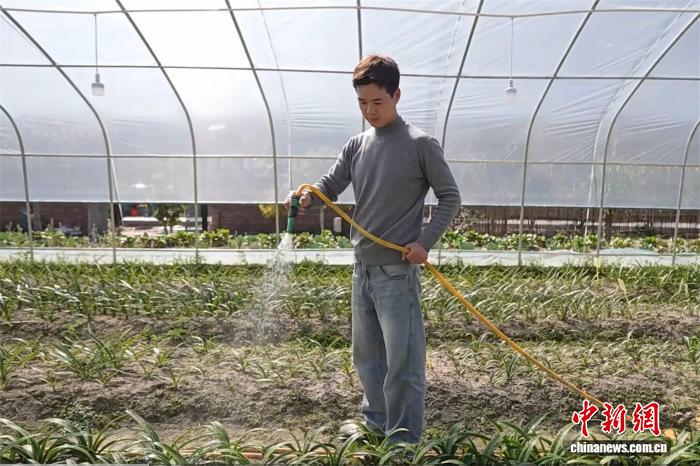
Core Viewpoint - The article highlights the successful implementation of the "New Farmers" initiative in Shouning County, Fujian Province, which encourages urban residents to return to rural areas and engage in agricultural entrepreneurship, thereby revitalizing local economies and communities [1]. Group 1: New Farmers Initiative - The "New Farmers" initiative aims to address issues such as rural depopulation and abandoned land by encouraging urban residents to return and cultivate the land, creating a sustainable development model [3][5]. - Wu Jiexiang, a "New Farmer," has successfully integrated e-commerce with agriculture by using live streaming to sell flowers and plants, demonstrating the potential of digital platforms in rural entrepreneurship [1][3]. - The initiative has led to the establishment of various agricultural projects, including a clothing factory that provides over 100 fixed and 200 flexible job positions, significantly increasing local income [5][7]. Group 2: Government Support and Policies - Shouning County has implemented a series of supportive policies, including a 5 billion yuan rural revitalization fund and interest subsidies for returning entrepreneurs, to facilitate the "New Farmers" initiative [7]. - The local government is actively involved in providing training and resources to ensure the success of returning farmers, promoting a collaborative environment for entrepreneurship [5][7]. - The county plans to create 15 model villages and 25 entrepreneurial bases by 2024, aiming to enhance local agricultural production and increase farmers' disposable income [7].
菊香“中国芯”——南京农业大学菊花遗传与种质创新利用团队的“芬芳答卷”
Huan Qiu Wang Zi Xun· 2025-10-17 03:33
Core Insights - The article highlights the significant advancements in China's chrysanthemum industry, driven by research and innovation from Nanjing Agricultural University, which has led to the development of numerous new varieties and a thriving market for chrysanthemum-related products [2][3][10]. Group 1: Industry Development - The chrysanthemum industry in China has a long history of over 3,000 years, but it faced challenges such as reliance on imported varieties and a lack of genetic diversity [2]. - Nanjing Agricultural University has established the "China Chrysanthemum Germplasm Resource Preservation Center," which houses over 5,300 resources, including 3,000 varieties, providing a strategic reserve for breeding new chrysanthemum varieties [2][3]. - The university's breeding team has developed over 400 new varieties, with domestic varieties expected to account for 30% of cut flower and 60% of garden chrysanthemum commercial varieties by 2025 [3]. Group 2: Market Impact - The introduction of new varieties like "Nanjing Agricultural University Little Golden Star" has disrupted the market previously dominated by imports, with annual sales reaching millions of stems [3][6]. - The team has established a comprehensive breeding system, utilizing modern biotechnology and market-driven research to ensure the successful commercialization of new varieties [4][6]. - The chrysanthemum products, including cosmetics and food items, have gained popularity, contributing to a vibrant market and enhancing the overall economic landscape [10]. Group 3: Socioeconomic Contributions - The chrysanthemum industry has positively impacted rural communities, with initiatives in places like Guizhou helping over 2,000 people find employment and generating significant tourism revenue [8][9]. - The establishment of demonstration bases and partnerships with leading companies has accelerated the transition from research to market, enhancing the industry's growth [7][10]. - The success stories from various regions illustrate the potential of the chrysanthemum industry to drive rural revitalization and economic development across China [9][10].
“风”从何起归何处(评论员观察)
Ren Min Ri Bao· 2025-10-16 22:04
Core Insights - The article emphasizes the importance of leveraging unique advantages for development, focusing on innovation and proactive measures to create conditions for growth [1][2]. Group 1: Development Strategies - Yunnan province is utilizing its natural resources, such as wind power, to provide green energy to over 1.08 million households through 310 wind turbines [1]. - The region is enhancing agricultural infrastructure by constructing 320 kilometers of industrial roads and 17 kilometers of rural roads to facilitate product circulation [2]. - The integration of tourism and local culture is evident in the transformation of traditional homes into guesthouses, generating annual incomes exceeding 2 million yuan for some households [2]. Group 2: Environmental and Ecological Initiatives - The establishment of wind farms has led to ecological restoration, showcasing a harmonious coexistence of agriculture and renewable energy [3]. - The implementation of a high-precision CO2 monitoring system supports carbon trading, reflecting a commitment to green development [3]. - Comprehensive environmental governance around Dianchi Lake has resulted in improved water quality and biodiversity, enhancing the quality of life for residents [4]. Group 3: Community and Cultural Integration - The promotion of cultural events among different ethnic groups fosters a sense of community and shared identity, contributing to social cohesion [4]. - The opening of the China-Laos railway has expanded trade opportunities, covering 19 countries and facilitating the exchange of over 3,300 types of goods [4]. Group 4: Vision for Sustainable Development - The article advocates for a holistic approach to ecological protection and community development, emphasizing the need for a shared prosperity model among diverse ethnic groups [6]. - The focus on ecological benefits as a fundamental aspect of public welfare highlights the importance of sustainable practices in enhancing living standards [6]. - The narrative underscores the significance of aligning development strategies with the interests of the people and global cooperation for mutual benefits [7].
(乡村兴·看振兴)喜欢侍弄花卉的“90后”村党总支部书记
Zhong Guo Xin Wen Wang· 2025-10-14 13:13
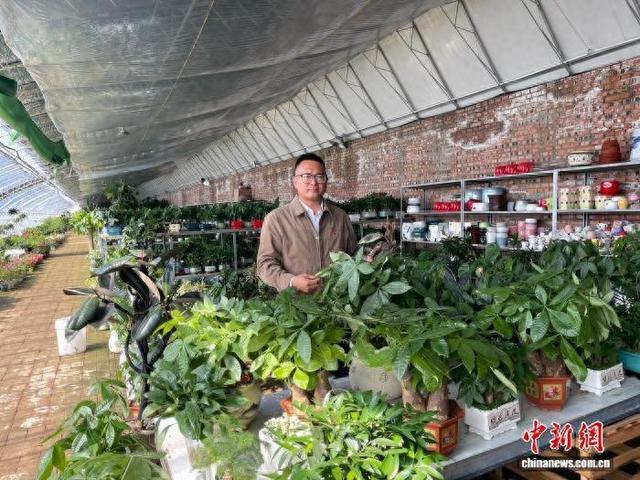
Core Viewpoint - The article highlights the efforts of Liu Dapeng, a village party secretary, in promoting flower cultivation as a means of economic development and community engagement in Yongsheng Village, Inner Mongolia [1][3]. Group 1: Background and Development - Liu Dapeng, born in 1990, is the party secretary of Yongsheng Village in the Dongsheng District of Ordos City, Inner Mongolia [3]. - Since 2015, some villagers began experimenting with flower cultivation, but initial efforts were small-scale and lacked significant impact [3]. - The local government recognized the potential of flower cultivation and initiated the establishment of standardized greenhouses to support this industry [3][4]. Group 2: Economic Impact - From 2015 to 2023, flower cultivation has generated an annual income of 50,000 yuan for the village's collective economy [3]. - After Liu Dapeng's appointment in 2023, he expanded the flower cultivation area to 30 acres, projecting an annual income of approximately 300,000 yuan for the village [4]. - The flower greenhouses now feature over a thousand varieties, attracting customers from nearby regions and significantly boosting local sales [4]. Group 3: Community Engagement and Future Plans - Liu Dapeng has actively involved villagers in the flower cultivation process, providing job opportunities that can yield over 200 yuan per day during off-peak farming seasons [4]. - The village plans to integrate idle land for expanding flower cultivation and diversifying into fruits and vegetables, aiming for a holistic development approach that combines agriculture with tourism and commerce [5]. - Economic expert Gai Zhiyi commended Liu Dapeng's initiatives, noting the transformation of "flower economy" into tangible economic value, which is a distinctive aspect of rural revitalization [5].
鹏举仙邑 兰之猗猗 翁源兰花展在深圳启幕
Nan Fang Nong Cun Bao· 2025-10-10 03:02
Core Viewpoint - The "Pengju Xianyi Lan Zhi Yiyi" Orchid Exhibition has officially opened in Nanshan District, Shenzhen, aiming to blend natural beauty with industrial prosperity while promoting orchid culture [2][3][8]. Group 1: Event Overview - The exhibition lasts for six months, spanning the National Day and Spring Festival holidays, and is designed to attract both local residents and tourists [2][3]. - This event represents a significant collaboration between the Nanshan District Government of Shenzhen and the Wengyuan County Government, enhancing regional cooperation [5][6]. Group 2: Economic and Cultural Impact - The collaboration aims to implement a modern orchid industry development model, promoting the integration of cultural tourism between the Greater Bay Area and the northern Guangdong ecological region [7][8]. - Wengyuan County, known as the "first county of Chinese orchids," produces over 60% of the national supply of orchids, supported by a robust industry with 35,500 acres of cultivation and an annual output value exceeding 3.34 billion yuan [11][12]. Group 3: Exhibition Features - The exhibition is hosted at the Dutch Flower Town, a well-known cultural landmark in Shenzhen, covering approximately 60,000 square meters and featuring over 280 specialty shops, attracting millions of visitors annually [18][19]. - The event facilitates efficient market access for Wengyuan orchids, breaking traditional barriers in agricultural product distribution and providing a platform for appreciation, education, and premium selection [21][22].

小花盆里长出“大生意” 看单一品类花卉产区如何破局
Yang Shi Wang· 2025-10-06 23:52
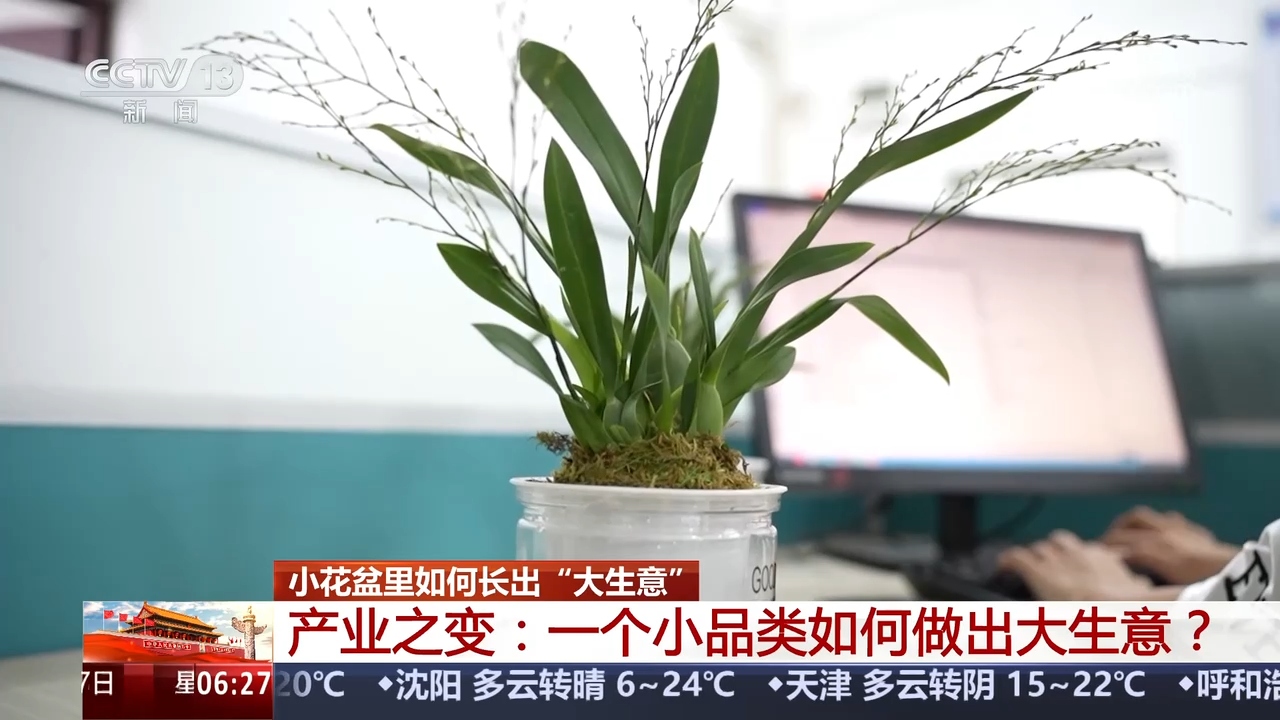
Core Insights - The flower industry in regions like Fujian Nanjing is evolving to adapt to younger consumer preferences, shifting from traditional large orchids to smaller, low-maintenance "lazy potted plants" that appeal to the aesthetic and convenience desires of younger buyers [1][3] Group 1: Industry Transformation - The Nanjing orchid industry is transitioning from a focus on "high-end" products to smaller orchids that are more popular among young consumers, serving as "soft decoration" for their living spaces [3] - The local orchid farmers have adopted a new sales model that emphasizes online sales through live streaming, allowing consumers to see the orchids' quality directly, thus creating a seamless connection from "orchard" to "living room" [5] Group 2: Economic Impact - The Nanjing orchid e-commerce sector has experienced an annual growth rate exceeding 13%, with online sales now accounting for over 53% of total sales [5] - The complete industry chain development, integrating orchid source development, efficient planting, and logistics, has contributed to a healthier and more vibrant growth of the Nanjing orchid industry, with over 5,000 acres of planting area and an annual production of over 100 million orchids, generating an annual output value exceeding 1.85 billion yuan [7]
【美丽四川】千亩花海中的诗歌与稼穑‖云朝清
Sou Hu Cai Jing· 2025-10-04 10:49
Core Insights - The article highlights the transformation of Wenhua Village into a flourishing "Flower Valley," showcasing its development over the past decade and its impact on local economy and culture [1][2][3] Group 1: Economic Impact - Wenhua Village has become a significant tourist destination, attracting over 500,000 visitors annually, with a peak of 35,000 visitors in a single day during the 2025 Spring Festival [2] - The income of local villagers has increased significantly, with average annual income rising from 8,000 yuan in 2017 to 35,000 yuan in 2024 through a model of "land leasing + labor income + guaranteed dividends" [3] Group 2: Agricultural Development - The village has initiated programs to support local farmers, including the donation of green plum seedlings to mountainous villagers, promoting agricultural diversity [3] - The introduction of processed products from local flowers and fruits, such as hawthorn umbrella wine and green plum products, has led to projected sales exceeding 20 million yuan in 2024 [3] Group 3: Cultural Significance - The name "Wenhua" carries poetic significance, reflecting the village's connection to nature and culture, and has been leveraged to enhance the brand's recognition [2] - Seasonal flower displays, combined with cultural events like light shows and music festivals, have enriched the visitor experience and contributed to the village's cultural identity [2]
第二十三届昆明国际花卉展圆满落幕 现场成交额近3亿元
Zheng Quan Ri Bao Wang· 2025-09-29 13:40
Core Insights - The 23rd China Kunming International Flower Expo concluded successfully, attracting 145,000 visitors, including over 35,000 professional attendees, with a transaction volume of nearly 300 million yuan [1] Industry Overview - Yunnan's flower planting area has reached 1.95 million acres, continuously supplying high-quality floral materials to the global market [1] - By the end of 2024, Yunnan has applied for over 1,100 new flower varieties, with more than 800 receiving national authorization, showcasing strong innovation capabilities in the industry [1] - The industry is encouraged to increase innovation investments through the establishment of industry benchmarks, promoting a comprehensive transformation towards high-end development [1] Export Performance - In the first seven months of this year, Yunnan's fresh flower exports amounted to 636 million yuan, representing a year-on-year increase of 55.5%, indicating a rapid growth in the "Yunhua" brand's international presence [1] Key Players - Yunnan Yuntianhua Flower Gardener Technology Co., Ltd., as a leading enterprise in the "Yunhua" industry, showcased its full industry chain capabilities from seedling cultivation to market circulation at the expo, playing a crucial role in promoting the internationalization of "Yunhua" [1]
