五金

Search documents
建材行业2026年度投资策略
2025-12-29 15:50
Summary of Key Points from the Conference Call on the Building Materials Industry Industry Overview - The building materials industry is shifting towards an alpha-driven investment strategy, focusing on companies that can increase market share and achieve performance growth, such as Sanke Tree, Rabbit Baby, Oriental Yuhong, and Henkel Group, with expected growth rates between 20% and 30% [1][2] Core Investment Strategies - **Cyclical Opportunities**: The industry is expected to remain in a downward trend in 2026, with no significant beta opportunities. The focus is on structural alpha-driven opportunities [2] - **Overseas Expansion**: The African building materials market is promising due to population growth and urbanization, benefiting from the US interest rate cut cycle. Key players like Keda Manufacturing and Huaxin Cement are expected to see significant growth, with Huaxin Cement projected to have a compound annual growth rate (CAGR) exceeding 30% over the next three years [1][2] - **AI Sector**: The AI PCB segment, particularly electronic cloth materials, is highlighted, with companies like Feilihua and China National Materials performing well. China National Materials is expected to reach a target market value of 80 billion by 2026, potentially reaching 90 to 100 billion by 2027 [1][2] Market Demand and Supply Dynamics - Overall real estate sales area in 2026 is projected to reach 600 million square meters, a year-on-year decline of approximately 10%. Average demand for building materials is expected to decrease by 3% to 5% [5] - Renovation demand is anticipated to support total demand, particularly in coatings, panels, and hardware sectors [5] - Supply side is contracting, with a cumulative decline of about 30% expected by 2024, leading to increased competitiveness among leading companies through price wars and brand competition [6][7] Company Recommendations - Recommended companies for mid-term investment include Oriental Yuhong, Sanke Tree, Rabbit Baby, and Henkel, with Sanke Tree and Henkel showing the highest growth potential [3][8] - Keda Manufacturing is noted for its dual business model, benefiting from both building materials and lithium carbonate, which could significantly enhance profitability [13] Emerging Trends - The low dielectric constant electronic cloth market is projected to reach 25 billion RMB by 2027, with domestic companies expected to capture 75% market share [16] - The AI-driven electronic cloth market is expected to see significant growth due to increased demand for advanced materials in technology applications [14][19] Regional Insights - The African market is highlighted for its long-term growth potential, driven by urbanization and population growth, with companies like Huaxin Cement and Keda Manufacturing positioned for rapid growth [10][11] - Huaxin Cement's overseas market development is noteworthy, with expected profits reaching 5 billion RMB by 2027 [11][12] Conclusion - The building materials industry is navigating a challenging environment with a focus on alpha-driven growth strategies, overseas expansion, and technological advancements in AI and electronic materials. Key players are expected to adapt and thrive amidst changing market dynamics, with specific recommendations for investment in leading companies and emerging sectors.
实体店一直零申报?三大致命坑已让数百老板被罚!税局最新口径来了
Sou Hu Cai Jing· 2025-12-27 14:13
Core Viewpoint - The article highlights the risks associated with zero tax declarations for physical stores, emphasizing that even within tax exemption limits, zero declarations can lead to penalties and audits due to the enhanced monitoring capabilities of the tax system. Group 1: Risks of Zero Declaration - Case of a clothing store in Zhejiang shows that declaring zero income while having significant monthly revenue (over 80,000 yuan) can lead to penalties, as all taxable activities must be reported [3] - A stationery store in Beijing faced penalties after six months of zero declarations, indicating that businesses must register for suspension if they are closed for more than three months [7] - A restaurant in Shenzhen was penalized for artificially creating a zero declaration scenario through inflated expenses, which was uncovered during an audit [8] Group 2: Tax System Monitoring - The upgraded tax system utilizes five verification dimensions, including third-party payment data, fund flows from corporate accounts, industry profit margin deviations, cost expense analysis, and upstream/downstream enterprise data [5] - The tax authority's monitoring system now includes a "three-flow comparison" that tracks cash flow, invoice flow, and goods flow to ensure compliance [9] Group 3: Correct Declaration Practices - Businesses should report income accurately, even if it falls below the exemption threshold, and avoid declaring zero income directly [10] - Loss declarations must accurately reflect costs for individual income tax, while VAT can be declared as zero [10] - New individual businesses must register for tax within 30 days, even if they have no income, and must submit zero declarations on time [10]


买爆潮玩的年轻人,唤醒中国制造扫地僧
远川研究所· 2025-12-24 11:03
Core Insights - The toy industry in China is experiencing a significant transformation, with companies like Pop Mart leading the charge and achieving substantial profits in a short time frame [3][4] - The shift in consumer behavior towards interest-based and emotional value consumption is reshaping market dynamics, moving away from traditional demographic segmentation [3][4] - The rise of content-driven e-commerce is bridging the gap between manufacturers and consumers, allowing niche products to thrive [7][10] Group 1: Industry Trends - The toy market has seen a 92% increase in non-parental toy sales on platforms like Douyin, indicating a growing acceptance of adult consumers in the toy space [3] - Interest-based consumption is becoming a new norm, with even basic consumer goods adapting to personalized demands, as seen with innovative laundry products [3][4] - The concept of "interest industry belts" is emerging, where consumer interests drive the entire supply chain, leading to a new economic landscape [3][10] Group 2: Case Studies - Qingdao Pingdu produces 70% of the world's false eyelashes, yet many local manufacturers have relied on traditional offline sales channels until recently [4][6] - Taohua Youpin, a local eyelash brand, transitioned from offline to online sales, achieving significant growth through short video marketing on Douyin [6][7] - Cocoyo, a pet product brand, has successfully tailored its offerings to meet specific consumer needs, leading to its dominance in the pet supply market [8][10] Group 3: Economic Impact - The interest industry belts have contributed to a 219% year-on-year sales growth for non-heritage businesses, showcasing the economic potential of niche markets [13][20] - The rise of live-streaming e-commerce has revitalized traditional industries, with significant job creation linked to each billion yuan in sales [20] - Local economies are benefiting from the shift to interest-based consumption, with traditional manufacturing regions adapting to new market demands [19][20]

广州廷数铅科技有限公司成立 注册资本1万人民币
Sou Hu Cai Jing· 2025-12-17 05:13
Group 1 - Guangzhou Tingshu Lead Technology Co., Ltd. has been established with a registered capital of 10,000 RMB [1] - The company's business scope includes internet sales (excluding goods requiring permits), retail of pet food and supplies, hardware products, computer software and hardware, household appliances, motorcycle and auto parts, photographic equipment, musical instruments, arts and crafts, jewelry, sports equipment, stationery, bicycles, kitchenware, cosmetics, footwear, clothing, information consulting services (excluding licensed consulting services), advertising design and agency, and various technical services [1]
惠州市晨阳光工贸有限公司成立 注册资本5万人民币
Sou Hu Cai Jing· 2025-12-17 05:13
Group 1 - A new company, Huizhou Chenyangguang Industrial Trade Co., Ltd., has been established with a registered capital of 50,000 RMB [1] - The company's business scope includes the sale of clothing accessories, wholesale of clothing and apparel, and sales of textiles and raw materials [1] - Additional activities include the sale of plastic products, hardware products, and the development of carbon fiber recycling technology [1] Group 2 - The company is also involved in the sale of sewing machinery, labor protection products, furniture, and home goods [1] - It offers a wide range of electronic products and components, as well as communication equipment [1] - The company engages in import and export activities, technical services, and trade brokerage [1]
5.06万亿元,创新高!多视角观察 “数”看“中国制造”叩开多元外贸市场
Yang Shi Wang· 2025-12-17 02:09
Core Insights - China's foreign trade provinces have made significant progress in diversifying trade markets since 2025, with Zhejiang and Guangdong leading the way in expanding into emerging markets such as ASEAN, Africa, the Middle East, and Central Asia [1] Group 1: Trade Performance - Zhejiang's total import and export value exceeded 5 trillion yuan, reaching 5.06 trillion yuan in the first 11 months of 2025, marking a historical high for the same period [1] - In Taizhou, the export value of sewing machinery and parts surpassed 5 billion yuan, with an 8.7% increase compared to the same period in 2024 [5] - Guangdong's trade with emerging markets showed remarkable growth, with exports to the Middle East, Africa, and Central Asia increasing by 7.8%, 10.4%, and 26% respectively, all outpacing the overall foreign trade growth rate of 4.2% [12] Group 2: Sector-Specific Developments - Taizhou's sewing machinery has become a "hot item" in foreign trade, with orders extending into June 2026 [4] - Yongkang's hardware products have seen a strong increase in exports to Africa, with a 20% growth in the first 11 months of 2025 [5][9] - The demand for electric tools in Africa has surged due to rapid urbanization and industrialization, prompting Yongkang's foreign trade enterprises to intensify market development efforts [7] Group 3: Logistics and Infrastructure - Sichuan's export scale exceeded 550 billion yuan in the first 11 months of 2025, with the Chengdu to Central Asia freight volume increasing by 2.8 times [24] - The establishment of a cold chain logistics center in Chengdu is expected to enhance the efficiency of high-value fresh and pharmaceutical product exports [31] - The integration of international transport, warehousing logistics, and supply chain finance through the China-Europe Railway Express has facilitated the export of Sichuan apples to Central Asia and Europe [26][28]
丹阳市丹北镇铭雅商贸经营部(个体工商户)成立 注册资本1万人民币
Sou Hu Cai Jing· 2025-12-16 23:16
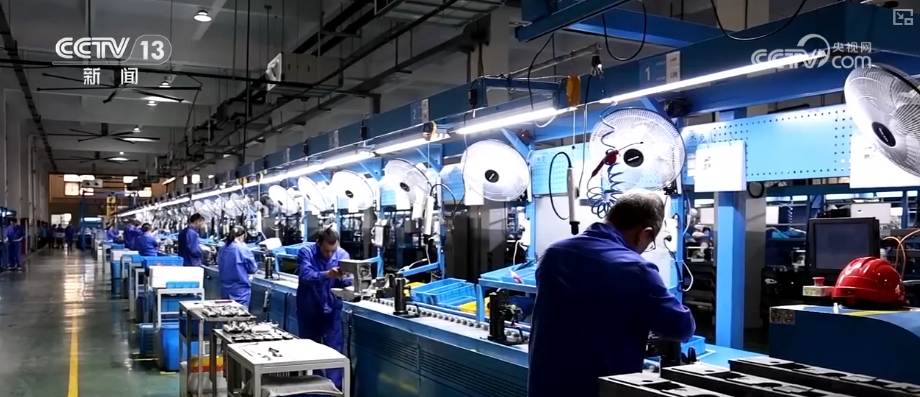
Group 1 - A new individual business named Mingya Trading Department has been established in Danbei Town, Danyang City, with a registered capital of 10,000 RMB [1] - The legal representative of the business is Zhang Ming [1] - The business scope includes wholesale and retail of auto parts, wholesale and retail of hardware products, sales of automotive decorative products, sales of plastic products, mold manufacturing and sales, and motor vehicle repair and maintenance [1]
成都市新都区鼎森包装材料经营部(个体工商户)成立 注册资本1万人民币
Sou Hu Cai Jing· 2025-12-16 10:28
Core Insights - Chengdu Xindu District Dingsen Packaging Materials Business has been established as an individual business entity with a registered capital of 10,000 RMB [1] - The business scope includes sales of packaging materials and products, paper products, plastic products, metal packaging containers and materials, and various other goods [1] Business Overview - The legal representative of the new business is Deng Shouyan [1] - The company is authorized to engage in a wide range of sales activities, including internet sales (excluding items requiring special permits) [1] - The business also covers sales of daily necessities, hardware products, molds, construction materials, and computer software and hardware [1]
东莞市黎湘五金有限公司成立 注册资本10万人民币
Sou Hu Cai Jing· 2025-12-16 08:55
Group 1 - Dongguan Lixiang Hardware Co., Ltd. has been established with a registered capital of 100,000 RMB [1] - The company's business scope includes wholesale of hardware products, retail of daily necessities, and various other sales activities [1] - The company is also involved in services such as cleaning, disinfection, and home services, as well as intellectual property services [1] Group 2 - The company engages in the sale of clothing, footwear, and related accessories, including both wholesale and retail [1] - It offers a wide range of products, including electronic products, cosmetics, and outdoor goods [1] - The company is permitted to operate independently within the scope of its business license, excluding projects that require approval [1]
当AI开始为工厂“思考”:2026,我们为何要去汉诺威?
吴晓波频道· 2025-12-16 00:30
Core Viewpoint - The article emphasizes the transformative impact of artificial intelligence (AI) on the manufacturing industry, highlighting the shift from traditional automation to AI-driven cognitive and optimization processes, and the importance of participating in this evolution rather than being a mere observer [2][3]. Group 1: AI in Manufacturing - AI is evolving into the "second brain" of factories, moving beyond simple automation to take over cognitive tasks, predictions, and optimizations, as evidenced by applications in companies like Hisense and Siemens [3]. - The penetration rate of AI in logistics has exceeded 37%, leading to significant efficiency improvements [3]. - The focus for entrepreneurs has shifted to specific metrics such as production speed and inventory reduction, making the stakes of AI adoption in manufacturing high due to substantial investments and safety concerns [4]. Group 2: Hannover Messe - Hannover Messe is positioned as a critical platform for defining the future of manufacturing, showcasing real solutions to pressing industry challenges rather than abstract concepts [6][8]. - The event serves as a "pressure test" for trends before they become industry standards, with significant participation from over 4,000 top companies and 200,000 decision-makers annually [9][11]. - The 2026 Hannover Messe will focus on "Generative AI and Industrial Collaboration," featuring key themes such as the transition from tool applications to AI-driven processes, the integration of green concepts into profitable manufacturing, and the collaboration across industry boundaries [12][13][15]. Group 3: Hidden Champions - The article discusses the concept of "hidden champions" in Germany, which are small to medium-sized enterprises that dominate niche markets globally despite low public visibility [17]. - These companies thrive by focusing on "gap market" strategies, avoiding mainstream competition, and leveraging a robust education-research-industry ecosystem to foster innovation [18][19]. - The challenges faced by these hidden champions, such as rising energy costs and labor shortages, highlight the need for resilience and adaptability in a rapidly changing global landscape [20]. Group 4: Strategic Insights - Peter Löscher, former global CEO of Siemens, will share insights on how traditional manufacturing firms can navigate technological changes and balance global resource integration with local market innovation [27][28]. - The discussion will also cover how the competitive landscape of manufacturing is being reshaped in the era of generative AI, emphasizing the importance of ecosystem collaboration to build core competitive advantages [29]. - The journey to Hannover is framed as an opportunity to witness cutting-edge technologies and learn from successful business models that can help companies thrive in the face of global challenges [30][31].