农文旅

Search documents
“百千万工程”新闻发布会上,广东这9个全域土地综合整治典型案例被点赞
2 1 Shi Ji Jing Ji Bao Dao· 2025-12-16 10:05
Core Insights - Guangdong Province is advancing urban-rural coordinated development through comprehensive land remediation and key reforms aimed at promoting equal exchange and dual flow of urban and rural elements, contributing to the "Hundred Million Project" [1][3] Group 1: Land Remediation Initiatives - The province has implemented various models of comprehensive land remediation tailored to local conditions, resulting in exemplary cases that are both comprehensive and representative [1] - In the Pearl River Delta, Guangzhou's Huangpu District focuses on refined land governance, establishing a five-level implementation system to integrate rural revitalization with new productivity development [1][3] Group 2: Agricultural and Economic Development - Foshan's Sanshui District is leveraging policy-driven financial support and efficient agricultural models to transition agriculture towards intensification and high added value, while also engaging in ecological restoration through market mechanisms [3] - Zhuhai's Jinwan District is creating an integrated industrial chain centered on "sea-land linkage," promoting a model of collective economic development through innovative approaches like "land investment shares" [3] Group 3: Regional Development Strategies - Meizhou's Jiaoling County is exploring a model for large-scale land rights confirmation and operational enhancement, achieving a significant increase in rental income for local villages [3] - The development of a green manufacturing industrial park in Shantou, in collaboration with BYD, aims to establish a cluster for new energy vehicles and energy storage, utilizing local industrial and logistical advantages [5] Group 4: Future Directions - Guangdong plans to introduce policies to establish a long-term mechanism for comprehensive land remediation, focusing on resource-oriented sustainable development and creating a provincial special fund to address urban-rural development imbalances [5]


发力“强、美、治” 推动城乡再造升级丨市委书记抓乡村振兴(2025.12.01-12.07)
Nan Fang Nong Cun Bao· 2025-12-08 14:04
发力"强、美、 治" 推动城乡再 造升级丨市委书 记抓乡村振兴 (2025.12.01- 12.07)_南方+_ 南方plus 本文收录于专辑 12月1日-7日, 各地聚焦"百千 万工程"发力突 破。珠海沿 用"重点在西 部、特色在海 岛、着力点在镇 村"打法,深化 区镇村联动发展 特色产业;河源 大力实施"十带 百坊千创客"培 育行动;汕尾全 力打造新兴海洋 经济发展聚集地 与海上新汕尾; 东莞立足特色资 源活化古村旧 屋,推动科技强 农与农文旅深度 融合;中山围 绕"强、美、 治"发力,加快 壮大农村集体经 济与城乡再造升 级;阳江通过市 场化运作打造农 文旅融合精品项 目;湛江深化粤 桂东西部协作, 携手柳州拓展多 领域合作;茂名 做强"五棵树一 条鱼一桌菜+"特 色产业矩阵;清 远以生态优势转 化助力城乡区域 协调发展;潮州 加快现代化海洋 牧场建设并推进 文化遗产申报; 云浮推进县镇村 一体化与农文旅 体商融合,强化 科技兴薯与绿美 生态建设。 大力实施"十带 百坊千创客"培 珠海市委书记陈 勇: 用好珠海打法 12月6日,中国 共产党珠海市第 九届委员会第十 次全体会议召 开,市委书记陈 勇代表市 ...

让农业合作的种子结出硕果
Ren Min Ri Bao· 2025-11-27 22:30
Core Insights - The article highlights the successful collaboration between China and ASEAN countries in agricultural development, particularly focusing on smart agriculture and rural revitalization initiatives [1][2]. Group 1: Agricultural Cooperation - The China-ASEAN Eastern Economic Growth Zone Rural Development (Smart Agriculture) training program was held in Nanning, Guangxi, with 27 participants from ASEAN countries discussing agricultural cooperation and global agricultural trends [1]. - The training included field visits to various agricultural projects, showcasing China's advancements in agricultural technology and practices [1]. Group 2: Smart Agriculture and Technology - Guangxi Hualv Biotechnology Co., Ltd. utilizes agricultural waste such as sugarcane leaves and bagasse to create nutrient-rich substrates for mushroom cultivation, addressing environmental pollution and promoting a circular economy [2]. - The automated processes in mushroom harvesting and packaging observed in the company demonstrate high standards of production efficiency and cleanliness, which impressed officials from Cambodia [2]. Group 3: Rural Development and Cultural Integration - Nandan County in Hechi City has developed its agricultural and cultural tourism industry, creating multiple 4A-level tourist attractions that integrate local ethnic culture and heritage [2]. - The Yao Wang Tianxia scenic area attracts approximately 400,000 visitors annually, generating over 30 million RMB in revenue and providing stable employment for over 3,000 local residents [2].
崇左产品进湾区,粤桂协作促消费
Nan Fang Nong Cun Bao· 2025-11-24 09:03
Core Points - The event "桂品入湾・崇左臻选" was held in Guangzhou on November 23, 2025, focusing on promoting products from Chongzuo to the Guangdong-Hong Kong-Macao Greater Bay Area [2][3] - The event attracted over 400 representatives from government, enterprises, and media, highlighting the collaboration between Guangdong and Guangxi [3][12] - The initiative aims to enhance the integration of Chongzuo's agricultural products and cultural tourism with the Greater Bay Area's market demands [6][17] Group 1 - The Greater Bay Area has a large consumer market and a complete industrial chain, while Chongzuo offers green ecological agricultural resources and unique cultural tourism [6][7] - The event serves as a new starting point for upgrading cooperation from "product exchange" to "industry integration" [7][8] - Continuous support from Jiangmen will include opening supermarket channels, e-commerce platforms, and wholesale market resources to establish long-term cooperation mechanisms [8][9] Group 2 - The event emphasized "quality, characteristics, and ecology," promoting Chongzuo's best agricultural and cultural products, as well as premium tourism routes to the Greater Bay Area [16][17] - The goal is to deepen the precise matching of "Greater Bay Area demand + Chongzuo supply," making more "Chongzuo selections" popular in the Bay Area [18] - Various local enterprises presented their unique agricultural products and cultural tourism routes, showcasing Chongzuo's industrial characteristics and development potential [20][22] Group 3 - During the event, Chongzuo enterprises signed contracts with Bay Area buyers, including an annual supply agreement worth 8 million yuan between Guangxi Tiantian Dairy Co., Ltd. and Hunan Aidi Trading Co., Ltd. [24][25] - The cooperation agreements covered agricultural product supply, cultural tourism project development, and laid a foundation for long-term collaboration [25] - A live streaming session was set up to promote Chongzuo's agricultural products, allowing real-time interaction with potential buyers [30][32] Group 4 - The exhibition featured over a hundred agricultural specialty products, including nuts, star oil tea, and cultural handicrafts, with tasting areas for public sampling [34][35] - Many buyers expressed interest in collaboration, highlighting the appeal of Chongzuo's unique cultural products [36][37]
学习贯彻党的二十届四中全会精神丨沃野新程 向强而行——“强省进行时”系列观察报道之一
He Nan Ri Bao· 2025-11-19 23:19
Core Insights - The article emphasizes the importance of agricultural modernization in Henan province as a key component of the broader goal of building a strong province, highlighting the strategic focus on agricultural strength as foundational to national strength [2][8]. Agricultural Strength and Modernization - Henan province has maintained a stable grain production of over 130 billion jin for eight consecutive years, leading the nation in various agricultural outputs, including oilseeds, edible fungi, and pork [2]. - The province has cultivated 11 national seed industry enterprises and established 15 national seed production bases, achieving over 97% coverage of quality seeds for major crops [3]. Technological Innovation - The integration of smart agricultural data management systems has transformed traditional farming practices, allowing for better monitoring and management of large-scale wheat fields [5]. - The establishment of 14 national agricultural innovation platforms has enhanced the resilience of Henan's agriculture through the deep integration of technology and farming practices [5]. Industrial Upgrading - The article discusses the need for industrial upgrading to enhance the economic benefits of high agricultural production, citing the example of the mushroom industry in Xixia County, which has significantly increased product value through processing [6]. - The formation of agricultural product processing clusters is underway, driven by the establishment of the Henan Agricultural Product Processing Industry Alliance [6]. Rural Development and Tourism - The integration of agriculture with cultural and ecological tourism is highlighted, with villages transforming into tourist destinations that attract significant visitor numbers and generate economic benefits [7]. - The implementation of the "Henan Province Rural Prosperity Industry Development Action Plan (2025-2027)" aims to promote diverse agricultural development, including the integration of agriculture with culture and tourism [7]. Open Cooperation - The article underscores the importance of open cooperation in agricultural development, with Henan actively engaging in partnerships with research institutions and international markets to enhance agricultural practices and expand market reach [8]. - Initiatives such as the signing of cooperation agreements with various agricultural research institutions and the establishment of export service platforms are part of Henan's strategy to integrate into the global agricultural landscape [8].
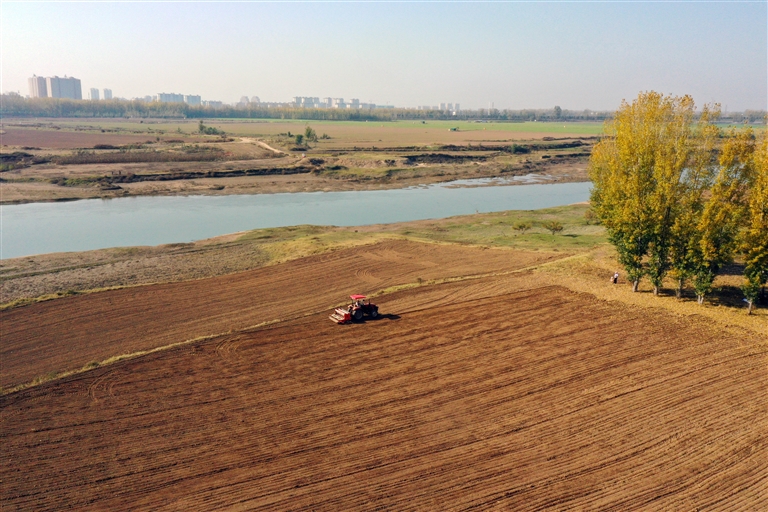
甘肃宕昌:“产培评”融合 激发振兴新动能
Zhong Guo Fa Zhan Wang· 2025-11-06 07:59
Core Insights - The article highlights the efforts of the Danchang County Human Resources and Social Security Bureau in implementing an integrated talent training model to address the mismatch between industrial development and talent supply, thereby injecting vitality into local industries [1][4]. Group 1: Mechanism for Supply-Demand Matching - Danchang County has established a special task force to systematically plan and implement the "Integrated Training and Evaluation" program, focusing on key industries such as traditional Chinese medicine and tourism [2]. - A cross-departmental mechanism has been created to dynamically collect data on labor demand and training willingness, forming a closed-loop management model from job demand identification to customized training and standardized skill evaluation [2]. Group 2: Demonstration Projects - The county has developed distinctive training demonstration projects, such as the "Qiangyuan Weidao" culinary training program, which attracted 117 participants, enhancing their skills for local tourism [3]. - A school-enterprise cooperation model has been adopted in Hada Pu Town, providing training for over 130 personnel in traditional Chinese medicine cultivation and processing, laying a talent foundation for industry enhancement [3]. Group 3: Employment and Income Growth - The training programs have led to significant employment outcomes, with an employment rate of 89.74% among participants in the culinary training, supporting the integration of agriculture and tourism [4]. - Successful case studies, such as a villager who increased his annual income from 60,000 to 150,000 by applying skills learned in agricultural training, demonstrate the tangible impact of these initiatives on local economies [4]. Group 4: Future Outlook - The Danchang County Human Resources and Social Security Bureau plans to deepen the integrated training model by enhancing demand research, increasing policy promotion, and fostering collaboration among enterprises, vocational schools, and training institutions [5]. - Future efforts will focus on improving the entire process from training to employment services, aiming to strengthen the talent engine for rural revitalization and high-quality development [5].
从二十届四中全会看广东“三农”|南岭东风
Nan Fang Nong Cun Bao· 2025-10-24 07:01
Core Viewpoint - The 20th Central Committee's Fourth Plenary Session emphasizes the importance of addressing the "three rural issues" (agriculture, rural areas, and farmers) as a priority for the party's work, highlighting the need for innovative approaches and strong support for rural revitalization during the 14th Five-Year Plan period [9][10][11]. Group 1: Economic and Social Development - The 14th Five-Year Plan is nearing completion, while the 15th Five-Year Plan is approaching, focusing on building a modern industrial system and accelerating high-level technological self-reliance [2][4]. - Guangdong, as China's largest economy, plays a crucial role in promoting rural revitalization and is committed to leading initiatives in addressing the "three rural issues" [15][16]. Group 2: Rural Revitalization Initiatives - Guangdong has implemented the "Hundred Counties, Thousand Towns, and Ten Thousand Villages High-Quality Development Project" to enhance rural development and address urban-rural disparities [28][32]. - The project aims to reverse the trend of resource outflow from rural areas to cities and stimulate high-quality development in counties and villages [32][33]. Group 3: Tourism and Economic Growth - The tourism sector in Guangdong is experiencing growth, with significant increases in visitor numbers and revenue during recent holidays, indicating a successful integration of agriculture and tourism [21][22][24]. - The development of rural tourism and related infrastructure is creating new income opportunities for local residents [24][25]. Group 4: Agricultural Modernization - The focus on modernizing agriculture includes enhancing production capacity and quality through the adoption of new technologies and practices [78][84]. - Guangdong is investing in agricultural machinery and technology to improve efficiency and productivity, with initiatives like the "Yue Strong Agricultural Equipment" project [87][88]. Group 5: Poverty Alleviation and Collaboration - Guangdong has committed substantial financial resources to support poverty alleviation efforts, with a total of 1.778 billion yuan allocated for collaborative projects with other regions [53]. - The province is actively participating in East-West collaboration to ensure sustainable poverty alleviation and rural revitalization [65][75].
汕尾市农业农村局赴深调研,聚焦农文旅发展与海洋牧场建设
Nan Fang Nong Cun Bao· 2025-10-24 02:36
Core Viewpoint - The agricultural and rural development bureau of Shanwei City conducted a research visit to Shenzhen, focusing on the integration of agriculture, culture, and tourism, as well as the construction of modern marine ranches [2][3]. Group 1: Research Visit and Discussions - The research team from Shanwei City engaged in in-depth discussions with Shenzhen Energy Power Service Co., Ltd. regarding potential cooperation in agricultural and cultural tourism development and modern marine ranch construction [2][3]. - The chairman of Shenzhen Energy Power Service Co., Ltd., Yang Hongqi, welcomed the Shanwei delegation and highlighted the complementary resources between Shenzhen and Shanwei in agriculture, culture, and tourism [6][7]. Group 2: Development Plans and Opportunities - Yang expressed that Shenzhen is actively expanding into emerging business areas such as industrial tourism and is eager to explore more collaboration opportunities with Shanwei [8]. - Liu Siwen, deputy director of the Shanwei Agricultural and Rural Development Bureau, introduced the agricultural development situation in Shanwei, emphasizing the planning and advantages of modern marine ranches [9][10]. - Shanwei aims to integrate marine ranching with sightseeing tourism and seeks to leverage Shenzhen's advanced experience in funding, technology, management, and market expansion to explore new models of resource connection and industrial collaboration [10][11]. Group 3: Future Cooperation - The research exchange laid a preliminary foundation for future cooperation, with both regions expected to further collaborate on agricultural, cultural, and tourism projects, as well as marine ranch construction [14][15].
南农晨读 | 甘蔗节节高
Nan Fang Nong Cun Bao· 2025-10-20 02:01
Group 1 - The Ministry of Agriculture and Rural Affairs, along with five other departments, has issued guidelines to support the construction of modern agricultural service centers to enhance agricultural social services and promote agricultural modernization [7][10]. - The focus is on transitioning China's agricultural supply system from "quantity satisfaction" to "quality improvement," emphasizing the need for a strong supply guarantee, technological equipment, operational systems, industry resilience, and competitiveness [11][15]. Group 2 - In Huizhou, the integration of agriculture, culture, and tourism has led to a 15.3% increase in collective operating income for rural villages and a 6.2% rise in per capita disposable income for rural residents in the first half of the year [26][28]. - The city is implementing a high-quality development project to explore a new path for the integration of agriculture, culture, and tourism, effectively activating rural resources and driving industry upgrades [30][31]. Group 3 - A rice technology training class and field observation meeting were successfully held in Shaoguan, attended by agricultural technicians, grain growers, and representatives from various agricultural support teams [33][36].
经济大省挑大梁·韧性中国|以高质量发展托起群众的幸福梦
Yang Guang Wang· 2025-10-18 13:22
Core Viewpoint - Jiangsu province is taking a leading role in promoting high-quality economic development and common prosperity, focusing on practical measures to ensure that people of all ages can find their place and benefit from development [1][11]. Group 1: Economic Development and Common Prosperity - Jiangsu's approach to common prosperity emphasizes systematic advancements in infrastructure, industrial upgrades, and social security, creating a unique path tailored to the province's characteristics [1][11]. - The province has established 2,280 livable and workable beautiful villages, significantly improving the management of 3,795 weak villages, and making positive progress in 40 areas, showcasing the vibrant picture of rural revitalization [5]. Group 2: Rural Revitalization - In Taoyuan Village, the integration of agriculture, culture, and tourism has transformed the local economy, with collective income rising from 500,000 to over 6.4 million yuan, driven by innovative projects and the development of a complete rural industry chain [4][5]. - The village's initiatives have led to the creation of over 130 jobs, allowing residents to work locally and benefit from the economic growth [2][4]. Group 3: Elderly Care and Social Services - Jiangsu is enhancing the meaning of "elderly care," with facilities providing comprehensive services that improve the quality of life for seniors, as evidenced by positive health outcomes for residents in care homes [6][10]. - The province has over 2,200 elderly care institutions with nearly 400,000 beds, 69% of which are nursing beds, addressing the needs of disabled and cognitively impaired elderly individuals [10]. - A shift in perception towards social elderly care is occurring, with more young people joining the caregiving workforce, reflecting a broader societal change in attitudes towards aging and care [9][10].