
农畜产品加工

Search documents
借“黔货出海”通道, 内蒙古谋划农畜产品出口东南亚
Zhong Guo Xin Wen Wang· 2025-12-15 11:47
Core Viewpoint - Inner Mongolia is leveraging the "Qian Goods Going to Sea" channel to plan the export of agricultural and livestock products to Southeast Asia, with a focus on breaking regional barriers and tapping into the southwestern consumer market [1][2]. Group 1: Investment and Collaboration - A signing event in Guiyang resulted in cooperation agreements worth 580 million RMB between Inner Mongolian agricultural enterprises and relevant companies in Guizhou [1]. - The collaboration aims to promote Inner Mongolia's high-quality beef and lamb products, adapting them to local tastes in the southwestern and southern markets [2]. Group 2: Market Potential and Product Offerings - Inner Mongolia leads the nation in the production of milk, lamb, beef, and cashmere, with over 8 million tons of milk and 1.8 million tons of lamb and beef produced annually [2]. - The demand for beef and lamb in Southeast Asia, particularly within the Chinese dining culture, presents a significant opportunity for promoting these products [2]. Group 3: Trade and Distribution Strategy - Inner Mongolia plans to utilize its cross-border trade advantages to integrate Guizhou's specialty products, such as tea and chili, into its international export network [4]. - The initiative aims to create a dual circulation model, facilitating the export of southern goods to the north and the import of northern goods to the Bay Area [4].

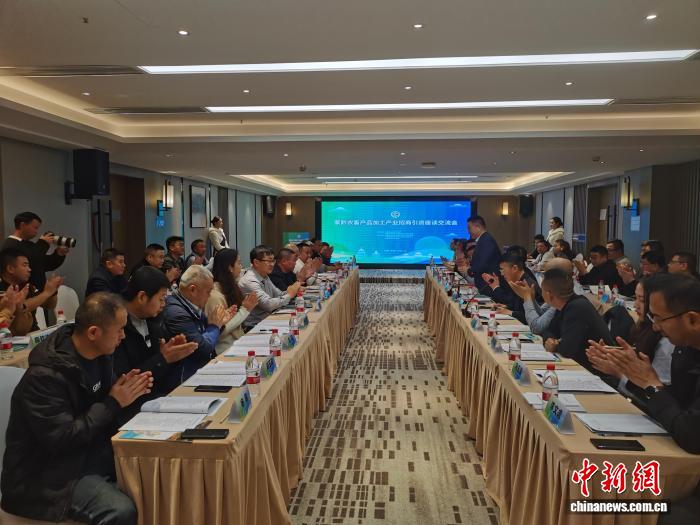
蒙黔农畜产品加工产业达成5.8亿元合作
Zhong Guo Xin Wen Wang· 2025-12-15 10:45
Core Viewpoint - The collaboration between Inner Mongolia and Guizhou in the agricultural and livestock processing industry has resulted in a signed agreement worth 580 million yuan, aiming to enhance market access in Southwest China and Southeast Asia [1][3]. Group 1: Collaboration Details - The signing event took place in Guiyang, where Inner Mongolian agricultural enterprises partnered with Guizhou companies [1]. - A key objective of the collaboration is to break regional barriers and tap into the consumer market in Southwest China, with plans to expand into Southeast Asia [1][3]. Group 2: Product and Market Strategy - Inner Mongolia aims to promote its high-quality beef and lamb products by adapting them to local tastes in Guizhou, facilitating acceptance in the Southern market [3]. - The region's agricultural products, including beef, lamb, dairy, and cashmere, rank among the top in China, positioning Inner Mongolia as a significant supplier [3]. Group 3: Supply Chain and Trade Opportunities - Guizhou has established an efficient production and sales system that connects high-end markets in the Guangdong-Hong Kong-Macao Greater Bay Area and Southeast Asia [3]. - Inner Mongolia plans to leverage its cross-border trade advantages to integrate Guizhou's specialty products, such as tea and chili, into its international export network, creating a bi-directional flow of goods [3][4].
赋能“新三化” 激活品牌力 内蒙古以信用融合书写高质量发展新答卷
Zhong Guo Jin Rong Xin Xi Wang· 2025-12-10 06:49
Core Insights - The article emphasizes the importance of brand credit as a foundation for value creation in the context of China's economic development strategy, which focuses on intelligent, green, and integrated industrial systems [1] Group 1: Brand Development and Credit - The "Credit Empowering Brand 'New Three Transformations' Brand Credit Construction Forum" was held to discuss brand building practices and innovative development in cultural and tourism sectors [1] - Inner Mongolia's various regions showcased their brand development practices, highlighting the role of credit in enhancing local economies [1][2] - The establishment of standardized planting and credit traceability systems has significantly increased the market price of products like "Bada Rengui Rice" from less than 1.5 yuan to 8-9 yuan per pound, illustrating the market logic of "credit equals value" [2] Group 2: Ecological and Cultural Integration - The ecological advantages of regions like Ordos City are being transformed into development momentum, with a focus on three key industries: wool, sheep, and algae [3] - The region's rich cultural tourism resources are being leveraged to enhance brand assets, providing a practical reference for high-quality regional development [3] - The integration of cultural tourism with local brands is seen as a vital strategy for economic growth, with initiatives to attract investment and enhance market presence [4] Group 3: Innovative Credit Systems - Naiman Banner has developed a four-in-one model of "credit foundation, legal protection, technological empowerment, and industrial integration," effectively turning soft credit constraints into hard development support [5] - The implementation of innovative regulatory practices, such as "scan to enter enterprises" and "two documents sent together" for credit repair, has improved the ease of doing business for companies [5] - The recognition of exemplary cases in various sectors, including energy, manufacturing, and agriculture, showcases the broad application of new productive forces in driving high-quality development [6]
察右中旗财政局协同金融机构深入企业调研走访
Xin Lang Cai Jing· 2025-12-04 11:25
Core Insights - The article discusses the establishment of a visiting team by the local financial bureau in collaboration with rural commercial banks to address the financial needs of small and micro enterprises, aiming to enhance local economic quality and efficiency [1][2] Group 1: Current Situation of Enterprises - The overall business operations of the surveyed enterprises are steadily recovering, but they face multiple challenges [1][2] - Some small and micro enterprises are experiencing tight cash flow, with urgent financing needs that favor short-term, low-cost credit [1][2] - There is insufficient collaboration along the industrial chain, leading to difficulties in raw material procurement and slow sales returns for some enterprises [1][2] - The transformation towards intelligent operations is lagging, with a lack of professional technology and financial support [1][2] Group 2: Future Actions - The financial bureau plans to coordinate with rural commercial banks to implement targeted measures tailored to the current situation of enterprises [1][2] - Customized credit products that align with the development needs of enterprises will be introduced [1][2] - A platform for connecting banks and enterprises will be established to collaborate with various financial institutions to resolve financing bottlenecks, helping enterprises reduce costs and improve efficiency [1][2]
2024年内蒙古全部工业增加值历史性突破万亿元大关
Zhong Guo Xin Wen Wang· 2025-11-19 01:03
Core Points - Inner Mongolia's total industrial added value is set to exceed 1 trillion yuan in 2024, marking a historic milestone [1] - The average annual growth rate of industrial added value is projected at 9.3%, contributing 38% to the GDP, an increase of 5.6 percentage points compared to the end of the 13th Five-Year Plan [1] - Inner Mongolia ranks 14th nationally in total industrial output, moving into the upper-middle tier of the country [1] Industrial Structure - The industrial sector in Inner Mongolia is primarily composed of energy and manufacturing, with over 90 industrial products leading in national production capacity [2] - The energy sector includes coal production, total power generation capacity, and renewable energy, with 15 energy products ranking first in the country [2] - Inner Mongolia is the first province to exceed 100 million kilowatts in renewable energy capacity [2] Manufacturing Sector - The manufacturing sector has established key industries such as metallurgy, chemicals, agricultural and livestock product processing, and modern equipment manufacturing, with an average annual growth rate of 10.1% during the 14th Five-Year Plan [2] - Manufacturing contributes over 50% to the industrial added value, serving as the main engine for industrial growth [2] - In the manufacturing sector, 76 products have the largest production capacity in the country, including 21 in chemicals, 14 in new materials, 4 in modern equipment, 18 in biomedicine, and 9 in agricultural processing [2] Policy and Development - During the 14th Five-Year Plan, Inner Mongolia has improved mechanisms for the coordinated development of traditional, emerging, and future industries [2] - Policies have been developed for key industries such as coking, rare earths, lithium, fluorine chemicals, and dairy, enhancing the support and adaptability of the industrial policy system [2] - The establishment of a key industry guidance fund and the implementation of low-altitude economy development plans are part of the efforts to strengthen and optimize key industries [2]
鄂尔多斯市乌审旗:搭建政企“连心桥” 厚植营商“沃土”
Sou Hu Cai Jing· 2025-11-06 07:32
Core Insights - The private economy is identified as the "main force" in regional economic development, with the business environment serving as fertile ground for enterprise growth [1][2] Group 1: Mechanism Innovation - The establishment of the "Warm City, Warm Enterprise - U Business Heart" reception hall has created a comprehensive service platform for government-enterprise communication, integrating various functions such as legal mediation and democratic consultation [1] - Since 2025, six government-enterprise discussion meetings have been held, covering key sectors like energy, agriculture, and tourism, facilitating direct communication between local leaders and business representatives [1] Group 2: Targeted Support - A "Big Visit, Big Research" initiative was launched in 2025, involving a 15-member service team conducting one-on-one visits to 500 key private enterprises, successfully addressing 11 out of 14 reported issues [2] - The introduction of "targeted services" has improved policy delivery efficiency, transitioning from "enterprises seeking policies" to "policies seeking enterprises" [2] Group 3: Resource Aggregation - A three-dimensional empowerment system has been established, focusing on policy, legal, and financial support, with over 140 enterprises benefiting from tax and financing policy training [3] - The reception hall has facilitated cross-regional collaboration, leading to partnerships between local brands and businesses in cities like Xi'an and Shenzhen [3]

封关11年 阿拉山口综保区交出什么答卷
Sou Hu Cai Jing· 2025-09-19 10:48
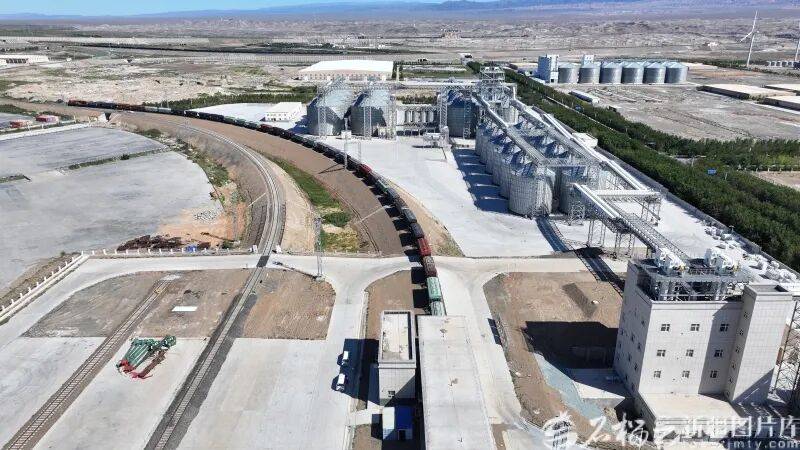
Core Insights - The article highlights the operational efficiency and economic growth of the Alashankou Comprehensive Bonded Zone, showcasing its transformation from a transit node to an integrated open hub over 11 years [3][4]. Group 1: Economic Performance - In 2024, the bonded zone's total foreign trade import and export volume reached 38.284 billion yuan, marking a year-on-year increase of 28.8%, with imports alone surging by 52.3% to 26.916 billion yuan [3][4]. - The bonded zone has seen a rise in its ranking to 75th among 154 bonded zones in China based on development performance evaluations [3]. Group 2: Infrastructure Development - The bonded zone has established over 700,000 square meters of standardized factory buildings and 200,000 square meters of open storage yards, along with a grain silo capable of storing 1 million tons [5]. - A comprehensive upgrade of the railway dedicated line and the construction of various specialized lines for different types of cross-border goods have been completed, enhancing logistical efficiency [5]. Group 3: Industry Growth - The bonded zone hosts 331 enterprises, fostering a diverse industrial cluster that includes modern commerce logistics, agricultural processing, metal mineral processing, medical materials, and equipment manufacturing [3][5]. - Significant projects such as a 160 million yuan railway dedicated line upgrade and a 560 million yuan cross-border e-commerce industrial park are operational, contributing to economic growth [5]. Group 4: Innovation and New Business Models - The newly established 82,000 square meter cross-border e-commerce industrial park has attracted 13 enterprises, achieving an import and export volume of 3.427 billion yuan in 2024 [7]. - The bonded zone is developing high-energy platforms for bulk commodity trading, cross-border e-commerce, and border trade, aiming to enhance its role as a modern comprehensive bonded zone connecting domestic and Eurasian markets [7].
因地制宜发展高原特色优势产业
Ren Min Ri Bao· 2025-09-05 01:32
Core Viewpoint - The development of highland characteristic advantageous industries in Tibet, leveraging local resources and increasing coordinated investment, will inject strong momentum into rural revitalization and income growth for the local population [1][4]. Group 1: Economic Development - Tibet's GDP reached 155 times that of 1965, with per capita disposable income for farmers and herdsmen increasing to 199 times that of 1965 [1]. - The region has seen significant improvements in infrastructure, public services, and living standards, laying a solid foundation for high-quality development [1]. Group 2: Resource Utilization - Unique geographical features such as river valley farmlands, alpine meadows, and wetland lakes provide competitive potential for high-quality development in Tibet [2]. - The establishment of the first large-scale intelligent computing center in Tibet marks the emergence of the high-tech digital industry as a new engine for economic growth [2]. Group 3: Challenges and Solutions - High altitude, inconvenient transportation, and high logistics costs present significant challenges for industrial development in Tibet [3]. - Addressing these challenges requires targeted support, talent introduction, and the integration of modern production factors to strengthen the industrial chain [3]. Group 4: Ecological Considerations - The ecological environment is crucial for the sustainable development of industries in Tibet, with a focus on green and organic products becoming a hallmark of local agricultural goods [3]. - It is essential to maintain strict ecological standards in project planning and resource development to protect the region's fragile environment [3].
释放雪域高原外贸发展新动能
Jing Ji Ri Bao· 2025-08-21 22:10
Group 1: Company Overview - Xizang Shengxin Industrial and Trade Co., Ltd. is a leading enterprise in the production of highland specialty products, leveraging high-quality resources such as wool, cashmere, and yak down to build premium brands and expand both domestic and international markets [1][2] - The company's total import and export volume increased from 9.25 million yuan in 2022 to 12.18 million yuan in 2024, reflecting significant growth [1] Group 2: Industry Development - The development of Xizang Shengxin Industrial and Trade Co., Ltd. mirrors the broader trends in Tibet's foreign trade, with the Lhasa Customs actively supporting the export of 31 categories of goods and 407 testing projects [2] - The total foreign trade value of Tibet reached 4.905 billion yuan in the first seven months of this year, marking a year-on-year increase of 12.6% [4] - Over the past 60 years, Tibet's foreign trade has transformed from 6.93 million yuan in 1965 to an average annual scale of 10 billion yuan, with trade partners expanding to over 100 countries and regions [4] Group 3: Policy and Support - Lhasa Customs has implemented various measures to facilitate foreign trade, including "advance declaration" and "cloud issuance" to streamline customs processes, resulting in a 50% improvement in overall logistics efficiency [3] - The customs authority has established a mechanism for "policy direct access + information direct delivery + service direct delivery," providing tailored support for enterprises [3] - In 2024, exports of specialty products such as wool, cashmere, and high-quality water from Tibet are expected to exceed 100 million yuan [2]
青海加快推进乡村产业振兴 致富花开遍高原
Ren Min Ri Bao· 2025-08-07 05:52
Group 1 - The core focus of rural revitalization in Qinghai is to enhance the income of farmers and herdsmen, promoting highland characteristic seed industry and developing green organic agriculture [1] - Qinghai province is implementing various measures to strengthen rural tourism, specialty planting and breeding, and agricultural product processing, aiming to create a rural industrial revitalization path with highland characteristics [1][3] Group 2 - Technological advancements have significantly improved the quality of Tibetan sheep in Qilian County, with over 98% of the sheep now being of high quality, leading to increased market demand and profitability for local farmers [2] - The establishment of the Qilian Tibetan Sheep Industry Development Research Institute has facilitated the development of standards for breeding and processing, enhancing product quality and marketability [2] Group 3 - Qinghai has set a three-year action plan for the high-quality development of characteristic agricultural industries, achieving 1,298 certifications for green food, organic agricultural products, and geographical indication products by June 2024 [3] - The area monitored for organic grassland has reached 335 million acres, with 48 agricultural products included in the national list of "famous, special, and excellent new agricultural products" [3] Group 4 - The development of eco-tourism in villages like Bianmagou has led to significant increases in local income, with over 70 households participating in the tourism industry and average annual income surpassing 20,000 yuan [4] - The integration of scenic resources into economic activities has transformed local economies, with rural residents experiencing a 5.9% increase in per capita disposable income in the first half of the year [4] Group 5 - The oilseed flower fields in Menyuan County have become a major tourist attraction, significantly boosting local businesses and creating numerous job opportunities in the tourism sector [5][6] - The county is advancing oilseed processing from small workshops to large-scale, standardized operations, with annual production reaching over 3,000 tons and revenue exceeding 20 million yuan [7]