
外卖平台

Search documents
每经热评|美团骑手养老保险补贴全国覆盖 诚意之后尚有四大全新考题
Sou Hu Cai Jing· 2025-10-29 13:49
Core Viewpoint - Meituan has announced that its rider pension insurance subsidy will be available nationwide, allowing all riders to choose to pay in their registered or working locations starting in November [1] Group 1: Policy Implementation - The subsidy policy for riders' social insurance was first piloted in Quanzhou, Fujian, and Nantong, Jiangsu, in April 2023, and has now expanded to a national level within six months [1] - The rapid implementation reflects intensified competition in the platform economy and increasing societal demands for platform companies to take on more responsibilities [1] Group 2: Coverage and Financial Implications - Meituan's model is based on "voluntary insurance participation by riders + platform subsidies," which allows for more flexible labor costs and encourages riders to opt for insurance [1] - The company has covered over 22,000 riders in the pilot regions, and with 745,000 riders earning income through orders in 2023, the potential annual subsidy for high-frequency riders alone could reach nearly 8 billion yuan, significantly impacting profits [3] Group 3: Challenges Ahead - The first challenge is how to establish a national subsidy standard, as the current model provides a 50% subsidy for riders meeting specific income criteria [3] - The second challenge involves addressing the needs of low-frequency riders, who make up 41% of the total, as their sporadic work patterns complicate social insurance contributions [4] - The third challenge is managing the transfer and continuity of social insurance across different regions, which is complicated by varying local policies and administrative processes [5] - The fourth challenge is to prevent the increased costs of subsidies from being passed on to consumers or riders, which could lead to reduced income for riders despite the benefits of social insurance [5]

美团骑手养老保险补贴全国覆盖 诚意之后尚有四大全新考题
Mei Ri Jing Ji Xin Wen· 2025-10-29 13:44
Core Insights - Meituan has announced that its rider pension insurance subsidy will now cover all riders nationwide, starting from November, allowing them to choose where to pay based on their needs [1] - The rapid expansion from pilot programs in two cities to nationwide coverage in just six months reflects increased competition in the platform economy and societal demands for greater corporate responsibility [1] - The model of "voluntary insurance participation by riders + platform subsidies" allows for more flexible labor costs, encouraging riders to opt for insurance [1] Group 1: Implementation and Coverage - The subsidy policy was first piloted in Quanzhou and Nantong, with over 22,000 riders covered in these areas [3] - By 2023, there are 745,000 riders earning income through orders, with high-frequency riders making up 11% of this group, approximately 819,500 individuals [3] - If the subsidy covers only high-frequency riders, it could lead to an additional annual expenditure of nearly 8 billion yuan for the company, potentially consuming an equivalent amount of profit [3] Group 2: Challenges in Coverage - The subsidy structure primarily benefits high-frequency riders, who represent only 11% of the total, while low-frequency and occasional riders make up 41% and 48% respectively [4] - Many riders are part-time workers or use this job as a temporary solution, complicating the insurance payment process due to their varied working hours and income [4] - There is a potential mismatch in insurance needs, as part-time riders may prioritize health and accident insurance over pension insurance [4] Group 3: Social Security Issues - The transfer and continuity of social security for riders who change work locations or residency pose significant challenges due to differing regional policies and administrative processes [6] - These issues are not merely technical but directly impact the long-term benefits for riders, necessitating collaboration between government and companies [6] Group 4: Cost Management - The increase in company costs due to social security subsidies raises concerns about potential cost transfer to consumers and riders through wage reductions or increased service prices [7] - Finding a balance that satisfies all parties involved is crucial, yet challenging, as it may lead to dissatisfaction among riders despite the intended benefits [7]
美团骑手养老保险补贴覆盖全国,诚意之后还有新考题:如何避免补贴成本转嫁给消费者和骑手、全国补贴标准如何制定……
Mei Ri Jing Ji Xin Wen· 2025-10-29 04:59
Core Points - Meituan has announced that its rider pension insurance subsidy will be available nationwide, allowing riders to choose where to pay based on their needs starting in November [1] - The rapid expansion of this policy from pilot cities to nationwide coverage within six months reflects increased competition in the platform economy and societal demands for greater corporate responsibility [1] - The model of "voluntary participation + platform subsidy" allows for flexible cost management for the company while encouraging riders to opt into insurance [2] Group 1 - The subsidy standard for riders nationwide is yet to be determined, with the pilot program indicating that riders meeting certain income thresholds would receive a 50% subsidy on their pension contributions [4] - High-frequency riders, who make up about 11% of the total, could lead to an annual increase in costs for Meituan of nearly 8 billion yuan if only they are covered under the subsidy scheme [4] - The complexity of the insurance scheme increases as it aims to cover a diverse group of riders, including those with varying levels of engagement [5][6] Group 2 - Low-frequency riders, who represent 41% of the total, face challenges in meeting income thresholds for subsidies, raising questions about how to structure support for this group [5][6] - The need for insurance options that cater to the specific needs of part-time and low-frequency riders, who may prioritize health and accident insurance over pension contributions, is highlighted [6] - The issue of social insurance transfer and continuity across different regions poses a significant challenge for riders, necessitating collaboration between companies and government [6] Group 3 - The potential for increased operational costs due to the subsidy program raises concerns about how these costs might be passed on to consumers or affect rider wages [7] - The balance between immediate financial needs and long-term benefits for low-income riders is crucial, as many may prioritize current income over future security [8] - Finding a sustainable solution that aligns the interests of the company, riders, and consumers is a complex challenge that requires careful consideration [9]

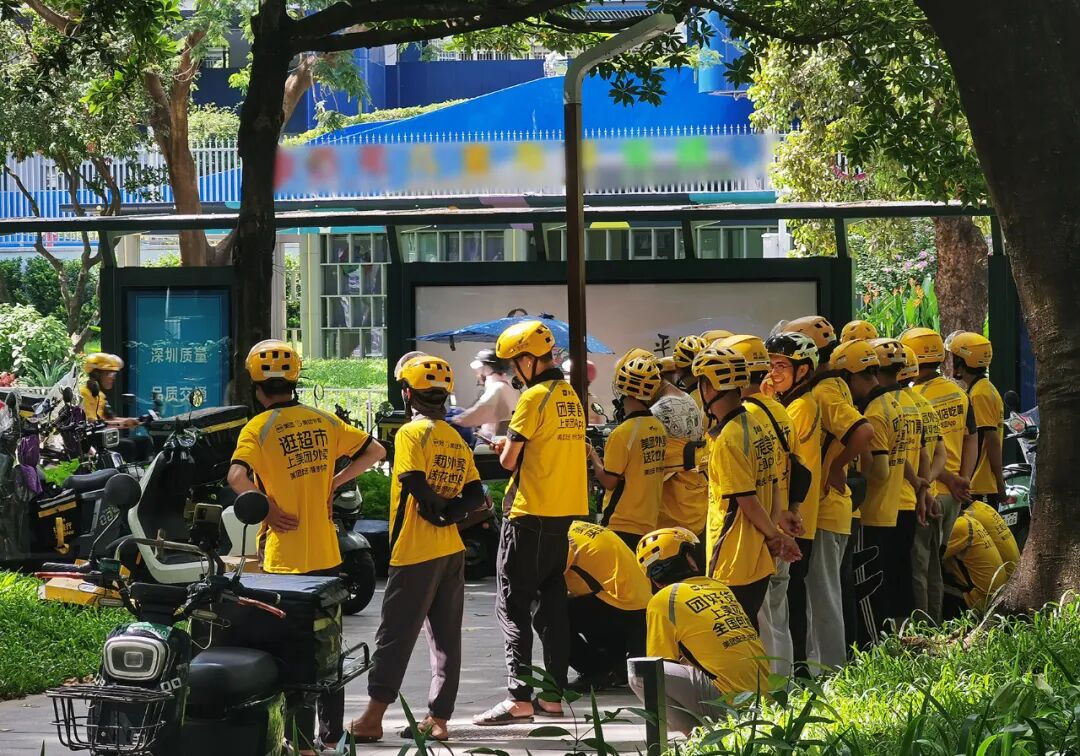
美团出资补贴养老保险,骑手们怎么看?
Di Yi Cai Jing· 2025-10-28 11:11
Core Viewpoint - Meituan's initiative to provide pension insurance subsidies for delivery riders is seen as both a cost for rider welfare and a significant investment in human resources, aimed at enhancing stability and sustainability within the workforce [1][7]. Group 1: Company Actions - Meituan announced the provision of pension insurance subsidies for riders, effective from November, allowing them to choose payment locations based on their needs [1]. - The company has expanded its "new employment form occupational injury insurance" pilot to 17 provinces, covering 13 million riders and paying over 2 billion yuan by September [9]. Group 2: Rider Perspectives - Riders' willingness to pay for insurance varies by age, with younger riders showing more hesitance compared to older riders who are more proactive in securing pension plans [3][4]. - Younger riders, like a 29-year-old from Hangzhou, express concerns about immediate financial burdens, while older riders, such as a 47-year-old from Nantong, actively seek to enroll in the pension scheme [3][4]. Group 3: Economic Implications - The average monthly income for high-frequency riders ranges from 6,949 to 10,201 yuan, with a potential insurance contribution of 1,600 yuan per month, half of which would be covered by Meituan [7]. - The initiative is expected to enhance job stability, reduce turnover costs, and improve operational efficiency for Meituan, ultimately contributing to sustainable growth [7][8]. Group 4: Industry Context - The move is part of a broader trend among platforms to enhance labor rights and benefits, responding to the needs of gig economy workers [9]. - Analysts suggest that the pension subsidy could alleviate financial anxieties for riders, fostering a more stable and committed workforce, which may lead to improved service quality [8][9].

平台配送费为何由商家承担
经济观察报· 2025-10-21 10:09
Core Viewpoint - The article discusses the shift in the burden of delivery fees from consumers to merchants in the context of intense competition among small and medium-sized businesses in the delivery service industry [1][2][10]. Delivery Fee Dynamics - In the digital economy, various instant delivery platforms are thriving, leading merchants to adopt aggressive promotional tactics, including discounts and absorbing delivery costs to attract customers [2][10]. - Globally, delivery fees are typically paid by consumers, with models in countries like the US and UK emphasizing consumer awareness of delivery costs through membership systems [4]. - In China, however, delivery fees are increasingly borne by merchants, particularly small and medium-sized ones, as platforms encourage them to absorb these costs to boost sales [5][10]. Theoretical Background of Delivery Fees - Delivery fees have evolved from being a straightforward cost to a complex variable in market competition, influenced by logistics, labor costs, and platform algorithms [7][8]. - The rise of instant delivery services has further complicated the structure of delivery fees, which now include various factors such as rider costs and peak time surcharges [8]. Merchant Behavior Regarding Delivery Fees - Merchants are often compelled to absorb delivery fees to improve their visibility and competitiveness on platforms, leading to a reliance on discounts rather than quality improvements [10][11]. - This behavior creates a "path dependency trap," where merchants focus on short-term gains at the expense of long-term brand building and customer loyalty [11][12]. Long-term Strategies for Merchants - To escape the cycle of competing on price, merchants should focus on enhancing product quality and brand recognition, moving away from the reliance on delivery fee absorption [15]. - Large chain brands exhibit resilience against price wars due to established supply chains and brand equity, allowing them to maintain order volumes without resorting to aggressive pricing strategies [11]. Recommendations for Industry Improvement - The article suggests a multi-faceted approach to address the over-competition in delivery fees, including platform governance, regulatory oversight, merchant upgrades, and consumer education [14][16]. - Platforms should shift towards a value-oriented algorithm that prioritizes quality and service stability over immediate sales metrics, thereby reducing the pressure on merchants to absorb delivery costs [14]. - Consumers should be educated to recognize the value of quality service over the lowest price, fostering a culture of rational consumption [16]. Regulatory Perspective - Regulators are encouraged to enhance fair competition rules and transparency in cost allocation, ensuring that delivery fee structures are clear and equitable [17].

无堂食外卖,如何把好“入口关”
Ren Min Ri Bao· 2025-10-15 22:22
Core Insights - The investigation reveals significant food safety concerns in the takeout industry, particularly among businesses without dine-in options, due to low entry barriers and intense competition [1] - Regulatory measures are being implemented in various regions to enhance the management and food safety standards of takeout services [2] Group 1: Food Safety Concerns - Recent investigations have uncovered that many takeout businesses operate under unsatisfactory sanitary conditions, with food preparation processes not being transparent [1] - Issues such as multiple licenses for a single business and false addresses have been identified, leading to potential food contamination and the use of expired ingredients [1] Group 2: Regulatory Measures - Local authorities are introducing stricter industry standards to guide businesses in improving management and food safety, such as the implementation of the "Takeout Service Standards" in Chongqing and Hangzhou [2] - Food delivery platforms are enhancing their qualification audits and supervision measures, with companies like Meituan taking immediate action against businesses that misrepresent their operational addresses [2] - The State Administration for Market Regulation is drafting a set of basic requirements for takeout platform services, aiming to address existing issues and ensure food safety compliance [2]
陆家嘴财经早餐2025年9月25日星期四
Wind万得· 2025-09-24 22:38
Group 1 - President Xi Jinping announced China's new round of Nationally Determined Contributions at the UN Climate Change Summit, aiming for a 7%-10% reduction in greenhouse gas emissions by 2035, with non-fossil energy consumption exceeding 30% of total energy consumption [3] - The total installed capacity of wind and solar power is targeted to reach over 360 million kilowatts, six times that of 2020, and forest stock is expected to exceed 24 billion cubic meters [3] - The national carbon emissions trading market will cover major high-emission industries, and a climate-adaptive society is to be fundamentally established [3] Group 2 - Premier Li Qiang emphasized China's commitment to maintaining an open trade and investment market during a meeting with the President of the European Commission, urging fair competition and adherence to WTO rules [5] - The Chinese government will not seek new special and differential treatment in current and future WTO negotiations, reinforcing its role as a responsible developing country [5] - The People's Bank of China announced a 600 billion yuan MLF operation on September 25, marking a net injection of 300 billion yuan for the month, continuing a trend of high liquidity [5][6] Group 3 - Alibaba announced a collaboration with NVIDIA on Physical AI, with plans to invest 380 billion yuan in AI infrastructure and the launch of seven large model products, including Qwen3-Max, the largest and most capable model to date [4] - The Chinese Ministry of Commerce introduced 14 measures to promote digital consumption, including trials for smart connected vehicles and drone delivery services [6] Group 4 - The A-share market saw significant gains, with the Shanghai Composite Index rising 0.83% to 3853.64 points, and the ChiNext Index increasing by 2.28% [8] - The Hong Kong Hang Seng Index rose 1.37%, with notable gains in tech stocks like Alibaba and SMIC, while medical stocks faced declines [8] - Chery Automobile announced its H-share final offering price at 30.75 HKD per share, set to officially list on September 25 [8] Group 5 - The State Administration for Market Regulation is seeking public opinion on new standards for food delivery platforms, addressing issues like competition and delivery personnel rights [11] - The National Press and Publication Administration approved 145 domestic games and 11 imported games in September, indicating a positive trend in the gaming industry [12] Group 6 - The global crude steel production in August was 145.3 million tons, a year-on-year increase of 0.3%, while the cumulative production from January to August saw a decline of 1.7% [23] - The UK government faced challenges in issuing new bonds, with the latest five-year bond auction seeing the lowest oversubscription rate in nearly two years [20]






东莞分批解除“五停”,商超、外卖恢复营业
2 1 Shi Ji Jing Ji Bao Dao· 2025-09-24 09:21
Core Points - Dongguan has announced a phased lifting of the "Five Stops" measures (suspension of classes, work, production, transportation, and business) due to the diminishing impact of Typhoon Haikashan, with the emergency response level adjusted from Level I to Level III [1] - Various sectors including education, construction, and transportation are set to resume operations starting September 25, with specific guidelines for different types of work [2][3] Group 1: Education Sector - All educational institutions including primary, secondary, and higher education will gradually resume classes from September 25 [2] - The resumption includes kindergartens, vocational schools, and various training institutions [2] Group 2: Construction Sector - Construction activities at various sites will resume in an orderly manner from September 25, with certain types of work such as fishing vessels and high-altitude operations remaining suspended until further notice [2] Group 3: Industrial and Commercial Sector - Industrial parks, production bases, and factories will restart operations from September 24 [3] - Markets, shopping malls, supermarkets, and restaurants will also reopen, with major retailers like Rainbow, Walmart, and Hema Fresh confirming their reopening [3] - Essential supplies such as vegetables and meat are reported to be sufficient, encouraging citizens to shop in a staggered manner to avoid crowding [3] Group 4: Transportation Sector - Various transportation modes including public transport and highways will resume operations from September 24, with rail services starting on September 25 [3] Group 5: Safety Measures - Authorities will guide institutions and businesses to conduct safety checks before resuming operations, ensuring that potential hazards are addressed [5] - Continuous monitoring of weather conditions is advised for both businesses and citizens to ensure safety [5]
外卖平台服务“新国标”向社会征求意见
Xin Hua Wang· 2025-09-24 08:30
Core Viewpoint - The draft "Basic Requirements for Service Management of Food Delivery Platforms" has been publicly released for feedback, aiming to regulate service management, enhance service quality, and reduce operational burdens on merchants in the food delivery industry [1] Group 1: Regulatory Focus - The draft focuses on key issues such as platform fees and promotional activities, which are essential for guiding food delivery platforms towards standardized service management [1] - The initiative is intended to promote fair competition among platform enterprises by encouraging transparency and orderly practices [1] Group 2: Institutional Framework - The national standard plan for the "Basic Requirements for Service Management of Food Delivery Platforms" is overseen by the National Platform Economy Governance Standardization Technical Committee, with the Market Supervision Administration as the supervising authority [1] - Key drafting organizations include the China Standardization Research Institute, the China Cybersecurity Review and Certification Center, and the Market Supervision Big Data Center [1]
美团宣布:为餐饮新店提供助力金及开店扶持
Xin Lang Ke Ji· 2025-09-15 03:34
Core Points - Meituan Waimai has launched a "Worry-Free Opening" service to support new restaurant businesses with free online store decoration, exclusive support for new stores, free AI management tools, and cash support [1][2] - Research indicates that nearly 70% of new merchants applying to join the platform are newcomers to the restaurant industry, prompting Meituan to provide comprehensive support in onboarding, store decoration, and operations [1] - The "Intelligent Onboarding Assistant" launched in July utilizes large model capabilities to guide merchants through the onboarding process, ensuring a smoother experience [1] - Meituan has helped over one million small and medium-sized new merchants upgrade their store images through its free decoration service, making it the only platform in the industry to offer this service continuously for several years [1] Financial Support Initiatives - Meituan plans to increase funding and resources to help restaurant merchants avoid low-price and chaotic competition, allowing them to focus on product and service quality for long-term business success [2] - The company has initiated a Small Store Support Fund, providing up to 50,000 yuan in support to small restaurants, with the first batch of funds already distributed to merchants this autumn [2]