
数据标注

Search documents
海天瑞声20260112
2026-01-13 01:10
Summary of Haitai Ruisheng Conference Call Company Overview - **Company**: Haitai Ruisheng - **Industry**: Data Annotation and AI Applications Key Points Growth Expectations - Haitai Ruisheng anticipates maintaining growth momentum in 2026, with overseas revenue expected to remain between 45%-50% due to significant progress in markets like North America and the establishment of a large annotation base in the Philippines to support domestic internet companies' Southeast Asian operations [2][4] Strategic Initiatives - The company is actively involved in formulating cross-border data policies and has established a large annotation base in Manila, employing over 1,000 people, to stabilize revenue and lay the groundwork for future expansions into Thailand, Indonesia, and Vietnam [2][5] - Haitai Ruisheng plans to continue expanding in Southeast Asia through mergers and acquisitions, enhancing its autonomous delivery bases, and improving efficiency and gross margins through semi-automation to meet growing data demands [2][7] Collaborations and Market Demand - The company collaborates with major tech firms like Apple, Zoom, and Meta to meet their needs for high-quality, multilingual data, which supports their global AI applications [2][6] - The demand for data annotation is expected to grow significantly, particularly in the AI application sector, with Haitai Ruisheng typically achieving a price-to-sales (PS) valuation of 20 to 30 times, indicating substantial upside potential [3] Domestic Market Performance - In the domestic market, Haitai Ruisheng serves the tech internet sector and G-class clients, with Alibaba contributing significantly to revenue growth, reaching 30 million in 2025, a multiple increase from 2024 [9] - Tencent has shown strong interest in the company's services, and Kuaishou's model capabilities have improved, indicating potential for future multimodal capability outputs [9][10] Data Governance and Quality - Data governance is crucial for ensuring high-quality data, which involves selecting, editing, and organizing valuable data before annotation [12] - Haitai Ruisheng's ability to provide high-quality data is supported by its internal capabilities and partnerships with industry experts [16] Future Projections - The company expects to increase its overseas workforce to around 3,000 by the end of 2027, with revenue from overseas bases projected to double from approximately 60-70 million in 2025 to at least 150 million in 2026 [13] - The overall gross margin trend is expected to fluctuate around 50%, with potential recovery to 52%-55% as functional modules mature [21] Industry Challenges and Opportunities - The data annotation industry faces challenges such as high technical barriers in specific sectors like healthcare and autonomous driving, where data quality is critical [22] - Haitai Ruisheng is well-positioned to capitalize on the growing demand for data annotation services, particularly in verticals like embodied intelligence, healthcare, and AI governance, which are expected to see rapid development [17][18] Competitive Landscape - The competitive landscape is segmented, with intense competition in low-tier data services, while the company focuses on mid-tier and high-end markets where competition is relatively lower [26] Market Outlook - The data annotation industry is experiencing robust demand both domestically and globally, with Haitai Ruisheng expected to achieve revenues of at least 500 million in 2026, potentially reaching a market valuation of around 150 billion if valued at 30 times earnings [27]

贵州首次为数据标注企业发放奖补
Sou Hu Cai Jing· 2026-01-05 01:26
Core Insights - Guizhou province has issued 7.3 million yuan in subsidies to six data labeling companies, marking the first time such financial support has been provided to this sector [1][2] - The subsidies are part of a new "no application required" mechanism, allowing companies to receive funds directly without submitting extensive documentation [1] Group 1: Subsidy Distribution - Century Hengtong received 3 million yuan for achieving over 100 million yuan in data labeling revenue for the first time in 2025 [1] - Four companies, including Jiatali and Mengdong Technology, each received 1 million yuan for surpassing 30 million yuan in data labeling revenue [1] - Data Bao's core team was awarded 300,000 yuan for meeting revenue targets through technology transformation [1] Group 2: Business Growth and Future Plans - Jiatali's chairman reported a nearly fourfold increase in data labeling revenue over the past year, making it the company's third major business pillar [2] - The company plans to establish a local labeling team of over 500 people to secure more large client orders in Guizhou [2] - The provincial data bureau aims to further optimize the 2026 policy details, expand the "no application required" scope, and enhance the local talent development system [2]
中科数字生态创新(云南)中心在昆揭牌
Xin Lang Cai Jing· 2025-12-23 22:11
Core Viewpoint - The establishment of the Zhongke Digital Ecological Innovation (Yunnan) Center aims to support the national "Digital China" strategy and Yunnan's "Digital Government" initiatives, focusing on high-quality development in the data labeling industry [1][2] Group 1: Industry Development - The data labeling industry is recognized as a critical foundation for the iteration of artificial intelligence large models, despite facing challenges such as a disconnect between technical capabilities and market demand, as well as incomplete industry standards [1] - There is significant potential for upgrading and development within the data labeling sector, with experts suggesting the exploration of localized development paths to create a unique industrial closed loop [1] Group 2: Future Plans - The center plans to deepen industrial collaboration and explore a cross-regional cooperation model of "R&D in major cities + processing in Yunnan" to cultivate new growth points in the local digital economy [2] - Efforts will be made to solidify data foundations and promote the standardized and scaled development of the data labeling industry, aiming to build a reliable "data granary" to support sustainable growth in the AI sector [2] - The center will focus on talent support through deepening industry-education integration and developing training systems tailored to the industry, aiming to cultivate high-quality technical talent [2] - Utilizing Kunming's unique policies and geographical advantages in cross-border data, the center seeks to facilitate the safe and efficient circulation of data elements, contributing to the high-quality development of Yunnan's digital economy [2]
一个入局晚了的数据标注创业者,3个月亏了20万
虎嗅APP· 2025-12-19 14:37
Core Viewpoint - The article illustrates the challenges faced by small entrepreneurs in the AI data annotation industry, particularly in lower-tier cities, highlighting the disparity between the perceived opportunities and the harsh realities of the market [4][6][34]. Group 1: Industry Overview - The AI entrepreneurship wave is rapidly spreading to lower-tier cities, where data annotation projects are marketed as accessible high-tech businesses that require only basic resources [4][5]. - Many entrepreneurs are lured by the promise of low barriers to entry and high returns, leading them to invest their savings in starting data annotation companies [5][6]. Group 2: Entrepreneurial Experience - A case study of a 45-year-old entrepreneur who invested 200,000 yuan to start a data annotation company in Dezhou, only to lose all his capital within three months due to various operational challenges [7][10][28]. - Initial optimism was fueled by the belief that entering the AI sector would provide a significant opportunity, especially after witnessing the bustling data annotation scene in larger cities [15][14]. Group 3: Operational Challenges - The entrepreneur faced significant operational hurdles, including high overhead costs, a lack of stable projects, and the pressure of low profit margins due to the dominance of larger firms in the industry [19][20][22]. - The company struggled with employee retention due to inconvenient commuting conditions and the demanding nature of the work, which involved tedious and complex data annotation tasks [20][26]. Group 4: Market Dynamics - The data annotation industry is characterized by a fragmented supply chain where profits are eroded at each level, leaving small companies with minimal earnings [22][28]. - The entrepreneur experienced long payment cycles from clients, which exacerbated cash flow issues and made it difficult to sustain operations [22][25]. Group 5: Conclusion and Future Directions - The entrepreneur ultimately closed the company after realizing that the AI boom in lower-tier cities was not as prosperous as advertised, reflecting a broader trend of failed ventures in the region [34][36]. - Despite the setback, the entrepreneur pivoted to a more specialized area within the medical data annotation field, where competition is lower and profit margins are higher, indicating a potential path for recovery [36][37][38].


四中全会精神在基层丨大山深处,数据标注员越来越多
Xin Hua Wang· 2025-12-18 00:18
Core Insights - The rise of data labeling as a new profession in Guizhou's mountainous regions is driven by the increasing demand for high-quality datasets in the context of the digital economy and generative artificial intelligence [1][3]. Industry Overview - Guizhou is actively cultivating a complete data labeling industry chain, with policies in place to incentivize companies. For instance, companies achieving 300 data labeling employees or 30 million yuan in revenue can receive a reward of 1 million yuan, with the highest reward reaching 10 million yuan [3][5]. - The local data labeling industry has begun to take shape, with 67 companies and over 9,100 employees currently involved [5]. Employment and Talent Development - The South National Data Labeling Incubation Base has expanded its workforce to over 700 employees, with plans to create more than 2,000 jobs in the future [3][5]. - The integration of education and industry is emphasized, with partnerships established between local educational institutions and companies to provide practical opportunities for students. Over 400 students have interned at the company, with about 20% securing positions post-internship [4][5]. Technological Advancements - The nature of data labeling work is evolving from simple tasks to more complex roles requiring specialized knowledge, driven by advancements in AI technology [5]. - Companies are collaborating with educational institutions to develop their own labeling platforms to enhance efficiency in data processing [5]. Economic Impact - Guizhou's digital industry is projected to grow at an annual rate of 16.2%, with an expected scale of approximately 280 billion yuan by the end of the year, including software and IT services surpassing 100 billion yuan [5].
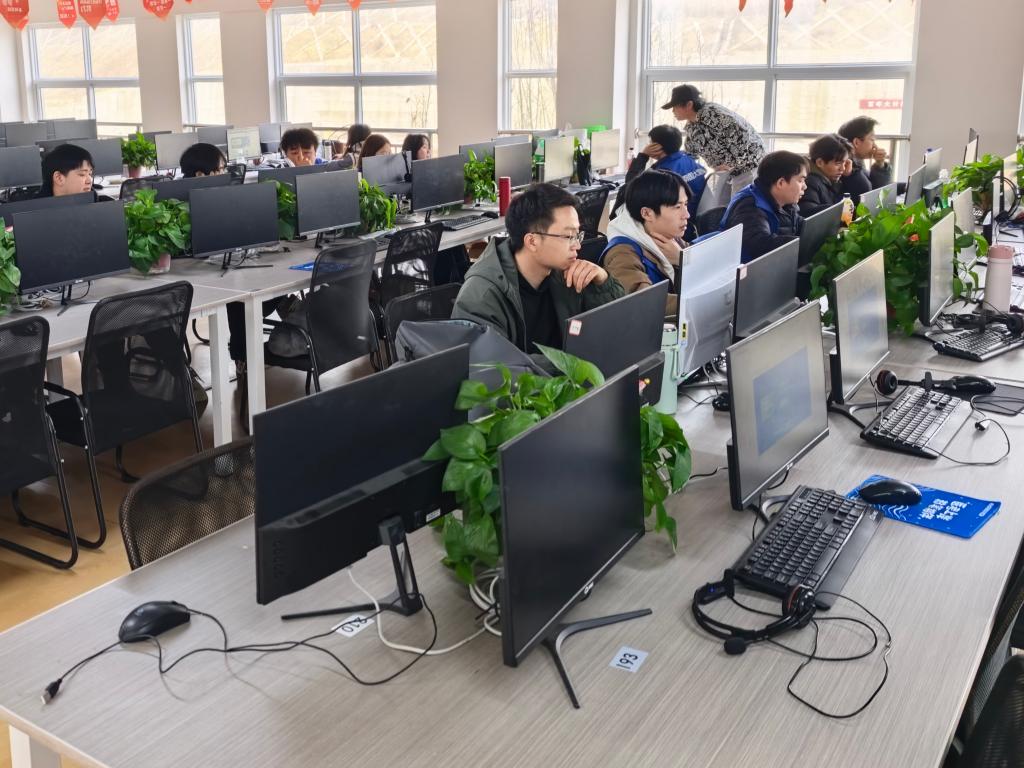
大山深处,数据标注员越来越多
Ren Min Ri Bao· 2025-12-17 22:11
Core Insights - The article highlights the emergence of data annotation as a new profession for young people in Guizhou, driven by the increasing demand for high-quality datasets due to the advancement of generative artificial intelligence and the marketization of data elements [1] Group 1: Industry Development - Guizhou has seen the establishment of multiple data annotation bases in mountainous counties, creating job opportunities for local youth [1] - By 2025, Guizhou plans to implement incentive policies for data annotation companies, offering rewards for reaching specific employment and revenue milestones, with the highest reward being 10 million yuan [1] - The Baiyun District has developed over 80,000 square meters of industrial space dedicated to data, with plans to create several data annotation bases that are expected to generate employment for over 5,000 individuals [1] Group 2: Talent and Education - Talent is identified as a key factor for sustaining the large-scale industrial layout, prompting Baiyun District to establish close ties with local universities that offer big data programs [1] - Companies are providing practical opportunities and career development platforms for students specializing in data-related fields [1]
四中全会精神在基层|大山深处,数据标注员越来越多
Xin Hua She· 2025-12-17 12:33
Core Viewpoint - The rise of the digital economy in Guizhou is leading to the establishment of numerous data annotation bases, creating new job opportunities for young graduates in the region [1][3]. Group 1: Industry Development - The demand for high-quality datasets is increasing due to the rapid advancement of generative artificial intelligence and the marketization of data elements [3]. - Guizhou is actively cultivating the entire data annotation industry chain, with policies in place to reward companies that achieve specific milestones in workforce and revenue [3][4]. - By 2025, companies with 300 data annotation employees or revenues of 30 million yuan will receive a reward of 1 million yuan, with the highest possible reward reaching 10 million yuan [3]. Group 2: Employment and Talent Development - The South National Big Data (Guizhou) Company has over 700 employees and aims to expand, potentially creating over 2,000 jobs in the future [3]. - The White Cloud District has established multiple data annotation bases, expected to create over 5,000 jobs [3][4]. - Partnerships with local universities are being formed to provide practical opportunities for students in data-related fields, enhancing their employability [4]. Group 3: Technological Advancements - The role of data annotators is evolving from simple tasks to more complex, knowledge-based work due to advancements in AI technology [5]. - The local industry is developing its own annotation and pre-annotation platforms to improve efficiency in data processing [5]. - The digital industry in Guizhou is projected to grow at an annual rate of 16.2%, with the scale expected to reach approximately 280 billion yuan by the end of the year [5].
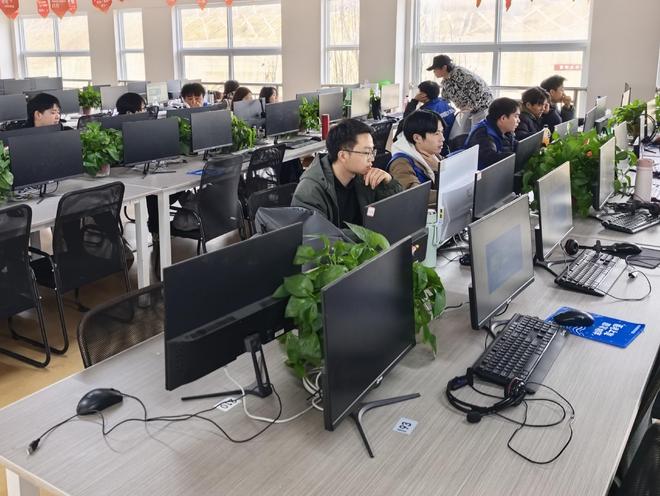
“十四五”期间贵州数字产业规模年均增速16.2%
Xin Hua Wang· 2025-12-17 08:54
Core Insights - During the "14th Five-Year Plan" period, Guizhou's digital industry is expected to reach approximately 280 billion yuan by the end of this year, with an average annual growth rate of 16.2% [1] - The province has seen the emergence of competitive industries and enterprises, with 54 companies generating over 100 million yuan in revenue and 14 companies listed [1] - Guizhou is actively promoting digital transformation through initiatives like the "Ten Thousand Enterprises Integration" program, providing over 100,000 assessment reports to nearly 20,000 enterprises [1] Group 1 - Guizhou's digital industry has established a strong foundation with 50 key data centers, making the Gui'an data center cluster one of the strongest in the country in terms of intelligent computing capabilities [2] - The province has maintained a leading position in data sharing and openness, ranking among the top tier in the nation for several consecutive years [2] - The growth of the digital industry has created significant employment opportunities, with over 10,000 new jobs added in the data annotation sector this year alone [2] Group 2 - The total number of employees in Guizhou's digital industry has surpassed 163,000, with approximately 475,000 big data professionals in the region [2] - The digital industry has become a crucial engine for economic growth and job stability in Guizhou [2]
贵州预计2025年底数字产业规模将突破2800亿元
Zhong Guo Xin Wen Wang· 2025-12-17 06:32
Group 1 - The core viewpoint of the article highlights that Guizhou's digital industry is expected to exceed 280 billion yuan by the end of 2025, with an annual growth rate of 16.2% during the 14th Five-Year Plan period [1] - The software and information technology service sector is projected to surpass 100 billion yuan in revenue [1] - Guizhou has cultivated a number of competitive industries and enterprises, with 54 companies generating over 100 million yuan in revenue and 14 companies listed [1] Group 2 - The province has seen significant job creation due to the growth of the digital industry, with over 10,000 new jobs added since 2025, bringing the total number of digital industry employees to over 163,000 [1] - Guizhou is focusing on artificial intelligence opportunities, developing over 110 typical application scenarios for large models across 24 key industries since 2024 [1] - The number of data centers in Guizhou has increased from 7 in 2020 to 50, with total computing power expected to reach 150 EFLOPS by the end of 2025, of which over 97% will be intelligent computing [2] Group 3 - Guizhou has aggregated 58,000 data resources and achieved over 11 billion data sharing and exchange instances, maintaining a leading position in data sharing and openness in China [2] - The province has opened 24,000 data sets, reflecting its commitment to unlocking the value of data [2]
关键词读懂“十五五”|乘“数”而上:数实融合催生新质生产力
Yang Guang Wang· 2025-12-17 03:59
Group 1 - The core viewpoint emphasizes the importance of integrating digital economy with the real economy, as highlighted in the recent guidelines from the Central Committee of the Communist Party of China [1] - Jiangsu province is recognized for its leading position in digital economy scale and quality, aiming to become the "first province in digital and real economy integration" [1][6] - Suqian city serves as a model for transforming traditional agriculture into a thriving e-commerce hub, showcasing the vitality of the digital economy in lower-tier markets [1][2] Group 2 - Suqian's digital economy is characterized by significant growth, with a compound annual growth rate exceeding 30% for a local pet supplies company, reflecting a successful transition from traditional manufacturing to digital branding [2] - The city has established itself as an "e-commerce city," with over 30,000 e-commerce enterprises and 132,000 active online stores, projecting an e-commerce transaction volume of 280 billion yuan in 2024 [2] - The presence of major players like JD.com has catalyzed the digital transformation of Suqian, leading to the establishment of multiple e-commerce demonstration bases and a workforce of 600,000 in related sectors [2][3] Group 3 - Suqian's e-commerce economy is rooted in local industry advantages, with a focus on developing an "e-commerce + industry belt" to enhance its foundational strengths [3] - The city is transitioning from an e-commerce hub to a smart city, with a focus on integrating digital technologies such as artificial intelligence and data collection into its core industries [4] - Suqian has become a leading center for data annotation in East China, with 15 data annotation companies and a projected revenue of 1.2 billion yuan by 2025 [4] Group 4 - Jiangsu province's digital economy has surpassed 5 trillion yuan, with core industries contributing 1.45 trillion yuan, accounting for 11.4% of the regional GDP [6] - The provincial government has outlined a three-year action plan aiming for a significant increase in the value added by digital economy core industries to 1.8 trillion yuan by 2027 [6] - The focus is on enhancing the digital transformation of manufacturing, promoting cloud computing and industrial internet platforms, and fostering innovation through collaboration in the Yangtze River Delta region [6]
