
清洁能源

Search documents
贵州又一城市加快“电动贵州”步伐
Xin Lang Cai Jing· 2026-02-11 08:24
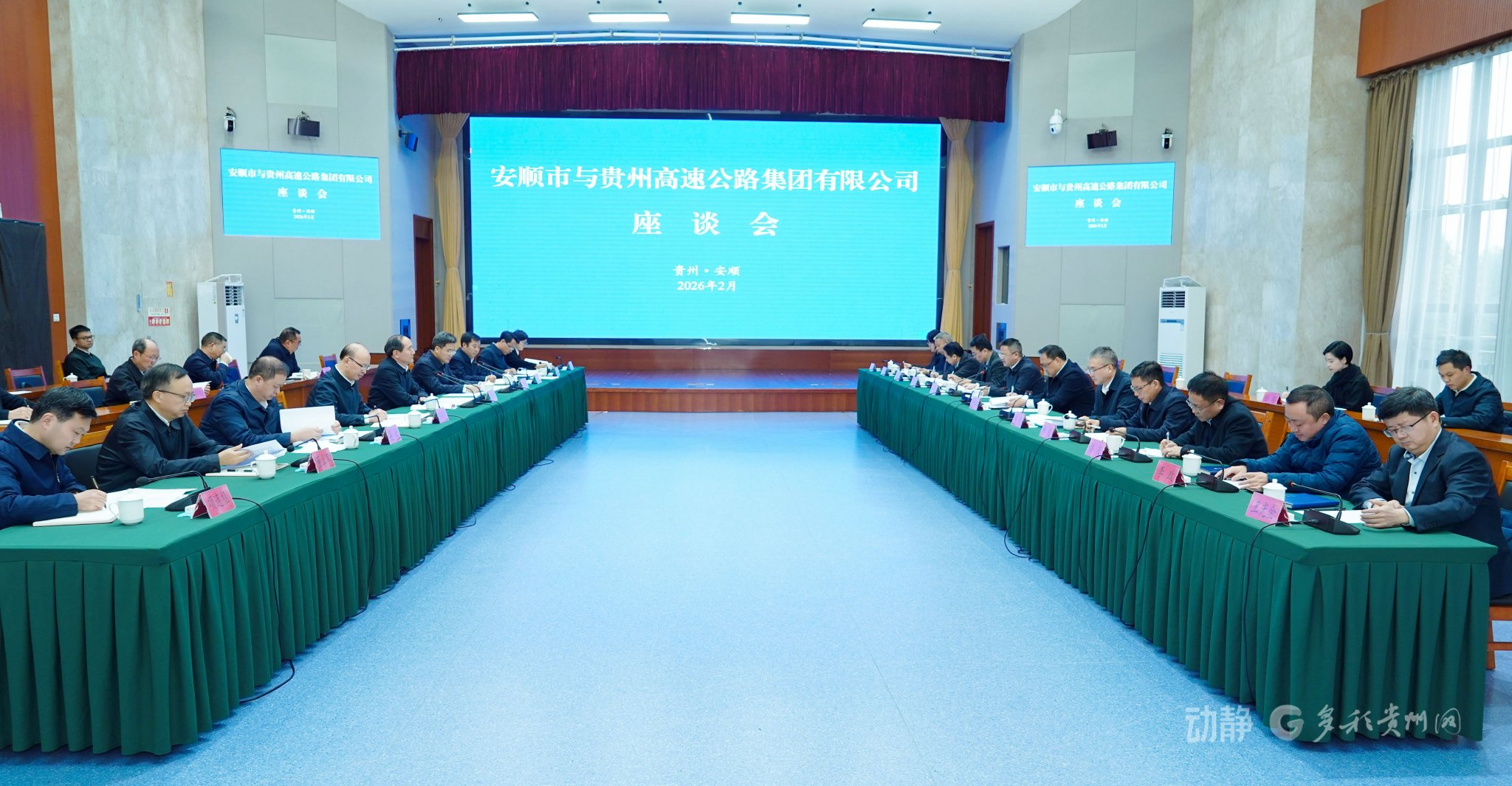
Group 1 - The core viewpoint of the article is the strategic cooperation agreement signed between Guizhou Expressway Group and Anshun Municipal Government, focusing on collaboration in 18 areas including road network planning, bridge and travel integration, low-altitude economy development, and smart transportation [1][3] Group 2 - The agreement aims to create "zero-carbon expressways" and "zero-carbon service areas" as demonstration projects, promoting the development of charging infrastructure, LNG clean energy refueling stations, and hydrogen energy industries in Anshun [3] - The collaboration will explore the integration of expressways with low-altitude economy, focusing on developing new scenarios and business models for low-altitude applications along expressways [3] - A modern smart warehousing and logistics park will be established in Anshun, specializing in cold chain logistics and e-commerce logistics, utilizing idle land along expressways for storage and distribution services for local agricultural and industrial products [3]

央地联手组建百亿能源新平台
Xin Lang Cai Jing· 2026-02-10 23:14
Core Viewpoint - The establishment of the State Power Investment Corporation Qingyue (Qinghai) Energy Development Co., Ltd. marks a significant step in China's clean energy development and cross-regional collaboration, supporting the national "dual carbon" goals and regional coordinated development [3][4]. Group 1: Company Formation and Structure - The new energy company has a registered capital of 15.1 billion yuan and is formed by several state-owned enterprises, including the State Power Investment Corporation and Guangdong Energy Group, showcasing a collaborative model between central and local enterprises [3][4]. - The shareholding structure includes 51% from the State Power Investment Corporation, 30% from Guangdong Energy Group, 10% from Qinghai Clean Energy Industry Development Group, and 9% from Guangdong Electric Power Co., Ltd., creating a diverse ownership model [3]. Group 2: Strategic Importance and Operations - The company aims to enhance China's clean energy development, focusing on power generation, transmission, energy storage technology services, and carbon reduction technology services, thereby covering the entire clean energy value chain [4][8]. - Qinghai province, with over 79 million kilowatts of clean energy installed capacity and a 93% share of clean energy in its total power generation, is positioned as a key strategic base for renewable energy in China [5][6]. Group 3: Regional Collaboration and Energy Security - The establishment of the company facilitates a new model of cooperation between the eastern and western regions of China, addressing the inverse distribution of energy resources and electricity demand [6][7]. - The Qinghai Hainan Clean Energy Delivery Base, with a total investment of nearly 73 billion yuan and a planned capacity of 19.44 million kilowatts, will significantly contribute to energy supply stability in the Guangdong region [5][7]. Group 4: Technological and Industrial Development - The new company will leverage technological resources from its stakeholders to enhance the integration of solar, wind, and energy storage technologies, aiming to improve project efficiency and reduce costs [8]. - The collaboration is expected to create a complete industrial chain from resource development to market consumption, promoting the upgrade of the renewable energy industry [8].
香港上市公司ESG价值核算报告(2025)-香港公司治理公会
Sou Hu Cai Jing· 2026-02-10 16:15
Core Insights - The report highlights the acceleration of global ESG value accounting standardization, with Hong Kong establishing a sustainable disclosure framework based on ISSB standards, aiming to enhance the quality of ESG disclosures among listed companies [1][15][24]. ESG Value Accounting Framework - The report constructs a framework for ESG net value and ESG risk opportunity value, utilizing a six-step process to monetize nine common issues and nine industry-specific issues [2][10]. - In 2024, 1,235 Hong Kong listed companies are identified as having a positive ESG net impact, representing 48.37% of the total, with notable performance in sectors like banking and defense [2][10]. - The quality of ESG disclosures has improved significantly, with the number of companies publishing ESG reports increasing from 1,657 in 2018 to 2,541 in 2025, and the disclosure rate across 31 primary industries exceeding 84% [1][45]. Investment Applications of ESG Value Accounting - ESG value accounting demonstrates significant application value in investment, with factor tests indicating that ESG net value and unit revenue ESG net value factors have an IC mean close to or exceeding 2%, showing strong predictive power for stock returns [2][10]. - An ESG net value and risk opportunity value-enhanced index based on Hang Seng Index constituents has shown positive cumulative excess returns from 2018 to 2025, indicating the effectiveness of positive screening strategies [2][10]. Corporate Applications of ESG Reporting - ESG reports are becoming the "fourth financial statement," providing quantitative support for dual materiality analysis, helping companies identify core issues, optimize resource allocation, and enhance disclosure transparency [2][10]. - The report emphasizes that ESG value accounting can be integrated into DCF valuation models, improving corporate value assessment by incorporating ESG risk opportunity values and net values [2][10]. Future Outlook - The report anticipates that ESG value accounting will play a multidimensional role in advancing corporate ESG management from compliance to value creation, providing comparable quantitative bases for sustainable investment [3][24]. - ESG value accounting is expected to be deeply embedded in financial institutions' credit approval and asset management processes, further solidifying Hong Kong's position as a sustainable finance hub [3][24].

去年四季度中国清洁能源建设景气指数处于较景气区间
Zhong Guo Xin Wen Wang· 2026-02-10 12:56
Core Insights - The Clean Energy Construction Prosperity Index (CEPI) for China in Q4 2025 is reported at 108.242, showing a year-on-year decrease of 8.22 points and a quarter-on-quarter decrease of 2.96 points, indicating a still prosperous but declining trend in the clean energy sector [1][2] Group 1: Capacity and Growth - By the end of 2025, China's total installed power generation capacity reached 3.89 billion kilowatts, representing a year-on-year increase of 16.12% [1] - The installed capacity for clean energy reached 2.352 billion kilowatts, accounting for over 60% of the total power generation capacity in the country [1] - In Q4 2025, the newly added power generation capacity was 17.944 million kilowatts, showing a year-on-year decrease of 5.88% but a quarter-on-quarter increase of 144.44% [1] Group 2: Investment and Construction - The scale of clean energy under construction by the end of 2025 reached 73.518 million kilowatts, which is a year-on-year decrease of 4.36% [1] - The total investment in clean energy for Q4 2025 was 381 billion RMB, reflecting a year-on-year decrease of 23.97% [1] Group 3: Energy Generation and Environmental Impact - In Q4 2025, clean energy generation amounted to 1,685.9 billion kilowatt-hours, marking a year-on-year increase of 20.65% and accounting for 53.34% of the national power generation [1] - This clean energy generation is equivalent to a reduction of approximately 138.4 million tons of carbon dioxide emissions [1] - The steady increase in clean energy generation indicates that the energy transition is entering an accelerated implementation phase [1]
绿色甲醇行业-IMO减排框架下需求向好-降本预期有望打破成本枷锁
2026-02-10 03:24
Summary of Green Methanol Industry Conference Call Industry Overview - The green methanol industry is positioned as a key solution for decarbonizing the shipping sector, supported by policies and active adoption by shipping companies. Long-term production is expected to increase, with prices gradually decreasing due to technological advancements [1][2]. Core Insights - Green methanol offers significant emission reduction capabilities, achieving over 95% reduction compared to traditional fuels. Each ton of green methanol can convert 1.375 tons of CO2, which can substantially lower carbon emissions when widely adopted [1][3]. - The main constraint on the promotion of green methanol is its production cost. Electrolytic and biomass methanol production costs are significantly higher than traditional fossil-based methanol. The cost of electrolytic methanol ranges from $820 to $2,380 per ton, while biomass methanol costs between $564 and $930 per ton, compared to $100 to $250 per ton for traditional methanol [1][6]. - The International Maritime Organization (IMO) and the European Union have set stringent greenhouse gas reduction targets for the shipping industry, aiming for net-zero emissions by around 2050 and introducing global fuel standards [1][7][8]. Future Trends - The green methanol industry is currently in a growth phase, with increasing demand. Despite setbacks from the IMO meeting in October 2025, the ongoing energy transition and carbon neutrality policies are expected to drive green methanol as a crucial solution for shipping decarbonization [2]. - By 2025, it is projected that China will have a production capacity of approximately 10 million tons of green methanol, which could directly absorb 150 million tons of CO2 and indirectly absorb 330 million tons, equivalent to increasing forest carbon storage by 370 million cubic meters [5][21]. Production Routes and Technologies - Green methanol production methods include water electrolysis, biomass gasification, and anaerobic fermentation, each with its advantages and limitations. The electrolytic route relies on green electricity and carbon capture technology, while biomass routes are constrained by raw material supply [4][14]. - The cost of green hydrogen production, a key component in green methanol production, is expected to decrease significantly by 2050, potentially reaching $1.2 to $2.4 per kilogram due to advancements in renewable energy and electrolysis technology [17]. Regulatory Environment - The IMO's greenhouse gas reduction strategy includes targets for 2027 and aims for at least 5% of net-zero emissions technologies and fuels to be implemented. The EU's "Fit for 55" plan also includes maritime fuel regulations and renewable energy directives [7][8]. Market Dynamics - As of 2024, methanol-powered vessels account for approximately 32% of global alternative fuel orders, with a significant demand for methanol expected from operational and under-construction vessels [4][13]. - The global green methanol production capacity is projected to grow from 18 million tons in 2023 to 20 million tons by 2028, with a compound annual growth rate of 2.13%. Electrolytic methanol is expected to dominate production methods, reaching 1.31 million tons by 2028 [20]. Conclusion - The green methanol industry is poised for significant growth driven by regulatory support, technological advancements, and increasing demand from the shipping sector. However, production costs remain a critical barrier that needs to be addressed for widespread adoption [1][2][6].
16个行业增加值实现两位数增长
Xin Lang Cai Jing· 2026-02-08 21:39
Core Insights - The core viewpoint of the article highlights the economic growth of Ziyang, with a projected GDP of 115.08 billion yuan in 2025, reflecting a year-on-year increase of 5.8%, surpassing the provincial growth rate by 0.3 percentage points [1] Economic Performance - The primary industry in Ziyang is expected to contribute an added value of 21.68 billion yuan, growing by 3.3% [1] - The secondary industry is projected to have an added value of 32.59 billion yuan, with a growth rate of 7.0% [1] - The tertiary industry is anticipated to reach an added value of 60.81 billion yuan, growing by 6.1% [1] Industry Growth - Among 31 major industries, 24 are expected to show growth in added value, with 16 industries achieving double-digit growth [1] - The industrial output value for Ziyang is projected to increase by 13.3% year-on-year [1] Key Sectors - The medical device industry is expected to grow by 10.8% [1] - The equipment manufacturing sector is projected to grow by 16.1% [1] - The clean energy industry is anticipated to grow by 23.8% [1] - The electronic information sector is expected to see significant growth of 40.1% [1] - The food and textile industry is projected to grow modestly by 0.9% [1]
工业经济提质增效迈新阶
Xin Lang Cai Jing· 2026-02-08 18:30
Core Viewpoint - Xining is accelerating the construction of a modern industrial system characterized by "3+2+N," enhancing its industrial ecosystem, resilience, and competitiveness, thus becoming a core force in promoting new industrialization in the province [1][2]. Group 1: Industrial Growth and Achievements - During the "14th Five-Year Plan" period, the city's industrial output value successfully exceeded 200 billion yuan, doubling compared to the end of the "13th Five-Year Plan," with a continuous industrial added value growth rate of over 20% for 36 months, averaging 15.2% annually, surpassing the national level [1]. - The city has successfully introduced a number of leading enterprises, cultivating nine companies with over 10 billion yuan in revenue, and the lithium battery industry cluster has entered the national "Top 100" [2]. - The high-performance materials industry cluster has achieved an output value exceeding 100 billion yuan, while the city has established a national-level highland biological medicine industry cluster and a Tibetan carpet textile characteristic industry agglomeration area [2]. Group 2: Policy and Strategic Initiatives - The municipal government has implemented various mechanisms such as "one entry, three deliveries, and one recruitment," and "four measures" to stabilize the industrial economy, enhancing the development capabilities of key industries like clean energy and high-performance materials [2]. - In 2023, Xining will continue to focus on new industrialization, strengthening development support through industrial clusters, activating growth engines with major projects, and broadening pathways for transformation and upgrading [3]. - The city aims to deepen industrial transformation, apply for the national new industrialization demonstration zone, and innovate investment attraction models while focusing on key areas to enhance investment quality and efficiency [3].
我省发布投资机遇三张清单
Xin Lang Cai Jing· 2026-02-07 20:47
Core Insights - Yunnan Province has released an investment opportunity list aimed at attracting private capital, highlighting its comparative advantages across six major areas and 28 key sectors [1][2] Group 1: Comparative Advantages - The comparative advantage list includes resources, location, ecology, climate, culture, and industry, providing a detailed overview of investment opportunities in each area [1] - Key resource advantages include sectors such as phosphorus, non-ferrous metals, rare metals, green energy, flowers, tea, coffee, and rubber, with opportunities in green mining construction and advanced manufacturing [1] - Location advantages focus on infrastructure like the China-Laos Railway, open platforms, ports, and logistics [1] - Ecological advantages emphasize highland specialty agriculture and forest economy [1] - Climate advantages support cultural tourism and health-related travel [1] - Cultural advantages highlight heritage and natural resources [1] - Industrial advantages cover green aluminum, biomedicine, and new materials, with investment opportunities in cross-border logistics and traditional village tourism upgrades [1] Group 2: Application Scenarios - The application scenario cultivation and opening list includes two aspects: demand opening and capability cultivation, translating industry trends into market opportunities [2] - The demand opening list covers ten fields, including emergency management and digital economy, providing 15 specific demand scenarios with details on needs and contact information [2] - The capability cultivation list features 35 items across various sectors, including modern agriculture and clean energy, aimed at enhancing technological capabilities [2] Group 3: Project Promotion - The project promotion list targets 11 key sectors, including industry, energy, and social affairs, with a total of 343 projects and an estimated total investment of 223.117 billion [2] - Yunnan Province is actively promoting private enterprise and investment through various channels, including online platforms and investment activities [2]
海南州:回望皆精彩 前行皆可期
Xin Lang Cai Jing· 2026-02-06 17:54
民生福祉交出温暖新答卷。用心用情推进普惠性、基础性、兜底性民生建设。每年承诺的20件民生实事 当年落地见效,民生领域财政支出连续五年保持在80%以上。就业形势稳定向好,城镇登记失业率控制 在3.5%以内。高规格召开全州教育高质量发展大会,各级各类学校办学条件明显改善,基础教育普及 均衡大幅提升,职业教育走出"产教融合"的新路子。开展"健康青海·幸福海南"行动,全民免费健康体 检成为常态,整体健康状况和生命质量达到新高度。 展望"十五五",海南州将持续深耕绿色发展主阵地,着力抓好7个方面的重点任务。 以实干笃行绘就更加斑斓的幸福底色,让绿色发展的成果真正转化为海南人看得见、摸得着的美好生 活,用一项项实打实的举措,让幸福的成色更足、底色更暖,让海南州的每一步发展都印刻着群众的获 得感、幸福感与安全感。 生态文明建设展现新作为。生态安全屏障全面巩固,黄河干支流水质达到或超过省定目标,主要污染物 排放总量持续下降,环境风险得到有效防控,城乡人居环境明显改善,如期实现碳达峰,生态功能最大 化取得标志性成果。 西海新闻记者 马璞馨 2月6日,海南藏族自治州政府工作报告亮出了"十四五"期间的成绩。海南州累计实现地区生产总 ...
美丽中国先行区建设视角下的能源转型问题
Zhong Guo Neng Yuan Wang· 2026-02-06 07:57
Core Viewpoint - The construction of beautiful China pilot zones is a key part of building a demonstration model for beautiful China, serving as an important tool for advancing the initiative and a crucial support for establishing a new framework for beautiful China construction [1] Group 1: Action Plans and Goals - By December 2025, China will implement action plans for beautiful China pilot zones in key regions such as Beijing-Tianjin-Hebei, the Yangtze River Delta, and the Guangdong-Hong Kong-Macao Greater Bay Area, outlining goals and action roadmaps for energy clean and low-carbon transformation [1][2] - The Beijing-Tianjin-Hebei region aims to optimize energy structure and establish a low-carbon transformation pilot zone, while the Yangtze River Delta will create a new energy system that promotes mutual support and sharing [1][2] - The Guangdong-Hong Kong-Macao Greater Bay Area is focused on building a clean and low-carbon energy system, contributing to the development of a green and low-carbon bay area [1][2] Group 2: Implementation Pathways - Different regions have distinct focuses for energy clean and low-carbon transformation, with Beijing-Tianjin-Hebei targeting a reduction in coal consumption and an increase in renewable energy share [2] - The Yangtze River Delta emphasizes internal and external collaboration, promoting wind power and green energy projects while controlling coal consumption [2] - The Guangdong-Hong Kong-Macao Greater Bay Area is leveraging its open frontiers to develop offshore wind power and green hydrogen industries, aiming for zero-emission transport corridors and zero-carbon airports [2] Group 3: Systematic Engineering Approach - The construction of beautiful China pilot zones is a systematic project that integrates energy production and consumption revolutions, focusing on sustainable development, ecological quality improvement, and carbon neutrality [2][3] - The approach includes exploring differentiated energy transformation paths based on regional characteristics and resource endowments [3] Group 4: Energy Equipment Manufacturing - The transition to clean and low-carbon energy creates market demand for traditional clean energy technologies and promotes the development of new technologies and products [4] - Emphasis is placed on developing advanced energy equipment and new energy sources, including green hydrogen and sustainable aviation fuels [4] Group 5: Infrastructure Development - There is a need to enhance energy infrastructure with a focus on environmental and carbon emission evaluations, aiming to build a modernized power grid and smart microgrids [5] - The development of charging, hydrogen refueling, and other infrastructure for new energy vehicles is essential for supporting the transition [5] Group 6: Pollution Reduction and Carbon Management - Implementing coal consumption reduction and exploring fossil energy substitution mechanisms are critical for managing total fossil energy consumption [6] - The goal is to achieve 100% green energy in certain sectors and establish recycling systems for solar panels and batteries to reduce carbon footprints [6] Group 7: Institutional Innovation - Optimizing the operation mechanisms of coal power and enhancing the synergy between operational indicators and pollution reduction are necessary for effective energy transition [7] - The establishment of a carbon footprint management system and the promotion of green finance are vital for supporting clean energy investments [7]