电子制造业

Search documents
麦捷科技:11月7日召开董事会会议
Mei Ri Jing Ji Xin Wen· 2025-11-07 10:23
2024年1至12月份,麦捷科技的营业收入构成为:电子制造业占比99.62%,其他业务占比0.38%。 每经AI快讯,麦捷科技(SZ 300319,收盘价:12.83元)11月7日晚间发布公告称,公司第六届第二十 八次董事会会议于2025年11月7日以视频结合通讯方式召开。会议审议了《关于提请召开2025年第二次 临时股东大会的议案》等文件。 (记者 王晓波) 每经头条(nbdtoutiao)——卢浮宫被盗文物竟无保险,国内48亿元艺术品保险市场也不乐观:险企称 定价太难,蛋糕看到吃不到 截至发稿,麦捷科技市值为113亿元。 ...

弘信电子:公司控股股东弘信创业解除质押420万股
Mei Ri Jing Ji Xin Wen· 2025-11-07 08:41
Group 1 - The core point of the article is that Hongxin Electronics announced the release of 4.2 million shares from pledge by its controlling shareholder, Hongxin Chuangye [1] - As of the report, Hongxin Electronics has a market capitalization of 14.4 billion yuan [1] - The revenue composition for Hongxin Electronics from January to June 2025 is as follows: 56.5% from the electronic manufacturing industry, 42.41% from computing and related industries, and 1.09% from other businesses [1]

盈趣科技:接受嘉实基金等投资者调研
Mei Ri Jing Ji Xin Wen· 2025-11-03 15:17
Group 1 - The core viewpoint of the article highlights that Yingqu Technology (SZ 002925) will hold an investor meeting on November 3, 2025, where the company's president Yang Ming will participate and address investor inquiries [1] - For the first half of 2025, Yingqu Technology's revenue composition shows that the electronic manufacturing sector accounts for 95.85%, while technology research and development services make up 4.15% [1] - As of the report, Yingqu Technology has a market capitalization of 15.1 billion yuan [1] Group 2 - The article mentions a significant increase in overseas orders for a certain industry, with a surge of 246%, covering over 50 countries and regions [1] - Entrepreneurs have raised concerns about some companies selling products at a loss, warning of the potential for vicious competition extending into overseas markets [1]

11.3犀牛财经晚报:LME铝价迈向逾三年高点 金价上涨周大生却一年关店560家
Xi Niu Cai Jing· 2025-11-03 10:25
Group 1: Gold Tax Policy and Market Impact - The new gold tax policy announced by the Ministry of Finance and the State Taxation Administration has led to adjustments in gold pricing, with China Merchants Bank including tax in the price of physical gold bars [1] - The announcement of the tax policy has negatively impacted retail gold stocks, with companies like Luk Fook Holdings experiencing a drop of nearly 9% in stock price [4] - The policy aims to enhance the distinction between gold as a commodity and its financial attributes, indicating a supportive stance towards the gold industry compared to international markets [4] Group 2: Aluminum and Glass Market Trends - Aluminum prices have surged, reaching their highest closing price since May 2022, with a monthly increase of over 7% in October [1] - The domestic photovoltaic glass market is facing an increase in production capacity, with new furnaces being activated, leading to a slight increase in supply despite some production constraints [2] Group 3: Company Developments and IPOs - Shukong Technology, a unicorn in AI medical imaging, is preparing for an IPO, with a valuation reaching 9.4 billion yuan after its last funding round [2] - Juhua Materials is planning to issue H-shares and list on the Hong Kong Stock Exchange, with details still under discussion [6] - Several companies, including Keren Co. and Pingzhi Information, have signed significant procurement contracts, indicating active business operations in their respective sectors [10][11] Group 4: Retail and Store Closures - Zhou Dashing has reported a net closure of 560 stores over the past year, primarily in franchise locations, despite rising gold prices [5]
东尼电子收《行政处罚事先告知书》:涉信披违规将被ST 多名高管遭重罚
Ju Chao Zi Xun· 2025-10-31 05:58
Core Viewpoint - Dongni Electronics has received a notice of administrative penalty from the Zhejiang Securities Regulatory Bureau for significant violations in information disclosure, including delayed reporting of major contract progress and false records in financial reports, leading to a potential fine of up to 16.2 million yuan [1][3]. Summary by Relevant Sections Information Disclosure Violations - The company is accused of failing to timely disclose significant risks related to a major sales contract worth 675 million yuan, which represents 51.84% of its most recent audited revenue. As of the end of October 2023, the delivery progress was only 6.74%, with the company not reporting this risk until January 2024 [3][4]. Financial Reporting Irregularities - The 2022 annual report and the 2023 semi-annual report contained false records, resulting in a significant overstatement of profits. Specific violations include: - Improper capitalization of expenses, leading to an understatement of research and development expenses by 56.81 million yuan, thus inflating profits [4]. - Failure to account for related party transactions, resulting in an inflated profit of 27.46 million yuan [4]. - Insufficient provision for inventory impairment, leading to an inflated profit of 26.78 million yuan [4]. - Overall, the 2022 annual report overstated profits by 38.63%, while the 2023 semi-annual report overstated profits by 70.95% [4]. Penalties and Company Response - The Zhejiang Securities Regulatory Bureau has proposed a total fine of 7 million yuan for the company, along with individual fines for responsible executives, including 3.5 million yuan for the chairman and 1.7 million yuan for the general manager [4]. - The company has stated that its operations continue normally and has committed to improving internal controls and enhancing the quality of information disclosure [4].


四季度北京经济将延续稳中向好态势
Bei Jing Shang Bao· 2025-10-22 15:38
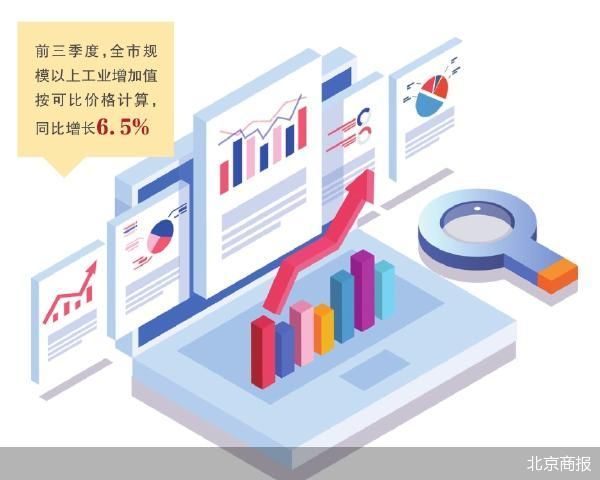
Economic Overview - Beijing's GDP for the first three quarters reached 38,415.9 billion yuan, with a year-on-year growth of 5.6% at constant prices, indicating a stable economic performance [1] - The city's economic development is characterized by a good start in Q1 and stable growth in Q2 and Q3, supported by effective macroeconomic policies and emerging new drivers [1][9] Investment Trends - Fixed asset investment in Beijing increased by 9% year-on-year, with equipment purchase investment surging by 83.1%, accounting for 29.3% of total investment [3][4] - Infrastructure investment grew by 2.3%, while manufacturing and first industry investments rose by 5.4% and 23.8%, respectively; however, real estate development investment declined by 13.7% [3] - High-tech industry investment saw a significant increase of 51.7%, driven by sectors such as information transmission and software services [3][4] Service Sector Performance - The service sector's value added reached 33,000 billion yuan, growing by 5.8% year-on-year, contributing 5 percentage points to GDP growth [5] - The information transmission, software, and IT services sector achieved a value added of 9,225.5 billion yuan, with a growth rate of 11.2%, contributing 2.5 percentage points to GDP [5][6] - High-tech service industry revenue increased by 13.2%, outperforming the average service sector growth rate [6] Manufacturing Sector Insights - The equipment manufacturing sector's value added grew by 8.2%, with computer and communication equipment manufacturing increasing by 24.6% [7] - The automotive manufacturing sector saw a 13.4% increase, with new energy vehicle production rising by 150% [7] - Overall industrial value added in Beijing grew by 6.5%, with strategic emerging industries and high-tech manufacturing contributing significantly to this growth [8] Future Outlook - The city aims to enhance technological innovation and cultivate new productive forces, focusing on six key areas: future information, health, manufacturing, energy, materials, and space [9] - The expectation is for Beijing's economy to maintain a stable and positive trend in the fourth quarter, supported by ongoing macroeconomic policy effects and emerging sectors [1][9]
中泰国际每日晨讯-20251022
ZHONGTAI INTERNATIONAL SECURITIES· 2025-10-22 01:34
Market Overview - The Hang Seng Index closed at 26,028 points, up 0.7%, while the Hang Seng China Enterprises Index rose 0.8% to 9,303 points[1] - Total trading volume in Hong Kong stocks was HKD 264.7 billion, an increase from HKD 239.2 billion on Monday, indicating investor contention[1] - Key sectors: Industrial (+1.4%), Consumer Discretionary (+1.2%), Financials (+1.1%); Consumer Staples (-0.1%), Telecoms (-1.0%), Utilities (-0.1%)[1] Stock Performance - China Life (2628 HK) and BYD Electronics (285 HK) led gains, rising 6.0% and 3.8% respectively[1] - Pop Mart (9992 HK) and China Resources Mixc Lifestyle (1209 HK) were the biggest losers, falling 8.1% and 1.9% respectively[1] Gold Price Trends - Gold prices peaked above USD 4,300 before retreating to around USD 4,100, with expectations of continued consolidation due to already priced-in U.S. rate cut factors[1] Global Economic Factors - U.S. Treasury Secretary may hold trade talks with China's Vice Premier, potentially easing U.S.-China tensions[1] - European leaders expressed support for Trump's stance on a ceasefire in Ukraine, indicating a stabilization of geopolitical risks[1] U.S. Market Update - The Dow Jones Industrial Average closed at 46,925 points, up 0.5%, while the Hang Seng Index futures settled at 25,919 points, down 109 points[2] Japanese Economic Update - The Japanese yen depreciated to approximately 151.8 against the USD, down from 149.5 the previous week following the election of new Prime Minister[3] Industry Insights - Pop Mart reported Q3 revenue growth of 245%-250%, with domestic revenue up 185%-190% and overseas revenue up 365%-370%, despite a stock price drop of 8.1%[4] - The healthcare sector saw a slight increase of 0.3%, with major companies showing minimal volatility[4] - New energy and utilities stocks experienced fluctuations, with notable gains in nuclear and thermal power sectors[4]
捷邦科技连亏2年半 2022年上市募9.4亿中信建投保荐
Zhong Guo Jing Ji Wang· 2025-10-17 07:56
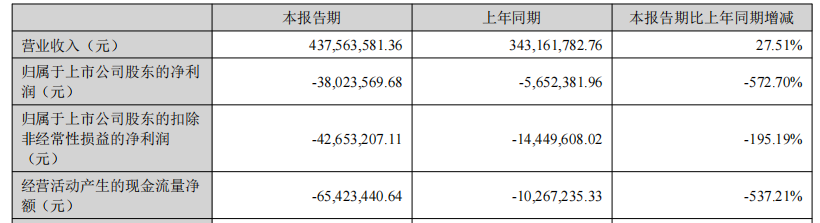
Core Viewpoint - Jebang Technology (301326.SZ) reported a revenue of 438 million yuan for the first half of 2023, marking a year-on-year increase of 27.51%, but faced significant net losses [1][2]. Financial Performance - The company's revenue for the first half of 2023 was 437,563,581.36 yuan, up 27.51% from 343,161,782.76 yuan in the same period last year [2]. - The net profit attributable to shareholders was -38,023,569.68 yuan, a decline of 572.70% compared to -5,652,381.96 yuan in the previous year [2]. - The net profit after deducting non-recurring gains and losses was -42,653,207.11 yuan, representing a decrease of 195.19% from -14,449,608.02 yuan [2]. - The net cash flow from operating activities was -65,423,440.64 yuan, a drop of 537.21% from -10,267,235.33 yuan [2]. Future Projections - For 2024, the company is projected to achieve a revenue of 792,805,238.89 yuan, a 16.90% increase from 678,193,574.22 yuan in 2023 [3]. - The net profit attributable to shareholders is expected to improve to -19,348,460.60 yuan, a 65.33% reduction from -55,803,415.39 yuan in 2023 [3]. - The net profit after deducting non-recurring gains and losses is projected to be -33,129,566.38 yuan, a 53.10% improvement from -70,641,707.56 yuan [3]. - The net cash flow from operating activities is anticipated to be 20,799,161.98 yuan, a significant decrease of 85.85% from 146,987,913.70 yuan in 2023 [3]. IPO and Fundraising - Jebang Technology raised a total of 936.132 million yuan from its initial public offering, with a net amount of 836.9503 million yuan after deducting issuance costs [4]. - The final net fundraising amount exceeded the original plan by 28.69503 million yuan [4]. - The funds are intended for the construction of a high-precision electronic functional structural component production base, a research and development center, and to supplement working capital [4].

领益智造:前三季度净利同比预增34%~50%
Mei Ri Jing Ji Xin Wen· 2025-10-13 10:51
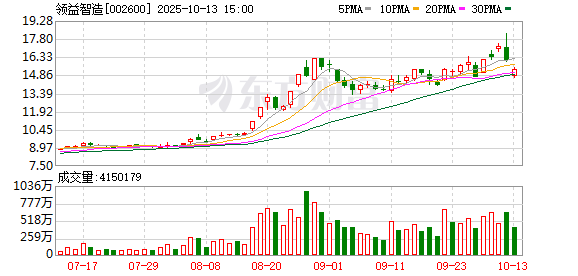
Core Viewpoint - Lingyi Technology (002600.SZ) expects a significant increase in net profit for the first three quarters of 2025, projecting between 1.89 billion to 2.12 billion yuan, representing a year-on-year growth of 34.10% to 50.42% [2] Group 1: Financial Performance - The anticipated net profit for the first three quarters of 2025 is between 1.89 billion to 2.12 billion yuan [2] - The expected growth in net profit is attributed to the launch of new AI terminal products and increased production capacity [2] - The overseas factory revenue has seen substantial growth, contributing to improved profitability [2]

8000亿巨头狂飙!近30个交易日,16次创新高
Zhong Guo Zheng Quan Bao - Zhong Zheng Wang· 2025-10-12 10:24
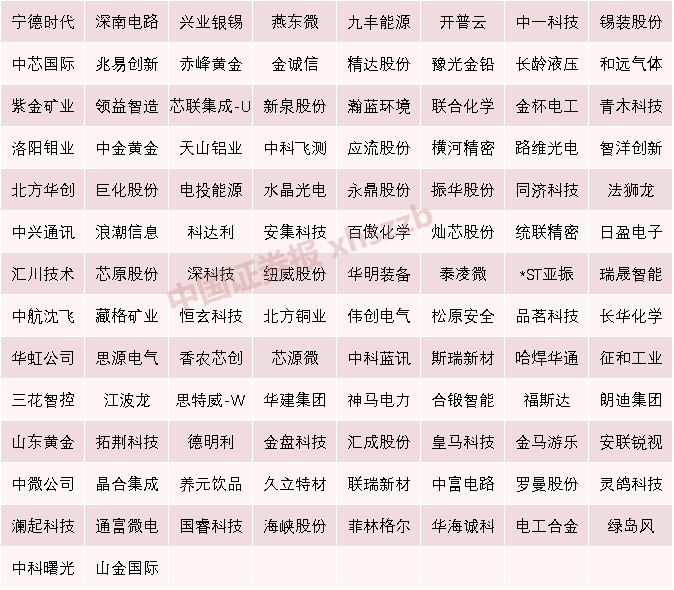
Core Insights - This week, 106 stocks reached historical highs, excluding newly listed stocks from the past year, indicating a strong market performance [1] - Year-to-date, 918 stocks have achieved historical highs, a significant increase from 82 stocks during the same period last year [1] Industry Performance - The non-ferrous metals sector has shown remarkable performance, with leading stocks frequently hitting historical highs [1][3] - Notable stocks in this sector include Zijin Mining, which reached a closing price of 30.87 CNY per share and a market capitalization of 820.45 billion CNY [1] Stock Highlights - The stocks that reached historical highs this week are concentrated in the electronics, non-ferrous metals, and machinery equipment sectors, with 32, 14, and 13 stocks respectively [1] - The top stocks by trading volume among the 106 that hit historical highs include ZTE Corporation, SMIC, CATL, Zijin Mining, and Sanhua Intelligent Control, with trading volumes of 47.64 billion CNY, 45.32 billion CNY, 37.67 billion CNY, 30.55 billion CNY, and 26.18 billion CNY respectively [1] Market Catalysts - Key factors driving the surge in non-ferrous metals include increased expectations for Federal Reserve interest rate cuts, supply concerns from Chile's copper production decline, and rising international gold prices [3] - Among the stocks that reached historical highs, 20 have a total market capitalization exceeding 100 billion CNY, with leading companies being CATL, SMIC, Zijin Mining, and others [3] Stock Price Movements - The top gainers this week include Lingge Technology, Haheng Huaton, and Hezhuan Intelligent, with increases of 29.82%, 29.62%, and 21.02% respectively [4] - As of October 10, 27 stocks have prices exceeding 100 CNY, with the highest closing prices belonging to Northern Huachuang, CATL, and others [4]