
电气设备制造

Search documents
日本拟在美投资生产“人造钻石”
日经中文网· 2026-02-01 00:33
Group 1 - The core focus is on the potential investment project in the U.S. for synthetic diamonds, which are crucial for semiconductor manufacturing and are currently predominantly produced in China. The project is part of a $550 billion investment initiative based on the U.S.-Japan tariff agreement [2][4] - The Japanese government has included specific types of synthetic diamonds in its export control list for 2025, highlighting the importance of stable procurement for both Japan and the U.S. [4] - Element Six Holdings is discussing a project to establish a facility for manufacturing diamond particles using high-pressure and high-temperature methods, with a total business scale of $500 million. Japanese suppliers and off-takers are expected to participate [4] Group 2 - Hitachi's power transmission and distribution equipment project has also emerged as a candidate under the investment initiative, focusing on strengthening the supply chain for power infrastructure, including transmission and substation equipment and data center transformers [5]

被罚34.25万元!重庆博森电气逃避监管排放污水,公司曾称经营困难望从轻处罚
Hua Xia Shi Bao· 2026-01-30 12:46
华夏时报记者 李未来 北京报道 明修废水池,暗渡排水井。重庆博森电气(集团)有限公司(下称"博森电气")以逃避监管方式排放水 污染物,被重庆市生态环境局处以罚款34.25万元。 1月26日,重庆市生态环境局发布的一则行政处罚决定书显示,博森电气在废水收集池底部预埋废弃雨 水井,废水未按照环评处理后直排外环境,监测结果显示化学需氧量、氨氮分别超标4.2倍、7.6倍。另 外执法人员在调阅视频中发现博森电气含镍废水违规排放。 1月29日记者联系重庆市生态环境局,相关人员表示对案件详情并不了解,行政处罚决定书发出仅几 天,还没有收到缴纳罚款。 某地环保部门专业人士告诉《华夏时报》记者:"氨氮超标对水质肯定会有影响,至于构成什么影响, 要看排入什么样的外环境。不同水体排放标准不同,企业自身出水也有排放标准,如果超标,有关部门 可以取证、调查,对企业进行处罚。" 超标排放 根据博森电气官网,该公司位于重庆南岸茶园工业园区,占地150亩,厂房4.6万㎡,"东邻重庆火车东 站,北邻江北国际机场,交通便利,地理位置得天独厚"。但在这样的地理位置上,博森电气却出现违 规排放的现象。 重庆市生态环境保护综合行政执法总队执法人员于2 ...
威腾电气:公司母线业务拥有自有威腾品牌,同时与ABB设立合资公司开展相关合作
Zheng Quan Ri Bao Wang· 2026-01-29 10:43
Group 1 - The core viewpoint of the article highlights that Weiteng Electric has its own brand for busbar business and is collaborating with ABB to establish a joint venture for related operations [1] - The company's products, including busbars, complete electrical equipment, and energy storage systems, directly or indirectly benefit from grid renovation, energy storage construction, and data center development [1]

上海新时达电气股份有限公司关于公司对控股公司提供担保的进展公告
Shang Hai Zheng Quan Bao· 2026-01-28 19:07
登录新浪财经APP 搜索【信披】查看更多考评等级 证券代码:002527 证券简称:新时达 公告编号:临2026-002 上海新时达电气股份有限公司 关于公司对控股公司提供担保的进展公告 本公司及董事会全体成员保证信息披露的内容真实、准确、完整,没有虚假记载、误导性陈述或重大遗 漏。 特别提示: 截至本公告披露日,上海新时达电气股份有限公司(以下简称"公司")及控股公司对外担保金额超过公 司最近一期经审计净资产50%。本次担保的被担保方晓奥(上海)工程技术股份有限公司资产负债率超 过70%。敬请广大投资者充分关注担保风险。 一、担保情况概述 为满足公司及各子公司生产经营与业务发展的需要,公司于2025年4月25日、2025年5月22日分别召开公 司第六届董事会第十三次会议和第六届监事会第九次会议、2024年度股东大会,审议通过了《关于对外 担保额度预计的议案》,公司为合并报表范围内下属公司提供的担保额度总金额不超过10.5亿元人民 币,其中为子公司上海会通自动化科技发展股份有限公司(以下简称"上海会通")提供担保的额度不超 过5亿元人民币;为子公司上海新时达机器人有限公司提供担保的额度不超过5,000万元人民 ...

科林电气1月27日现2笔大宗交易 总成交金额546万元 溢价率为-8.72%
Xin Lang Cai Jing· 2026-01-27 10:23
Group 1 - Colin Electric's stock closed down 1.38% at 21.44 yuan on January 27, with two block trades totaling 279,000 shares and a transaction amount of 5.46 million yuan [1] - The first transaction occurred at a price of 19.57 yuan for 153,000 shares, amounting to 2.99 million yuan, with a discount rate of -8.72% [1] - The second transaction also occurred at 19.57 yuan for 126,000 shares, totaling 2.47 million yuan, with the same discount rate of -8.72% [1] Group 2 - Over the past three months, Colin Electric has recorded 16 block trades with a total transaction amount of 51.33 million yuan [1] - In the last five trading days, the stock has increased by 8.78%, with a net inflow of 16.98 million yuan from major funds [1]

港股异动 | 哈尔滨电气(01133)盈喜后高开逾5% 预期2025年归母净利增至约26.5亿元
智通财经网· 2026-01-27 01:33
消息面上,1月26日,哈尔滨电气发布公告,预期该公司2025财政年度取得归属于母公司所有者的净利 润约人民币26.5亿元(上年同期取得约人民币16.86亿元),较上年同期大幅提升。主要原因是公司2025财 政年度营业收入较去年同期有所增长,产品盈利能力进一步提高。 智通财经APP获悉,哈尔滨电气(01133)盈喜后高开逾5%,截至发稿,涨5.26%,报20港元,成交额564 万港元。 ...
心智观察所:AI狂奔,中国变压器成了最硬通货
Guan Cha Zhe Wang· 2026-01-27 00:43
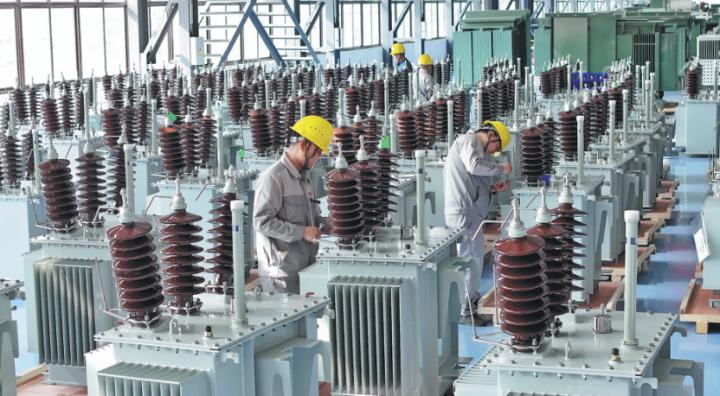
Core Viewpoint - The article emphasizes that the real bottleneck for the future of artificial intelligence (AI) is not computational power but electrical power, specifically the availability of large power transformers (LPTs) which are critical for energy infrastructure [1][2]. Group 1: Current Situation in the U.S. - The U.S. is facing a significant shortage of large power transformers, which are essential for converting high-voltage electricity for long-distance transmission [2][3]. - The average delivery time for a standard large transformer has reached 128 weeks, while transformers for data centers can take up to 144 weeks, with some cases nearing four years [2]. - Over 80% of large power transformers in the U.S. are expected to be imported by 2025 due to the decline of domestic manufacturing capabilities [3]. Group 2: Policy and Economic Implications - The U.S. government has imposed high tariffs on Chinese transformers, yet American companies are still compelled to purchase them due to a lack of alternatives [3][9]. - The high costs associated with tariffs are ultimately borne by U.S. electricity companies and consumers, revealing the limitations of "decoupling" strategies in critical infrastructure [9]. Group 3: European Context - Europe is also experiencing a transformer shortage, which hampers the integration of renewable energy projects into the grid [4][5]. - The European Union aims to increase renewable energy to 45% by 2030, but many projects are stalled due to insufficient transformer supply [4]. - European countries are beginning to source transformers from China, despite political pressures, to avoid project delays [5]. Group 4: China's Manufacturing Advantage - China has developed a complete and efficient transformer manufacturing supply chain, from raw materials to assembly, making it a key player in the global market [6][8]. - The typical delivery time for a large transformer in China is 10 to 14 months, significantly shorter than in the U.S. and Europe [8]. - Chinese manufacturers are not only meeting domestic demands but are also exporting transformers globally, establishing themselves as a reliable supplier [6][8]. Group 5: Strategic Insights - The article highlights the importance of stable energy supply for technological advancements, asserting that without reliable electricity, ambitious AI projects remain unfeasible [9][10]. - China's sustained investment in its manufacturing base has positioned it as a strategic player in the global supply chain for critical infrastructure [10].


AI狂奔,中国变压器成了最硬通货
虎嗅APP· 2026-01-26 13:22
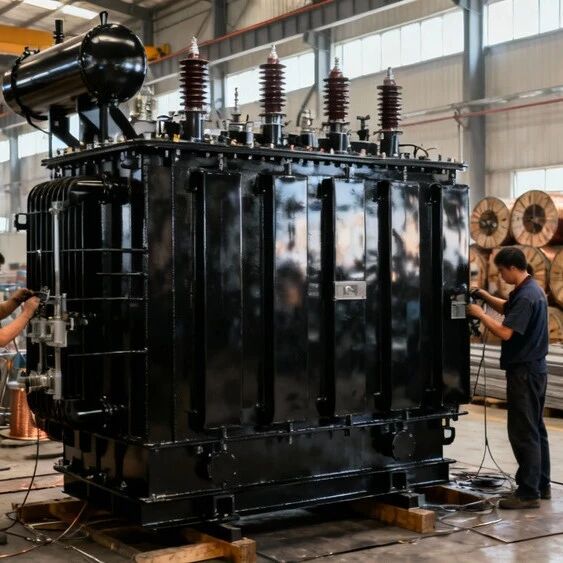
Core Viewpoint - The article emphasizes that the real bottleneck for the future of artificial intelligence (AI) is not computational power but electrical power, particularly the availability of large power transformers, which are crucial for the operation of AI data centers and energy infrastructure [4][6]. Group 1: Current Challenges in the U.S. and Europe - In the U.S., there is a significant shortage of large power transformers (LPTs), with an average delivery time of 128 weeks for standard transformers and 144 weeks for generator step-up transformers (GSUs) [6][8]. - The decline of U.S. manufacturing capabilities since the 1980s has led to over 80% of large power transformers being imported, primarily from China [7]. - European countries face similar issues, with many renewable energy projects unable to connect to the grid due to a lack of suitable transformers, highlighting a critical lag in the upgrade of transmission systems [10][11]. Group 2: The Role of China in Transformer Manufacturing - China has developed a complete and efficient transformer manufacturing supply chain, from raw materials to assembly, making it a key player in the global market [12][13]. - Chinese manufacturers can deliver large transformers in 10 to 14 months, significantly faster than their U.S. and European counterparts, which can take up to three years [13]. - The demand for Chinese transformers is increasing globally, as countries like the U.S. and those in Europe are forced to rely on Chinese imports despite political tensions and tariffs [15][18]. Group 3: Strategic Implications - The reliance on Chinese transformers reveals the limitations of "decoupling" strategies in critical infrastructure sectors, as the need for reliable electrical supply outweighs political considerations [15][18]. - The article suggests that the ability to produce essential infrastructure equipment domestically is a form of strategic deterrence in a world marked by supply chain vulnerabilities and geopolitical conflicts [18].
和顺电气(300141.SZ):预计2025年亏损4200万元~4920万元
Ge Long Hui A P P· 2026-01-26 11:45
Core Viewpoint - The company expects a loss of 42 million to 49.2 million yuan in 2025, with a non-recurring loss of 42.6 million to 49.8 million yuan, primarily due to intense competition in traditional industries, high R&D expenses, and significant impairment losses [1] Group 1: Financial Performance - The projected loss for 2025 is attributed to declining product sales and gross margins in the power supply sector [1] - Non-recurring losses affecting net profit are estimated at approximately 600,000 yuan [1] Group 2: Business Strategy - The company plans to accelerate new product development to explore new business opportunities despite the high R&D costs impacting current profits [1] - There is a commitment to enhance internal management, cost reduction, and efficiency improvement to boost core competitiveness and profitability [1]

探访施耐德电气武汉工厂:何以能入围全球唯三的“人才灯塔工厂”
2 1 Shi Ji Jing Ji Bao Dao· 2026-01-24 06:30
Core Insights - Schneider Electric's Wuhan factory has been recognized as one of the only three "Talent Lighthouse Factories" globally, marking it as the first of its kind for the company [1] - The "Talent Lighthouse Factory" designation emphasizes the importance of talent transformation and advanced solutions in workforce planning, safety, and employee development [1] - The recognition reflects a broader shift in manufacturing towards institutional transformation, requiring a robust talent system to support continuous learning and adaptability [1] Company Overview - Schneider Electric's Wuhan factory is a key node in the company's global supply chain and a strategic base for industrial digital transformation [2] - The factory has seen a significant increase in automation by 55% and an expansion of product offerings by 239% over the past five years [2] - The core development philosophy of the Wuhan factory focuses on a human-centered approach, emphasizing deep exploration of human-machine collaboration [2] Future Development Plans - The Wuhan factory aims to continue developing core products such as contactors, miniature circuit breakers, and indicator lights while adapting to market demands in emerging fields like renewable energy [2] - The factory's recognition as a "Talent Lighthouse Factory" is viewed as a new starting point for further innovation and expansion in high-end manufacturing [2] Industry Context - The global supply chain is facing new challenges due to macroeconomic uncertainties and the urgent need for new quality productivity [3] - Traditional production models focused solely on efficiency are no longer sufficient to meet complex demands, necessitating the creation of lean, agile, resilient, and green supply chains [3] - China's supply chain has evolved from being a "global factory" to a comprehensive industrial hub integrating R&D, advanced manufacturing, and supply chain management [3] Competitive Landscape - With the addition of the Wuhan factory, Schneider Electric's global "Lighthouse Factory" count has reached nine, with a notable presence in China [3] - The Shanghai Putuo factory is recognized as an "end-to-end lighthouse factory," and the Wuxi factory as a "sustainable lighthouse factory," creating a strong competitive trio in the region [3]