
接触器

Search documents
2026年第2期:数据中心建设及能源转型大幅拉动铜需求
Huachuang Securities· 2026-03-07 14:39
1. Report Industry Investment Rating No information about the report industry investment rating is provided in the given content. 2. Core Viewpoints of the Report - Copper demand is steadily increasing and will be driven by new demand. The global annual demand is predicted to grow from about 28 million tons in 2025 to 42 million tons in 2040, a growth rate of 50%. Core economic demand, artificial intelligence, national defense, and energy transition will be the main growth points [1][5]. - Affected by supply shortages and expected demand growth, copper prices have risen significantly in recent years. Market analysts predict that short - term prices will remain strong, and long - term supply - demand gaps may push prices further up [1][7]. - The global copper supply gap is expected to widen in the future. By 2040, the supply gap may reach 10 million tons, equivalent to 23.8% of the demand [6]. 3. Summary According to the Directory I. Global Copper Supply - Demand Situation and Price Outlook Supply - Multiple research institutions expect a slight increase in copper output in the near term but a tightening in the long term. S&P Global predicts that global mine copper output will increase from about 23 million tons in 2025 to about 27 million tons in 2030 and then gradually decline to about 22 million tons in 2040 [4]. - Short - term supply shortages are due to major accidents in main copper mines, while long - term shortages are caused by declining ore grades, lagging new mine development, and insufficient investment [4]. Demand - Copper demand is growing steadily. AI has a significant impact on copper demand. For example, in 2025, over 100 new AI data center projects were launched with a total investment of nearly $61 billion. By 2030, copper demand in the data center field alone will reach 33 - 420,000 tons, and grid upgrades due to AI data centers will consume 1.1 million tons of copper annually [1][5]. Shortage - Multiple institutions predict a widening copper supply gap. For example, S&P Global predicts a 10 million - ton gap by 2040, and BloombergNEF predicts a 19 million - ton deficit by 2050 [6]. Price - Copper prices have risen significantly in recent years. Taking the LME three - month copper contract price as a benchmark, the price at the end of 2025 increased by 101.6% compared to the end of 2019. Analysts predict short - term strength and long - term price increases due to supply - demand gaps [7]. II. Copper Usage in Computing Infrastructure (1) Macro Expectations of Copper Demand in Computing - To estimate the macro - expectations of copper demand in computing, a capacity - growth - based prediction model is generally used. Different institutions have different estimates of data center capacity [8][9]. - By 2030, the total data center capacity is roughly estimated to increase by about 10GW, which may consume about 2.7 million tons of copper, accounting for about 10% of the 2024 global refined copper output [10]. - The copper intensity of data centers varies. AI - related hyperscale data centers have a copper intensity of 39 tons/MW, non - AI hyperscale data centers 36 tons/MW, and enterprise - level data centers 32 tons/MW [11]. (2) Copper Usage in Power Plant Construction and Grid Upgrades Related to Data Centers - Due to the carbon - reduction commitments of technology giants, data centers are purchasing green power, which requires the construction of energy - storage facilities and the upgrade of transmission and distribution systems [22]. - In the future 15 years, the copper consumption for global energy transition will grow at an annual rate of 4.1%, reaching 15.6 million tons per year. Among them, 7.1 million tons will be used for T&D facility upgrades, and 2.1 million tons for clean energy installation [25]. - In the T&D system, copper is mainly used in transformers, underground/subsea cables, and underground distribution lines. The copper consumption of distribution and transmission lines is expected to grow at 3.5% and 7.2% respectively from 2025 to 2040 [28][35]. - The average copper intensity of solar photovoltaic systems is about 2.2 tons/MW. The total copper demand for photovoltaic is expected to rise from about 1.2 million tons in 2025 to 1.4 million tons in 2040, with transformers being the largest copper - consuming component [36][38]. - The copper consumption structure of onshore and offshore wind power varies significantly. Offshore wind power has a much higher total copper intensity. By 2040, the new wind power capacity will require 400,000 tons of copper annually, doubling the 2025 level [42][47]. - In the battery energy storage (BESS) field, copper foil in lithium - ion batteries is a key copper - consuming component. From 2025 to 2040, the annual new installed capacity of BESS will grow at a rate of 2.7% per year, and the annual copper demand will increase from 300,000 tons in 2025 to 500,000 tons in 2040 [55]. (3) The Macro Picture of Copper Demand - Core economic demand is the traditional main body, but its growth is slowing and its proportion is declining. Energy transition and incremental demand are the fastest - growing categories, and AI and data centers are emerging demand hotspots [58][59][60].
探访施耐德电气武汉工厂:何以能入围全球唯三的“人才灯塔工厂”
2 1 Shi Ji Jing Ji Bao Dao· 2026-01-24 06:30
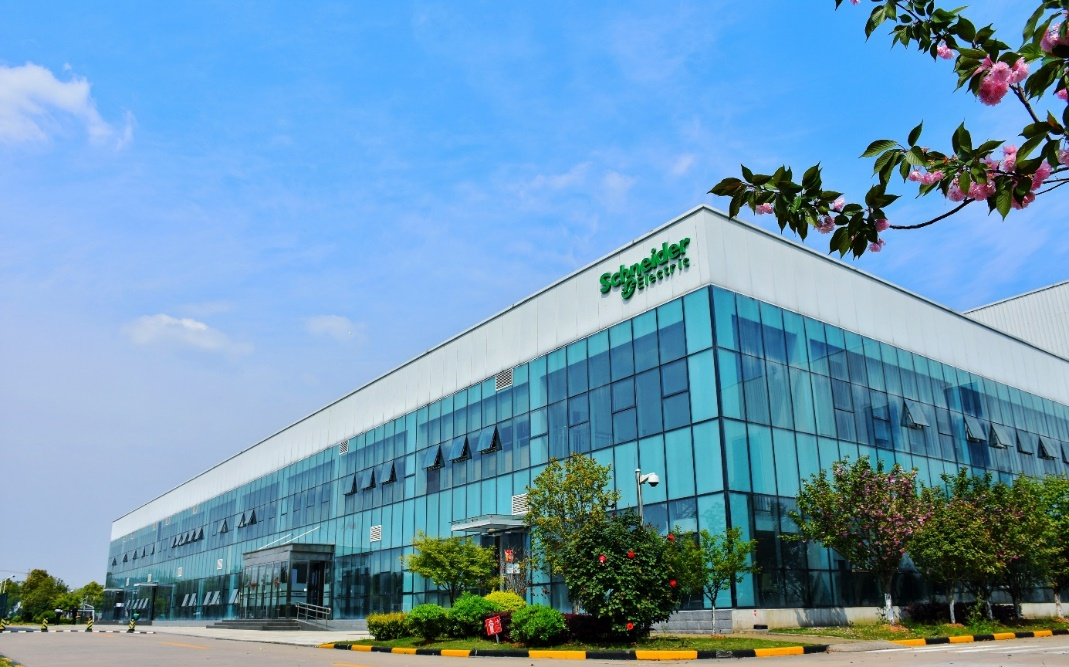
Core Insights - Schneider Electric's Wuhan factory has been recognized as one of the only three "Talent Lighthouse Factories" globally, marking it as the first of its kind for the company [1] - The "Talent Lighthouse Factory" designation emphasizes the importance of talent transformation and advanced solutions in workforce planning, safety, and employee development [1] - The recognition reflects a broader shift in manufacturing towards institutional transformation, requiring a robust talent system to support continuous learning and adaptability [1] Company Overview - Schneider Electric's Wuhan factory is a key node in the company's global supply chain and a strategic base for industrial digital transformation [2] - The factory has seen a significant increase in automation by 55% and an expansion of product offerings by 239% over the past five years [2] - The core development philosophy of the Wuhan factory focuses on a human-centered approach, emphasizing deep exploration of human-machine collaboration [2] Future Development Plans - The Wuhan factory aims to continue developing core products such as contactors, miniature circuit breakers, and indicator lights while adapting to market demands in emerging fields like renewable energy [2] - The factory's recognition as a "Talent Lighthouse Factory" is viewed as a new starting point for further innovation and expansion in high-end manufacturing [2] Industry Context - The global supply chain is facing new challenges due to macroeconomic uncertainties and the urgent need for new quality productivity [3] - Traditional production models focused solely on efficiency are no longer sufficient to meet complex demands, necessitating the creation of lean, agile, resilient, and green supply chains [3] - China's supply chain has evolved from being a "global factory" to a comprehensive industrial hub integrating R&D, advanced manufacturing, and supply chain management [3] Competitive Landscape - With the addition of the Wuhan factory, Schneider Electric's global "Lighthouse Factory" count has reached nine, with a notable presence in China [3] - The Shanghai Putuo factory is recognized as an "end-to-end lighthouse factory," and the Wuxi factory as a "sustainable lighthouse factory," creating a strong competitive trio in the region [3]
施耐德电气武汉工厂获评全球“人才灯塔工厂”
Xin Lang Cai Jing· 2026-01-22 11:58
Core Insights - Schneider Electric's Wuhan factory has been recognized as one of the three "Talent Lighthouse Factories" globally by the World Economic Forum and McKinsey, showcasing its effective talent cultivation and empowerment model in the digital age [1][2] Group 1: Talent Development and Strategy - The concept of "Lighthouse Factories" is leading a profound transformation in the manufacturing industry, necessitating a higher level of comprehensive talent quality and continuous learning capabilities [2] - Schneider Electric's Chief Supply Chain Officer, Mourad Tamoud, emphasized that the core of the Fourth Industrial Revolution lies not only in technological innovation but also in preparing employees to apply cutting-edge technologies [2] - The Wuhan factory serves as a strategic base for Schneider Electric's industrial digital transformation, having increased its automation level by 55% and expanded its product portfolio by 239% over the past five years [2] Group 2: Talent Ecosystem and Framework - Schneider Electric is implementing a human-centered approach to develop a comprehensive talent development system in collaboration with external ecosystems, integrating advanced tools like AI to enhance employee growth and value creation [2] - The company has established a full-cycle talent ecosystem under the strategic framework of "technology innovation, ecological collaboration, and human-centeredness," focusing on selection, training, utilization, and retention of talent [5] - The company collaborates with 11 vocational colleges to integrate education and industry, creating AI training rooms that bring factory experiences into classrooms [5] Group 3: Competitive Advantages and Product Development - The Wuhan factory will continue to focus on core products such as contactors, miniature circuit breakers, and indicator lights while developing new products for the renewable energy and DC sectors, including the launch of the A9Pro smart home product line by December 2025 [6] - The factory's core competitive advantages include smart manufacturing, leveraging Schneider Electric's deep manufacturing technology expertise, and a commitment to green and low-carbon products, utilizing recyclable materials and environmentally friendly printing processes [6] Group 4: Lighthouse Factory Recognition - Schneider Electric now has nine "Lighthouse Factories" globally, with three located in China, including the Wuhan factory, which has been recognized for its talent empowerment, production efficiency, supply chain resilience, and sustainable development [7]

良信股份:公司专注于低压电器市场的研发、生产与销售
Zheng Quan Ri Bao Wang· 2025-12-29 13:13
Core Viewpoint - Liangxin Co., Ltd. focuses on the research, production, and sales of low-voltage electrical equipment, emphasizing its commitment to the low-voltage electrical market [1] Group 1: Company Overview - The core products of Liangxin include circuit breakers, contactors, relays, and terminal distribution, primarily used in industries such as renewable energy, digital energy, infrastructure, electricity, and industrial control [1] - The company’s subsidiary, Guangzhou Hanguang Electric Co., Ltd., is responsible for products like current transformers, electric meters, voltage meters, and transfer switches, which are not included in Liangxin's main business scope [1] Group 2: Future Focus - Liangxin plans to continue focusing on its core low-voltage electrical business and will optimize products and solutions based on customer needs [1]

研判2025!中国智能断路器行业政策、产业链、发展现状、重点企业及前景展望:智能断路器优化用电管理,行业规模将达191.78亿元[图]
Chan Ye Xin Xi Wang· 2025-12-26 01:24
Core Insights - The smart circuit breaker industry is experiencing significant growth driven by increasing electricity demand and the need for upgraded power systems, with the market size in China projected to grow from 4 billion yuan in 2018 to 15.333 billion yuan by 2024, representing a compound annual growth rate (CAGR) of 25.1% [1][12] - Smart circuit breakers integrate modern technologies such as sensors, communication, and intelligent control, enhancing their functionality compared to traditional circuit breakers, which are limited in capability and efficiency [1][6] Industry Overview - Smart circuit breakers combine traditional circuit breaker functions with modern smart technologies, enabling real-time monitoring, intelligent control, remote management, and data analysis [4][11] - The industry is categorized into universal (frame type), plastic shell, and miniature circuit breakers based on structure, purpose, and functionality [5] Market Demand and Growth - The increasing demand for smarter and more reliable circuit breakers is fueled by the rise of smart homes and industrial automation [1][12] - The market for smart circuit breakers in China is expected to reach 19.178 billion yuan by 2025 [1][12] Policy Support - Recent government policies have been implemented to promote the development of smart circuit breakers, focusing on green and low-carbon innovations in power equipment [8][9] Industry Chain - The smart circuit breaker industry chain includes upstream raw materials and components, midstream manufacturing, and downstream applications across various sectors such as construction, power, metallurgy, and agriculture [9][10] Competitive Landscape - The market features a mix of domestic and international players, with companies like Schneider Electric maintaining a strong presence in high-end applications, while domestic firms such as Hongfa, Suwen Electric, and Taiyong Changzheng are enhancing their competitiveness through innovation and system integration [12][13] Future Trends - Future smart circuit breakers are expected to incorporate edge computing capabilities for autonomous decision-making and enhanced local communication networks for distributed intelligence [16][18] - The evolution towards software-defined solutions will allow for flexible adaptation to changing grid standards and user needs, promoting a sustainable business model [17] - Next-generation smart circuit breakers will integrate a wider range of sensors for comprehensive environmental monitoring, transitioning from mere circuit protection to active participation in energy and environmental management [18]

电力、电气行业2026年度信用风险展望
Lian He Zi Xin· 2025-12-24 11:29
Investment Rating - The credit risk outlook for the power and electrical equipment manufacturing industry in 2026 is overall controllable, with structural differentiation continuing, highlighting the stability of leading enterprises while remaining cautious about the operational and debt pressures faced by small and medium-sized enterprises [8][50]. Core Insights - The power and electrical equipment manufacturing industry is a crucial part of the national economy, closely linked to macroeconomic growth and electricity investment demand. Since 2024, electricity consumption has steadily increased, and the industry is accelerating the construction of a new energy system and power grid [8][9]. - In 2025, industry policies focus on growth stabilization, market reform, industrial integration, and rural electricity support, with attention needed on the execution of growth targets and the participation of private capital [8][11]. - The industry is characterized by a pyramid structure, with a large number of small and medium-sized enterprises facing intense competition. The ability to negotiate with upstream and downstream partners is weak, and there is significant capital occupation from accounts receivable and inventory [8][21]. - Profitability in the industry is under pressure from upstream and downstream factors, but there was a slight recovery in operating profit in the first half of 2025, with overall profitability remaining stable compared to the previous year [8][27]. - The industry maintains a good credit status, with no new defaults reported in 2025, although there is a need to monitor potential concentrated repayment pressures in the future [8][39]. Industry Fundamentals - The power and electrical equipment manufacturing industry is significantly influenced by national economic growth and electricity investment demand. In 2024, the total electricity consumption in China reached 9.85 trillion kWh, a year-on-year increase of 6.8% [10]. - The investment in power generation and grid construction has seen substantial growth, with a focus on renewable energy installations becoming the mainstay [19][18]. Industry Policies and Regulatory Environment - Numerous policies have been introduced to support the power and electrical equipment industry, emphasizing growth targets, market reforms, and rural electrification [11][13]. - Key policies include the "Power Equipment Industry Growth Stabilization Work Plan (2025-2026)" which sets revenue growth targets for traditional power equipment at around 6% annually [13][15]. Industry Operating Conditions - In the first three quarters of 2025, investment growth in power generation and grid construction continued, with a notable increase in the construction of new energy systems [17]. - The total installed power generation capacity reached 3.72 billion kW by the end of September 2025, a year-on-year increase of 17.5% [18]. Industry Competitive Landscape - The industry exhibits a pyramid-shaped competitive structure, with a high degree of marketization and significant pressure on capital occupation. The number of enterprises in the power and electrical equipment manufacturing sector exceeds ten thousand, with small and medium-sized enterprises making up a large proportion [21][22]. - The competition is particularly fierce in the low and medium voltage cable sectors, while high voltage and ultra-high voltage cable production is dominated by a few key players due to high technical barriers [21]. Industry Financial Status - The profitability of the industry is affected by the dual pressures of upstream raw material costs and downstream customer pricing. In the first half of 2025, sample enterprises saw a slight increase in operating profit, with overall revenue growth of 1.07% [27][28]. - The financial leverage of sample enterprises decreased slightly by mid-2025, remaining at a moderate level, with an average asset-liability ratio of around 58% [33][36]. Industry Bond Market Performance - The credit status of the power and electrical equipment industry remains stable, with no defaults reported in 2025. The majority of bonds issued are short-term financing bonds and general corporate bonds [39][40]. - As of the first nine months of 2025, 37 bonds were issued, primarily by local state-owned enterprises with AAA ratings, indicating a preference for short-term flexible financing [41][43].
“向新力”到“向心力”!一线感知中国外贸外资活力
Xin Hua She· 2025-10-18 04:37
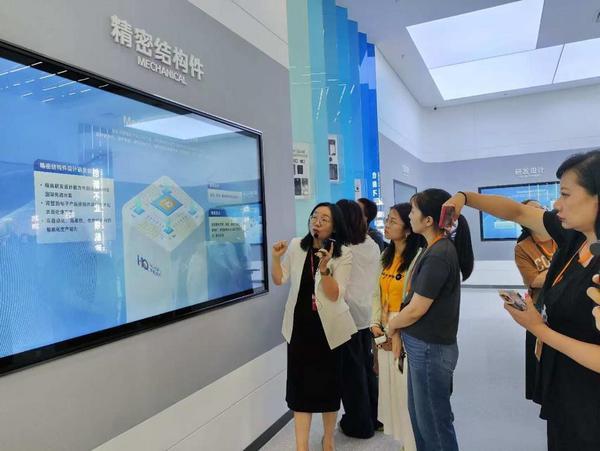
Core Insights - China's economy is demonstrating resilience and innovation, with significant growth in foreign trade and foreign investment despite external challenges [1][5][8] - The transformation of China's foreign trade structure is evident, with a shift from labor-intensive products to high-tech and high-value-added goods [3][5] - Foreign companies are increasingly viewing China not just as a market but as a vital part of their global supply chain and innovation ecosystem [8][9] Group 1: Trade and Economic Growth - In the first three quarters, China's total goods trade value increased by 4% year-on-year, with new foreign-funded enterprises rising by 4.1% in the first half of the year [1][5] - High-tech product exports grew by 11.9% year-on-year, contributing over 30% to overall export growth [5][6] - The export of electromechanical products now accounts for 60% of total exports, indicating a significant shift in trade composition [3][5] Group 2: Company Innovations and Developments - Huakin, a leading company in smart product manufacturing, plans to produce 230 million smart products in 2024, with over 100 million units destined for international markets [2] - The company has invested over 5 billion yuan annually in technology development, employing over 19,000 R&D personnel [2] - Shanghai's Qinglong Intelligent Technology has produced 100,000 service robots, which have collectively traveled over 40 million kilometers, equivalent to over 1,000 times around the Earth [5][6] Group 3: Foreign Investment and Market Dynamics - Over 5,700 new foreign-funded enterprises were established annually in Shanghai since the 14th Five-Year Plan, with a total of 33,000 new foreign-funded enterprises nationwide in the first half of the year [8][9] - Schneider Electric has established China as a key supply chain and R&D base, emphasizing the collaborative advantages of the industrial chain [8] - Foreign companies express confidence in investing in China, viewing it as a strategic market for future growth [9]

新华鲜报丨“向新力”到“向心力”!一线感知中国外贸外资活力
Xin Hua Wang· 2025-10-18 03:49
Core Insights - China's economy is demonstrating resilience and innovation, with significant growth in foreign trade and foreign investment despite external challenges [1][5][10] Group 1: Innovation and Product Development - Huakin has evolved from mobile phone motherboard design to producing 2.3 billion smart products, with over 100 million units exported globally, achieving revenue exceeding 100 billion yuan [1][2] - The company invests over 5 billion yuan annually in technology development, employing more than 19,000 R&D personnel and expanding into new industries like robotics [2][4] - The export structure of China's foreign trade is shifting from labor-intensive products to high-tech and high-value-added products, with electromechanical products accounting for 60% of exports [4][5] Group 2: Market Dynamics and Collaboration - High-tech product exports increased by 11.9% year-on-year, contributing over 30% to overall export growth, with industrial robots seeing a 54.9% increase [5][6] - The robotics industry is characterized by a complex ecosystem, with local companies producing service robots that have been deployed in over 60 countries [6][8] - Schneider Electric views China as a key supply chain base and innovation hub, emphasizing the collaborative advantages of the industrial chain [8][10] Group 3: Foreign Investment and Economic Confidence - China has seen a steady increase in foreign investment, with over 3.3 million new foreign enterprises established in the first half of the year, reflecting confidence in the Chinese market [10][11] - Foreign companies, such as Dassault Systèmes, have experienced significant growth in China, highlighting the supportive policies and responsiveness of the government [10][11] - The financial sector's openness is attracting international players, with Standard Chartered Bank recognizing China as a strategic market contributing significantly to its global revenue [11]
新华鲜报|“向新力”到“向心力”!一线感知中国外贸外资活力
Xin Hua She· 2025-10-18 03:37
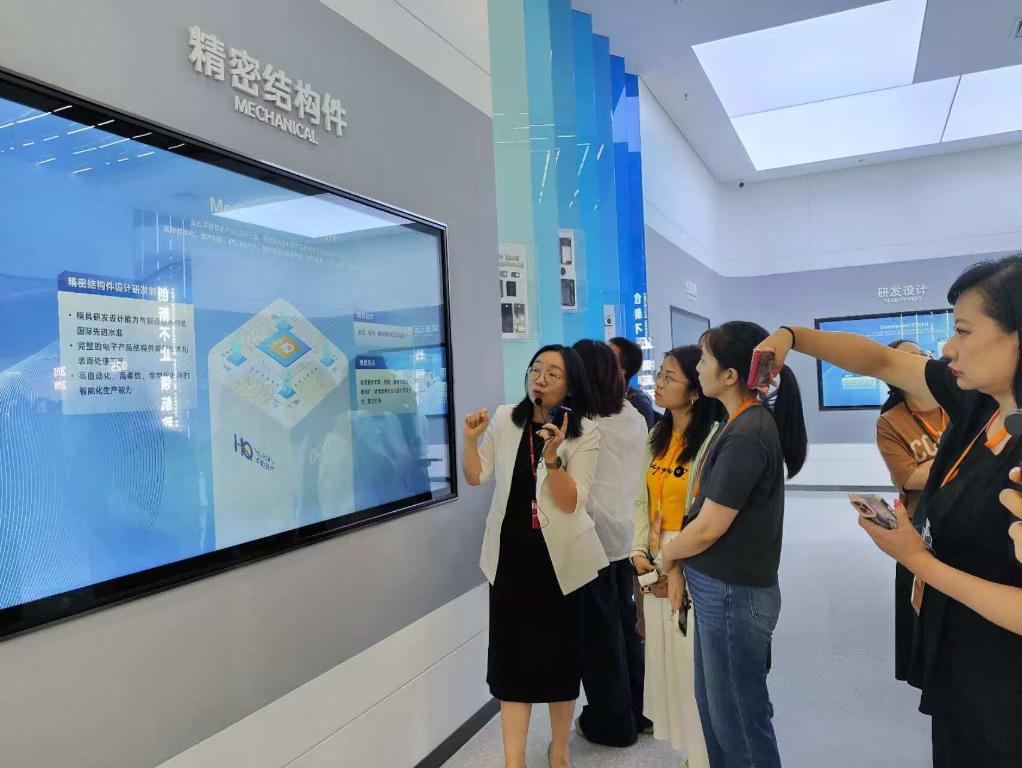
Core Insights - China's economy is demonstrating resilience and innovation, with significant growth in foreign trade and foreign investment despite external challenges [1][10] - The transformation of China's foreign trade structure is evident, with a shift from labor-intensive products to high-tech and high-value-added goods [4][5] Group 1: Trade and Economic Growth - In the first three quarters, China's total import and export value increased by 4% year-on-year, with new foreign-funded enterprises rising by 4.1% in the first half of the year [1][10] - High-tech product exports grew by 11.9% year-on-year, contributing over 30% to overall export growth [5] Group 2: Company Innovations and Developments - Huakin, a leading company in mobile phone motherboard design, is set to produce 230 million smart products in 2024, with over 100 million units exported, achieving revenue exceeding 100 billion yuan [2][4] - The company invests over 5 billion yuan annually in technology development and employs more than 19,000 R&D personnel, expanding into new industries like robotics [2] Group 3: Robotics Industry Growth - The robotics sector is experiencing rapid growth, with a 54.9% increase in industrial robot production, and over 100,000 service robots produced by local companies [5][6] - These robots have collectively traveled over 40 million kilometers, equivalent to more than 1,000 times around the Earth's equator [6] Group 4: Foreign Investment and Market Dynamics - Shanghai has seen an average of over 5,700 new foreign-funded enterprises annually since the 14th Five-Year Plan, with a total of 33,000 new foreign-funded enterprises established nationwide in the first half of the year [10] - Foreign companies express confidence in investing in China, citing favorable policies and a supportive business environment [10]
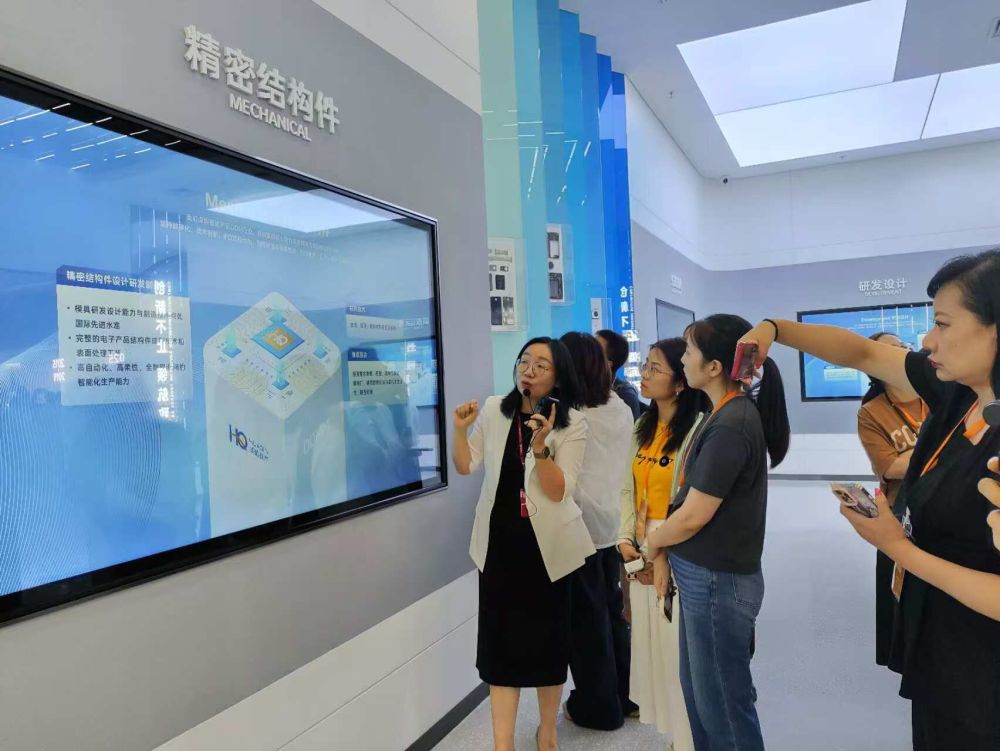
宏发科技股份有限公司 关于完成注册资本变更及《公司章程》备案登记的公告
Zhong Guo Zheng Quan Bao - Zhong Zheng Wang· 2025-09-13 04:00
Core Points - The company held its first extraordinary shareholders' meeting of 2025 on August 22, 2025, where it approved the proposal to change its registered capital and revise the Articles of Association [1] - As of June 30, 2025, the total number of shares increased from 1,042,676,146 to 1,459,746,940 due to the implementation of the 2024 annual profit distribution and capital reserve conversion into share capital, as well as the conversion of convertible bonds [1] - The registered capital changed from 1,042,676,146 yuan to 1,459,746,940 yuan [1] - The company will no longer have a supervisory board, and its functions will be transferred to the audit committee under the board of directors [1] Company Information - The company has completed the registration capital change and the filing of the revised Articles of Association, obtaining a new business license from the Wuhan Market Supervision Administration [2] - The new business license includes the following information: - Unified Social Credit Code: 914201001776660197 - Name: Hongfa Technology Co., Ltd. - Type: Other joint-stock company (listed) - Legal Representative: Guo Manjin - Address: No. 21, Jiefang Avenue, Qiaokou District, Wuhan - Registered Capital: 1.45974694 billion yuan - Established Date: December 21, 1990 - Business Scope: Research, production, and sales of relays, low-voltage electrical appliances, contactors, automation equipment, and related electronic components and modules, as well as import and export of goods or technologies [2]