
能源产业

Search documents
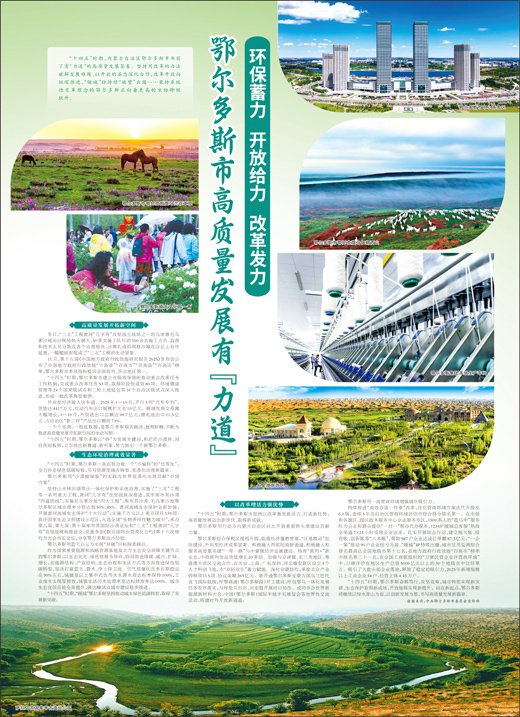
鄂尔多斯市高质量发展有“力道”
Ren Min Wang· 2025-12-09 01:21
Core Viewpoint - During the "14th Five-Year Plan" period, Ordos City in Inner Mongolia has achieved significant high-quality development through reforms, open cooperation, and systematic changes, aiming for a higher developmental trajectory [2][9]. Group 1: High-Quality Development - Ordos has established a mechanism led by city leaders to promote key reform tasks, completing 53 major reform tasks with 80 achieving phased results [3]. - The city ranks first in North China and among the top in the nation for various indicators in the "2025 China Local Government Administrative Efficiency Research Report" [3]. - The external economy is thriving, with foreign trade reaching 9.87 billion yuan and lithium battery exports accounting for 1.15 billion yuan, representing 73% of the region's "new three products" exports [4]. Group 2: Ecological and Environmental Governance - Ordos has made significant progress in ecological governance, implementing integrated protection and systematic management of natural resources, achieving a governance rate of 50% in the Kubuqi Desert and 85% in the Mu Us Sandy Land [6]. - The city has been recognized as a national ecological civilization demonstration zone and has hosted international forums on desertification [6]. Group 3: Urban Development and Business Environment - Ordos has optimized its business environment, achieving the highest score in the autonomous region for five consecutive years, and has established a service team to assist over 987 enterprises, resulting in an order amount of 8.73 billion yuan [11][12]. - The city has attracted 54 new large-scale industrial enterprises and 44,500 business entities during the "14th Five-Year Plan" period, enhancing its urban appeal [12]. Group 4: Infrastructure and Connectivity - The Ordos Comprehensive Bonded Zone has been upgraded, and the city is actively integrating into the Western Land-Sea New Corridor and the Belt and Road Initiative [10]. - New international flight routes and infrastructure projects are being developed to enhance connectivity with neighboring regions and countries [10].


2025中国企业碳中和贡献力研究报告发布
中国能源报· 2025-12-05 10:23
Core Viewpoint - The article discusses the release of the "2025 Chinese Enterprises Carbon Neutrality Contribution Report" and the "Top 50 Chinese Energy Enterprises Carbon Neutrality Contribution List," emphasizing the importance of transitioning to a new energy system and the role of energy companies in achieving carbon neutrality [2][3]. Evaluation System Upgrade - The evaluation system has been upgraded to guide enterprises towards value chain emissions reduction, reflecting a shift from macro goals to operational details and collaborative efforts across the value chain [4]. - The report employs a "six-dimensional integrated" evaluation model, assessing contributions in areas such as carbon source reduction, carbon neutrality actions, carbon reduction technologies, carbon finance, digitalization, and corporate social responsibility [3][4]. Top 50 List Analysis - The "Top 50 Chinese Energy Enterprises Carbon Neutrality Contribution List" reveals that China Huadian Corporation, Sinopec, and State Grid Corporation rank as the top three companies based on their performance in emission reduction practices and strategic planning [6][8]. - The average score of the top 50 companies is 74.03, indicating a steady improvement in overall performance, with about 62% of companies falling within ±5% of the average score [10]. Characteristics of Carbon Neutrality Actions - The report identifies six core characteristics of carbon neutrality actions among Chinese energy enterprises, including steady performance improvement and a clear tiered scoring distribution [10][12]. - State-owned enterprises dominate the list, with 33 out of 50, while private enterprises show significant innovation and agility, particularly in sectors like photovoltaics and energy storage [12][13]. Regional Distribution and Potential - The distribution of companies is heavily concentrated in the eastern coastal regions, which account for nearly 80% of the listed enterprises, while western regions show potential for growth due to abundant renewable energy resources [17]. Performance Disparities - There are notable performance disparities across different dimensions, with state-owned enterprises leading in carbon source reduction and carbon finance, while private enterprises excel in carbon neutrality action plans and social responsibility [19]. Annual Changes and Trends - Traditional energy companies are accelerating their transformation, with significant improvements in scores and rankings over the past five years, indicating a positive trend in their carbon neutrality efforts [21]. Forward-looking Recommendations - The report suggests that leading companies should refine their carbon management systems and enhance collaboration across the supply chain, while emerging companies should focus on governance, data integrity, and market participation to improve their carbon neutrality contributions [23]. Future Outlook - As carbon neutrality efforts deepen, energy companies are expected to transition from compliance to proactive leadership, integrating carbon neutrality into their core strategies and fostering a new competitive edge [24].

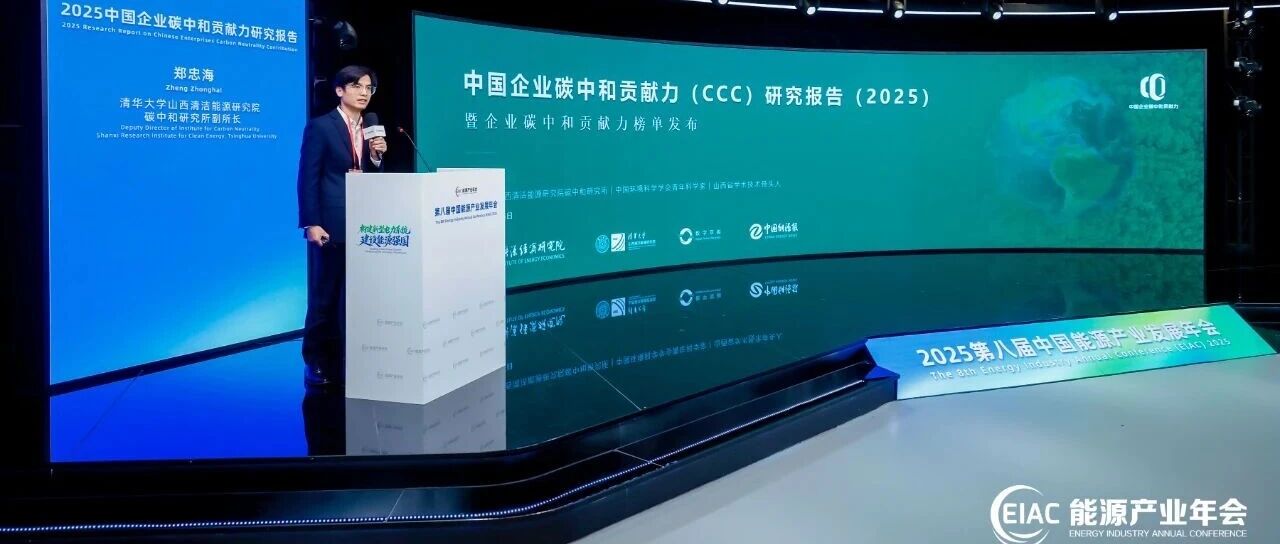
2025第八届中国能源产业发展年会在京举行
Ren Min Ri Bao· 2025-12-04 22:16
党的二十届四中全会《建议》提出,加快建设新型能源体系。持续提高新能源供给比重,推进化石能源 安全可靠有序替代,着力构建新型电力系统,建设能源强国。与会嘉宾认为,构建新型电力系统与建设 能源强国是战略目标与实施路径的深度绑定,建设能源强国是引领电力系统变革的顶层设计,构建新型 电力系统是实现能源强国的必由之路。新型电力系统作为新型能源体系的支撑和关键枢纽,通过关键技 术突破与产业升级,夯实能源强国的技术根基与产业实力。 《 人民日报 》( 2025年12月05日 06 版) 本报北京12月4日电 (渠沛然)12月4日,2025第八届中国能源产业发展年会在北京举行。年会以"构建 新型电力体系 建设能源强国"为主题。 (责编:牛镛、岳弘彬) 关注公众号:人民网财经 本届年会由中国能源报、中国能源研究会主办,G20青年企业家联盟中国总部联合主办,并设置"中东 能源投资论坛"等活动。中央和国家机关有关部门负责同志、外国驻华使节、地方政府主管部门代表、 中外企业负责人和专家学者等参加论坛。 ...
倒计时1天!
中国能源报· 2025-12-03 10:24
EIAC 能源产业年会 能源 】 | 日本 The 8th Energy Industry Annual Conference C) 2025 合中最六十 倒 计 天 时 r = | | | == 云以且描 官方直播 video live photo live 中国·北京 12/4 Beijing, China December 4, 2025 主办单位 Organizers 联合主办 Co-organizer live streaming platform 海外网 环球网 中国城市报 全国能家居民服务 全国党媒信息公共平台 中国汽车部 中国能源报 ...
倒计时3天!2025第八届中国能源产业发展年会
中国能源报· 2025-12-01 09:08
倒 EIAC 能源产业年会 The 8th Energy Industry Annual Conference (EIAC) 2025 图片直播 photo live 会议直播 video live E n d 欢 迎 分 享 给 你 的 朋 友! 出品 | 中国能源报(c ne ne rgy) 编辑丨赵方婷 计 天 时 来 源:中 国 能 源 报 ...
三个视角 透视“十四五”四川全面深化改革
Si Chuan Ri Bao· 2025-11-25 00:31
Core Insights - The article highlights the significant progress made by Sichuan in implementing comprehensive reforms since the 14th Five-Year Plan, focusing on high-quality development and enhancing people's well-being [9][11][16]. Reform Achievements - Sichuan has been recognized for its reform efforts, with 55 cases selected as annual reform examples, ranking it among the top provinces in China [9]. - The province has completed 146 reform tasks from the 19th National Congress and is advancing 102 tasks from the 20th National Congress [10]. - A total of 44 provincial-level authorization matters and 621 support matters have been delegated since 2023, demonstrating a commitment to decentralization and local empowerment [10]. Economic Development - The province's private economy reached a value of 3.6 trillion yuan, marking a significant milestone in economic growth [15]. - In 2022, the first batch of nine pilot areas experienced a 9.8% growth in economic output, surpassing the provincial average of 4.1% [10]. Social Welfare and Public Services - Sichuan has focused on enhancing public services and social welfare, with urbanization rates reaching 60.1% and significant improvements in employment and education [16][17]. - The province has implemented reforms in healthcare and social security, increasing the basic pension for urban and rural residents to 193 yuan per month [17]. Environmental and Cultural Initiatives - The province has established a comprehensive carbon peak and carbon neutrality policy framework, achieving a 100% compliance rate in water quality assessments [17]. - Cultural and tourism integration efforts have been accelerated, enhancing public cultural services and promoting local heritage [17].

世界银行拟扩大对肯尼亚的支持领域
Shang Wu Bu Wang Zhan· 2025-10-29 16:03
Core Insights - The World Bank plans to expand its aid projects in Kenya, focusing on key sectors such as minerals, pharmaceuticals, digital economy, and energy transition [1] - The new initiative aims to enhance local pharmaceutical production capacity, develop critical mineral resources, and promote green energy and digital projects [1] - The Kenyan delegation indicated that this collaboration would help localize supply chains and boost employment growth [1] - This meeting is part of Kenya's efforts to broaden international financing channels and deepen partnerships for development [1]
成果发布︱中国能源好物 向世界传递“中国智慧” 、共享“中国方案”
国家能源局· 2025-10-24 10:17
Core Viewpoint - The 2025 International Energy Transformation Forum showcased 60 representative energy products from China, highlighting advancements in renewable energy, nuclear technology, and smart energy applications, reflecting China's commitment to energy innovation and sustainability [2][3][5]. Group 1: Key Highlights of the Energy Products - The forum introduced a total of 60 energy products, including 36 core products such as "Hualong One" and perovskite photovoltaic modules, along with 24 solutions like integrated hydrogen systems and intelligent microgrids for industrial applications [2]. - The showcased products represent contributions from both state-owned and private enterprises, covering various sectors including wind power, solar energy, and nuclear power [2]. Group 2: Global Recognition and Impact - Attendees praised the rapid development of China's energy industry, noting its modernization through the application of digital technologies and artificial intelligence [4]. - The event highlighted China's role in providing a blueprint for global energy development, showcasing its technological innovations and practical applications in the energy sector [5]. - The energy products presented offer low-cost and easily implementable solutions for developing countries, addressing global energy governance challenges and enhancing international recognition of China's energy governance strategies [5].
2025年太原能源低碳发展论坛举行
Xin Hua Wang· 2025-09-28 00:41
Core Viewpoint - The 2025 Taiyuan Energy Low Carbon Development Forum focuses on "green low-carbon transformation and building a new energy system," highlighting global discussions on low-carbon energy issues [1] Group 1: Forum Overview - The forum is co-hosted by the Ministry of Foreign Affairs, the National Energy Administration (representing the National Development and Reform Commission), and the Shanxi Provincial Government [1] - It features participation from guests across 32 countries and regions, including representatives from international organizations and multinational enterprises [1] - The forum includes various activities such as international meetings, parallel forums, investment promotions, achievement releases, and business inspections [1] Group 2: Special Features - Cuba participates as the guest country in related activities [1] - Concurrently, the 2025 Shanxi (Taiyuan) Energy Industry Expo is held to showcase the latest achievements and trends in the green low-carbon transformation of the energy industry [1] - The expo attracts over 500 domestic and international enterprises, universities, and research institutions in the energy sector [1] Group 3: Forum Significance - The Taiyuan Forum is recognized as a significant national-level, international, and specialized forum in China's energy industry, having successfully held eight sessions [1]
市能源集团同步启动两大平台助力产业升级
Hang Zhou Ri Bao· 2025-09-24 02:10
Core Insights - The "Energy Power · Creating the Future" brand launch event emphasizes the commitment of Hangzhou Energy Group to the principle of "State-owned Enterprises are Party-owned" since its establishment in December 2022 [1][2] - The company has developed a "1+7+X" brand matrix system and has cultivated 40 national and provincial-level model workers [1] Group 1: Party Building and Supply Assurance - The company has successfully opened overseas LNG long-term procurement channels, enhancing supply chain resilience and completing the renovation of 443 old community pipeline networks, serving 1.9 million natural gas users [1] - The comprehensive procurement costs have significantly decreased due to these efforts [1] Group 2: Transformation and Innovation - The company is promoting the industrialization of alcohol-hydrogen new energy vehicles and ecological governance projects, with nearly 1 billion yuan invested in R&D over the past three years, resulting in 292 patent authorizations [1] - Several landmark low-carbon scenarios have been established as part of this transformation [1] Group 3: Collaboration and Service - The company is deepening cooperation with leading enterprises and other state-owned enterprises to build an industrial ecosystem through party-building initiatives [1] - Over 12,000 volunteer service hours have been conducted, and the application of information technology has improved service efficiency by over 50% [1] Group 4: New Initiatives - The "Energy Partners Cooperation Program" and "Energy Technology Transformation Center" were launched to inject new momentum into the transformation and upgrading of the energy industry in Hangzhou [2] - The Energy Partners Cooperation Program focuses on building an open collaborative ecosystem in key areas such as new energy systems [2] - The Energy Technology Transformation Center aims to facilitate the commercialization of scientific and technological achievements by leveraging government policies and resources from universities and research institutions [2] Group 5: Future Outlook - The company plans to continue optimizing its business layout and enhancing core competitiveness and sustainable development capabilities through innovation, reform, and open cooperation [2] - The goal is to lead the group towards a safer, greener, and more excellent future, contributing to urban prosperity and people's happiness [2]