
财富管理

Search documents
瑞杰金融股价下跌受AI工具冲击财富管理板块及市场情绪影响
Jing Ji Guan Cha Wang· 2026-02-12 22:55
Core Viewpoint - The stock price of Raymond James Financial (RJF.N) has declined by 2.89% to $154.01 as of February 12, 2026, primarily due to market concerns over AI-driven financial tools potentially replacing traditional financial advisory services [1] Stock Performance - On February 10, 2026, the launch of Altruist's AI-driven tax planning tool, Hazel, led to a collective sell-off in the wealth management sector, causing Raymond James Financial's stock to drop by 8.75% [1] - The stock's decline on February 12 is a continuation of the negative sentiment, with a daily trading volume of approximately $189 million and a price fluctuation of 5.01% [1] - The overall asset management sector saw a decline of 3.40% on February 12, exacerbated by a broader market downturn, with the Nasdaq index falling by 1.41% [2] Institutional Perspectives - During the earnings call on February 11, 2026, Raymond James Financial projected a 6.5% quarter-over-quarter increase in management fees and announced plans to increase investments in AI technology [3] - Some institutions, such as Citizens, believe that the current sell-off may be an overreaction to short-term sentiments, suggesting that AI is more likely to expand rather than completely replace human advisory services [3]
24:00加速下跌,这一切发生得太快了
Xin Lang Cai Jing· 2026-02-12 22:35
Market Overview - The U.S. stock market experienced a significant decline, with the Dow Jones index falling by 1.33%, the S&P 500 index down by 1.57%, and the Nasdaq index dropping by 2.03% [2] - Gold prices plummeted by 4%, while silver saw an 11% drop, indicating that both metals are heavily influenced by market sentiment [2] - Oil prices decreased by 2.7%, copper prices fell by 2.9%, and Bitcoin dropped to $65,000 [2] - The U.S. dollar index remained stable, closing nearly flat [2] AI Impact on Various Industries - Concerns regarding the disruptive impact of artificial intelligence (AI) have spread from software stocks to logistics, commercial real estate, and other sectors, with fears that AI could compress industry profits further [2] - The market's shift from enthusiasm for AI to fear of its potential to destroy industries occurred rapidly, marking a period of uncertainty in the U.S. bull market [2] Market Reactions and Future Outlook - The recent market downturn began at the opening of U.S. markets and accelerated after midnight, with gold prices dropping by $180 in one hour [3] - This decline occurred just before the release of key inflation data, with investors generally expecting a decrease in inflation, which could maintain hopes for interest rate cuts [3] - However, even positive CPI data may only result in a temporary market rebound, as the underlying concern about AI's impact on profits remains unresolved [3] Additional Insights - There is a notable lack of buyers willing to step in during the market downturn, indicating a significant shift in market sentiment [4] - A report titled "Global Market Notes: A Big Change is Coming" suggests that the current calm in the market is deceptive, with predictions for the next three years outlined [4] - The report also discusses the potential for a multi-year bull market in gold, silver, and copper, along with forecasts for A-shares, Hong Kong stocks, and commodities [4] - The report highlights a historical cycle for the Chinese yuan, suggesting unexpected future movements [4]

美国股市:三大股指全线下跌 AI颠覆风险引发的抛售迅速蔓延
Xin Lang Cai Jing· 2026-02-12 22:32
Core Viewpoint - Major US stock indices experienced a decline, driven by sell-offs in companies threatened by artificial intelligence, with selling pressure spreading across multiple sectors [1][8]. Group 1: Market Performance - The S&P 500 index fell by 1.6%, marking its third consecutive day of decline, with most large-cap stocks, including Apple, also declining [2][9]. - The Nasdaq 100 index dropped by 2%, recording its fifth single-day decline of at least 1% in the past 10 trading days, led by technology stocks [3][10]. - The Dow Jones Industrial Average decreased by 1.3%, influenced by significant drops in transportation stocks that had previously driven the index to record highs [4][11]. - The Russell 2000 index, which had been performing well this year, also fell by 2% [5][12]. Group 2: Sector Analysis - Defensive sectors such as consumer staples and utilities showed the best performance, indicating a shift in investor sentiment towards safer investments [4][11]. - Technology stocks were notably under pressure, with Cisco experiencing a 12% drop due to concerns over hardware and storage chip prices impacting future prospects [3][10]. - The overall market theme suggests a pattern of immediate sell-offs in response to any news related to artificial intelligence, as noted by Jeffrey Favuzza from Jefferies LLC [4][11]. Group 3: Economic Indicators - Major indices opened higher initially, following a slight decrease in the number of Americans filing for unemployment benefits, but these gains were quickly reversed [6][13]. - Traders are closely monitoring an upcoming inflation report for insights into the Federal Reserve's interest rate trajectory [7][14].

尾盘:美股继续下滑 思科领跌科技股
Xin Lang Cai Jing· 2026-02-12 19:57
Core Viewpoint - The U.S. stock market experienced a decline, primarily driven by concerns over the negative impacts of artificial intelligence on various industries, potentially disrupting business models and increasing unemployment rates [1][6]. Market Performance - The Dow Jones Industrial Average fell by 364.68 points, a decrease of 0.73%, closing at 49,756.72 points; the Nasdaq dropped by 351.67 points, down 1.52%, ending at 22,714.79 points; the S&P 500 index decreased by 66.44 points, a decline of 0.96%, closing at 6,875.03 points [3][8]. - Cisco Systems led the technology sector decline with a significant drop of 11.8% following disappointing quarterly guidance [3][8]. Sector-Specific Impacts - Financial stocks, including Morgan Stanley, faced pressure due to fears that AI could disrupt wealth management services [3][8]. - C.H. Robinson and other trucking and logistics companies saw stock prices plummet by 22% amid concerns that AI could optimize freight operations, negatively affecting specific revenue lines [3][8]. - The real estate sector was also affected, with companies like CBRE and SL Green Realty facing declines due to anticipated rising unemployment impacting demand for office space [3][8]. Software Sector Trends - The software sector, already troubled by disruptive concerns, saw further declines, with Salesforce shares dropping by 2% and a year-to-date decline exceeding 31%. Autodesk shares fell over 5%, with a year-to-date drop of 26% [3][8]. - The iShares Expanded Tech-Software Sector ETF (IGV) decreased by 3%, currently down approximately 32% from recent highs [4][9]. Investor Behavior - Increased selling pressure in silver, a popular trading commodity among retail investors, contributed to heightened risk-averse sentiment, with silver futures plummeting by 9% [4][9]. - Defensive sectors attracted investors, with Walmart and Coca-Cola shares rising by 3% and 2%, respectively, leading the S&P 500 sectors, both gaining over 1% [4][9]. Economic Indicators - Following a strong employment report, market enthusiasm waned, with economists questioning whether it would signal a trend in job growth, especially given revisions indicating zero job growth in the second half of 2025 [4][9]. - Traders are preparing for a key inflation report, with economists from Dow Jones expecting a 0.3% month-over-month increase in both the overall Consumer Price Index (CPI) and the core index (excluding food and energy) for January [4][9].

九方智投控股(9636.HK)2025业绩预告及行政监管点评:合同负债创历史新高 客户留存持续向好
Ge Long Hui· 2026-02-12 12:41
Core Viewpoint - The company has reported a significant increase in net profit and a record high in contract liabilities, establishing a solid foundation for its 2026 performance. The retention of existing customers remains strong, and market trading activity is vibrant, leading to an optimistic outlook for future performance. Group 1: Financial Performance - The company forecasts a net profit of 10 to 10.3 billion, representing a year-on-year growth of over 180% [1] - Revenue for 2025 is projected at 34.3 billion, reflecting a year-on-year increase of 48.74% [1] - The adjusted net profit estimates for 2025-2027 are 9.01 billion, 13.77 billion, and 15.74 billion, indicating year-on-year growth of 231%, 53%, and 14% respectively [1] Group 2: Regulatory Impact - The company received an administrative penalty, resulting in a three-month suspension of new clients for its advisory business due to misleading promotional practices [2] - The penalty primarily affects the advisory business, while other operations remain unaffected, and existing clients continue to contribute significantly to revenue [2] Group 3: Market Conditions - The total order amount reached 39.55 billion, a year-on-year increase of 12.8%, with contract liabilities at a historical high of 15.3 billion [3] - The average daily trading volume in the market is approximately 3.4 trillion, significantly higher than the previous year's 2 trillion, suggesting a positive outlook for 2026 performance [3] - The demand for wealth management is strong, with a notable increase in deposits from non-bank financial institutions, which supports the sales of the company's related products [2]
华尔街新交易逻辑:先卖了再说!
Xin Lang Cai Jing· 2026-02-12 08:42
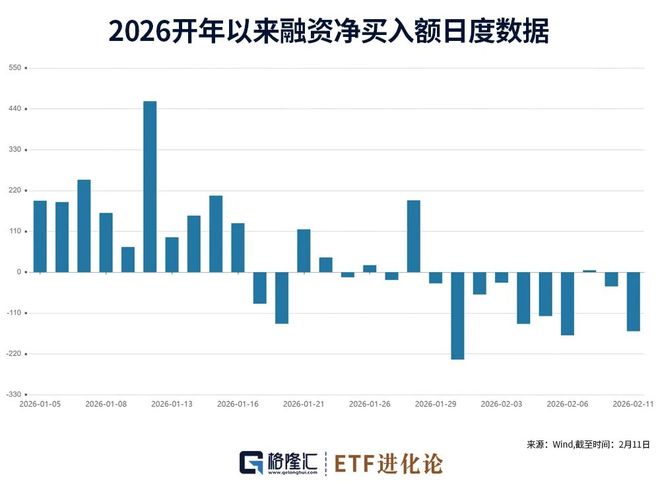
Group 1 - The core trading logic on Wall Street has shifted from identifying AI winners to indiscriminately selling potential AI losers, driven by fears of traditional business models being disrupted by AI advancements [1][2][3] - The recent sell-off has affected various sectors, including SaaS software, insurance brokerage, wealth management, and real estate services, with notable declines such as a 14% drop for JLL and a 12% drop for CBRE, marking their largest single-day declines since the pandemic [1][2] - Gabelli Funds' manager John Belton highlighted that any company with potential disruption risk is facing indiscriminate selling [3] Group 2 - In the A-share market, leveraged funds have begun to reduce their positions after a period of aggressive buying, with net selling occurring on 9 out of the last 10 trading days, totaling 974 billion yuan in sales [3][10] - Major companies experiencing net selling include Kweichow Moutai, Industrial Fulian, and Zhongji Xuchuang, with net selling amounts of -27.88 billion yuan, -23.49 billion yuan, and -23.27 billion yuan respectively [7][8] - Despite the reduction in positions in broad-based ETFs, there has been significant buying in specific ETFs such as Hai Futong Zhongzheng Short Bond ETF and E Fund Zhongzheng Overseas Internet ETF [10] Group 3 - The market is showing a strong interest in sectors related to economic recovery and domestic demand improvement, with significant inflows into the chemical sector and other related industries [17][18] - The recent price increases across various sectors, including upstream resources and consumer goods, indicate a potential inflationary trend, with PPI data showing a month-on-month increase of 0.4% and a narrowing year-on-year decline to -1.4% [21][22] - The upcoming Spring Festival is expected to boost consumer spending, with major companies launching significant promotional campaigns and government initiatives to stimulate the economy [26][27]
AI恐慌交易席卷美国地产服务板块,头部企业股价暴跌12%-14%,创2020年以来最大单日跌幅
Jin Rong Jie· 2026-02-12 03:32
Group 1 - The U.S. real estate services sector has been significantly impacted by the latest wave of AI-induced panic selling, with major companies like CBRE and JLL experiencing stock price drops of 12% and 14% respectively, marking their largest single-day declines since the COVID-19 pandemic began in 2020 [1] - The commercial real estate industry in the U.S. has been struggling to recover due to the pandemic's disruption of office space demand and high interest rates suppressing transaction volumes, despite some growth in niche areas like data centers and high-end office leasing driven by the AI boom [1] - Investors are increasingly wary of the potential impact of AI technology on the industry, fearing that automation and streamlined transaction processes could disrupt high-fee, labor-intensive business models, leading to a shift away from real estate service firms perceived as vulnerable to AI disruption [1] Group 2 - Barclays analyst Brendan Lynch noted that the recent stock price declines appear "excessive" given that there were no significant negative developments in the news, indicating that the associated risks have not changed [2] - Jefferies analyst Joe Dickstein believes that the threat of AI to leasing and capital markets is limited, asserting that firms like CBRE will maintain their positions as large leasing and transaction intermediaries due to their scale advantages in data accumulation and industry relationships [2] - The panic selling triggered by AI concerns has spread across multiple sectors, including SaaS, insurance brokerage, and wealth management, with significant stock pressure observed following the launch of AI-based applications in these industries [2]


阿波罗全球管理股价下跌4.17%,财报不及预期与行业AI冲击成主因
Jing Ji Guan Cha Wang· 2026-02-11 21:12
Company Performance - Apollo Global Management (APO.N) reported a 21.94% year-over-year increase in revenue to $32.102 billion for the fiscal year 2025, but net income fell by 21.10% to $3.492 billion, resulting in a net profit margin of 10.88%, which was below market expectations for high-growth asset management firms [1] - The stock price dropped 4.17% to close at $126.91 on February 11, 2026, following the earnings report [1] Industry Sector Situation - The wealth management industry faced widespread selling pressure due to innovations in AI tools, with non-public company Altruist launching an AI tax planning feature, raising concerns about the disruption of traditional asset management models [2] - Competitors such as Charles Schwab and Raymond James experienced significant declines of 7.4% and 8.8%, respectively, contributing to negative sentiment in the sector [2] Market and Technical Analysis - The trading volume for Apollo Global Management on the day was $804 million, with a volume ratio of 1.11, indicating active selling pressure [3] - The stock broke through a key support level, with a cumulative decline of 4.44% over five days, reflecting short-term weakness in technical indicators [3] - The S&P 500 index also fell by 0.33% due to weak retail data and pressure from financial stocks, leading to a contraction in market risk appetite [3] Latest Valuation - Despite institutional target prices averaging $165.81, indicating a premium over the current price, the decline in net profit for fiscal year 2025 and a trailing P/E ratio of 23.05 may lead some investors to reassess the certainty of continued growth in a high-interest-rate environment [4]
【今晚播出】断裂、稳定与重构——2026达沃斯论坛特辑 | 两说
Di Yi Cai Jing Zi Xun· 2026-02-11 19:04
Group 1 - The core viewpoint of the article highlights that the world is experiencing a painful rupture rather than a transformation amid increasing great power competition, ongoing geopolitical conflicts, and diminishing influence of international organizations [1] - China is expected to be a stabilizing force in this volatile environment, raising questions about the attention and expectations it will receive at the 2026 Davos Forum [1] - The article suggests that Chinese companies need to prepare adequately for international market challenges in this turbulent global landscape [1] Group 2 - Artificial intelligence is identified as a significant force in this transformation, with discussions around whether its asset value and short-term potential are overestimated [1] - The program "Two Talks" will feature insights from experts and entrepreneurs at the 2026 Davos Forum, focusing on key variables in the reconstruction of the world order [1]

华尔街年初热门交易 全军覆没
Sou Hu Cai Jing· 2026-02-11 16:49
Market Sentiment Shift - The recent market turmoil is not caused by a single factor, indicating a significant shift in sentiment on Wall Street compared to the panic sell-off triggered by tariff policies last April [1] - Earlier predictions suggested that the U.S. stock market would experience its longest rally in nearly two decades, driven by expectations of sustained AI momentum, unexpectedly strong economic resilience, and gradual interest rate cuts by the Federal Reserve [1][6] AI Disruption Concerns - Concerns about AI potentially disrupting or reshaping certain U.S. industries and companies have emerged as investors worry about the transition of AI investments into commercial products [1][2] - The launch of a new tool by startup Altruist aimed at helping financial advisors has sparked fears of automation threatening the wealth management sector, leading to significant stock declines for firms like Raymond James Financial Inc. (down 8.8%) and Charles Schwab Corp. (down 7.4%) [2] Broader Market Impact - The sell-off affected not only tech stocks but also other previously popular trades on Wall Street, with the S&P 500 software and services index losing nearly 8% over the week, marking its worst weekly performance since March 2020 [6] - The S&P 500 insurance index dropped 3.9%, the largest single-day decline since October of the previous year, reflecting the broader impact of AI-related concerns on various sectors [2] Investment Strategy Shift - Analysts suggest a shift in investment focus from "AI enablers" to "AI beneficiaries," indicating a potential change in which companies will benefit from AI advancements [3][4] - Despite the recent volatility, some analysts believe the market's reaction may be an overreaction, with the fundamentals still supporting a stable growth outlook [8][9] Economic Indicators - The ISM manufacturing PMI showed better-than-expected performance, indicating potential for stable growth and avoidance of inflationary pressures, which is crucial for the stock market and the Federal Reserve [8] - Recent strong earnings reports from various companies have reinforced the initial positive expectations, although concerns about the sustainability of high valuations in tech and other sectors remain [7]