智能汽车

Search documents
智能汽车ETF(159889)涨超2.2%,政策与技术双轮驱动行业提速
Mei Ri Jing Ji Xin Wen· 2025-12-22 06:29
Group 1 - The core viewpoint is that the gradual relaxation of intelligent driving policies in China is expected to drive further growth for related companies, marking a significant step towards the commercialization of L3 autonomous driving vehicles [1] - The first batch of L3 autonomous driving vehicles in China has received approval for commercial use, with two models designed for urban congestion and highway conditions set to conduct pilot tests in designated areas of Beijing and Chongqing [1] - Tesla has initiated unmanned Robotaxi road testing in Austin, while XPeng Motors has obtained a road testing license for L3 autonomous driving and plans to launch mass-produced L4 autonomous vehicles by 2026 [1] - Guangzhou has achieved full-scale open demonstration operations for autonomous driving with safety personnel in vehicles, launching multiple demonstration operation routes [1] - China FAW plans to mass-produce solid-state batteries by 2027 for its high-end Hongqi flagship models [1] - Momenta has formed a strategic partnership with Grab to explore the integration of L4 autonomous driving capabilities into mass-produced vehicles [1] - The EU's decision to abandon the proposal to ban internal combustion engines by 2035 indicates flexibility in the policy environment [1] - These developments highlight that the smart automotive industry is experiencing a dual drive of policy support and technological breakthroughs, accelerating the commercialization process [1] Group 2 - The Smart Automotive ETF (159889) tracks the CS Smart Automotive Index (930721), which selects listed companies involved in smart driving and vehicle networking from the A-share market [2] - The CS Smart Automotive Index covers multiple industries, including electronics, computers, and automobiles, reflecting the overall performance of listed companies in the smart automotive sector [2] - The index is designed to represent the growth potential and investment value of companies related to the smart automotive industry [2]
刚刚!A股又传“利好”!
天天基金网· 2025-12-21 03:12
Core Viewpoint - The emergence of China's first L3 autonomous driving license plate marks a significant step towards the commercialization of L3 autonomous driving technology, with Changan Automobile leading the way in this development [2][3][4]. Group 1: L3 Autonomous Driving License and Models - The first L3 autonomous driving license plate "渝AD0001Z" was awarded to Changan Automobile in Chongqing, indicating the start of the L3 autonomous driving era in China [2][3]. - The Ministry of Industry and Information Technology (MIIT) has approved the first batch of L3 autonomous driving models, including Changan's Deep Blue SL03 and Arcfox Alpha S6, for trial operations in designated areas of Beijing and Chongqing [4][5]. - Changan's L3 autonomous driving system has undergone over 5 million kilometers of testing on complex roads in Chongqing, demonstrating its readiness for commercial application [3][5]. Group 2: Market Impact and Future Prospects - Following the announcement of L3 autonomous driving approvals, related stocks surged, with multiple companies seeing significant gains in the stock market [2]. - Analysts believe that the approval of L3 models signifies a new phase in the mass production and application of intelligent connected vehicles in China, potentially leading to a restructuring of the autonomous driving industry [6][7]. - The gradual implementation of L3 autonomous driving is expected to expand from B-end (business) to C-end (consumer) markets, with increasing opportunities for component suppliers and testing institutions [7].



重庆大学智能汽车技术学院揭牌
Xin Lang Cai Jing· 2025-12-19 16:23
转自:北京日报客户端 据了解,市政府、重庆大学、深圳引望智能技术有限公司此次签署合作协议,将高水平共建重庆大学智 能汽车技术学院,聚焦智能汽车领域方向,以多学科交叉融合推进工程类硕博人才培养,建设智能汽车 技术联合实验室,全力打造具有国际影响力的卓越人才成长摇篮、高质量科技创新策源地和未来产业孵 化高地,为国家和重庆市智能网联新能源汽车产业未来发展提供有力支撑。 12月19日,重庆大学智能汽车技术学院合作共建签约暨揭牌活动举行。重庆市委副书记、市长胡衡华出 席活动。 来源:重庆日报 活动前,胡衡华一行前往重庆大学科学中心,听取智能汽车技术学院建设情况介绍,参观智能座舱、车 载软件、网络安全等实验室,了解办学规模、课程设置、研究方向等情况。 深圳引望智能技术公司董事长徐直军,副市长郑向东,重庆大学党委书记王树新、校长刘昌胜参加。 ...
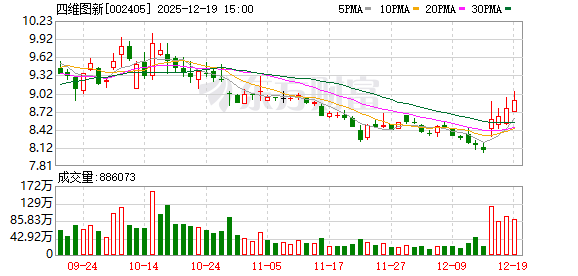
四维图新:目前公司智驾订单顺利推进中,将随客户量产进度逐步释放收入
Zheng Quan Ri Bao· 2025-12-19 12:27
(文章来源:证券日报) 证券日报网讯 12月19日,四维图新在互动平台回答投资者提问时表示,公司和长安及北汽蓝谷在智能 座舱、车规级芯片、智能驾驶方面均有合作,且斩获订单。目前公司智驾订单顺利推进中,将随客户量 产进度逐步释放收入,预计将在中长期订单生命周期内持续改善公司业绩。 ...

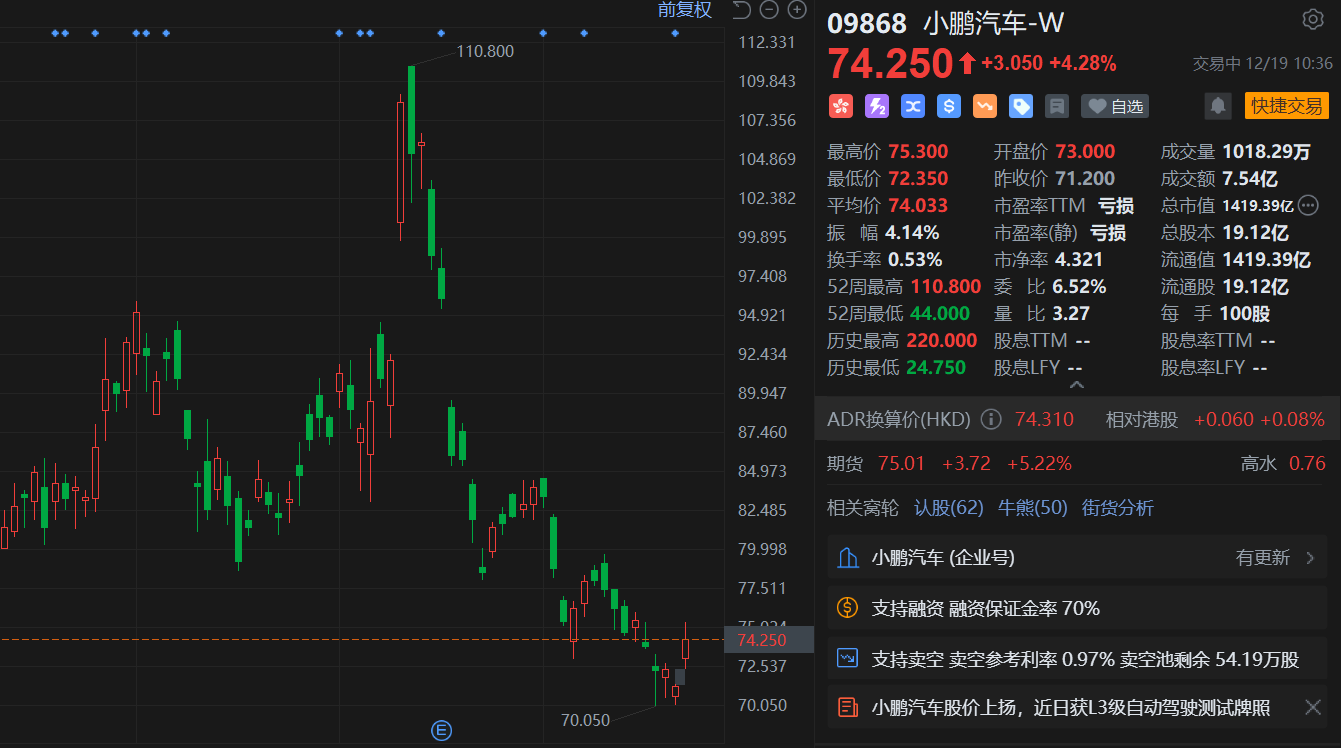
港股异动丨终见反弹!小鹏汽车盘中涨约6%,11月中旬以来累计跌幅超34%
Ge Long Hui· 2025-12-19 02:59
相关事件 连续下跌的小鹏汽车终见反弹,盘前一度涨约6%,该股从11月12日以来持续走低,区间最大跌幅更是 超34%,现报74港元,总市值1417亿港元。 消息上,近日,据消息称小鹏汽车已在广州市获得L3级自 动驾驶道路测试牌照,并启动常态化的L3道路测试。该牌照主要用于在广州市智能网联汽车测试高快 速路上进行有条件自动驾驶的测试。 长江证券指出,小鹏汽车依托软硬件一体化优势,在智能驾驶领 域持续领先。随着自研图灵芯片上车、云端基座大模型推进,智驾进入第二代VLA阶段。公司预计 2026年一季度量产具备L4级能力的第二代VLA,并预期在2026年推出具备L4能力的Robotaxi车型。 小鹏汽车-W(9868.HK):强势产品周期驱动业绩高增 战略升级聚焦物理AI 小鹏汽车-W(09868.HK): 2026年看点梳理 从汽车走向AI科技! ...
具身智能产业动态:希迪智驾启动全球招股,众擎机器人完成10亿元A1加及A2轮融资
GUOTAI HAITONG SECURITIES· 2025-12-18 13:06
Investment Rating - The report does not explicitly state an investment rating for the industry Core Insights - The embodied intelligence industry is primarily represented by embodied robots and smart vehicles, which are mutually reinforcing in development. The core concept of embodied intelligence emphasizes real-time interaction with the environment, integrating perception, decision-making, and action [8][9] - Recent trends in the embodied robot sector include significant orders and partnerships, such as the 1,000-unit order for the Bumi humanoid robot and collaborations between major companies like Mercado Libre and Agility Robotics [12][13][14] - In the smart vehicle sector, notable developments include the delivery rankings of new energy vehicles, with Hongmeng Zhixing leading with 81,864 units delivered in November [21][27] Summary by Sections 1. Embodied Robot Industry Dynamics - Songyan Power secured an order for 1,000 Bumi humanoid robots, which are lightweight and under 1 meter tall, with a pre-sale price of 9,998 yuan [12] - Mercado Libre partnered with Agility Robotics to deploy the Digit robot in its logistics system, marking a significant step towards automation in Latin America [13] - EQT plans to facilitate the deployment of up to 10,000 humanoid robots from 1X across its portfolio companies from 2026 to 2030 [14] - Stardust Intelligence launched the Lumo-1 model, enhancing the reasoning-action loop for robots [15] - Lingchu Intelligent introduced the Psi-SynEngine, a data collection engine for real-world applications [16] - Zhiyuan announced the production of its 5,000th general-purpose humanoid robot [18] - Horizon released two foundational models, HoloMotion and HoloBrain, aimed at advancing embodied intelligence [19] - Lichong Group signed a procurement agreement worth 75 million yuan for humanoid robot components [20] 2. Smart Vehicle Industry Dynamics - The delivery rankings for November show Hongmeng Zhixing leading with 81,864 units, followed by Leap Motor and Xiaomi [21] - Jiusi Intelligent signed a strategic cooperation agreement with Jiangling to accelerate the deployment of RoboVan ecological unmanned vehicles [22] - Collaborations with major public transport groups aim to integrate autonomous driving technology into urban logistics [23][24] - New Stone and Linglong Tire's partnership marks a significant step in the application of unmanned delivery in the automotive service market [26] 3. Investment and Financing Events - From December 8 to December 14, 2025, there were 16 financing events in the embodied intelligence sector, including significant rounds for companies like Shaping Technology and Cloud Deep Technology [29][30][32][36] - Notable financing events include a 10 billion yuan round for Zhongqing Robotics, which also launched the T800 humanoid robot [36] - Other companies like Ling Sheng Technology and Lumos Robotics also secured substantial funding to enhance their product offerings and market presence [39][40]
华为乾崑:从“跟跑”到“领跑” 科技自信的硬核表达
Huan Qiu Wang· 2025-12-18 09:10
在百年未有的汽车产业变革浪潮中,中国正从"技术追随者"迈向"规则制定者"。根据最新行业数据显示,2025年全球智能汽车市场规模将突破9000万辆,而 中国以全球34.5%的市场份额成为不可忽视的引领力量。我国L2级以上智能辅助驾驶装车率已突破67.8%,标志着中国不仅在智能汽车市场规模上领先,更 在技术能力上实现系统性崛起。 波澜壮阔的产业升级需要有力的技术破局者与生态构建者,以华为乾崑为代表的技术方案扮演了其中的关键角色,成为从"汽车大国"迈向"汽车强国"路途上 的重要支点。 全栈自研:从 " 技术自主 " 到 " 全球标准 " 的跨越 华为乾崑以全栈自研为战略支点,构建了覆盖ADS(智能辅助驾驶系统)、鸿蒙座舱、车控、车云等核心环节的完整技术体系。与依赖多供应商的"拼盘模 式"相比,全栈自研不仅可解决系统兼容性与响应效率问题,更在安全性与迭代速度上构建起强大竞争力。 实测数据显示,华为乾崑智能辅助驾驶紧急制动响应时间较行业平均水平缩短30%,技术更新周期提速40%,自2022年推出首款城区智能辅助驾驶功能ADS 1以来,华为乾崑智能辅助驾驶已完成四次重大版本升级,迭代速度行业领先,展现了其背后的科技实力。 ...

兴民智通:公司重视无人驾驶领域产品的布局开发
Zheng Quan Ri Bao Wang· 2025-12-18 07:10
证券日报网讯12月17日,兴民智通(002355)在互动平台回答投资者提问时表示,公司重视无人驾驶领 域产品的布局开发,为无人驾驶开发了高网络可靠性的双5g智能网联终端产品—通信域控制器 (ICVBOX),目前已在L3L4无人驾驶汽车Robotaxi、无人物流车上配套,服务客户涵盖百度萝卜快跑、 Momenta以及国内主流车企。 ...

AI加速“上车” 智能汽车操作系统迈向千亿级市场
Xin Hua Cai Jing· 2025-12-18 01:09
Core Insights - Major automotive companies are increasingly adopting AI as a core strategy for future development, with significant investments in AI technologies and models [1] - The automotive software industry is undergoing structural changes, shifting the value focus from traditional hardware manufacturing to software and services, with projections indicating a rise in software profit share from 6% in 2020 to 25% by 2030 [2][3] - The integration of software is fostering a new ecosystem that bridges various sectors, enhancing collaboration and resource efficiency across the automotive industry [3][4] Group 1: Industry Trends - The automotive software industry's value is transitioning from a "one-time sale" model to a "full-cycle service" model, with hardware profit share decreasing from 79% in 2020 to an expected 59% by 2030 [2] - The commercial value of in-vehicle operating systems is becoming increasingly significant, with the market projected to reach approximately 600 billion yuan by 2025 and exceed 1 trillion yuan by 2030 [3] - The future of automotive software development is expected to focus on integration, moving towards highly adaptive intelligent operating systems that support comprehensive resource management [4] Group 2: Challenges and Solutions - The automotive industry faces challenges in establishing a unified and open software and hardware ecosystem, with varying levels of openness and interface standards among chip manufacturers [7] - Collaboration between companies remains inefficient, often requiring extensive customization and debugging, which hampers the overall efficiency of solutions [7] - The industry is encouraged to adopt open-source models to build a unified technical foundation, reducing costs and fostering innovation through community collaboration [5][9] Group 3: Future Directions - The integration of advanced safety features and the expansion of collaborative boundaries are essential for building sustainable competitive advantages in the automotive sector [11] - The industry is exploring the incorporation of satellite technology into existing vehicle-road-cloud systems to enhance data and computational networks [12] - The relationship between AI and the automotive industry is expected to evolve, with AI becoming a critical component in the development of intelligent vehicles and applications [12]



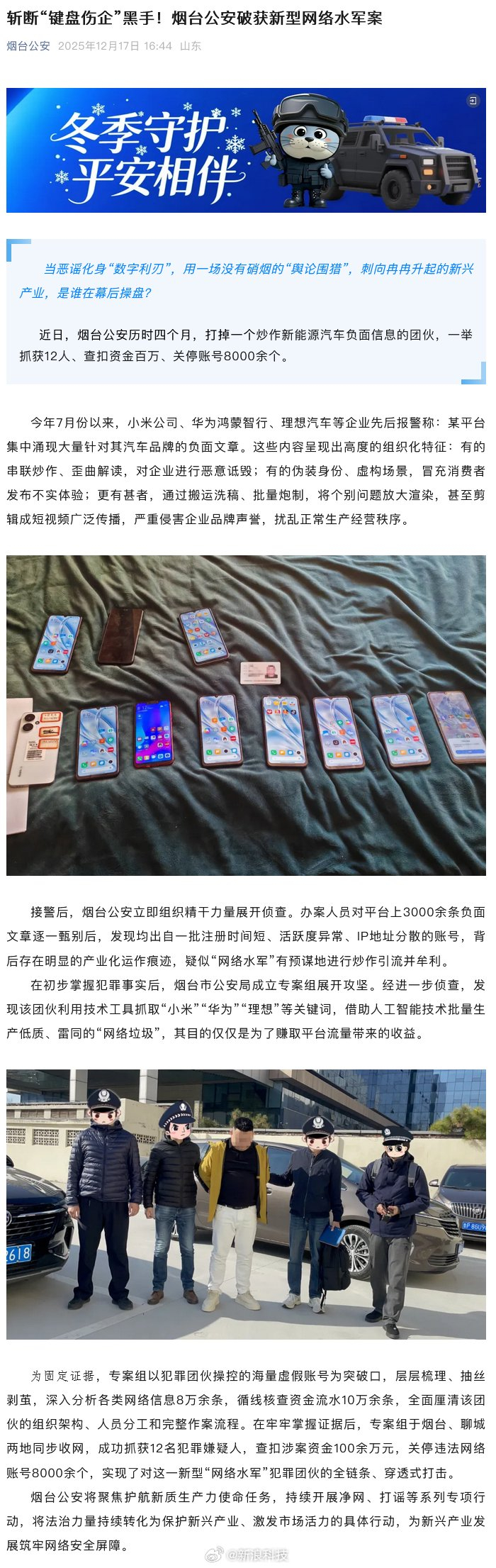
黑产操控8000账号抹黑小米华为理想,12名嫌疑人落网
Xin Lang Ke Ji· 2025-12-17 11:20
Core Viewpoint - A criminal group has been manipulating over 8,000 accounts to spread negative information about companies such as Xiaomi, Huawei, and Li Auto, leading to significant damage to their brand reputation and disruption of normal business operations [1][4]. Group 1: Criminal Activities - Since July, Xiaomi, Huawei, and Li Auto reported a surge of organized negative articles targeting their brands, indicating a coordinated effort to defame these companies [1]. - The negative content includes distorted interpretations, fake consumer experiences, and exaggerated issues, often disseminated through short videos [1][4]. - The criminal group utilized technology to scrape keywords related to the companies and produced low-quality, identical "internet garbage" to generate traffic and profit [4][6]. Group 2: Law Enforcement Response - After receiving reports, the Yantai police organized a task force to investigate, identifying over 3,000 negative articles linked to a batch of suspicious accounts with short registration times and abnormal activity [4]. - The task force analyzed over 80,000 pieces of online information and traced over 100,000 financial transactions to clarify the group's structure and operations [6]. - The operation resulted in the arrest of 12 suspects, seizure of over 1 million yuan in illicit funds, and closure of more than 8,000 illegal accounts, marking a comprehensive crackdown on this "internet water army" [1][6].