核聚变能源

Search documents
研制成功!我国这一领域取得关键技术突破
Guan Cha Zhe Wang· 2025-09-11 13:09
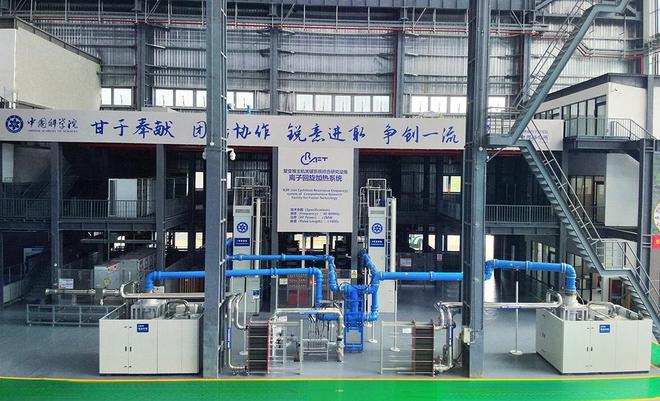
Core Insights - The successful acceptance of the Ion Cyclotron Resonance Heating (ICRF) system marks a significant breakthrough in China's high-power radio frequency heating technology, led by the Hefei Institute of Physical Science [1][3][4] - The ICRF system is crucial for future fusion reactors, addressing key technologies such as the domestication of megawatt-level electronic quadrupoles and the design of fusion reactor antennas [3][4] Group 1 - The ICRF system has achieved a stable output of 2MW power with a wide frequency range of 40-80MHz and a long pulse duration of milliseconds, overcoming technical bottlenecks in core technologies [3][4] - The successful development of the ICRF system signifies a shift from "catching up" to "leading" in high-power RF heating technology, showcasing China's innovative capabilities in the fusion energy sector [4] Group 2 - The ICRF system will provide a research and testing platform for key components of ICRF heating systems in devices such as BEST, CFEDR, and ITER, supporting the future development of fusion energy [4] - The advancements in the ICRF system contribute to China's dual carbon strategy and position the country at the forefront of the global energy revolution [4]

外滩大会今日开幕,图灵奖得主称人工智能进入“经验时代”
Yang Zi Wan Bao Wang· 2025-09-11 12:27
Core Insights - Artificial intelligence is entering an "experience era," where continuous learning will be central to its development, surpassing previous capabilities [2] - The expansion of infrastructure is facilitating the industrial scaling of AI, leading to a new "agent economy" characterized by interactions among numerous intelligent agents [3] - The rise of AI is significantly increasing global energy consumption, necessitating advancements in nuclear fusion as a sustainable energy source for future AI technologies [4] Group 1: AI Development and Learning - Richard Sutton, the Turing Award winner, emphasizes that the current machine learning methods are reaching their limits in transferring human knowledge, necessitating a new data source generated through direct interaction with the environment [2] - Sutton argues that fears surrounding AI, such as bias and job loss, are exaggerated, and that decentralized collaboration will drive human prosperity alongside AI [2] Group 2: Infrastructure and Economic Transformation - Zhang Hongjiang highlights the ongoing relevance of the "scaling law" for large models, indicating that the interaction among intelligent agents will profoundly reshape economic structures [3] - The concept of an "agent economy" is introduced, where organizations will need to enhance computational power and data richness to leverage the capabilities of intelligent agents [3] Group 3: Energy Consumption and Nuclear Fusion - Sun Xuan points out that AI currently consumes 1.5% of the Earth's electricity, with projections suggesting it could rise to over 20%, creating a significant energy gap [4] - Nuclear fusion is presented as a solution to meet the future energy demands of AI, with its high energy density being a key advantage [4] - Despite the challenges in achieving nuclear fusion, advancements in AI technology are seen as pivotal in moving towards commercial viability in this field [4]
中科大孙玄:AI或将“吃掉”全球五分之一电力
Hua Er Jie Jian Wen· 2025-09-11 06:13
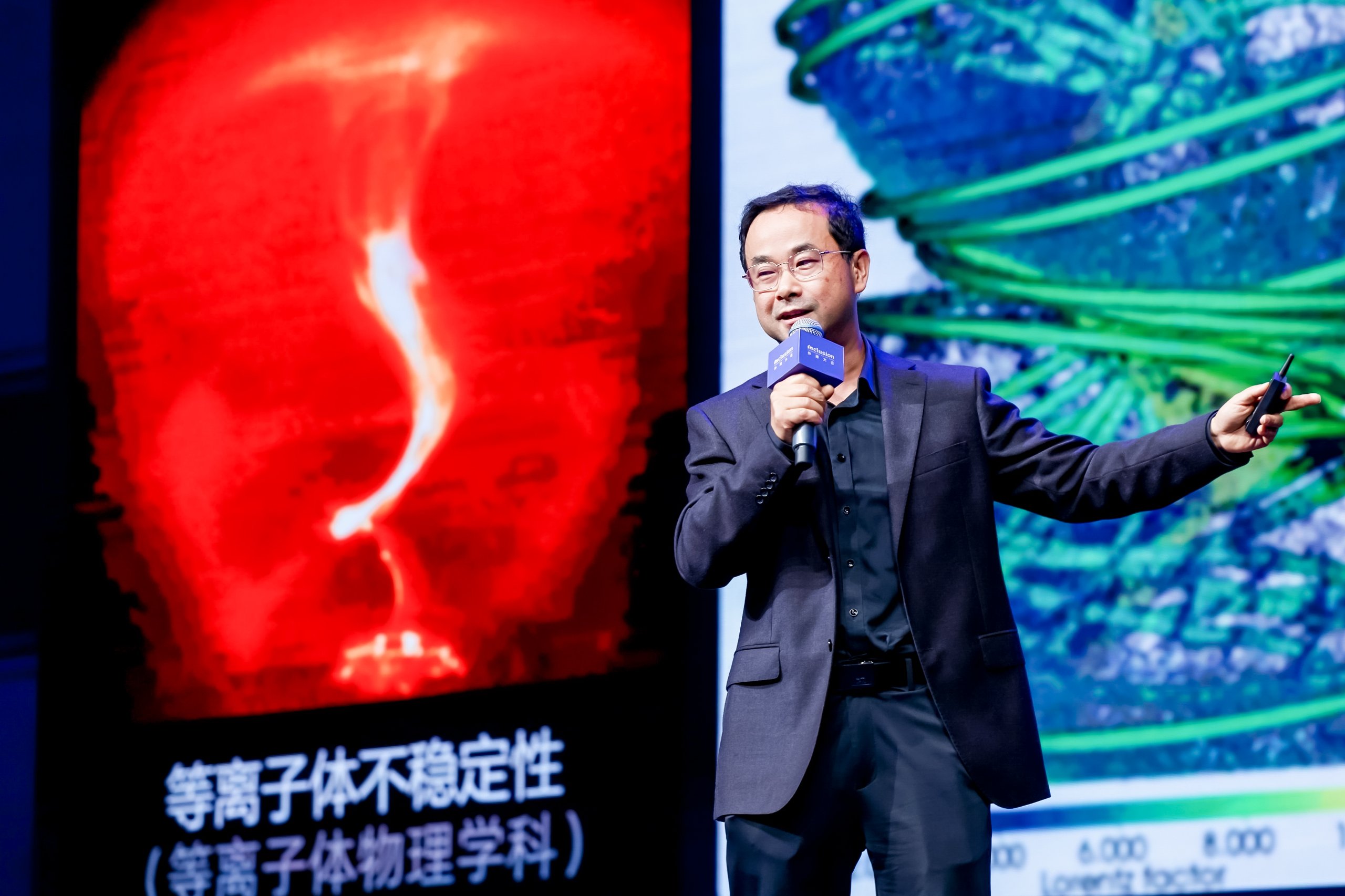
"相信不少人听过这么一句话:AI的终点是能源,能源的终点是聚变。" 9月11日,在2025 Inclusion·外滩大会上,中国科学技术大学核科学与技术学院教授、星能玄光创始人兼董事长孙玄在演讲中重申了这一业界重要共识——核 聚变是开启下一代文明的关键科技。 孙玄指出,AI的崛起正指数级推高全球能源消耗,而解决这一终极需求的答案便是核聚变。核聚变一旦实现,不仅将带来一场能源革命并引发工业革命, 更是迈向利用宇宙中最普遍能源、跨越到更高阶文明的关键一步。 当下,驱动聚变能从实验室走向产业关注的核心力量,正来自于其最大的需求方——AI。孙玄在指出:"AI目前用电量占地球的1.5%,如果我们把AI比喻 成'地球大脑'的话,人的大脑能耗占人体的20%,因此有人预测,AI的耗电量也将占地球总数的20%以上。" 这意味着,仅AI一个领域,就将产生巨大的能源缺口。 核聚变正是满足未来AI技术发展所需的能源供给的解决之道。聚变指的是两个轻核聚合成一个重核,在这一过程中存在质量亏损,可以释放出巨大的能 量。孙玄指出,核聚变拥有极高的能量密度:1克核聚变燃料,释放的能量相当于8吨石油。 等离子体不稳定性 孙玄解释道,实现核聚变的 ...
民生证券:聚变时代加速到来 Z箍缩路线走进主流视野
智通财经网· 2025-09-11 02:00
Core Insights - The global fusion industry has experienced explosive growth over the past five years, with total investment rising from $1.9 billion in 2021 to $9.7 billion, including an increase of $2.6 billion in the last year alone, reflecting mature investor confidence, technological breakthroughs, and rapid supply chain integration [1][2] - The era of controllable nuclear fusion is accelerating, with 2030 seen as a critical period for commercialization, driven by the advantages of abundant raw materials, high efficiency, and safety [2][3] Investment Opportunities - Companies involved in Z-pinch drivers, fusion targets, and deep subcritical fission blankets are recommended for investment, as Z-pinch technology is rapidly developing and its commercialization path is becoming clearer [1][4] - The Z-pinch technology is expected to significantly boost investments in key areas such as drivers, fusion targets, and deep subcritical fission blankets, with a focus on critical technologies like high-yield fusion target design and large current driver design [4][5] Technological Developments - Inertial confinement technology, particularly Z-pinch technology, is gaining recognition for its safety, economic viability, durability, and environmental friendliness, with significant advancements being made [3][4] - The U.S. Lawrence Livermore National Laboratory achieved a historic milestone by producing 3.15 megajoules of fusion energy output, surpassing the fusion ignition threshold, marking a significant step towards the fusion energy era [3] Future Projections - The development of Z-pinch technology is expected to progress through three phases: critical technology breakthroughs (2024-2030), engineering demonstration (2031-2040), and commercial power generation (post-2040), with specific milestones set for each phase [5]
186亿,“人造太阳”最大单轮融资来了
3 6 Ke· 2025-09-05 03:19
Group 1: Core Insights - Google has signed an unprecedented power purchase agreement with Commonwealth Fusion Systems (CFS) to procure 200 megawatts of electricity from its first commercial fusion plant, ARC, marking the largest fusion energy purchase agreement globally [1] - CFS has raised a total of $2.663 billion in its B round financing, setting a record for the largest single round of financing in the fusion sector, with notable investors including Google, Nvidia, and Bill Gates' Breakthrough Energy Ventures [1][2] - CFS's total funding has surpassed $3 billion, accounting for one-third of the global fusion industry's total financing, and its valuation has reached approximately $8 billion [1] Group 2: Technological Advancements - The 2020s have seen significant advancements in fusion technology, including high-temperature superconductors and AI control systems, which have reduced the size and cost of fusion devices [5] - CFS's innovative high-temperature superconducting magnet technology has allowed for a significant reduction in the size of fusion reactors, from "the size of a stadium" to 1/60 of that size [14][15] Group 3: Market Dynamics - Major tech companies are investing in fusion energy due to the increasing energy demands of data centers, which are projected to double by 2030, driven primarily by AI [10] - The global push for carbon neutrality has created a favorable environment for fusion energy, as it offers a stable, zero-carbon power source [10][11] Group 4: Global Competition - The race for fusion energy is intensifying globally, with various companies exploring different fusion approaches, such as Helion's magnetic inertial fusion and TAE Technologies' efforts in the field [16][17] - China is also making significant strides in fusion research, with its EAST facility achieving a world record for sustained plasma operation, and plans for a domestic fusion engineering experimental reactor [19][20] Group 5: Future Outlook - The fusion industry is optimistic about achieving commercial viability by the mid-2030s, with over 70% of private companies believing that fusion can achieve grid connection by then [18] - The path to commercialization is expected to be challenging, requiring breakthroughs in technology, engineering, and supply chain management [23][24]
突破燃料瓶颈 氢硼聚变提供“人造太阳”破局解决方案
Jing Ji Guan Cha Wang· 2025-09-05 02:42
Group 1 - The Los Alamos National Laboratory team in the U.S. proposed an innovative solution to convert nuclear waste into fusion fuel, addressing the long-standing tritium fuel shortage in the nuclear fusion sector [1][2] - Tritium production is critically limited, with natural and artificial sources totaling only a few dozen kilograms, while the demand for tritium in commercial fusion reactors is significantly higher, creating a substantial supply gap [2][3] - The proposed method utilizes a particle accelerator-driven system to bombard nuclear waste, initiating a controlled fission reaction that ultimately generates tritium fuel, although it remains in the theoretical research phase [2][3] Group 2 - Global investment in nuclear fusion research is accelerating, highlighting the urgency of tritium production and the importance of developing alternative technologies [3] - Various technological routes are emerging in the fusion industry, with some approaches bypassing the need for tritium altogether, indicating a diverse exploration of fusion energy commercialization [3][4] - The hydrogen-boron fusion route has gained traction, with eight companies adopting this method by the end of 2024, including China's New Hope Group, which has achieved significant experimental milestones [4][5] Group 3 - China has made rapid advancements in fusion research, with notable achievements in the EAST device and the "Chinese Circulation No. 3," both reaching critical temperature breakthroughs [5] - New Hope Group's "Xuanlong-50U" device has successfully demonstrated the feasibility of hydrogen-boron plasma operations, providing key references for international fusion projects [5] - The ongoing research and development efforts in China since 2017 have focused on hydrogen-boron fusion, aiming to contribute to the commercialization of fusion energy [5][6]
可控核聚变系列 - 电源专题:多技术路线共同发展,电源价值量在膨胀
2025-09-03 14:46
Summary of Key Points from the Conference Call on Controlled Nuclear Fusion Power Supply Industry Overview - The conference focuses on the controlled nuclear fusion industry, specifically the power supply systems for various fusion devices such as Tokamak, FRC (Field-Reversed Configuration), and Z-pinch technology [1][4][16]. Core Insights and Arguments - **Tokamak Dominance**: The Tokamak device is the mainstream nuclear fusion route, with high demand for magnet power supplies and auxiliary heating systems, which constitute a significant portion of the value [1][4]. - **FRC and Z-Pinch Technology**: FRC and Z-pinch technologies have high technical barriers and rapidly growing demand, particularly for fast-switching and pulse capacitor technologies [1][4][16]. - **Power Supply Requirements**: Controlled nuclear fusion power supplies require high capacity, high voltage, large current, and low ripple. For Tokamak devices, ripple must be maintained below 1% to 2% [2][11]. - **Auxiliary Heating Systems**: The main auxiliary heating systems are neutral beam heating and radio frequency heating, which require specific power supply types based on their voltage needs [10][12]. Technical Specifications - **Key Components of Tokamak**: The critical aspects of Tokamak devices include steady-state power (auxiliary heating, grid, low-temperature, and water cooling systems) and pulse power (auxiliary heating, magnetic power, and reactive power compensation) [5][9]. - **Reactive Power Compensation**: This system is essential for stabilizing the operation of fusion devices by managing reactive power fluctuations, ensuring reliability and safety [6][8]. - **FRC Device Characteristics**: FRC devices do not require complex magnetic fields or superconducting magnets, but they demand high instantaneous power pulse capabilities, leading to increased power supply value [13][15]. Market Opportunities and Risks - **Investment Potential**: Companies such as PSM, Sifang Electronics, Yingjie Electric, Aikexibo, and Xinfengguang are highlighted as having competitive advantages in the nuclear fusion sector, particularly in FRC-related equipment [18]. - **Upcoming Tender Activities**: The recent tender activities related to the CAS BEST project for magnet procurement are expected to expand into power supply-related tenders, presenting new market opportunities for suppliers [19]. Additional Important Content - **Key Components to Watch**: The demand for switches and supercapacitors is expected to rise significantly in the development of FRC and Z-pinch technologies, along with attention to MOSFETs as critical components [17]. - **Response Time Requirements**: FRC devices require nanosecond-level response times for power supplies, indicating a significant increase in power supply value, potentially exceeding 15% to 50% growth [15][16].
开源证券:可控核聚变技术百花齐放 行业有望逐渐迈向商业化阶段
智通财经网· 2025-09-01 03:29
Core Insights - The controlled nuclear fusion industry is entering a rapid incubation phase, with significant advancements in various technical routes such as magnetic confinement, Z-pinch, and FRC, indicating a potential move towards commercialization [1][2] Group 1: Industry Developments - The diversification of controlled nuclear fusion technology routes is evident, with public funding leading current projects and private capital driving future initiatives, resulting in a global fusion race with increased financing activities from major tech companies like Google, Amazon, and Microsoft [2] - The Tokamak device is expected to benefit from breakthroughs in high-temperature superconducting materials, potentially achieving grid-connected power generation by the 2030s [3] Group 2: Project and Investment Opportunities - Domestic Z-pinch hybrid reactors are anticipated to accelerate in development, with private capital showing interest in FRC devices, which have seen significant funding and advancements in recent years [4] - The potential annual investment in nuclear fusion power stations could reach several hundred billion yuan if commercialization is successful, based on current construction rates of fission reactors [2] Group 3: Beneficiary Companies - Beneficiary companies in the magnetic materials sector include Western Superconducting (low-temperature superconductors), Yongding Co. (high-temperature superconductors), and Shanghai Superconductor (high-temperature superconductors) [5] - Companies involved in vacuum chambers and internal components include Hezhong Intelligent (vacuum chambers), Guoguang Electric (first wall components), and Antai Technology (first wall components) [5] - In the power supply assembly sector, beneficiaries include Yingjie Electric (magnet power supply), Aike Saibo (magnet power supply), and Sichuang Electronics (PSM power supply) [5]
速递|30亿美元总融资破纪录!AI巨头押注核聚变,英伟达谷歌参投CFS装置明年点火
Z Potentials· 2025-08-30 04:18
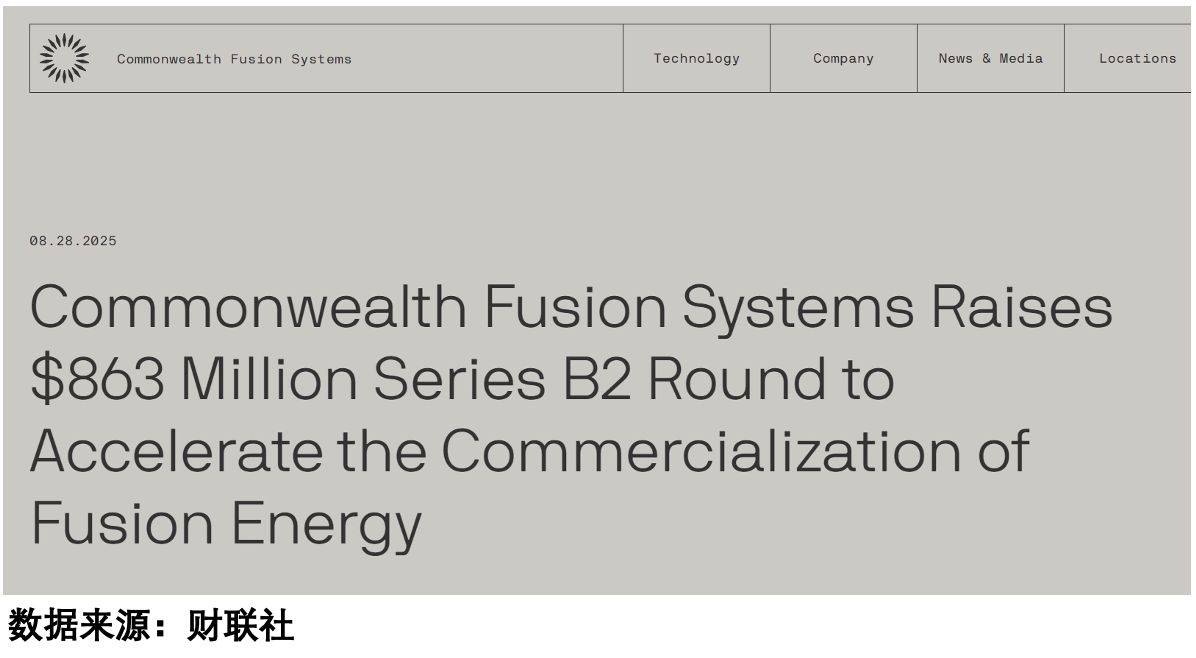
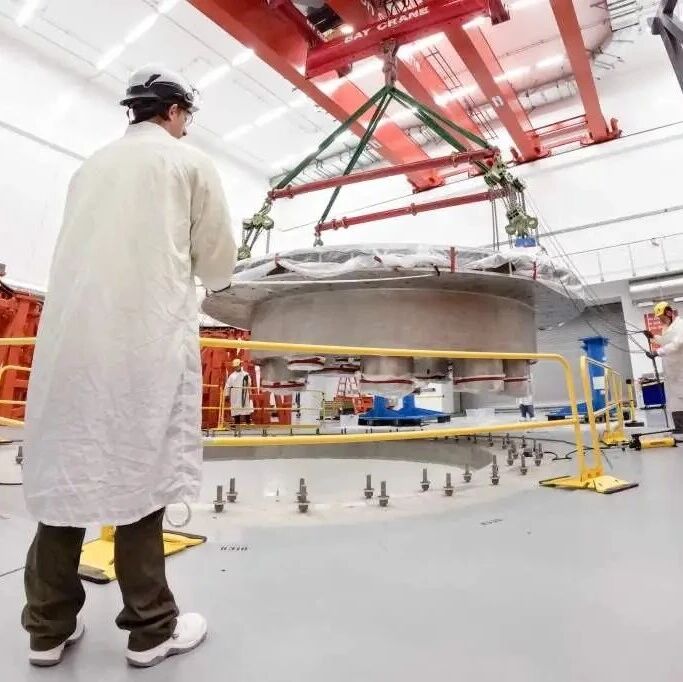
Core Viewpoint - Commonwealth Fusion Systems (CFS) has raised $863 million from various investors, including Nvidia and Google, to advance nuclear fusion technology towards commercialization [1][6]. Funding and Investment - CFS has raised nearly $3 billion to date, leading all nuclear fusion startups, with a previous funding round of $1.8 billion in 2021 [1]. - The recent funding round saw participation from a wide array of investors, with no single lead investor, and included both existing and new investors [6][7]. - Notable existing investors that increased their stakes include Breakthrough Energy Ventures, Emerson Collective, and Google, while new investors include Brevan Howard and Morgan Stanley [6]. Project Development - CFS is constructing a prototype reactor named Sparc in the Boston suburbs, expected to be operational by late next year, aiming for scientific breakeven by 2027 [2][3]. - Sparc is crucial for CFS's success, as it will help validate scientific principles and provide essential cost data for future projects [3][7]. - Following Sparc, CFS plans to build a commercial-scale power plant named Arc in Virginia, with construction expected to begin around 2027 or 2028, contingent on Sparc's performance [3][7]. Technology and Design - Both Sparc and Arc utilize a tokamak design, which employs superconducting magnets to confine and compress plasma for nuclear fusion [4]. - The technology is recognized in the scientific community, but there are uncertainties regarding its practical performance [5]. Strategic Partnerships - CFS has signed an agreement with Google to purchase 200 megawatts of power from the Arc project, indicating strategic partnerships that may benefit supply chain development [7]. - The construction costs for Arc are anticipated to be high, potentially reaching billions, and the company is still determining the financing structure for this project [7].
核聚变巨头融资30亿,散户为何总被套路?
Sou Hu Cai Jing· 2025-08-29 14:26
Group 1 - The core viewpoint is that institutional investors are strategically positioning themselves in the market, often ahead of retail investors, as seen in the recent $863 million funding round by CFS, a fusion energy startup that has raised approximately $3 billion, accounting for one-third of global fusion industry funding [1][10][13] - The article highlights the overwhelming amount of market information available today, which can lead to anxiety among investors, as they struggle with decisions regarding buying, selling, and holding positions [3][12] - It discusses the phenomenon of stock price movements in response to mid-year earnings forecasts, emphasizing that the market is driven by pricing power rather than mere concepts or news [4][6][9] Group 2 - The article reveals that many investors rely on fund flow data to gauge institutional intentions, but this data can be misleading; true insights come from analyzing actual trading behavior [7][9] - The CFS funding case illustrates that major tech companies are investing in fusion energy due to anticipated changes in the energy landscape over the next 10 to 20 years, indicating a long-term strategic approach rather than speculative trading [10][11] - It emphasizes the importance of understanding the underlying trading behaviors and data rather than being swayed by surface-level information, advocating for a more analytical approach to investment decisions [12][13][15]