
石化

Search documents
“十五五”如何推进经济社会发展全面绿色转型?
Zhong Guo Huan Jing Bao· 2026-01-04 23:50
党的二十届四中全会对"加快经济社会发展全面绿色转型,建设美丽中国"作出系统部署,为"十五五"时 期推动绿色发展,促进人与自然和谐共生指明了方向。必须深刻领悟党中央作出这一重大安排的战略考 量,深入研判当前的工作基础和形势挑战,谋划推进经济社会发展全面绿色转型的战略举措,推动美丽 中国建设取得新的重大进展。 深刻理解加快经济社会发展全面绿色转型的战略考量 推动经济社会发展绿色化、低碳化是实现高质量发展的关键环节。加快经济社会发展全面绿色转型,不 是摆在发展面前的"选择题",而是我们自己要走的路和必须做好的事,是推进中国式现代化的"必答 题"。 推动高质量发展高水平安全的重要抓手。党的二十届四中全会强调,绿色发展是中国式现代化的鲜明底 色。据测算,要实现2035年基本实现社会主义现代化、人均国内生产总值(GDP)达到中等发达国家水 平的目标,未来十年我国GDP年均增速需达到4.5%以上。加快经济社会发展全面绿色转型,以约束性 机制倒逼存量升级、以新兴产业未来产业引领增量崛起,将有力推动产业深度转型升级,实现新质生产 力跃升发展,以绿色低碳的新动能、新优势为保持未来经济增速、增强我国发展潜力和后劲注入稳定性 与确定 ...
五个故事看长江经济带十年非凡成就
Ren Min Ri Bao· 2026-01-04 22:48
Core Viewpoint - The Yangtze River Economic Belt has made significant progress in high-quality development over the past decade, focusing on ecological restoration and sustainable growth, as emphasized by President Xi Jinping's call for "big protection" and "no large-scale development" [1]. Group 1: Ecological Restoration and Protection - The Jiangjin District has transformed its approach to protecting the Yangtze River, implementing ecological restoration measures along the riverbanks and creating artificial fish habitats, resulting in a significant increase in fish populations [2][3]. - The district has established a comprehensive ecological protection network using smart monitoring systems, including 67 AI warning points and regular drone patrols, ensuring effective oversight of key water areas [2]. Group 2: Economic Development and Trade - Jiangjin has successfully opened a new trade route via the "sea-rail-river" transport system, facilitating the import of goods and enhancing the efficiency of logistics operations [4]. - The district is actively promoting high-quality port development while balancing ecological preservation, showcasing a model of sustainable industrial growth along the Yangtze River [5]. Group 3: Industrial Transformation - The chemical industry in Jiujiang has undergone a green transformation, with significant reductions in pollutant emissions and a focus on sustainable practices, leading to the establishment of numerous national-level green factories [6][8]. - Jiujiang Petrochemical has achieved a 50.5% increase in crude oil processing while reducing pollutants by 90.7% compared to ten years ago, demonstrating the effectiveness of its environmental initiatives [7]. Group 4: Renewable Energy and New Industries - Anhui Province is accelerating its transition to renewable energy and energy-saving industries, with a target of selling 900,000 new energy vehicles by 2025, positioning itself as a leader in the sector [10]. - The province's strategic emerging industries contribute over 60% to its industrial economic growth, highlighting the shift towards greener manufacturing practices [12]. Group 5: Tourism and Local Development - In Lishui, the transformation of abandoned quarries into cultural and recreational spaces has boosted local tourism, creating economic opportunities for residents [13][14]. - The region's focus on ecological preservation and cultural heritage has led to a significant increase in tourist visits, enhancing the livelihoods of local communities [15]. Group 6: Community Engagement and Quality of Life - In Shanghai's Chongming District, improvements in the ecological environment have attracted younger generations back to their hometowns, fostering community engagement and local tourism [16][18]. - The development of community facilities and eco-friendly practices has resulted in increased visitor numbers and economic benefits for local residents, demonstrating the link between a healthy environment and economic prosperity [17][18].
【广发宏观王丹】12月PMI反季节性回升的中观线索
郭磊宏观茶座· 2026-01-04 09:43
Core Viewpoint - The manufacturing PMI for December 2025 increased by 0.9 points to 50.1, significantly above the seasonal trend, which typically sees a decline of 0.3 points over the past decade [1][5][6]. The main driving force behind this increase is the upward shift in the economic center of high-tech manufacturing [1][5]. Group 1: Manufacturing Sector - The absolute economic performance is led by the pharmaceutical, automotive, textile, and computer communication electronics industries, supported by the upcoming "two new" policies in 2026, which include subsidies for digital and smart products, and vehicle replacement policies [1][9]. - The computer communication electronics sector has maintained a PMI above 52 for five consecutive months, driven by the "AI+" industry trend [1][9]. - Export orders have rebounded, with the textile industry’s export order index rising above 60 and the pharmaceutical industry’s export order index reaching 55 [1][9]. Group 2: Marginal Changes - Industries showing improvement in economic performance include pharmaceuticals, textiles, electrical machinery, petrochemicals, and metal products, with the pharmaceutical sector potentially benefiting from the flu season [2][12]. - The petrochemical industry has stabilized at a low level, with production indicators rising significantly by 15 points, likely due to stabilizing oil prices in late December [2][12]. - The electrical machinery sector's improvement is linked to the continuation of the 2026 "old-for-new" appliance policy and strong demand in the energy storage sector, with the sector's factory price index rising by 4.9 points in December [2][12]. Group 3: Emerging Industries - Emerging industries such as biotechnology, new energy vehicles, and next-generation information technology continue to maintain high levels of economic performance, with biotechnology seeing a 2.7-point increase in its economic index [2][15]. - Among the seven emerging industries, biotechnology has the highest economic performance, while new energy vehicles and next-generation information technology are in the 50-55 range [15]. Group 4: Construction Sector - The construction industry has returned to economic expansion after four months, with the real estate sector showing a slight increase of 0.5 points in its index [3][16]. - The construction activity index for civil engineering rose by 1.2 points, driven by the concentrated release of new policy financial tools and favorable construction conditions in southern regions [3][16]. - The construction PMI increased by 3.2 points to 52.9, marking a return to economic expansion [3][17]. Group 5: Service Sector - The service sector's business activity index rose by 0.2 points to 49.7, with online information technology services and postal services leading the performance [3][22]. - The financial services and capital market services sectors have business activity indices above 60, indicating high economic performance [3][22]. - The accommodation and catering services sector showed the lowest performance, declining in line with weak consumer mobility data [3][22].


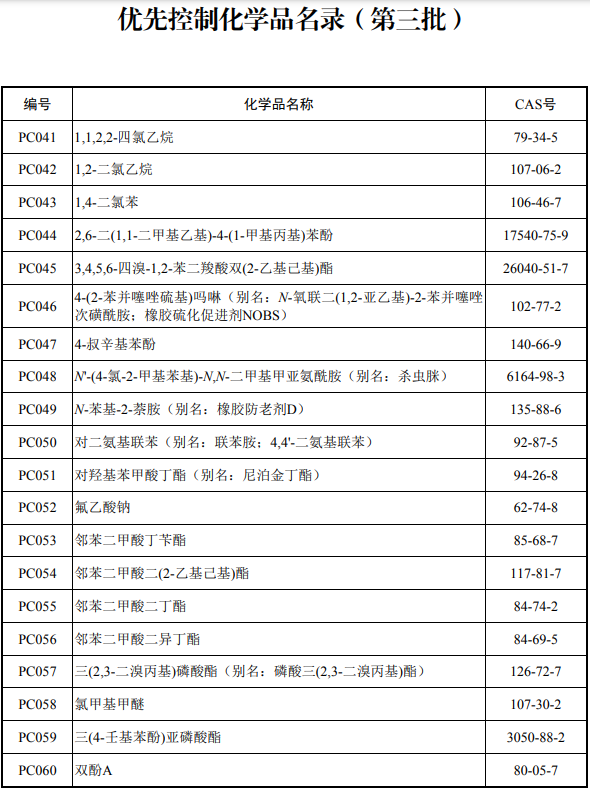
注意!双酚A等23种类化学品,被列入优先控制化学品名录!
Zhong Guo Hua Gong Bao· 2026-01-04 09:14
Core Viewpoint - The Ministry of Ecology and Environment and the National Health Commission have jointly issued the "Priority Control Chemical List (Third Batch)," which includes 23 chemical substances such as 1,1,2,2-tetrachloroethane and bisphenol A, focusing on high-risk chemicals with significant environmental and health impacts [1][2]. Group 1: Chemical Substances and Their Risks - The list includes 23 chemical substances, particularly those with persistent, bioaccumulative, and aquatic chronic toxicity properties, as well as carcinogenic, mutagenic, reproductive toxicity, and endocrine-disrupting characteristics [1][2]. - Notable substances in the list include 1,1,2,2-tetrachloroethane, bisphenol A, and various perfluoroalkyl and polyfluoroalkyl substances, which are linked to industries such as petrochemicals, plastics, pharmaceuticals, textiles, and pesticides [1][2]. Group 2: Regulatory Measures and Industry Response - The management of the chemicals listed is primarily based on environmental impact assessments for construction projects, pollution discharge permits, and soil and groundwater pollution prevention measures [1]. - Companies are encouraged to recognize the potential environmental and health risks associated with these chemicals and to proactively upgrade processes, enhance waste treatment, and develop environmentally friendly alternatives to minimize risks [2].
青岛生产总值,2025年有望成为北方第二城
Sou Hu Cai Jing· 2026-01-04 03:41
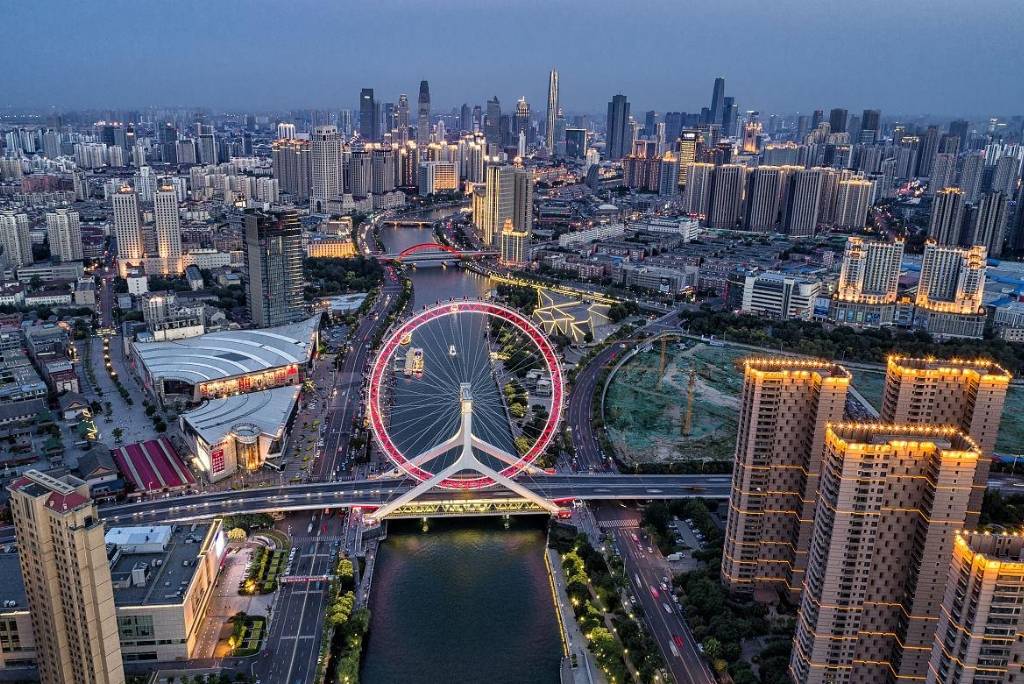
Group 1 - The competition for the title of the second city in Northern China is intensifying, with Qingdao poised to surpass Tianjin, breaking a nearly 50-year dominance by Beijing and Tianjin [1] - As of the third quarter, Tianjin's GDP stands at 13,416 billion, while Qingdao's GDP is at 13,373 billion, indicating a narrow lead of only 43 billion for Tianjin, but Qingdao's growth rate is higher by 0.7 percentage points [1] - The economic transition is a key factor in the competition, with Tianjin's traditional industrial strengths in petrochemicals, steel, and automotive industries becoming less advantageous, while Qingdao is focusing on emerging sectors like new energy vehicles and electronics [3] Group 2 - Qingdao's advantages include a significant port throughput and a vast coastline, which supports its "ocean+" industries, contrasting with Tianjin's declining industrial base [3] - A decade ago, Tianjin's economic scale was nearly double that of Qingdao, highlighting the rapid changes in their economic standings over the past ten years [5]
湖南石化环氧树脂产品链挖潜增效
Zhong Guo Hua Gong Bao· 2026-01-04 02:57
中化新网讯 湖南石化树脂部面对市场需求变化、行业竞争加剧等情形,坚持以科技创新助推环氧树脂 产品链挖潜增效。2025年,该部锚定122条攻关措施,7套装置综合能耗、4项单体消耗创历史最优水 平,新特产品销量同比增长77%,产品链实现扭亏为盈。 针对纤维增强树脂在苛刻使用环境中对阻燃性及力学性能要求高的实际情况,科研团队进行协同阻燃环 氧树脂开发及应用研究,开发的环氧树脂体系性能优异,满足阻燃、工艺、力学性能及加工硬度要求, 并得到成功应用,带动环氧树脂销量增长。 该部还对离子膜烧碱装置进行提高导电性能降电耗稳运行研究,开发出氯气吸收塔进口管防堵塞技术和 封闭式取样装置等,每吨产品电耗下降110千瓦时,电解槽母排温度下降20摄氏度左右,提升了装置稳 定运行产能。2025年以来,该装置实现增产节支"双效"。 该部有机氯装置氯丙烯单元受反应结碳、冷蒸塔运行周期短等因素影响,平均运行周期在3个月以内。 对此,科研团队进行氯丙烯单元长周期运行技术开发与应用研究,提高压缩机一级缓冲罐压力稳定性, 改进冷蒸塔进料流程,冷蒸塔运行周期由153天提高至211天以上。 ...
新版ETS或让欧洲石化业受益
Zhong Guo Hua Gong Bao· 2026-01-04 02:53
Group 1 - The European Commission has announced multiple revisions to the EU Emissions Trading System (ETS) guidelines to assist high-energy industries facing carbon leakage risks, including the petrochemical sector [1][2] - The revisions are part of the European Chemical Industry Action Plan released earlier in 2025, aimed at addressing the rising ETS costs that have increased carbon leakage risks for high-energy industries [1] - The updated guidelines expand the list of eligible industries for compensation, adding 20 new industries and 2 sub-industries, including petrochemicals, and increasing the aid intensity from 75% to 80% to mitigate the carbon leakage risks [2] Group 2 - The current ETS guidelines allow member states to partially compensate industries at risk of carbon leakage due to high electricity prices caused by rising carbon costs [2] - The revisions are crucial for the struggling European petrochemical industry, providing significant support against high electricity prices, which have been a major concern for the sector [2] - The revised ETS is expected to alleviate electricity cost pressures on the petrochemical industry while enhancing its international competitiveness and supporting decarbonization efforts [2]
波国油收购森索斯核心石化装置
Zhong Guo Hua Gong Bao· 2026-01-04 02:51
中化新网讯 2025年12月29日,波兰石油天然气集团(波国油)与森索斯集团签署协议,全资收购负责建设 新丁二烯萃取装置的S54公司。该装置建成后将并入波国油普洛克生产基地,完善集团石化产业链条, 交易估值约6.92亿兹罗提。 波国油首席执行官伊雷纽什·法法拉表示,此次交易解决了烯烃Ⅲ项目及丁二烯装置投资遗留问题,标 志着双方合作迈入新阶段。波国油通过该方案重获装置完全控制权,为"新化工计划"推进扫清障碍,也 为双方透明共赢的长期合作奠定基础。 据悉,S54公司承建的丁二烯萃取装置将加工全部C4馏分,产出抽余油供下游石化环节使用。双方同步 签署多项协议及合同修订案,全面规范法律与商业合作关系。合作范围拓展至捷克市场,将克拉卢比丁 二烯合资企业及相关原料合同期限从2049年提前至2038年,并延长两年乙烯、苯产品的捷克市场承购 期。 此次收购源于数年前普洛克石化扩张计划,原项目曾独立于波国油管控体系。本次交易进一步强化了项 目安全性与运营灵活性,助力集团优化单体生产设施建设及环氧乙烷、乙二醇等产品的产能布局。 ...
新版ETS或让欧洲石化业受益
Zhong Guo Hua Gong Bao· 2026-01-04 02:44
Group 1 - The European Commission has announced multiple revisions to the EU Emissions Trading System (ETS) guidelines to assist high-energy industries facing carbon leakage risks, including the petrochemical sector [1][2] - The revisions are part of the European Chemical Industry Action Plan released earlier in 2025, aimed at addressing the rising ETS costs that have increased carbon leakage risks for high-energy industries [1] - The revised guidelines expand the list of eligible industries for compensation, adding 20 new industries and 2 sub-industries, including petrochemicals, and increase the aid intensity from 75% to 80% to mitigate the carbon leakage risks [2] Group 2 - The current ETS guidelines allow member states to partially compensate industries at risk of carbon leakage due to high electricity prices caused by rising carbon costs [2] - The revisions are crucial for the struggling European petrochemical industry, providing significant support against high electricity prices, which have been a major concern for the sector [2] - The expanded ETS is expected to alleviate electricity cost pressures on the petrochemical industry while enhancing its international competitiveness and supporting decarbonization efforts [2]
打造营商环境最佳口碑省,辽宁需要“代表作”
Xin Lang Cai Jing· 2026-01-03 10:00
2026年第一个工作日,辽宁将召开优化营商环境大会。新年第一会聚焦营商环境,辽宁"打造市场化法 治化国际化一流营商环境,短期内实现明显好转、根本好转,全力打造营商环境最佳口碑省"的决心显 而易见。 在辽宁,营商环境建设从来不是一个新话题,各种方案文件出台不少,但必须清醒认识到,营商环境的 优劣最终要靠实效说话,政策举措的价值终究要由市场主体的获得感来检验。辽宁打造一流营商环境, 需要一批"代表作",市场需要在这些"代表作"里感知变化、改善预期。 所谓营商环境"代表作",本质上是支持服务市场主体的具体案例和生动故事。它不是空洞的口号,也不 是抽象的数据,而是能让市场主体直观看到、真切体会到的成果——可以是企业发展困境被精准破解的 过程,可以是政务服务效率大幅提升的体验,也可以是公平竞争环境得到保障的案例。 "代表作"应该是对企业全生命周期的有效服务,需要精准对接。再好的政策若不能精准触达企业,也只 是纸上谈兵。领导干部进企业,是实现精准对接的好办法。2025年,辽宁出台省级领导联系企业制度帮 助协调解决问题,截至11月底,全省省级领导共联系企业280家,收集诉求1260条,解决率达92%,企 业满意度95%以上 ...