3D打印

Search documents
广东又给全球造了个大爆款
吴晓波频道· 2025-12-14 00:29
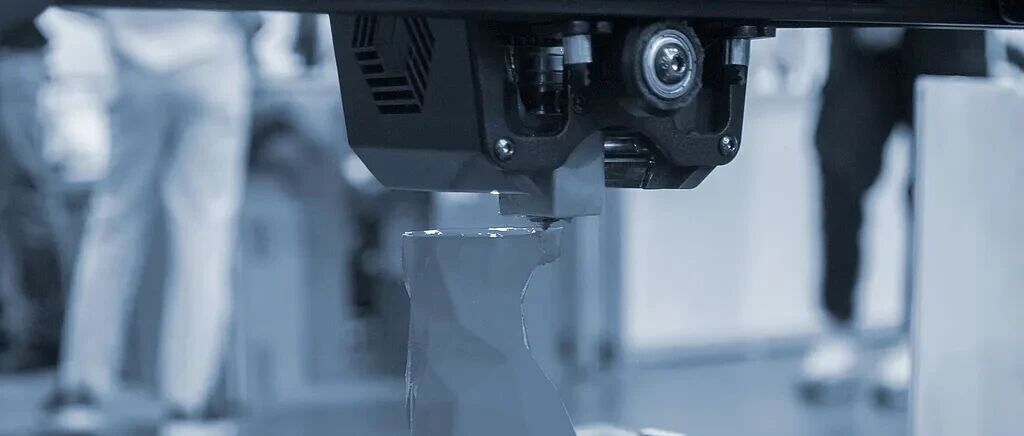
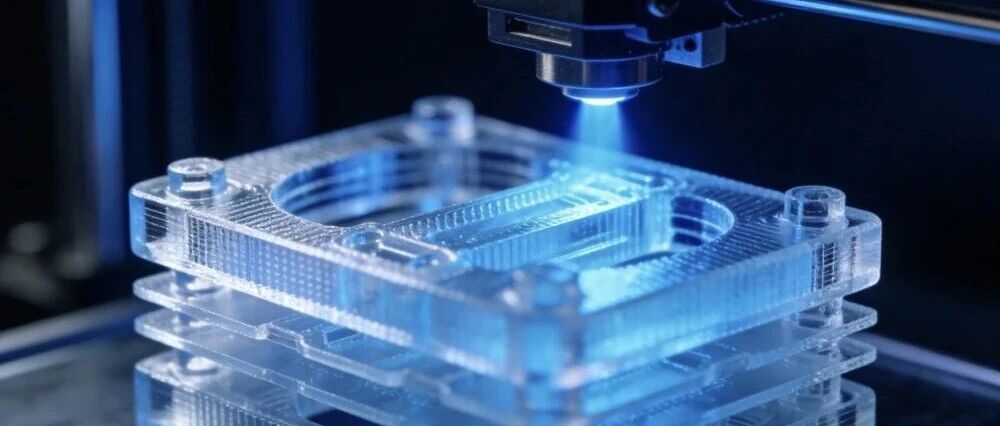
点击上图▲立即收听 " 中国消费级 3D 打印机家庭用户占比,从 2023 年的不足 20% 攀升到 2025 年的 45% 。 " 文 /巴九灵(微信公众号:吴晓波频道) 大部分人对3D打印机的印象,还停留在工业生产线上的"大块头"、前沿科技展会上的概念产品。如今,它却频繁出现在普通人的案头——为了更 直观地了解这个突然跑出的爆款,我们入手了一台千元左右的入门款以作尝试。 从收货到通电开机,再到完成初始化等一系列操作,不过十多分钟的时间。在APP里的上万个模型里挑选了一款,2个小时后,一只小手办来到了 我们手里。 想象一个画面:一台略小于台式电脑主机的桌面3D打印机,紧挨着办公的你独自作业。期间, 直径不足1毫米的喷嘴不断吐出加热融化的塑料, 在方形面板上画出一层一层的塑料薄层,不断堆叠、冷却,在你工作的几个小时里,打出了一只精致的"星星人"。 小巴用3D打印机尝试制作的玩具 这个被当代年轻人誉为"能打印万物"的大玩具,已经出现在了越来越多人的家里或者办公桌上。 双十一期间,在京东和天猫,消费级3D打印机卖出了上万台,几大品牌销售额同比增长超过80%。 社交媒体开始涌现一批又一批3D打印博主,他们晒出自己在 ...

3D 打印行业报告:飞入寻常百姓家,行业扩张奇点时刻降临
Orient Securities· 2025-12-13 07:11
Investment Rating - The report maintains a "Positive" outlook on the 3D printing industry, indicating a low current penetration rate and potential for rapid growth driven by the expansion of demand for customized products and the popularization of the 3D farm model [7]. Core Insights - The 3D printing industry is entering a "singularity moment," where growth is driven not just by technological breakthroughs but also by a paradigm shift in industrial manufacturing and a surge in consumer demand for personalized products. Key drivers include agile manufacturing advantages in industrial-grade 3D printing, the ability to produce complex shapes, and the democratization of technology in consumer-grade 3D printing [9][13]. - The global 3D printing market is projected to reach $21.9 billion in 2024, with a year-on-year growth of 9.31%. In China, the market is expected to reach 42.3 billion yuan, with a significant portion of revenue coming from equipment and services [9][69]. Summary by Sections Investment Suggestions and Targets - The report suggests that the 3D printing industry is poised for rapid growth due to low current penetration rates and expanding demand. Key investment targets include: - Consumer-grade 3D printing service operator Huina Technology (300609, not rated) - Industrial-grade metal printing equipment manufacturers Plater (688333, not rated) and Huashu High-Tech (688433, not rated) - 3D printing material suppliers Jialian Technology (301193, not rated) and Youyan Powder Materials (688456, not rated) [4][21]. Industry Overview - 3D printing technology is characterized by its flexibility and high production capacity, allowing for the creation of complex structures with minimal waste. The technology has evolved from traditional subtractive manufacturing to additive manufacturing, enabling significant design freedom and reduced production cycles [22][24]. - The main materials used in 3D printing include plastics and metal powders, with various technological routes such as FDM, SLS, and SLA being commercially viable [31][36]. Market Outlook - The global 3D printing market is experiencing a golden development period, with both consumer and industrial segments expected to expand. The U.S. leads the market, while the Asia-Pacific region is catching up rapidly. The market for 3D printing materials is projected to grow by 35.21% in 2024, with significant growth also seen in 3D bioprinting and metal additive manufacturing [58][62]. - In China, the 3D printing market is expected to reach 42.3 billion yuan in 2024, with a strong focus on equipment and services, which together account for 76% of the market [69][70]. Key Players - The report highlights the differentiation among leading companies in the industrial-grade 3D printing sector, with notable players like Plater and Huashu High-Tech excelling in metal 3D printing. In the consumer-grade sector, Huina Technology is building a supply-demand ecosystem through a combination of scale farms and offline stores [9][20][21].



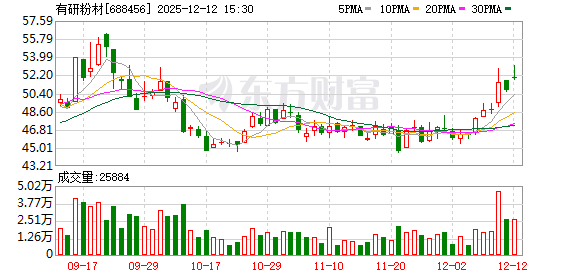
有研粉材:3D打印行业整体较为火爆,大量企业迅速涌入新市场
Zheng Quan Ri Bao· 2025-12-12 14:09
Group 1 - The 3D printing industry is experiencing significant growth, with many companies rapidly entering the new market [2] - After a period of market competition, weaker companies with less capital and strength are expected to be eliminated, leading to a more stable market structure for 3D printing [2]
89年泉州小伙卖3D打印机:融资数亿,还打破全球纪录
3 6 Ke· 2025-12-12 12:11
Group 1 - Snapmaker, a 3D printing brand, announced the completion of a multi-hundred million RMB Series B financing round on December 10 [1][2] - The financing round was led by Hillhouse Capital and Meituan, with participation from existing investors [2] - Snapmaker's U1 3D printer set a record by raising 150 million RMB on a crowdfunding platform, marking the highest amount ever raised in 3D printing history [2] Group 2 - The consumer-level 3D printing market is expanding, with household users now accounting for 45% of the market, up from less than 20% three years ago [5][6] - Schools and small business owners are also significant buyers, with around 80% of schools planning to introduce 3D printing for STEAM education [5][6] - The global shipment of entry-level 3D printers surpassed 1 million units in Q1 2025, with 95% coming from Chinese suppliers [5][6] Group 3 - The industrial 3D printing market is seeing growth in sectors such as aerospace, medical implants, and automotive parts, with 13.24% of industrial attendees at the 2025 TCT Asia exhibition having procurement budgets over 5 million RMB [20][21] - Companies like Xunyi High-Tech are breaking foreign monopolies in continuous fiber and ceramic 3D printing, directly engaging with clients in aerospace and military sectors [23] - SIRUI Additive is addressing the issue of metal waste in aerospace and medical fields by recycling metal waste into usable powder, significantly reducing costs for companies [24][25] Group 4 - The rapid growth of the 3D printing industry is facing a talent shortage, with companies struggling to fill key technical positions [26][30] - The demand for interdisciplinary talent is high, as expertise in both 3D printing technology and specific industry requirements is necessary [31] - Companies like Snapmaker are investing heavily in talent acquisition to support their technological advancements and global expansion [31]

资本争相入局,3D打印赛道2025年融资超70笔,消费与工业双线爆发
机器人圈· 2025-12-12 09:49
Core Insights - In 2025, the domestic 3D printing sector is experiencing a surge in investment, with 75 investment events recorded, a significant increase from 55 in 2024, indicating strong growth potential in the industry [1][3][4]. Investment Statistics - A total of 75 investment events have occurred in the 3D printing sector, with 59 companies successfully attracting capital, reflecting a robust investment climate [1]. - Early-stage investments dominate the market, with 41 out of 75 financing events (54.7%) occurring in A+ rounds or earlier, showcasing investor confidence in early-stage projects [6]. Company Performance - Notable companies in the consumer-grade 3D printing segment include Aileku, which has achieved annual revenue exceeding 1.6 billion yuan and ranks first globally in consumer-grade light-curing 3D printing [8]. - KuaiZao Technology, backed by Hillhouse Capital and Meituan, has set crowdfunding records, raising over 150 million yuan for its flagship U1 3D printer, with plans for a global launch in 2026 [8]. - Atom Rebuild, focusing on consumer-grade 3D printers, has completed two rounds of financing and aims to enter the European and American markets by the end of 2025 [8]. Regional Distribution - Guangdong leads with 15 invested companies (25.4%), followed by Jiangsu with 14 (23.7%), indicating a clear regional concentration of investment in the 3D printing sector [9]. Industrial Focus - The industrial-grade segment is attracting significant capital, particularly companies targeting aerospace and automotive sectors. Companies like Xietong High-Tech have completed multiple financing rounds, emphasizing their focus on advanced industrial applications [10][11]. - SiRui Additive, established in 2023, has also gained attention for its innovative approach to recycling titanium alloy waste, highlighting the industry's shift towards sustainability [11]. Capital Landscape - The investment landscape is characterized by a mix of market-oriented venture capital and local state-owned early-stage investment institutions, with notable players like Meituan Longzhu and Hillhouse Capital actively participating [12]. - The overall investment trend in 2025 reflects a continuation of the maker movement and signifies a transition of Chinese manufacturing towards high-end production capabilities, with the 3D printing sector poised to become a key growth area in the next five years [12].
年营收超60亿元,它会成为3D打印领域的大疆吗?
Tai Mei Ti A P P· 2025-12-12 05:46
Core Insights - The conflict between DJI and TuoZhu Technology has escalated due to DJI's investment in a 3D printing company, which TuoZhu's founder views as a direct attack on his business [1] - TuoZhu has rapidly grown in the 3D printing market, attracting significant investment from top firms, indicating a shift in market dynamics [1] Company Background - TuoZhu Technology was founded by former DJI employees, including founder Tao Ye, who left DJI after eight years to pursue opportunities in 3D printing [2][5] - The founding team possesses extensive experience from DJI, allowing TuoZhu to replicate DJI's successful business strategies [4][5] Growth Strategy - TuoZhu's growth strategy mirrors DJI's approach: starting with high-quality products in niche markets, then aggressively pricing to capture broader consumer markets [6][8] - TuoZhu's first product, Bambu Lab X1, launched at approximately $1,000, achieving a printing speed of 500mm/s, significantly faster than the industry average [7] - By 2024, TuoZhu's annual shipments are projected to exceed 1.2 million units, capturing nearly 30% of the global market with revenues around 6 billion yuan [8] Ecosystem Development - TuoZhu has implemented a "3M strategy" focusing on Machine, Model, and Material to create a sustainable ecosystem for 3D printing [9][10] - The company launched MakerWorld, an open-source model platform, allowing users to easily print models and enhancing user engagement [10][12] - MakerWorld has grown to become the largest 3D printing model community globally, with around 50 million registered users and over a million models available [12] Market Dynamics - The global 3D printing market is projected to reach $24.6 billion by 2024, with a compound annual growth rate (CAGR) of 28%, indicating significant growth potential [13] - Investment activity in the 3D printing sector has surged, with over 70 investment events reported in 2023 alone, highlighting increased interest from capital markets [14] Competitive Tensions - DJI's recent investment in TuoZhu's competitor, SmartPrint, is perceived as a defensive move to mitigate the threat posed by TuoZhu's rapid growth and potential encroachment into DJI's core markets [15][17] - Talent retention has become a critical issue for DJI, as many former employees have successfully transitioned to startups, creating a competitive landscape that challenges DJI's market position [16][17]
刷新众筹记录后,这家3D打印公司拿到美团、高瓴和顺为的投资
Xin Lang Cai Jing· 2025-12-12 05:24
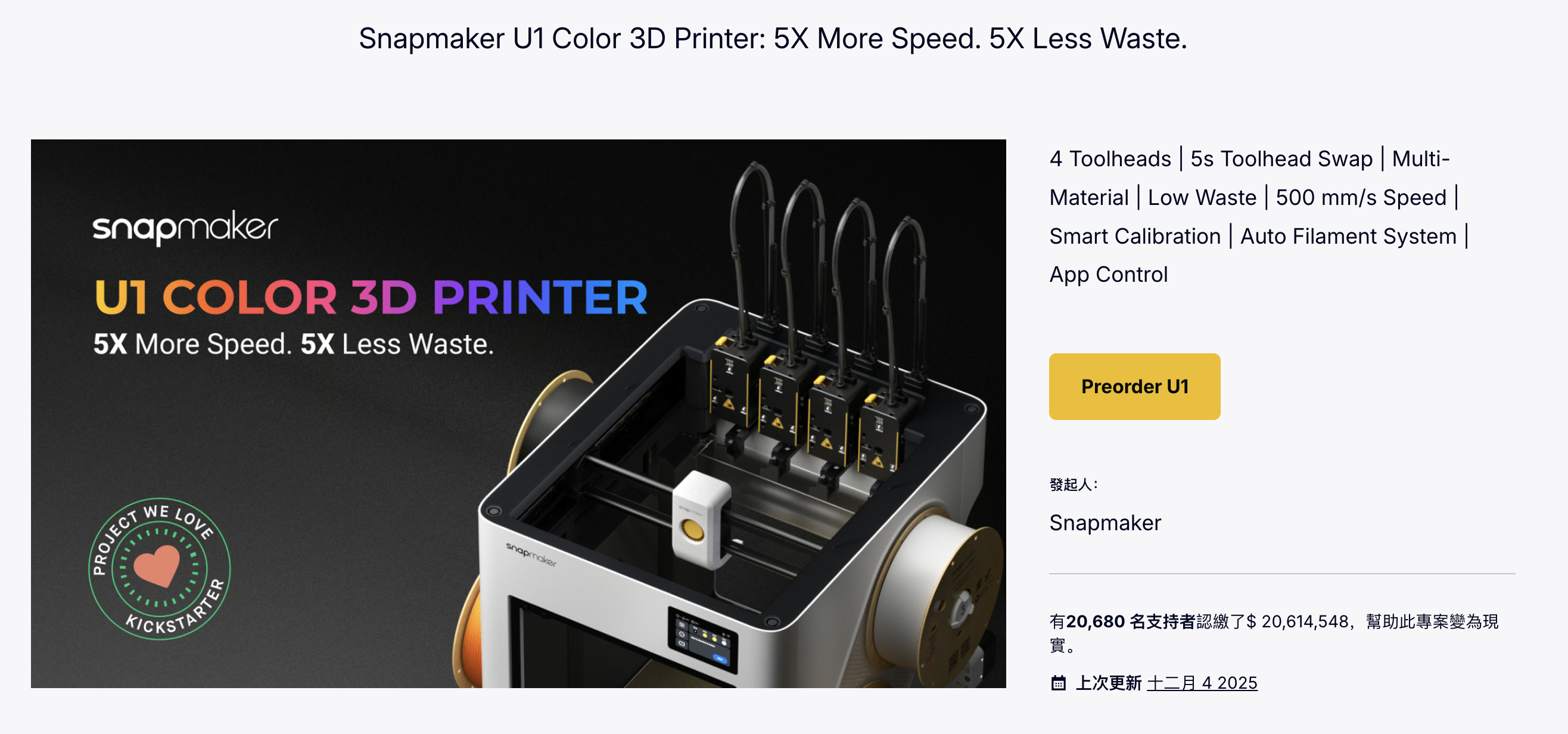
Core Insights - Snapmaker, a 3D printing company, has completed a multi-hundred million yuan Series B financing round led by Hillhouse Capital and Meituan, with participation from other investors including Shunwei Capital and Nanshan Zhanxin [1][12] - The company’s Snapmaker U1 3D printer achieved over $20 million (approximately 150 million yuan) in crowdfunding on Kickstarter, setting a record for the highest crowdfunding amount in the 3D printer category [1][4] - The U1 printer features innovative technology that allows for a five-second color change without interrupting the printing process, significantly improving printing efficiency by up to five times and reducing material waste by approximately 80% [5][6] Company Overview - Snapmaker is recognized as a leading player in the 3D printing industry, particularly after the successful launch of the U1 printer, which represents a shift from their previous "three-in-one" devices to a more focused product line [6][12] - The company plans to launch the U1 globally in the first quarter of 2026, with expectations of substantial revenue growth in the coming year [6][7] Market Context - The 3D printing industry has seen increased investment interest, with notable companies like DJI and other startups also securing funding, indicating a growing trend in the sector [12] - Competitors are beginning to introduce similar multi-color printing solutions, highlighting the competitive landscape in the 3D printing market [6][12] Future Plans - The recent funding will be allocated towards core technology development, talent acquisition in hardware and AI software, and building an open ecosystem to lower the barriers to 3D printing [12] - Snapmaker aims to address key challenges in multi-color printing and high-speed manufacturing as part of its strategic focus for the upcoming year [12]

10万亿!超越京沪,中国“第一城”易主了
Qian Zhan Wang· 2025-12-12 04:33
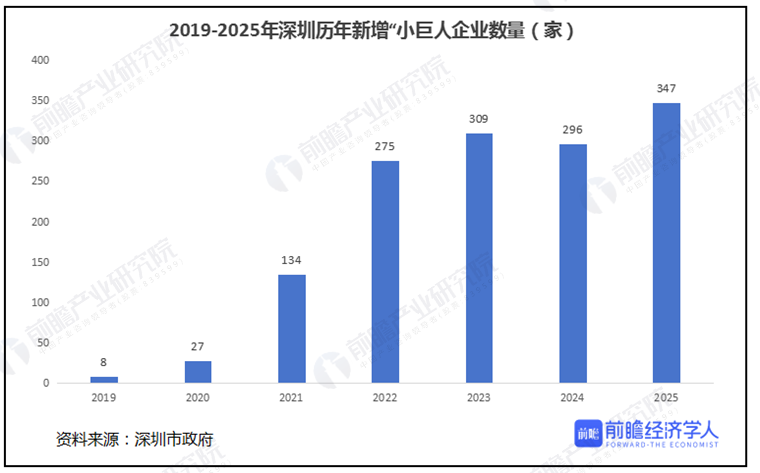
Core Viewpoint - Shenzhen has officially become China's "first city" for specialized and innovative "little giant" enterprises, surpassing Beijing and Shanghai in quantity and economic value [2][3][19]. Group 1: Overview of "Little Giants" - By the end of 2025, Shenzhen will have 1,333 "little giant" enterprises, leading the nation with 347 new additions, compared to Beijing's 1,210 and Shanghai's 1,032 [2][3]. - The total market value of these enterprises is estimated to be close to 10 trillion yuan, based on an average market value of 71 million yuan per listed "little giant" [3][8]. - These enterprises are concentrated in key areas of national focus, such as "manufacturing power" and "strengthening supply chains," with high entry barriers requiring domestic leadership in niche sectors and significant R&D investment [3][8]. Group 2: Growth and Innovation - Shenzhen's "little giants" exhibit remarkable growth, with an average time of 13 years from establishment to becoming a national-level "little giant," which is 1.71 years faster than the national average [8]. - The average R&D intensity of these enterprises is 7.63%, with annual R&D expenditure averaging 33.39 million yuan, significantly higher than the national average [8][19]. - These companies are also active in patent applications, averaging 152 patents per enterprise, with nearly 30% involved in setting international or national standards [8][19]. Group 3: Ecosystem and Support - Shenzhen's "20+8" industrial cluster strategy serves as a core engine for nurturing "little giant" enterprises, providing a structured ecosystem for growth and collaboration [9][10]. - The government facilitates connections between large and small enterprises through mechanisms like "chain leader" and "chain master" systems, resulting in over 500 technical cooperation agreements in 2024 alone [12][14]. - The city combines effective market strategies with government support, creating a comprehensive market support system that includes local validation and global expansion initiatives [14][15]. Group 4: Financial Support - Shenzhen has developed a "bold capital" approach to support innovative enterprises, allowing for long-term investments in high-tech sectors despite initial project risks [16][19]. - The city has established four major equity investment platforms to back innovative enterprises, with significant investments in numerous "little giants" [16][19]. Group 5: Future Implications - Achieving the title of "first city" for specialized and innovative enterprises marks a new starting point for Shenzhen, strengthening its industrial foundation and enhancing its resilience against global market fluctuations [19][20]. - The pathway from "little giants" to potential global leaders indicates a clear trajectory for future economic growth, with these enterprises expected to contribute significantly to Shenzhen's high-quality development [19][20].


消费级3D打印企业快造科技完成数亿元B轮融资,高瓴创投、美团、顺为资本加速入局消费级3D打印
机器人圈· 2025-12-11 10:01
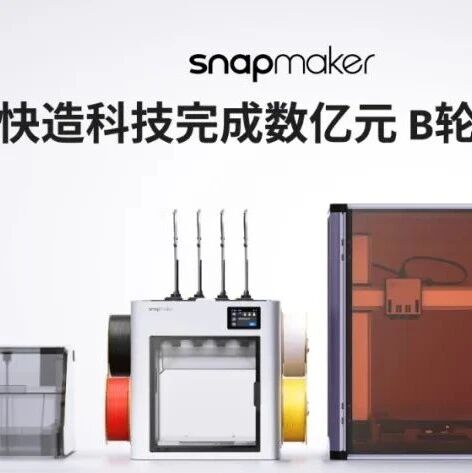
Core Insights - Snapmaker has completed a multi-hundred million RMB Series B financing round, led by Hillhouse Capital and Meituan, with participation from several other investors. The funds will be used for core technology development, talent recruitment, and content ecosystem construction to accelerate the popularization of consumer-grade 3D printing [2] Group 1: Company Development - Since its establishment in 2016, Snapmaker has focused on consumer-grade 3D printing, breaking crowdfunding records globally. The Snapmaker 2.0 raised over 54 million RMB, setting a record in the technology category, and holds the largest market share globally [3] - The flagship product, U1 3D printer, achieved over 150 million RMB (approximately 20 million USD) in crowdfunding, becoming the highest-funded 3D printing project in history, supported by over 20,000 users, indicating strong market demand for efficient multi-color printing [3] Group 2: Product Innovation - Snapmaker's breakthroughs stem from precise insights into user needs and deep integration of technology. The U1 printer features the innovative SnapSwap™ independent four-head system, allowing for rapid material switching and significantly improving printing efficiency and stability, achieving five times the speed and material savings [4] - The U1 crowdfunding orders have been fully delivered, with plans for a global launch in Q1 2026, and the company anticipates several-fold revenue growth next year [4] Group 3: Strategic Focus Post-Financing - The recent financing is seen as a pivotal point for Snapmaker, transitioning from product leadership to ecosystem enhancement. The company aims to accelerate core technology development, expand global talent acquisition, and build an open ecosystem to lower the barriers for 3D printing [6] - Snapmaker is actively recruiting top talent in hardware development, AI software, and content ecosystem fields, emphasizing that innovation is driven by talent [6]
一家“手艺人”VC的水下8年丨入局
3 6 Ke· 2025-12-11 03:12
Core Insights - The article highlights the successful fundraising of over 1 billion RMB by a market-oriented RMB fund, Jing Shui Hu Venture Capital, within a year, indicating a positive trend in the RMB fund market [2][3] - The founder, Zhang Yi, emphasizes a focus on identifying alpha companies rather than following market trends, showcasing a pragmatic investment philosophy [3][11] Fundraising and Investment Strategy - Jing Shui Hu Venture Capital has raised a total of over 1 billion RMB in less than 12 months, including a recent 500 million RMB blind pool fund [2] - The fund has successfully attracted new limited partners (LPs) such as Yuan He Chen Kun and Xiamen Capital, while maintaining government-guided fund contributions below 30% [2][12] - The firm maintains a controlled fund size of around 500 million RMB per fund to optimize investment strategies and avoid the pitfalls of larger fund sizes [16][17] Investment Philosophy - Zhang Yi's investment approach is characterized by a focus on early-stage companies with strong fundamentals, as demonstrated by successful investments in companies like Wo Tai Energy and Polymaker [4][6][10] - The firm prioritizes investments in sectors such as smart energy, industrial technology, and algorithm-driven companies, primarily in regions like Beijing and the Yangtze River Delta [11][12] - The strategy includes a disciplined approach to exiting investments, with a focus on liquidity and timely returns to LPs [18][21] Market Position and Trends - The firm has adapted to market challenges, such as the IPO bottleneck, by establishing S funds to provide liquidity and enhance returns for existing LPs [20][21] - Zhang Yi's insights into market dynamics emphasize the importance of understanding cycles and focusing on micro-level project evaluations rather than macroeconomic predictions [22]