储能

Search documents
移动储能车爆发前夜
高工锂电· 2026-03-07 05:44
Core Viewpoint - The article highlights the emerging market for mobile energy storage vehicles, which are gaining traction as a flexible and efficient solution in the energy sector, particularly in response to the growing demand for energy transition and decentralized energy systems [4][25]. Group 1: Industry Development - A niche market for mobile energy storage vehicles is quietly forming, with various players actively deploying these systems [4][5]. - Major state-owned enterprises like Southern Power Grid and State Grid have begun operating mobile energy storage vehicles in multiple provinces, showcasing their utility in high-traffic areas [6][14]. - Companies such as XINWANDA, Guoxuan High-Tech, and Yingke Shuneng are among those delivering mobile energy storage vehicles, indicating a diverse competitive landscape [7][10]. Group 2: Market Players - The market features a variety of players, including battery manufacturers, specialized integrators, and vehicle manufacturers, each leveraging their core strengths to enter the market [8][10]. - Key players include XINWANDA, Guoxuan High-Tech, and Yingke Shuneng, with products ranging from high-capacity vehicles to specialized solutions for specific industries [12][11]. Group 3: Product Characteristics - Mobile energy storage vehicles are categorized into several types based on capacity and application, including large capacity models (1 MWh to 2+ MWh) and modular designs [15][19]. - For instance, XINWANDA's 2 MWh mobile storage vehicle features advanced liquid cooling technology and can replace diesel generators, significantly reducing operational costs [17][19]. Group 4: Commercialization and Applications - Companies like Yingke Shuneng have successfully deployed mobile storage vehicles for commercial use, achieving over 60% savings in electricity costs compared to diesel generators [13]. - The Southern Power Grid has implemented zero-carbon mobile storage vehicles in Shenzhen, while State Grid has deployed several units for emergency charging in service areas [14]. Group 5: Trends and Future Outlook - The mobile energy storage vehicle market is evolving towards regular use and smart integration into energy systems, with four key trends identified: broadening application scenarios, technological advancements, integration into new power systems, and innovative business models [22][25]. - The market is transitioning from selling equipment to offering comprehensive services, including hardware, operations, and data management, exemplified by Guoxuan High-Tech's flexible leasing models [25].

储能产业经历深度调整期
中国能源报· 2026-03-07 00:39
Core Viewpoint - The rapidly developing energy storage industry is undergoing a deep adjustment period, transitioning from a phase of "policy-driven scale expansion" to "market-driven high-quality development," indicating a rational reshuffling of the industry [2][8]. Project Construction Adjustments - Numerous energy storage projects have been halted or suspended, with reasons including project changes and improper bidding conditions. For instance, the Tongshan Weiyu new independent shared energy storage project faced a failed bid due to the first candidate not signing the contract within the stipulated time [4]. - In regions like Ningxia and Shanxi, some projects have stagnated due to long delays in construction initiation and withdrawal of investment. In February, Ningxia announced the cancellation of nine energy storage projects, including a significant project with a total investment of 1.5 billion yuan [5]. Rational Reshuffling Phase - The energy storage industry is entering a phase of rational reshuffling, with companies becoming increasingly cautious in their project layouts due to market changes and stricter regulations. Many companies have chosen to pause or reduce investments in energy storage projects [7][8]. Shift in Industry Focus - The focus of the energy storage industry is shifting from mere scale expansion to quality improvement and efficiency growth. The cancellation of ineffective capacities is accelerating, and core technology and continuous innovation capabilities are becoming crucial for companies to maintain their positions during this reshuffling [10]. Value Growth and Technological Advancements - The energy storage industry is moving towards a new stage of value growth, with rapid technological iterations. Long-duration energy storage is emerging as a viable solution for renewable energy consumption challenges, prompting companies to invest in the development and production of large-capacity energy storage batteries [12]. - As of December 2025, China's cumulative installed capacity for energy storage reached 213.3 GW, a year-on-year increase of 54%. The market share of new energy storage technologies, particularly lithium batteries, has seen significant growth, now accounting for over two-thirds of the total installed capacity [12]. Storage Duration Trends - The average duration of new energy storage installations is gradually increasing, projected to rise from 2.11 hours in 2021 to 3.47 hours by 2030. This trend reflects ongoing technological advancements and growing market demand for long-duration energy storage solutions [13].
全国人大代表姚金健:构建适配新型电力系统的多元储能技术体系,巩固我国储能产业技术优势
中国能源报· 2026-03-06 12:08
Core Viewpoint - The new energy storage is a core support for building a new energy system in China, playing a strategic role in ensuring the safety of the new power system, promoting low-carbon energy transition, and serving the "dual carbon" goals [2] Group 1: Industry Development - China's new energy storage industry has a comprehensive strength that ranks globally, with over 70% of global energy storage battery production and a domestic core material localization rate exceeding 95% [2] - The industry has entered a critical period of scaled development, with deep-seated contradictions emerging that restrict high-quality development [2] Group 2: Technological Innovation - It is essential to strengthen technological innovation to seize the global competitive high ground in energy storage technology, focusing on core demands for high safety, low cost, long life, and large capacity [2] - The establishment of national innovation centers and key laboratories in collaboration with leading enterprises, universities, and research institutions is recommended to tackle key areas such as solid-state battery electrolytes and long-duration flow battery core materials [2] Group 3: Market Mechanism Improvement - A unified and differentiated capacity compensation standard should be established nationwide to address the mismatch between value and revenue in energy storage [3] - The promotion of new business models such as shared energy storage and energy storage leasing is suggested to lower initial investment barriers for users [3] Group 4: Industrial Ecosystem Optimization - A differentiated and collaborative industrial layout should be constructed based on local resource endowments and development needs, with a focus on high-end R&D and core equipment manufacturing in the eastern regions [3] - A complete lifecycle recycling system for energy storage batteries should be established to prevent environmental risks and enhance the collaborative efforts of the industry chain [3] Group 5: Globalization and Risk Management - Support for leading energy storage enterprises to expand into overseas markets through the "Belt and Road" initiative is crucial, promoting a model of "technology output + localized production" [4] - The development of specialized insurance products tailored to the energy storage industry is recommended to mitigate operational risks and enhance safety [4]
有色新能源周度报告-20260306
中盛期货· 2026-03-06 11:27
1. Industry Investment Rating - No relevant information provided 2. Core View of the Report - The report analyzes the price trends of major domestic metal spot and futures markets, the inventory situation of copper, the processing fees of copper concentrates, and the demand - side situation of non - ferrous metals. It also gives short - term and medium - long - term outlooks and risk points for key varieties such as lithium carbonate and tin [4][19][34][38] 3. Summary by Related Catalogs 3.1 Domestic Main Metal Spot Price Trends - Copper: The futures主力合约CU2604 fell from 103920 to 101050, a weekly decline of 2.76%. The average price of 1 copper in Shanghai spot dropped from 102140 to 101610, a weekly decline of 0.52% [4] - Aluminum: The futures主力合约AL2605 rose from 23925 to 24785, a weekly increase of 3.59%. The average price of A00 aluminum in Shanghai spot rose from 23400 to 25110, a weekly increase of 7.31% [4] - Zinc: The futures主力合约ZN2604 fell from 24710 to 24260, a weekly decline of 1.82%. The average price of 0 zinc in Shanghai spot rose from 24470 to 24730, a weekly increase of 1.06% [4] - Lead: The futures主力合约PB2604 fell from 16840 to 16775, a weekly decline of 0.39%. The average price of 1 lead ingot rose from 16575 to 16600, a weekly increase of 0.15% [4] - Nickel: The futures主力合约NI2605 fell from 141560 to 137140, a weekly decline of 3.12%. The average price of 1 electrolytic nickel fell from 142650 to 140500, a weekly decline of 1.51% [4] - Alumina: The futures主力合约AO2605 rose from 2744 to 2832, a weekly increase of 3.21%. The alumina price in Foshan spot rose from 2670 to 2680, a weekly increase of 0.37% [4] - Industrial Silicon: The futures主力合约SI2605 rose from 8395 to 8690, a weekly increase of 3.51%. The average price of 553 silicon remained unchanged at 9400 [4] - Lithium Carbonate: The futures主力合约LC2605 fell from 176040 to 156160, a weekly decline of 11.29%. The average price of battery - grade lithium carbonate fell from 174100 to 154800, a weekly decline of 11.09% [4] - Polysilicon: The futures主力合约PS2605 fell from 46495 to 41115, a weekly decline of 11.57%. The price of N - type polysilicon material fell from 52000 to 49000, a weekly decline of 5.77% [4] - Tin: The futures主力合约SN2604 fell from 453240 to 393660, a weekly decline of 13.15%. The average price of 1 tin in Shanghai spot fell from 430250 to 397050, a weekly decline of 7.72% [4] 3.2 Copper Inventory Trends in Major Exchanges - LME copper inventory rose from 25.36 million tons to 28.22 million tons, a weekly increase of 11.28% [19] - COMEX copper inventory fell from 60.1 million tons to 59.97 million tons, a weekly decline of 0.22% [19] - SHEF copper inventory rose from 39.15 million tons to 42.51 million tons, a weekly increase of 8.58% [19] 3.3 Copper Concentrate Processing Fees - As of March 5, 2026, the spot TC of copper concentrate was - 56 US dollars/ton, with a slight weekly decline, remaining at a historical extreme negative value. The spot RC was - 5.6 cents/pound, and the expectation of tight supply at the mine end still existed [23] 3.4 Lithium Spodumene Concentrate Index - As of March 6, 2026, the latest quote was 2155 US dollars/ton, a weekly decline of 217 US dollars/ton [25] 3.5 Non - ferrous Metals Demand Side - In January 2026, the production and sales of automobiles in China were 2.45 million and 2.346 million respectively. Production increased slightly by 0.01% year - on - year, while sales decreased by 3.2% year - on - year. Compared with the previous month, they decreased by 25.7% and 28.3% respectively. The production and sales of new energy vehicles were 1.041 million and 0.945 million respectively, with year - on - year growth of 2.5% and 0.1% respectively [29] - In 2025, the floor area under construction of real estate development enterprises was 6.5989 billion square meters, a year - on - year decrease of 10.0%. The floor area of new housing starts was 587.7 million square meters, a decrease of 20.4%. The floor area of housing completion was 603.48 million square meters, a decrease of 18.1% [31] - By the end of 2025, the cumulative installed power generation capacity in China was 3.89 billion kilowatts, a year - on - year increase of 16.1%. Among them, the installed capacity of solar power generation was 1.2 billion kilowatts, a year - on - year increase of 35.4%, leading in growth rate; the installed capacity of wind power was 0.64 billion kilowatts, a year - on - year increase of 22.9% [33] 3.6 Lithium Carbonate Market Analysis - Short - term: There is obvious double - top suppression, and short - term attention should be paid to the support at the 150,000 - yuan mark [34] - Medium - long - term: Focus on the actual realization of demand [35] 3.7 Tin Market Analysis - Short - term: Pay attention to the competition at the 400,000 - yuan mark [38] - Medium - long - term: Closely monitor the actual purchasing power of downstream demand and the latest policy guidance [40]
储能出海潮!超20企4天“连轴转”
行家说储能· 2026-03-06 10:41
Core Viewpoint - The article highlights the active participation of Chinese energy storage companies in European exhibitions, indicating a strategic move to penetrate the European market with tailored product strategies for 2026 [2]. Group 1: Market Dynamics - The energy storage market in Europe is experiencing significant growth, with major exhibitions in Romania, Poland, and Italy attracting numerous Chinese companies [2]. - Romania's energy department plans to support independent storage projects with €150 million for a 2.1GWh capacity [4]. - Poland has announced a $1.15 billion subsidy plan for large-scale storage projects, aiming for 172 projects totaling 3.9GW/14.5GWh by the end of 2028 [4]. - Italy is developing a procurement mechanism for long-duration storage, targeting 50GWh by 2030 [4]. Group 2: Company Strategies and Products - Trina Storage is promoting its Elementa series, focusing on high energy density systems and lifecycle services [7][9]. - Hongzheng Storage is showcasing its D-Cube-S125/261 standardized commercial storage systems, emphasizing replicability and scalability [10][12]. - Weiheng Intelligent is presenting its PC-G2 commercial storage system, featuring modular design and rapid deployment capabilities [13][15]. - Far East Storage is highlighting its PowerX W5 low-voltage wall-mounted battery for residential applications [16][18]. - Saiwei Digital Energy is displaying its high-efficiency energy storage solutions, including the Efficiency King S2 and Storage King X3 [19][21]. - Astech is promoting its LABEL liquid-cooled commercial storage systems, which have achieved significant cost reductions [22][24]. - Liandao Storage is featuring its FLEX-261 outdoor liquid-cooled unit and Tervol L16 residential storage product [25][27]. - Mingmei New Energy is showcasing its Max-Solaris series and PowerM-Pro container storage systems [28][30]. - Chint Power is presenting solutions for large-scale ground-mounted solar storage systems [31][33]. - Dongfang Rising is focusing on integrated solar-storage solutions for various market segments [34][35]. - Shouhang New Energy is demonstrating its PowerIn commercial solar-storage system [38][40]. - Qidian Energy is introducing its all-scenario smart energy solutions, including modular products for various applications [41][43]. - Maitian Energy is showcasing its S22 series and Power Q products for residential and commercial applications [45][47]. - Hemai is presenting its HiOne residential storage unit, designed for quick deployment [48][50]. - Huayuxin is promoting its commercial storage systems with high energy density and intelligent management [51][53]. - Guanlong Electric is displaying its grid-forming PCS and comprehensive storage solutions [55][57]. - Linyang Storage is focusing on liquid-cooled storage systems and strategic partnerships in Poland [58][61]. - Kubao Energy is introducing its FlexCombo 2.0 flexible storage solution, designed for modular expansion [62][64]. - Yingke Shuneng is launching its Stars CL261 series, emphasizing high integration and safety [66][68]. - Elecnova is presenting a range of storage products, focusing on modular design and compliance with European standards [70][72]. - Hisense Network Energy is showcasing its Hi-Prime series for residential applications, emphasizing safety and ease of installation [73][75]. - Yizhen Technology is highlighting its digital management platform for energy assets, showcasing AI-driven optimization strategies [79].
“发展新型储能”再次被提及
第一财经· 2026-03-06 08:55
Core Viewpoint - The article emphasizes the importance of developing new energy storage technologies in China, highlighting their role in supporting the new power system dominated by renewable energy sources, as reiterated in the government work reports for three consecutive years [3]. Summary by Sections New Energy Storage Development - New energy storage, excluding pumped hydro storage, is crucial for enhancing the flexibility and safety of the power grid, especially as wind and solar energy generation scales up [3]. - By the end of 2025, the installed capacity of new energy storage in China is expected to reach 136 million kilowatts, a more than 40-fold increase compared to the end of the 13th Five-Year Plan [3]. Utilization and Capacity - In 2025, the equivalent utilization hours of new energy storage are projected to be 1,195 hours, an increase of nearly 300 hours from 2024 [4]. - New energy storage is expected to free up 42.1 billion kilowatt-hours of consumption space for renewable energy, with a peak capacity exceeding 30 million kilowatts in summer [4]. Market Challenges and Policy Changes - Despite rapid growth, new energy storage faces profitability challenges due to factors like slow electricity market development and limited auxiliary service varieties, leading to a significant drop in rental income for independent storage projects [5]. - The cancellation of "policy-based storage" has resulted in a reduction of 50% to 70% in rental income, with internal rates of return dropping to 2.2% to 3.5% [5]. Policy Support and Economic Viability - Recent policy changes have integrated independent storage into the capacity price mechanism, establishing a three-tier revenue structure that includes energy market, auxiliary service market, and capacity pricing [5][6]. - This policy shift is expected to enhance the economic viability of new energy storage projects by providing a dual revenue model of guaranteed capacity pricing and market-based income [6]. Industry Trends - The number of independent storage project filings has surged, with 79 projects approved in Guangdong by March 6, 2026, nearing half of the total for 2025 and significantly higher than previous years [6]. - The industry is anticipated to enter a phase of true market development during the 14th Five-Year Plan, characterized by steady growth, diverse technology pathways, and an upgraded role as a core resource for system regulation [6].
详细日程发布 | ESIE 2026主题论坛:储能+AIDC协同发展
中关村储能产业技术联盟· 2026-03-06 08:41
Core Viewpoint - The article emphasizes the critical role of energy storage in supporting the stable operation of AI Data Centers (AIDC) amidst the exponential growth of AI computing power and the global electricity shortage. It highlights 2026 as a pivotal year for the convergence of AI computing and energy storage needs [3]. Group 1: Industry Trends - The "East Data West Computing" initiative and the global electricity shortage are driving energy storage from a supporting role to a central one in AIDC operations [3]. - 2026 is identified as a key turning point for the global explosion of AI computing power and the realization of energy storage demand [3]. - The industry is undergoing profound changes, focusing on high reliability, safety, and high-rate solutions for energy supply and demand [3]. Group 2: Forum Highlights - The forum will feature collaboration across the entire chain, with discussions among internet giants, operators, AI chip manufacturers, and leading energy storage companies on the synergy between computing power, electricity, and energy storage [4]. - It will focus on technological advancements, exploring how electrochemical storage, supercapacitors, and networked solutions can support stable AIDC operations [5]. - A dual perspective will be adopted to build an efficient cooperation platform, addressing both demand (internet companies/operators) and supply (energy/storage companies) [6]. Group 3: Event Details - The 14th Energy Storage International Conference and Expo (ESIE 2026) will take place from March 31 to April 3, 2026, at the Capital International Exhibition Center in Beijing [10][28]. - The event will include various forums and discussions on global energy storage market trends, independent storage project development, and the collaboration between storage and new business models [7][24].
2026年全球经济和大类资产白皮书:穿越周期,洞见新机
Ge Lin Qi Huo· 2026-03-06 08:08
1. Report Industry Investment Rating No information provided in the report. 2. Core Views of the Report - The global economy is undergoing a paradigm shift from globalization to geopolitics, with geopolitical risks becoming a core variable in asset pricing. The global economy is at the end of the depression phase of the previous information technology cycle, and 2026 - 2027 is expected to be a global economic trough, followed by a new cycle centered on artificial intelligence and new energy [4]. - The world economic pattern is being reshaped, with the US - China game leading to the reorganization of the order. The US economy shows signs of stagflation and faces policy dilemmas, while the Chinese economy has both challenges and resilience. Other economies are also experiencing differentiation [4]. - The core driving forces include the technological revolution, energy transformation, and geopolitical games, which will have a profound impact on the global economy and asset prices [4]. - In 2026, different asset classes have different investment strategies, such as gold as a core asset, copper and aluminum as strategic assets, and attention to structural opportunities in various markets [6]. 3. Summary by Relevant Catalogs Chapter 1: Historic Turn in the Context of a Century - Long Change - **Paradigm Shift from Globalization to Geopolitics**: The global political - economic pattern is shifting from globalization to geopolitics, with geopolitical risks becoming a key factor in asset pricing. Trump's potential radical trade policies are an extreme manifestation of this trend [17]. - **Positioning from the Perspective of the Kondratieff Cycle**: The global economy is at the end of the depression phase of the previous information technology cycle, expected to end in 2026. This will resonate with the bottom of the Kitchin inventory cycle, and 2026 - 2027 may be a significant global economic trough [18]. Chapter 2: Fission and Reconstruction of the Global Macroeconomy - **World Economic Pattern and Order Reorganization**: The "east - rising and west - falling" trend is non - linear. The US - China game will lead to the reorganization of the monetary system, trade rules, and international political order, and the global economy is moving towards "grouping" and "camp - forming" [23]. - **US Economic Stagflation and Policy Dilemmas**: The US economy shows signs of stagflation, with weakening growth momentum and stubborn inflation. The government's debt has exceeded $38 trillion, and the Fed is in a dilemma between cutting interest rates and controlling inflation [24][27]. - **China's Economic "New Normal"**: China's economy faces challenges such as population aging, high leverage, and real - estate adjustment, but also shows resilience in exports and the development of new - quality productivity. In 2026, active fiscal policies and real - estate stabilization policies will support the economy [49]. - **Differentiation and Risks of Other Major Economies**: Europe's manufacturing PMI is contracting, facing recession risks; Japan's interest - rate hike cycle is fragile, which may trigger a Japanese debt crisis; India's economic growth shows signs of slowing down [71][74][75]. Chapter 3: Analysis of Core Driving Forces: Technology, Energy, and Politics - **New - Round Technological Revolution**: The core driving force is "artificial intelligence + new energy + digital finance". The Juglar cycle is in an upward phase, spurring investment in high - tech industries. AI will reshape traditional industries and drive demand for underlying hardware [80]. - **Energy Revolution and Reconstruction**: The new - energy revolution is reshaping the global energy demand pattern, but resource nationalism is on the rise, increasing global mining costs. Localization policies distort global pricing [81]. - **Great - Power Games and Geopolitics**: The US - China game is a core variable, with a "fight - but - not - break" situation in areas such as technology decoupling and key - mineral control. Geopolitical conflicts in various regions bring uncertainties to the global market [89]. Chapter 4: 2026 Asset Allocation Strategies - **Precious Metals**: Gold is a "ballast stone" due to central - bank purchases, safe - haven demand, and interest - rate cuts. Silver has strong industrial demand and is suitable for tactical allocation [91]. - **Industrial Metals**: Copper is a core strategic asset. Supply is limited, while demand from the new - energy revolution is strong, making copper prices likely to rise [99]. - **Energy and Chemicals**: Global crude - oil demand growth is slowing, but supply is fragile. Geopolitical events drive short - term price fluctuations, and investors should focus on structural opportunities [103]. - **Equity Markets**: Global stock markets face complex situations. US stocks face risks of AI bubbles and profit pressure, while A - shares and Hong Kong stocks have structural opportunities [104]. - **Fixed - Income Markets**: US Treasury yields may steepen, with limited downward space for long - term yields. Chinese bonds have downward space for yields and are suitable for risk - aversion [109]. - **Foreign - Exchange Markets**: The US dollar may show a volatile pattern, and the RMB is expected to remain stable within the range of 6.8 - 7.2 [114]. Chapter 5: Risk Warnings and Summary Outlook - **2026 Investment Strategy Summary**: In 2026, the market will be highly volatile and uncertain, with structural opportunities. The core idea of asset allocation is to focus on defense, seize opportunities, and emphasize structure. Strategic allocation of gold, core offensive in strategic metals, and attention to China's new - quality productivity direction [125].
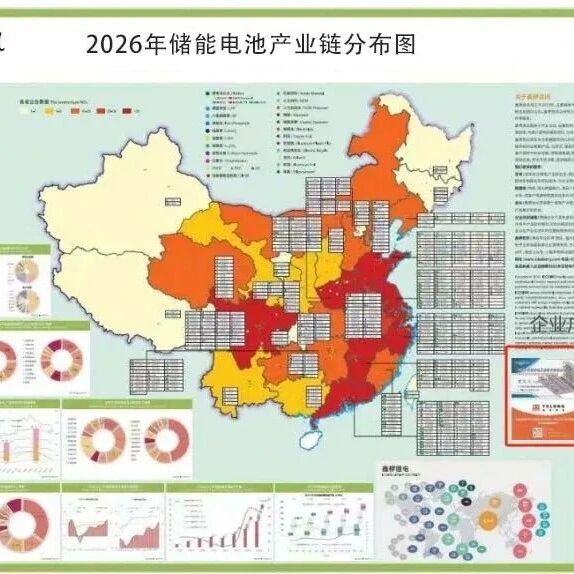
招商!鑫椤资讯2026中国储能产业分布图
鑫椤锂电· 2026-03-06 07:51
Group 1 - The article emphasizes the importance of a distribution map for energy storage companies, serving as a targeted advertisement to decision-makers in the industry [1][3] - The map will be distributed to over 30,000 key personnel in the energy storage supply chain, acting as an invitation to enter core circles [1] - It highlights the regional layout heat map, which marks leading enterprises and industrial clusters in key provinces and cities across the country [4] Group 2 - The article outlines a comprehensive industry chain map covering the entire supply chain from lithium mining to application, including core enterprises in each segment [4] - It provides a policy heat index that clearly shows subsidy levels, storage requirements, and electricity pricing policies across different provinces [5] - The article mentions various sponsorship opportunities for companies to display their logos and information on the distribution map [8]
12家储能企业营收超1500亿,行业爆发新一轮“抢钱大战”开始
投中网· 2026-03-06 07:13
Core Insights - The energy storage industry is experiencing a significant recovery, with 12 listed companies reporting a total revenue of 151.72 billion yuan and a net profit of 9.10 billion yuan for 2025, indicating a positive trend in performance [6][8]. Group 1: Company Performance - Among the 12 companies, Siyuan Electric led with a net profit of 3.16 billion yuan, followed by Tianneng Co. and Haibo Sichuang with 1.59 billion yuan and 0.95 billion yuan respectively [6][7]. - Nine out of the twelve companies reported positive profit growth, with four companies (Xiamen Tungsten New Energy, Haibo Sichuang, Siyuan Electric, and Pylon Technologies) achieving over 40% year-on-year growth [6][8]. - Pylon Technologies exhibited the highest growth rate at 104.64%, marking it as the fastest-growing company among the twelve [6][8]. Group 2: Market Trends - The global energy storage battery shipment reached 651.5 GWh in 2025, a year-on-year increase of 76.2%, with Chinese companies accounting for 614.7 GWh, representing 94.4% of the global market [9]. - The recovery in the domestic and international energy storage markets has been a significant factor driving revenue growth for these companies [9][11]. Group 3: Challenges and Strategies - Companies like Pylon Technologies and Rongbai Technology are facing challenges such as intensified market competition and rising costs due to changes in export tax policies [12][13]. - To mitigate risks, Pylon Technologies is diversifying its market strategy by expanding into Southeast Asia, Africa, and the Middle East, while Rongbai Technology is focusing on collaborative efforts in various battery materials [13]. Group 4: Solar Component Companies - Major solar component manufacturers such as Canadian Solar, Trina Solar, JinkoSolar, JA Solar, and LONGi Green Energy have also entered the energy storage market, indicating a trend of integration between solar and storage [14]. - In 2025, these companies reported significant growth in their energy storage businesses, with Canadian Solar entering a profitable phase and achieving substantial order volumes [15][16]. - Despite the growth, the overall contribution of energy storage to their total revenue remains limited, with most companies still reporting losses [16][17]. Group 5: Future Outlook - For 2026, Canadian Solar anticipates global large-scale energy storage shipments to reach 14-17 GWh, while Trina Solar aims for 15-16 GWh [18]. - The competitive landscape in the energy storage sector is expected to intensify as companies expand their production capacities and market reach [18].