生物制造

Search documents
“保持投资合理增长”——政策周观察第56期
一瑜中的· 2025-11-25 10:50
Group 1 - The core message emphasizes the importance of reform and innovation, as highlighted in the speech by the General Secretary on November 21, which calls for a commitment to ideals and the need for continuous self-revolution within the party [2][8] - The speech also stresses the necessity of enhancing the people's sense of gain, happiness, and security, aiming for substantial progress in common prosperity [8] - The focus on utilizing both domestic and international resources for development is reiterated, along with the need for a comprehensive and planned approach to reform [8] Group 2 - Recent high-level inspections by government officials, including Ding Xuexiang and He Lifeng, indicate a strong emphasis on maintaining reasonable investment growth and improving investment efficiency across various sectors [3][9][10] - The inspections covered advanced manufacturing, smart manufacturing, and the development of new-generation information technology, highlighting the importance of optimizing traditional industries and nurturing emerging sectors [9] - The government is actively addressing external pressures on foreign trade and promoting a modern logistics system to enhance competitiveness [10] Group 3 - The State-owned Assets Supervision and Administration Commission (SASAC) held a meeting on November 21 to promote the specialization and integration of central enterprises, focusing on key areas such as new materials and artificial intelligence [13] - The Ministry of Industry and Information Technology launched a commercial trial for satellite IoT services, indicating a push towards integrating industrial internet and artificial intelligence [14] - The education sector is also being reformed to support modernization efforts, with initiatives aimed at enhancing talent cultivation and integrating technology with industry [15]


“全球南方”媒体关注海南自由贸易港建设进展
Hai Nan Ri Bao· 2025-11-25 01:20
Core Insights - The Hainan Free Trade Port is set to officially launch its full island customs closure on December 18, attracting significant global media attention [2] - Preparations for the customs closure are progressing smoothly, with foundational conditions already in place, including the establishment of key policy frameworks and completion of necessary infrastructure [2][3] Group 1: Customs Closure Preparations - The overall progress for the full island customs closure is on track, with essential policy systems established, including import tax item catalogs and tax policies for goods circulation [2] - Infrastructure is fully constructed, with eight open ports and ten "second-line ports" completed, alongside 64 anti-smuggling enforcement stations operational [2] - Continuous pressure testing is being conducted to ensure effective policy implementation and risk management, with comprehensive drills planned as the closure date approaches [2] Group 2: Economic Development Strategies - Hainan will implement four major projects to integrate its economy into the global supply chain, focusing on digital economy, finance, logistics, and strategic industries like biomedicine and clean energy [3] - The "Industry Construction" project aims to develop cross-border financial ecosystems and enhance international data services [3] - The "Industry Renewal" project will focus on strategic industries such as high-end food manufacturing and marine resource development [3] Group 3: Trade Advantages and International Cooperation - The Hainan Free Trade Port will enhance trade with "Global South" regions by increasing the proportion of zero-tariff goods from 21% to 74% post-closure, reducing export costs for these countries [4] - Hainan's geographical advantage allows for the implementation of high-level open policies, including tax exemptions for goods processed in Hainan that exceed 30% value addition [4] - From 2020 to 2025, Hainan's investment in Southeast Asia is projected to reach $5.4 billion, indicating a strengthening of economic ties with "Global South" nations [4]
政策周观察第56期:保持投资合理增长
Huachuang Securities· 2025-11-24 09:01
Group 1: Policy Insights - The speech by the General Secretary on November 21 emphasized the importance of reform and innovation, stating that rural reform should learn from past mistakes and promote openness[1] - The focus on maintaining reasonable investment growth and improving investment efficiency was highlighted during recent inspections in Shandong and Hebei[2] - The State-owned Assets Supervision and Administration Commission (SASAC) held a meeting on November 21, resulting in the signing of key projects involving 17 units in critical sectors such as new materials and artificial intelligence[12] Group 2: Economic Development Strategies - The need for a comprehensive legal and policy framework to guide outward-oriented enterprises was stressed during inspections in Hubei and Hunan[2] - The importance of enhancing traditional industries and nurturing emerging sectors was reiterated, with a focus on optimizing government investment[9] - The launch of commercial trials for satellite IoT services was announced at the 2025 China 5G+ Industrial Internet Conference, indicating a push towards advanced technology integration[13]
刘宁到信阳市平桥商城固始淮滨调研时强调:推动创新链与产业链深度融合 以新发展理念引领高质量发展
He Nan Ri Bao· 2025-11-24 03:05
Group 1: Industry Development - The focus on introducing and nurturing innovative enterprises in Xinyang, encouraging increased R&D investment and innovation efforts [2] - The new materials industry is highlighted as a strategic and foundational sector, crucial for high-tech competition both domestically and internationally [2] - Emphasis on the development of green low-carbon circular economy projects, with specific mention of hydrogen and ammonia projects [2] Group 2: Economic and Infrastructure Initiatives - The Huai Bin Central Port is being upgraded from a loading port to a logistics and trade port, enhancing its capacity and capabilities [5] - There is a strong emphasis on improving waterway planning and construction to strengthen the shipbuilding industry and integrate into the national market [5] - The importance of cultural tourism integration is noted, with a focus on leveraging cultural resources to foster entrepreneurship [5] Group 3: Policy and Strategic Goals - The need to align with the goals set by the 20th National Congress of the Communist Party, focusing on innovation and the integration of industrial and innovation chains [3][5] - The call for creating a first-class business environment to stimulate the vitality of various business entities [5] - The commitment to enhancing green development momentum and fostering new productive forces tailored to local conditions [5]

华熙生物董事长赵燕:厚植合成生物平台 深耕衰老干预核心物质创新
Zhong Guo Zheng Quan Bao· 2025-11-24 00:51
Core Insights - The core viewpoint of the articles emphasizes Huaxi Biological's strategic adjustments and focus on synthetic biology as a key growth area, aiming for high-quality development through technological innovation and organizational restructuring [1][4][12] Company Strategy - Huaxi Biological is actively adjusting its business and organizational structure to enhance its long-term competitiveness, focusing on core advantages and technological innovation [1][4] - The company is prioritizing C-end business development, aiming to create value for consumers by accurately defining brand positioning and target demographics [4][5] - The strategic focus on synthetic biology, particularly glycomics, is seen as a critical area for future growth and innovation [1][6] Financial Performance - In Q3 2025, Huaxi Biological reported a net profit of 0.32 billion yuan, a year-on-year increase of 55.63%, and revenue of 9.03 billion yuan, indicating sustained improvement following strategic reforms [4] - The company has successfully reduced its sales expense ratio to 34.26%, the lowest level in five years, while still achieving significant profit growth despite asset impairment provisions [5] Research and Development - Huaxi Biological is building an integrated platform for research and development, focusing on glycomics and cell biology to provide systematic solutions for aging intervention [6][9] - The company has developed a synthetic biology system supported by two core platforms: a biocatalyst library and a pilot-scale conversion platform, which facilitate rapid molecule screening and scaling [6][10] Technological Advancements - The company has achieved global leadership in technologies such as the precise synthesis of heparin through enzyme methods, moving towards "green biological manufacturing" [7] - Huaxi Biological's pilot-scale platform is crucial for validating technologies and facilitating the transition from laboratory breakthroughs to industrial applications [10][11] Future Outlook - The company aims to deepen its "pilot-scale foundation, AI efficiency enhancement" model, aligning with national strategies to solidify its position in the synthetic biology industry [12]

刘宁到信阳市平桥商城固始淮滨调研时强调 推动创新链与产业链深度融合 以新发展理念引领高质量发展
He Nan Ri Bao· 2025-11-23 23:12
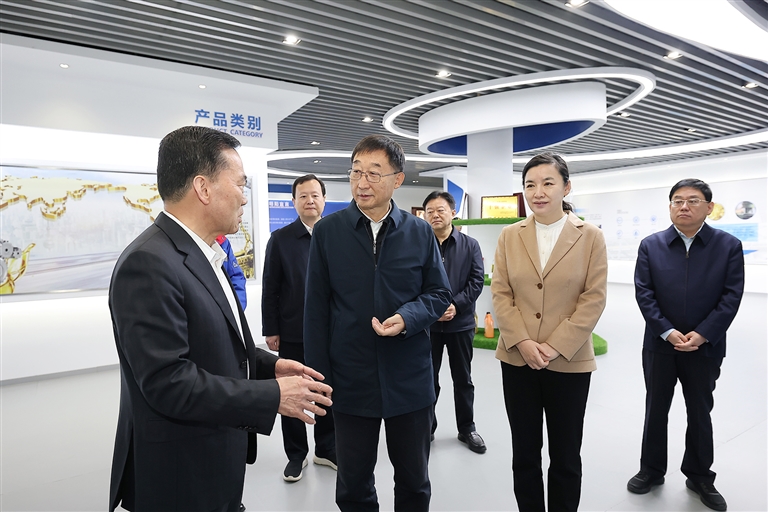
Group 1 - The provincial secretary Liu Ning conducted research on the development of green low-carbon circular economy in Xinyang City, focusing on various sectors including industrial development, inland shipping, and cultural tourism integration [2][3] - Liu emphasized the importance of the new materials industry as a strategic and foundational sector, urging for enhanced R&D investment and innovation to strengthen the technological level and advance towards the mid-to-high end of the value chain [3] - Liu acknowledged the efforts of Huayang Changqing Investment Co., Ltd. in developing projects related to electric hydrogen ammonia and green low-carbon circular economy, encouraging the company to deepen its market presence in Henan [3] Group 2 - The Huai Bin Central Port, the largest comprehensive single-port in the province, is transitioning from a loading and unloading port to a logistics and trade port, with an emphasis on enhancing port capabilities and promoting the shipbuilding industry [4] - Liu highlighted the need to leverage cultural resources, particularly the root culture, to foster talent return initiatives and create a conducive environment for entrepreneurship [4] - The focus is on integrating innovation chains with industrial chains, enhancing green development momentum, and creating a first-class business environment to stimulate various business entities [5]
华熙生物董事长赵燕: 厚植合成生物平台 深耕衰老干预核心物质创新
Zhong Guo Zheng Quan Bao· 2025-11-23 21:38
Core Insights - The company is actively adjusting its operations and organizational structure to enhance its long-term competitiveness through technological innovation, focusing on synthetic biology as a core strategic direction [1][2][4] Group 1: Strategic Adjustments and Financial Performance - The company has seen a profit growth trend, achieving a net profit of 0.32 billion yuan in Q3 2025, a year-on-year increase of 55.63%, with operating revenue reaching 9.03 billion yuan [1] - The decline in revenue during the first three quarters was primarily due to a decrease in skin science innovation conversion business, which is viewed as a temporary outcome of the ongoing adjustments [2] - The company has reduced sales expenses to 34.26%, the lowest level in five years, while still achieving approximately 55% profit growth year-on-year [3] Group 2: Focus on C-end Business - The C-end business is a key focus of the company's adjustments, emphasizing the need to accurately define brand positioning and target demographics to create consumer value [2] - The company is building an ecosystem that fosters collaboration with users, platforms, and partners to strengthen its C-end business foundation [2][3] Group 3: Synthetic Biology and Research Platforms - The company is centered on synthetic biology, particularly in glycoscience and cell biology, aiming to provide systematic solutions for delaying aging [4][5] - The synthetic biology system is supported by two core platforms: a biocatalyst library and a pilot transformation platform, which facilitate rapid molecular screening and scale-up verification [5][7] - The company has developed leading technologies, such as the precise synthesis of heparin through an enzyme-based method, moving towards "green biological manufacturing" [5] Group 4: Pilot Testing and AI Integration - The pilot platform is crucial for connecting research, validation, and transformation, and is seen as a strategic asset in the innovation chain [7][8] - The company has invested in a pilot transformation platform in Tianjin, equipped with fermentation systems and production lines to support scaling and standardization [7] - The pilot platform is open to collaboration with universities and research institutions, providing low-cost support for technology validation and process development [8][9]
厚植合成生物平台 深耕衰老干预核心物质创新
Zhong Guo Zheng Quan Bao· 2025-11-23 20:06
Core Viewpoint - The company is actively adjusting its operations and organizational structure to enhance its long-term competitiveness in the synthetic biology sector, focusing on high-quality development paths in the biomanufacturing industry [1][2]. Group 1: Strategic Adjustments and Financial Performance - The company has seen a profit growth trend, with a net profit of 0.32 billion yuan in Q3 2025, representing a year-on-year increase of 55.63%, and revenue of 9.03 billion yuan, indicating continuous improvement over two consecutive quarters [1]. - The decline in revenue during the first three quarters was primarily due to a decrease in skin science innovation conversion business, which is viewed as a temporary outcome of the ongoing adjustments [2]. - The company has reduced ineffective spending and adjusted its evaluation system, resulting in a sales expense ratio of 34.26%, the lowest in five years, while still achieving approximately 55% profit growth year-on-year [3]. Group 2: Focus on C-end Business and Ecosystem Development - The C-end business is a key focus of the company's adjustments, emphasizing the need to accurately define brand positioning and target demographics to create real value for consumers [2]. - The company is accelerating the construction of an ecosystem that fosters mutual growth with users, platforms, and partners to solidify the foundation for C-end business development [2]. Group 3: Synthetic Biology and Technological Innovation - The company is centered on synthetic biology, particularly in glycomics, aiming to provide systematic solutions for delaying aging [4]. - The synthetic biology system is supported by two core platforms: a biocatalyst library and a pilot transformation platform, which facilitate rapid new molecule screening and scale-up verification [4][8]. - The company has achieved significant technological advancements, such as the precise synthesis of heparin through a fully enzymatic method, moving towards "green biomanufacturing" [4]. Group 4: Pilot Testing and AI Integration - The pilot platform is crucial for connecting research, validation, and transformation, serving as a key facility for technology maturity verification and data model accumulation [8]. - The company has invested in a synthetic biology pilot transformation platform equipped with fermentation systems and production lines to support core functions like mechanism verification and process standardization [7][8]. - The open and shared mechanism of the pilot platform is becoming an essential part of the national innovation system, supporting both the company's growth and the broader industry ecosystem [8][9].
专访中国社科院经济研究所原所长黄群慧:既要重视AI赋能千行百业,也要考量对就业的替代效应和带来的收入极化
Mei Ri Jing Ji Xin Wen· 2025-11-23 15:49
Core Viewpoint - The "15th Five-Year Plan" emphasizes the construction of a modern industrial system, reflecting a strategic shift in response to current domestic and international conditions, with a focus on both supply-side and demand-side policies [2][3][4]. Group 1: Modern Industrial System - The prioritization of "building a modern industrial system" signifies a need for new growth drivers, as traditional industries currently account for about 80% of the economy, with potential for significant market expansion through transformation [3][4]. - The modern industrial system is crucial for supporting the transformation of traditional industries and fostering new growth dynamics, highlighting the interdependence between technological innovation and industrial development [3][5]. Group 2: Policy Resource Allocation - The government should balance investments in traditional industries with those in strategic emerging and future industries, recognizing that traditional industries are essential for overall economic transformation [6][7]. - Different investment mechanisms are required for traditional, strategic emerging, and future industries, emphasizing the need for tailored policies to avoid pitfalls in resource allocation [8]. Group 3: Future Industries - The selection of six key future industries—quantum technology, biomanufacturing, hydrogen energy, nuclear fusion, brain-computer interfaces, and sixth-generation mobile communications—reflects a strategic focus on original innovation, market potential, and national security [9][10]. - The potential for these industries to achieve commercial viability within five years remains uncertain, with various factors influencing their market readiness and scalability [11][12]. Group 4: High-Tech Industry Growth - The goal of "doubling" the scale of high-tech industries over the next decade indicates a significant push for structural upgrades and the development of new high-tech sectors [14][15]. - Achieving breakthroughs in key areas like integrated circuits and industrial mother machines is critical for overcoming technological bottlenecks and enhancing national competitiveness [16]. Group 5: Artificial Intelligence Integration - The repeated emphasis on "artificial intelligence" in the plan indicates its role as a core driver for modern industrialization, aiming to empower various sectors of the economy [17][18]. - The social implications of AI, including its impact on employment and income distribution, must be considered in policy-making to ensure inclusive growth and address potential ethical concerns [18][19].
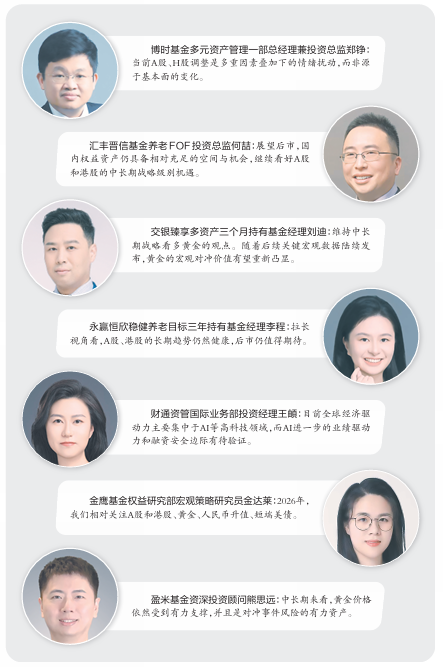
关键时刻!最新研判来了
Zhong Guo Ji Jin Bao· 2025-11-23 11:51
Group 1: Global Market Overview - Recent global market turmoil is attributed to multiple factors, including the Federal Reserve's mixed signals on interest rate cuts, leading to increased volatility across asset classes [3][4][5] - Concerns over AI sector sustainability and geopolitical tensions have also contributed to the decline in various asset prices, particularly in the tech sector [4][5][6] Group 2: A-shares and H-shares Outlook - The current adjustments in A-shares and H-shares are seen as emotional disturbances rather than fundamental changes, with expectations for policy support and foreign capital inflow remaining positive [6][7] - Analysts maintain a long-term optimistic view on A-shares and H-shares, anticipating a healthy recovery despite potential short-term volatility [6][7][8] Group 3: Gold Market Analysis - The outlook for gold remains positive due to anticipated global monetary expansion, although its risk-return profile may decline as economic conditions stabilize [9][10] - Analysts highlight that gold serves as a hedge against rising debt levels and geopolitical risks, reinforcing its long-term investment appeal [10][11] Group 4: Oil Market Projections - The oil market is expected to experience a range-bound trading pattern, with prices projected between $60 and $70 per barrel due to weak demand and OPEC's production strategies [14][15] - Geopolitical factors and supply-demand dynamics will continue to influence oil prices, with a cautious outlook for significant price increases [15][16] Group 5: Investment Opportunities - A-shares are viewed as having superior investment value, with a focus on sectors like technology and high-end manufacturing, while also considering defensive positions in high-dividend stocks [16][17] - Analysts suggest that the current market environment favors a diversified approach, balancing risk and return across various asset classes [17][18] Group 6: Risks to Monitor - Key risks include potential economic data surprises from the U.S. and geopolitical developments that could impact market sentiment and liquidity [18][19] - The end of the U.S. government shutdown has not alleviated concerns over liquidity, and ongoing uncertainties in economic performance may affect global asset markets [19][20]