医美

Search documents
“百千万工程”三年考 深圳罗湖如何为高密度建成区发展探路
Nan Fang Du Shi Bao· 2025-12-11 07:05
Core Insights - The article discusses the implementation of the "Hundred Counties, Thousand Towns, and Ten Thousand Villages High-Quality Development Project" in Luohu District, Shenzhen, focusing on its strategies for industrial transformation and spatial restructuring to achieve high-quality urban development [1] Group 1: Industrial Transformation - Luohu is focusing on high-quality development in the service sector, with service industry value added accounting for over 90% of GDP, despite occupying only 3.5% of the built-up area of the city, contributing nearly 7% of the city's GDP and 13% of retail sales [2] - The financial sector is projected to reach a value added of 78.56 billion yuan by 2024, with over 100 licensed financial institutions, ranking third in the city [2] - The "China Treasure Capital" initiative in the gold and jewelry industry accounts for about 50% of the national market, while the tourism and medical beauty sectors also show significant growth [2] Group 2: Spatial Restructuring - Luohu has innovated land development through four pathways, including integrated development and environmental restoration, revitalizing inefficient spaces [3] - The "Luo Ling Model" for urban village renovation has been recognized nationally, and a digital management system has been implemented to optimize public property utilization, releasing nearly 28,000 square meters of service space [3] - The district aims to complete urban renewal and renovation of urban villages and old communities totaling nearly 5 million square meters during the 14th Five-Year Plan period, with an additional 5 million square meters of quality industrial space planned for the next five years [3] Group 3: New Development Engines - The marine economy has reached a production value of 38.08 billion yuan, and the low-altitude economy has established the first intelligent take-off and landing point in the country [5] - Over 3,500 new enterprises have been registered in three years, with significant growth in high-tech and specialized enterprises, doubling their contribution to GDP compared to the previous five-year plan [5] - The district has developed a consumer landscape with various themed shopping areas and has achieved significant sales through e-commerce initiatives in the gold and jewelry sector [6] Group 4: Strategic Framework and Actions - The "Hundred Thousand Project" is guided by five strategic approaches, including high-level promotion, industrial support, ecological empowerment, reform-driven initiatives, and service-oriented governance [7] - Luohu plans to implement 55 specific actions across six key areas, including industry, ecology, and social welfare, to enhance urban quality and vitality [8] - The district's ongoing efforts reflect a commitment to high-quality development, responding to the challenges of urbanization and economic transformation [8]
长曜创新完成A轮融资;Meta收购Limitless;太古收购新沁园
Sou Hu Cai Jing· 2025-12-10 03:17
Investment Dynamics - L'Oréal plans to increase its stake in Galderma to 20%, becoming a significant strategic shareholder and gaining a board seat for core strategic decision-making [3] - Changyao Innovation successfully completed a new round of A financing amounting to several tens of millions, with strategic investment from leading robotics company Hangzhou Shenhao Technology [5] - UK DTC children's outdoor clothing brand Roarsome raised £1.5 million, with nearly £1 million from lead investor Sustainable Wealth Group, focusing on sustainable materials [7] - Meta acquired wearable AI device company Limitless, shifting part of its metaverse resources towards AI wearable devices [8] - Swire Group reached a share transfer agreement for its bakery chain "New Qinyuan" with Yang Brothers Investment Company, with a total acquisition amount close to HKD 1.4 billion [9] - Anheuser-Busch InBev plans to acquire a majority stake in US ready-to-drink beverage brand BeatBox for approximately $490 million, as part of its strategy to explore markets beyond beer [12] Brand Dynamics - Hema acknowledged a production issue with strawberry cakes, affecting around 60 units sold across seven stores, and has initiated customer follow-ups and compensation [15] - COMME des GARÇONS announced a collaboration with G-DRAGON, featuring a collection inspired by his album "Übermensch," with a black baseball cap as a core item [18] - Burberry appointed Matteo Calonaci as COO and CCO, emphasizing supply chain acceleration and customer experience as key performance drivers [19][21] - Kering's Brioni brand ended its collaboration with creative director Norbert Stumpfl, potentially slowing down the introduction of new men's collections [23]







欧莱雅再增持高德美股权至20%,释放出哪些信号?
Xin Lang Cai Jing· 2025-12-10 02:19
Core Viewpoint - L'Oréal Group has acquired an additional 10% stake in Galderma from EQT-led consortium, increasing its ownership to 20%, marking a significant move in the medical aesthetics and skin health sector [1][5] Group 1: Acquisition Details - The acquisition allows L'Oréal to nominate two non-independent board members from its group starting from the 2026 annual shareholders' meeting, replacing representatives from EQT [1] - L'Oréal's historical connection with Galderma dates back to 1981 when it co-owned the company with Nestlé, which later sold its stake to EQT and Abu Dhabi Investment Authority in 2019 [3] Group 2: Financial Performance - Galderma's sales increased from $34.17 billion in 2021 to $44.1 billion in 2024, with a notable growth rate of 9.3% in 2024 and 15% in the first three quarters of 2025, significantly outpacing L'Oréal's growth [4][5] - The company has successfully restructured its business focus on aesthetic injectables, skin care, and dermatological treatments under EQT's leadership [4] Group 3: Strategic Importance - Galderma is viewed as a "strategic puzzle" by L'Oréal, which aims to leverage its expertise in medical aesthetics rather than treating it as a short-term investment [5] - The collaboration is expected to enhance R&D alignment between L'Oréal and Galderma, particularly in developing innovative products that combine medical aesthetics and skincare [12][14] Group 4: Market Positioning - Galderma has established a strong presence in over 100 countries, with significant achievements in the Chinese market, which is projected to exceed 300 billion yuan in the medical aesthetics sector by 2025 [14] - The partnership allows L'Oréal to utilize Galderma's existing capabilities and distribution channels to capture market share in the injectable aesthetics segment [14] Group 5: Industry Challenges - The medical aesthetics industry is entering a phase of compliance and competition, with various brands launching new products and services [15] - L'Oréal faces challenges in balancing its mass marketing approach with the specialized services required in the medical aesthetics field, necessitating a focus on localized product development [17][18] Group 6: Long-term Strategy - The success of the collaboration between L'Oréal and Galderma hinges on a commitment to long-term investment in R&D and the development of innovative products that meet consumer needs [18] - The evolving consumer demand from basic skincare to advanced aesthetic solutions indicates a trend towards deeper integration between beauty and medical sectors [18]
2025年中国医美行业市场研究报告
硕远咨询· 2025-12-09 14:15
Investment Rating - The report rates the Chinese medical beauty industry as a "Buy" due to its significant growth potential and increasing consumer demand [17]. Core Insights - The medical beauty industry in China is rapidly evolving, driven by technological advancements, changing consumer preferences, and supportive government policies [12][17]. - The market is expected to exceed 200 billion RMB by 2027, indicating robust growth opportunities [17]. Industry Overview - The medical beauty industry encompasses a wide range of services, including invasive and non-invasive procedures, with a focus on safety and professionalism [4][7]. - The consumer base is diversifying, now including men, the elderly, and teenagers, reflecting a broader demand for beauty and health [5]. Market Size and Growth Trends - As of 2024, the market size has surpassed 100 billion RMB, making China the second-largest medical beauty market globally [17]. - The growth is fueled by rising disposable incomes and a shift in consumer attitudes towards personal appearance and health [17][21]. Market Drivers - Changing consumer demands are leading to a preference for minimally invasive procedures and personalized beauty solutions [23][24]. - Technological innovations, such as AI and digital platforms, are enhancing service delivery and consumer engagement [25][66]. Consumer Behavior and Demand Analysis - The primary consumer demographic consists of women aged 20 to 40, with increasing participation from men and older adults [28][29]. - High-income consumers are driving demand for premium, customized services, while middle-income consumers seek value for money [30][41]. Competitive Landscape - The market is characterized by a concentration of large chain medical beauty groups that leverage capital and technology to maintain competitive advantages [50][57]. - Emerging innovative companies are focusing on niche markets and utilizing advanced technologies to differentiate their offerings [52]. Technological Development Trends - Key advancements in injection techniques and laser technologies are improving treatment safety and effectiveness [62][64]. - AI-assisted diagnostics and treatment planning are becoming integral to enhancing patient outcomes and satisfaction [66][67].
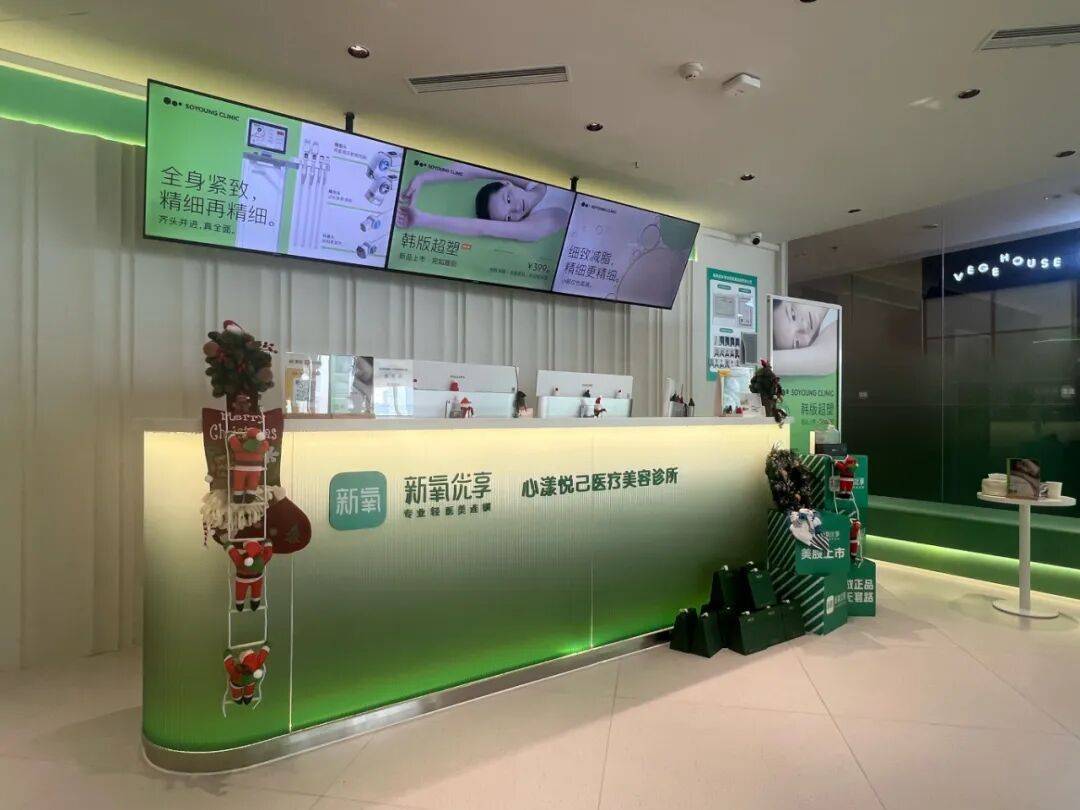
新氧“破价”连环劫
Sou Hu Cai Jing· 2025-12-09 06:20
Core Viewpoint - The company is undergoing a significant transformation from an online medical beauty intermediary to a physical entity, which has led to a sharp decline in profitability and a conflict with supply chain partners due to aggressive pricing strategies [2][3][14]. Financial Performance - In Q3, the company's total revenue increased by 4% year-on-year to 386.7 million yuan, with offline medical beauty service revenue surging by 304.6% to 183.6 million yuan, surpassing online business for the first time [2]. - The overall net profit shifted from a profit of 22.2 million yuan in the same period last year to a loss of 61.6 million yuan, marking a significant financial downturn [2]. Business Model Shift - The company is transitioning to a "virtual chain" model, with the first physical "New Oxygen Youth Clinic" launched in May 2023, now covering 10 cities with a total of 39 clinics by Q3 2024 [3]. - The aggressive pricing strategy, exemplified by the drastic price cut of the "童颜针" to 5,999 yuan, aims to penetrate the market but has resulted in immediate financial losses and potential long-term impacts on existing business relationships [3][10]. Market Dynamics - The company’s previous role as a neutral platform connecting users and medical institutions is being challenged as it enters direct competition with its partners, raising concerns about trust and neutrality in the marketplace [7][11]. - The aggressive pricing strategy disrupts the established value network in the medical beauty industry, which relies on stable pricing and brand integrity [9][10]. Strategic Challenges - The company faces a "nested dilemma," where efforts to stimulate online growth through offline expansion have led to conflicts with partners and a weakening of its platform's foundational trust [8][14]. - There is a tension between the fast-paced culture of the internet team and the cautious, safety-oriented approach of the medical team, complicating internal operations and decision-making [7][8]. Future Outlook - The company is betting on a vision of "smart clinics" and an "industry operating system," aiming to standardize and digitize medical services, but faces challenges in balancing efficiency with the human aspects of healthcare [13][15]. - The ongoing transformation reflects broader industry challenges, questioning whether a purely intermediary model can sustain itself in a complex and trust-deficient medical service environment [15][16].

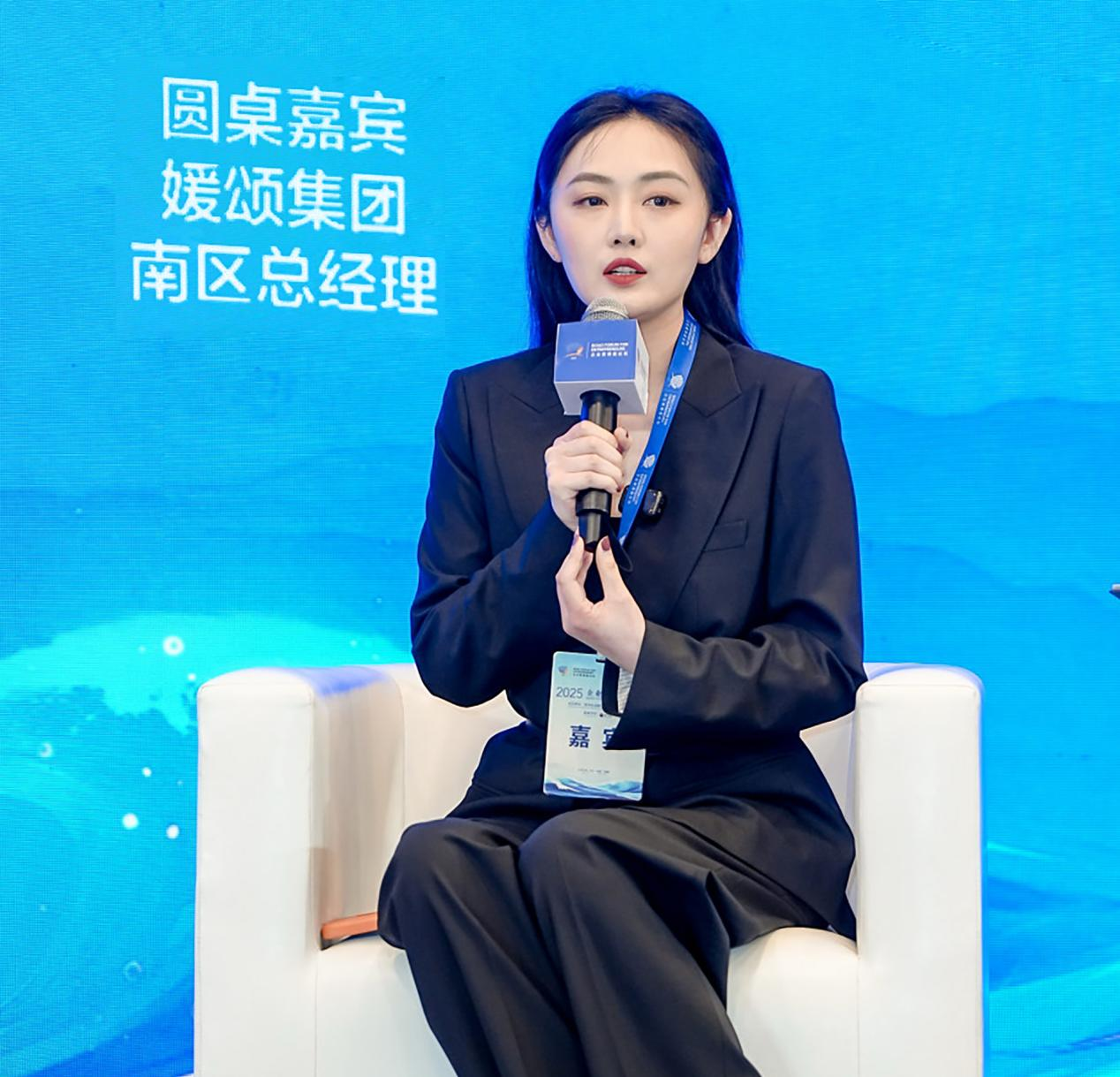
媛颂集团组建高标产业联盟,以供应链升级推动产业价值竞争
Jing Ji Wang· 2025-12-08 10:08
Core Viewpoint - The medical aesthetics industry is transitioning from scale expansion to quality enhancement, with compliance and standardization becoming critical paths for companies to break through [2][3]. Group 1: Current Status of Compliance in the Medical Aesthetics Industry - The medical aesthetics industry is at a critical juncture characterized by tightening regulations and ecological restructuring, with the market size reaching a trillion yuan [3]. - Issues such as "black institutions" and "black injectables" continue to hinder the healthy development of the industry, making compliance a necessity for survival rather than an option [3]. - Companies are collaborating to establish high-standard, transparent industry alliances, promoting initiatives like "tenfold compensation for counterfeit products" to enhance consumer trust [3]. Group 2: Role of Compliance in Industry Trust - Compliance is viewed not as a cost burden but as the best trust agent for the industry [4]. - The company, established in 2015, has built a direct sales system in 20 first-tier and new first-tier cities, focusing on technological upgrades and standard outputs to shift the industry from "marketing-driven" to "technology-driven" [4].
怕老怕死卷疯了,科技大佬砸钱“买永生”
3 6 Ke· 2025-12-08 00:55
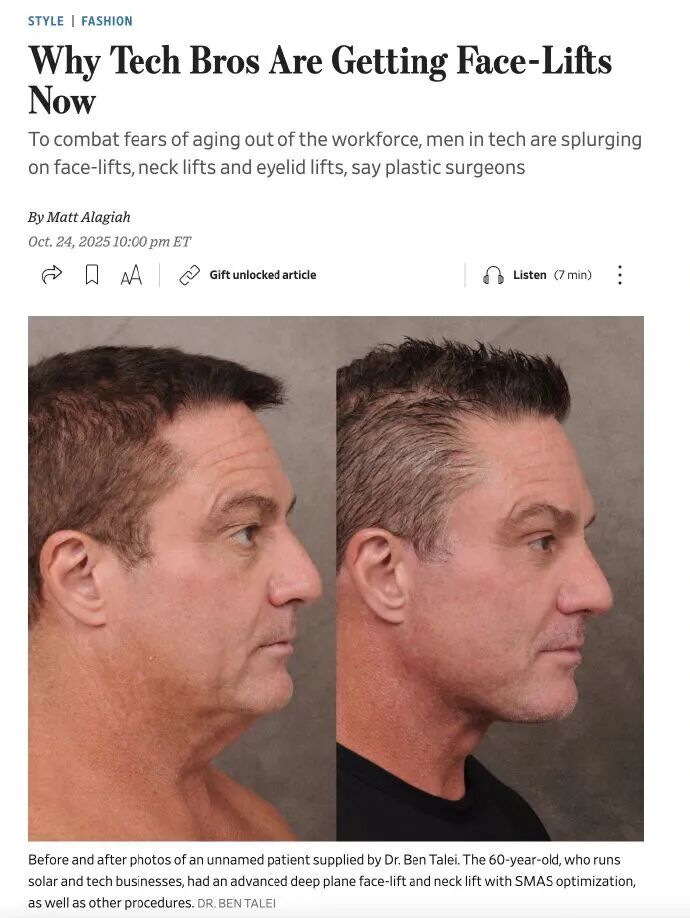
Core Viewpoint - The article discusses the rising trend of appearance anxiety in Silicon Valley, where tech workers are increasingly turning to cosmetic procedures to maintain a youthful appearance amid job insecurity and competitive work environments [1][3][31]. Group 1: Cosmetic Procedures in Silicon Valley - Appointment volumes at plastic surgery clinics in Silicon Valley have surged by 40% over the past six months, with two-thirds of clients being tech employees, averaging under 35 years old [1]. - The perception that youth equates to creativity has led some investors to openly state a preference for hiring younger individuals, further fueling the trend of cosmetic enhancements among tech workers [3]. Group 2: Wealthy Individuals and Anti-Aging Investments - High-profile Silicon Valley billionaires are investing heavily in anti-aging technologies, with Amazon founder Jeff Bezos investing $3 billion in a cellular rejuvenation company aimed at reversing cellular aging [6]. - Elon Musk has also engaged in various anti-aging treatments while developing technologies like Neuralink, which aims to upload human consciousness to the cloud for digital immortality [10]. Group 3: Extreme Anti-Aging Practices - Entrepreneur Bryan Johnson spends $2 million annually on a medical team for his anti-aging regimen, which includes blood exchanges with his son and father to create a "life perpetual motion machine" [15][17]. - Johnson's extreme practices include strict dietary controls, extensive exercise, and a rigorous skincare routine, reflecting a broader trend of obsessive self-care among the wealthy [21][23]. Group 4: Broader Implications in the Tech Industry - The anti-aging anxiety is not limited to Silicon Valley; it has spread to tech circles in China, with a reported 27% increase in male spending on cosmetic procedures in 2023 [31]. - The pressure to appear youthful is seen as a survival strategy in the tech industry, where layoffs can be influenced by perceived age and vitality [34]. Group 5: Capitalizing on Anti-Aging Trends - Bryan Johnson has turned his anti-aging pursuits into a business, selling supplements at inflated prices and hosting events that attract thousands, despite safety concerns about his products [40][42]. - The trend of wealthy individuals investing in anti-aging technologies is viewed as a form of "life insurance," with many seeking to extend their lives through capital and privilege [47][49].
化妆品医美行业周报:11月抖音表现符合预期,双12国货积极备战-20251207
Shenwan Hongyuan Securities· 2025-12-07 15:21
Investment Rating - The report maintains a "Positive" outlook on the cosmetics and medical beauty industry, despite recent underperformance compared to the market [4][5]. Core Insights - The cosmetics and medical beauty sector has shown weaker performance, with the Shenwan Beauty Care Index declining by 2.0% from November 28 to December 5, 2025, underperforming the market [4][5]. - Douyin's performance in November met expectations, with domestic brands preparing actively for the upcoming Double 12 sales event, indicating a strong competitive landscape for domestic products [4][10]. - The report highlights the leading market share of Minoxidil products, particularly from Mandi International, which has established itself as a top brand in the hair growth sector [11][12]. Summary by Sections Industry Performance - The Shenwan Cosmetics Index fell by 2.2%, while the Shenwan Personal Care Index also dropped by 2.0%, both underperforming against the Shenwan A Index [4][5]. - The top-performing stocks in the sector included Juzhibio (+5.9%) and Hongmian Co. (+3.5%), while the worst performers were Kelao Co. (-7.6%) and Baiya Co. (-4.8%) [6]. Key Market Developments - Mandi International has dominated the Minoxidil market, achieving a revenue growth from 982 million yuan in 2022 to approximately 1.455 billion yuan in 2024, with a CAGR of 21.7% [12][13]. - The company has maintained a leading position in the market for ten consecutive years, with a market share of about 57% in the hair loss treatment sector and 71% in the Minoxidil product market as of 2024 [12][14]. E-commerce Insights - In November 2025, Douyin's domestic brand GMV showed significant growth, with brands like Han Shu and New Page experiencing double-digit increases [15][18]. - The overall retail sales of cosmetics in October 2025 grew by 9.6%, driven by the Double 11 shopping festival, indicating a robust recovery in consumer spending [18][20]. Company Announcements - Lin Qingxuan updated its IPO prospectus for the Hong Kong market, reporting a revenue of 1.052 billion yuan in the first half of 2025, a year-on-year increase of 98.3% [22][19]. - The company plans to expand its research and development team and explore international markets in Southeast Asia [22][19]. Market Trends - The Chinese consumer healthcare market is projected to grow from 9.313 billion yuan in 2018 to 16.420 billion yuan in 2024, with a CAGR of 9.9% [13]. - The report emphasizes the increasing market share of domestic brands in the skincare sector, with a notable rise in the competitive landscape against international brands [24].




林清轩更新招股书,关注高端国货护肤公司上市进展
KAIYUAN SECURITIES· 2025-12-07 04:14
Investment Rating - The industry investment rating is optimistic (maintained) [1] Core Insights - The report highlights the rapid growth of high-end skincare products in China, with a projected compound annual growth rate (CAGR) of 13.8% from 2024 to 2029 [28] - Lin Qingxuan, a high-end domestic skincare brand, is positioned to capitalize on this growth, having updated its IPO prospectus, indicating a potential acceleration in its capital process [25][28] - The report emphasizes the importance of emotional consumption themes and recommends focusing on high-quality companies in high-growth sectors [6][32] Summary by Sections Retail Market Overview - The retail industry index closed at 2310.07 points, down 0.83%, underperforming the Shanghai Composite Index, which rose by 0.37% [5][14] - Among the retail sub-sectors, the professional chain segment saw the largest increase, while the jewelry sector led the year-to-date performance with a 20.56% rise [17][20] Company Focus: Lin Qingxuan - Lin Qingxuan achieved a revenue of 1.05 billion yuan in H1 2025, representing a year-on-year increase of 98.3%, with a net profit of 180 million yuan, up 109.9% [25][28] - The brand's core product, camellia oil, has dominated the facial oil sales market for 11 consecutive years, establishing a strong market presence [25][28] - Lin Qingxuan's online and offline revenue contributions were 65.4% and 34.6%, respectively, with a total of 554 stores, the highest among domestic and international high-end skincare brands [25][28] Investment Themes - Investment Theme 1: Focus on high-end jewelry brands with differentiated product offerings, recommending companies like Chow Tai Fook and Lao Pu Gold [6][32] - Investment Theme 2: Emphasize offline retail companies adapting to market changes and AI-enabled cross-border e-commerce leaders, recommending Yonghui Supermarket and Aiyingshi [6][32] - Investment Theme 3: Highlight domestic beauty brands that meet emotional value and safety ingredient innovations, recommending brands like Maogeping and Proya [6][32] - Investment Theme 4: Target differentiated medical beauty product manufacturers and expanding chain medical beauty institutions, recommending Aimeike and Kedi-B [6][32] Company Performance Highlights - Chow Tai Fook reported a revenue of 38.986 billion HKD in FY2026H1, a slight decline of 1.1%, but a net profit increase of 0.1% [39][40] - Chao Hong Ji achieved a revenue of 6.237 billion yuan in Q1-Q3 2025, up 28.4%, with a net profit increase of 0.3% [42] - The report notes that companies like Proya and Marubi have shown strong performance in the beauty sector, with Proya's revenue reaching 7.098 billion yuan in Q3 2025, up 1.9% [34][35]
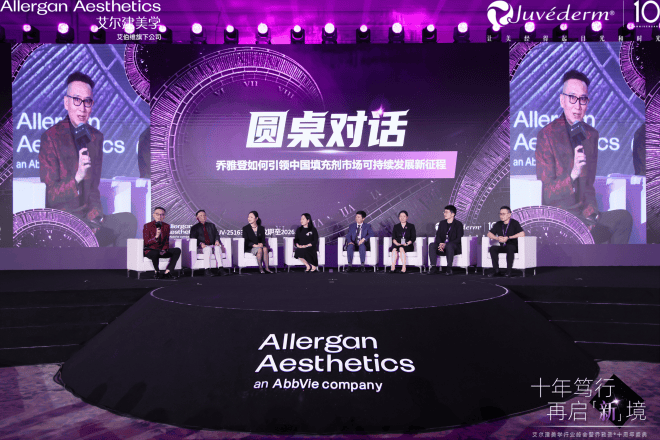
《全球透明质酸应用未来趋势报告》:联合治疗成为医美新风向
Sou Hu Cai Jing· 2025-12-05 11:44
Core Insights - The report titled "Global Trends in Hyaluronic Acid Applications" was released at an aesthetic medicine summit in Haikou, highlighting consumer insights and expert analysis on the current and future applications of hyaluronic acid fillers [1][3]. Industry Trends - Hyaluronic acid fillers are recognized as a foundational material in modern aesthetic medicine due to their predictable effects, natural satisfaction outcomes, and long-term clinical safety [3]. - A significant 78% of aesthetic medicine consumers acknowledge the trend of pursuing more natural aesthetic results [3]. - Three core trends were identified: 1. The "natural beauty" concept is diversifying, with consumers increasingly seeking personalized yet natural aesthetic effects [3]. 2. The rise of GLP-1 receptor agonists for weight loss has led approximately one-third of doctors to observe a linked increase in demand for hyaluronic acid fillers [3]. 3. Combined treatment modalities are becoming more common, with about one-third of facial filler users having previously combined hyaluronic acid with other injectable treatments, indicating a shift towards holistic and long-term treatment plans [3]. Expert Opinions - Mark Wilson, Senior Vice President of Allergan Aesthetics, emphasized that the report aims to present how hyaluronic acid materials can safely and effectively meet diverse aesthetic needs [3]. - Professor Zhang Yuguang from Shanghai Jiao Tong University School of Medicine noted that the report provides scientific guidance in a complex information environment, helping the public understand that hyaluronic acid fillers are a cornerstone of modern aesthetic treatments [3][4]. - Shi Bing, Chair of the Non-Public Medical Institutions Association and the Aesthetic Surgery Professional Committee, stated that standardized treatment by doctors is crucial for ensuring safety and expected outcomes for aesthetic medicine seekers [4].