数码

Search documents
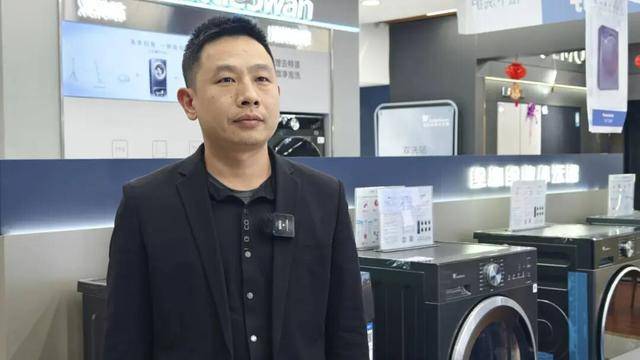
靖远县“以旧换新”政策成效亮眼 撬动消费9400余万元
Sou Hu Cai Jing· 2025-12-24 23:05
Core Insights - The "old-for-new" policy during the 14th Five-Year Plan period is a significant initiative for expanding domestic demand and promoting green transformation in China [1] - The implementation of this policy in Jingyuan County has stimulated consumer spending across various sectors, enhancing market vitality [1] Group 1: Policy Implementation and Impact - Jingyuan County has fully promoted the "old-for-new" policy this year, covering essential household appliances, automobiles, and digital products, leading to increased consumer satisfaction and market activity [1] - The introduction of the "old-for-new" policy has resulted in a notable increase in store foot traffic and a significant rise in sales for home appliances, particularly in air conditioners, televisions, refrigerators, and washing machines [3] - The county has adopted a "policy synergy" approach by combining the "old-for-new" initiative with promotional events, effectively amplifying the impact of the 14th Five-Year Plan policies [5] Group 2: Financial Metrics and Consumer Engagement - As of now, Jingyuan County has provided subsidies for 18,575 transactions under the "old-for-new" policy, distributing over 16.7 million yuan in subsidies and generating sales exceeding 94 million yuan [7] - The county's financial allocation of 2 million yuan for special consumption activities during key festivals aims to further incentivize consumer spending through promotional offers [7] - The ongoing implementation of the "old-for-new" policy has effectively released consumer potential and fostered new economic growth points, contributing to high-quality development in the county [9]

消费“国补”请继续 “外卖大战”别打了
Xin Lang Cai Jing· 2025-12-24 22:54
Group 1 - The central economic work conference has emphasized the optimization of the "Two New" policy, which includes large-scale equipment updates and a subsidy program for replacing old consumer goods [1] - The subsidy program, referred to as "national subsidy," will continue next year, encouraging consumer purchases of home appliances and digital products [1] - In 2025, the subsidy program will expand to include new categories such as smartphones, tablets, smartwatches, microwaves, water purifiers, dishwashers, and rice cookers, benefiting consumers and stimulating sales [1] Group 2 - The "takeout war" among delivery platforms has led to intense competition characterized by cash-burning strategies to gain market share, resulting in record-high order volumes [2] - However, this competition has created a vicious cycle of low-quality service, with issues such as declining food quality, consumer safety concerns, and inadequate protection for delivery personnel [2] - Recent regulatory measures aim to improve management practices within delivery platforms, focusing on merchant management and promotional activities to foster healthy competition and innovation in the industry [2]
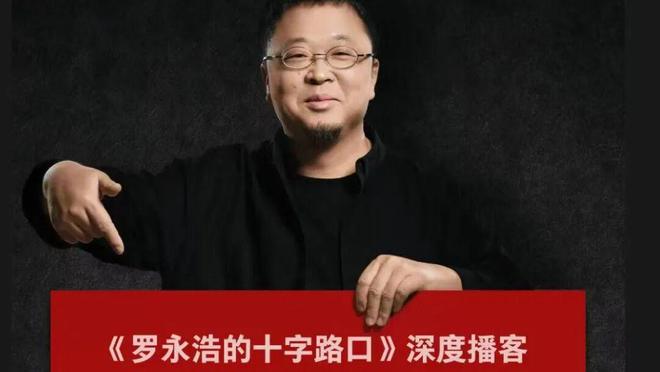
罗永浩时隔7年重启“科技春晚”,最高千元门票秒光
Di Yi Cai Jing Zi Xun· 2025-12-22 13:00
Group 1 - The core event is the "Luo Yonghao's Crossroads" annual technology innovation sharing conference scheduled for December 30, 2025, in Shanghai, marking the return of Luo Yonghao's signature "Technology Spring Festival" after seven years [2][4] - Tickets for the event were made available in six price tiers ranging from 300 to 1000 yuan, with the highest tier selling out instantly and all tickets sold out within approximately two hours [3][4] - The conference will showcase around 15-20 innovative Chinese technology products and will include the release of an internally developed AI software by Luo Yonghao's company, highlighting a focus on quality content rather than a typical sales-driven event [3][4] Group 2 - Luo Yonghao emphasized that the conference is not a "sales live broadcast" and aims to present impressive yet lesser-known Chinese innovative technology products, with all selections made by him and his team [3][4] - This event signifies Luo Yonghao's formal return to the technology launch stage, with his last major event dating back to the end of 2018 [4] - Luo Yonghao is associated with over 30 companies, including Beijing Smartisan Technology Co., Ltd. and Chengdu Wild Ambition Digital Technology Co., Ltd., holding significant roles and stakes in these enterprises [4][6]
二〇二六年 “国补”将继续
Ren Min Ri Bao Hai Wai Ban· 2025-12-19 01:40
Core Viewpoint - The continuation of the "national subsidy" policy for large-scale equipment updates and consumer goods trade-in programs is confirmed for 2026, aimed at stimulating consumption and investment growth in the economy [2][3]. Group 1: Policy Implementation - The central economic work conference emphasized the optimization of the "two new" policies, which include large-scale equipment updates and consumer goods trade-in programs [2][5]. - The Ministry of Finance plans to utilize various government bond funds and issue ultra-long-term special bonds to support these initiatives [2][3]. - The scale of funding for the "two new" policies will increase to 500 billion yuan in 2025, with 300 billion yuan allocated for consumer goods trade-in, marking a 150 billion yuan increase from the previous year [3]. Group 2: Economic Impact - The "two new" policies have significantly contributed to consumption, investment, and economic stability, promoting high-quality development [3][4]. - In the first three quarters, investment in equipment and tools increased by 14% year-on-year, contributing 2 percentage points to overall investment growth [4]. - The consumer goods trade-in program has driven sales exceeding 2.5 trillion yuan, benefiting over 360 million people, with notable increases in the trade-in of automobiles and home appliances [6]. Group 3: Future Directions - The "national subsidy" policy will continue to evolve, with new categories of products added to the trade-in program, including digital devices and various home appliances [8]. - The implementation of personal consumption loans and service industry loans will be supported to enhance consumer demand and service supply [8]. - Future optimization of the "two new" policies may include expanding subsidies to the service consumption sector to further stimulate economic growth [8].
持续支持、优化实施大规模设备更新和消费品以旧换新——二〇二六年,“国补”将继续
Sou Hu Cai Jing· 2025-12-19 01:34
Core Viewpoint - The continuation of the "national subsidy" policy for consumer goods trade-in is confirmed, aimed at stimulating consumption and investment, and supporting economic growth in 2024 [3][4]. Group 1: Policy Implementation - The "Two New" policy focuses on large-scale equipment updates and consumer goods trade-in, significantly impacting consumers, particularly in sectors like automobiles and home appliances [4][6]. - The 2025 plan includes an increase in special long-term bonds to support the "Two New" initiatives, with a total funding of 500 billion yuan, of which 300 billion yuan is allocated for consumer goods trade-in, marking a 150 billion yuan increase from the previous year [4][5]. - The policy has shown significant effectiveness in promoting consumption, investment, and structural adjustments, contributing to high-quality development [4][8]. Group 2: Economic Impact - The "Two New" policy is seen as a powerful tool for expanding domestic demand, with trade-in programs generating over 2.5 trillion yuan in sales and benefiting more than 360 million people from January to November this year [7][8]. - The trade-in of automobiles exceeded 11.2 million units, while home appliances saw over 12.8 million units traded in, indicating strong consumer engagement [7]. - The policy has also facilitated a shift towards smart appliances and electric vehicles, with a 31.2% year-on-year increase in new energy vehicle sales [8]. Group 3: Future Directions - The upcoming implementation of the "national subsidy" policy will include new categories for trade-in, such as smartphones and various home appliances, expanding the scope of consumer goods eligible for subsidies [9]. - The government plans to enhance financing support through personal consumption loans and service industry loans, aiming to meet diverse consumer needs [9]. - Future adjustments to the "Two New" policy may include expanding subsidies to service consumption, further stimulating economic growth [9].
二〇二六年,“国补”将继续(锐财经)
Ren Min Ri Bao Hai Wai Ban· 2025-12-18 22:51
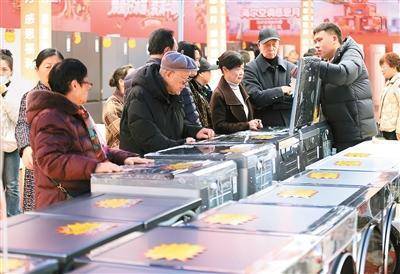
近日,四川省乐山市商务局、乐山市总工会推出汽车、家电"以旧换新"惠职工专场活动,通过"政府补 贴+企业让利"的叠加优惠模式,带动市场消费活力。图为消费者在咨询补贴政策、选购享受补贴的家 电产品。 李华时摄(人民视觉) 新的一年,消费品以旧换新"国补"还会持续吗? 近日召开的中央经济工作会议在明年经济工作重点任务中明确指出,优化"两新"政策实施。财政部 日前也在相关会议中提出,用好用足各类政府债券资金,发行超长期特别国债,持续支持"两重"建 设、"两新"工作。这也进一步明确,明年"国补"将继续实施。 稳增长惠民生 "两新",是指大规模设备更新和消费品以旧换新,其中消费品以旧换新政策与普通消费者关系密 切。 根据国务院2024年印发的《推动大规模设备更新和消费品以旧换新行动方案》,消费品以旧换新主 要涉及汽车、家电以及家装厨卫等消费品。当前,我国耐用消费品市场规模居全球首位,已进入存量优 化阶段。通过实施消费品以旧换新政策,有利于激发升级消费需求,释放消费潜力。 2025年,"两新"政策加力扩围实施,支持该项工作的超长期特别国债资金规模增加至5000亿元。其 中,3000亿元用于支持消费品以旧换新,比上年增加15 ...
国补背后的幸福感
Xin Lang Cai Jing· 2025-12-18 07:22
Core Viewpoint - The article discusses the impact of the "National Subsidy" policy on consumer behavior and the economy, highlighting a significant increase in consumer spending on home appliances and digital products due to enhanced subsidies [2][5]. Group 1: Consumer Behavior - In the first 11 months of the year, over 128 million home appliances were replaced under the "National Subsidy" program, with digital products receiving subsidies for over 9.015 million items [2]. - Consumers are taking advantage of the subsidies, as evidenced by a Beijing resident who purchased 10 appliances for 41,000 yuan, significantly more than the original budget of 20,000 yuan [2]. - Social media feedback indicates that consumers are enjoying the benefits of these subsidies, feeling a sense of improved quality of life [3]. Group 2: Policy Effectiveness - The "National Subsidy" program has increased subsidy amounts by 50% compared to previous years, with some categories seeing subsidy limits doubled [2]. - The policy is designed to activate current consumer demand rather than deplete future resources, effectively addressing the timing of product replacements [5]. - The subsidy percentage is strategically set between 15% and 20% to stimulate interest without causing dependency or excessive consumption [5]. Group 3: Economic and Industrial Impact - The subsidies create a beneficial cycle by linking consumer benefits with industrial upgrades, such as promoting digital transformation in the home appliance sector and supporting the green transition in the automotive industry [6]. - The policy aims to enhance both consumer spending and industrial growth, aligning with the central economic work meeting's focus on improving livelihoods and stimulating consumption [7].
【商洛】优化消费品以旧换新补贴发放方式
Shan Xi Ri Bao· 2025-12-18 00:29
Core Viewpoint - The article discusses the optimization and adjustment of consumption coupon issuance and redemption rules in Shangluo City, effective from December 15, aimed at enhancing the effectiveness of the old-for-new consumption program and increasing the redemption rate of coupons and fund disbursement [1] Group 1: Consumption Coupon Adjustments - The adjustments involve multiple categories of consumer goods subsidies, including home appliances and digital products, which will be issued daily at 9 AM through the "Yunshanfu" platform, valid for the same day and can be reapplied the next day until funds are exhausted [1] - Automotive replacement and upgrade coupons will be issued in a one-time release at 9 AM on December 15 via the "Yunshanfu" platform, available until all are claimed; scrap vehicle replacement coupons will be distributed through the Shangluo City Commerce Bureau's departmental channel [1] - Consumers must complete relevant procedures for the two types of automotive coupons by December 31 and submit subsidy documentation by January 10, 2026, or they will forfeit the subsidy [1] Group 2: Other Consumer Goods - The old-for-new electric bicycle and home renovation consumer coupons will continue to be issued on the Alipay platform, with unchanged issuance time and method [1] - Consumers are advised to redeem the coupons within the validity period, and participating merchants must upload subsidy application materials by December 31, correcting any feedback from the system promptly; late submissions will not be compensated [1]
扩内需 消费提质筑牢“压舱石”
Sou Hu Cai Jing· 2025-12-16 19:31
Core Viewpoint - Expanding domestic demand is identified as the core engine for stabilizing economic growth and restructuring in China, especially in the context of a sluggish global economic recovery and changing external demand conditions [1] Group 1: Domestic Demand Expansion - In 2025, a series of policy measures will be implemented to continuously expand and improve the domestic demand market, contributing to a 53.5% growth rate in final consumption expenditure for the first three quarters of this year, an increase of 9 percentage points compared to the previous year [1] - The domestic demand market not only stabilizes the economy but also fosters new growth points such as service consumption and green consumption, injecting lasting momentum into high-quality development [1] Group 2: Service Consumption Growth - The booming concert economy reflects a deep transformation in consumer attitudes, with younger generations willing to spend on experiences rather than material possessions, marking a shift towards service consumption as a significant growth point [3] - In the first ten months of this year, service retail sales in China increased by 5.3%, surpassing the growth rate of total retail sales of consumer goods by 1 percentage point [3] Group 3: Trade and Market Adjustments - In response to external pressures, many foreign trade enterprises are shifting their focus to the domestic market, with various initiatives being launched to facilitate this transition, including the establishment of foreign trade product sections in large supermarkets and e-commerce platforms [5] - The Central Economic Work Conference has prioritized the goal of "domestic demand dominance" for 2026, emphasizing the need for actions to boost consumption and optimize the implementation of new policies [5] Group 4: Replacement and Upgrading Policies - The implementation of large-scale equipment updates and consumer goods replacement policies has shown significant effects, with over 25 trillion yuan in sales driven by replacement programs from January to November this year, benefiting over 360 million people [4] - Specific figures include over 11.2 million vehicles replaced under the old-for-new policy, over 12.8 million home appliances, and over 9 million digital products [4]
好消息!明年“国补”继续
Sou Hu Cai Jing· 2025-12-15 10:55
Group 1 - The central economic work conference held in Beijing on December 10-11 outlined the economic work for 2026, emphasizing the need to optimize the implementation of the "Two New" policies, which include large-scale equipment updates and the consumer goods trade-in policy [1] - The consumer goods trade-in policy, referred to as "national subsidies," will continue in 2026 with optimized specifics, indicating ongoing government support for consumer spending [1] - In 2024, China will issue 150 billion yuan in long-term special government bonds for the consumer goods trade-in program, with the amount increasing to 300 billion yuan in 2025, doubling the subsidy compared to 2024 [1] Group 2 - From January to November this year, the consumer goods trade-in program has driven sales exceeding 2.5 trillion yuan, benefiting over 360 million people [2] - The trade-in program has seen significant participation, with over 11.2 million cars, 12.844 million home appliances, and 9.015 million digital products being replaced [2] - Experts suggest that the subsidy amount for 2026 may see a moderate increase from 2025, with a focus on optimizing funding allocation to enhance service consumption and further stimulate economic growth [2]