
新一代信息技术

Search documents
首届 “湘智兴湘” 大会释放引才育才强信号:人才来了有舞台 留下能出彩
Chang Sha Wan Bao· 2025-09-21 01:37
Core Insights - The "Xiangzhi Xingxiang" conference held in Changsha on September 18-19 aimed to attract global talent and showcased Hunan's commitment to creating a conducive environment for talent retention and development [1] Talent Demand and Recruitment - Hunan has released 275 key technology talent demands, planning to recruit over 1,500 high-level talents across various strategic emerging industries such as new information technology, renewable energy, and advanced manufacturing [2] - The recruitment efforts involve 120 employers, including all "Double First-Class" universities in the province and numerous research institutions and technology companies [2] Policy Support and Incentives - Hunan has introduced a comprehensive talent policy package, including 45 upgraded policies that provide support in areas like healthcare and housing for incoming talents [3] - The "Furong Plan" offers up to 100 million yuan in support for top talents and flexible recruitment options for urgently needed high-level talents [2][3] Talent Integration and Utilization - The conference emphasized that incoming talents can quickly engage in relevant roles, directly contributing to local industries and projects [5] - Since the launch of the "Xiangzhi Xingxiang" initiative, over 1,500 technology talents have been attracted, highlighting its role as a bridge for talent and enterprise integration [4] Research and Development Infrastructure - Changsha has established a robust R&D ecosystem, including the formation of a "1+2" national laboratory system and the establishment of 35 national key laboratories [6] - The city has seen the creation of 1,796 new R&D institutions, including 68 R&D centers from central enterprises and Fortune 500 companies [6][8] Talent Attraction Mechanism - The strategic platforms and R&D institutions in Changsha are becoming strong magnets for talent, providing world-class research facilities and opportunities for career development [7][8] - The city has successfully attracted multiple Nobel laureates and established numerous high-level talent projects, with over 12,000 talents concentrated in enterprise R&D centers [8]
2025世界制造业大会签约港澳企项目总投资额218亿元
Sou Hu Cai Jing· 2025-09-20 12:57
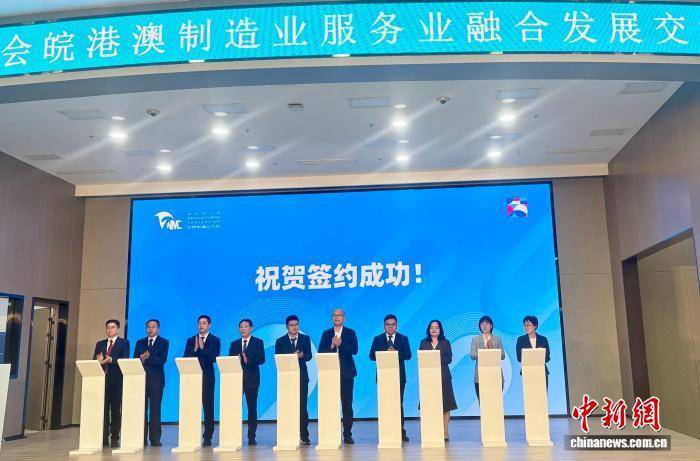
Group 1 - The 2025 World Manufacturing Conference and the Anhui-Hong Kong-Macao Manufacturing and Service Industry Integration Development Exchange Meeting took place in Hefei, resulting in the signing of 27 projects with a total investment of 21.8 billion RMB [1][3] - The theme of the meeting was "Sharing Opportunities, Winning the Future," focusing on project matching, investment promotion, and discussions to deepen practical cooperation among Anhui, Hong Kong, and Macao [3] - The manufacturing industry is a key strength for Anhui, while Hong Kong is recognized for its advantages in modern service sectors such as finance, trade, logistics, and professional services, indicating strong complementary industries and broad cooperation potential [3] Group 2 - The World Manufacturing Conference serves as a platform for showcasing high-quality development in manufacturing in Anhui and China, facilitating global cooperation and resource sharing [3] - The Hong Kong Trade Development Council aims to support Anhui enterprises in connecting with global resources and expanding into international markets, enhancing collaboration in technology innovation, finance, and trade [3]

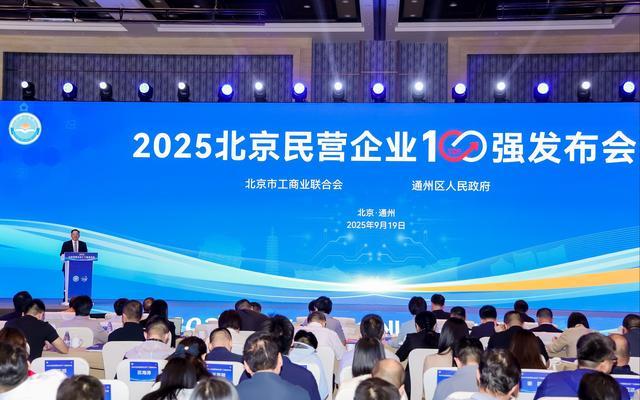
营收总额超5万亿元,2025北京民营企业百强榜单发布
Xin Jing Bao· 2025-09-20 06:01
Core Insights - The 2025 Beijing Private Enterprises Top 100 list was released, highlighting the growth and innovation within the private sector in Beijing [1][3] Group 1: Overall Performance of Private Enterprises - The threshold for entering the top 100 private enterprises exceeded 5 billion yuan, a year-on-year increase of 7.5%, with a cumulative growth of 38.6% over five years [3] - Total revenue of the top 100 enterprises reached 5.26 trillion yuan, a year-on-year increase of 12.27%, with a cumulative growth of 38.8% over five years [3] - Total assets amounted to 15.02 trillion yuan, reflecting a year-on-year growth of 6.6% and a cumulative growth of 183.4% over five years, all reaching historical highs [3] - 68% of the enterprises are concentrated in the digital economy and high-end manufacturing sectors, with 7 companies investing over 10 billion yuan in R&D [3] Group 2: Technology Innovation Sector - The total revenue of the top 100 technology innovation enterprises reached 2.46 trillion yuan, with a year-on-year growth of 33.79% [4] - Total profit amounted to 1360.44 billion yuan, reflecting a year-on-year increase of 20.54% [4] - R&D expenses totaled 1742.69 billion yuan, with an average R&D intensity of 9.47%, indicating a strong focus on self-developed key technologies [4] Group 3: Cultural Industry Sector - Total assets of the top 100 cultural enterprises reached 6804.48 billion yuan, a year-on-year increase of 77.17% [4] - Total revenue was 4200.80 billion yuan, with a year-on-year growth of 37.82%, driven by high-tech service industries [4] - Total profit reached 435.90 billion yuan, reflecting a year-on-year increase of 77.21% [4] Group 4: Specialized and Innovative Enterprises - Total revenue of the top 100 specialized and innovative enterprises reached 755.56 billion yuan, with a net profit of 97.30 billion yuan [4] - 97 enterprises have core technologies developed independently, and 95 are involved in strategic emerging industries [4] - A total of 3579 domestic patents were applied for, with over 72% being invention patents [4] Group 5: Social Responsibility Initiatives - A total of 1475 enterprises participated in the social responsibility survey, with 244 submitting cases for evaluation [5] - 35 enterprises were recognized for their outstanding social responsibility initiatives, contributing to rural revitalization with a total investment of 12.386 billion yuan [5]
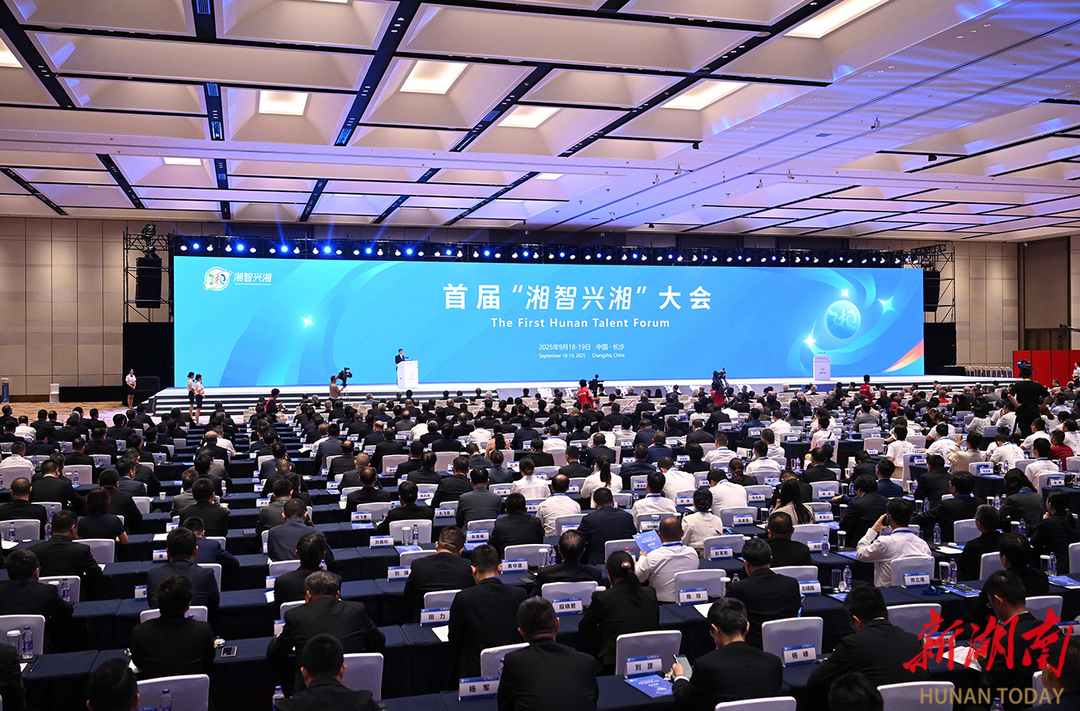
首届“湘智兴湘”大会开幕 沈晓明出席 毛伟明致辞
Chang Sha Wan Bao· 2025-09-20 01:11
Core Viewpoint - The first "Xiangzhi Xingxiang" conference was held in Changsha, aiming to promote talent attraction and innovation in Hunan province [3][10]. Group 1: Conference Overview - The conference was attended by key provincial leaders, including Secretary of the Provincial Party Committee Shen Xiaoming and Governor Mao Weiming [5][10]. - The event featured speeches from Nobel laureates and other distinguished guests, highlighting the importance of talent in driving innovation and economic development [9]. Group 2: Talent Development Initiatives - Governor Mao Weiming emphasized the need for Hunan to attract high-level talent, with a focus on various industries such as information technology, advanced manufacturing, artificial intelligence, and new materials [6][9]. - The conference announced a total of 275 key technology talent needs in Hunan, with a goal to recruit over 1,500 high-level talents [9]. - A policy list for common technology talents in Hunan was released, promoting the city of Changsha as a global R&D center [9]. Group 3: Strategic Goals - The "Xiangzhi Xingxiang" initiative is part of a broader strategy by the provincial government to establish Hunan as a national talent center and innovation hub, supporting the realization of the "Three Highs and Four New" blueprint [10]. - The conference included various activities aimed at fostering talent exchange, promoting technological innovation cooperation, and enhancing the interaction between returning alumni and local businesses [10].
助力新兴产业发展,完善科技金融体系,这场发布会信息量大
Zhong Guo Zheng Quan Bao· 2025-09-18 14:32
Core Viewpoint - The Chinese government has made significant advancements in technology innovation during the "14th Five-Year Plan" period, enhancing the country's technological capabilities and fostering a robust innovation ecosystem that benefits the public and supports economic growth [1][2]. Investment in R&D - Total R&D investment in China is projected to exceed 3.6 trillion yuan in 2024, representing a 48% increase from 2020 [2] - R&D intensity is expected to reach 2.68%, surpassing the average level of EU countries [2] - The number of R&D personnel in China is the highest in the world [2] - Basic research funding is set to reach 249.7 billion yuan in 2024, a growth of over 70% since 2020 [2] - China has maintained the highest number of high-level international journal papers and international patent applications for five consecutive years [2] Emerging Industries Development - China is accelerating the transformation of traditional industries towards high-end, intelligent, and green technologies [3] - Major breakthroughs in new generation information technology and renewable energy have been achieved, with approximately 4.6 million 5G base stations established [3] - The cumulative sales of new energy vehicles have surpassed 40 million, maintaining the world's highest production and sales for ten consecutive years [3] Advanced Technology Layout - China is proactively developing frontier technologies such as artificial intelligence and brain-computer interfaces [4] - Several domestic general models in AI have reached international advanced levels, with some achieving over 95% accuracy [4] - Breakthroughs in humanoid robot technology and brain-computer interface applications have been made, benefiting patients with disabilities [4] Technology Transfer and Innovation - In 2024, 524 Chinese companies entered the global top 2000 in industrial R&D investment, an increase of 4.8 percentage points since 2020 [5] - The total value of technology contracts in China is expected to reach 6.8 trillion yuan in 2024, with continuous double-digit growth [5] - The establishment of a technology transfer system is being promoted, with numerous platforms and institutions supporting technology commercialization [6] Technology Finance System - Since 2021, 376 companies have been listed on the Sci-Tech Innovation Board, raising over 600 billion yuan [7] - A series of policies have been introduced to support the development of a technology finance system, aiming to mobilize nearly 1 trillion yuan in local and social capital [7][8] - The loan balance for technology-based SMEs reached 3.46 trillion yuan by mid-2023, with a year-on-year growth of 22.9% [7] Future Outlook - The next five years are deemed critical for achieving the goal of becoming a technology powerhouse, with a focus on original and leading technological breakthroughs [9] - The government plans to enhance the integration of technology and industry, promote large-scale applications of new technologies, and cultivate top-tier talent [9]
“十四五”以来央企战略性新兴产业投资年均增速超20%
Zhong Guo Xin Wen Wang· 2025-09-18 01:59
Group 1 - The central enterprises in China have significantly increased their investment in strategic emerging industries, with an annual growth rate exceeding 20% since the 14th Five-Year Plan began [1][2] - In 2024, the investment in strategic emerging industries by central enterprises is expected to surpass 40% of their total investment, with revenue contribution approaching 30% [1] - Cumulative investment in strategic emerging industries has reached 8.6 trillion yuan, marking a substantial increase compared to the 13th Five-Year Plan, with notable advancements in fields such as integrated circuits, biotechnology, and new energy vehicles [1] Group 2 - In 2024, the revenue from strategic emerging industries for central enterprises is projected to exceed 11 trillion yuan, with an 8 percentage point increase in revenue contribution over the past two years [2] - Central enterprises are actively engaging in supply chain integration and have published nearly 10,000 supply-demand lists to enhance industry cooperation [2] - The establishment of venture capital funds by many central enterprises has led to a total scale nearing 100 billion yuan, facilitating the application of AI technologies in traditional industries [2]
国务院国资委:大力推动央企战略性专业化重组整合
Zhong Guo Zheng Quan Bao· 2025-09-17 23:25
Core Insights - The total assets of central enterprises exceed 90 trillion yuan, with total profits reaching 2.6 trillion yuan, indicating improved quality of state-owned assets and significant progress in high-quality development [1] - The restructuring of central enterprises is focused on enhancing core functions and competitiveness, with strategic professional mergers and integrations being prioritized [1][2] - The cumulative investment in strategic emerging industries has reached 8.6 trillion yuan, reflecting a strong commitment to optimizing structural layout and achieving high-quality development [4] Group 1: Reform Achievements - The restructuring of 10 enterprises into 6 groups and the establishment of 9 new central enterprises have effectively improved the efficiency of state-owned capital allocation [2] - Central enterprises' revenue in key sectors exceeds 70%, with over 90% of investments and subsidiaries focused on core businesses [2] - The market performance of central enterprises' listed companies has improved, with a market value exceeding 22 trillion yuan, a nearly 50% increase since the end of the 13th Five-Year Plan [2] Group 2: Innovation and Investment - The annual investment growth rate in strategic emerging industries exceeds 20%, with significant advancements in fields such as integrated circuits and biotechnology [4] - Nearly 1,000 technology-based enterprises have received incentives related to equity and dividends, promoting innovation and rewarding achievements [3][5] - Central enterprises are establishing venture capital funds, with a total scale nearing 100 billion yuan, focusing on technology-driven investments [5] Group 3: Future Development Strategies - The "AI+" initiative aims to enhance the role of central enterprises in the artificial intelligence sector, aligning with national strategies [6] - The focus on value creation is evident, with expected increases in value-added and profit totals by 40% and 50% respectively during the 14th Five-Year Plan [7] - The State-owned Assets Supervision and Administration Commission (SASAC) plans to guide enterprises in enhancing brand value and strategic positioning to improve competitiveness [8]
国资委:大力推动央企 战略性专业化重组整合
Zhong Guo Zheng Quan Bao· 2025-09-17 20:53
Core Insights - The total assets of central enterprises exceed 90 trillion yuan, with total profits reaching 2.6 trillion yuan, indicating improved quality of state-owned assets and significant progress in high-quality development [1] - The State-owned Assets Supervision and Administration Commission (SASAC) reported that strategic restructuring has been implemented for 10 enterprises, and 9 new central enterprises have been established [2] - The cumulative investment in strategic emerging industries has reached 8.6 trillion yuan, with an annual growth rate exceeding 20% [4] Group 1: Performance and Achievements - Central enterprises' operating income in key sectors exceeds 70%, with over 90% of main business investments and subsidiaries focused on core activities [2] - The market performance of central enterprises' listed companies has improved, with a market capitalization exceeding 22 trillion yuan, a nearly 50% increase since the end of the 13th Five-Year Plan [2] - Cash dividends of 2.5 trillion yuan have been distributed since the beginning of the 14th Five-Year Plan, contributing to market stability [2] Group 2: Strategic Initiatives - The SASAC emphasizes enhancing core functions and competitiveness through systematic and innovative restructuring [1][3] - The development of strategic emerging industries is a priority, with significant investments in sectors like new generation information technology and renewable energy [4][6] - The establishment of venture capital funds by central enterprises, with a total scale nearing 100 billion yuan, focuses on technology-driven investments [5] Group 3: Future Directions - The SASAC plans to continue promoting the "AI+" initiative to enhance the role of central enterprises in artificial intelligence [6] - The focus will be on high-quality planning for the 15th Five-Year Plan, aiming to strengthen emerging industries and improve productivity [6] - The SASAC aims to establish a value creation orientation, with expected increases in value-added and profit totals by 40% and 50% respectively during the 14th Five-Year Plan [7][8]
国资委:大力推动央企战略性专业化重组整合
Zhong Guo Zheng Quan Bao· 2025-09-17 20:19
Core Insights - The total assets of central enterprises exceed 90 trillion yuan, with total profits reaching 2.6 trillion yuan, indicating improved quality of state-owned assets and significant progress in high-quality development [1] - The State-owned Assets Supervision and Administration Commission (SASAC) highlights the strategic restructuring of 10 enterprises and the establishment of 9 new central enterprises, aiming to enhance core functions and competitiveness [1][2] - Central enterprises' revenue in key sectors exceeds 70%, with over 90% of investments and subsidiaries focused on core businesses, reflecting a strong alignment with national priorities [2] Group 1: Reform Achievements - The restructuring of central enterprises has led to improved operational efficiency and capital allocation, with significant progress in specialized integration in sectors like cruise operations [1][2] - The quality of listed companies has improved, with a market capitalization of over 22 trillion yuan, a nearly 50% increase since the end of the 13th Five-Year Plan [2] - Cash dividends of 2.5 trillion yuan have been distributed since the beginning of the 14th Five-Year Plan, contributing to market stability [2] Group 2: Strategic Emerging Industries - Cumulative investment in strategic emerging industries has reached 8.6 trillion yuan, with an annual growth rate exceeding 20%, focusing on sectors like integrated circuits and biotechnology [3] - Central enterprises are establishing venture capital funds, totaling nearly 100 billion yuan, to invest in technology-driven and emerging sectors [3] - The "AI+" initiative has identified over 800 application scenarios, with 1,854 smart factories being developed as part of the digital transformation efforts [3] Group 3: Value Creation Focus - The expected growth in value added and total profits for central enterprises during the 14th Five-Year Plan is 40% and 50%, respectively, with continuous improvement in productivity and financial ratios [5] - SASAC emphasizes the importance of five core values: value added, functional value, economic value added, revenue from strategic emerging industries, and brand value [5] - Future efforts will focus on enhancing brand value and competitiveness, aligning with the strategic goals of high-quality development and new productive forces [5]
“十四五”以来中央企业资产总额从不到70万亿元增至超过90万亿元
Mei Ri Jing Ji Xin Wen· 2025-09-17 13:31
Core Insights - The central enterprises in China have shown significant growth in assets and profits during the "14th Five-Year Plan" period, with total assets increasing from less than 70 trillion yuan to over 90 trillion yuan and total profits rising from 1.9 trillion yuan to 2.6 trillion yuan, reflecting an annual growth rate of 7.3% and 8.3% respectively [2][3] Group 1: High-Quality Development - The quality and efficiency of central enterprises have improved, with the operating income profit margin increasing from 6.2% to 6.7% and labor productivity rising from 594,000 yuan to 817,000 yuan per employee per year [2][3] - Central enterprises have made significant strides in technological innovation, with R&D expenditure exceeding 1 trillion yuan for three consecutive years and the investment intensity increasing from 2.6% to 2.8% [2][3] Group 2: Modern Industrial System - Progress has been made in building a modern industrial system, with a focus on strategic emerging industries such as new-generation information technology, new energy, and high-end equipment, leading to the creation of world-class industrial clusters [3][4] - The central enterprises have implemented over 800 application scenarios under the "AI+" initiative and established 1,854 smart factories, resulting in a reduction of energy consumption and carbon emissions per unit of output by 12.8% and 13.9% respectively [3][4] Group 3: Strategic Emerging Industries - Central enterprises have invested a total of 8.6 trillion yuan in strategic emerging industries during the "14th Five-Year Plan," significantly increasing their investment compared to the "13th Five-Year Plan" [4][5] - The revenue from strategic emerging industries is projected to exceed 11 trillion yuan in 2024, with contributions from new-generation information technology and high-end equipment sectors surpassing 1 trillion yuan each [5]