
造船业

Search documents
广东掘金深蓝,推动海洋经济高质量发展
2 1 Shi Ji Jing Ji Bao Dao· 2025-08-30 13:53
Core Insights - Guangdong is leading the development of the marine economy in China, with the implementation of local regulations and planning aimed at promoting high-quality growth in this sector [1][3] Group 1: Marine Economy Development - Guangdong has introduced the "Guangdong Province Marine Space Planning (2021-2035)" and the "Guangdong Province Regulation on Promoting High-Quality Development of the Marine Economy," showcasing its proactive approach [1] - The city of Yangjiang is highlighted for its robust marine economy, with a total installed capacity of over 22.8 million kilowatts in various energy sectors, half of which is green energy [1] - Yangjiang's offshore wind power capacity is significant, with a planned capacity of 20 million kilowatts and an operational capacity of over 6 million kilowatts, accounting for half of Guangdong's total [1] Group 2: Emerging Sectors - The marine ranching and offshore wind power sectors are experiencing explosive growth, with potential for AI and automation to enhance marine manufacturing [2] - Guangdong's marine ranching has achieved a production of 1.2291 million tons of aquatic products, with a pre-prepared food capacity exceeding 80,000 tons [2] - The province is home to the largest seawater fish seedling base in China, with a focus on scaling up and intensifying marine aquaculture [2] Group 3: Integration with Local Initiatives - The marine economy is integrated with Guangdong's "Hundred Million Project," emphasizing technological empowerment and ecological priorities in local development [3] - Investment in a modern pre-prepared food industrial park in Raoping County amounts to 212 million yuan, aimed at enhancing product value and market competitiveness [3] - The promotion of marine economy initiatives has also stimulated local consumption, with campaigns encouraging tourism and cultural engagement [3][4] Group 4: Tourism and Cultural Integration - Guangdong's rich island resources and coastal tourism prospects are being leveraged to enhance cultural and tourism consumption [4] - The establishment of the Marine Strong Province Construction Work Committee aims to promote comprehensive development in the marine economy [4] - Various innovative practices are emerging in Guangdong's marine economy, contributing to national high-quality development efforts [4]
学习笔记|广东掘金深蓝,推动海洋经济高质量发展
2 1 Shi Ji Jing Ji Bao Dao· 2025-08-30 08:29
Core Insights - Guangdong is leading the development of the marine economy with the introduction of local regulations and planning aimed at high-quality growth in this sector [1][5] - The province has significant advantages in marine energy development, particularly in offshore wind power and marine ranching, positioning it as a national leader [1][2] Marine Economy Development - Guangdong has implemented the "Guangdong Province Marine Economy High-Quality Development Regulations," marking a proactive approach to enhancing its marine economy [1] - The province's marine energy capacity exceeds 22.8 million kilowatts, with green energy accounting for about half of this capacity [1] - The offshore wind power capacity planned is 20 million kilowatts, with over 6 million kilowatts already connected to the grid, making it the second highest in the country [1] Marine Ranching and Technology - The marine ranching sector is experiencing explosive growth, with the introduction of smart equipment like the "Mingyu No. 1," which has completed its third year of breeding [2] - Guangdong's annual aquatic product output reaches 1.2291 million tons, with a pre-prepared food production capacity exceeding 80,000 tons [2] - The province ranks first in the number of national-level marine ranches and has a complete industrial chain from breeding innovation to smart farming and product branding [2] Integration with Local Initiatives - The marine economy is integrated with local initiatives such as the "Hundred Million Project," focusing on technological empowerment and ecological priorities [3] - Investments in modern industrial parks for pre-prepared food are aimed at enhancing product value and market competitiveness [3] Tourism and Cultural Promotion - Guangdong is promoting coastal tourism as part of its strategy to boost consumption, with initiatives like the "Please Come to Guangdong for Summer Vacation" campaign [3][4] - The province is actively working to become a strong tourism destination, enhancing cultural and tourism integration to stimulate economic activity [4] Strategic Initiatives - The establishment of the Marine Strong Province Construction Work Committee reflects Guangdong's commitment to advancing its marine economy [4][5] - The province aims to play a leading role in national marine economic development, leveraging its resources and capabilities [5]
新“超级船厂”诞生!同城两大船厂年内正式合并
Sou Hu Cai Jing· 2025-08-30 07:54
Core Viewpoint - HD Hyundai Heavy Industries is merging its two shipyards, HD Hyundai Heavy Industries and HD Hyundai Ulsan, to enhance competitiveness in the marine defense sector and implement a "super gap" strategy in the rapidly growing global marine defense market [2][3] Group 1: Merger Details - The merger was approved by the boards of HD Korea Shipbuilding & Offshore Engineering, HD Hyundai Heavy Industries, and HD Hyundai Ulsan on August 27, with the new entity expected to be established by December [2][5] - The merger ratio is set at 1:0.4, with HD Hyundai Heavy Industries absorbing HD Hyundai Ulsan, which will cease to exist post-merger [5] - The merger is anticipated to maximize synergies through both quantitative and qualitative enhancements, ensuring a competitive edge in the global shipbuilding market [2][3] Group 2: Market Strategy - The newly formed HD Hyundai Heavy Industries aims to achieve annual military revenue of 10 trillion KRW (approximately 7.16 billion USD) by 2035 [3] - The company plans to expand its presence in the special ship market, particularly in icebreakers, due to increased demand from Arctic development and shipping routes [3] - The merger is seen as a strategic move to differentiate from competitors in China and Japan, who have already consolidated their shipbuilding industries [4] Group 3: Financial Performance - In 2024, HD Hyundai Heavy Industries is projected to achieve revenues of 144.865 trillion KRW (approximately 76 billion RMB) and an operating profit of 7.052 trillion KRW (approximately 3.7 billion RMB) [6] - For the first quarter of this year, HD Hyundai Heavy Industries reported revenues of 38.225 trillion KRW (approximately 19.4 billion RMB) and an operating profit of 4.337 trillion KRW (approximately 2.2 billion RMB) [7] - The second quarter saw revenues of 41.471 trillion KRW (approximately 21.4 billion RMB) with an operating profit of 4.715 trillion KRW (approximately 2.4 billion RMB) [7] Group 4: Future Goals - The company has set a target of 9.751 billion USD in orders for 2025, with HD Hyundai Ulsan aiming for 3.8 billion USD, totaling approximately 13.551 billion USD (around 96.9 billion RMB) [8] - The merger is expected to enhance the technological capabilities and market position of the new entity, allowing it to lead in the evolving global market [5][6]

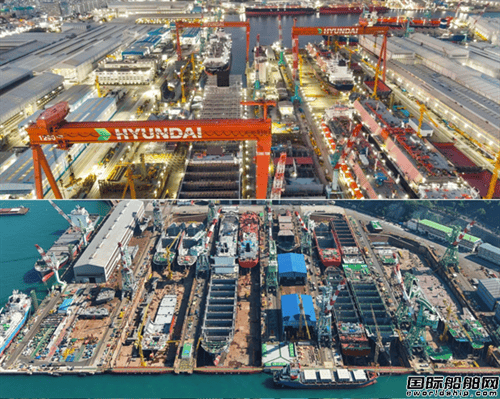
狂砸10696亿!韩国救得了美国造船业吗?
Sou Hu Cai Jing· 2025-08-29 07:51
Core Viewpoint - The article discusses the significance of shipbuilding as a key area of cooperation between South Korea and the United States, particularly in the context of U.S. President Trump's efforts to revitalize the American shipbuilding industry [4][5][20]. Group 1: U.S. Shipbuilding Industry Context - Historically, the U.S. was the world's leading shipbuilding nation, with a market share of 72% in 1944 and 66% post-World War II [8][10]. - Currently, the U.S. shipbuilding industry accounts for only 0.04% of the global market, while China, Japan, and South Korea dominate with a combined share of 90.44% [10][11]. - The U.S. Navy's fleet is aging, with fewer than 300 active vessels, and the rate of decommissioning exceeds that of new ship commissions [16][19]. Group 2: Trump's Shipbuilding Revival Strategy - Trump has prioritized the revival of the shipbuilding industry as part of his broader manufacturing return strategy, viewing it as essential for national security and economic growth [5][20]. - The shipbuilding sector has a long supply chain involving over 150 related industries, making it a significant driver for job creation and economic multiplier effects [12][13]. - The Trump administration has proposed measures such as establishing a "Shipbuilding Office" and imposing fees on Chinese-built vessels to support U.S. shipbuilding [22]. Group 3: South Korea's Role and Capabilities - South Korea has positioned itself as a key partner for the U.S. in shipbuilding, with President Yoon Suk-yeol asserting that South Korea is the best and only partner for the U.S. in this sector [31]. - In 2024, South Korea's new order share rose to 24.81%, ranking second globally, with its largest shipbuilding group, HD Hyundai, leading in new orders [25][29]. - South Korea's acquisition of the Philadelphia shipyard and plans to invest $5 billion to increase production capacity highlight its commitment to supporting U.S. shipbuilding [32]. Group 4: Challenges in Revitalizing U.S. Shipbuilding - The U.S. shipbuilding industry faces significant challenges, including a shortage of skilled labor, with the workforce reduced to one-tenth of its peak size and an average age of 56 [36]. - The industry is highly dependent on a global supply chain, and U.S. policies aimed at protectionism may hinder its ability to thrive in a globalized market [38]. - The strategic paradox of attempting to rebuild a globally dependent industry through isolationist policies presents a significant obstacle to the revival of U.S. shipbuilding [38].
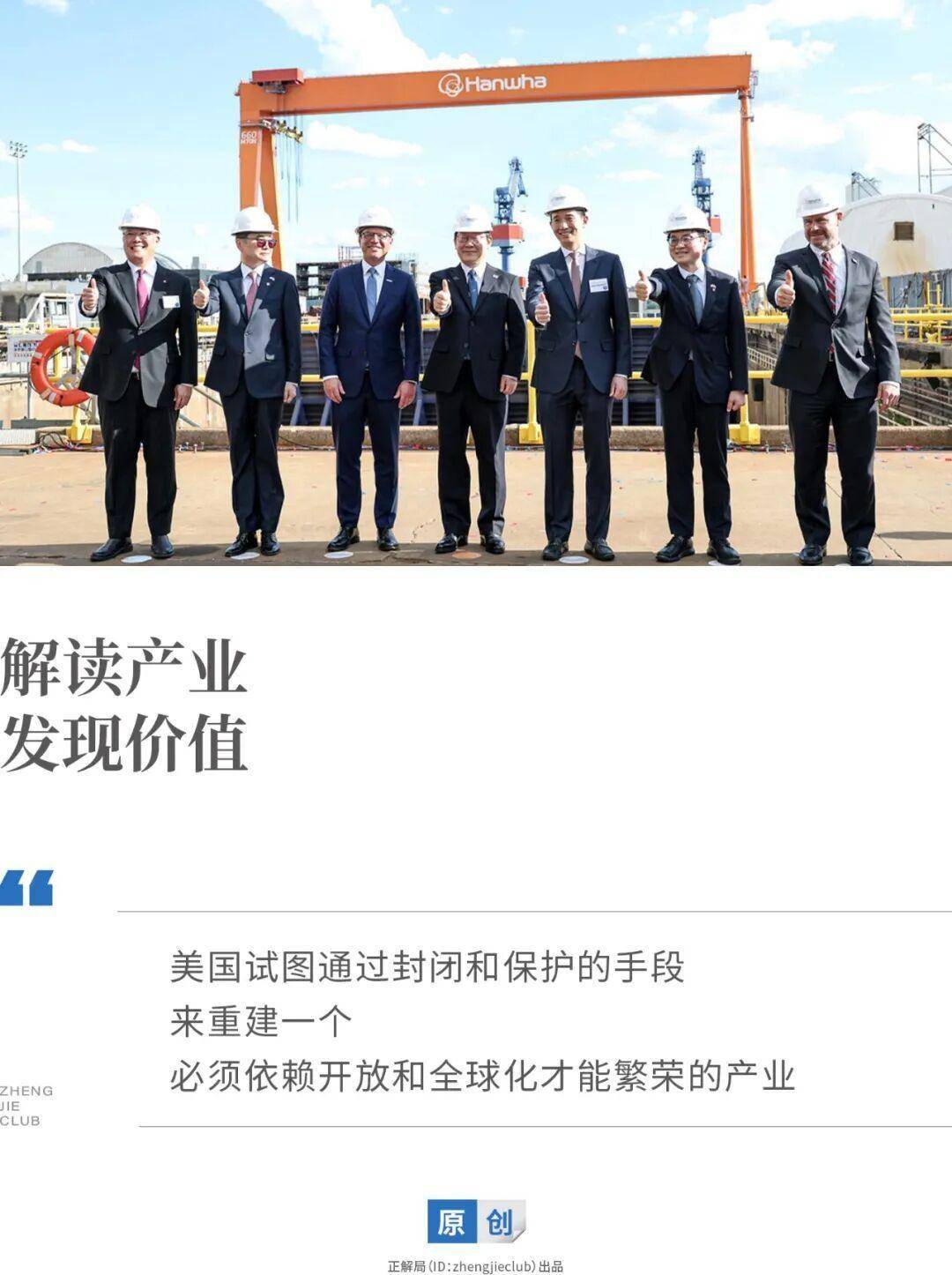
美国造船业沉疴难愈,韩国承诺为其造船解困
Sou Hu Cai Jing· 2025-08-28 15:42
Group 1 - The core idea revolves around South Korea's ambition to revitalize the struggling U.S. shipbuilding industry through strategic partnerships and investments, particularly highlighted by President Lee Jae-myung's visit to the Philadelphia shipyard [1][3] - South Korea's shipbuilding industry holds over 30% of the global market share, positioning it as a significant player compared to the U.S., which has dwindled to a mere 0.04% of the global merchant ship market [3][6] - The MASGA project aims to assist U.S. maritime security and shipbuilding revival, starting with less sensitive training vessels, which could ultimately enhance U.S. maritime capabilities [5][6] Group 2 - South Korea is investing $1.5 billion to construct five National Security Multi-Mission Vessels, each costing $300 million, which are designed for training but equipped with advanced facilities [6][8] - Hanwha Group's acquisition of the Philadelphia shipyard allows it to be the first South Korean company authorized to provide maintenance services for U.S. Navy vessels, establishing a foundation for deeper collaboration [8][11] - Legal barriers such as the Jones Act and the Burns-Tollefson Amendment pose significant challenges for foreign shipyards to engage in U.S. Navy shipbuilding, complicating South Korea's ambitions [9][11] Group 3 - Hanwha Group plans to invest $5 billion in infrastructure upgrades to increase the shipyard's annual output from fewer than 2 vessels to 20, indicating a strong commitment to enhancing U.S. shipbuilding capacity [11] - Despite the potential for collaboration, the U.S. Navy's core shipbuilding challenges, including delays in major vessels, remain largely unaddressed by foreign assistance, emphasizing the need for domestic reforms [8][11] - The U.S. shipbuilding industry faces deep-rooted issues such as a skilled labor shortage, aging infrastructure, and fragile supply chains, which cannot be resolved solely through foreign partnerships [11]
*ST松发上半年营收66.80亿元 同比增长315.49%
Zheng Quan Ri Bao Wang· 2025-08-28 13:44
Group 1 - The core viewpoint of the articles highlights the significant turnaround in *ST Songfa's financial performance, with a revenue increase of 315.49% year-on-year and a net profit of 647 million yuan, marking a substantial recovery from previous losses [1] - The turnaround is attributed to a major asset restructuring, where *ST Songfa transitioned from traditional ceramic manufacturing to shipbuilding by integrating with Hengli Heavy Industry Group [1] - The restructuring has led to enhanced profitability and performance, with the shipbuilding business expected to significantly contribute to the company's earnings post-2025 [1] Group 2 - Hengli Heavy Industry's "Future Factory" project will enable an annual processing capacity of approximately 2.3 million tons of steel and the production of around 180 marine engines, covering various dual-fuel types [2] - The annual output value of Hengli Heavy Industry is projected to exceed 70 billion yuan, reflecting its rapid growth and contribution to the high-quality and green transformation of China's shipbuilding industry [2] - Hengli Heavy Industry's advancements are reshaping the development path of China's shipbuilding sector and enhancing its global competitive position, while also contributing to the green and low-carbon transition in global shipping [2]

韩国船企能帮美海军“解套”吗?专家:美造船业积重难返,不是贴上“创可贴”就能解决
Huan Qiu Shi Bao· 2025-08-27 22:53
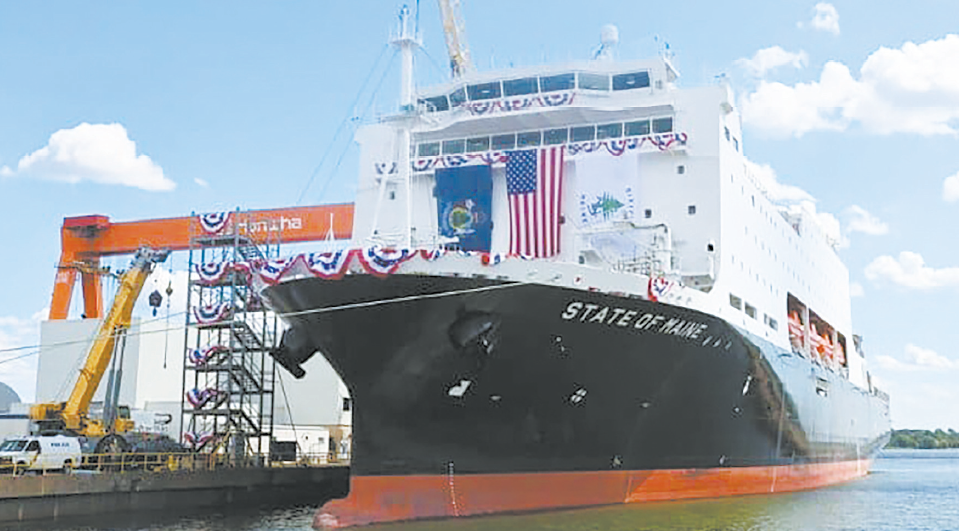
Group 1 - The core viewpoint of the articles revolves around South Korea's efforts to revitalize the U.S. shipbuilding industry through collaboration, particularly highlighted by the construction of the National Security Multi-Mission Vessel (NSMV) "Maine" [1][2][6] - South Korean shipbuilding companies, particularly Hanwha, are set to contribute to U.S. maritime security and the revival of the American shipbuilding sector through the MASGA project, which aims for mutual development [2][6] - The NSMV "Maine" is primarily intended for training purposes and humanitarian aid, equipped to train 600 students and provide disaster relief, showcasing its dual functionality [4][5] Group 2 - The U.S. shipbuilding industry has been in decline, with its market share dropping to 0.04% by 2024, prompting South Korea to propose the MASGA project during trade negotiations [6][7] - Challenges facing the U.S. Navy include skilled labor shortages, aging infrastructure, and supply chain instability, leading to delays in shipbuilding and maintenance schedules [7][8] - Legal barriers, such as the Jones Act and the Burns-Tollefson Amendment, pose significant challenges for South Korean companies aiming to participate in U.S. naval shipbuilding, although there are discussions about potential exemptions [9]
美财长贝森特:考虑在其他行业收购股权,英伟达不在考虑范围内
Feng Huang Wang· 2025-08-27 22:16
Group 1 - The U.S. government, represented by Treasury Secretary Scott Basset, confirmed the potential for equity acquisitions in other industries following the recent deal with Intel, but Nvidia is not under consideration [1] - The transaction with Intel is said to have created $11 billion in value for the U.S., with expectations for further appreciation [1] - Basset emphasized the need for self-sufficiency in critical industries, citing the vulnerabilities exposed in the supply chain during the COVID-19 pandemic [1] Group 2 - Republican Congressman Don Bacon expressed opposition to government acquiring equity in companies [2] - Senator Todd Young, a key proponent of the CHIPS and Science Act, indicated that the intent of the legislation was not for government ownership but to enhance economic and national security [2] - Senator Bernie Sanders supported the idea of converting subsidies into equity, arguing that it is unfair for taxpayers to provide billions in subsidies without receiving a stake in profitable companies like Intel [2]


美国财长:政府没有理由入股英伟达,可能介入造船业等行业
Ge Long Hui A P P· 2025-08-27 17:10
Core Viewpoint - The U.S. Treasury Secretary Scott Bessent stated that the U.S. government has no reason to take a stake in Nvidia, as the company does not require financial support [1] Group 1: Government Intervention - Bessent mentioned that the government might consider intervening in industries such as shipbuilding instead [1] Group 2: Corporate Behavior - Bessent criticized Boeing for engaging in large-scale stock buybacks rather than investing in research and development [1]

美财长贝森特证实:正探索其他行业入股机会,但不考虑持有英伟达股份
Xin Lang Cai Jing· 2025-08-27 16:05
Group 1 - The U.S. government, represented by Treasury Secretary Scott Basset, confirmed the recent investment in Intel and indicated potential for similar investments in other industries, excluding Nvidia [1] - The investment in Intel is seen as creating $11 billion in value for the U.S., with expectations for further appreciation [1] - Basset emphasized the need for self-sufficiency in critical industries, citing vulnerabilities in the supply chain exposed by the COVID-19 pandemic [1] Group 2 - There is a divide among Republican lawmakers regarding the government's acquisition of equity in Intel, with some opposing the idea [2][3] - Concerns were raised about the implications of government equity stakes, referencing the lackluster performance of bank stocks after the 2008 financial crisis [3] - Senator Bernie Sanders supports the idea of converting taxpayer subsidies into equity stakes in profitable companies like Intel, arguing it is a fairer approach [3]