
中医药

Search documents
以赛促学,岐黄之术联通世界
Qi Lu Wan Bao· 2025-11-14 16:34
Core Insights - The event showcased the skills of students in traditional Chinese medicine (TCM) and emphasized international collaboration through the participation of 12 teams from various countries [1][2] - A highlight of the competition was the "Foreign Student Experience Event," where international students engaged in practical TCM techniques, enhancing cultural exchange [1] - The competition format included both theoretical and practical assessments, aligning with vocational education standards and TCM assistant physician examination requirements [1][2] Group 1 - The competition featured a theoretical test conducted in a human-computer dialogue format, focusing on participants' understanding of TCM theory and diagnosis [2] - In the practical segments, participants demonstrated proficiency in acupuncture, cupping, moxibustion, and Tui Na techniques, showcasing their clinical skills [2] - The event aimed to promote TCM education and international cooperation, serving as a platform for cultural exchange among Belt and Road and BRICS nations [2]
立冬后重在“养神”
Ren Min Ri Bao· 2025-11-14 07:29
一味食疗方:黑芝麻粥。将黑芝麻(炒熟后研磨)与粳米一同放入锅中共煮成粥,可加少许蜂蜜调味。中 医认为,黑芝麻能补益精血、润燥滑肠,精足则血旺,血旺则心神得养。对于因用脑过度出现头晕、耳 鸣、早生华发的人群,食用黑芝麻粥尤为适宜。 一组穴位按摩:太溪和神门。太溪穴为肾经原穴,位于足内侧内踝后方与脚跟骨肌腱之间的凹陷处,具 有滋肾阴、补肾气的功效。神门穴为心经原穴,位于腕横纹尺侧端,尺侧腕屈肌腱的桡侧缘凹陷处,可 用拇指指尖按压这两个穴位直至有酸胀感,每次3—5分钟。 立冬,万物收藏之始。《黄帝内经》云:"冬三月,此谓闭藏,水冰地坼,无扰乎阳。"在中医理论 中,"心藏神""肾藏志"。冬季对应人体肾脏,是封藏精气的季节。现代人容易思虑过度、心神耗散,推 荐几种"养神"方式,有利于放松心情、缓解焦虑。 一杯代茶饮:甘麦安神茶。取炙甘草、浮小麦、大枣(掰开),放入杯中,用沸水冲泡,代茶频饮,适合 心绪不宁时饮用。甘麦安神茶来源于《金匮要略》中记载的"甘麦大枣汤",三药合用,能柔肝润燥,缓 解精神紧张、悲伤欲哭之感。 一种呼吸法:凝息敛神法。选择安静的时刻,保持正坐或盘坐姿势。采用"吸—停—呼"的呼吸节奏,即 先用鼻子缓 ...
以岭药业股价涨5.29%,华泰柏瑞基金旗下1只基金重仓,持有15.02万股浮盈赚取16.22万元
Xin Lang Cai Jing· 2025-11-14 02:31
Group 1 - Yiling Pharmaceutical's stock increased by 5.29%, reaching 21.49 CNY per share, with a trading volume of 1.012 billion CNY and a turnover rate of 3.50%, resulting in a total market capitalization of 35.903 billion CNY [1] - The company, established on August 28, 2001, and listed on July 28, 2011, is located in the High-tech Industrial Development Zone of Shijiazhuang, Hebei Province, focusing on the research, production, and sales of traditional Chinese medicine [1] - The revenue composition of Yiling Pharmaceutical includes cardiovascular products at 48.60%, respiratory system products at 22.80%, other products at 22.52%, and patented products at 6.08% [1] Group 2 - Huatai-PineBridge Fund has one fund heavily invested in Yiling Pharmaceutical, with a reduction of 11,000 shares in the third quarter, holding a total of 150,200 shares, which accounts for 3.25% of the fund's net value, ranking as the eighth largest holding [2] - The fund, established on July 26, 2022, has a current size of 73.3687 million CNY, with a year-to-date return of 3.17%, ranking 4132 out of 4216 in its category, and a one-year loss of 3.9%, ranking 3883 out of 3955 [2] - The fund manager, Chen Kehan, has been in position for 114 days, overseeing total assets of 2.226 billion CNY, with the best return during the tenure at 2.93% and the worst at -7.96% [2]

党建引领 汇聚发展澎湃动能
Si Chuan Ri Bao· 2025-11-13 21:00
位于成都市青羊区的航空国创中心产 业园。 青羊区少城街道总工会开展的骑手义诊活动 现场。 □青社轩 (图片由成都市青羊区委社会工作部提供) 时代潮涌,一道必须答好的新课题摆在面前—— 近年来,新经济组织、新社会组织大量涌现,新就业群体规模持续扩大,不断改变着传统的组织 形式、工作方式和治理结构。 因势而谋、顺势而为、乘势而上。聚焦"突出抓好新经济组织、新社会组织、新就业群体党的建 设,不断增强党在新兴领域的号召力凝聚力影响力",成都市青羊区主动破题,立足现实变化,把 握时代特征,以高质量党建引领新兴领域高质量发展。 强基固本 织好组织体系"一张网" 近日,一场特殊的产融对接活动在青羊区光华街道举行。前来参加活动的,除了新认定的高新技 术企业及金融机构代表,还有来自街道的专职党建服务专员。会上,除相关部门进行政策、服务 宣讲外,专职党建服务专员还就如何发挥高新技术企业党组织作用等进行政策宣讲。 在青羊区,类似的活动还有很多。要形成完善的组织体系,不仅要巩固已有的组织基础,还要扩 大组织覆盖面。近年来,青羊区坚持重点企业分类攻坚、重点区域因地制宜、重点组织统筹推 进、重点群体凝聚引领,强基固本,持续织好组织体系" ...


新华时评:为中医药文化注入“时代流量”
Xin Hua She· 2025-11-13 06:55
Core Insights - Traditional Chinese medicine (TCM) culture is gaining popularity and visibility through innovative approaches, such as the short video series "Looking at China through Classical Medical Texts," which has quickly risen to the top of various video platforms [1] - The recent China International Import Expo showcased various TCM heritage practices, attracting significant public interest and participation [1] - The increasing public health awareness and recognition of TCM culture are driving its "breaking the circle" dissemination, although there remains a gap between the supply of TCM products and the diverse demands of the public [1] Group 1 - TCM culture is being revitalized through modern digital methods, making ancient medical knowledge more accessible and engaging for the public [2] - The integration of modern technology and information platforms is essential for the preservation and promotion of TCM knowledge [2] - There is a need for a high-level team dedicated to TCM popularization, focusing on cross-disciplinary talent development [2] Group 2 - The popularity of TCM-themed markets among young people and the rise of TCM herbal drinks as a health trend reflect a growing cultural acceptance [1] - The innovative transformation and development of TCM culture are crucial for its sustainability and relevance in contemporary society [2] - Emphasizing the importance of aligning TCM with modern societal needs and leveraging technology can enhance public health and cultural confidence [2]
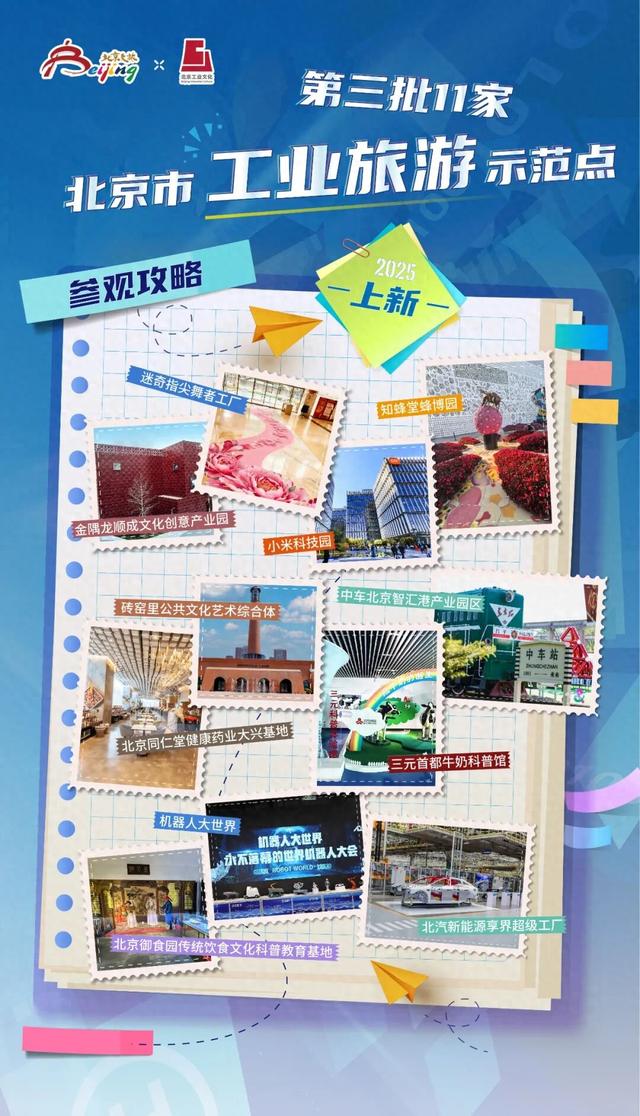
上新11家!北京工业旅游打卡点位达30处,攻略来了
Bei Jing Ri Bao Ke Hu Duan· 2025-11-12 11:36
Core Points - Beijing's cultural tourism sector has announced the addition of 11 new industrial tourism demonstration sites, showcasing a blend of technology, art, and cultural experiences [2] Group 1: New Industrial Tourism Sites - The Jinju Longshun Cheng Cultural and Creative Industry Park features a non-heritage museum, restoration center, and practical workshops for students, emphasizing traditional craftsmanship [4][6] - The Miqi Finger Dancer Factory combines Eastern aesthetics with modern technology, offering immersive experiences that highlight traditional beauty and innovation [8] - The Xiaomi Technology Park integrates IoT and big data to create a smart, efficient, and green workspace, allowing visitors to experience the brand's ecosystem [10][12] Group 2: Cultural and Educational Experiences - The Zhuangyao Li Public Cultural and Art Complex, a renovated brick factory, serves as a cultural exchange space, promoting art and education [20] - The Zhifeng Hall Bee Museum, the largest bee-themed museum globally, offers insights into bee culture and products, along with hands-on experiences [26] - The San Yuan Capital Milk Science Museum focuses on dairy education, featuring interactive exhibits and a modern production line [39] Group 3: Technological and Industrial Innovation - The CRRC Beijing Zhihui Port Industrial Park emphasizes high-tech industry development and cultural integration, showcasing China's railway history [30][32] - The Beiqi New Energy Enjoy Super Factory aims for high-end, intelligent, and green manufacturing, with a production capacity of 120,000 vehicles annually [50][52] - The Robot World serves as a comprehensive robot exhibition center, linking various industries and promoting technological advancements [56][58] Group 4: Overall Impact - The total number of industrial tourism demonstration sites in Beijing has now reached 30, covering diverse fields such as smart manufacturing, cultural creativity, traditional crafts, and digital technology [60]

为中医药文化注入“时代流量”
Xin Hua She· 2025-11-12 06:13
Core Viewpoint - The article emphasizes the need to inject "modern flow" into traditional Chinese medicine (TCM) culture to enhance its relevance and accessibility in contemporary society [1][2]. Group 1: Current Trends in TCM Culture - TCM culture is gaining popularity, as evidenced by the success of the short video series "Looking at China through Classical Medical Texts," which quickly topped various video platform charts [1]. - The recent China International Import Expo showcased various TCM heritage practices, such as Lu's acupuncture and Haipai medicinal paste, attracting significant public interest [1]. - The rise of TCM-themed markets and the popularity of herbal tea drinks reflect a growing trend among younger generations towards TCM as a new health fashion [1]. Group 2: Challenges and Opportunities - Despite the increasing interest, there remains a gap between the supply of TCM products and services and the diverse demands of the public, with the specialized nature of TCM posing challenges for broader dissemination [1]. - To effectively promote TCM culture, it is essential to accelerate digital integration and utilize modern technology for the protection and dissemination of TCM knowledge [2]. - Building a high-level TCM popular science team and cultivating cross-disciplinary talents in TCM culture dissemination are crucial for enhancing public engagement and recognition [2].
山西长治组建“中医天团” 专科集群为区域医疗“打通经脉”
Zhong Guo Xin Wen Wang· 2025-11-12 06:08
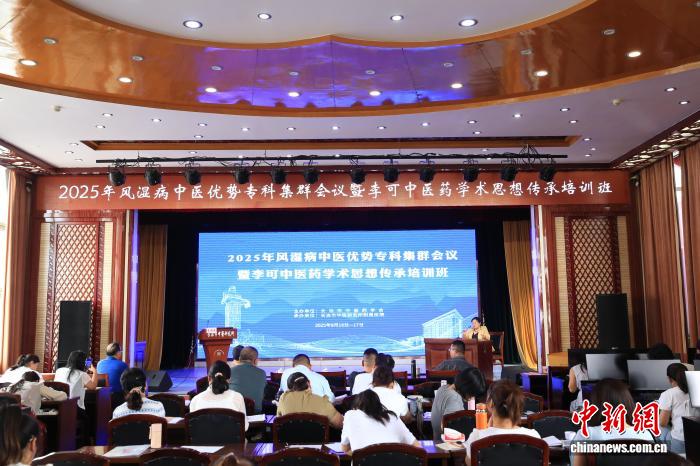
中新网记者 范丽芳 山西长治组建"中医天团" 专科集群为区域医疗"打通经脉" 中新网长治11月12日电 题:山西长治组建"中医天团" 专科集群为区域医疗"打通经脉" "以前治风湿得往市里跑,现在专家每周来县里坐诊,喝中药、做针灸,没多久关节不疼了。"在山西长 治壶关县,刘大妈的一番切身感受,道出了当地中医药服务正在发生的深刻变化。 变化始于一场"集群化"改革。2023年,山西省长治市入选中医药传承创新发展示范试点项目,此后,当 地依托两所三甲中医医院,将八个优势中医专科"打包"成集群,组建成一个个"中医天团"。其核心任务 是为区域医疗"打通经脉"。随着"气血"的通畅,优质资源得以流动,民众健康的"第一道防线"更加稳 固。 在平顺县中医院,心血管病医生潘韬对此深有体会。工作十年的他,过去遇到疑难杂症多靠翻阅资料。 如今,他成了山西省名中医史爱菊的跟师学生。"现在可以随时请教,潜移默化中掌握了老师的临床思 想,治病流程更规范,也能处理棘手病例了。"潘韬说。 从"往上跑"到"往下沉" 集群共建织就健康网 长治市中医资源丰富,但过去优质医疗资源多集中在市区。为破解基层民众"看专家难"问题,该市推 出"中医优势专科集群 ...
新华时评丨为中医药文化注入“时代流量”
Xin Hua She· 2025-11-12 02:57
Core Viewpoint - The article emphasizes the need to inject "modern flow" into traditional Chinese medicine (TCM) culture to enhance its relevance and accessibility in contemporary society [1][2]. Group 1: Cultural Promotion - Recent initiatives, such as the short video series "Looking at China through Classical Medical Texts," have successfully attracted public interest in TCM by utilizing engaging formats like animation and AI [1]. - The eighth China International Import Expo showcased various TCM heritage practices, drawing significant public engagement and interest [1]. Group 2: Challenges and Opportunities - Despite the growing interest in TCM, there remains a gap between the supply of TCM products and services and the diverse demands of the public, partly due to the specialized nature of TCM knowledge [1]. - The article highlights the importance of digital integration and modern technology in preserving and promoting TCM knowledge, suggesting the establishment of digital service platforms for TCM [2]. Group 3: Future Directions - To further promote TCM culture, it is essential to innovate communication methods and create high-quality cultural events that resonate with the public [2]. - Building a skilled team for TCM popularization and training cross-disciplinary talents in TCM communication is crucial for its sustainable development [2].
熊大经全国名中医传承工作站落户杭州
Hang Zhou Ri Bao· 2025-11-12 02:26
Core Viewpoint - The establishment of the national famous traditional Chinese medicine (TCM) inheritance workstation in Hangzhou marks a significant step in the development and dissemination of TCM, particularly in the field of otolaryngology, led by the renowned expert Xiong Dajing [1][2] Group 1 - The workstation aims to focus on "guarding the essence and innovating," integrating traditional TCM theories with modern technologies such as artificial intelligence and big data to further develop Xiong's academic theories [2] - The establishment of the workstation is seen as a recognition of the development of the otolaryngology department at the Hangzhou Traditional Chinese Medicine Hospital and an important opportunity for academic exchange between Zhejiang and Sichuan [2] - The initiative is viewed as a milestone for the cross-province dissemination of Sichuan-style TCM, promoting cultural confidence and the innovative development of traditional Chinese culture [2] Group 2 - The workstation will work on the transmission of the "Five Degrees Differentiation" academic thought, aiming to better protect the respiratory health of the people in Jiangnan [2] - The event included a ceremony where disciples paid respect to Professor Xiong, who emphasized the importance of combining excellent medical skills with high moral standards in practice [1][2] - The initiative is expected to inject continuous strength into public health through the wisdom of TCM, showcasing the vitality of ancient medical knowledge in modern contexts [2]