
超市

Search documents
离境退税“即买即退”服务再添新举措 中行上海市分行推动设立上海首个酒店、商超退付点
Zhong Guo Jin Rong Xin Xi Wang· 2025-10-30 13:03
Group 1 - Bank of China Shanghai Branch has established the first hotel tax refund point in Shanghai at the Shanghai Grand Hotel, enhancing the tax refund service for international travelers [1] - The "immediate purchase and refund" service has been launched at the RT-Mart on Pingxingguan Road, expanding the channels for overseas guests to process tax refunds [1] - The Shanghai Grand Hotel, with its extensive multilingual reception capabilities and international service experience, aims to provide a seamless "stay, shop, and refund" experience for foreign guests [1] Group 2 - The number of South Korean tourists visiting China has significantly increased since the implementation of the visa-free policy for ordinary passports [1] - The RT-Mart supermarket has become a popular spot among South Koreans on social media, serving as an important channel for the Bank of China's tax refund services [1] - The "immediate purchase and refund" service will be further extended to tourists from more countries and regions in the future [1] Group 3 - The upcoming 8th China International Import Expo (CIIE) will see Bank of China continue to focus on "diversified scenarios" to expand the coverage of the "immediate purchase and refund" service [2] - The goal is to enhance the payment experience for international visitors, ensuring convenience and comfort at various locations such as airports, hotels, attractions, and supermarkets [2]
离境退税“即买即退”服务再添新举措 中行上海市分行推动设立全市首个酒店、商超退付点
Di Yi Cai Jing· 2025-10-30 11:24
Group 1 - Bank of China Shanghai Branch has established the first hotel tax refund point in Shanghai at the Shanghai Grand Hotel, enhancing the tax refund process for international travelers [1] - The "immediate purchase and refund" service point at the RT-Mart on Pingxingguan Road is gaining popularity among Korean tourists, further expanding the channels for tax refunds [1] - The integration of tax refund services at hotels and supermarkets aims to improve the overall experience for international visitors, promoting a seamless "stay, shop, refund" process [1] Group 2 - The upcoming 8th China International Import Expo (CIIE) will see Bank of China as the sole strategic partner, focusing on diversifying service scenarios [2] - The bank aims to enhance the "immediate purchase and refund" service coverage to provide a high-quality payment experience for international tourists [2] - The goal is to ensure that visitors experience convenience and comfort at various locations, including airports, hotels, scenic spots, and supermarkets [2]
国芳集团(601086) - 国芳集团:2025年第三季度主要经营数据的公告
2025-10-30 09:23
证券代码:601086 证券简称:国芳集团 公告编号:2025-054 甘肃国芳工贸(集团)股份有限公司 2025 年第三季度主要经营数据的公告 本公司董事会及全体董事保证本公告内容不存在任何虚假记载、误导性陈述 或者重大遗漏,并对其内容的真实性、准确性和完整性承担法律责任。 甘肃国芳工贸(集团)股份有限公司(以下简称"公司")根据上海证券交 易所《上市公司自律监管指引第 3 号——行业信息披露 第四号 零售》、《关于 做好主板上市公司 2025 年第三季度报告披露工作的通知》的相关要求,现将 2025 年第三季度末门店变动情况及主要经营数据公告如下: 一、已开业门店分布及变动情况 (一)控股公司开设的门店分布及变动情况 截至 2025 年 9 月 30 日,公司在甘肃地区、宁夏地区、青海地区共拥有已运 营门店 11 家,其中:百货业态为主的门店 7 家,分别为东方红广场店、白银世 贸中心店、宁夏购物广场店、张掖购物广场店、西宁国芳购物中心店、兰州国芳 G99 购物中心、金昌国芳广场;超市 4 家,分别为综超广场店、综超曦华源店、 综超七里河店、综超皋兰店。公司经营面积共 36.15 万平方米,具体情况如下: ...

百联股份(600827) - 百联股份2025年1-3季度经营数据公告
2025-10-30 09:22
上海百联集团股份有限公司 2025 年 1-3 季度经营数据公告 本公司董事会及全体董事保证本公告内容不存在任何虚假记载、误导性陈述或者重 大遗漏,并对其内容的真实性、准确性和完整性承担法律责任。 根据《上海证券交易所上市公司自律监管指引第 3 号——行业信息披露:第四号 ——零售》的要求,现将公司 2025 年 1-3 季度主要经营数据披露如下: | 地区 | 业态 | 报告期内新开门店 | | 报告期内关闭门店 | | | --- | --- | --- | --- | --- | --- | | | | 门店家数 | 经营面积 | 经营面积 门店家数 | | | | | | (平方米) | (平方米) | | | 华东地区 | 超级市场 | 112 | 52,323.65 | 90 | 48,988.40 | | | 便利店 | 13 | 640.14 | 55 | 2,471.72 | | | 专业专卖 | 1 | 54.86 | 3 | 241 | | | 小计 | 126 | 53,018.65 | 148 | 51,701.12 | | | 超级市场 | 4 | 3,370.00 | - | - ...

重庆百货(600729):业绩表现稳健,实施首次中期分红
SINOLINK SECURITIES· 2025-10-30 05:28
Investment Rating - The report maintains a "Buy" rating for the company [5][13]. Core Insights - The company reported a revenue of 3.589 billion yuan in Q3 2025, a year-on-year decrease of 10.81%, while the net profit attributable to shareholders was 217 million yuan, an increase of 2.82% year-on-year [2]. - The company has implemented effective adjustments in its department store and supermarket operations, leading to a narrowing decline in revenue for both segments [3]. - Investment income for Q3 2025 reached 196 million yuan, a significant year-on-year increase of 33% [3]. Summary by Sections Performance Review - In Q3 2025, the company's revenue was 3.589 billion yuan, down 10.81% year-on-year, while the net profit attributable to shareholders was 217 million yuan, up 2.82% year-on-year. The net profit excluding non-recurring items was 231 million yuan, an increase of 17.90% year-on-year [2]. Operational Analysis - Despite a decline in total revenue, the revenue drop in the department store and supermarket segments showed signs of narrowing. Supermarket revenue fell by 3.99% year-on-year in Q3 2025, an improvement from a 5.02% decline in Q2 2025. Department store revenue decreased by 2.16%, compared to a 9.06% decline in Q2 2025 [3]. - The gross margin improved by 2.1 percentage points, with a rise in sales expense ratio by 1.7 percentage points and management expense ratio by 0.2 percentage points, while financial expense ratio decreased by 0.2 percentage points, indicating an overall improvement in operational efficiency [3]. Store Count and Dividends - As of the end of Q3, the company had 42 department stores, unchanged from the beginning of the year, and 145 supermarkets, a decrease of 3 stores. The company also initiated a mid-term dividend, proposing a cash dividend of 0.1589 yuan per share, totaling 70 million yuan, which accounts for 9.04% of the net profit attributable to shareholders for the first half of 2025 [4]. Profit Forecast and Valuation - The company is projected to generate revenues of 16.385 billion yuan, 17.073 billion yuan, and 18.307 billion yuan for 2025, 2026, and 2027 respectively, with year-on-year growth rates of -4.40%, +4.20%, and +7.23%. The net profit attributable to shareholders is expected to be 1.445 billion yuan, 1.568 billion yuan, and 1.738 billion yuan for the same years, with growth rates of +9.92%, +8.47%, and +10.89% respectively [5][10].

千亿山姆的“阿喀琉斯之踵”
3 6 Ke· 2025-10-29 12:04
Core Insights - Sam's Club in China is facing a significant decline in consumer trust due to multiple quality control issues, leading to a surge in complaints and questioning its value proposition [2][6][12] - The company's expansion strategy has shifted, focusing on increasing store numbers in lower-tier cities, which has introduced financial pressures and affected product quality [6][8] - The competitive landscape is intensifying, with both international and local players gaining market share, further challenging Sam's Club's position [11][12] Quality Control Issues - Recent incidents of food safety problems, including foreign objects found in products, have led to over 10,000 complaints on consumer platforms, with a 65% year-on-year increase in complaints [2][3] - The perception of Sam's Club's quality is deteriorating as it has started to stock lower-quality, mass-market brands, undermining its previous reputation for premium products [3][5] Strategic Shifts - The company has altered its product selection strategy, moving away from high-quality items to focus on higher profit margins, which has diluted its unique product offerings [8][12] - The rapid expansion from 48 to 60 stores in just over a year has created operational challenges, leading to a potential decline in service quality and consumer trust [6][11] Competitive Landscape - Sam's Club's market share in first-tier cities has decreased by 2.3%, while competitors like Costco and Hema have seen growth of 4.1% and 3.8% respectively [11] - The company is facing increased competition from local retailers who are quickly replicating successful products, putting further pressure on Sam's Club to maintain its pricing and quality standards [11][12] Financial Implications - Sam's Club's revenue contribution to Walmart China is significant, with nearly 70% of the total revenue coming from Sam's Club, highlighting the importance of maintaining its member base [9][12] - The financial model is under strain as the average transaction value in lower-tier cities is only 61% of that in first-tier cities, while operational costs are higher [6][8]

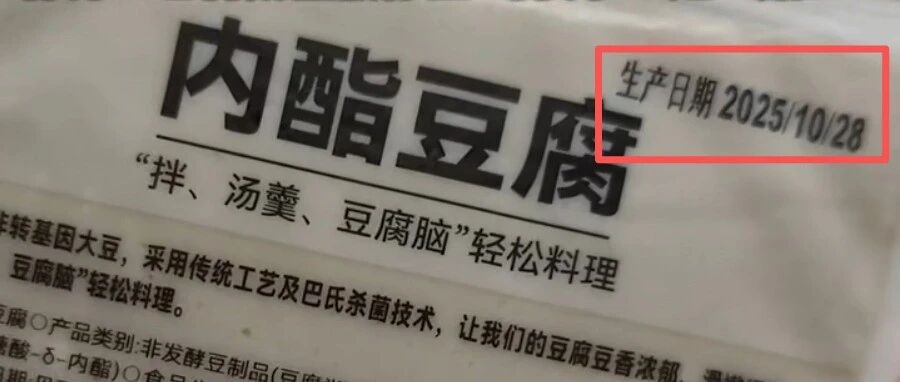
永辉超市被曝出售“穿越豆腐”!生产日期是“明天”?客服回应
新华网财经· 2025-10-29 11:29
Core Viewpoint - A consumer in Quanzhou, Fujian, reported purchasing a box of tofu from Yonghui Supermarket with a production date marked as "October 28, 2025," which led to public attention and humorous remarks about "time-traveling tofu" [3][5]. Group 1: Incident Details - The tofu incident prompted a response from Yonghui Supermarket's customer service, indicating that they would address the issue if it was their responsibility, but no official statement had been made at the time of reporting [3]. - The tofu manufacturer, Quanzhou Haohe Food Technology Co., stated they would verify if there was a date printing error [5]. - The local market supervision authority emphasized that such practices are not allowed and suggested consumers could file complaints if necessary [5]. Group 2: Legal Implications - A lawyer pointed out that labeling a future date constitutes false labeling, violating consumer protection and product quality laws [5]. - Consumers were advised to retain evidence and communicate with the seller, with the possibility of claiming "triple compensation" and reporting to regulatory authorities [5]. Group 3: Yonghui Supermarket's Operational Challenges - This incident is not the first occurrence of production date issues at Yonghui Supermarket, with a similar case reported in 2011 involving a misprinted date on tofu [9]. - Yonghui Supermarket has been undergoing store renovations, with 15 stores in the Beijing area modified in the past year, aiming to expand to 18 stores by the upcoming Spring Festival [9]. - The supermarket's performance has been declining, with a 20.73% year-on-year drop in revenue to 29.95 billion yuan and a net profit loss of 241 million yuan in the first half of the year [9][10].

坐标荔湾、天河,广州市区新增两家“胖永辉”
Sou Hu Cai Jing· 2025-10-29 11:10
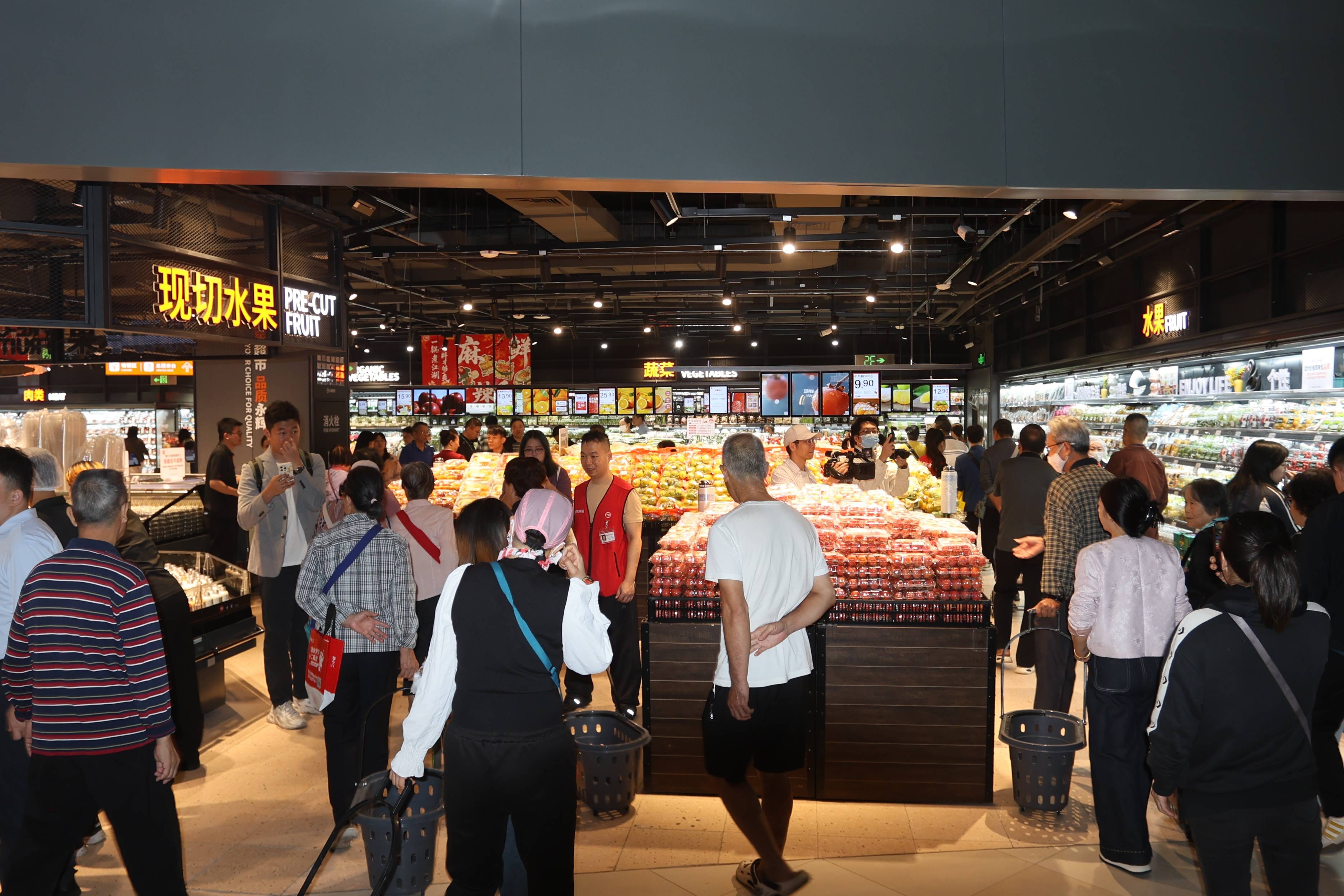
Core Insights - Yonghui Supermarket has opened two new stores in Guangzhou, enhancing consumer choices and establishing a "four-store linkage" in the main urban area [1][4]. Group 1: Store Openings and Strategy - The new stores in Liwan and Tianhe districts opened on October 29 and 31, respectively, following the first store's opening in late September [1]. - The stores are designed to cater to different demographics, with the Liwan store focusing on traditional Lingnan flavors and the Tianhe store targeting a younger audience [4]. - The product mix in the new stores includes a significant proportion of new and imported items, with 46.6% of the 7,868 SKUs in the Liwan store being new products and 37.6% imported, while the Tianhe store has 48.4% new products and 37% imported [4]. Group 2: Product and Service Enhancements - Both stores have achieved over 80% alignment with the product structure of the successful "Pang Dong Lai" model [4]. - The stores introduced popular products such as DL tomato compound juice and YONGHUI brand items to strengthen their product offerings [4]. - Upgrades to the shopping environment include wider aisles, lower shelf heights for better visibility, and various customer service enhancements like health measurement tools and convenience items [10]. Group 3: Employee Welfare and Community Engagement - The new stores have improved employee compensation and benefits, including immediate enrollment in social insurance and paid annual leave after one year of service [13]. - A "Vitality Energy Supply Station" was established in the Liwan store to cater to sports enthusiasts, offering a range of nutritional products [13].
重庆百货(600729) - 重庆百货大楼股份有限公司2025年1-3季度经营数据公告
2025-10-29 10:18
根据《上海证券交易所上市公司自律监管指引第 3 号——行业信息披露》第 四号——零售和《关于做好主板上市公司 2025 年第三季度报告披露工作的重要 提醒》的要求,重庆百货大楼股份有限公司(以下简称"公司")将 2025 年 1-3 季度主要经营数据披露如下: 一、2025 年 1-3 季度门店变动情况 注 1:同一物理体内存在多业态的,按其属性归口计入各业态。 二、2025 年 1-3 季度拟增加门店情况 证券代码:600729 证券简称:重庆百货 公告编号:临 2025-048 重庆百货大楼股份有限公司 2025 年 1-3 季度经营数据公告 本公司董事会及全体董事保证本公告内容不存在任何虚假记载、误导性陈述 或者重大遗漏,并对其内容的真实性、准确性和完整性承担法律责任。 地区 经营 业态 年初数 新增 关闭 本期余额 数量 建筑 面积 数量 变动时间 建筑 面积 数量 变动时间 建筑 面积 数量 建筑 面积 重庆 地区 百货业态注 1 42 99.20 42 99.20 超市业态 143 67.48 2 2025.01.01 2025.05.31 0.46 3 2025.05.12 2025.07.14 ...
家家悦(603708):Q3经营质量明显提升,供应链调优持续推进
Shenwan Hongyuan Securities· 2025-10-28 14:54
Investment Rating - The investment rating for the company is "Buy" (maintained) [2] Core Insights - The company's Q3 performance shows significant improvement in operational quality, with ongoing supply chain optimization contributing to enhanced service experience and operational efficiency [7] - The company reported a revenue of 13.588 billion yuan for the first three quarters of 2025, a year-on-year decrease of 3.81%, while the net profit attributable to shareholders was 206 million yuan, reflecting a year-on-year increase of 9.43% [7] - The company continues to adjust its store layout and enhance operational efficiency, with a total of 1,090 stores as of Q3 2025, including 921 direct-operated stores and 169 franchise stores [7] Financial Summary - For 2025, the company expects total revenue of 18.802 billion yuan, with a projected net profit of 201 million yuan, corresponding to a PE ratio of 34 [6] - The gross profit margin for Q1-Q3 2025 was 20.37%, an increase of 1.10 percentage points year-on-year, with Q3 gross profit margin reaching 23.79% [7] - The company’s operating expenses ratio for Q1-Q3 2025 was 21.30%, a decrease of 0.80 percentage points year-on-year, indicating improved cost management [7]
