
商业地产

Search documents
岁末狂欢!北京商圈跨年“节目单”超精彩
Bei Jing Ri Bao Ke Hu Duan· 2025-12-24 12:16
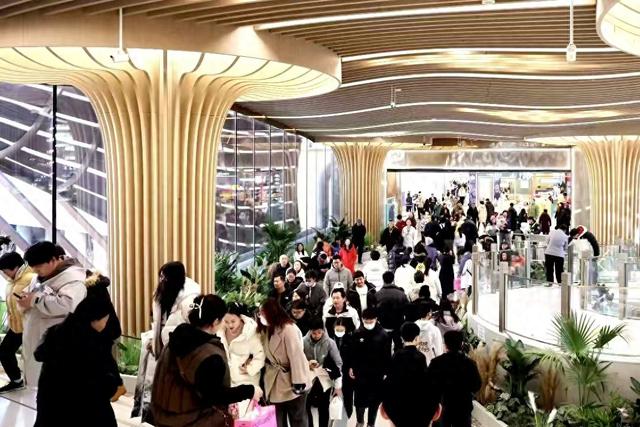
首钢园将迎来艺术与科技的盛会。首钢园六工汇变身巨大的"AI新聚场"主题岛,机器人、巨型机甲都将 加入庆祝活动。已举办13年的艺术市集陶然集将首次走出景德镇,北上到首钢园六工汇举办第14届"进 京赶集"陶然集。今年连唱49场的首钢园音乐会也将在2025年12月31日和2026年1月1日限时返场2天, OK排队、Lucky7两支人气乐队将演绎流行热门曲目。玩累了,人们还可以钻进三高炉对面的"贪吃暖 屋",品尝围炉大锅煮等暖食。 转自:北京日报客户端 品美食、看演出、逛市集……岁末年初,北京各大商圈喜庆氛围升温。记者了解到,2025年最后一天, 不少商场都准备了精彩的跨年夜活动,并延长营业时间,让市民和游客尽情狂欢。元旦假期,各大商圈 也准备了丰富多元的活动,为2026年添彩。 刚刚开启试营业的湾里,将用一系列丰富多彩的文化活动迎接新年到来。跨年夜,现场将举办多种跨年 活动,营业时间也将延长至零点后。其中,湾里·汀云小镇的火山公园将以"光影秀"为核心,在跨年之 夜呈现大型户外灯光艺术盛宴,结合"自贡彩灯"经典工艺,展现寓意美好的主题灯组,点亮璀璨光影; 魔毯广场将举行大型音乐会,邀请知名乐队现场演出。元旦假期,国内 ...

作价10亿,滨江宝龙城将易主
Xin Lang Cai Jing· 2025-12-24 10:32
Core Viewpoint - Baolong Real Estate is set to sell Hangzhou Binjiang Baolong City and Hangzhou Binjiang Baolong Yijun Hotel for an initial price of 1 billion yuan [1][7][9]. Group 1: Transaction Details - The sale agreement involves Shanghai Lianshang No. 1 Commercial Management Co., Ltd., which is 99.97% owned by Lishui Lianjia No. 2 Equity Investment Partnership [2][10]. - The payment will be made in four installments, with the first payment being 135 million yuan [2][9]. - A special shareholders' meeting will be convened by Baolong Real Estate to discuss this matter [10]. Group 2: Property Information - Hangzhou Binjiang Baolong City has a total construction area of approximately 137,000 square meters (excluding parking) and includes 1,390 underground parking spaces [5][12]. - The hotel has 175 guest rooms and began operations in December 2017 [5][12]. - The properties generated a net operating income of 231 million yuan in 2023, projected to be 232 million yuan in 2024, and 156 million yuan from January to August 2025 [5][12]. Group 3: Financial Obligations - After the completion of the equity transfer, Lianshang No. 1 will be responsible for providing shareholder loans or arranging new financing to repay approximately 1.46 billion yuan in project debt [5][12].
北京市投资促进服务中心副主任唐永宏:北京甲级写字楼市场延续持续回暖态势
Zhong Guo Jing Ying Bao· 2025-12-24 09:33
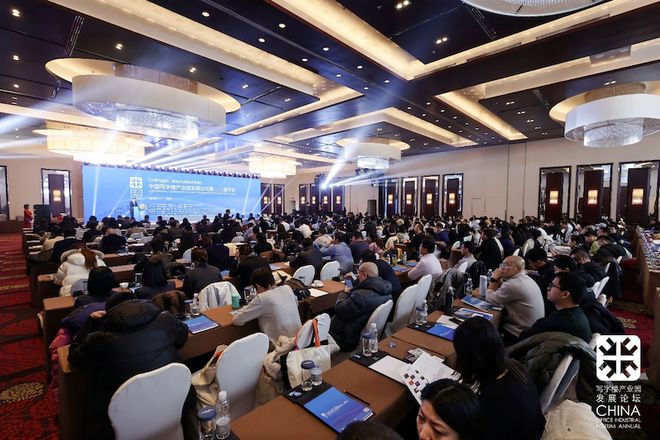
中经记者 颜世龙 北京报道 12月23日—24日,中国写字楼产业园发展论坛第22届年会在北京富力万丽酒店举办,本届年会由北京市 投资促进服务中心、全联房地产商会指导,房讯网、房讯指数CORC联合主办,主题为"内卷与进化: 商业办公的范式变革"。 论坛年会聚焦"十五五"规划建议与房地产发展新模式、宏观经济与商业地产可持续发展之道、写字楼产 业园从空间到价值的进化之路、写字楼从运营管理到资产管理的范式变革、产业园从空间进化到产业生 态的范式变革五大核心主题,深入探讨在全球经济格局变迁与科技革命的交织影响下商业办公的范式变 革。 据悉,中国写字楼产业园发展论坛源于2004年12月,已连续成功举办22届年会,聚焦商业地产行业发展 进程,记录并见证写字楼产业园行业历史轨迹,是国内商业地产行业规格最高、规模最大、影响最广的 专业论坛之一。 北京市投资促进服务中心党组成员、副主任唐永宏表示,商业地产在现代化经济体系中担任了重要位 置,在城市发展中扮演着塑造城市形象和提升竞争力的关键角色,是城市经济的重要驱动力。目前,北 京甲级写字楼市场延续持续回暖态势,租赁活跃度稳步提升,空置率持续回落。自三季度末,全市平均 空置率19% ...
新场景激发新活力——来自三地消费市场的调查
Ren Min Ri Bao· 2025-12-24 06:44
Core Viewpoint - The Central Economic Work Conference emphasizes the importance of expanding the supply of quality goods and services, highlighting the significance of new consumption scenarios in integrating new business formats, models, and products [1] Group 1: Consumption Scenarios and Integration - The State Council's implementation opinion stresses the need to strengthen cross-industry integration in commerce, culture, tourism, sports, health, and transportation to create impactful new consumption scenarios [1] - Local explorations in enhancing the supply of quality goods and services through cross-industry integration and new consumption scenarios are being actively pursued [1] Group 2: Case Studies of Successful Integration - In Jiangxi's Yingtan, the "Tiger Mountain Chestnut" brand has successfully integrated agriculture and tourism, achieving annual sales exceeding 1.2 billion yuan through a "farm-tourism integration" model [2] - The establishment of a smart cold storage system has extended the sales period of chestnuts from 3 months to 9 months, significantly increasing the planting area and benefiting over 1,200 farmers with an average income increase of 3,000 yuan [2] Group 3: Regional Development and Consumer Behavior - In Xinjiang's Yining, the opening of the Xingyue Mall attracted over 120,000 visitors on its first day, featuring 240 brands, including 57 first-time entries into the market, showcasing a strong demand for diverse consumption experiences [4][5] - The development of commercial facilities in third and fourth-tier cities is crucial to meet the rising demand for quality living and new experiences among young consumers [6] Group 4: Digital Transformation in County-Level Markets - In Shandong's Leling, the opening of a new fruit market equipped with a big data system has transformed the sales strategy of local fruit vendors, leading to a 60% increase in apple sales within the first month [7][8] - The implementation of digital rural initiatives is guiding the transformation of trade and commerce enterprises, promoting high-quality development in county-level markets [8][9]
“东方笕桥”打造航空航天图书馆
Hang Zhou Ri Bao· 2025-12-24 02:20
作为杭州的"东大门",笕桥也是兵家要地。1931年,中央军校航空队搬来笕桥,培养出了一大批飞 行员,成为中国航空人才的摇篮。1937年8月14日,发生在杭州上空的"八一四"笕桥空战,写下了中国 抗战史和中国近代史光辉的一页。 在东方笕桥打造航天航空主题图书馆,是一个笕桥人深厚航空情结使然。作为土生土长的笕桥人, 王水福小时候就有一个航空梦想,在之后的创业历程中,他带领西子联合进军高端,参与航空航天事 业。他表示,建设该图书馆不仅源于企业情怀,更希望为社区居民,尤其是青少年打开一扇仰望星空、 探索未来的窗口。 作为西子联合众多产业中最贴近邻里生活、最富有烟火气的板块,东方笕桥致力于成为新型社区生 活空间,成为大家愿意常来、乐于相聚的"第二客厅"。未来,这里还将逐步引入"笕桥茶馆""相亲河 边""人才驿站""运动健身养生场馆"等,为附近居民构建一个兼具生活温度与精神厚度的美好生活圈。 12月20日,由西子联合与笕桥街道共同主办的"暖流融岁月丰景在邻里"笕桥街道第二届邻里节活动 在东方笕桥举行。活动现场,西子联合董事长王水福宣布,将在东方笕桥打造一个航天航空主题图书 馆,收藏全球相关书籍。 位于火车东站附近的东方笕 ...
新场景激发新活力(新视窗·扩大优质商品和服务供给)
Ren Min Ri Bao· 2025-12-23 22:31
Core Viewpoint - The Central Economic Work Conference emphasizes the importance of expanding the supply of quality goods and services, highlighting the role of new consumption scenarios in integrating new business formats, models, and products [1] Group 1: Consumption Scenarios and Integration - The State Council's implementation opinion stresses the need to enhance cross-industry integration in consumption, including commerce, culture, tourism, sports, health, and transportation, to create impactful new consumption scenarios [1] - In Jiangxi's Yingtan, the "Longhushan Chestnut" geographical brand has been developed, leading to an annual sales revenue exceeding 1.2 billion yuan through the integration of agriculture and tourism [2] - The establishment of a smart cold storage system has extended the sales period of chestnuts from 3 months to 9 months, addressing preservation challenges in the chestnut industry [2] Group 2: Economic Impact and Community Development - The chestnut industry expansion has increased the planting area from 3,000 acres to over 5,000 acres, benefiting over 1,200 farmers with an average income increase of 3,000 yuan [2] - The integration of the chestnut industry with tourism has led to the development of unique culinary offerings, enhancing market demand and visitor numbers [2] Group 3: Urban Consumption and Brand Development - In Xinjiang's Yining, the opening of the Xingyue Mall attracted over 120,000 visitors on its first day, showcasing strong consumer interest in new brands and shopping experiences [4] - The mall features 240 brands, including 57 that are entering the Yining market for the first time, indicating a shift in consumer behavior towards local shopping options [4][5] Group 4: Digital Transformation in County-Level Markets - In Shandong's Leling, the opening of a new fruit market equipped with a big data system has transformed local fruit sales, allowing for real-time market analysis and improved inventory management [7] - The introduction of diverse packaging options for apples has resulted in a 60% increase in sales within the first month, demonstrating the effectiveness of data-driven decision-making [8] - The promotion of digital rural initiatives aims to enhance the quality of county-level commerce, encouraging the integration of digital technologies in local markets [9]
特色载体推介 重点项目签约 观前街—平江路商圈以场景再构谋新局
Su Zhou Ri Bao· 2025-12-23 22:19
Core Insights - The event "Reconstructing Scenes, Breaking Through Business Circles" focused on upgrading the Qianqian Street-Pingjiang Road business district while preserving the historical city, showcasing various resources and signing key projects to enhance consumer experiences [1] Group 1: Event Overview - The event was held on December 23 and was guided by the Gusu District Data Bureau, organized by the Pingjiang Sub-district Office and Suzhou Historical and Cultural City Construction Group [1] - The event included carrier promotions, scene releases, project signings, and salon discussions to gather multiple forces for constructing new consumer scenes [1] Group 2: Business District Development - Three types of characteristic carrier resources were showcased, presenting a diverse development pattern of "history + modern" and "single + comprehensive" [1] - The Suzhou Historical and Cultural City Construction Group promoted unique old house spaces to support cultural, commercial, and tourism integration projects [1] - The Wujie Meiluo Boutique Center aims to create a luxury consumption landmark near the ancient city wall, focusing on "delicate + comprehensive" offerings [1] - The CFS Central Holiday Plaza is set to unveil at the end of the year, addressing integrated needs for leisure, entertainment, and socializing, outlining a comprehensive urban holiday lifestyle [1] - Eight key projects were successfully signed, injecting strong momentum into the development of the business district [1] Group 3: Innovative Consumer Scenes - The Pingjiang Sub-district collaborated with 99 key merchants to launch the "Fortune in Pingjiang, Sweet 'Coupling' Economy" consumer gift package [2] - A pet-friendly scene was introduced, promoting cross-industry collaborations and incorporating pet-friendly facilities and services to invigorate the development of the ancient city [2]
试营业三天客流破40万!北京“湾里”商业新地标本周五重磅开业
Xin Jing Bao· 2025-12-23 11:22
12月23日,市民打卡湾里王府井(600859)WellTown。与地铁花庄站无缝衔接的商业项目"湾里"将于 本周五(12月26日)正式开门迎客。该项目试营业前三日,累计客流已突破40万人次。 ...
香港商界推出多项便利及优惠措施 迎接“粤车南下”
Zhong Guo Xin Wen Wang· 2025-12-23 10:32
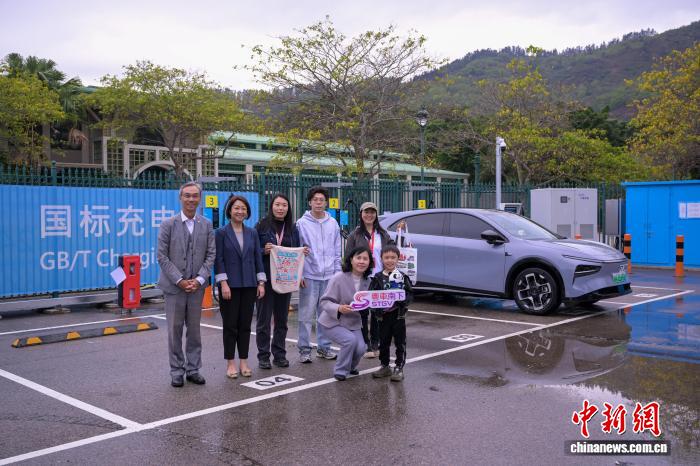
Core Viewpoint - The Hong Kong business community has introduced various convenience and discount measures to welcome the arrival of Guangdong private cars under the "Yue Che Nan Xia" policy, which allows eligible vehicles to enter Hong Kong [1][4]. Group 1: Policy Implementation - The "Yue Che Nan Xia" policy began accepting applications from eligible Guangdong private cars on December 9, with successful reservations allowing entry into Hong Kong starting from December 23 [3]. - Vehicles can stay in Hong Kong for a maximum of three days per visit [3]. Group 2: Infrastructure Support - A new electric vehicle charging station was inaugurated at Tsing Kau Bay on Lantau Island, providing support for both "Yue Che Nan Xia" and "Hong Kong Cars Northbound" travelers [6]. - The charging station features nine fast charging points, capable of charging a standard electric vehicle to about 60% in approximately 10 minutes, and supports various electronic payment methods [3][6]. Group 3: Business Opportunities - A shopping mall in Tsim Sha Tsui has launched a series of promotions to attract "Yue Che Nan Xia" travelers, including large consumption vouchers and upgraded parking facilities with charging stations for electric vehicles [8]. - The asset management director of the shopping mall believes that the launch of "Yue Che Nan Xia" will bring more consumer vitality to Hong Kong and promote the integration of the Guangdong-Hong Kong-Macao Greater Bay Area [8].
赚大钱还是接飞刀?美国AI基建支出即将首超写字楼,仅甲骨文一家就狂签2480亿美元租赁大单
Hua Er Jie Jian Wen· 2025-12-23 09:11
美国商业地产投资的底层逻辑正在被人工智能热潮重塑,这一趋势虽然为投资者带来了巨额潜在回报, 但也使其投资组合以前所未有的程度暴露在单一行业的风险之下。 据《华尔街日报》23日援引美国人口普查局的数据报道,数据中心建设支出最早有望在明年超过写字楼 建设支出。在AI需求的推动下,数据中心的投资回报率已领跑市场,据美国房地产投资受托人全国委 员会数据,该类资产去年的回报率高达11.2%,除活动房屋外,表现优于所有其他房地产板块。 这种狂热的建设浪潮正通过惊人的资金投入体现出来。房地产服务公司JLL预测,2025年至2030年间, 北美地区的新建数据中心规模可能达到1万亿美元。由于急需扩充算力,科技巨头们正改变策略,从自 建转向租赁,仅甲骨文一家公司目前的未来租赁承诺就高达2480亿美元。 然而,这种转变引发了市场对"AI泡沫"及其对实体资产影响的担忧。与2000年互联网泡沫破裂时商业地 产相对稳健的表现不同,如今的房地产业与科技行业的捆绑程度已达到历史峰值。随着投资者押注AI 技术将产生万亿美元级的新收入,一旦需求出现回调或建设交付不及预期,风险敞口大增的地产基金恐 将面临严峻考验。 万亿美元基建潮与写字楼的衰退 ...
