
低空经济

Search documents
密集布局、利好不断 多地低空经济开年“起飞”
Sou Hu Cai Jing· 2026-01-14 12:46
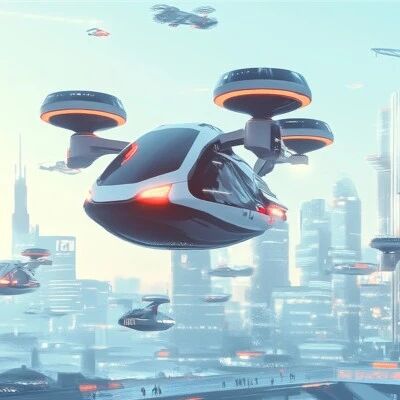
Core Insights - The low-altitude economy is gaining strategic importance in major economic provinces, with a focus on developing a trillion-yuan market [1][3] - Shanghai aims to achieve a core industry scale of approximately 80 billion yuan by 2028, establishing a complete industrial chain for low-altitude new aircraft [1] - The Guangdong-Hong Kong-Macau Greater Bay Area is also experiencing rapid growth in low-altitude logistics and drone operations, indicating a burgeoning trillion-yuan market [1] Industry Development - The low-altitude economy refers to activities conducted below 1,000 meters using manned and unmanned aircraft, with a projected market size of 1.5 trillion yuan by 2025 and over 3.5 trillion yuan by 2035 in China [3][4] - The National Development and Reform Commission has released a classification for low-altitude economy, defining its scope and categorizing it into four major industries [3][4] Technological Advancements - Guangdong's low-altitude economy has reached a scale of over 100 billion yuan, with more than 2,000 manufacturers of low-altitude flying devices [4][5] - Domestic low-altitude flying devices have seen significant advancements, with over 1,081 registered companies and more than 5.29 million units of equipment [5][6] Practical Applications - Low-altitude economy applications are becoming part of daily life, such as drone delivery services in Shenzhen and air delivery systems along the Yangtze River in Nanjing [6] - Emergency services are also benefiting, with drones reducing delivery times for critical supplies from one hour to 18 minutes in Tianjin [6] International Expansion - The low-altitude equipment sector is emerging as a new growth point in foreign trade, with significant international orders for electric vertical takeoff and landing aircraft [7] - Companies in Shenzhen are advancing from product exports to a more integrated approach involving technology transfer and international collaboration [7]

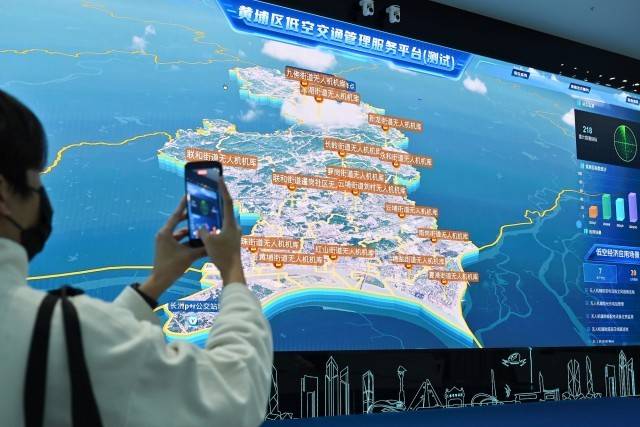
云南多部门解读产业强省路线图 力争2027年工业总产值破2万亿元
Zhong Guo Xin Wen Wang· 2026-01-14 11:44
Core Insights - The "Action Plan" aims for Yunnan Province to achieve an industrial output value exceeding 2 trillion yuan by 2027, with a focus on developing a modern industrial system and addressing key industry challenges [1][2]. Group 1: Industrial Development Goals - The plan sets a target for the industrial output value to surpass 2 trillion yuan by 2027, with a 3% increase in the share of non-tobacco and non-energy industries within the total industrial output [1]. - By 2030, Yunnan aims to establish itself as a significant base for clean energy, strategic non-ferrous metal industries, modern ecological agriculture, and a world-renowned tourism destination [1]. Group 2: Key Industry Focus Areas - The "Action Plan" outlines a "4+5+6" industrial development strategy, focusing on four resource-based industries (green aluminum, silicon photovoltaic, phosphorus chemical, and non-ferrous and precious metals), five advantageous industries (highland characteristic agriculture, cultural tourism, green energy, tobacco, and modern logistics), and six breakthrough areas (biomedicine, new materials, advanced equipment manufacturing, digital economy, low-altitude economy, and biomanufacturing) [2]. - Yunnan's energy sector is highlighted as a key strength, with plans to increase clean energy capacity to over 90% of total installed capacity by 2027, aiming for 180 million kilowatts of installed power by the end of 2025 [2]. Group 3: Technological and Agricultural Innovation - The plan emphasizes the integration of technological innovation with industry, focusing on enhancing strategic emerging industries and supporting biopharmaceutical development and modernization of traditional medicine [2]. - In agriculture, the strategy includes enhancing the quality and efficiency of highland characteristic agriculture through a comprehensive approach that integrates technology, sustainability, quality, and branding [2]. Group 4: Tourism Development - Yunnan is leading the initiative for "Travel and Residence in Yunnan," aiming to strengthen brand promotion and innovate product offerings to enhance its tourism appeal [3].
低空产业,开始爆单了
3 6 Ke· 2026-01-14 10:28
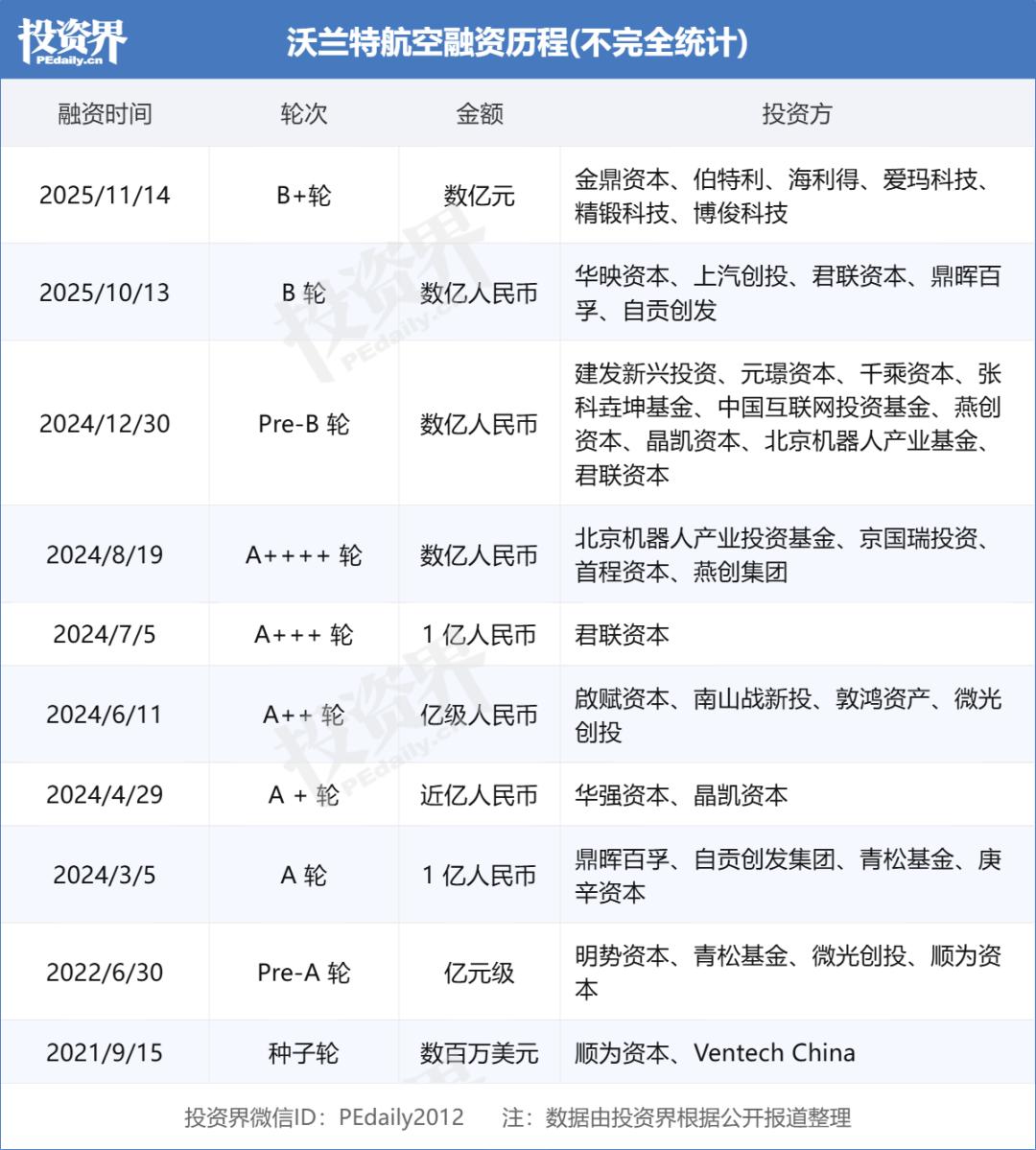
Core Insights - The low-altitude economy is entering a significant order year in 2025, highlighted by major orders from companies like Xiaopeng Huitian and Volant Aviation, marking a record in overseas bulk orders for flying cars [1][9] - Financing in the low-altitude sector is increasingly characterized by "plus" rounds, indicating a trend where startups are seeking additional funding to maintain valuations amid a cooling investment climate [2] - The financing pace has slowed in 2025, but the proportion of billion-level projects has increased, showcasing a "head effect" where leading companies attract more investment [3] Financing Trends - Zero Gravity Aircraft Industry completed an A++++ round of financing amounting to nearly 300 million RMB, while Volant Aviation also secured similar funding, indicating a trend of startups relying on external financing during product certification stages [2][5] - Volant Aviation's financing history shows a series of successful rounds, including a B round of several hundred million RMB led by Huaying Capital and a B+ round shortly after, demonstrating strong investor interest [3][4] - Zero Gravity Aircraft has completed at least eight rounds of financing, with a total amount nearing 700 million RMB, supported by various investment institutions [5][6] Order Developments - In the Middle East, significant orders have been placed, including 600 flying cars by Xiaopeng Huitian and 350 eVTOLs by Times Technology, reflecting the region's favorable regulatory environment for new technologies [9][10] - Domestic orders are also on the rise, with Volant Aviation securing orders worth 3 billion RMB for 120 aircraft from Agricultural Bank of China Leasing and EHang announcing orders for 50 EH216-S drones [10][11] Policy and Industry Support - Beijing and Shanghai have introduced action plans to boost the low-altitude economy, aiming for substantial industry growth by 2027, with Beijing targeting a scale of 100 billion RMB and Shanghai 50 billion RMB [11][12] - Shenzhen has enacted the first special regulations for promoting the low-altitude economy, establishing a 2 billion RMB fund to support the entire industry chain, including R&D and manufacturing [12]

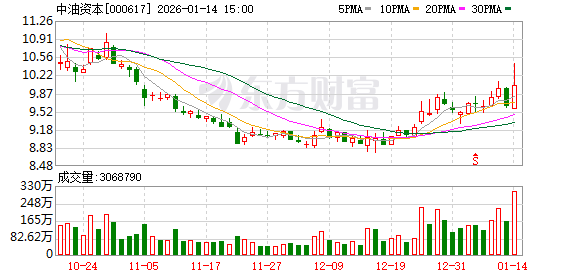
中油资本:参股企业昆仑资本重点聚焦新能源、新材料、数智产业、低空经济等领域投资
Mei Ri Jing Ji Xin Wen· 2026-01-14 09:56
Group 1 - The company, Zhongyou Capital, has confirmed its subsidiary, Kunlun Capital, is actively investing in the commercial aerospace sector, specifically in companies like Hongqing Technology and Aerospace Times Feipeng [2] - Kunlun Capital is implementing a "fund + direct investment" dual-drive strategy, focusing on investments in new energy, new materials, digital intelligence industries, and low-altitude economy [2]

中设股份:近年来公司持续布局低空经济,拓展新的增长点
Zheng Quan Ri Bao Wang· 2026-01-14 09:53
证券日报网讯1月14日,中设股份(002883)在互动平台回答投资者提问时表示,近年来,公司持续布 局低空经济,拓展新的增长点。2025年上半年,公司抢抓低空经济战略机遇,完成《无锡市低空经济基 础设施规划研究》。旨在构建支撑无锡低空经济发展的基础网络体系,为低空物流、载人运输、城市管 理等多样化场景落地提供关键支撑。基于基础设施规划研究,深入开展低空航线规划及商业化应用场景 设计研究,并积极构建产业生态圈,与多家单位开展深度交流与合作。未来,公司将持续积极探索在低 空经济领域的发展机遇。 ...
“十四五”时期阳江经济总量连跨3个百亿级台阶 跃升全省第一电力能源大市
Nan Fang Ri Bao Wang Luo Ban· 2026-01-14 08:40
Economic Growth and Industrial Development - During the "14th Five-Year Plan" period, Yangjiang's economic total crossed three significant thresholds of 140 billion, 150 billion, and 160 billion yuan, becoming the top power energy city in the province with an installed capacity exceeding 24.29 million kilowatts, accounting for about one-tenth of the province's total [1] - Yangjiang has established a modern industrial system characterized by "4+4+X," with fixed asset investment growth rates ranking first in the province for 2021, 2023, and 2024, and a cumulative investment increase of over 30% compared to the "13th Five-Year Plan" [1] - The number of industrial enterprises with over 100 billion yuan in output has increased to seven, and the number of "specialized, refined, distinctive, and innovative" enterprises has grown nearly 12 times since the end of the "13th Five-Year Plan" [1] Infrastructure and Trade Integration - Yangjiang actively integrates into the Guangdong-Hong Kong-Macao Greater Bay Area by establishing a comprehensive transportation system, including "airports + dual high-speed rail + high-speed road network + a major port," facilitating a "one-hour living circle" within the Bay Area [2] - The city has expanded its international connections to 178 countries and regions, with average annual growth rates of 7.4% in foreign trade imports and exports, and 28.4% in actual foreign investment during the first four years of the "14th Five-Year Plan" [2] - Yangjiang has implemented 460 key reform tasks across ten major areas, resulting in over 100 national and provincial reform pilot projects, with a net increase of over 100,000 market entities in five years, surpassing a total of 270,000 [2] Cultural and Ecological Development - Yangjiang is promoting its cultural heritage by participating in the joint application for the "Maritime Silk Road" World Cultural Heritage and establishing the Guangdong Provincial Underwater Cultural Heritage Protection Center [3] - The city has developed the Hailing International Tourism Island as a leisure and vacation destination, with the number of visitors from Hong Kong and Macau increasing over 20 times compared to the "13th Five-Year Plan" period [3] - Yangjiang has made significant progress in ecological construction, being recognized as a national forest city and an international garden city, with nearly 80% of fiscal spending allocated to public welfare, enhancing the quality of life for residents [3]
低空产业,开始爆单了
投资界· 2026-01-14 08:32
Core Insights - The low-altitude economy is entering a significant order year, with notable contracts signed in the Middle East and domestic markets, indicating a growing demand for eVTOL aircraft [2][9][10] - Financing in the low-altitude sector has slowed down, but the proportion of billion-level projects is increasing, showcasing a "head effect" in the industry [3][4] - The industry is transitioning into a phase where technology and order validation are crucial, moving towards a deflationary cycle [2] Financing Trends - In 2025, the low-altitude industry saw a decrease in financing pace, with 23 disclosed financing events in October alone [3] - Volant Aviation completed several rounds of financing, including a B round and a B+ round, raising several hundred million RMB, with participation from various venture capital firms [3][4] - Zero Gravity Aircraft announced a 300 million RMB A++++ round financing, indicating strong investor interest despite a general slowdown in the sector [5][6] Major Orders and Contracts - In October 2025, XPeng Huitian signed a record-breaking order for 600 flying cars in the Middle East, while other companies like Peak Flying and Times Technology also secured significant contracts [2][9] - Domestic orders include Volant Aviation's agreement with Nongyin Jinzu for 10 confirmed orders and 110 intention orders, totaling 3 billion RMB [10] - The Middle East's flexible regulatory environment and strategic initiatives are driving eVTOL orders, with significant contracts from companies like AutoCraft and Peak Flying [9] Regional Development Initiatives - Beijing aims to elevate its low-altitude economy to a scale of 100 billion RMB by 2027, supported by local universities and research institutions [11][12] - Shanghai's plan includes establishing a complete industrial system for low-altitude aircraft, targeting a core industry scale of over 50 billion RMB [12] - Shenzhen has introduced regulations and a 2 billion RMB fund to promote low-altitude economic development, fostering a comprehensive industry chain [12]
民革广州凝聚智慧话发展 携手奋进“十五五”
Zhong Guo Fa Zhan Wang· 2026-01-14 08:19
Core Insights - The Guangzhou Municipal Committee of the Chinese Kuomintang (民革) emphasizes the importance of focusing on industrial development and manufacturing as key strategies for the city's growth, aligning with national policies and local initiatives [1] Industry Development - Recommendations include developing a "new blue ocean" for the unmanned economy to transition from a follower to a leader in this sector, focusing on policy innovation and ecosystem collaboration [2] - The proposal to enhance innovation infrastructure sharing aims to empower the development of strategic industries in Guangzhou, addressing the current lack of collaborative mechanisms compared to cities like Beijing and Shanghai [2] - The pet industry, valued at 300 billion yuan, is identified as a potential growth area, with suggestions to integrate it with other sectors such as biomedicine and fashion [2] - The low-altitude economy around Nankun Mountain is highlighted for its potential, with recommendations to address current operational challenges to transform ecological resources into economic benefits [2] - The beauty industry is urged to enhance its core competitiveness through improved brand quality and innovation [2] Government Planning and Economic Environment - The proposal for a scientific government planning approach to leverage the water economy, which has significant potential, is presented, emphasizing the need for innovative land supply and industry chain optimization [3] - Recommendations for a tiered exit mechanism for business entities aim to promote a healthier private economy by ensuring market competition and preventing systemic risks [3] Legal and Regulatory Framework - Suggestions to optimize administrative checks on enterprises through digital means aim to reduce arbitrary enforcement and improve regulatory efficiency [4] - Addressing the issue of private enterprises relocating out of Guangzhou, recommendations include differentiated rental subsidies and the establishment of a supportive policy framework to retain businesses [4] Agricultural Sector - The proposal to establish an international flower trading center in Guangzhou aims to enhance the competitiveness of the local flower industry, which currently faces challenges in supply chain and infrastructure [5] Social Welfare and Economic Growth - The development of the silver economy is proposed as a new growth engine, focusing on integrating technology and innovative services to cater to the aging population in Guangzhou [6] - Additional recommendations include improving cultural facilities to enhance community engagement and support for the elderly [6]
万亿进阶之路,看济宁如何以“三大定位”锻造发展实力
Feng Huang Wang Cai Jing· 2026-01-14 06:26
Core Viewpoint - Shandong province has successfully entered the 10 trillion yuan economic club in 2025, with Jining city exemplifying innovative transformation from a resource-based economy to a high-quality development model [1] Group 1: Economic Development - Jining port achieved a cargo throughput of 116 million tons in 2025, marking a 19.6% year-on-year increase, becoming the first inland port in northern China to reach this milestone [2] - The city has established 360 kilometers of high-grade waterways, accounting for 58% of the province's inland waterways, and 103 berths for vessels over 1,000 tons, representing 68% of the province's total [3] - Jining's industrial economy saw a year-on-year growth of 7.8% from January to November 2025, with the manufacturing sector growing by 10.2%, contributing to 61% of the industrial output [9] Group 2: Infrastructure and Logistics - Jining is developing a multi-modal transport system with a focus on high-grade waterways and dedicated railway lines, enhancing its position as a northern inland shipping hub [3] - The city is implementing a "front port - middle production - back garden" model, establishing seven major logistics parks to integrate port operations with local industries [4] - Jining's logistics network now covers 20 provinces, 152 cities, and extends to 19 countries, marking a significant leap in its port and shipping capabilities [5] Group 3: Industrial Transformation - Jining is focusing on a "number one project" in industrial economy, emphasizing the importance of the manufacturing sector and green, low-carbon development [6] - The city has initiated a three-year action plan for technological upgrades, with 251 projects included in the provincial key directory, maintaining the highest number in the province for four consecutive years [8] - New energy projects and smart manufacturing initiatives are being developed, including a significant investment in industrial robots and low-altitude economy sectors [8] Group 4: Cultural and Tourism Development - Jining is transforming its cultural tourism sector, with the launch of immersive experiences that attract significant visitor numbers, such as the "Ru Water Source" night show [10][11] - The city aims to build a "world cultural tourism city," leveraging its rich cultural heritage to drive high-quality development [11] - Jining's tourism service system is being enhanced to improve the overall quality of visitor experiences, with expectations of receiving over 100 million domestic tourists in 2025 [13]
李乐成接受《经济日报》采访:锚定新型工业化 推动工业经济向新向优
Jing Ji Ri Bao· 2026-01-14 01:28
Core Insights - The article emphasizes the importance of implementing the "14th Five-Year Plan" to promote a strong start for the industrial economy, focusing on new industrialization and high-quality development [2][3]. Group 1: Industrial Economic Development - In 2025, the industrial added value of large-scale industries increased by 6% year-on-year, with high-tech manufacturing and equipment manufacturing growing by 9.2% and 9.3% respectively [4]. - The Ministry of Industry and Information Technology (MIIT) aims to stabilize growth in key industries and regions, which account for 80% of the total industrial output [4]. - The MIIT plans to enhance effective demand by promoting flexible manufacturing and accelerating the application of new technologies like artificial intelligence [5]. Group 2: Modern Industrial System - The MIIT will focus on traditional industry renewal and the development of emerging industries to create new economic drivers [6][7]. - Key areas for development include integrated circuits, new materials, and aerospace, with plans to establish national demonstration bases for emerging industries [7]. - The MIIT aims to enhance the safety and controllability of supply chains while maintaining a reasonable proportion of manufacturing [7]. Group 3: Technological Innovation - The MIIT has made significant progress in integrating technology and industry during the "14th Five-Year Plan," with a focus on overcoming critical technological challenges [9]. - Future plans include increasing high-quality technological supply and enhancing the role of enterprises in innovation [10]. - The MIIT will establish a national manufacturing innovation center and promote the transformation of technological achievements into marketable products [10]. Group 4: Digital and Intelligent Transformation - The MIIT aims to accelerate the digital transformation of manufacturing, with over 7,000 advanced intelligent factories established [11]. - Key initiatives include building a robust digital infrastructure and promoting the application of industrial internet platforms [12]. - The MIIT will implement actions to enhance artificial intelligence in manufacturing, focusing on both technology and application scenarios [13].