
无人机

Search documents
大疆称美限制中国无人机没必要
Xin Lang Cai Jing· 2026-01-10 05:03
Core Viewpoint - The U.S. Department of Commerce has revoked a plan to restrict imports of Chinese-made drones, which was initially proposed to address "national security" concerns [1] Group 1: U.S. Regulatory Actions - The Federal Communications Commission (FCC) had previously placed all foreign-made drones and components on a "covered list" due to perceived national security risks [1] - The FCC announced that some "non-Chinese manufactured drones" would be excluded from the restrictions imposed last month [1] - The Department of Commerce submitted the proposal to limit imports of Chinese drones for White House review on October 8, 2022, and withdrew it on January 8, 2023 [1] Group 2: DJI's Position - DJI, a major Chinese drone manufacturer, argued that the comprehensive restrictions on Chinese drones were unnecessary and unreasonable, potentially harming U.S. stakeholders [1] - DJI's products have been validated for safety and reliability by global markets and independent third-party organizations [1] - The company expressed its intention to explore all viable paths to protect its and its global users' legitimate rights [1] Group 3: Market Impact - Chinese-made drones hold a significant position in the U.S. consumer drone sales market [1] - The restrictions led to widespread backlash in the U.S., with many drone operators relying on DJI equipment for small businesses in various sectors [1] - Concerns were raised that the ban could jeopardize livelihoods, as many operators noted the lack of alternatives to Chinese-made drones in the Western market [1]
看清现实,美国商务部悄悄撤销限制中国无人机的计划
Xin Lang Cai Jing· 2026-01-10 05:03
Core Viewpoint - The U.S. government has retracted its proposed import restrictions on Chinese drones, indicating a shift in policy and recognition of the realities facing the U.S. drone industry [1][4]. Group 1: U.S. Government Actions - The U.S. Department of Commerce withdrew a plan to impose import restrictions on Chinese drones, which was initially proposed in September 2022 due to national security concerns [1]. - The Federal Communications Commission (FCC) continues to blacklist all foreign-made drones, citing unacceptable national security threats, affecting companies like DJI and Daotong [1][4]. - The FCC's restrictions prevent Chinese drone manufacturers from obtaining necessary approvals to sell new drone models and critical components in the U.S. [1]. Group 2: Industry Challenges - The U.S. drone industry is struggling to scale production, with approximately 500 companies producing fewer than 100,000 drones annually, while Ukraine produces 2 million FPV drones each year [5]. - The "Blue UAS" program, aimed at creating a reliable drone supplier list for the U.S. military, has seen only 23 out of over 300 applicants approved, primarily due to issues with imported components [5]. - The U.S. lacks the necessary tools, molds, and automated production lines to transition from small-batch production to large-scale manufacturing, which is critical for the drone industry [6]. Group 3: Supply Chain Dependencies - The U.S. drone industry heavily relies on Chinese-made components, particularly brushless motors, which are essential for drone production [6]. - The U.S. Geological Survey reported that 72% of rare earth compounds and metals were imported from China between 2019 and 2022, highlighting a significant dependency on Chinese supply chains [6]. - In the lithium-ion battery sector, China dominates the supply chain, making it difficult for the U.S. to achieve independence despite ongoing policy pressures [7]. Group 4: Future Outlook - The U.S. government's focus is shifting from data security to supply chain issues, acknowledging that the entire industrial system is unprepared to support the drone industry independently [7]. - The U.S. is unlikely to eliminate its reliance on Chinese supply chains within the next two to three years, despite ambitious military drone plans and regulatory efforts [7].

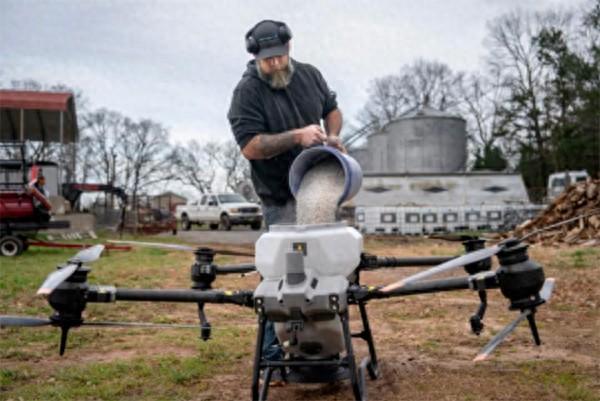
看清现实,美商务部悄悄撤销中国无人机限制计划
Guan Cha Zhe Wang· 2026-01-10 04:28
Core Viewpoint - The U.S. government has retracted its proposed import restrictions on Chinese drones, indicating a shift in policy and recognition of the realities facing the U.S. drone industry [1][4]. Group 1: U.S. Government Actions - The U.S. Department of Commerce withdrew a plan to impose import restrictions on Chinese drones, which was initially proposed in September 2022 due to national security concerns [1]. - The Federal Communications Commission (FCC) has blacklisted all foreign-made drones and components, citing unacceptable national security threats, affecting companies like DJI [1][4]. - Despite the withdrawal of the import restrictions, the FCC's ban on foreign drones remains in effect, preventing new models from being sold in the U.S. [1]. Group 2: Industry Challenges - The U.S. drone industry is struggling to scale production, with approximately 500 companies producing fewer than 100,000 drones annually, while Ukraine produces 2 million FPV drones each year [5]. - The "Blue UAS" program, aimed at creating a reliable drone supplier list for the U.S. military, has seen only 23 out of over 300 applicants approved, primarily due to issues with imported components [5]. - The U.S. lacks the necessary tools and infrastructure for large-scale drone production, with significant reliance on Chinese-made components, particularly in electric motors and rare earth materials [6][7]. Group 3: Supply Chain Dependencies - The U.S. is heavily dependent on China for rare earth elements, with 72% of imports coming from China between 2019 and 2022, complicating efforts for domestic production [6]. - In the lithium-ion battery supply chain, China dominates the production of key materials, making it difficult for the U.S. to achieve independence despite policy efforts [7]. - The U.S. government's focus is shifting from data security to supply chain issues, acknowledging that the entire industrial system is unprepared to support a self-sufficient drone industry [7].
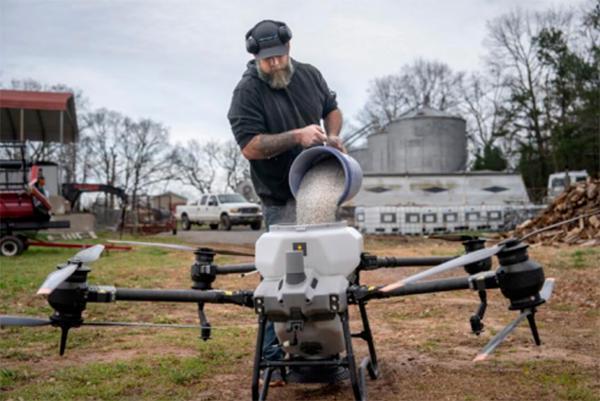
报道:美国商务部撤销将中国制造无人机列入所谓“受管制清单”的计划
Huan Qiu Wang· 2026-01-10 03:15
Core Viewpoint - The U.S. Department of Commerce has withdrawn a proposal to restrict the import of Chinese-manufactured drones, which was initially aimed at addressing "national security" concerns [1] Group 1: U.S. Regulatory Actions - The FCC had previously placed all foreign-manufactured drones and their components on a "regulated list" due to "unacceptable risks to national security" [2] - The FCC announced that it would exclude some "non-Chinese manufactured drones" from the restrictions imposed last month [1][2] - The Department of Commerce submitted the proposal to limit imports of Chinese drones for White House review on October 8, 2022, and withdrew it on January 8, 2023 [1] Group 2: Industry Impact and Reactions - DJI, a major Chinese drone manufacturer, expressed regret over the FCC's decision, stating it limits consumer choice and undermines fair market competition [3] - The ban has sparked significant backlash in the U.S., with many drone operators relying on DJI products for various applications, including agriculture and construction [3] - Concerns have been raised that the ban could jeopardize the livelihoods of drone operators, as there are no suitable alternatives to Chinese-manufactured drones in the Western market [3]
外媒:美国商务部撤销将中国制造无人机列入所谓“受管制清单”的计划
Huan Qiu Wang· 2026-01-10 03:00
Core Viewpoint - The U.S. Department of Commerce has withdrawn a proposal to restrict the import of Chinese-made drones, which was initially aimed at addressing "national security" concerns. This decision follows backlash from both Chinese manufacturers and U.S. consumers regarding the restrictions imposed by the Federal Communications Commission (FCC) on foreign-made drones and components [1][3]. Group 1: U.S. Regulatory Actions - The FCC had previously placed all foreign-made drones and their components on a "covered list," citing "unacceptable risks to national security," which led to significant opposition from China and dissatisfaction among U.S. consumers [1][3]. - The FCC announced that it would exclude some "non-Chinese manufactured drones" from the restrictions imposed last month [1]. - The Department of Commerce submitted the proposal to limit imports of Chinese drones for White House review on October 8 of the previous year and officially withdrew it on January 8 [1]. Group 2: Industry Impact and Reactions - DJI, a major Chinese drone manufacturer, expressed regret over the FCC's decision to include all non-U.S. manufactured drones on the "covered list," arguing that it restricts consumer choice and undermines fair market competition [4]. - The company emphasized that its products have been validated for safety and reliability by global markets and independent third-party organizations [4]. - Following the announcement of the restrictions, there was significant backlash in the U.S., with many drone operators relying on DJI equipment for their businesses, leading to concerns about the impact on their livelihoods [5].
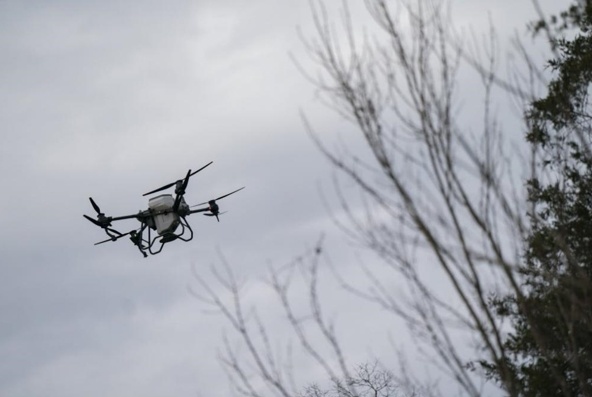
外卖天上来
Liao Ning Ri Bao· 2026-01-10 00:48
Core Insights - Dalian Jinpu New Area is actively expanding low-altitude economic applications for drones, with the recent launch of the city's first regular drone delivery route in Jinshitan [1] - The service allows customers to place orders through the WeChat mini-program "Yunding Feisong," enabling drone deliveries in approximately five minutes, showcasing the convenience of aerial food delivery [1] Group 1 - Dalian's first regular drone delivery route has been established, enhancing the local low-altitude economy [1] - The drone delivery service operates through a WeChat mini-program, facilitating quick and efficient food delivery [1] - The delivery time for the drone service is around five minutes, demonstrating its efficiency [1] Group 2 - The drone used for deliveries has a maximum payload capacity of 30 kilograms, indicating its capability to handle substantial delivery loads [2]

无人机表演成节日庆典亮点 高巨创新展现中国低空科技硬实力
Zheng Quan Ri Bao Wang· 2026-01-09 14:15
Group 1 - The integration of technology and cultural tourism is enhancing the New Year's consumption market, with drone shows becoming a major highlight of the celebrations [1] - Shenzhen Gaoju Innovation Technology Development Co., Ltd. (Gaoju Innovation) has gained attention for its drone performances during the New Year period, particularly the "Sky Tree" show featuring nearly 16,000 drones [1] - The "Sky Tree" performance showcased the ability of drones to accurately release fireworks, demonstrating the company's technological capabilities in large-scale control and hardware stability under complex tasks [1] Group 2 - Gaoju Innovation is advancing low-altitude applications from visual presentations to broader industrial applications, leveraging its expertise in precision manufacturing and cluster algorithms [2] - With the development of communication and AI technologies, Chinese low-altitude technology companies like Gaoju Innovation are expected to play a key role in the global low-altitude economy [2]
光智科技:创新成果获行业认可 推动红外技术与低空经济深度融合
Zhong Zheng Wang· 2026-01-09 11:28
Group 1 - The core viewpoint of the news is that Guangzhi Technology has been awarded the "2025 China Drone Excellence Technology Innovation Award" for its outstanding performance in technological innovation and application in the low-altitude economy sector [1] - The award validates the company's development strategy of "full industry chain + core technology" and recognizes its integration of infrared thermal imaging with drone applications [1] - Guangzhi Technology aims to deepen its full industry chain layout and continue promoting the integration of infrared technology with the low-altitude economy [1] Group 2 - The UCC3 series core module has overcome multiple technical bottlenecks, meeting the extreme requirements of the drone industry for payload, performance, and reliability [2] - The UCC3 module features advanced detector technology and image processing capabilities, supporting multiple resolution options and providing precise data for applications such as power inspection and fire monitoring [2] - The module weighs under 23 grams and has a power consumption of only 0.5W, significantly reducing the drone's payload and extending mission duration [2] - The UCC3 operates in a wide temperature range of -20℃ to 60℃ and has an IP67 front-end protection level, ensuring stable operation in extreme environments [2] - The module offers various interfaces such as UVC, MIPI, DVP, and CVBS, enhancing compatibility with mainstream platforms and simplifying system integration [2] - The advanced image optimization algorithms built into the UCC3 improve image quality, enabling users to identify early hazards and track high-speed targets effectively [2] - The UCC3 series is a concentrated embodiment of Guangzhi Technology's full industry chain advantages and is widely applied in security monitoring, industrial temperature measurement, smart agriculture, and emergency rescue [2]

低空经济的“天空革命”,谁来当“空中交警”?
Yang Zi Wan Bao Wang· 2026-01-09 08:55
Core Insights - The emergence of the "drone flight planner" profession indicates the rapid growth of the low-altitude economy, which is projected to be a trillion-dollar industry [1] - The role of flight planners is crucial for managing complex air traffic involving multiple drones, ensuring safety and efficiency in operations [1][2] - There is a significant talent shortage in this field, with an estimated future demand exceeding one million professionals [1][2] Group 1 - The new profession of drone flight planners is essential for the safe and efficient operation of drones in urban environments, akin to traffic management on the ground [1] - The responsibilities of flight planners include understanding coding, traffic regulations, and adapting to real-time conditions, highlighting the complexity of their role [1][2] - The low-altitude economy is expanding into various sectors, including delivery, surveillance, and agriculture, necessitating a skilled workforce to prevent operational bottlenecks [1] Group 2 - The job of a flight planner is attractive due to good salaries, technological engagement, and the ability to solve real-world problems, but it requires strong responsibility and quick thinking [2] - As air taxis and drone delivery services become more prevalent, flight planners will play a pivotal role in shaping air traffic regulations and urban airspace design [2] - The challenges in this field include the rapid pace of technological change, varying air traffic control policies, and public concerns about noise and privacy, which also present opportunities for innovation [2][3]
中无人机(688297):重大合同持续签订 支撑公司业绩未来持续提升
Xin Lang Cai Jing· 2026-01-09 06:39
Group 1 - The company signed a significant daily contract on January 8, 2026, with a total amount exceeding 50% of the audited revenue from the last fiscal year, amounting to over 1 billion RMB, which is expected to support future performance growth [1] - The new contract follows a previous contract with AVIC Technology, valued at 615 million RMB, indicating a positive outlook for the company's performance [1] Group 2 - For Q3 2025, the company reported a substantial revenue increase, achieving 1.109 billion RMB in a single quarter, representing a year-on-year growth of 1039.20% and a quarter-on-quarter growth of 446.46% [2] - The company turned a profit with a net profit of 20.665 million RMB in Q3 2025, a significant improvement from a loss of 82.7492 million RMB in the same period of 2024 [2] - The gross margin for Q3 2025 was 4.99%, showing a year-on-year decrease of 18.18 percentage points and a quarter-on-quarter decrease of 20.44 percentage points, while the net margin improved by 45.75 percentage points year-on-year [2] - The company effectively controlled expenses, with a total expense ratio of 5.32% for the first three quarters of 2025, a decrease of 4.66 percentage points year-on-year [2] Group 3 - The company announced a share buyback plan, intending to repurchase shares worth between 100 million and 200 million RMB, reflecting confidence in future development and recognition of company value [3] - The buyback shares are intended for employee stock ownership plans or equity incentives, with a maximum repurchase price of 60.52 RMB per share [3] - Profit forecasts for 2025, 2026, and 2027 are projected at 136 million, 186 million, and 242 million RMB respectively, with corresponding PE ratios of 251, 183, and 141 times [3]
