商业保理

Search documents
悦达国际控股附属与丹鹤绿化订立保理协议
Zhi Tong Cai Jing· 2025-12-03 08:48
Core Viewpoint - Yueda International Holdings (00629) has announced a factoring agreement with Danhe Greening, indicating a strategic move to enhance financial services and support for its subsidiary [1] Group 1: Agreement Details - The agreement involves Yueda Commercial Factoring providing accounts receivable financing, management services, and collection services to Danhe Greening [1] - A revolving credit limit of RMB 20 million is granted under the agreement, with an annual interest rate and factoring management fee combined ranging from 8% to 9% [1] - The agreement is effective from December 3, 2025, and will expire on December 9, 2026 [1]
江西长运股份有限公司关于子公司诉讼进展情况的公告
Shang Hai Zheng Quan Bao· 2025-12-01 18:55
Core Viewpoint - The announcement details the ongoing litigation involving Jiangxi Changyun's wholly-owned subsidiary, Shenzhen Huaron Financial Information Consulting Co., Ltd., regarding the recovery of a debt of 10 million RMB and associated costs due to a default by the debtor [2][3][4]. Group 1: Litigation Background - Shenzhen Huaron Financial Information Consulting Co., Ltd. filed a civil lawsuit against the debtor for the recovery of 10 million RMB in principal and 110,000 RMB in legal fees due to overdue factoring payments [3]. - The initial ruling by the Shenzhen Futian District People's Court was upheld by the Guangdong Province Shenzhen Intermediate People's Court, which dismissed the appeal from the debtor [3][4]. - Following the debtor's failure to comply with the court's ruling, Huaron applied for compulsory enforcement of the judgment [4]. Group 2: Enforcement Proceedings - The enforcement application was accepted by the Shenzhen Futian District People's Court, which initiated the enforcement process, including the freezing and seizure of the debtor's assets [4][5]. - The court later determined that the debtor had no other assets available for enforcement, leading to the termination of the current enforcement proceedings, although Huaron retains the right to pursue debt recovery [5][7]. Group 3: Financial Impact - The outcome of the litigation remains uncertain, making it difficult to assess the impact on Huaron's current or future profits [2][9]. - As of the announcement date, Huaron has fully provisioned for the receivable amount of 10 million RMB, reflecting a 100% provision rate for bad debts [9].

广东将清退800余家融资租赁公司
Zhong Guo Jing Ying Bao· 2025-11-28 14:09
Core Points - The Guangdong Provincial Local Financial Supervision Administration announced a list of companies engaged in abnormal operations in financing leasing and commercial factoring, with 838 financing leasing companies and 170 commercial factoring companies set to be eliminated [1] - Companies on the list are required to apply for cancellation or removal of relevant business names within 30 days, or they will face regulatory actions [1] - The administration also released a list of 44 financing leasing companies rated C or above for the 2024 regulatory assessment, excluding Shenzhen [1] Group 1 - The announcement identifies 838 financing leasing companies and 170 commercial factoring companies for elimination due to abnormal operations [1] - Companies must act within 30 days to avoid penalties, including potential criminal charges for serious violations [1] - The regulatory rating system for financing leasing companies is categorized from A to E, with 44 companies rated C or above for 2024 [1] Group 2 - Prior to this, Shenzhen's local financial bureau published a list of financing leasing companies rated C or above for 2025, including 59 companies rated C or above, 21 rated D, and 56 rated E [1]
全国首单以产业园区集合类科技创新企业为基础资产的资产支持证券项目落地天津
Sou Hu Cai Jing· 2025-11-28 00:26
近年来,天津港保税区区管国有企业紧密围绕金融创新运营示范区建设要求,持续深化对区域企业特色 需求的研究与对接,不断探索金融支持实体经济新路径,先后成功发行资产支持商业票据(ABCP)、 获批发行资产支持证券(ABS),并积极推进不动产投资信托基金(REITs)项目发行,为区域产业 的"串链、补链、强链"以及区管国企自身做强做优做大注入了强劲动能。 未来,天津港保税区区管国企将继续把握国家金融创新政策机遇,推动相关成功模式的复制与推广,助 力区域产业链协同创新与能级提升,为实现区域经济高质量发展贡献更大力量。 据悉,该项目由天津天保商业保理有限公司牵头实施,项目储架总规模达10亿元,本期成功发行规模为 4.95亿元,期限2年,债项评级为AAA。作为全国首创,该项目不仅为科创企业募集急需资金,也是区 管国有企业积极推动市场化转型、拓展业务范围的有益尝试,进一步强化了金融对实体经济的支撑效 能。 央广网天津11月28日消息(记者周思杨)近日,全国首单以产业园区集合类科技创新企业为基础资产的 资产支持证券项目成功发行,标志着天津港保税区在金融支持科技创新、服务实体经济发展方面迈出关 键一步。 ...
信用分析周报(2025/11/17-2025/11/21):信用利差低位小幅震荡-20251124
Hua Yuan Zheng Quan· 2025-11-24 02:02
Report Industry Investment Rating No relevant content provided. Core Viewpoints of the Report - This week, credit bond yields continued to fluctuate slightly at a low level, and most credit spreads in different industries reached historical lows since early 2024. The short - term urban investment bond spreads within 3 years have been compressed to the 3% quantile or lower since early 2024, while the long - term spreads over 5 years still have some room to decline. The credit spreads of 3 - 5Y AA+ industrial bonds are currently in the range of 65 - 70BP, and the credit spreads of 3 - 5Y AA+ secondary perpetual bonds are in the range of 50 - 70BP, with some potential. Considering the support from the opening of amortized open - end bond funds in the next six months for 3 - 5Y credit bonds, investors are advised to pay appropriate attention to investment opportunities in 3 - 5Y general credit bonds and secondary perpetual bonds [5][57]. Summary by Directory 1. This Week's Credit Hot Events - **Low - price trading of Jiutai Rural Commercial Bank's secondary capital bonds**: Since the end of October, there have been multiple secondary transactions of Jiutai Rural Commercial Bank's outstanding secondary capital bond "21 Jiutai Rural Secondary" significantly below the valuation, with a transaction price of around 50 yuan. The bank has not released its 2024 annual report, 2025 quarterly reports, and its operation has been under pressure in recent years, with net profit continuously declining and a large loss in 2024, and the capital adequacy ratio approaching the warning line, which has raised market concerns about non - redemption or write - down [10]. - **Shanghai Stock Exchange's written warnings to 3 bond issuers**: Zhenjiang Urban Construction Industry Group, Guangning County Huiye Asset Operation Co., Ltd., and Hongda Xingye Group Co., Ltd. were warned for issues such as non - standard management of special accounts for raised funds, non - compliance with the use of raised funds as stipulated in the prospectus, and inaccurate and untimely information disclosure [13]. - **PBC Beijing Branch's support for science - and - technology innovation enterprises to raise funds through the bond market**: On November 18, 12 departments including the PBC Beijing Branch issued an implementation plan to support eligible enterprises in service consumption fields such as culture, tourism, and education to issue bonds, encourage science - and - technology innovation enterprises to raise funds through the bond market, and support consumer finance companies, auto finance companies, and financial leasing companies to issue financial bonds [14]. 2. Primary Market 2.1 Net Financing Scale - **Overall situation**: This week, the net financing of traditional credit bonds increased compared with last week, while the net financing of asset - backed securities decreased by 18.4 billion yuan. The net financing of urban investment bonds was 5.6 billion yuan, an increase of 3.11 billion yuan; the net financing of industrial bonds was 13.46 billion yuan, an increase of 6.31 billion yuan; and the net financing of financial bonds was 13.58 billion yuan, an increase of 7.65 billion yuan [3][16]. - **Issuance and redemption quantity**: The issuance quantity of urban investment bonds increased by 32, and the redemption quantity decreased by 22; the issuance quantity of industrial bonds increased by 65, and the redemption quantity increased by 19; the issuance quantity of financial bonds increased by 13, and the redemption quantity decreased by 13 [20]. 2.2 Issuance Cost - The issuance interest rates of AA urban investment bonds and industrial bonds decreased significantly this week, falling within the range of 2.6 - 2.8%. The issuance interest rates of other bonds with different ratings were in the range of 1.9 - 2.4%. Specifically, the average issuance interest rates of AA urban investment bonds and industrial bonds decreased by 24BP and 28BP respectively compared with last week. The average issuance interest rates of AA+ and AAA urban investment bonds increased slightly, and the average issuance interest rate of AAA financial bonds increased by 7BP. The average issuance interest rates of other credit bonds with different ratings decreased by 1 - 4BP [3][24]. 3. Secondary Market 3.1 Transaction Situation - **Trading volume**: The trading volume of credit bonds increased by 34.1 billion yuan compared with last week. The trading volume of urban investment bonds was 234.5 billion yuan, an increase of 14.9 billion yuan; the trading volume of industrial bonds was 381.1 billion yuan, an increase of 46.7 billion yuan; the trading volume of financial bonds was 470.5 billion yuan, a decrease of 27.5 billion yuan; the trading volume of asset - backed securities was 18.7 billion yuan, unchanged from last week [3]. - **Turnover rate**: The turnover rates of credit bonds showed mixed trends compared with last week. The turnover rate of urban investment bonds was 1.51%, an increase of 0.09 percentage points; the turnover rate of industrial bonds was 2.02%, an increase of 0.24 percentage points; the turnover rate of financial bonds was 3.07%, a decrease of 0.2 percentage points; the turnover rate of asset - backed securities was 0.52%, unchanged from last week [26]. 3.2 Yields - The yields of credit bonds with different ratings and maturities fluctuated slightly this week, with a fluctuation range of no more than 3BP. For example, the yields of AA, AAA -, and AAA+ credit bonds within 1 year fluctuated by no more than 1BP; the yields of 5Y AA and AAA+ credit bonds decreased by less than 1BP, and the yield of 5Y AAA - credit bonds increased by 3BP; the yields of AA, AAA -, and AAA+ credit bonds over 10 years increased by 1BP [29]. 3.3 Credit Spreads - **Overall situation**: Except for the relatively large fluctuations in the credit spreads of AA+ non - bank finance, leisure services, and textile and clothing industries compared with last week, the fluctuations of credit spreads in other industries and ratings were within 5BP. The credit spreads of AA+ pharmaceutical biology, textile and clothing, and food and beverage industries compressed by 4BP, 15BP, and 4BP respectively, while the credit spreads of AA+ non - bank finance and leisure services industries widened by 6BP [3]. - **Urban investment bonds**: The long - term credit spreads of urban investment bonds over 10 years compressed significantly this week, while the spreads of other maturities fluctuated by no more than 1BP. In terms of regions, the credit spread of AA urban investment bonds in Yunnan compressed by 11BP, and the fluctuations of credit spreads of urban investment bonds in other regions and ratings were within 3BP [42][44]. - **Industrial bonds**: The overall change in industrial credit spreads this week was not significant, and the change range of spreads with different maturities and ratings was within 5BP [48]. - **Bank capital bonds**: The credit spread of 5Y AA+ bank secondary capital bonds compressed by 5BP this week, and the fluctuations of credit spreads of bank secondary perpetual bonds with other maturities and ratings were within 2BP [51]. 4. This Week's Bond Market Public Opinions - There were 7 bond implicit ratings downgraded for 5 issuers this week. China Yintai Investment Co., Ltd. had 3 bond implicit ratings downgraded, and the other issuers included China Water Resources and Hydropower First Engineering Bureau Co., Ltd., PowerChina Commercial Factoring Co., Ltd., Liaoning Kangping County Zhonghe Rural Credit Micro - loan Co., Ltd., and Jilin Jiutai Rural Commercial Bank Co., Ltd. [4][54]. 5. Investment Recommendations - This week, the central bank achieved a net investment of 434 billion yuan through open - market operations. As of Friday's close, DR001 closed at 1.30%, down from 1.5% at the beginning of the week. Overall, except for the relatively large fluctuations in the credit spreads of AA+ non - bank finance, leisure services, and textile and clothing industries, the fluctuations of credit spreads in other industries and ratings were within 5BP. Considering the current situation of credit spreads and the support from the opening of amortized open - end bond funds in the next six months, investors are advised to pay appropriate attention to investment opportunities in 3 - 5Y general credit bonds and secondary perpetual bonds [56][57].
深圳商业保理服务超223万中小微
Shen Zhen Shang Bao· 2025-11-21 06:58
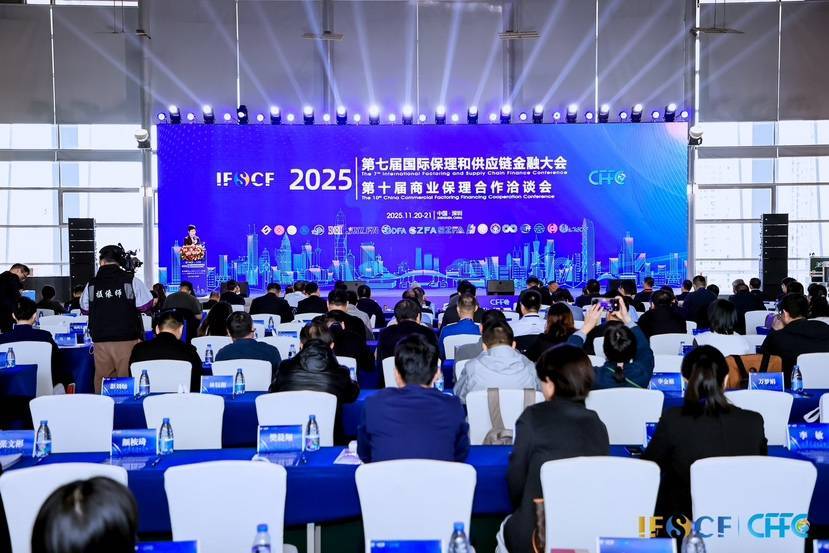
持续化解"融资难、融资贵",提供近5万亿元保理融资 大会发布了《广东省商业保理行业发展报告(2024—2025)》,该报告全面梳理了粤港澳大湾区商业保 理行业的发展概况,深入剖析行业痛点与机遇,阐释行业热点问题。 本次大会还对外公布了《2025年大湾区商业保理服务实体经济普惠金融重点领域典型案例》,共遴选39 个优秀案例,集中展现大湾区保理企业在"五篇大文章"方面的实践成果。案例聚焦服务"三农"、小微企 业、个体工商户、专精特新及外贸企业等重点领域,体现行业作为传统金融机构的有效补充,在提升中 小微企业融资可得性、降低融资成本等方面的积极探索与责任担当。 会议期间还举办了银企协同对接交流会等。大会同步设立金融服务展区、产融对接专区与成果展示专 区,组织项目路演、成果展示与签约活动,推动产业链、创新链与资金链深度融合。 【深圳商报讯】(首席记者 谢惠茜)11月20日—21日,2025第七届国际保理和供应链金融大会暨第十 届商业保理合作洽谈会在深圳举办。大会以"党建引领高质量发展,深耕主业服务实体经济"为主题,汇 聚全国金融界专家学者、企业代表及金融机构负责人,聚焦"十五五"新蓝图,共商商业保理服务实体经 济的新 ...
深圳商业保理企业1400余家,累计为超223万家中小微企业提供近5万亿元保理融资
Sou Hu Cai Jing· 2025-11-20 11:35
Core Insights - The 2025 7th International Factoring and Supply Chain Finance Conference successfully took place in Shenzhen, focusing on high-quality development and service to the real economy [1] Group 1: Industry Overview - The commercial factoring industry in Shenzhen has over 1,400 existing companies, accounting for approximately 40% of the national total, and has provided nearly 5 trillion yuan in factoring financing to over 2.23 million small and micro enterprises [3] - The industry aims to address the financing difficulties faced by small and micro enterprises while adhering to compliance management and risk prevention [3] Group 2: Expert Insights - Zhang Yanling, former Vice President of the Bank of China, emphasized the need for the factoring industry to adapt to geopolitical changes and trade model transformations, highlighting its critical role in supporting small enterprises and ensuring export safety [5] - Wang Zhongmin discussed the opportunities for cross-border factoring amid global supply chain restructuring, advocating for enhanced compliance and risk management capabilities [5] - Liu Jiangning proposed focusing on four key areas—legal, professional, digital, and diversified approaches—to promote high-quality development in the factoring industry [5] Group 3: Innovations and Practices - Fang Xiaomin shared innovative practices in agricultural supply chain factoring, showcasing how technology is transforming traditional services into digital solutions for rural revitalization [6] - The conference released the "Guangdong Province Commercial Factoring Industry Development Report (2024-2025)," analyzing industry pain points and opportunities [6] - A total of 39 exemplary cases were selected to demonstrate the contributions of factoring companies in key areas such as agriculture, small enterprises, and foreign trade [6] Group 4: Collaborative Discussions - Leaders from commercial factoring associations in Shanghai, Jiangsu, Guangdong, and Shenzhen engaged in discussions on industry governance, digital transformation, and regional collaboration [7] - The international factoring CEO dialogue focused on innovative development paths under global supply chain restructuring, exploring technology-driven internationalization opportunities [7] Group 5: Future Directions - The conference emphasized the commitment to high-quality development in the commercial factoring industry, aligning with national strategies and enhancing service capabilities for the modern industrial system [8] - The industry aims to contribute to the construction of a financial powerhouse while deepening reforms and promoting sustainable development [8]

“我与浦东共成长”系列报道 | 舜泰保理数字赋能产业金融“多点开花”
Xin Lang Cai Jing· 2025-11-14 10:07
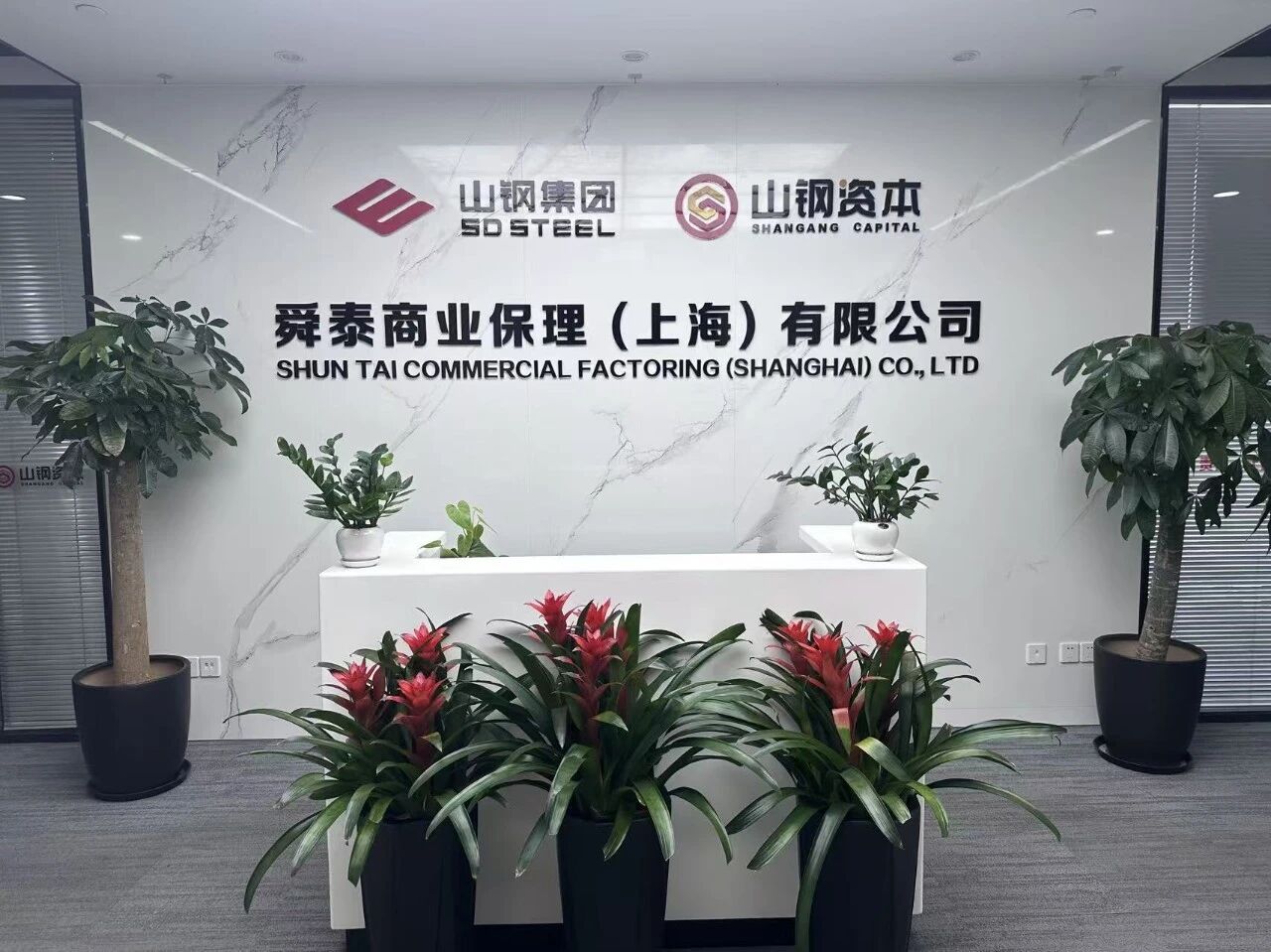
Core Viewpoint - The integration of digital technology in the financial sector is accelerating the deep fusion of industrial finance and inclusive finance, exemplified by Shuntai Factoring's innovative approaches in the steel industry supply chain [1][10]. Group 1: Digital Transformation in Supply Chain Finance - Shuntai Factoring is leveraging a self-developed digital system to address traditional pain points in the steel industry, such as slow capital flow and high risk control costs, leading to significant business growth [1][4]. - The company has established a closed-loop system centered around "Digital Asset Cloud Warehouse," which includes warehouse, logistics, and capital supervision, fundamentally changing traditional offline operations [4][6]. - The "An E Da" smart logistics system allows real-time tracking of goods, significantly reducing the financial burden on enterprises by eliminating the need for upfront payments [5][6]. Group 2: Efficiency Improvements - The digital transformation has reduced the time for goods retrieval from days to seconds, enabling enterprises to respond quickly to orders from central enterprises [7][8]. - Financing processes have been streamlined, with the time for loan disbursement reduced to under three working days, enhancing operational efficiency [8][9]. - The integration of third-party data sources into the factoring system has automated due diligence, invoice verification, and contract signing, further speeding up processes [8][9]. Group 3: Innovative Financial Solutions - Shuntai Factoring is exploring new paths for asset appreciation through asset-backed securities (ABS) and data asset financing, aiming to enhance liquidity and service capabilities [9]. - The company has initiated plans for ABS issuance, targeting 2 billion yuan in receivables from state-owned enterprises, although the project is currently on hold due to external factors [9]. - The use of data as a financing asset has been successfully piloted, demonstrating the potential for data-driven financial solutions in the digital finance landscape [9]. Group 4: Risk Management and Future Outlook - The risk control system is built on digital technology, allowing for real-time monitoring and early warning of potential risks, contributing to a low non-performing loan rate [9][10]. - Shuntai Factoring plans to expand its operations nationally, leveraging the resources of Baowu Group and replicating its successful digital finance model in other regions [10]. - The company's practices illustrate that digital finance can effectively address industry pain points and enhance the overall experience for enterprises [10].
山东投资:金融“活水”精准赋能科创“小巨人” 5000万保理资金助力智能电网升级
Sou Hu Cai Jing· 2025-11-11 10:19
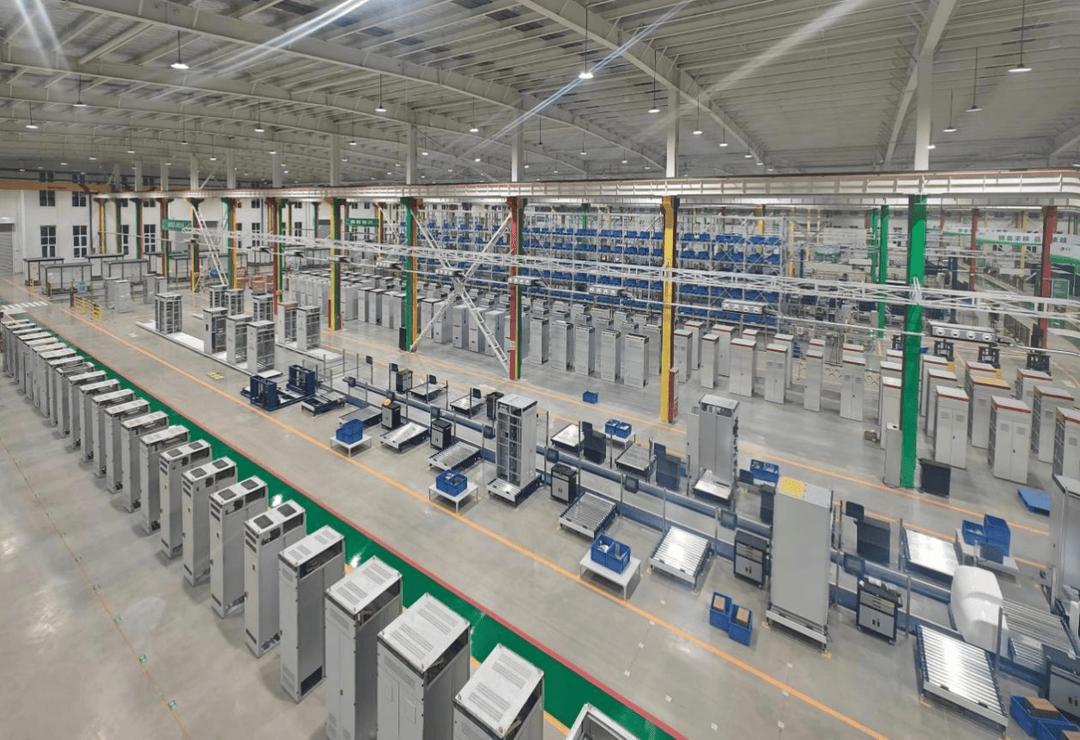
Core Insights - Shandong Investment Co., Ltd. provided CNY 50 million accounts receivable factoring financing to Shandong Haiguan Electric Power Group, aimed at supporting the R&D and production of smart distribution equipment [1][3] - The financing addresses the pain points of technology innovation enterprises, facilitating their growth and ensuring continuous R&D of core technologies [3][5] - The smart distribution equipment funded is crucial for building a new power system and enhancing energy efficiency, showcasing the company's leadership in the digital grid sector [4][7] Financial Support and Innovation - The timely financial injection from Lushin Factoring accelerates the cash flow for Haiguan Electric Power, enabling ongoing investment in cutting-edge technologies like smart energy storage and distribution [5] - This support exemplifies the role of financial resources in sustaining innovation and product iteration within the electric power manufacturing industry [5][8] Green Energy Transition - The smart distribution equipment is foundational for a new energy system, improving the grid's capacity to integrate intermittent clean energy sources like solar and wind [7] - Enhanced grid flexibility and reliability contribute to reducing energy loss and fossil fuel consumption, aligning with national green development strategies [7] Financial Innovation and Future Outlook - Shandong Investment is deepening financial innovation through various methods, including leasing and supply chain finance, to support key sectors like technology innovation and green industries [8] - The successful implementation of this financing model serves as a replicable case for integrating financial tools with technology innovation, aiming to foster more specialized and innovative enterprises in Shandong [8]
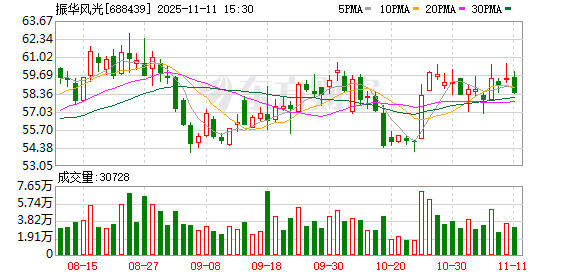
振华风光:关于2025年度开展应收账款保理业务及认购应收账款资产支持证券暨关联交易的公告
Zheng Quan Ri Bao· 2025-11-11 10:11
Core Viewpoint - The company plans to transfer accounts receivable worth up to RMB 16,525 million to a related party for securitization purposes, which involves issuing asset-backed securities [2] Group 1: Transaction Details - The company intends to use non-recourse factoring to transfer accounts receivable to China Electronics Huirong Commercial Factoring (Shenzhen) Co., Ltd. [2] - The accounts receivable transfer is part of a broader asset-backed securities product established by China Securities Co., Ltd. [2] - The transfer amount is valid for one year from the date of approval by the shareholders' meeting [2] Group 2: Company Involvement - The company will use its own funds to purchase up to RMB 5 million of the asset-backed securities, which is approximately 3% of the accounts receivable transfer amount [2] - The actual controllers of both the company and China Electronics Huirong are the same, indicating a related party transaction [2] - The transaction has been approved by the independent directors and the board of directors, pending further approval from the shareholders' meeting [2]