工业软件

Search documents
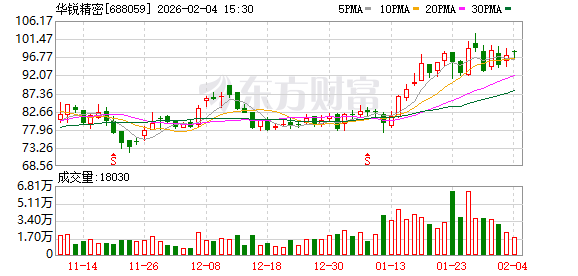
华锐精密:公司“智加”工业软件是一台机床配置一套系统
Zheng Quan Ri Bao· 2026-02-04 13:41
Group 1 - The core viewpoint of the article highlights that the company Huari Precision's "Zhijia" industrial software integrates high-precision sensors and AI algorithms for dynamic monitoring of the entire cutting process, enhancing efficiency and safety while reducing management costs [2] Group 2 - The "Zhijia" system is designed to work alongside machine tool CNC systems without conflict, indicating its compatibility and potential for widespread adoption in the industry [2]


黄仁勋最新演讲
Di Yi Cai Jing Zi Xun· 2026-02-04 03:49
2026.02.04 黄仁勋表示,双方技术的融合将使工程师能在比以往大10万倍的规模上开展工作,工作时看到的不再是 预先渲染或离线模拟画面,而是实时生成的虚拟孪生世界。工程师设计产品、在风洞中实时模拟、模拟 机器人实时运行,在接下来5~10年将带来非常大改变。 谈到物理AI与仿真的结合,黄仁勋表示,AI可以学习如何预测物理行为,当这个过程实时运行时,就 能预测1万倍以上的规模,在设计中结合模拟和仿真将带来革命性改变。而在工厂中,数以百万计的工 厂可以在虚拟孪生世界中先完成生产线安排、机器人组织等。 "今天,制造和物流系统僵化、难以扩展且脆弱。"在媒体沟通会中,达索系统研发执行副总裁Florence Hu-Aubigny向记者表示,未来工厂则将由软件定义生产系统,物理AI与虚拟孪生技术结合将使工厂能 在虚拟环境中测试和重新配置生产,使相应过程的耗时从几个月缩短至几个小时。AI工厂的复杂性更 是比普通工厂复杂,如果不进行预先模拟,就难以确保整个系统正常工作。 黄仁勋也提到AI工厂等基础设施建设中应用相关技术的必要性。他提到,现在全世界开始了史上最大 规模的工业基础设施建设,价值数万亿美元甚至数十万亿美元的基础设施 ...


黄仁勋最新演讲
第一财经· 2026-02-04 03:42
2026.02. 04 本文字数:1277,阅读时长大约2分钟 当天英伟达宣布了与达索系统的合作,双方将利用虚拟孪生技术合作构建工业AI平台,达索的虚拟孪生技术将与英伟达AI基础设施、开源加速软件库结 合,建立经科学验证的行业世界模型,用于生物学、材料科学、工程和制造等领域,除了在工程和制造领域实现软件定义的生产系统,还能用于推动新 分子和下一代材料发展。 黄仁勋表示,双方技术的融合将使工程师能在比以往大10万倍的规模上开展工作,工作时看到的不再是预先渲染或离线模拟画面,而是实时生成的虚拟 孪生世界。工程师设计产品、在风洞中实时模拟、模拟机器人实时运行,在接下来5~10年将带来非常大改变。 谈到物理AI与仿真的结合,黄仁勋表示,AI可以学习如何预测物理行为,当这个过程实时运行时,就能预测1万倍以上的规模,在设计中结合模拟和仿 真将带来革命性改变。而在工厂中,数以百万计的工厂可以在虚拟孪生世界中先完成生产线安排、机器人组织等。 "今天,制造和物流系统僵化、难以扩展且脆弱。"在媒体沟通会中,达索系统研发执行副总裁Florence Hu-Aubigny向记者表示,未来工厂则将由软件 定义生产系统,物理AI与虚拟孪生 ...

中国工业软件行业发展研究报告
艾瑞咨询· 2026-02-04 03:25
Core Viewpoint - The industrial software industry is at a critical juncture, necessitating urgent development driven by innovation and supported by favorable policies. It serves as a core production material and key productivity for new industrialization, emphasizing the importance of self-control and supply chain security [1][4]. Industry Dynamics - The evolution path of industrial software is transitioning from tools to systems, then to platforms, and finally to genetic models, focusing on data value in the latter stages [2]. - The market is large, with a projected size nearing 300 billion yuan in 2024, but challenges such as core technology gaps and imbalanced industrial structure are prominent [1][17]. Product Development - Currently, industrial software is primarily sold as products, but it is expected to shift towards selling "intelligence" as data assets are effectively accumulated and utilized, leading to the emergence of industrial intelligent agents [3]. Development Background - Industrial software is crucial for innovation and transformation in the economy, with the shift of control from hardware to software becoming increasingly evident. The encapsulation of industrial knowledge in software is essential for optimizing production processes [4][7]. Driving Factors - Policy support and technological advancements, particularly in AI and large models, are accelerating the development and application of industrial software. Cities are introducing subsidy policies to stimulate innovation in this sector [12][14]. - Demand from enterprises emphasizes practical market needs while also considering domestic alternatives, with government and research institutions focusing on top-level planning and integration [14]. Market Characteristics - The industrial software market is characterized by a significant gap in core technologies, particularly in R&D design software, which is the most affected area by the "bottleneck" phenomenon. The imbalance in the industrial structure shows a stronger presence of management software compared to engineering software [17][19]. Industry Value Flow - The industrial software value distribution follows a "smile curve" model, where the closer to core technology, the higher the barriers and profits. The rise of data value services is expected to create new growth opportunities [30]. Profit Models - Current profit models for industrial software include software licensing, maintenance, and customized development, with ongoing exploration of platform and ecosystem revenue sharing [33]. Future Directions - The industrial software industry is expected to evolve towards platformization and genetic modeling, focusing on enhancing data flow efficiency and value. The future will see products transforming from mere tools to intelligent agents capable of autonomous task execution [48][52].

黄仁勋对谈达索CEO 英伟达开辟第三战场
2 1 Shi Ji Jing Ji Bao Dao· 2026-02-04 01:02
Core Viewpoint - NVIDIA's CEO Jensen Huang is actively pursuing partnerships and innovations in the AI and industrial software sectors, particularly through a strategic collaboration with Dassault Systèmes to enhance AI capabilities in design and engineering [3][5]. Group 1: Strategic Partnership - NVIDIA and Dassault Systèmes have announced a long-term strategic partnership to develop an industrial AI platform, integrating AI intelligence into Dassault's software [3][5]. - The collaboration aims to create scientifically validated world models and introduce "skilled virtual companions" in fields such as biology, materials science, engineering, and manufacturing [3][5]. Group 2: Business Structure - NVIDIA's business is primarily focused on GPU sales, with AI and data center modules accounting for 90% of its revenue [6]. - The company is expanding its software capabilities to maintain its hardware dominance, similar to how Apple integrates software with its hardware [6][10]. Group 3: Market Segments - NVIDIA operates in three main market segments: 1. GPU and data center, which constitutes 90% of its business. 2. Consumer market for gaming graphics cards, accounting for approximately 8%. 3. 3D rendering software, which is in its early stages but is expected to be crucial for future growth [6][7]. Group 4: Omniverse Platform - NVIDIA's Omniverse platform is designed to support digital twins and physical AI, allowing for large-scale deployment of real-world simulations [10][12]. - The platform aims to unify various 3D tools and promote the OpenUSD standard, enhancing interoperability among different software used in industries [13]. Group 5: Industry Context - The global industrial modeling software market is dominated by companies like Dassault Systèmes and Siemens, with annual revenues exceeding $4 billion for the top players [9]. - The collaboration with Dassault Systèmes positions NVIDIA to leverage its AI capabilities in a market that has historically been dominated by European and American firms with strong industrial foundations [9].
黄仁勋全球连轴转 最新演讲称AI将重塑全球工厂
Xin Lang Cai Jing· 2026-02-04 00:52
英伟达CEO黄仁勋最近的行程非常满。当地时间1月21日,黄仁勋在瑞士举办的达沃斯论坛上大谈过去 一年AI模型的三大进展。随后,他开启访华行程,先后出现在上海、北京、深圳、中国台湾。当地时 间2月3日,黄仁勋又出现在工业软件公司达索系统于美国休斯顿举办的活动上,这次演讲的主题是工业 AI。 "过去,我们花了1/3的时间在设计和数字化上,也许花了2/3的时间在构建物理形态上。未来很有可能我 们将花100%的时间在数字化上。即使完成了设计、模拟、验证,还必须做软件集成。"黄仁勋称,无论 是设计、描绘、模拟还是操作,未来都将由软件定义,从一双网球鞋到其他所有东西都是如此,汽车是 软件定义的,机器人所在的工厂也是软件定义的。 当天英伟达宣布了与达索系统的合作,双方将利用虚拟孪生技术合作构建工业AI平台,达索的虚拟孪 生技术将与英伟达AI基础设施、开源加速软件库结合,建立经科学验证的行业世界模型,用于生物 学、材料科学、工程和制造等领域,除了在工程和制造领域实现软件定义的生产系统,还能用于推动新 分子和下一代材料发展。 黄仁勋表示,双方技术的融合将使工程师能在比以往大10万倍的规模上开展工作,工作时看到的不再是 预先渲染 ...

黄仁勋全球连轴转,最新演讲称AI将重塑全球工厂
Di Yi Cai Jing· 2026-02-04 00:50
"今天,制造和物流系统僵化、难以扩展且脆弱。"在媒体沟通会中,达索系统研发执行副总裁Florence Hu-Aubigny向记者表示,未来工厂则将由软件定义生 产系统,物理AI与虚拟孪生技术结合将使工厂能在虚拟环境中测试和重新配置生产,使相应过程的耗时从几个月缩短至几个小时。AI工厂的复杂性更是比 普通工厂复杂,如果不进行预先模拟,就难以确保整个系统正常工作。 当天英伟达宣布了与达索系统的合作,双方将利用虚拟孪生技术合作构建工业AI平台,达索的虚拟孪生技术将与英伟达AI基础设施、开源加速软件库结 合,建立经科学验证的行业世界模型,用于生物学、材料科学、工程和制造等领域,除了在工程和制造领域实现软件定义的生产系统,还能用于推动新分子 和下一代材料发展。 黄仁勋表示,双方技术的融合将使工程师能在比以往大10万倍的规模上开展工作,工作时看到的不再是预先渲染或离线模拟画面,而是实时生成的虚拟孪生 世界。工程师设计产品、在风洞中实时模拟、模拟机器人实时运行,在接下来5~10年将带来非常大改变。 谈到物理AI与仿真的结合,黄仁勋表示,AI可以学习如何预测物理行为,当这个过程实时运行时,就能预测1万倍以上的规模,在设计中结 ...

中国工业软件行业发展研究报告
艾瑞咨询· 2026-02-04 00:08
Core Insights - The industrial software industry is at a critical juncture, driven by the need for innovation and the urgency of development, especially in the context of China's economic transformation and the push for self-sufficiency in core technologies [1][3][17] - The market for industrial software in China is projected to approach 300 billion yuan by 2024, indicating robust growth despite challenges such as a lack of core technologies and imbalanced industrial structure [1][17] - The evolution of industrial software is characterized by a shift from tools to systems, platforms, and eventually to a genetic level, focusing on data value and efficiency [2][48] Industry Dynamics - Industrial software serves as a critical enabler for innovation and transformation in the industrial sector, acting as the "brain" and digital foundation of new industrialization [3][9] - The market is large, with significant opportunities for domestic companies to replace foreign products, particularly in the context of national policies promoting self-reliance [2][50] - The development of industrial software is slow and requires patience, but it also presents opportunities amid ongoing changes and restructuring [1][17] Market Characteristics - The industrial software market is characterized by a significant gap in core technologies, particularly in research and design software, which is crucial for engineering optimization [17][23] - The market structure shows a strong presence of management software while engineering software remains weak, indicating a need for improvement in the latter [17][19] - The demand for industrial software is driven by practical needs from enterprises, government initiatives, and the integration of research and education [14][50] Technological Drivers - The advancement of large models and AI technologies is accelerating the development and application of industrial software, supported by government subsidies aimed at fostering innovation [12][14] - The integration of AI and big models is transforming the capabilities of industrial software, enhancing areas such as code generation and human-computer interaction [43][45] Future Directions - The industrial software industry is expected to transition towards a model that emphasizes selling "intelligence" rather than just software, with products evolving into "digital engineers" capable of autonomous task execution [52][48] - The focus will shift towards platformization and the internalization of industrial knowledge into parameters and codes, enhancing the efficiency of data flow and value extraction [48][52] - Companies are encouraged to leverage head clients and policy support to drive technological breakthroughs while also exploring opportunities in mid-tier and long-tail markets [50][52]

北交所123家公司披露2025年年度业绩预告
Zheng Quan Ri Bao· 2026-02-03 22:55
本报记者 孟 珂 东源投资首席分析师刘祥东在接受《证券日报》记者采访时表示,这充分展现了创新型中小企业强劲的 内生动力与活力,彰显了新质生产力培育的积极成效。 展望未来,中央财经大学研究员张可亮对《证券日报》记者表示,北交所目前的交投十分活跃,希望尽 快增加北交所上市企业数量,同时为其匹配公募等长期资金入场,推出场内ETF,做好股票供给和资金 供给的平衡。 北交所2025年年度业绩预告披露收官。 谈及北交所有哪些投资机会,刘祥东认为,当前可围绕中国经济转型升级脉络重点把握三个方面:一是 聚焦业绩预喜且具备核心技术的成长主线,特别是在半导体零部件、新材料、工业软件等"卡脖子"环节 实现进口替代的优质公司,其业绩弹性与成长空间有望在政策扶持下持续释放。二是关注符合国家战略 方向的新兴赛道,如绿色能源、数字经济、人工智能等领域的早期领军企业。三是把握估值修复与制度 改革红利,随着北交所做市商扩容、转板机制完善及中长期资金持续流入,部分估值合理、主业扎实的 细分行业隐形冠军,其投资价值正得到市场重估,投资者可共享成长红利。 例如,宏裕包材发布业绩预报称,预计2025年实现净利润1700万元至2200万元,同比增长35 ...
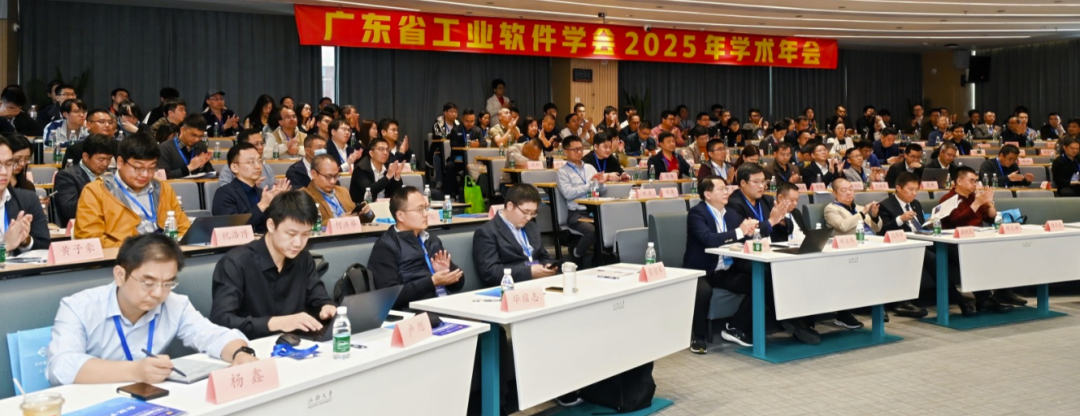
中能拾贝出席广东省工业软件学会2025年学术年会,解锁工业资产价值管理新范式!
Sou Hu Wang· 2026-02-03 07:48
近日,广东省工业软件学会2025年学术年会在广东汕头隆重召开,工业领军企业、资深专家学者与技术 精英齐聚一堂,围绕新型国产工业软件自主研发、生态构建、人才培养及产业落地等核心议题深度研 讨,共绘工业软件创新发展蓝图。 会上,刘勇还指出,针对传统电厂的厂站端值班监盘、人工现场日常巡检、人工现场定期操作、现场作 业违章监管等多类场景,中能拾贝将通过具身智能、多模态传感器融合、数字孪生等技术,实现全场景 智能化升级,稳步推进 "无人值班、无人值守" 的 "黑灯电厂" 目标。 刘勇以智慧水电系统建设为例,进一步介绍电力行业数智化发展趋势。他表示,智慧水电系统建设将聚 焦两大核心方向:一是水电运营管理智慧化,以"AI数智大脑"为核心重构人机交互模式,人工不再操作 大量信息界面,而是直接向AI数智大脑提需求,由AI数智大脑驱动产出"成果",大幅提升运营管理效 率;二是水力发电系统智能化,融合边缘智能手段,将机电设备本体与智能电子装置有机结合,实现设 备状态数字化、诊断自主化、通信网络化、功能一体化与信息互动化。 展望未来,中能拾贝将持续深耕 AI + 工业智能赛道,深化融合物理仿真、数字孪生、大模型等技术与 工业核心场景 ...