
民营医院

Search documents
交银国际:医药稳中向好趋势不改 选股偏好回归基本面
智通财经网· 2025-12-05 07:05
Group 1 - The pharmaceutical industry is expected to experience a critical turning point in 2025, with a stable and positive trend continuing into 2026, influenced by factors such as policy, fundamentals, overseas investment environment, and liquidity [1] - The sector is currently undervalued, and catalysts are anticipated to drive upward momentum, with the realization of value from innovative research further pushing the overall valuation upward [1] - Stock selection will likely return to fundamentals and valuations, focusing on stocks with expected fundamental discrepancies that are still undervalued [1] Group 2 - In the innovative drug/prescription drug segment, short-term focus should be on overseas transactions and performance, with long-term value driven by innovation and iteration [2] - Key short-term catalysts include progress in overseas clinical data, inclusion in medical insurance, and reaching breakeven points, with leading Hong Kong stocks expected to maintain double-digit revenue and net profit growth [2] - Recommended stocks include: 1) 3SBio, Deking Pharmaceutical, and BeiGene, which have rich catalysts and limited impact from procurement; 2) Xiansheng Pharmaceutical, Hutchison China MediTech, and Legend Biotech, which are significantly undervalued with clear long-term growth logic [2] Group 3 - The CXO sector is expected to maintain rapid performance growth, but long-term trends indicate tightening regulations in the U.S. and increasing difficulty in new drug development, suggesting that industry consolidation may just be beginning [3] - Leading players in high-growth segments are expected to have higher long-term certainty [3] Group 4 - High-quality private hospitals are recommended as the pressure on cost control eases and outdated capacity is eliminated, allowing private medical institutions to return to a faster growth trajectory [4] - Recommended stocks include: Guoshengtang and Haijia Medical, which are expected to have short-term performance rebounds and clear long-term expansion paths [4]
交银国际每日晨报-20251204
BOCOM International· 2025-12-04 07:49
Group 1: Pharmaceutical Industry - The pharmaceutical sector is expected to maintain a stable upward trend in 2026, driven by undervaluation and catalysts that could further enhance overall valuations [3][4] - Key recommendations include companies like 3SBio, Eucure Biopharma, and BeiGene, which have rich catalysts and limited impact from centralized procurement [4] - The focus will shift back to fundamentals and valuations, particularly for stocks that are currently undervalued with expected positive fundamental differences [3][4] Group 2: Real Estate Industry - The real estate sector in mainland China is projected to explore new development models under strong policy support, with expected sales area between 900-950 million square meters and sales value around 10-11 trillion RMB in 2026 [5] - In Hong Kong, key factors for market recovery include improved macro uncertainty, significant policy easing, and the return of fundamental demand drivers, with residential rental levels expected to grow by approximately 3% annually [5] - Investment preferences are ranked as state-owned enterprises with low valuations, private sector leaders with land reserves in first and second-tier cities, followed by other private developers [5] Group 3: Retail and Office Market - The retail rental market in Hong Kong is expected to see moderate growth, with community mall rents increasing by about 3-5%, while office vacancy rates have peaked, setting the stage for a rebound in 2026 [7] - The intrinsic value of the Hong Kong physical market is anticipated to gradually release, with New World Development recommended as a high-quality proxy for residential recovery [7]
年底5元以下低价股捡漏,7只潜力股推荐,跨年黑马等你选
Sou Hu Cai Jing· 2025-11-30 18:37
Group 1: Consumer Sector - The government has implemented substantial measures to boost consumption, focusing on smart products, green energy, and products for the elderly [1] - The fourth round of "trade-in" subsidies is accelerating, targeting home appliances, digital products, and home decoration, with a deadline for consumers to act by December 31 [1] Group 2: Alcohol and Pharmaceutical E-commerce - A company specializing in both liquor and pharmaceutical e-commerce has seen revenue growth of nearly 30%, with high gross margins due to increased demand during year-end banquets [1] - The pharmaceutical e-commerce segment benefits from stricter regulations, providing a competitive edge, while innovative drugs are in phase three clinical trials, indicating strong cash flow and a low price-to-earnings ratio compared to peers [1] Group 3: Prepared Dishes and New Retail - A company focused on prepared dishes and new retail is experiencing rapid market growth, with the market size exceeding 600 billion, although its actual revenue contribution is only over 10% [3] - The main business remains traditional retail with lower gross margins, and new production facilities for prepared dishes will not be operational until 2026, posing risks for large investments [3] Group 4: Healthcare Sector - Companies specializing in cold medicine are expected to see revenue spikes during the flu season, with over 40% of their revenue coming from this period, but they have low R&D investment, limiting long-term growth potential [3] Group 5: Elderly Care and AI Medical Services - A company focusing on elderly care and AI medical services has seen over 50% revenue growth in community care and rehabilitation, with AI diagnostic systems implemented in numerous grassroots hospitals [5] - The company has high R&D investment compared to industry averages, but its diverse business lines contribute limited short-term profits, making it suitable for long-term investment [5] Group 6: Private Hospitals and Smart Medical Services - A company operating in private hospitals, smart medical services, and coal has seen over 30% revenue growth in private hospitals, with stable cash flow from coal operations [6] - The company has a diversified risk profile but lacks a core growth engine, making it suitable for conservative investors [6] Group 7: High-end Manufacturing - The high-end manufacturing sector is receiving strong policy support, with a focus on industrial mother machines, which are expected to modernize by 2027 [6] - A company producing CNC machines has reported over 60% profit growth in the first three quarters, with a nearly 40% year-on-year increase in industrial mother machine revenue [6] Group 8: New Energy and Digital Economy - The new energy and digital economy sectors are experiencing explosive growth, with data trading becoming a national focus and data center capacity reaching 500 PB [8] - The company involved in data business has seen revenue double, with stable cash flow from cement operations and lower valuations compared to peers, indicating potential for increased profitability if the data business model is successful [8]


四闯IPO!这家民营医院中国台湾上市公司控股!
Guo Ji Jin Rong Bao· 2025-11-24 03:56
Core Viewpoint - BenQ Hospital Group has submitted its fourth IPO application to the Hong Kong Stock Exchange, with CICC and Citigroup as joint sponsors, amidst a challenging environment for private healthcare companies seeking to go public [1][6]. Group 1: Company Overview - BenQ Hospital is a private, profit-oriented comprehensive hospital group in mainland China, operating two hospitals and leveraging operational management experience from Taiwan [1][2]. - The group is the largest private profit-oriented comprehensive hospital group in East China by total revenue for 2024, holding a 1% market share in the region and ranking seventh nationally with a 0.4% market share [1]. Group 2: Operational Performance - As of June 30, 2025, the total building area of the two hospitals is approximately 400,000 square meters, with 1,850 registered beds and over 1,000 experienced doctors, including 35 experts from Taiwan and overseas [2]. - The number of inpatient visits increased from 67,100 in 2022 to 81,900 in 2023, and further to 86,200 in 2024, with 42,400 visits in the first half of 2025 [3]. - Outpatient visits rose from 1.68 million in 2022 to 2.15 million in 2024, with 1.06 million visits in the first half of 2025 [3]. Group 3: Financial Performance - The company reported revenues of CNY 2.336 billion, CNY 2.688 billion, CNY 2.659 billion, and CNY 1.312 billion for the years 2022, 2023, 2024, and the first half of 2025, respectively, showing significant fluctuations [3]. - The net profits for the same periods were CNY 89.6 million, CNY 168 million, CNY 109 million, and CNY 48.7 million, indicating volatility in profitability [3]. - The gross profit margins were 16.4%, 18.9%, 18.1%, and 15.9% for the respective years, with a decline noted in 2024 [4]. Group 4: Market Context - The IPO attempts coincide with a wave of private healthcare companies seeking to go public, referred to as the "Odyssey Year of Private Medical IPOs" in 2023, amidst various pressures affecting investment value [5][6]. - The net proceeds from the IPO are intended for hospital expansion and upgrades, potential investments and acquisitions, smart hospital upgrades, working capital, and general corporate purposes [6]. Group 5: Shareholding Structure - BenQ Hospital is primarily controlled by Qisda Corporation, which holds 95.02% of the shares, providing a strong backing from a diversified technology group [7]. - Qisda Corporation, founded in 1984 and listed on the Taiwan Stock Exchange, operates across various sectors, including healthcare, which may offer synergistic opportunities for BenQ Hospital [7].
603122,14天12涨停!600829,5连板!这一概念火了,多只牛股诞生
Zheng Quan Shi Bao· 2025-11-15 14:47
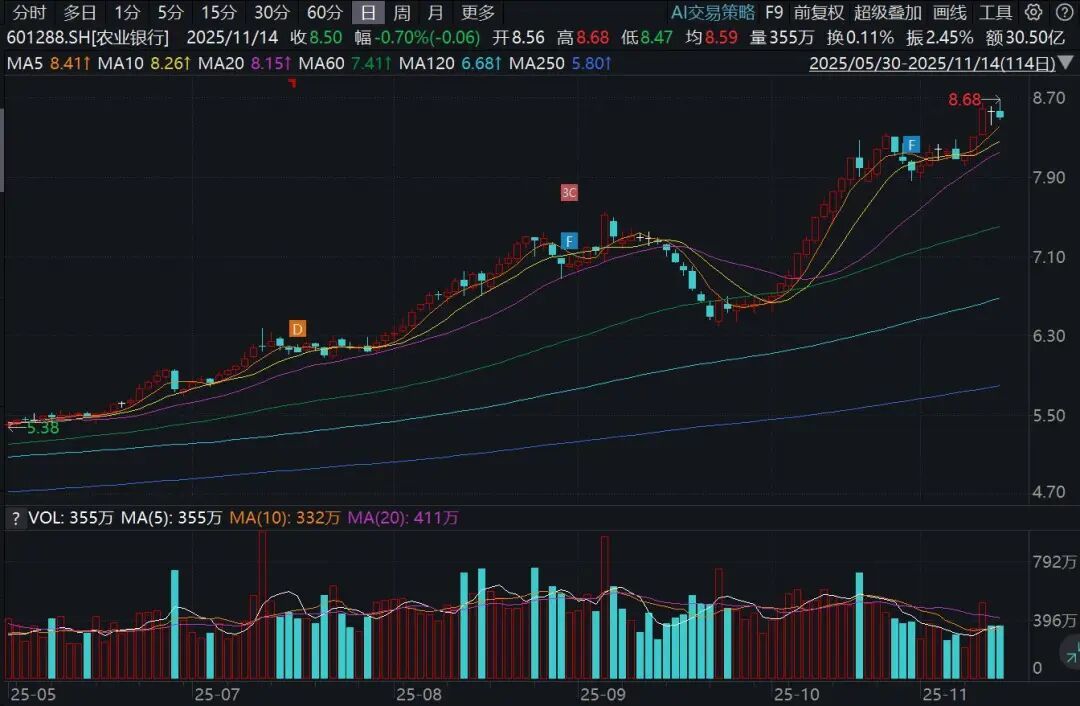
Group 1: Market Overview - The health industry continues to strengthen, with several stocks performing exceptionally well [1][6] - A-shares experienced fluctuations, with major indices slightly declining after reaching a 10-year high [1] - The total trading volume for the week was approximately 10.22 trillion yuan, with daily turnover around 2 trillion yuan [1] Group 2: Financing Trends - Cumulative net financing for the year reached 634 billion yuan, with over 12.6 billion yuan net bought this week [2] - The power equipment sector saw over 5.3 billion yuan in net purchases, while the non-ferrous metals and basic chemicals sectors each received over 3 billion yuan [2] - The pharmaceutical and biotechnology sectors attracted over 30.5 billion yuan in net inflows, while the electronics sector faced a net outflow of over 16.1 billion yuan [2] Group 3: Banking Sector Performance - The banking sector has been performing strongly, with indices frequently reaching historical highs [3] - Over the past three years, bank stocks have increased by 94%, significantly outperforming the Shanghai Composite Index [3] - Agricultural Bank of China has shown remarkable growth, with a cumulative increase of 317% over four years [3] Group 4: Policy and Future Outlook - Policies aimed at optimizing bank credit structures and enhancing interest margins are expected to support the banking sector [5] - The health industry is projected to grow significantly, with estimates suggesting a market size of 17.4 trillion yuan by 2025 and 29.1 trillion yuan by 2030 [8] - The market is expected to stabilize, with structural trends becoming more pronounced, particularly in the TMT sector and coal and banking investments [9]




民营医院概念涨1.35%,主力资金净流入28股
Zheng Quan Shi Bao Wang· 2025-11-14 09:25
Core Viewpoint - The private hospital sector has shown a positive performance with a 1.35% increase, ranking sixth among concept sectors, driven by significant gains in several stocks [1][2]. Group 1: Market Performance - As of November 14, the private hospital concept saw 42 stocks rise, with notable performers including Hainan Haiyao, Dazhongfang, and Renmin Tongtai, which hit the daily limit up [1]. - The top gainers in the sector included Hainan Haiyao with a 10.08% increase, Dazhongfang at 10.06%, and Xinlong Holdings at 9.99% [3]. - Conversely, the biggest losers were *ST Wanfang, Madi Technology, and Samsung Medical, which fell by 5.06%, 3.09%, and 2.76% respectively [1][2]. Group 2: Capital Flow - The private hospital sector experienced a net outflow of 382 million yuan in principal funds, with 28 stocks seeing net inflows and 10 stocks exceeding 10 million yuan in net inflows [2]. - Hainan Haiyao led the net inflow with 256 million yuan, followed by Dazhongfang, Xinlong Holdings, and Kaikai Industry with net inflows of 178 million yuan, 118 million yuan, and 106 million yuan respectively [2][3]. - The highest net inflow ratios were recorded by Xinlong Holdings at 48.07%, ST Zhongzhu at 42.18%, and Hainan Haiyao at 39.26% [3].


新股消息 | 明基医院更新招股书 为华东地区最大的民营营利性综合医院集团
智通财经网· 2025-11-12 23:47
Core Viewpoint - Ming Kee Hospital is a leading private for-profit hospital group in East China, with significant market share and a focus on providing high-quality medical services through its two hospitals in Nanjing and Suzhou [2][3]. Company Overview - Ming Kee Hospital operates two private for-profit general hospitals: Nanjing Ming Kee Hospital and Suzhou Ming Kee Hospital, making it the largest private for-profit hospital group in East China by total revenue in 2024, with a market share of 1.0% in the region and 0.4% nationally [2]. - Nanjing Ming Kee Hospital, operational since 2008, was rated as a tertiary hospital in 2022, becoming the first private hospital in Nanjing to achieve this status. It ranks as the third largest private for-profit hospital in China with a market share of 0.3% [2]. - Suzhou Ming Kee Hospital, operational since 2013, is also a tertiary hospital and has received various certifications, including from the Joint Commission International (JCI) [2]. Financial Performance - Revenue for Ming Kee Hospital was approximately RMB 2.336 billion in 2022, RMB 2.688 billion in 2023, and RMB 2.659 billion in 2024, with RMB 1.330 billion and RMB 1.312 billion for the six months ending June 30 in 2024 and 2025, respectively [5]. - Profit figures were RMB 89.55 million in 2022, approximately RMB 167.45 million in 2023, and approximately RMB 108.92 million in 2024, with RMB 63.40 million and RMB 48.70 million for the six months ending June 30 in 2024 and 2025, respectively [6]. - Gross profit margins were 16.4% in 2022, 18.9% in 2023, and 18.1% in 2024, with a margin of 15.9% for the six months ending June 30 in 2025 [7][9]. Industry Overview - The private hospital sector in China is predominantly for-profit, holding a market share of 66.5% in 2024. The revenue of private hospitals is projected to grow from RMB 437.9 billion in 2019 to RMB 944.7 billion in 2024, with a compound annual growth rate (CAGR) of 16.6% [10]. - The number of private hospitals is expected to increase from 22,424 in 2019 to 27,652 in 2024, with a CAGR of 4.3% [13]. - The demand for higher quality medical services is anticipated to rise due to increasing disposable income and changing patient preferences, positioning private hospitals as key players in meeting this demand [13].
医药行业周报:中国药企闪耀ESMO大会,建议4Q25关注政策、学术大会、BD等催化剂-20251023
BOCOM International· 2025-10-23 10:27
Industry Rating - The report rates the pharmaceutical industry as "Leading" [1] Core Insights - The report emphasizes the significance of the ESMO conference, highlighting the achievements of Chinese pharmaceutical companies and suggesting to focus on catalysts such as policies, academic conferences, and business development in Q4 2025 [1][4] - The report indicates a potential market rebound due to increasing industry catalysts, including various academic conferences and favorable policies [4] - The report recommends continued attention to companies with promising clinical pipelines and their global commercialization potential [4][5] Valuation Summary - The report provides a detailed valuation overview of various companies, with all covered companies rated as "Buy" except for two rated as "Neutral" and one as "Sell" [3] - Notable target prices and current prices for selected companies include: - AstraZeneca: Target price 93.30, Current price 83.87 [3] - BeiGene: Target price 225.00, Current price 188.20 [3] - Innovent Biologics: Target price 48.00, Current price 36.42 [3] - I-Mab: Target price 105.00, Current price 86.10 [3] - China Biologic Products: Target price 9.10, Current price 7.43 [3] Market Performance - The Hang Seng Index rose by 2.3% and the Hang Seng Healthcare Index increased by 2.0% during the week of October 14-21, 2025, ranking fifth among twelve industry indices [4][7] - Sub-industry performance showed CXO leading with a 4.5% increase, followed by Internet medicine and biopharmaceuticals [4][7] Institutional Holdings - As of October 21, 2025, the proportion of domestic institutional holdings through Hong Kong Stock Connect decreased slightly to 22.1%, while foreign institutional holdings also saw a minor decline to 38.6% [34][38] - The report notes that both domestic and foreign investors are increasing their positions in innovative drug companies with clear pipeline values [4][38] Clinical Developments - The report highlights significant clinical trial results presented at the ESMO conference, including: - CanSino Biologics' promising data on its PD-1/VEGF inhibitor [5][6] - Rongchang Biopharmaceuticals' HER2 ADC showing significant survival benefits [5][6] - Kelun-Biotech's results indicating substantial improvements in progression-free survival [5][6] - The report suggests that these developments enhance the global competitiveness of the covered companies [5][6]
明基医院赴港IPO三度折戟背后:民营医院冲上市的困局与变数
Di Yi Cai Jing· 2025-10-23 00:16
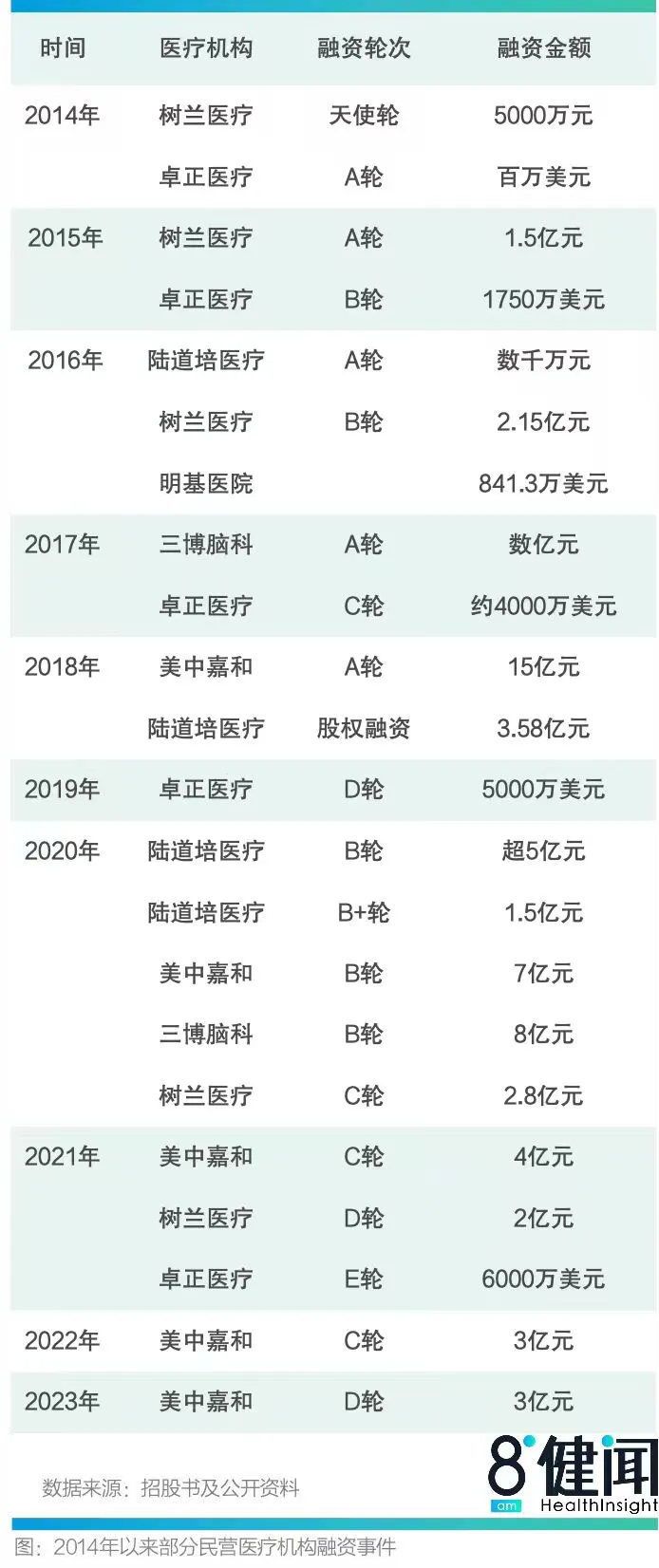
Core Viewpoint - Mingji Hospital has faced multiple failures in its attempts to go public on the Hong Kong Stock Exchange, attributed to unfavorable industry conditions and low market expectations for comprehensive hospitals [1][3][5]. Group 1: Company Performance - Mingji Hospital generated revenues of 23.36 billion, 26.88 billion, and 26.59 billion from 2022 to 2024, with profits of 895.5 million, 1.67 billion, and 1.09 billion respectively, indicating a strong performance compared to many peers in the private healthcare sector [3][5]. - Despite its profitability, Mingji Hospital's limited number of facilities (only two hospitals) hinders its ability to attract investor confidence regarding future growth potential [4][5]. Group 2: Industry Environment - The private healthcare sector is currently facing significant challenges, with over 50% of private hospitals projected to incur losses in 2024, highlighting a broader industry struggle [3][5]. - Recent changes in national healthcare policies and stricter regulations have increased operational costs for private hospitals, further complicating their ability to secure funding and go public [5][22]. Group 3: IPO Challenges - Mingji Hospital's repeated failures to list are indicative of a structural dilemma within the healthcare sector, where many private hospitals are encountering similar obstacles in their IPO pursuits [1][7][8]. - The capital market's confidence in private healthcare has waned, with fewer investment institutions showing interest in conducting due diligence on private hospitals since 2023 [5][22]. Group 4: Future Prospects - Mingji Hospital is actively seeking solutions to its growth challenges, including investments in new facilities, but these efforts have yet to yield profitable results [4][5]. - The hospital's expansion plans face stiff competition in regions already saturated with healthcare providers, particularly in Suzhou, where the number of tertiary hospitals has reached 32 [5][22].
2.01亿主力资金净流入,民营医院概念涨0.29%
Zheng Quan Shi Bao Wang· 2025-10-16 10:23
Core Insights - The private hospital sector saw a slight increase of 0.29%, ranking 9th among concept sectors, with 32 stocks rising, including Guizhou Bailing and Luoxin Pharmaceutical hitting the daily limit [1][2] Sector Performance - The top-performing concept sectors included Hainan Free Trade Zone (+2.58%) and Military Equipment Restructuring (+1.98%), while sectors like Special Steel (-2.68%) and Photolithography (-2.47%) faced declines [2] - The private hospital sector attracted a net inflow of 201 million yuan, with 29 stocks receiving inflows, and 6 stocks exceeding 50 million yuan in net inflow [2] Stock Highlights - Notable stocks in the private hospital sector included: - New Mileage: +9.87% with a net inflow of 161.24 million yuan and a net inflow ratio of 19.36% [3] - Guizhou Bailing: +9.98% with a net inflow of 95.37 million yuan and a net inflow ratio of 33.91% [3] - Luoxin Pharmaceutical: +9.94% with a net inflow of 77.86 million yuan and a net inflow ratio of 35.07% [3] - Other significant gainers included Hainan Haiyao (+6.14%) and Xinfeng Pharmaceutical (+3.20%) [1][3] Decliners - The stocks with the largest declines included: - Pingtan Development: -4.53% [1] - Xiangjiang Holdings: -3.06% [7] - Anke Biotechnology: -2.48% [7]


