
生物医药研发

Search documents
国产顶刊Vita上线首篇研究论文:来自西湖大学,发现对抗致命病毒的“超级武器”,成功进行非人灵长类治疗实验
生物世界· 2026-01-26 02:06
Core Insights - The Severe Fever with Thrombocytopenia Syndrome Virus (SFTSV) is a tick-borne virus that has rapidly spread across Asia since its discovery in 2011, with a mortality rate ranging from 16.2% to 30% [2][6] - Currently, there are no effective antiviral treatments or vaccines for SFTSV, and treatment is primarily supportive, highlighting the urgent need for the development of effective therapeutic antibodies to reduce mortality and public health burden [2][6] Group 1: Research Findings - A recent study published in the journal Vita identified a fully human super-neutralizing antibody, ZS1C5, which targets the SFTSV virus and demonstrated 100% protection in lethal mouse models [3][10] - ZS1C5 was shown to significantly reduce viral load in both mouse and non-human primate models, with a 90% reduction in viral load within 24 hours and complete viral clearance within three days in treated monkeys [10][15] - The antibody's unique mechanism involves binding to a previously undiscovered cross-domain epitope on the SFTSV Gn protein, which enhances its neutralizing capability [8][10] Group 2: Immune System Restoration - ZS1C5 not only clears the virus but also restores immune balance, preventing the cytokine storm and excessive inflammatory response typically seen in untreated patients [12] - The treatment group maintained normal immune cell function, which helped mitigate thrombocytopenia and coagulation abnormalities [12] Group 3: Vaccine Development Insights - The study utilized AI algorithms to scan healthy human B cell receptor gene libraries, identifying germline antibodies similar to ZS1C5, providing a new blueprint for universal vaccine design [14] - This approach could lead to the development of vaccines that stimulate immune responses akin to those generated by ZS1C5, potentially offering broader protection against SFTSV and similar emerging viral threats [14][17]


Cell子刊:中山大学高艳锋团队开发双特异性多肽-纳米酶偶联物,双管齐下协同抗肿瘤
生物世界· 2026-01-24 04:06
Core Viewpoint - The article discusses a novel bispecific peptide-nanozyme conjugate (BsPNEC) designed for cancer immunotherapy, which aims to overcome the limitations of the immunosuppressive tumor microenvironment and enhance T cell immune responses [4][11]. Group 1: Research Background - Cancer immunotherapy has shown transformative clinical prospects, but only about 20% of patients achieve durable responses due to intrinsic tumor resistance and the immunosuppressive network within the tumor microenvironment (TME) [3]. - The study highlights the role of PD-L1 upregulation and the infiltration of immunosuppressive myeloid cells in T cell exhaustion and immune dysfunction [6]. Group 2: Design and Mechanism - The research team designed a bispecific peptide-nanozyme conjugate (BsPNEC) that integrates tumor-targeting delivery, magnetic resonance imaging (MRI) contrast functionality, and potent anti-tumor effects [4][7]. - BsPNEC combines CXCR1/2/PD-L1 blockade with nanozyme-driven cGAS-STING activation, where Fe3O4 catalyzes the conversion of H2O2 to reactive oxygen species (ROS), promoting dendritic cell activation and T cell migration [7][8]. Group 3: Therapeutic Potential - The study indicates that BsPNEC shows promising therapeutic effects in an anti-PD-L1 resistant pancreatic cancer model [9]. - The dual specificity of the D-type peptide targets PD-L1 and CXCR1/2 to combat tumor immune suppression, enhancing CD8+ T cell infiltration [8][11].

宇伟观察|新加坡:从“无” 到“有” 的逆袭传奇
Jing Ji Guan Cha Bao· 2026-01-22 10:46
Group 1 - Singapore's development is characterized by three key concepts: "nothing," "something," and "creating something from nothing," which reflect its journey from survival challenges to becoming a global hub [2][3] - The country faces significant natural resource limitations, including a lack of freshwater, minerals, and arable land, which are critical constraints on its development [4][5] - Singapore's initial economic challenges included a high unemployment rate of 12% and a low GDP per capita of $428 at independence in 1965, compounded by a lack of industrial infrastructure and regional trade barriers [5][6] Group 2 - Singapore has built core advantages through strategic positioning and institutional innovation, establishing itself as a bridge between East and West [7][8] - The country has developed a highly efficient and transparent institutional framework, which includes strict anti-corruption measures and a meritocratic governance model, contributing to a stable business environment [8][9] - Singapore's geographical location has been leveraged to create a global trade and shipping hub, with its port's throughput increasing from under 10 million tons in 1965 to 615 million tons by 2025 [10][11] Group 3 - The nation has implemented a dual talent strategy, attracting global talent while nurturing local capabilities, which is essential for its economic growth [11][12] - Singapore's water management innovations have transformed its water scarcity into a thriving industry, with a water services sector generating over 8 billion SGD annually [13] - The country has strategically shifted its industrial focus over the decades, moving from labor-intensive industries to high-tech sectors like biomedicine and digital economy, maintaining an annual growth rate of over 15% in the biomedicine sector [14][15] Group 4 - Singapore's international influence has grown significantly, participating actively in global governance and trade agreements, which enhances its role as a key player in the global economy [16] - The country has successfully transitioned from a resource-scarce nation to a global hub, achieving a GDP per capita exceeding $94,000 and ranking among the wealthiest countries [17][18]
四川双马:目前公司在保持原有建材生产制造业务经营的同时正在着力发展生物医药研发生产业务
Zheng Quan Ri Bao Wang· 2026-01-22 09:47
Core Viewpoint - Sichuan Shuangma is focusing on developing its biopharmaceutical research and production business while maintaining its existing building materials manufacturing operations [1] Group 1: Company Operations - Sichuan Shuangma is engaged in industrial investment and management as well as private equity fund management [1] - The company is managing and participating in investments in multiple private equity funds across various sectors including smart manufacturing, semiconductors, new energy, new consumption, health care, and biotechnology [1] Group 2: Investment Philosophy - The company adheres to the philosophy of promoting industry through capital, supporting the development of the real economy [1]

香港借壳上市的历史流变和现状澄析(中)
Sou Hu Cai Jing· 2026-01-21 13:34
Core Insights - The article reviews the evolution of backdoor listings in Hong Kong over the past 40 years, categorizing it into three stages: early exploration, regulatory games, and comprehensive tightening. The traditional "shell acquisition - capital injection" model ended after the new regulations in 2019 [4][13] - The article provides a panoramic insight into the current market post-2019 regulations and offers practical survival guidance for mainland companies seeking backdoor listings in Hong Kong [4][35] Group 1: Current Status of Backdoor Listings - Case Study 1: The failure of WM Motor's backdoor listing through Apollo Travel highlights the challenges faced by companies with poor fundamentals, emphasizing that stringent regulations serve as a filter [5][10] - WM Motor's financial crisis included cumulative losses of 17.4 billion yuan from 2019 to 2021 and a current debt of approximately 20.4 billion yuan, leading to a situation of insolvency [6][10] - The transaction process for WM Motor's backdoor listing was abruptly terminated due to market instability and the company's application for bankruptcy restructuring in October 2023 [9][10] Group 2: Policy Implications from WM Motor's Case - The case illustrates that Hong Kong's regulatory framework prioritizes substance over form, indicating that the exchange will scrutinize the commercial essence of transactions rather than just their legal arrangements [12][14] - Successful capital operations must demonstrate that the merger creates a synergistic effect, enhancing the quality and sustainability of the listed platform [14] Group 3: Successful Case of Yiteng Pharmaceutical and Jiahe Biology - Case Study 2: The merger between Yiteng Pharmaceutical and Jiahe Biology showcases a successful path through deep industry collaboration under strict regulatory frameworks, leading to a successful backdoor listing [15][19] - The merger was structured as a share exchange, with Yiteng's shareholders retaining approximately 77.43% of the new entity, which was later renamed "Yiteng Jiahe" [18] - The success of this transaction stemmed from its solid commercial logic, creating real synergistic value and aligning with Hong Kong's regulatory goal of enhancing the quality of listed companies [19][20] Group 4: Insights from "Jiao Ge Peng You" Case - Case Study 3: The backdoor listing of "Jiao Ge Peng You" through Century Ruike represents a successful example of avoiding reverse acquisition scrutiny by employing a carefully structured transaction [23][34] - The transaction involved a gradual integration strategy, allowing the company to maintain its original business while expanding into new areas, thus avoiding triggering regulatory concerns [31] - This case demonstrates that the path for pure backdoor listings is not entirely closed, but requires meticulous planning and a strong collaborative relationship between the parties involved [33]
港股午评:恒指跌0.04%、科指跌0.66%,内房股、新消费概念股走强,科网股、商业航天及生物医药股下挫
Sou Hu Cai Jing· 2026-01-20 04:13
Market Overview - The Hong Kong stock market opened high but experienced a decline, with the Hang Seng Index down 0.04% at 26,552.57 points, the Hang Seng Tech Index down 0.66% at 5,712.19 points, and the National Enterprises Index down 0.12% at 9,123.18 points, while the Red Chip Index rose 1% to 4,183.81 points [1] - Major tech stocks generally fell, with Alibaba down 0.25%, Tencent down 1.48%, and Xiaomi down 1.48%, while JD.com rose 1.07% and NetEase rose 1.85% [1] - Real estate stocks showed strength, with Greentown China rising over 5%, while new consumption concepts were active, with Hu Shang Ayi rising over 10% [1] - The commercial aerospace sector weakened, with Asia Pacific Satellite down over 6%, and the biopharmaceutical sector continued to adjust, with WuXi AppTec down over 4% [1] Corporate News - Code-B (02487.HK) reported positive top-line results from a Phase III clinical trial for CU-20101, an injectable type A botulinum toxin for moderate to severe glabellar lines [2] - Saint Bella (02508.HK) signed a strategic cooperation framework agreement with Cloud Technology to explore the integration of AI and robotics in high-demand home care scenarios [2] - China Pacific Insurance (00966.HK) expects a net profit increase of approximately 215% to 225% in 2025, compared to 8.432 billion HKD in the previous year [2] - TCL Electronics (01070.HK) anticipates an adjusted net profit of approximately 2.33 to 2.57 billion HKD in 2025, representing a growth of about 45% to 60% [2] - Jihong Co. (02603.HK) expects a net profit of approximately 273 to 291 million HKD in 2025, a year-on-year increase of 50% to 60% due to growth in packaging and cross-border e-commerce [2] - Guolian Minsheng (01456.HK) expects a net profit of approximately 2.008 billion RMB in 2025, a year-on-year increase of around 406% [2] - China Railway (00390.HK) reported a new contract amount of 1,165.98 billion RMB in Q4 2025, with a cumulative new contract amount of 2,750.9 billion RMB, a year-on-year increase of 1.3% [2] Additional Corporate Updates - Shenzhen Holdings (00604.HK) expects a total contract sales amount of approximately 13.311 billion RMB in 2025, a decrease of 21.55% year-on-year [3] - SF Holding (06936.HK) reported a total revenue of 27.339 billion RMB in December from its express logistics, supply chain, and international business, a year-on-year increase of 3.41% [4] - China Ruyi (00136.HK) plans to invest approximately 14.2 million USD in AIsphere to explore AI applications in film, streaming, and gaming content production [4] - Baide International (02668.HK) signed a memorandum of understanding with potential sellers regarding the possible acquisition of part or all of a target company's equity [5] - HAPO (02142.HK) exercised warrants under an agreement with Spruce [6] - Yuanda Pharmaceutical (00512.HK) had its new drug application for TLX591-CDx accepted by the Chinese drug regulatory authority [7] - Yancoal Australia (03668.HK) reported a coal production of 10.4 million tons in Q4 2025, a 12% increase quarter-on-quarter and a 7% increase year-on-year [7] Institutional Insights - Dongwu Securities noted that the Hong Kong market is in a long-term upward trend but faces short-term challenges, with strong consensus on domestic fundamentals but mixed views on overseas factors [8] - Huaxia Fund highlighted the high sensitivity of the Hong Kong market to corporate earnings and macroeconomic data, suggesting that positive economic surprises could significantly boost market expectations [8] - Citigroup expressed optimism about the Hong Kong market's prospects compared to A-shares, anticipating support from both southbound and foreign capital in 2026, while cautioning against potential risks from high overseas interest rates [8] - Guolian Minsheng Securities remains bullish on the revaluation of AI in China, citing a solid industrial catalyst timeline and upcoming model releases from major companies [8]
纳安生物:RDC+ADC协同疗法诊疗一体化案例 实现区域突破与全球创新双跨越
Jing Ji Guan Cha Wang· 2026-01-19 07:23
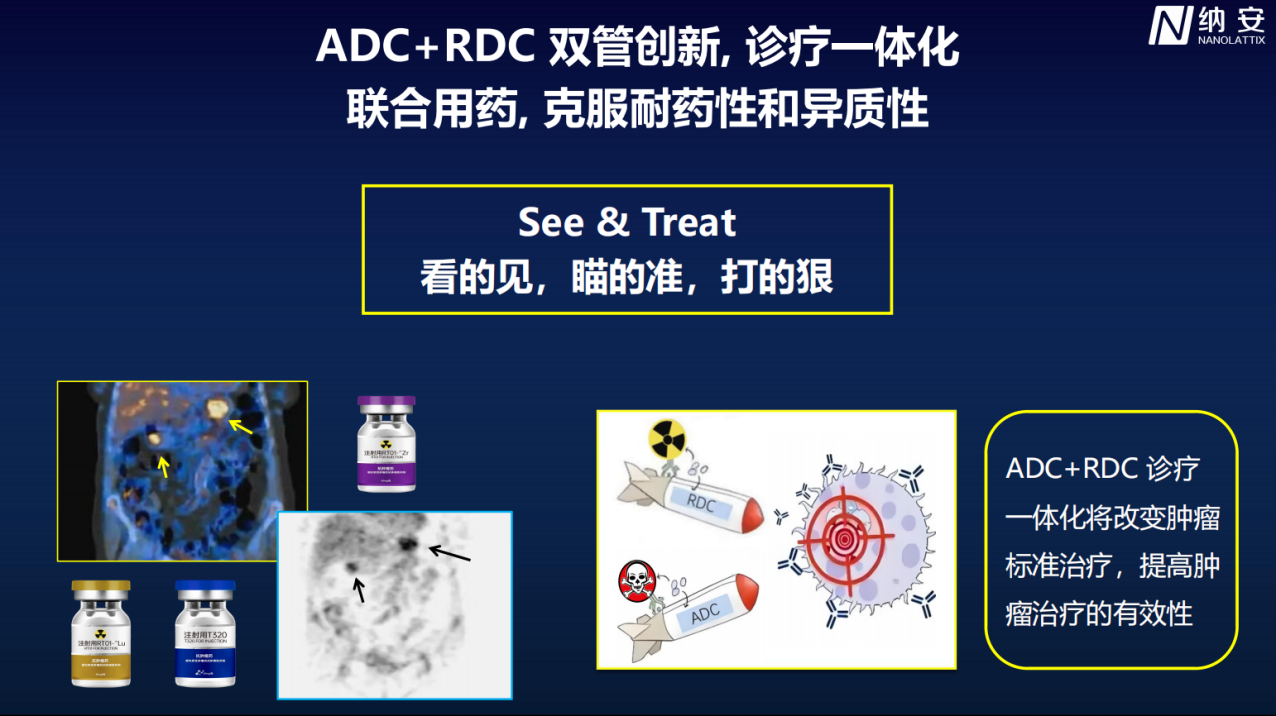
Core Insights - Shanxi Naan Biotechnology Co., Ltd. focuses on developing integrated new drugs for tumor diagnosis and treatment, leveraging its proprietary BioLattix technology platform to create a closed-loop from target discovery to clinical transformation [1][2] Group 1: Company Overview - Founded in 2016 by Dr. Qu Zhican, the company specializes in antibody-drug conjugates (ADC) and radiopharmaceutical-drug conjugates (RDC) [1] - Naan Biotechnology has established over 10 innovative research pipelines and has become a benchmark for biopharmaceutical innovation in resource-rich regions [1] Group 2: Innovative Treatment Paradigm - The company proposes a new paradigm of "integrated diagnosis and treatment" combining ADC and RDC to address high tumor heterogeneity and resistance issues in clinical treatment [1] - This approach enhances therapeutic efficacy by enabling precise delivery of ADC drugs while RDC drugs can target low-expressing tumor cells, overcoming resistance [1] Group 3: Research and Development Progress - The core ADC drug T320 is the first biopharmaceutical class 1 new drug from Shanxi to enter clinical trials, having received clinical trial approvals in China, the U.S., and Australia, with positive early clinical outcomes observed [4] - The RDC drug has shown excellent targeting and tumor suppression rates in preclinical studies, forming the world's first shared antibody integrated diagnosis and treatment combination [4] Group 4: Future Plans and Impact - The company plans to invest over 33 million yuan in R&D in 2024 to support ongoing innovation [4] - Naan Biotechnology aims to push at least one drug for market approval and eight to ten new drugs into clinical research within three years, positioning itself as a global player in tumor precision treatment [4]
我科学家在活体动物中实现时空可控的蛋白质精准降解
Ke Ji Ri Bao· 2026-01-19 00:36
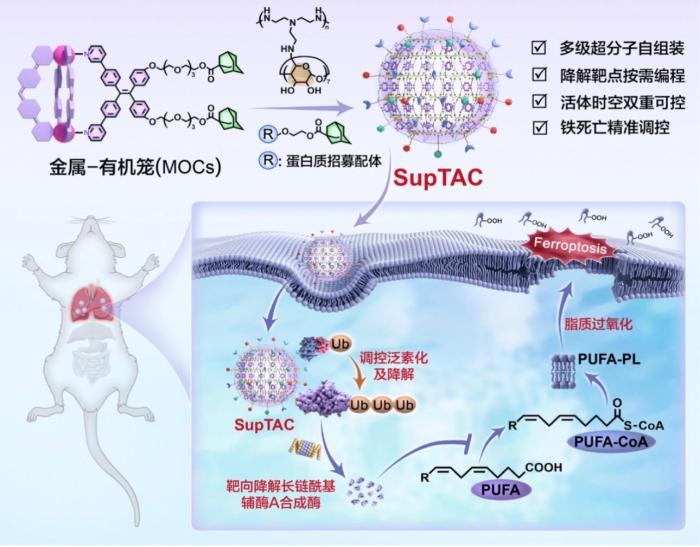
Core Viewpoint - The research team from the Chinese Academy of Sciences has developed a new supramolecular targeted chimeric (SupTAC) that enables precise degradation of pathogenic proteins in vivo, offering a novel tool for drug development and disease treatment [1][2]. Group 1: Research and Development - The SupTAC technology combines supramolecular chemistry with protein degradation techniques, resulting in a stable and flexibly assembled supramolecular nanoparticle [1]. - SupTAC's surface can be equipped with various functional modules, allowing for targeted and controlled protein degradation [1]. Group 2: Applications and Implications - Research indicates that SupTAC demonstrates stable, efficient, and spatiotemporally controllable protein degradation across various animal models, including non-human primates [2]. - This innovation provides a new strategy for precise regulation of protein balance within living organisms and shows significant potential for revealing disease mechanisms and discovering new drug targets [2].
如何精准清除“致病蛋白”?中国科学家创新研发开辟新路径
Zhong Guo Xin Wen Wang· 2026-01-17 03:42
Core Insights - Chinese scientists have developed a novel approach to precisely eliminate "pathogenic proteins" using a supramolecular targeted chimeric system (SupTAC), marking a significant advancement in protein homeostasis regulation and disease treatment research [1][3]. Group 1: Research Breakthrough - The research team led by Wang Ming has successfully created a stable and functionalizable supramolecular nanoparticle through metal-organic cage multi-level self-assembly technology [3]. - This innovation allows for precise regulation of ubiquitination modification and degradation of target proteins, overcoming challenges faced by traditional methods in controlling the timing of protein degradation [3]. Group 2: Applications and Implications - The supramolecular targeted chimeric system exhibits programmable characteristics and spatial organization selectivity, enabling precise protein degradation within specific time windows [3]. - This breakthrough not only provides a new strategy for protein homeostasis regulation in complex biological systems but also shows significant potential in disease mechanism analysis and the discovery of innovative drug targets, paving the way for clinical applications of targeted protein degradation technology [3].
科学家构建“细胞配方库”
Jin Rong Jie· 2026-01-15 23:28
Core Insights - A research team from Lund University in Sweden has made significant advancements in the field of immune cell reprogramming by developing a "cell formula library" [1] - They created a technology platform capable of large-scale screening to identify the "formulas" needed to convert ordinary cells into specific immune cells, which will drive the development of next-generation immunotherapies [1] - This breakthrough offers new approaches for treating various diseases, including cancer and autoimmune disorders [1]