科技金融

Search documents
以挑大梁的实绩实效,为发展大局多作贡献——省委经济工作会议侧记
Xin Hua Ri Bao· 2025-12-22 23:16
Group 1 - The core viewpoint emphasizes the importance of achieving high-quality economic development and the need for strategic planning as Jiangsu transitions from the "14th Five-Year Plan" to the "15th Five-Year Plan" [1][6] - The provincial economy is expected to maintain stability and progress, with a projected GDP exceeding 14 trillion yuan, showcasing resilience and vitality despite external challenges [2][3] - Financial reforms and the development of a technology-finance integration system have significantly supported economic growth, with new loans reaching 2.33 trillion yuan from January to November [3] Group 2 - The province has seen structural improvements, with a rising proportion of high-tech enterprises and a notable increase in foreign investment, indicating stronger market attractiveness [4] - The focus on domestic consumption and international trade has led to significant growth in sectors such as e-commerce and green consumption, contributing to record-high import and export volumes [3][4] - The meeting highlighted the necessity of addressing challenges such as weak domestic demand and external market fluctuations while maintaining a focus on high-quality development [5][6] Group 3 - The "Five Musts" proposed by the central government serve as a guiding framework for achieving high-quality development and navigating economic challenges [7] - The emphasis on enhancing domestic demand and fostering innovation is critical for sustaining economic growth, with local initiatives aimed at boosting specific industries [9][10] - The commitment to green development and the transition to carbon emission controls is set to play a significant role in shaping future economic strategies [11]
科技金融股权投资指数发布
Zhong Guo Jing Ji Wang· 2025-12-22 02:01
三是市场活跃度大幅提升,资金结构优化助力硬科技领域发展。2025年上半年,机构LP(有限合伙人)认 缴出资规模同比增长超50%,已达2024年全年出资额的68%,市场参与度显著提升。资金结构方面,在 国务院办公厅印发的《促进创业投资高质量发展的若干政策措施》等政策引导下,国有资本有望作 为"耐心资本"在服务国家战略、推动产业升级、促进创新创业等方面发挥更大积极作用。(经济日报记 者彭江) 一是市场结构转型成效显著,股权投资向"投早、投小、投长期"加速迈进。募资与退出环境的持续优 化,成为推动这一转型的关键力量。投资结构指数同比增长7.50%,攀升至120.93点的历史高位,凸显 资本对科技创新领域的关注。2024年,私募股权投资中,流向战略性新兴产业的资金占比及科技领域早 期投资(A轮及以前)金额占比均有显著提升。资金供给端同样表现亮眼,2024年,新增备案基金中科技 金融基金规模占比超六成,资金向科技创新领域集聚的态势愈发明显。 二是服务体系建设成效初显,全生命周期金融服务体系为科技企业发展提供了有力支持。覆盖科技型企 业全生命周期的金融服务体系已初见成效,人工智能、大数据等技术深度融入业务全流程,2025 ...
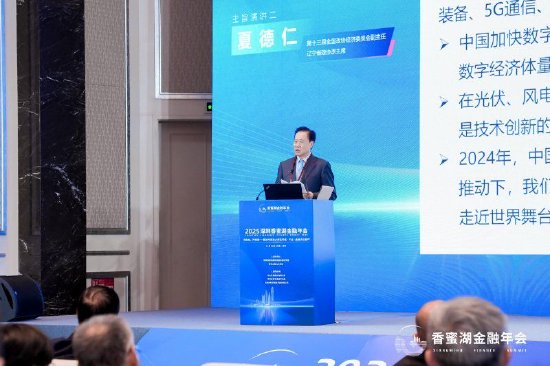
夏德仁:大湾区需加快补齐研发投入短板,以金融创新推动科技产业循环
Xin Lang Cai Jing· 2025-12-21 08:53
Core Viewpoint - The second "Shenzhen Xiangmi Lake Financial Annual Conference" emphasizes the importance of promoting a virtuous cycle among technology, industry, and finance in the Guangdong-Hong Kong-Macao Greater Bay Area as a key agenda for China's development [3][8]. Group 1: Technology-Finance Integration - The integration of technology innovation and industrial innovation is a national strategic priority, with modern finance, especially technology finance, playing a crucial role [3][8]. - Technology finance is not only a funding channel but also a risk-sharing partner for technology and industry, creating a community of shared fate where financial returns are closely linked to technological innovation outcomes [3][8]. Group 2: Recent Progress in Technology Finance - Significant progress has been made in technology finance services, with the special re-lending tool quota increasing to 800 billion yuan, and over one million technology enterprises receiving bank services [4][9]. - As of September this year, the proportion of new technology loans accounted for over 30% of all new loans, with a loan acquisition rate exceeding 50% for technology-based SMEs [4][9]. - The capital market has strengthened support, with nearly 70% of new companies listed on the Shanghai Stock Exchange in the past five years being technology innovation enterprises [4][9]. Group 3: Challenges and Recommendations - The Guangdong R&D investment intensity is projected to be 3.6% in 2024, significantly lower than Beijing's 6.58% and Shanghai's 4.37%, indicating an urgent need to address R&D shortcomings in the Greater Bay Area [4][9]. - Recommendations include improving financial products and services for the entire lifecycle of technology enterprises, developing venture capital funds, and establishing a risk-sharing mechanism involving government, enterprises, and insurance institutions [5][10]. - Encouraging pilot projects in cutting-edge areas such as smart investment advisory, digital currency, and financial AI, while enhancing the "investment-loan linkage" mechanism in commercial banks is also suggested [5][10].

财经聚焦 | 破解科技企业融资痛点 金融“活水”涌向创新高地
Xin Hua She· 2025-12-21 05:02
Group 1 - The article emphasizes the importance of financial support for technology enterprises, highlighting the increasing flow of financial resources towards innovation hubs due to supportive policies [1][2] - Financial institutions are exploring new pathways to improve the financing environment for technology companies, addressing issues such as lack of collateral and valuation difficulties [2][3] - The People's Bank of China has expanded the scale of re-loans for technological innovation and reduced re-loan interest rates, significantly increasing financial support for technology research and development [3][7] Group 2 - Companies like Anhui Zhongke Haoyin Intelligent Technology Co., Ltd. have benefited from innovative financial products such as the "Common Growth Plan," which provides credit loans to support R&D [2][4] - The integration of technology and finance is evident as banks utilize data analytics to enhance credit assessments and streamline loan processes for technology firms [4][5] - Collaborative financing models, combining equity investment, credit funding, and guarantees, have proven effective in supporting the growth of technology startups [6][7] Group 3 - The article notes that the average annual growth rate of scientific and technological loans is projected to reach 27.2% during the 14th Five-Year Plan period, indicating a robust demand for financial support in the tech sector [6][7] - The establishment of a differentiated financial support system for technology innovation is crucial, with various departments working together to enhance the overall financing ecosystem [6][7] - The recent Central Economic Work Conference has reaffirmed the commitment to innovation-driven development, emphasizing the role of financial services in supporting technological advancements [7]
20cm速递|科创创业ETF(588360)涨超0.7%,政策与区域布局成市场关注焦点
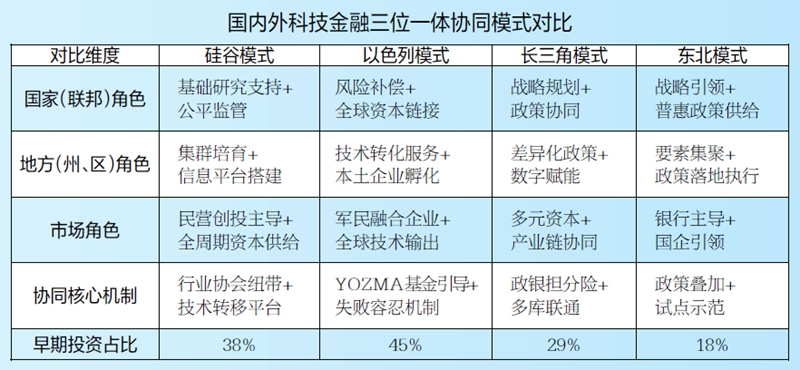
Sou Hu Cai Jing· 2025-12-19 05:23
Group 1 - The technology sector is expected to benefit from policy guidance, with the central economic work conference emphasizing that technological development will be "more entrusted to the market" and focusing on the Beijing-Tianjin-Hebei, Yangtze River Delta, and Guangdong-Hong Kong-Macao regions [1] - Long-term investment in talent development is highlighted, particularly through the promotion of educational and technological talent development programs [1] - The technology sector should pay attention to new demands and employment forms arising from the platform economy, as well as innovations in technology financial services [1] Group 2 - The "Bema Asset" core direction includes technology, especially the trend of AI, which is identified as a key sub-sector in the 14th Five-Year Plan, possessing medium to long-term advantages amid economic transformation and major power competition [1] - The internal structure of the industry may exhibit high rotation characteristics, but the combination of policy support and market mechanisms will enhance the competitiveness of leading enterprises [1] - The Science and Technology Innovation and Entrepreneurship ETF (588360) tracks the Science and Technology Innovation 50 Index (931643), which has a daily fluctuation of 20%, selecting 50 emerging industry stocks with large market capitalization and excellent liquidity from the Science and Technology Innovation Board and the Growth Enterprise Market [1]

四川:用好用足科技创新和技术改造再贷款 推动实施“天府科创保”
Xin Lang Cai Jing· 2025-12-18 05:09
Core Viewpoint - The Sichuan Provincial Government has issued a plan to enhance financial support for technological innovation, aiming to increase R&D investment across society [1] Financial Support for Technological Innovation - The plan emphasizes optimizing the assessment mechanism for state-owned innovation investment funds, allowing a maximum investment loss tolerance of 60% for government-guided and state-owned funds [1] - For funds investing in seed-stage enterprises or future industries, the loss tolerance can be increased to 80%, with a maximum allowance of 100% loss for individual enterprises or projects [1] Encouragement of Investment in Technology Enterprises - The plan encourages equity investment institutions to increase investments in project transformation and technology-based enterprises, with local governments incentivized to reward contributions based on economic performance [1] - A resource pool for potential listed companies will be improved, with localities required to support enterprises in shareholding reform, bond financing, and mergers and acquisitions on a case-by-case basis to promote more companies to go public [1] Support for Small and Medium-sized Technology Enterprises - The plan aims to effectively utilize re-loans for technological innovation and technological transformation, promoting a linkage between innovation credit systems and special guarantee plans to support technology-based SMEs in obtaining bank loans [1] Insurance and Financial Products for Technology Enterprises - The implementation of "Tianfu Sci-tech Insurance" is encouraged, aiming to develop insurance products for technology enterprises and high-level innovation platforms focusing on core technology breakthroughs and technology achievement transformations [1] - The plan also promotes pilot projects for technology enterprise merger loans, comprehensive trials for intellectual property financial ecosystems, and reforms in financial asset investment company equity [1]
协同演进视角下的科技金融赋能
Jin Rong Shi Bao· 2025-12-18 02:12
Core Viewpoint - The Northeast region of China, recognized as the "industrial cradle" of the new China, is strategically positioned to cultivate new productive forces due to its significant educational and scientific resources, including 11.3% of the national scientific and educational resources, 28 national key laboratories, and a talent pool of 2.3 million skilled workers. The 2023 Central Financial Work Conference prioritized "technology finance" as a key focus, providing a fundamental guideline for the Northeast to overcome transformation bottlenecks [1][5]. Theoretical Framework: Three-dimensional Collaborative Evolution - The empowerment of new productive forces through technology finance is a systematic project led by central strategy, implemented by local policies, and responded to by market innovations. The three-dimensional collaborative evolution framework reveals the dynamic adaptation of these three elements throughout the industrial lifecycle, offering a new perspective on understanding the development of technology finance in Northeast China [2][4]. Framework Core Dimensions - Central Government: Provides strategic guidance and institutional supply through top-level design, offering inclusive policies and common technical support, establishing unified national market rules [3]. - Local Government: Creates scenarios and gathers resources through differentiated policies, building risk-sharing mechanisms and information platforms to promote the geographical concentration of financial and technological resources [3]. - Market Entities: Respond to policy signals through technological innovation and product iteration, achieving the industrialization of technological achievements, with capital completing full-cycle allocation driven by profit motives [3]. Stage Adaptability Collaborative Characteristics - The interaction among the three entities is dynamic, evolving through the "startup phase, growth phase, and maturity phase" of new productive force cultivation, forming a closed-loop collaborative system of "strategy-execution-feedback" [4]. Practical Outcomes: Breakthroughs and Data Evidence in Northeast Technology Finance - The Northeast region has begun to form a collaborative effect based on the three-dimensional framework, achieving substantial progress in policy systems, financing channels, and ecological cultivation, laying a solid foundation for the cultivation of new productive forces [5]. Central-Local Policy Collaboration - The central top-level design and local characteristic policies effectively respond to each other, with the central government implementing targeted policies such as technology innovation re-loans and venture capital tax incentives, while local governments establish a policy system that integrates provincial and municipal characteristics [6]. Local-Market Factor Collaboration - Local governments are building platforms to promote resource aggregation, with market-oriented financing channels continuously expanding. The loan balance for technology enterprises in Northeast China increased from 420 billion yuan in 2021 to 680 billion yuan in the first half of 2024, with an annual growth rate of 17.8% [7]. Ecological Collaboration Cultivation - Local governments are improving ecological infrastructure, significantly enhancing market entity participation. Information platforms and risk-sharing mechanisms are being established, with notable increases in financing events and amounts raised [8]. Core Bottlenecks: Deep Deconstruction of Collaborative Imbalance - Despite progress, Northeast technology finance faces three imbalances: ineffective central policy transmission, insufficient local mechanism innovation, and limited market entity vitality, leading to inefficient matching of financial resources and innovation demands [9]. Central-Local Collaboration Imbalance - There is a mismatch between central inclusive policies and local actual needs, with policy transmission efficiency being insufficient. The average capital adequacy ratio of provincial policy guarantee institutions in Northeast China is only 12.3%, significantly lower than the 18.7% in the Yangtze River Delta [10]. Local-Market Collaboration Imbalance - Local government platforms are disconnected from market demands, with issues of information asymmetry and lack of risk-sharing. The interconnectivity rate of enterprise databases in Northeast China is below 30%, compared to 85% in Suzhou [11]. Market-Central Feedback Imbalance - The innovative demands of market entities lack effective feedback mechanisms to policy optimization, resulting in a lag in policy responses to grassroots practices. The proportion of state-owned venture capital in Northeast China is 68%, which is 23 percentage points higher than in the Yangtze River Delta [12]. International Comparison: Collaborative Models and Experience Extraction - Global innovation hubs have optimized their three-dimensional collaborative mechanisms, forming technology finance ecosystems that adapt to the laws of technological innovation, providing important references for Northeast China [14]. Silicon Valley: Market-Driven Collaborative Ecology - Silicon Valley's model emphasizes private venture capital, with the federal government supporting basic research and local governments focusing on ecological building, while market entities lead capital supply [15][16]. Israel: Government-Guided Collaborative Model - Israel's model features national risk coverage, local technology transfer, and market global expansion, breaking down capital entry barriers and focusing on the last mile of technology transfer [17]. Yangtze River Delta: Government-Market Linked Collaborative Sample - The Yangtze River Delta constructs a model of central strategic guidance, local digital empowerment, and market multi-dimensional collaboration, adapting to regional industrial characteristics [18]. Quantitative Assessment: Empirical Evaluation of Policy Collaboration Effects - The PMC index model evaluates the collaborative quality of Northeast technology finance policies, revealing that while the average score is 6.7 (out of 10), there are significant shortcomings in collaboration [19][20]. Path to Resolution: Innovative Solutions for Three-dimensional Collaborative Empowerment - To address the bottlenecks in Northeast technology finance, it is essential to build collaborative mechanisms from three dimensions: central-local transmission, local-market connection, and market-central feedback [21][22][23]. Conclusion - The core of empowering Northeast new productive forces through technology finance lies in achieving collaborative evolution among the central government, local governments, and market entities. While a preliminary framework for policy collaboration has been established, challenges remain in transmission, connection, and feedback. Systematic innovation is required to enhance the collaborative chain, ultimately transforming the region's rich scientific and educational resources into productive advantages [26].
多地发布“十五五”规划建议 区域经济发展将更注重优化金融资源配置
Zhong Guo Zheng Quan Bao· 2025-12-16 22:19
Group 1: Core Insights - Multiple provinces have released local "14th Five-Year" planning suggestions focusing on technology finance, promoting quality enterprise listings, and developing green finance as high-frequency terms [1] - Experts believe these initiatives address the actual needs of enterprises for technological innovation and green transformation, optimizing financial resource allocation to inject financial vitality into regional economic development during the "14th Five-Year" period [1] Group 2: Technology Finance Initiatives - Various regions emphasize leveraging government investment guiding funds to enhance technology finance, with Jiangsu and Shandong highlighting the role of strategic emerging industry funds [2] - Some areas are exploring risk-sharing mechanisms due to the long return cycles and high risks associated with emerging industries, as seen in Heilongjiang's proposal for a future industry investment growth and risk-sharing mechanism [2] - The integration of diverse financial tools can effectively match the financing needs of enterprises at different development stages, promoting the optimization of financial resource allocation [3] Group 3: Supporting Quality Enterprise Listings - Local governments are deploying strategies to support the quality and quantity of listed companies, with initiatives in Guizhou, Henan, and Chongqing focusing on nurturing mechanisms and integrated service systems [4] - Emphasis is placed on improving the quality of listed companies, with suggestions for establishing quality assessment mechanisms and dynamic management to ensure timely adjustments [4] - Recommendations for mergers and acquisitions include implementing pre-review processes and performance evaluation mechanisms post-merger to ensure industry logic and valuation rationality [4] Group 4: Development of Green Finance - Energy-rich provinces like Inner Mongolia, Shanxi, and Qinghai are proposing the development of green finance, with innovative financial products and services based on ecological product values [5] - Green finance is seen as a means to reshape local government industrial policy preferences and enterprise project selection, promoting green investment expansion and restructuring regional growth models [5][6] - Future efforts should focus on unifying green standards, enhancing information disclosure, activating long-term capital, and preventing risks in green finance practices [6]
区域经济发展将更注重优化金融资源配置
Zhong Guo Zheng Quan Bao· 2025-12-16 20:19
Group 1 - The article highlights the emphasis on technology finance, quality enterprise listings, and green finance in the "14th Five-Year Plan" proposals from various provinces in China, aiming to optimize financial resource allocation for regional economic development [1][2] - Multiple regions are focusing on leveraging government investment funds to stimulate technology finance, with specific initiatives such as Jiangsu's strategic emerging industry fund and Shaanxi's establishment of a comprehensive technology finance service platform [1][2] - The establishment of risk-sharing mechanisms is being explored in some areas, such as Heilongjiang's proposal to create a future industry investment growth and risk-sharing mechanism [1] Group 2 - Regions are also working on improving financial service mechanisms to support technology enterprises, with initiatives like Sichuan's enhancement of the technology finance service system and Henan's development of a government-bank guarantee linkage mechanism [2] - The article discusses the importance of nurturing quality enterprises for listing, with various provinces implementing measures to enhance the listing cultivation system and improve the quality of listed companies [2][3] - The focus is shifting from quantity expansion to quality improvement in enterprise listings, with suggestions for establishing quality assessment mechanisms and dynamic management of listings [3] Group 3 - The development of green finance is being prioritized in energy-rich provinces, with initiatives such as Qinghai's innovation in green financial products and Inner Mongolia's creation of a carbon peak and neutrality financial service zone [3][4] - The article emphasizes the need for institutional innovation in regional economic transformation through green finance, including the establishment of unified green standards and robust information disclosure mechanisms [4] - Concerns about "greenwashing" and the importance of regulatory frameworks for green financial products are highlighted, stressing the need for credible identification and verification mechanisms [4]
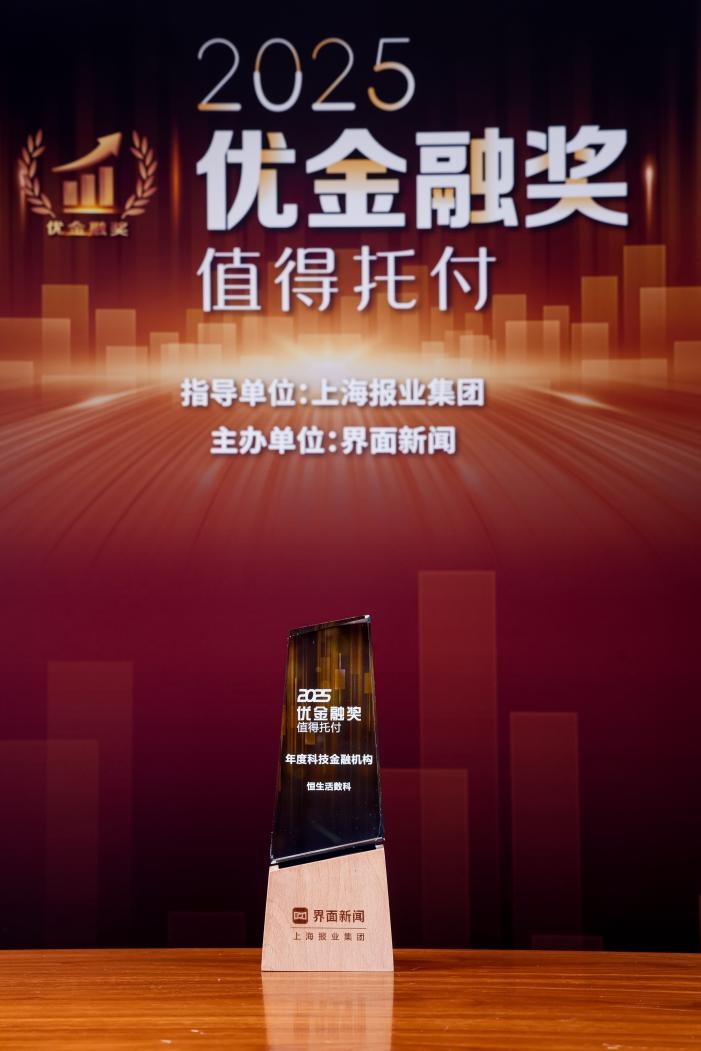
恒生活数科荣膺2025“优金融奖”年度科技金融机构
Cai Fu Zai Xian· 2025-12-16 09:21
12月16日,由上海报业集团指导,智通财经主办的2025第八届界面财经年会在上海盛大举行,本次大会 以"拥抱变革·破局共生"为核心命题,共同探寻中国经济的韧性根基、转型路径与增长新范式,备受瞩 目的2025"优金融奖"也同期揭晓。作为大数据与人工智能双轮驱动的科技金融服务平台,恒生活数科凭 借其在科技金融领域的创新成果与技术优势,与工银瑞信基金管理有限公司和金融壹账通共同荣获 2025"优金融奖"年度科技金融机构殊荣。 恒生活数科荣膺2025"优金融奖"年度科技金融机构 "本次获奖是对我们科技金融服务能力的充分认可,将激励我们通过技术成果转化持续为金融消费者带 来普惠便捷的数智生活新体验。"恒生活数科负责人表示,作为值得托付的科技金融服务机构,未来将 继续聚焦用科技创新诠释务实精神与创新活力,推动"科技+金融"融合发展,助力国家高水平科技自立 自强。 作为科技金融领域的深耕者,恒生活数科本次荣膺2025"优金融奖"年度科技金融机构重磅奖项,与其将 核心技术研发与场景应用作为发展根基的理念息息相关。近年来,恒生活数科将金融服务深度嵌入民生 场景,让技术成果转化为普惠便捷的数智生活服务体验。同时,以数据安全技术筑 ...