
罐头食品

Search documents
研判2025!中国水果罐头行业产业链、市场规模、进出口及发展前景展望:内销动力不足,行业出海势头强劲[图]
Chan Ye Xin Xi Wang· 2025-07-02 01:12
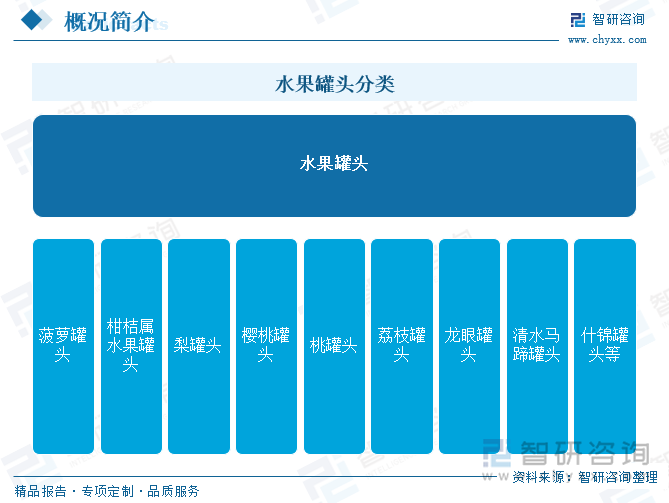
Industry Overview - The canned fruit industry in China is experiencing steady growth, projected to reach approximately 10.3 billion yuan by 2024, driven by increasing consumer demand and expansion into overseas markets [1][8] - Canned fruits are processed from fresh fruits through various methods to extend shelf life, and they include a variety of products such as pineapple, citrus, pear, cherry, peach, lychee, longan, water chestnut, and mixed fruit [1][4] Current Industry Status - China's per capita consumption of canned fruits is only 1 kg, significantly lower than the 90 kg in the US, 50 kg in Western Europe, and 23 kg in Japan, indicating a large market potential [6] - The market size for canned fruits in China decreased from 10.08 billion yuan in 2017 to 9.18 billion yuan in 2021, but rebounded to 9.497 billion yuan in 2022 due to increased home stocking demand [8] Import and Export - In 2024, China's canned fruit exports reached 640,900 tons, a year-on-year increase of 12%, with a total export value of 822 million USD, up 5% [10] - The main export products include canned oranges, peaches, pears, lychees, cherries, pineapples, longans, and mixed fruit, with canned oranges accounting for 41% of total exports [12] Competitive Landscape - The canned fruit industry has low entry barriers with over 3,000 companies, predominantly small to medium-sized enterprises, leading to a fragmented market [16] - Major players include traditional food manufacturers and emerging snack brands, with top companies in the fruit and vegetable processing market being Zhenxin, Huanlejia, Linjiapuzi, Xiduo, and Zhenpengda [18][19] Development Trends - The market is expected to grow amid fluctuations, driven by both export and domestic demand, with a projected total export volume of 2.8507 million tons for canned fruits in 2024 [23] - There is a noticeable trend towards product innovation and health-oriented offerings, with companies introducing low-sugar, additive-free, and functional products to meet consumer health demands [24] - The competitive landscape is evolving, with leading companies leveraging brand strength, technology, and distribution channels to increase market share, while smaller firms may face challenges due to rising labor costs and environmental regulations [25]

研判2025!中国食用菌罐头行业产业链、市场规模、进出口情况、竞争格局及发展趋势分析:市场格局较为分散,行业发展前景广阔[图]
Chan Ye Xin Xi Wang· 2025-06-26 01:12
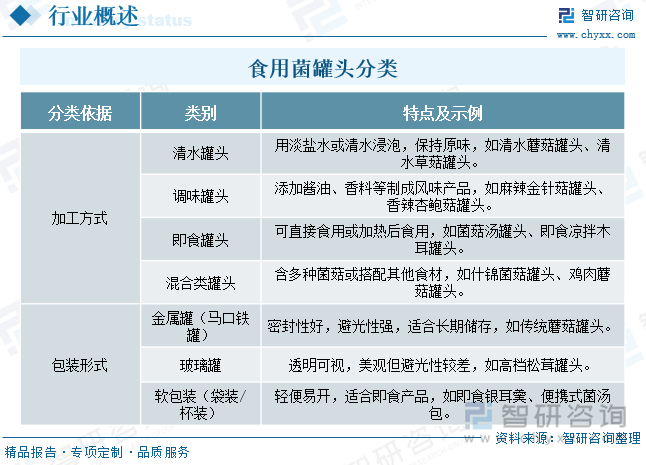
Core Insights - The canned mushroom industry in China has rapidly developed, becoming an important part of the food industry, driven by modern lifestyles and health-conscious eating habits [1][10] - In 2023, China's total mushroom production exceeded 40 million tons, accounting for over 75% of global production, providing ample quality raw materials for canning [1][10] - The market size of the canned mushroom industry reached 9.5 billion yuan in 2023, with a year-on-year growth of 11.8%, and is expected to surpass 12 billion yuan by 2025, maintaining a stable compound annual growth rate of around 12% [1][10] Industry Overview - Canned mushrooms are made from high-quality fresh mushrooms, processed through scientific pre-treatment and advanced canning technology, retaining nutritional value and flavor while offering long shelf life and convenience [2][4] - The industry has evolved from experimental production in the 1950s to becoming a global leader in production and export, with a complete industrial chain established [4][5] Market Dynamics - The industry is characterized by a "large industry, small enterprises" structure, with the top ten companies holding less than 30% market share, indicating significant room for consolidation [18] - Major companies like Hualu Biological, Zhongxing Mushroom Industry, and Xue Rong Biological lead the market through capital, technology, and brand advantages [18] Development Trends - The industry is moving towards health-oriented and functional products, with innovations such as high-protein and low-sodium options emerging to meet consumer demands [20][21] - Smart production technologies are being adopted to enhance efficiency and safety, including ultra-high pressure sterilization and AI quality monitoring [22] - Sales channels are diversifying, with a rise in cross-border e-commerce and new retail models, allowing for better access to international markets [23][24] - The internationalization of the industry is increasing, with exports expanding to countries along the "Belt and Road" initiative, creating new opportunities for growth [24]


欢乐家(300997) - 2025年5月27日投资者关系活动记录表(2025-011)
2025-05-28 04:36
Group 1: Company Strategy and Market Development - The company is deepening its channel diversification strategy, actively embracing emerging channels such as snack specialty chains, achieving revenue of CNY 115 million in 2024 from these channels [2] - In Q1 2025, the company generated revenue of CNY 46.4462 million from snack specialty chains and plans to continue expanding this channel with personalized and higher value-added products [2] - The company is focusing on high-quality canned fruit products, introducing new variations such as reduced-sugar and fruit juice canned products to meet diverse consumer needs [3] Group 2: Product Development and Supply Chain - The company sources fruit raw materials primarily from Shandong and Hubei, with procurement prices being market-driven; in 2024, peach procurement prices decreased by over 30% due to a bumper harvest [3] - The company is expanding its coconut water product line, which includes new offerings like coconut water drinks, although these products currently contribute limited revenue [3] - The procurement price for coconut raw materials has increased due to supply-demand factors, particularly for products sourced from Southeast Asia [3] Group 3: Sales and Marketing - The company primarily relies on offline sales but recognizes the importance of online channels for brand promotion and development [3] - As of the end of 2024, the company had 2,236 distributors, with 65.07% located in central, southwestern, and eastern China, which collectively generated CNY 1.225 billion in revenue, accounting for 66.05% of total revenue [4] - The company plans to optimize its marketing strategies and expense structure in 2025, tailoring approaches based on market conditions [4] Group 4: Management Changes and Corporate Governance - The company has appointed a new president, Li Zihao, following the resignation of the previous president, Li Xing, who remains as chairman [4] - The board has also appointed a new vice president, Lv Jianliang, to oversee marketing, bringing extensive experience from previous roles in fast-moving consumer goods companies [4] - The company has not yet implemented an equity incentive plan but has disclosed a profit distribution plan for 2024, distributing CNY 125 million in cash dividends [5]
欢乐家:今年继续贯彻水果罐头和椰子汁双驱动的发展战略,有序推进椰子水系列产品
Cai Jing Wang· 2025-05-13 03:44
Core Insights - The company is enhancing its channel diversification strategy to adapt to changing consumer demands and sales channels, particularly focusing on emerging snack specialty chains [1] - The company reported significant revenue from snack specialty channels, achieving 115 million yuan in revenue and 46.4462 million yuan in the first quarter of 2025 [1] - The company has a strong presence in central, southwestern, and eastern China, with these regions accounting for 66.05% of total revenue [1] Group 1 - The company plans to continue optimizing existing sales points and expanding into the catering channel to increase product exposure [2] - The company aims to deepen its channel diversification and brand promotion, focusing on coconut juice and fruit canned products while enhancing brand vitality [2] - The company will advance its dual-driven development strategy for fruit canned goods and coconut juice, while also progressing its coconut processing project in Vietnam [2] Group 2 - The company is committed to improving supply chain management to enhance responsiveness and efficiency [2]
欢乐家(300997) - 2025年5月12日投资者关系活动记录表(2025-010)
2025-05-12 09:52
Group 1: Company Progress and Strategy - The company has deepened its channel diversification strategy, entering snack specialty chains, achieving revenue of 1.15 million CNY in 2024 and 46.44 million CNY in Q1 2025 from this channel [2][4] - The company plans to enhance product R&D to offer more personalized and higher value-added products [2][4] Group 2: Management Changes - Mr. Li Xing resigned as president but remains chairman and strategic committee convener; Mr. Li Zihao has been appointed as the new president [3][4] - Mr. Lv Jianliang has been appointed as vice president, responsible for marketing, bringing extensive experience from previous roles in fast-moving consumer goods [3][4] Group 3: Product Development Plans - The company focuses on high-quality canned fruit products, introducing smaller, portable packaging and reduced-sugar options to meet diverse consumer needs [3][4] - Coconut water products are being developed to expand the company's offerings in the ready-to-drink market, with plans for new product categories [3][4] Group 4: Market Position and Sales Strategy - The company has a national layout with factories in multiple provinces, leveraging regional fruit characteristics to maintain a competitive edge [4][5] - In 2024, the company had 2,236 distributors, with 65.07% located in central, southwestern, and eastern China, generating 12.25 billion CNY in revenue, accounting for 66.05% of total revenue [4][5] Group 5: Raw Material Costs and Procurement - The procurement price of peach raw materials decreased by over 30% in 2024 due to a bountiful harvest, while orange prices increased slightly due to lower production [5] - Coconut water and fresh coconut juice are sourced from Southeast Asia, with procurement prices rising due to supply-demand factors [5] Group 6: Sales Strategy and Incentives - The company will continue to refine its sales strategies in 2025, optimizing marketing expenses based on market conditions [5] - Currently, there is no equity incentive plan in place [5]
从英文标签到国潮包装:一家外贸企业的本土化突围
Yang Shi Wang· 2025-05-12 03:46
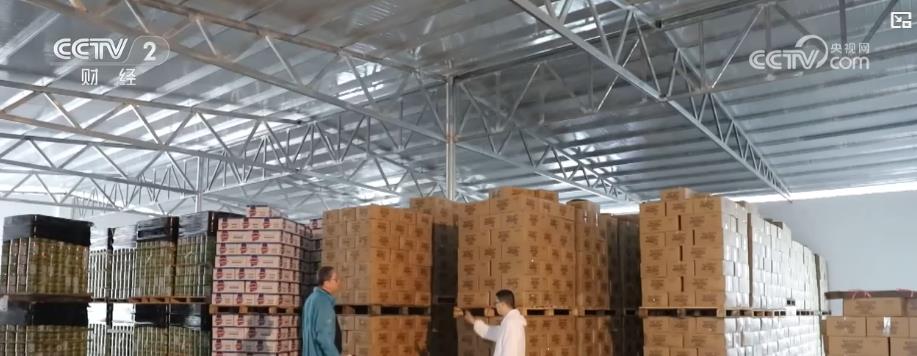
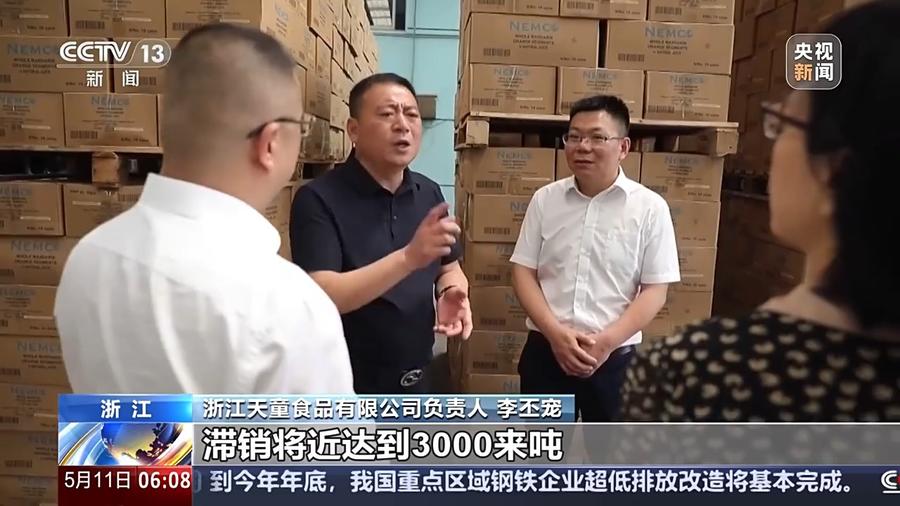
Group 1 - The core issue faced by foreign trade companies in China is the pressure from the U.S. tariff policies, leading to significant challenges in maintaining export operations [1] - A traditional canned food company in Quzhou, Zhejiang, experienced a complete halt in its foreign trade production line due to a 50% reliance on exports to Europe and the U.S., resulting in order cancellations [1][3] - The company had previously seen an increase in orders after passing the U.S. FDA inspection, but the imposition of tariffs led to a backlog of products that could not be sold [3] Group 2 - Local government initiatives have facilitated connections between foreign trade companies and domestic sales channels, providing a potential solution to the crisis [5] - The canned food company successfully negotiated to place its products in over 130 convenience stores across Zhejiang province, despite initial challenges with packaging not aligning with local consumer preferences [5] - Sales strategies were adjusted, including packaging modifications and promotional pricing, leading to over 3,000 cans sold within nine days of launching in stores, with peak daily sales exceeding 500 cans [6] Group 3 - The company is actively transitioning to local markets, reducing inventory of English-labeled products and introducing new domestic packaging designs [6] - The canned products have also been integrated into local government canteens and various supermarkets, indicating a successful pivot to domestic sales channels [6]
企业加速“本土赛道”突围打造“国民爆款” 外贸品变身内销“香饽饽”
Yang Shi Wang· 2025-05-11 03:04
Core Viewpoint - The article highlights the challenges faced by a traditional canned food company in China due to increased tariffs imposed by the U.S., which has led to a significant decline in exports. The company has successfully pivoted to domestic sales with the help of local government and e-commerce platforms, increasing its sales from 70 cans per day to 500 cans per day. Group 1: Challenges Faced - The company, which exports 50% of its products to Europe and the U.S., has experienced order cancellations and production line shutdowns due to tariff increases [1][3] - The company faced a severe inventory backlog and cash flow issues, prompting a search for alternative sales channels [3][5] Group 2: Government and Platform Support - Local government facilitated connections that allowed the company to explore domestic sales opportunities [3][5] - The company collaborated with over 130 convenience stores in Zhejiang province to sell its products domestically [5][12] Group 3: Adaptation Strategies - The company successfully adapted its products for the domestic market by changing labels and packaging, although initial sales faced challenges due to consumer preferences [6][10] - Adjustments in marketing strategies, such as downsizing packaging and creating promotional offers, helped the company transition from international to domestic sales [10][14] Group 4: Future Prospects - The company is now focusing on developing new products tailored for the domestic market while also exploring Southeast Asian markets [10][14] - E-commerce platforms like JD.com and Taobao are actively supporting the transition of export products to domestic sales, with significant procurement plans in place [12]
外贸滞销品变身内销“香饽饽”,罐头企业如何实现逆袭?
Qi Lu Wan Bao· 2025-05-11 00:35
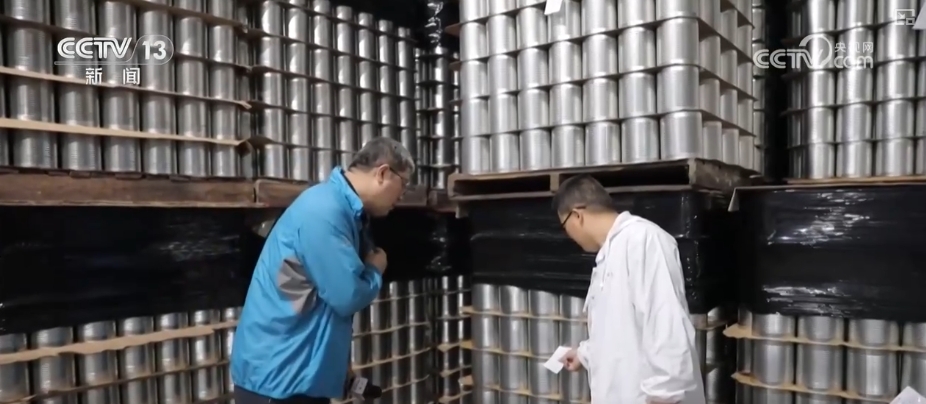
转自:央视新闻 自美国乱挥关税大棒以来,让不少依赖出口的中国企业遭遇严峻挑战。浙江衢州开化的一家老牌罐头企业,50%的产品出口欧 美国家,因关税激增遭订单停发,外贸生产线全面停滞,甚至连前期扩建产能的设备款、农户原料款都面临断付危机。 在这场考验中,这家有着20多年外贸经验的企业,如何在政府、平台与自身的三重发力下,实现从日销70罐到500罐的逆袭,让 外贸滞销品变身内销"香饽饽"? 一家罐头企业的转型记 在浙江天童食品有限公司库房里,记者看到堆积了不少英文包装的罐头产品,这些原本都是即将运往美国的货物。 企业负责人告诉记者,去年企业刚刚通过美国食品药物管理局的验厂,美国客户的订单增加了不少,原本以为外贸业务能实现 跨越式发展,没想到美国滥施关税,而导致大量产品滞销。 浙江天童食品有限公司负责人 李丕宠:一开始加到10%,到后来一下子就猛涨到145%,那个时候我们真的是傻眼了。下单的 货,客户提出要求就不发货,他说这样货发过去我们也无法承受。滞销将近3000来吨,价值2000多万元。 多方协同搭建"内销高速路" 千万级库存积压、产线停摆、资金链告急——当企业负责人一筹莫展时,当地政府的牵线搭桥,让企业看到了转 ...
欢乐家(300997):25年主动求变 销售端新赋能有望逐步推动渠道变革
Xin Lang Cai Jing· 2025-04-29 02:53
Core Viewpoint - The company reported a significant decline in revenue and net profit for Q1 2025, attributed to a challenging consumer environment and internal channel adjustments [1][2]. Financial Performance - Q1 2025 revenue was 449 million yuan, down 18.52% year-on-year, with a net profit attributable to shareholders of 34 million yuan, down 58.27% year-on-year [1]. - The gross margin and net profit margin for Q1 2025 were 31.38% and 7.63%, respectively, both showing a decline of 7.32 and 7.27 percentage points year-on-year [2]. - The company experienced a net cash flow from operating activities of -67.71 million yuan, reflecting a decrease due to timing differences in procurement payments and increased prepayments for coconut raw materials [2]. Product Performance - Revenue from coconut juice beverage products was 228 million yuan, down 14.6% year-on-year, while revenue from canned fruit products was 155 million yuan, down 25.5% year-on-year [1]. - The decline in revenue for both coconut and canned products was primarily influenced by the overall consumer environment and the company's channel adjustments [1]. Management Changes - The company appointed Mr. Lv Jianliang as Vice President, who has extensive experience in fast-moving consumer goods sales, indicating a strategic focus on channel reform [3]. - The company aims to implement tailored channel strategies based on market conditions and enhance its marketing organization and performance systems [3]. Future Outlook - The company forecasts revenues of 2.022 billion yuan, 2.272 billion yuan, and 2.539 billion yuan for 2025-2027, representing year-on-year growth rates of 9.03%, 12.35%, and 11.76% respectively [4]. - Expected net profits for the same period are projected at 157 million yuan, 187 million yuan, and 220 million yuan, with corresponding year-on-year growth rates of 6.46%, 18.94%, and 17.99% [4].
欢乐家(300997) - 2025年4月28日投资者关系活动记录表(2025-009)
2025-04-28 10:26
| 等方面带来新的推动力,但整体团队磨合仍需一定时间。 | | --- | | 3. 公司销售费用投入情况? | | 2025年第一季度公司销售费用金额同比和环比均有 | | 所下降,公司将继续进行渠道精耕和精细化管理,根据不 | | 同市场情况制定不同的销售策略,结合公司战略及销售 | | 规划更有针对性地进行投入,在费用投放和费用结构上 | | 也会进行一定的优化和调整。 | | 面对市场挑战,公司将以"主动求变"的姿态,聚焦 | | 水果罐头+椰基饮料赛道,持续创新,寻求新动能。加强 | | 品类创新,打造差异化产品矩阵,因地制宜拟定区域政 | | 策,提高产品在消费者面前的曝光度,促进产品销售。对 | | 于体现产品质价比的渠道,公司也会进行接触和开拓。 | | 4. 公司水果罐头和椰子水产品的发展规划? | | 公司坚持高品质的罐头产品,对水果罐头产品研发 | | 思路主要是在便携、休闲化和配料多元化的小包装罐头 | | 产品,同时随着公司多元化渠道的开拓,希望在该渠道巩 | | 固公司水果罐头产品优势,近期也推出了减糖版等不同 | | 配料的水果罐头产品,以满足不同消费者的需求。同时, | | 在 ...