
锂盐

Search documents
天华新能开启港股IPO!
起点锂电· 2026-01-22 10:53
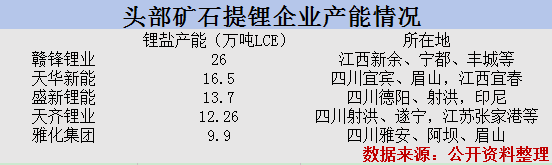
Core Viewpoint - Tianhua New Energy is planning to issue H shares and list on the Hong Kong Stock Exchange to accelerate its international strategy and enhance its overseas financing capabilities [2][18]. Group 1: Company Overview - Tianhua New Energy, formerly known as Tianhua Chaojing, has rapidly developed its lithium salt business, leading to its name change [5]. - The company has a significant focus on lithium battery materials, with 88.08% of its revenue coming from this segment as of the first half of 2025 [7]. - The company's lithium salt production capacity is concentrated in Sichuan and Jiangxi, totaling 16.5 million tons, positioning it among the top tier in the industry [8]. Group 2: Market Context - The current market conditions are favorable for listing, as lithium prices have rebounded significantly since mid-2025, with increases of over 160% from their lows [19]. - H shares of lithium companies have outperformed A shares, with Ganfeng Lithium's H shares rising 214.4% compared to 108.9% for A shares [20]. - The A/H premium for Ganfeng Lithium has decreased to 1.19 times, nearing historical lows, indicating a diminishing premium for A shares over H shares [20][21]. Group 3: Strategic Moves - Tianhua New Energy aims to increase its lithium salt production capacity to 250,000 to 260,000 tons per year based on market demand [13]. - The company has established a partnership with CATL, which is expected to increase the scale of processing services provided to CATL in the future [14]. - The company is also exploring upstream lithium resources but faces challenges in securing quality lithium resources, which affects its cost structure compared to integrated lithium salt companies [9][12].


“联姻”宁德时代 天华新能冲刺港股
2 1 Shi Ji Jing Ji Bao Dao· 2026-01-22 09:19
Core Viewpoint - Tianhua New Energy is initiating its Hong Kong listing plan shortly after strategic investment from CATL, aiming to enhance its international presence and capital capabilities in the lithium industry [1][2][4]. Group 1: Company Overview - Tianhua New Energy, formerly known as Tianhua Super Clean, is a major lithium salt producer in China, with a combined production capacity of 165,000 tons of lithium hydroxide and lithium carbonate [3][8]. - The company has shifted its focus to lithium battery materials, with over 88% of its revenue coming from this segment as of the first half of 2025 [10]. Group 2: Market Context - The timing for the Hong Kong listing is favorable, as the lithium industry has seen a rebound since the second half of 2025, with companies like Ganfeng Lithium and Tianqi Lithium experiencing significant stock price increases [4][21]. - The A/H premium for lithium companies has been decreasing, with Ganfeng Lithium's A/H premium dropping from approximately 1.85 times to 1.19 times as of January 21, 2026 [5][28]. Group 3: Production Capacity and Challenges - Tianhua New Energy's lithium salt production capacity is concentrated in Yibin, Meishan, and Yichun, with notable capacities of 75,000 tons/year and 60,000 tons/year for battery-grade lithium hydroxide [10][11]. - The company faces challenges in securing high-quality lithium resources, relying heavily on imported lithium concentrate, which affects its cost structure compared to integrated lithium salt producers [12][16]. Group 4: Strategic Partnerships and Financials - The company has established a significant partnership with CATL, with expected sales and processing service revenues reaching approximately 1.5 billion yuan in 2025 [20]. - Tianhua New Energy plans to increase its lithium salt production capacity to 250,000-260,000 tons/year in response to market demand [17].


盐湖股份:公司控股子公司蓝科锂业现碳酸锂产能为4万吨
Mei Ri Jing Ji Xin Wen· 2026-01-21 00:59
Group 1 - The core inquiry from investors is whether Blue Lithium Industry is undergoing technological upgrades to add 5,000 tons of capacity [1] - Salt Lake Co., Ltd. confirmed that its subsidiary, Blue Lithium Industry, currently has a lithium carbonate production capacity of 40,000 tons [1] - The company indicated that the existing production facilities at Blue Lithium Industry can be further enhanced and optimized based on the operational status of its newly established 40,000-ton lithium salt integrated project [1]

碳酸锂:区间震荡强博弈格局延续,成材:重心下移偏弱运行
Hua Bao Qi Huo· 2026-01-15 03:09
Report Summary 1. Industry Investment Rating No investment rating was provided in the report. 2. Core View The industry will experience range - bound oscillations, with the strong game - playing pattern continuing. Attention should be focused on marginal changes in costs, supply, and demand [4]. 3. Summary by Related Content Market Performance - Yesterday, the main lithium carbonate contract showed wide - range oscillations, with prices fluctuating between 155,000 yuan/ton and 173,400 yuan/ton, closing at 161,940 yuan/ton. Trading volume slightly shrank to 589,000 lots, and open interest slightly decreased to 453,000 lots. The net short position of the main force in the capital market continued, and the long - short ratio decreased by 3.8% month - on - month. Market sentiment was cautious, and the number of warehouse receipts increased to 27,200 lots. The average price of SMM electric carbon was 163,000 yuan/ton, and the basis of the main contract was 1,060 yuan/ton [3]. - In terms of market transactions, upstream lithium salt manufacturers preferentially fulfilled long - term agreements, and their willingness to sell spot orders was low, with some manufacturers quoting high prices. The proportion of spot purchases by downstream material manufacturers increased during long - term agreement negotiations. The weakening of the afternoon market led to a recovery in inquiry and transactions, and overall transactions moderately increased [3]. Fundamental Analysis - **Supply side**: Last week, raw material prices increased by more than 9% month - on - month, continuing the upward trend and strengthening cost support. The total weekly operating rate of SMM lithium carbonate decreased by 1.05% month - on - month. The operating rates of spodumene and salt lakes decreased slightly, while those of lithium mica and recycling increased slightly. SMM's total output increased by 0.5% month - on - month, and production capacity was further released [4]. - **Demand side**: There was a significant structural differentiation. Last week, the production of SMM lithium iron phosphate and ternary materials decreased by 3.3% and 1.3% month - on - month respectively, with inventory destocking. The production of SMM power cells slightly decreased, while SMM new energy vehicle sales and penetration reached new highs. Slight growth in the production scheduling of energy - storage cells supported demand [4]. - **Inventory**: Last week, the weekly inventory of the SMM sample increased by 0.3% month - on - month, showing the first sign of inventory accumulation. The total inventory days slightly increased to 28 days [4]. Policy Impact - In 2026, subsidies for car trade - ins, the Fed's interest rate cuts, the industrial plan for Qinghai salt lakes, the key points of the "15th Five - Year Plan" for energy storage, and a series of arrangements from the Central Economic Work Conference jointly provided favorable support for long - term supply - demand balance [4]. - On January 4th, the State Council's "Solid Waste Comprehensive Management Action Plan" strengthened constraints on the supply side, which may exacerbate short - term supply shortages. On January 9th, the two departments announced a reduction in the battery export tax - refund policy, which may trigger short - term export rush demand [4].
藏格矿业预盈逾37亿股价一年涨244% “现金奶牛”巨龙铜业贡献收益26.8亿
Chang Jiang Shang Bao· 2026-01-15 00:01
Core Viewpoint - Cangge Mining (000408.SZ) is expected to achieve significant growth in its annual performance for 2025, driven by strong sales in potassium chloride, lithium carbonate, and copper products from its associate company, Jilong Copper [1][2][4]. Group 1: Financial Performance - The company forecasts a net profit attributable to shareholders of 3.7 billion to 3.95 billion yuan for 2025, representing a year-on-year increase of 43.41% to 53.10% [2]. - The expected net profit after deducting non-recurring items is projected to be between 3.87 billion and 4.12 billion yuan, reflecting a growth of 51.95% to 61.76% [2]. - Investment income from Jilong Copper is anticipated to contribute approximately 2.68 billion yuan to the company's net profit in 2025 [4]. Group 2: Potassium Chloride Business - Cangge Mining's potassium chloride business is expected to see a significant increase in both production and sales, with an estimated production of 1.0336 million tons and sales of 1.0843 million tons in 2025 [2]. - The average selling price of potassium chloride is projected to rise year-on-year, contributing to strong revenue and profit growth for this segment [2]. - The company has successfully reduced the average sales cost of potassium chloride to 978.69 yuan per ton, a decrease of 19.12% year-on-year, while the average selling price increased by 26.88% to 2,919.81 yuan per ton [2]. Group 3: Lithium Carbonate Business - Cangge Mining is expected to produce 8,808 tons of lithium carbonate and sell 8,957 tons in 2025, benefiting from a recovery in lithium prices [3]. - The smooth coordination of production and sales in this segment has helped mitigate the impact of previous production halts [3]. Group 4: Copper Business - The company holds a 30.78% stake in Jilong Copper, which has become a significant profit contributor, with investment income from this associate expected to reach 12.63 billion yuan in 2023 and 19.28 billion yuan in 2024 [4]. - Jilong Copper's revenue and net profit have seen substantial year-on-year growth due to rising copper prices and increased production capacity [4]. - Following the completion of the second phase of Jilong Copper's expansion, annual copper production is projected to increase from 200,000 tons to over 300,000 tons, positioning it as the largest single copper mine in China [5].

停牌!600499,重大资产重组
中国基金报· 2026-01-14 14:39
Core Viewpoint - Keda Manufacturing plans to acquire minority equity in its subsidiary, Guangdong Tefu International Holdings, through a combination of share issuance and cash payment, while also raising supporting funds [2][3]. Group 1: Transaction Details - The transaction is expected to constitute a related party transaction and a major asset restructuring, with Keda's A-share stock suspended from trading starting January 15, 2026, for a period not exceeding 10 trading days [3]. - The target company, Tefu International, was established on November 10, 2023, and its business scope includes corporate headquarters management, brand management, import and export of goods, and manufacturing and sales of building ceramic products [6][7]. Group 2: Business Overview - Keda Manufacturing, founded in 1992 and listed on the Shanghai Stock Exchange in 2002, specializes in building materials machinery, overseas building materials, new materials, and new energy equipment, with strategic investments in lithium salt business through Blueco Lithium [5]. - Tefu International serves as the core platform for Keda's overseas building materials business, with existing ceramic manufacturing bases in several African countries, including Cameroon, Côte d'Ivoire, Ghana, and Kenya, creating a comprehensive overseas production and sales network [8]. Group 3: Financial Performance - For the first three quarters of 2025, Keda Manufacturing reported revenue of 12.605 billion yuan, a year-on-year increase of 47.19%, and a net profit attributable to shareholders of 1.149 billion yuan, up 63.49% year-on-year, driven primarily by the overseas building materials business and lithium material segment [8]. - As of January 14, the closing price of Keda Manufacturing's stock was 14.78 yuan per share, with a market capitalization of 28.35 billion yuan [11]. Group 4: Regulatory Issues - In October 2025, Keda Manufacturing received an administrative regulatory decision from the Guangdong Regulatory Bureau of the China Securities Regulatory Commission due to multiple violations, including inaccurate disclosures in periodic reports and failure to disclose related party non-operating fund occupation [10]. Group 5: Future Expansion Plans - Keda Manufacturing has indicated that it will continue to focus on expanding its overseas building materials business in countries and regions south of the Sahara Desert, with plans to gradually extend into South America [9].


碳酸锂冲破17万:这不是行情,是一次再定价
Tai Mei Ti A P P· 2026-01-13 09:55
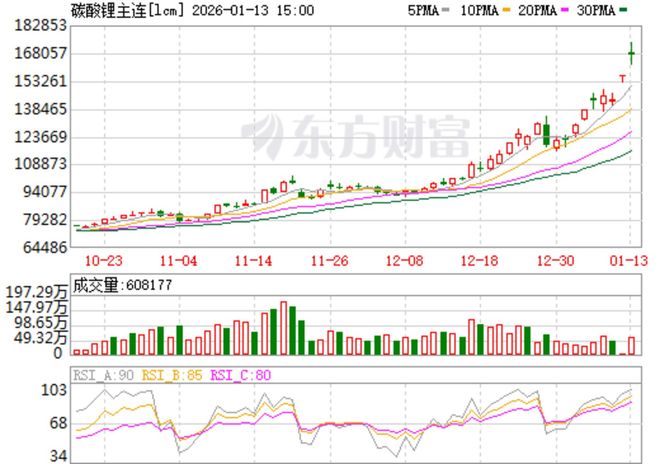
Core Viewpoint - The lithium carbonate futures price has surpassed 170,000 yuan/ton, indicating a shift in market dynamics and the formation of a new price anchor, as the market tests a new price range after a significant increase [1][3]. Group 1: Price Dynamics - The recent price surge reflects a transition from cash cost and current supply-demand dynamics to a focus on supply realization probability, inventory positioning, and demand concentration [3]. - The price increase from 130,000 to 170,000 yuan/ton represents a second phase of tight balance, where the key variables influencing price are no longer just quantity differences but also the certainty of supply and timing of demand [4]. - The upward movement in price is supported by a shift in inventory from high levels to sensitive ranges, where any uncertainty in supply triggers restocking, leading to a preemptive tightening of the market [4][6]. Group 2: Supply Chain Changes - The supply side's credibility has diminished due to multiple upstream production cuts and maintenance events, making the market more sensitive to supply stability [8]. - Regulatory pressures regarding resource development and environmental compliance have increased, altering market expectations for supply elasticity [8]. - In a tight balance, changes in quantity dictate direction, while changes in certainty dictate slope, emphasizing the importance of reliable supply in price determination [8]. Group 3: Demand Dynamics - The demand structure is evolving, with significant contributions from energy storage, which introduces more concentrated and project-based purchasing patterns, leading to sharp demand spikes [9]. - Anticipated adjustments to tax policies related to battery exports may shift order placements and production schedules, increasing short-term demand concentration [9][10]. Group 4: Pricing Mechanisms - The combination of declining supply certainty and demand pulses amplifies effects in the futures market, leading to increased volatility and rapid price fluctuations [11]. - The market is not merely reacting to current supply changes but is also pricing in future expectations, indicating a potential formation of a new consensus price range [11]. Group 5: Profit Distribution and Market Anxiety - The re-pricing process favors companies with stable, low-cost production capabilities, as they benefit more directly from price increases [12]. - Midstream lithium salt companies face greater differentiation based on their raw material stability and cash flow management, with high-cost firms potentially experiencing cash flow issues despite improved profit margins [12]. - Downstream sectors, including materials and battery integration, are under pressure due to mismatches between rapidly changing input costs and slower revenue recognition [12]. Group 6: Future Outlook - The next 3 to 6 months are likely to see high-level fluctuations, contingent on intermittent supply disruptions and sustained energy storage demand [13]. - If supply exceeds expectations or downstream pricing resistance becomes evident, prices may experience a quicker retraction [13][15]. - The upward price movement is not limitless, as increased production incentives may lead to a return of supply elasticity, potentially compressing price ceilings [13][16]. Group 7: Pathways and Triggers - Monitoring inventory depletion is crucial; if prices rise alongside inventory reduction, it indicates solid fundamental support [15]. - Observing the rebound in lithium salt production and its impact on inventory replenishment will be key to understanding price pressures [15]. - The relationship between concentrate and lithium salt pricing will help determine whether the current price increase is driven by demand or cost pressures [15].
突破15万元大关!碳酸锂价格迎来“开门红”
Zhong Guo Hua Gong Bao· 2026-01-13 09:02
Core Viewpoint - The price of lithium carbonate has surged at the beginning of 2026, driven by international expectations, policy disruptions, and industry behaviors, with battery-grade lithium carbonate reaching 154,100 yuan/ton, a nearly 29.17% increase from December 31, 2025 [2] Group 1: Price Trends - As of January 12, 2026, both battery-grade and industrial-grade lithium carbonate prices have surpassed 150,000 yuan per ton, with industrial-grade at 151,250 yuan/ton, reflecting a 29.94% increase from the end of 2025 [2] - The rebound in lithium carbonate prices is attributed to geopolitical tensions and resource policy adjustments that heighten supply concerns [2] Group 2: Supply Factors - The Brazilian government's decision to freeze new mining rights auctions has intensified market fears regarding lithium resource supply tightening [2] - Domestic supply is constrained due to increased environmental requirements for lithium mining, which may raise operational costs and affect future production capacity [3] - A significant supply gap of 5,000 to 8,000 tons per month has emerged due to the delayed resumption of production at the Jiangxi lithium mine and seasonal maintenance of older production lines [3] Group 3: Demand Dynamics - The demand for lithium carbonate remains strong, particularly from the booming electric vehicle market, with battery manufacturers actively procuring lithium to meet production needs [4] - Some downstream companies have announced production line maintenance, which may impact the overall demand for lithium carbonate [4] Group 4: Market Outlook - Industry experts suggest that the fundamentals supporting lithium carbonate prices remain robust, indicating a sustained strong price environment with increased volatility expected [5]

今日碳酸锂现货价格继续上行
Xin Lang Cai Jing· 2026-01-13 04:20
Group 1 - The core viewpoint of the article highlights a significant increase in lithium carbonate prices, with battery-grade lithium carbonate index price rising to 160,975 yuan/ton, up by 8,512 yuan/ton from the previous working day [1] - Battery-grade lithium carbonate is priced between 155,000 to 164,000 yuan/ton, with an average price of 159,500 yuan/ton, reflecting an increase of 7,500 yuan/ton from the previous working day [1] - Industrial-grade lithium carbonate is priced between 152,000 to 160,000 yuan/ton, with an average price of 156,000 yuan/ton, also showing an increase of 7,500 yuan/ton from the previous working day [1] Group 2 - Lithium carbonate futures contracts opened strong, continuing a robust upward trend, with a notable increase of 11.99%, reaching a price limit of 174,060 yuan/ton [1] - The rapid rise in lithium carbonate prices has led to a divergence in the willingness of upstream suppliers to sell, with some lithium salt manufacturers adopting a wait-and-see attitude while others are actively quoting prices above current spot transaction levels [1] - Downstream material manufacturers generally exhibit a cautious attitude towards current price levels, but companies with urgent procurement needs continue to inquire and transact in the market, sustaining upward pressure on spot prices [1]
碳酸锂:资金驱动强势涨停,短期博弈加剧成材,重心下移偏弱运行
Hua Bao Qi Huo· 2026-01-13 02:29
Report Summary 1) Report Industry Investment Rating No information provided. 2) Core View of the Report The report suggests that the lithium carbonate market will experience high - level fluctuations, and investors should be vigilant about price corrections, focusing on cost and marginal changes in supply and demand [3]. 3) Summary by Related Content Market Performance - The main contract of lithium carbonate reached the daily limit at 156,060 yuan/ton yesterday, with the limit - down order volume remaining above 20,000 lots, trading volume of 68,500 lots, and open interest slightly decreasing to 506,700 lots. The net short position of the main force in the capital market continued, and the warehouse receipts slightly increased to 25,970 lots. The SMM average price of electric carbon was 152,000 yuan/ton, and the basis of the main contract narrowed to - 4,060 yuan/ton [2]. - The sharp price increase significantly affected the spot market sentiment. Upstream lithium salt producers were more willing to sell and quote, and some quotes were higher than the futures price. Downstream procurement and inquiry activities increased, and the proportion of spot purchases in long - term contract negotiations increased compared to last year. The market generally expects the price to continue rising [2]. Fundamental Analysis - **Supply**: Last week, the raw material price increased by more than 9% month - on - month, strengthening cost support. The total weekly operating rate of SMM lithium carbonate decreased by 1.05% month - on - month, with a slight decline in the operating rates of spodumene and salt lakes, and a slight increase in the operating rates of lithium mica and recycling. The total output increased by 0.5% month - on - month, and production capacity was further released [3]. - **Demand**: There was a significant structural differentiation in demand. Last week, the production of SMM lithium iron phosphate and ternary materials decreased by 3.3% and 1.3% month - on - month respectively, with inventory depletion. The production of SMM power cells slightly decreased, while the sales and penetration rate of SMM new energy vehicles reached new highs, and the production schedule of energy - storage cells increased slightly to support demand [3]. - **Inventory**: Last week, the SMM sample weekly inventory increased by 0.3% month - on - month, showing signs of inventory accumulation for the first time, and the total inventory days slightly increased to 28 days [3]. Policy Impact - In 2026, the subsidy for automobile trade - ins, the Fed's interest rate cut, the Qinghai Salt Lake Industry Plan, the key points of energy - storage during the 15th Five - Year Plan, and a series of arrangements of the Central Economic Work Conference formed a coordinated positive effect to support long - term supply - demand balance. In the short term, regulatory tightening was clear, and measures such as trading limits on the Guangzhou Futures Exchange were used to stabilize price fluctuations [3]. - On January 4, the State Council's "Solid Waste Comprehensive Management Action Plan" strengthened the constraints on the supply side, which may intensify the supply shortage in the short term. On January 9, the two departments announced a reduction in the battery export tax - rebate policy, which may trigger a rush for export demand in the short term [3].