工业互联网

Search documents
科达自控半年报 第二增长曲线夯实长期发展动能
Cai Jing Wang· 2025-08-25 03:30
Core Viewpoint - The company, Keda Control (831832.BJ), reported a revenue of 149 million yuan and a net profit of 4.58 million yuan for the first half of the year, with significant growth in its new energy business, which achieved a revenue of 51.47 million yuan, a year-on-year increase of 40% [1][2]. Group 1: Financial Performance - The overall mining industry faced challenges in the first half of 2025, with a 30.3% year-on-year decline in total profits to 429.41 billion yuan, and a 53% decline in the coal mining and washing industry profits to 149.16 billion yuan [1]. - Keda Control's performance was impacted by the downturn in the coal market, but the company saw a recovery in the second quarter, achieving a revenue of 81.56 million yuan, a quarter-on-quarter increase of 21%, and a non-recurring net profit of 10.05 million yuan, marking a turnaround with a quarter-on-quarter increase of 242% [1][2]. - The gross margin for the second quarter reached 47.70%, reflecting a significant quarter-on-quarter increase of 7.17 percentage points and a year-on-year increase of 3.25 percentage points [1]. Group 2: Business Development - The new energy charging and swapping business has shown remarkable growth, with projected revenue of 97 million yuan in 2024, a year-on-year increase of 208.65%, and a 40% increase in the first half of this year [2]. - The company has been increasing its R&D investment, with R&D expenses reaching 22.30 million yuan in the first half of the year, a 3.30% increase from the previous year [2]. - Sales and management expenses have decreased, with sales expenses at 17.70 million yuan (down 4.97%) and management expenses at 11.87 million yuan (down 11.99%), indicating improved operational efficiency [2]. Group 3: Strategic Initiatives - The chairman of the company stated that due to cyclical industry impacts, the first growth curve (smart mining) is under pressure, and the focus will be on strengthening the second growth curve (new energy charging and swapping business) while also nurturing a third growth curve [3]. - Keda Control announced a significant acquisition of 51% of Changzhou Haitong Information Technology Co., Ltd. for 209.1 million yuan, marking the largest acquisition since the establishment of the Beijing Stock Exchange [3]. - The acquisition is expected to create synergies between Keda Control's strengths in smart mining and industrial internet and Haitong's expertise in audio-visual intelligent analysis and machine vision, enhancing product performance and market competitiveness [3].
石景山地区生产总值一年迈一个百亿台阶
Bei Jing Wan Bao· 2025-08-22 06:04
Economic Growth - The GDP of Shijingshan District has increased from 97.38 billion yuan in 2020 to 131.29 billion yuan in 2024, achieving a growth of 7.6% in the first half of this year, ranking first among central urban areas [1][2] - The district's GDP reached 69.66 billion yuan in the first half of this year [1] Industrial Transformation - Shijingshan District is accelerating industrial transformation, evolving its industrial system from "1+3+1" to "2+4+4" [2] - The district focuses on two leading trillion-yuan industries: information technology and modern finance, with emerging industries such as artificial intelligence and virtual reality contributing significantly [2] - The contribution of the two leading industries exceeds 60% of the district's GDP, while the annual revenue of four featured industries reaches 130 billion yuan [2] Urban Development Projects - The district plans to implement 481 urban renewal projects during the 14th Five-Year Plan, attracting over 90 billion yuan in investment [3] - Key projects include the transformation of Shougang Park and the development of a multi-functional exhibition town covering nearly 2 square kilometers [3] - The district aims to enhance its waterfront areas, creating vibrant commercial districts and attracting 13 million visitors by 2024 [3] Upcoming Events - The "Chao Wan Yue Xiang Shui An" project will debut before the Service Trade Fair, aiming to create an innovative waterfront lifestyle experience [4] - The project will feature approximately 5,000 square meters of space with 30 design works and brands, with the first "Opening Festival" scheduled to coincide with the fair [4]
上海工业数智化转型标准体系及5项应用团体标准发布
Xin Hua Cai Jing· 2025-08-21 14:23
Core Points - The Shanghai Industrial Internet Association's Industrial Digitalization Standard Committee held its 2025 annual meeting, releasing the "Shanghai Industrial Digital Transformation Standard System" and five group standards [1][2] - The standard system focuses on common technologies, application scenarios, and evaluation improvements, integrating "AI+Manufacturing" as a key area [1] - The Shanghai government has emphasized the importance of digital transformation standardization, having issued plans to support the development of a globally influential digital city [1] Group 1 - The standard committee has achieved significant results in the digitalization field, with 25 group standards published or in development, and has become a key player in building Shanghai's digital standard system [2] - The committee will accelerate the development of core standards in response to the recent "AI+Manufacturing" implementation plan, focusing on common foundational technologies, key technologies, industry applications, and testing certifications [2]
今年上半年北京石景山区实现地区生产总值696.6亿元
Xin Jing Bao· 2025-08-21 13:13
Economic Performance - In the first half of the year, Shijingshan District achieved a GDP of 69.66 billion yuan, with a year-on-year growth of 7.6%, ranking first among central urban areas [2] - Since the beginning of the 14th Five-Year Plan, the district's GDP has increased from 97.38 billion yuan in 2020 to 131.29 billion yuan in 2024, with an annual increase of approximately 10 billion yuan [2] Investment and Budget - From 2021 to 2024, Shijingshan District completed nearly 180 billion yuan in fixed asset investment, accounting for 5.2% of the city's total investment [2] - The average annual growth rate of general public budget revenue is 7.7%, also ranking first among central urban areas [2] Industrial Development - The district is focusing on developing strategic emerging industries and future industries that attract young talent, with an emphasis on technological innovation [5] - Shijingshan District has received 7 national science and technology awards and 59 Beijing science and technology awards during the 14th Five-Year Plan period [5] Talent Incentives - The district has implemented 12 tailored measures to support innovation and entrepreneurship for young talents, including providing up to 500,000 yuan in research funding for eligible projects [7] - A new innovation and entrepreneurship base for young talents has been established, offering free office space for up to one year [7] Urban Renewal - A total of 481 urban renewal projects have been implemented, driving over 90 billion yuan in investment, with 106 old residential communities covering 5.51 million square meters successfully renovated [8] - The district has transformed old factory areas into technology and cultural parks, enhancing urban aesthetics and functionality [8] Environmental and Urban Management - Shijingshan District has a green coverage rate of 55.28% and an average of 24.48 square meters of park green space per capita, contributing to its recognition as a "National Forest City" [9] - The district is actively improving urban governance, including waste classification initiatives and enhancing property service quality through a "red-black list" evaluation system [9]


聊城三方携手共建国家碳计量中心(山东)公共服务平台
Qi Lu Wan Bao Wang· 2025-08-20 04:33
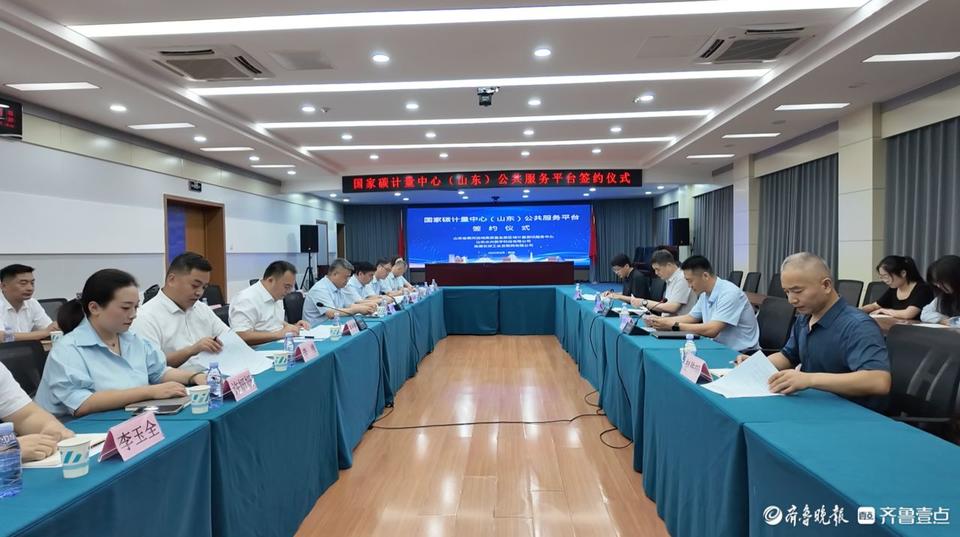
Group 1 - The signing ceremony for the cooperation to build the National Carbon Measurement Center (Shandong) public service platform marks a significant milestone in the collaboration among three parties, promoting the "dual carbon" strategy and green low-carbon high-quality development in Liaocheng and Shandong [1] - The collaboration is expected to inject new momentum into regional industrial transformation and upgrading, leveraging the strengths of each party involved [5][7] - The platform aims to provide data support for government decision-making, precise services for enterprises in energy conservation and emission reduction, and strong impetus for regional green development [7] Group 2 - Liaocheng Water Group has deep expertise in smart water management and environmental energy management, showcasing its achievements in the "dual carbon" and energy management fields [4] - Inspur Yunzhou, recognized as a national-level "little giant" enterprise, has significant advantages in industrial internet and "dual carbon" technology, having won dual championships in market position and development capability for six consecutive years [4][5] - The collaboration will leverage Inspur Yunzhou's technological strengths to provide robust technical support for the platform's construction [5]
河北将打造超30个重点行业产业大脑
Zhong Guo Chan Ye Jing Ji Xin Xi Wang· 2025-08-19 07:25
Core Viewpoint - Hebei Province is initiating the "Industrial Brain Cultivation Project" to enhance the digitalization level of enterprises, aiming to establish a "1+M+N" development system by 2027, which includes one provincial industrial brain capability center and over 30 key industry industrial brains [1][2] Group 1: Project Overview - The project focuses on leveraging Hebei's advantageous industrial clusters and key parks, utilizing an industrial internet platform to drive digital transformation and build an ecosystem for industrial chains [1][2] - The integration of various chains such as industrial, supply, innovation, policy, and capital chains will be facilitated through new information technologies like AI, big data, cloud computing, and IoT [1] Group 2: Implementation Strategy - The notification emphasizes the need for local advantages to cultivate a batch of specialized industry industrial brains, with the provincial industrial brain capability center providing common technical support services [2] - It encourages collaboration between enterprises and industry industrial brains for data sharing and service interaction across various operational aspects, promoting the creation of "shared factories" [2] Group 3: Support and Development - The initiative will strengthen the guarantee of development factors, urging cities to increase support for industrial brain construction and enhance the training of specialized talents [3] - The project will adopt a "ranking system" to cultivate industry-specific industrial brains, aiming to improve the overall service level of industrial brains across the province [3]
河南20条降本增效新政发布,科研仪器与技术创新获重点支持!
仪器信息网· 2025-08-19 03:58
Core Viewpoint - The article outlines the Henan Provincial Government's comprehensive policy measures aimed at reducing operational costs for enterprises across various dimensions, including R&D, transformation, human resources, funding, energy, logistics, land use, import/export, and operational costs, to promote high-quality development [2][5][6]. Group 1: R&D Cost Reduction - The policy encourages key industry chain enterprises to collaborate with research institutions to establish provincial manufacturing innovation centers, providing a subsidy of 30% of actual investment in technology introduction and research equipment, capped at 5 million yuan [2][7]. - For the first set of major technical equipment and new materials developed by enterprises, a reward based on a certain percentage of sales is available, with a maximum of 5 million yuan per enterprise annually [2][7]. - Support for key core technology projects includes a subsidy of 30% of the approved total investment, with a maximum of 20 million yuan per project [2][7]. Group 2: Transformation and Upgrade Cost Reduction - The policy includes loan interest subsidies for equipment updates and financing leasing support, with a 15% subsidy for major technical transformation projects exceeding 50 million yuan, capped at 10 million yuan [3][7]. - Digital transformation initiatives are supported, including subsidies for industrial internet platform construction, with a maximum of 5 million yuan [3][7]. - Green transformation projects recognized as national-level green factories can receive a subsidy of 20% of actual investment in equipment and software, up to 5 million yuan [3][7]. Group 3: Human Resource Cost Reduction - Social insurance subsidies are available for enterprises hiring unemployed individuals, covering the actual social insurance contributions made by the employer [8]. - A stable employment return policy allows enterprises that maintain employment levels to receive a return of 30% for large enterprises and 60% for small and micro enterprises on their unemployment insurance contributions [8]. - A one-time expansion subsidy of 1,500 yuan per person is available for enterprises hiring recent graduates or unemployed youth [8]. Group 4: Funding Cost Reduction - The policy aims to enhance credit services for small and micro enterprises, with a target of 160 billion yuan in new loans for technology enterprises in 2025 [9][10]. - Tax incentives include VAT refunds and deductions for R&D expenses, as well as exemptions from certain taxes for small loans to micro enterprises [10]. - Measures to clear overdue payments to small and medium enterprises are emphasized, ensuring timely payments from state-owned enterprises [10][11]. Group 5: Energy and Logistics Cost Reduction - The policy promotes the use of renewable energy sources and aims to reduce electricity and water costs through various measures, including direct supply trials for large users [11]. - Logistics cost reductions include toll exemptions for hydrogen and electric trucks and subsidies for updating older vehicles [11][12]. Group 6: Land Use and Import/Export Cost Reduction - The policy encourages the use of standard land supply for industrial use and supports flexible land leasing arrangements [12][13]. - Measures to enhance customs efficiency and support for import/export enterprises are outlined, including simplified procedures and financial support for certifications [13][14]. Group 7: Operational Cost Reduction - The article emphasizes improving service quality for enterprises through streamlined administrative processes and enhanced support for industrial parks [13][14]. - Initiatives to establish modern enterprise systems and training programs for private enterprises are also highlighted [14].

寄云科技NeuSeer平台:赋能高耗能工业,智慧能源转型新路径
Sou Hu Cai Jing· 2025-08-16 05:07
Core Insights - Qiyun Technology is a leading company in the autonomous industrial internet sector, showcasing its NeuSeer platform's innovative applications in high-energy-consuming industries through integrated virtual power plants [1][5] - The NeuSeer platform has evolved from version 1.0 to 3.0, transitioning from project customization to productization and industry integration, enhancing its competitive edge [1][7] - The platform plays a crucial role in energy management and carbon neutrality by utilizing advanced technologies like digital twins for unified platform management and intelligent energy management [1][5] Summary by Sections NeuSeer Platform Development - NeuSeer platform started with version 1.0 focusing on specific project needs, which had limitations in customization and data processing [1] - Version 2.0 marked the transition to productization, establishing a complete product line with applications in companies like CRRC [1][3] - In version 3.0, the platform emphasizes industry solutions, algorithm models, and ecosystem building, enhancing cloud-edge collaboration and ecological cooperation [1][7] Application Cases - The NeuSeer platform has been applied in various scenarios, including integrated operation services for a coal chemical group, optimizing energy management and operational efficiency [3][5] - In the refining industry, a smart factory utilized the NeuSeer platform to manage 14 business centers, integrating energy management seamlessly into production processes [3][5] Technological Innovations - NeuSeer platform continuously enhances its vertical application capabilities in high-end manufacturing through algorithm optimization and model upgrades [7] - The platform's success in energy management demonstrates its potential in driving industrial digital transformation [5][7] Industry Standards and Contributions - Qiyun Technology is among the first batch of autonomous industrial internet leaders in China, participating in the formulation of multiple national standards and industry white papers [10]

源网荷储一体化虚拟电厂在高耗能工业领域的智慧能源应用方案(63页 PPT)
Sou Hu Cai Jing· 2025-08-16 01:10
Group 1 - The core focus of the report is on the application of the NeuSeer industrial internet platform by Qiyun Technology in the high-energy-consuming industrial sector, specifically in the integrated virtual power plant for source-network-load-storage [1] - Qiyun Technology is recognized as a leading domestic industrial internet enterprise, participating in the formulation of multiple national standards, and the NeuSeer platform has evolved from version 1.0 to 3.0 [1][9] - The NeuSeer platform's development stages include: 1.0 focusing on project needs with issues in customization and data processing; 2.0 transitioning to productization with a complete product line; and 3.0 emphasizing industry-specific solutions, algorithm models, and enhanced collaboration [1][11] Group 2 - The integrated virtual power plant supported by a smart "energy brain" coordinates distributed energy clusters internally and participates in electricity trading externally [1] - The industrial internet plays a crucial role in connecting, gaining insights, and optimizing operations through technologies like digital twins, facilitating the digitalization of assets and operations, and contributing to carbon neutrality [1] - Application cases include comprehensive operations for solar-storage-charging-usage services, energy transition strategies for a coal chemical group, and optimization models for wind-solar-storage-hydrogen microgrids [1] Group 3 - In the future, Qiyun Technology will focus on high-end manufacturing and leverage various technological advancements to develop vertical applications and build ecosystems to promote the digital transformation of smart energy [2] - The NeuSeer platform aims to provide industry-specific applications and solutions, enhancing the integration of energy and industrial services [6][25] - The platform supports a wide range of industries, including manufacturing, energy, rail transit, and oil and gas, with applications in predictive maintenance, intelligent management, and real-time production decision-making [26]

经济学家宋清辉:哪些行业受益于“金融支持新型工业化”
Sou Hu Cai Jing· 2025-08-14 22:31
Core Viewpoint - The recent policy document issued by multiple Chinese government departments emphasizes the importance of financial support for new industrialization, marking a strategic shift towards advanced manufacturing and digital economy as key areas for future development [4][7]. Group 1: Advanced Manufacturing - The policy highlights increased support for enhancing the core competitiveness of the manufacturing sector, particularly in advanced manufacturing, which includes high-end CNC machine tools, industrial robots, aerospace equipment, and marine engineering equipment [5][6]. - The focus will be on technological innovation, smart manufacturing, and green development, moving beyond mere scale expansion [5]. - Financial institutions are encouraged to support the research and industrialization of key basic materials and high-end functional materials, particularly in semiconductor materials and special metal materials [5][6]. Group 2: Digital Economy - The integration of new industrialization with the digital economy is emphasized, with a call for strengthened support for digital infrastructure construction and application [5][6]. - The policy aims to promote the construction and application of industrial internet platforms, facilitating equipment interconnection, data sharing, and production collaboration [6]. - There is a growing market for data security and privacy protection services, which will become essential as the value of industrial data increases [6]. Group 3: Green Development - The policy underscores the importance of financial support for the green and low-carbon transformation of the industrial sector, identifying it as a new economic growth point [6][7]. - Encouragement is given for the development of energy-saving and environmentally friendly technologies and equipment, such as carbon capture and storage technologies, energy storage technologies, and efficient energy-saving motors [6]. - Renewable energy sources like solar, wind, and hydrogen are expected to receive more policy support and financial backing [6]. Group 4: Technological Innovation - The document stresses the need for support for technological innovation and specialized small and medium-sized enterprises, which are fundamental drivers of new industrialization [7]. - Hard technology sectors such as chips, high-end software, biomedicine, and new-generation information technology are expected to receive continued policy and funding support [7]. - The guidance document serves as a roadmap for structural transformation in the Chinese economy over the next decade, shifting focus from quantity to quality [7].