智能手机

Search documents
荣耀联名泡泡玛特推了款潮玩手机
第一财经· 2026-01-20 09:52
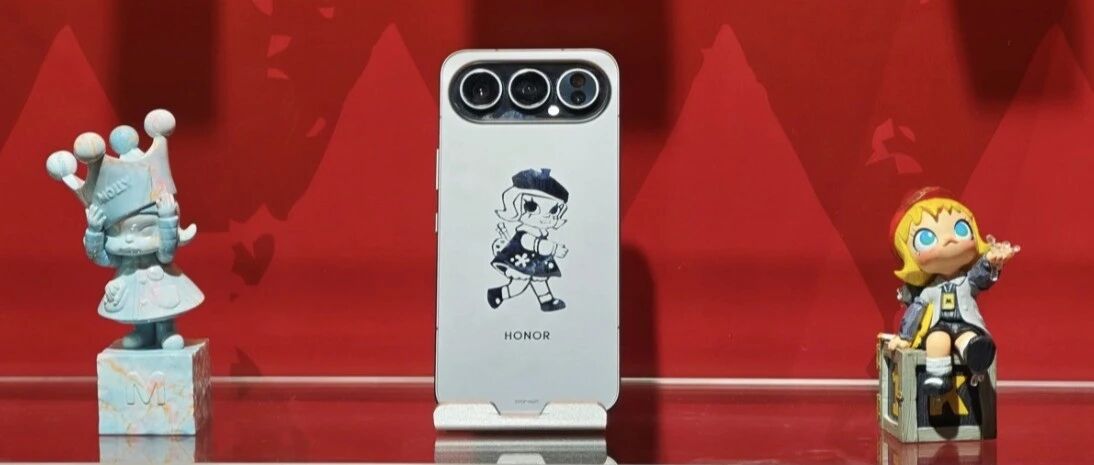
Group 1 - The core viewpoint of the article highlights the collaboration between Honor and Pop Mart, launching the "Honor 500 Pro MOLLY 20th Anniversary Limited Edition" smartphone, priced at 4,499 yuan, with a net price of 3,999 yuan after subsidies. The main differences from the regular version lie in design, system theme, boot animation, and packaging [2] - Pop Mart has previously collaborated with consumer electronics brands, but this partnership with Honor marks its most in-depth hardware collaboration to date, as it aims to accelerate cross-industry monetization around its core IP [2] - The collaboration occurs against a backdrop of a challenging Chinese smartphone market, where competition in the mainstream price segment is intensifying [2] Group 2 - According to IDC, China's smartphone market is projected to see an annual shipment of approximately 285 million units in 2025, reflecting a year-on-year decline of 0.6%, indicating a shift to a typical stock game phase [3] - As demand slows, upstream cost pressures are accumulating, with storage prices significantly rebounding since the second half of 2025, now accounting for 10% to 20% of smartphone hardware costs, a proportion that continues to rise [3] - Honor has made significant changes to its product lineup in recent months, including the reintroduction of the Honor WIN series targeting the gaming smartphone segment and the launch of a "Robot Phone" at CES, which integrates gimbal structures, imaging systems, and AI capabilities [3] Group 3 - The portable imaging device market is dominated by DJI, Insta360, and GoPro, prompting smartphone manufacturers to reintegrate gimbal, stabilization, tracking, and AI capabilities back into smartphones as a strategy to reclaim content entry points [4] - Compared to independent device manufacturers, smartphone companies still hold advantages in supply chain scale, channel coverage, and price bandwidth [4] Group 4 - In a market where expansion is challenging and cost curves are rising, manufacturers are finding it increasingly difficult to rely on conventional annual iterations to tell growth stories. Strategies such as collaborations with Pop Mart, reintroducing gaming product lines, and exploring imaging forms are being employed to seek market opportunities [5] - While these initiatives may not guarantee sales, the risk of remaining stagnant in the current industry environment is becoming increasingly pronounced [5]


把Pro塞进Air里?荣耀发布Magic8 Pro Air,国补4499元起
Guo Ji Jin Rong Bao· 2026-01-20 08:15
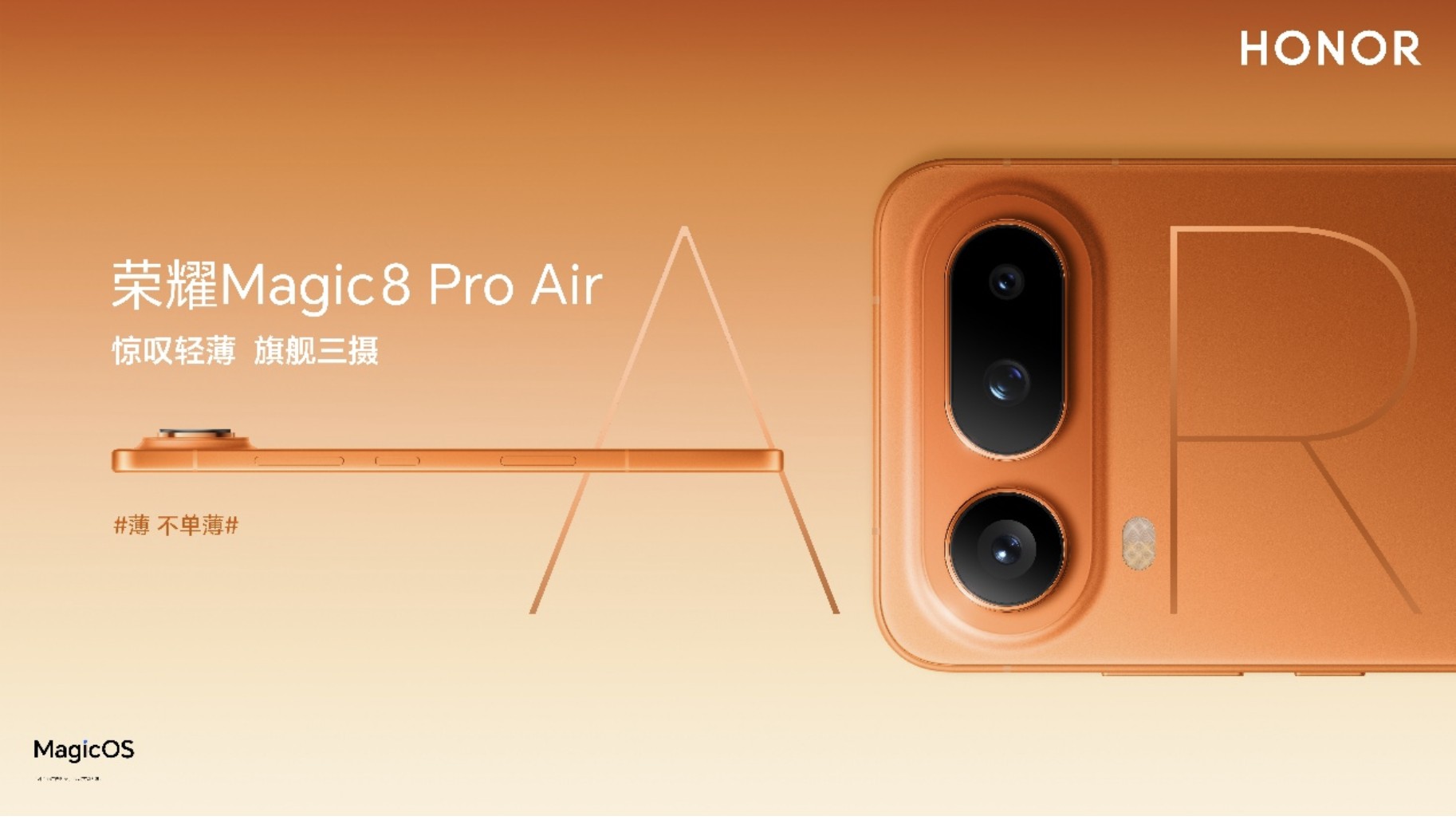
Group 1 - Honor officially launched the Magic8 Pro Air on January 19, featuring a lightweight design with a thickness of only 6.1mm and a weight of 155g, powered by the MediaTek Dimensity 9500 flagship chip [1] - The Magic8 Pro Air incorporates the "Cicada Wing Architecture" for enhanced durability and is the first ultra-thin model to support 6 meters of waterproofing, certified by IP68 & IP69 [1] - The device will be available for purchase starting January 23 at a price of 4499 yuan after national subsidies [1] Group 2 - Alongside the Magic8 Pro Air, Honor also released the Porsche Design Honor Magic 8 RSR, featuring a classic sports car design, a 200MP telephoto camera, and a 5000MP main camera, powered by the Qualcomm Snapdragon 8 Gen 2 platform, starting at 7999 yuan [2] - Honor introduced the "Honor 500 Pro MOLLY 20th Anniversary Limited Edition" targeting young consumers, featuring a customized design and exclusive UI, priced at 4499 yuan with a final price of 3999 yuan after subsidies, available from January 25 [6] - Honor, originally a sub-brand of Huawei focused on the youth market, has evolved since its independence in November 2020 to offer a diverse product matrix across various price segments, including the Play, X, Power, digital, GT, VPurse, Magic series, and foldable products [6]

那些外国博主们,怎么突然开始吹中国手机了???
创业邦· 2026-01-20 03:29
Core Viewpoint - The article discusses the increasing recognition and acceptance of Chinese smartphones in the global market, particularly highlighted by MKBHD's annual smartphone awards, which this year featured several Chinese brands prominently [8][9][11]. Group 1: Recognition of Chinese Smartphones - MKBHD's awards this year included Chinese smartphones such as Xiaomi 17 Pro Max for "Best Large Phone," OnePlus 15 for "Best Battery Life," and OPPO Find X9 Pro for "Best Camera," indicating a shift in perception towards Chinese brands [9][11]. - The article notes that previously, Chinese smartphones were often overlooked in international awards, but recent trends show a growing appreciation for their quality and innovation [8][9]. Group 2: Technological Advancements - Chinese smartphone manufacturers have made significant advancements in hardware design, achieving thinner devices with larger battery capacities through improved internal stacking technology and battery innovations [16][18]. - The use of silicon-carbon anode materials has led to the development of smartphones with batteries exceeding 8000 mAh, showcasing the ability to balance battery size and longevity [20][22]. - Innovations in materials, such as Huawei's Kunlun glass and OPPO's use of 3D-printed titanium alloy in hinges, have enhanced durability and performance in smartphones [22][26]. Group 3: Software and User Experience - The introduction of OPPO's "Starry Compiler" aims to improve the efficiency of Android applications by optimizing the communication between software and hardware, resulting in a smoother user experience [30][31]. - The article highlights the emergence of advanced AI applications in smartphones, such as the "Doubao" phone assistant, which can perform complex tasks and adapt to user needs, indicating a shift towards more intuitive technology [40][42]. Group 4: Market Dynamics - The article emphasizes that the increasing prices of Chinese smartphones in international markets reflect a shift from cost-based purchasing to a recognition of their quality and functionality [11][13]. - The growing acceptance of Chinese smartphones in markets like Australia suggests a broader trend of international consumers valuing performance and innovation over brand origin [13][18].


华为夺2025年中国手机第一;SK海力士发高额年终奖【巨头风向标】
2 1 Shi Ji Jing Ji Bao Dao· 2026-01-20 03:11
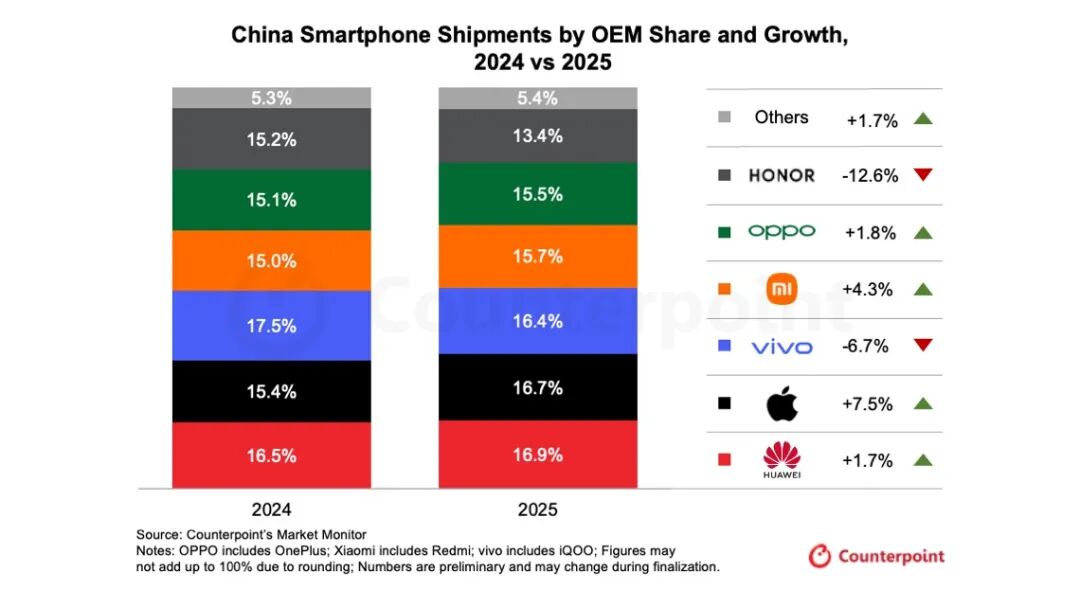
Group 1: Tesla's Transformation - Tesla CEO Elon Musk is pushing for the company to transform into a robotics company, with the Optimus humanoid robot as a key focus, aiming for a valuation of $25 trillion, which would significantly surpass its current business value [2] Group 2: Smartphone Market Trends - Huawei is projected to lead the Chinese smartphone market in terms of shipments by 2025, benefiting from price adjustments and government subsidies, despite an overall decline in smartphone shipments in China [3] - Apple's iPhone 17 series has seen a 28% year-on-year increase in shipments in the fourth quarter, driven by strong demand [3] Group 3: Robotics and AI Developments - Zhijidongli showcased the LimX Oli humanoid robots' ability to autonomously exit their packaging, demonstrating advanced group control technology and smooth movement [6] - JD.com launched a second batch of self-developed AI toys, expanding its offerings to cover all age groups, supported by the JoyInside system for contextual understanding [8] Group 4: Aerospace Industry Advancements - Chengdu Xingji's reusable liquid rocket production base is set to be completed by December 2026, with a design capacity of 20 rockets per year, focusing on reducing launch costs through reusability [9] Group 5: Semiconductor Industry Movements - Micron Technology announced an $1.8 billion acquisition of PSMC's facility in Taiwan, aimed at enhancing DRAM production capacity [13] - Zhongwei Semiconductor is set to launch its first low-power SPI NOR Flash chip, filling a product gap and expanding its market applications [14] Group 6: Employee Compensation in Tech - SK Hynix plans to distribute record bonuses averaging over 136 million KRW (approximately 640,000 RMB) per employee, attributed to a historic labor agreement that changed profit-sharing terms [15] Group 7: Corporate Actions and Financial Updates - Huichuan Technology is planning to issue H-shares and list on the Hong Kong Stock Exchange to enhance its international presence [16] - Hualing Cable terminated its acquisition of Hunan Xingxin Aerospace due to a lack of agreement on specific terms, with no adverse impact on its operations [17] - Yingfang Micro plans to acquire 100% stakes in Shanghai Xiaokeli and FIRST TECHNOLOGY CHINA, indicating a significant asset restructuring [18] - Zhu Hai Bo Rui Jing Xin completed a financing round exceeding 1 billion RMB, focusing on high-performance chip solutions for various industries [19] Group 8: New Product Launches - Feishu and Anker Innovation launched a new AI hardware product, the Anker AI Recording Bean, designed for seamless integration with the Feishu ecosystem [20]
泡泡玛特,大涨超10%!
Mei Ri Jing Ji Xin Wen· 2026-01-20 02:52
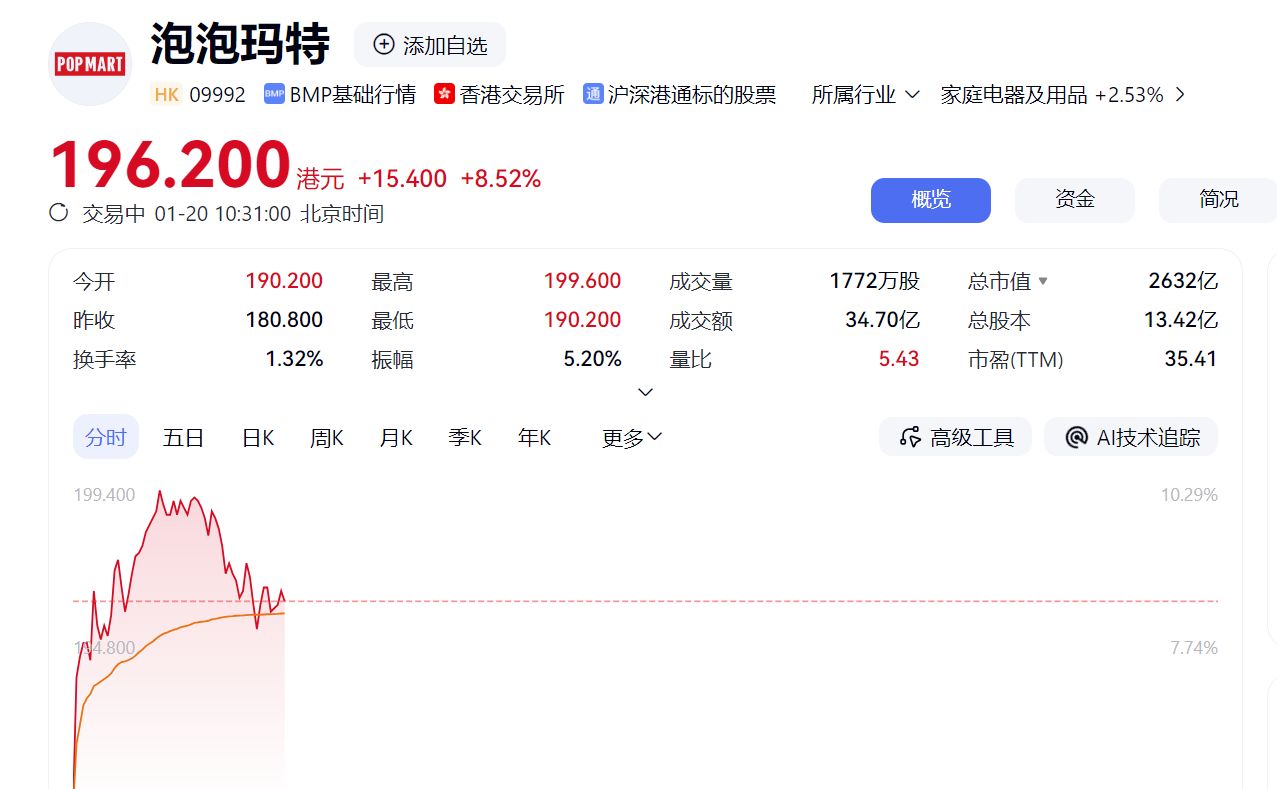
Group 1 - The company announced a share buyback of 2.51 billion HKD for 1.4 million shares at a price range of 177.7 to 181.2 HKD per share [2] - The launch of the "Honor 500 Pro MOLLY 20th Anniversary Limited Edition" in collaboration with Pop Mart, priced at 4,499 RMB, with a net price of 3,999 RMB after national subsidies, set to go on sale on January 25 [2] - Morgan Stanley's analysis suggests that the buyback is expected to attract more investor attention, particularly from institutional funds waiting for stock price catalysts [2] Group 2 - The company is experiencing strong growth, with a clear long-term development logic, and is projected to achieve a net profit of 12.6 billion RMB by 2025 [2] - As of the end of last year, the company held approximately 20 billion RMB in net cash, indicating ample financial resources to create more value for shareholders [2]
华为夺2025年中国手机第一;SK海力士发高额年终奖
2 1 Shi Ji Jing Ji Bao Dao· 2026-01-20 02:39
Group 1 - Tesla CEO Elon Musk is pushing for the company's transformation into a robotics company, with the Optimus humanoid robot as a key focus, aiming for a valuation of $25 trillion, significantly surpassing current business value [2] - Huawei is projected to lead the Chinese smartphone market in shipments by 2025, benefiting from price adjustments and government subsidies, despite an overall decline in smartphone shipments in China [3] - Micron Technology plans to acquire PSMC's factory in Taiwan for $1.8 billion to enhance its DRAM production capacity, with the deal expected to close in Q2 2026 [10] Group 2 - Chengdu Xingji Glory's reusable liquid rocket production base is set to be completed by December 2026, with a design capacity of 20 rockets per year, focusing on reducing launch costs through reusability [7] - SK Hynix will distribute record bonuses of over 136 million KRW (approximately 640,000 RMB) per employee, attributed to a historic labor agreement that allows for a percentage of annual operating profit to be included in the bonus pool [12] - Yingfang Micro plans to acquire 100% stakes in Shanghai Xiaokeli and FIRST TECHNOLOGY CHINA LIMITED, with the transaction expected to constitute a major asset restructuring for the company [16]




中泰国际每日晨讯-20260120
ZHONGTAI INTERNATIONAL SECURITIES· 2026-01-20 02:28
Market Overview - On January 19, Hong Kong stocks showed weak upward momentum, with the Hang Seng Index falling by 281 points (1.1%) to close at 26,563 points[1] - The Hang Seng Tech Index decreased by 72 points (1.2%), closing at 5,749 points, with total trading volume at HKD 225.7 billion[1] - Xiaomi, OPPO, vivo, and Transsion lowered their annual shipment forecasts, impacting stock prices, with Xiaomi (1810 HK) down 1.7% and Sunny Optical (2382 HK) down 2.3%[1] Sector Performance - The aviation sector strengthened, with Eastern Airlines (670 HK) and Southern Airlines (1055 HK) rising by 6%-9% due to expected record-high passenger transport during the Spring Festival[1] - The power equipment sector benefited from a planned investment of HKD 4 trillion by the State Grid during the 14th Five-Year Plan, with stocks like Dongfang Electric (1072 HK) and Harbin Electric (1133 HK) increasing by 5%-6%[1] Macroeconomic Insights - The GDP growth for Q4 2025 is projected at 4.5%, with an annual growth rate of 5.0%, meeting expectations[2] - Exports for 2025 are expected to increase by 5.5%, despite a 20% decline in exports to the U.S., showing resilience with an annual trade surplus of USD 1.2 trillion, a historical high[2] Real Estate Sector - Real estate development investment fell by 36.9% year-on-year to RMB 419.7 billion, a larger decline than November's 31.4%[3] - New housing starts decreased by 19.3% to 53.13 million square meters, while the average price index for new residential properties in 70 cities dropped by 3.0% year-on-year[3] Industry Developments - The automotive sector saw Chery Automobile (9973 HK) rise by 4.5% after announcing its AI strategy, marking a shift towards smart vehicles[4] - The renewable energy sector is encouraged to adopt zero-carbon practices, with companies like CIMC Enric (3899 HK) expected to benefit from new policies[4] Pharmaceutical Sector - Most pharmaceutical stocks declined alongside the Hang Seng Index, but leading reproductive health company Jinxin Fertility (1951 HK) rose by 5.3%[5] - The number of newborns is projected to drop from 9.54 million in 2024 to 7.92 million in 2025, prompting government support for childbirth[5]
慕了!内存芯片巨头人均发64万年终奖;特斯拉将重启Dojo 3超级计算机项目;2025胡润中国人工智能企业50强出炉!6300亿「寒王」登顶
雷峰网· 2026-01-20 00:40
Group 1 - SK Hynix announced a record year-end bonus of 1.36 billion KRW (approximately 640,000 RMB) per employee, attributed to a new performance bonus plan linked to the company's profits [4][5] - The new bonus plan allows employees to receive up to 50% of their bonuses in company stock, with additional cash rewards for holding the stock for a year [4][5] - The company expects a significant increase in bonuses due to a new agreement that ties bonuses to 10% of the previous year's operating profit, with an estimated total operating profit of 45 trillion KRW for the year [5] Group 2 - HuRun Research Institute released a list of the top 50 AI companies in China, with Cambricon leading at a valuation of 630 billion RMB, followed by Moore Threads and MuXi [7][8] - Cambricon has seen a revenue increase of 4,300% year-on-year, driven by its focus on AI core processor chips and partnerships with leading AI model companies [7][8] - The top five companies in the list include Cambricon, Moore Threads, MuXi, iFlytek, and Horizon Robotics, showcasing the rapid growth and innovation in the AI sector [9] Group 3 - Li Auto's AI glasses sold out in just three hours, with demand exceeding supply, indicating strong market interest [10] - The glasses, priced from 1,999 RMB, are designed to integrate with Li Auto's ecosystem and feature advanced technology such as a 12MP camera and AI capabilities [10] - The product's success highlights the growing trend of smart wearable devices in the automotive industry [10] Group 4 - Porsche reported a 10% decline in global sales for 2025, with a 26.28% drop in the Chinese market, reflecting challenges in the luxury car segment [12] - The company is focusing on maintaining a healthy supply-demand relationship and stable value system amid market pressures [12] - Porsche's stock fell by 4.34% following the sales report, indicating investor concern over the company's performance [12] Group 5 - Moonshot AI, an AI startup backed by Alibaba, achieved a valuation of 48 billion USD (approximately 330 billion RMB) in its latest funding round, reflecting strong market demand for AI companies [14][15] - The company has raised significant capital in a short period, indicating robust investor interest in the AI sector [14][15] - The rapid increase in valuation highlights the competitive landscape for AI startups in China [14][15] Group 6 - Xiaomi's second-generation self-developed chip, the Xuanjie O2, is expected to utilize TSMC's 3nm process and expand its application to tablets, cars, and computers [17][18] - The company aims to enhance its self-developed chip capabilities across various product lines, indicating a strategic shift towards in-house technology [17][18] - The Xuanjie O1 chip, released earlier, has already demonstrated high performance, positioning Xiaomi competitively in the semiconductor market [18] Group 7 - Northvolt announced a projected net loss of 4.35 to 4.65 billion RMB for 2025, primarily due to ongoing investments in product development and market expansion [32] - Despite the losses, the company expects a significant increase in sales volume, indicating a long-term growth strategy [32] - The strategic investments are aimed at enhancing the company's market position in the rapidly evolving electric vehicle sector [32]

禾赛科技三位创始人再创业,成立机器人公司;OpenAI或于2026年推出首款硬件设备;疯狂动物城2成全球影史好莱坞动画电影票房冠军丨邦早报
创业邦· 2026-01-20 00:10
Group 1 - Hesai Technology's co-founders have established a new robotics company, Sharpa, aimed at developing general-purpose robots and core components, with over 100 employees [1] - Porsche's global sales for 2025 are projected to be 279,400 units, a 10% decrease year-on-year, with a significant decline of 26.28% in the Chinese market [4] - UTree Technology is expected to ship over 5,500 humanoid robots in 2025, with mass production exceeding 6,000 units [9] - OpenAI's annual revenue for 2025 is projected to exceed $20 billion, a significant increase from $6 billion in 2024, driven by an expansion in computing power [13] - The UK government has announced a substantial subsidy plan for electric trucks, with a total budget of £318 million, aiming to boost the adoption of electric vehicles [19] Group 2 - The HuRun Research Institute's report on China's AI companies ranks Cambricon first with a valuation of 630 billion yuan, reflecting a 165% increase from the previous year [10] - Anker Innovations and Feishu have launched the AI hardware product "Anker AI Recording Bean," which features advanced recording capabilities and is priced at 899 yuan [21] - Alibaba Health has introduced the AI product "Hydrogen Ion," designed for medical professionals, which aims to minimize hallucination rates in AI responses [23] - Xiaopeng Motors has successfully developed the first robot based on automotive standards, marking a significant milestone in their robotics initiative [24] - Apple's iPhone shipments surged by 28% during the holiday season, regaining market leadership in China despite overall market declines [30]

荣耀发布Magic8系列两款新机型,让Air机型不再“妥协”丨最前线
3 6 Ke· 2026-01-20 00:06
Core Insights - Honor has launched two new models in the Magic8 series: Honor Magic8 Pro Air and Honor Magic8 RSR Porsche Design, focusing on innovative design and product concepts [1] Group 1: Honor Magic8 Pro Air - The Honor Magic8 Pro Air features a slim design with a thickness of only 6.1mm and a weight of 155g, minimizing hand fatigue [2] - It includes a full-range Pro-level imaging system and the industry's first lightweight high-definition periscope telephoto lens, addressing previous compromises in thin devices [2] - The device is equipped with a 5500mAh battery with an energy density of 917Wh/L, supporting 80W wired and 50W wireless fast charging [2] - It is powered by the Dimensity 9500 chip and supports eSIM with dual standby for four cards [2] Group 2: Honor Magic8 RSR Porsche Design - The design of the Honor Magic8 RSR Porsche Design incorporates elements from Porsche sports cars, including aerodynamic curves and a unique color calibration developed in collaboration with Porsche engineers [3] - It boasts a high-end camera setup with a 200MP telephoto lens and a 50MP main camera, along with the Honor AiMAGE engine for enhanced photography [4] - The device is powered by Qualcomm's fifth-generation Snapdragon 8 mobile platform and offers up to 24GB of LPDDR5X memory [4] - It features a 7200mAh battery with 120W wired and 80W wireless fast charging, optimized by Honor's AI power management system [4] - The device runs on the latest MagicOS 10 system with the YOYO intelligent assistant, enabling seamless integration across multiple devices [7] - The starting price for the Honor Magic8 Pro Air is 4999 yuan, while the Honor Magic8 RSR Porsche Design starts at 7999 yuan for its storage variants [7]