奢侈品

Search documents
记者观察丨法国皮具、瑞士钟表、德国汽车……业绩集体“跳水”
Xin Hua She· 2025-11-17 09:16
Core Viewpoint - The European high-end manufacturing industry, particularly luxury goods, is facing significant pressure due to U.S. tariff policies, leading to a collective decline in performance among companies in this sector [2]. Group 1: Impact on European Brands - European luxury brands, including French leather goods, Swiss watches, and German luxury cars, are experiencing a sharp decline in performance as a direct result of U.S. trade protectionism measures [2]. - The tariff storm is not only damaging the profits of European brands but also severely impacting consumer confidence in the U.S. market [2]. Group 2: Market Reactions - In response to the ongoing tariff pressures, European companies are being forced to raise prices to offset costs, which in turn is causing American consumers to tighten their spending [2]. - The sustained impact of tariffs is leading to short-term profit pressures for European high-end manufacturing firms, with significant uncertainty regarding the industry's growth prospects [2].
可选消费W46周度趋势解析:A/H高股息和中高端消费回升带动子板块关注度提升-20251117
Haitong Securities International· 2025-11-17 07:49
Investment Rating - The report assigns an "Outperform" rating to multiple companies in the discretionary sector, including Nike, Midea Group, JD Group, Haier Smart Home, Gree Electric, Anta Sports, and others [1]. Core Insights - The report highlights a recovery in mid-to-high-end consumption and increased focus on high-dividend A/H stocks, which has driven attention to sub-sectors within discretionary consumption [1][4]. - Various sub-sectors have shown different performance trends, with overseas sportswear leading the gains, followed by luxury goods and domestic sportswear [4][12]. Performance Review by Sub-Sector - **Weekly Performance**: Overseas sportswear increased by 6.8%, luxury goods by 5.2%, and domestic sportswear by 3.8%. In contrast, the pet sector saw a decline of 5.8% [4][12]. - **Monthly Performance**: The gambling sector led with an 8.4% increase, while domestic cosmetics experienced a significant decline of 14.3% [12]. - **Year-to-Date Performance**: The gold and jewelry sector outperformed with a 137.2% increase, while overseas sportswear saw a decline of 21.5% [12]. Sub-Sector Analysis - **Overseas Sportswear**: Notable gains driven by strong Q3 FY25 earnings, particularly in EMEA and Asia-Pacific regions, alleviating market concerns [6][15]. - **Luxury Goods**: Companies like Samsonite and Burberry reported better-than-expected earnings, boosting market confidence [6][15]. - **Domestic Sportswear**: OEM companies confirmed growth expectations for 2026 orders, contributing to positive stock performance [6][15]. - **Gold and Jewelry**: The sector benefited from rising international gold prices and favorable tax regulations in Hong Kong and Macau [8][15]. - **Pet Sector**: Experienced a decline post Double Eleven sales, with increased competition among brands [15]. Valuation Analysis - The report indicates that most sub-sectors are trading below their historical five-year average P/E ratios, suggesting potential undervaluation [9][16]. - **Projected P/E Ratios for 2025**: - Overseas sportswear: 29.1x (55% of historical average) - Domestic sportswear: 14.8x (78% of historical average) - Gold and jewelry: 23.8x (45% of historical average) - Luxury goods: 27.0x (49% of historical average) [9][16].
LVMH在京将开多家门店;施华洛世奇裁400岗位
2 1 Shi Ji Jing Ji Bao Dao· 2025-11-17 07:36
Group 1: Industry Overview - The luxury goods industry is showing signs of stabilization, with major players like Richemont reporting a 5% sales growth and a 7% increase in sales in mainland China, Hong Kong, and Macau for Q2 [1][2] - LVMH plans to open several large flagship stores in Beijing in December, indicating a significant recovery in the Chinese luxury market [4] - Burberry has returned to profitability, with an adjusted operating profit of £19 million, reversing a loss from the previous year, and showing signs of recovery in the Greater China market [5][6] Group 2: Company-Specific Developments - On Holding AG reported a record net sales increase of 24.9% to CHF 794.4 million, with a net profit surge of 289.8%, driven by strong performance across all channels [9] - Asics achieved a revenue growth of 19% to ¥625 billion, marking the first time the company’s revenue surpassed ¥600 billion in nine months [11] - Kering's management has denied rumors of selling the McQueen brand, emphasizing a deep restructuring plan aimed at restoring profitability within three years [15] - Swarovski announced a significant restructuring plan, including a reduction of approximately 400 jobs at its headquarters, as part of efforts to improve efficiency and cost control [19] Group 3: Legal and Competitive Landscape - Coty has filed a lawsuit against Gucci and Kering over a commercial contract dispute regarding Gucci's beauty and fragrance business, following Gucci's decision to partner with L'Oréal for future operations [21][22]

LVMH在京将开多家门店;施华洛世奇裁400岗位|二姨看时尚
2 1 Shi Ji Jing Ji Bao Dao· 2025-11-17 07:15
Group 1: Industry Overview - The luxury goods industry is showing signs of stabilization, with major players like Richemont reporting a 5% sales growth and a 7% increase in sales in mainland China, Hong Kong, and Macau for Q2 [1][2] - LVMH plans to open several large flagship stores in Beijing in December, indicating a significant recovery in the Chinese luxury market [3] - Burberry has turned a profit with an adjusted operating profit of £19 million, recovering from a loss of £41 million the previous year, and showing signs of growth in the Greater China region [4][5] Group 2: Company-Specific Developments - On Holding AG reported a record net sales increase of 24.9% to CHF 794.4 million and a net profit surge of 289.8% to CHF 118.9 million, driven by strong performance across all channels [6] - Asics achieved a revenue growth of 19% to ¥625 billion, marking the first time the company’s revenue surpassed ¥600 billion in the first nine months of the fiscal year [7] - Kering's executives have denied rumors of selling the McQueen brand, emphasizing a restructuring plan aimed at restoring profitability within three years [9][10] Group 3: Restructuring and Challenges - Swarovski announced a significant restructuring plan, including a reduction of approximately 400 jobs at its headquarters, as part of efforts to improve efficiency and cost control [12] - Coty has filed a lawsuit against Gucci and Kering over the termination of a beauty and fragrance licensing agreement, following Gucci's new partnership with L'Oréal [13]
这个双11,线上奢侈品开始抓牢年轻人
3 6 Ke· 2025-11-14 09:16
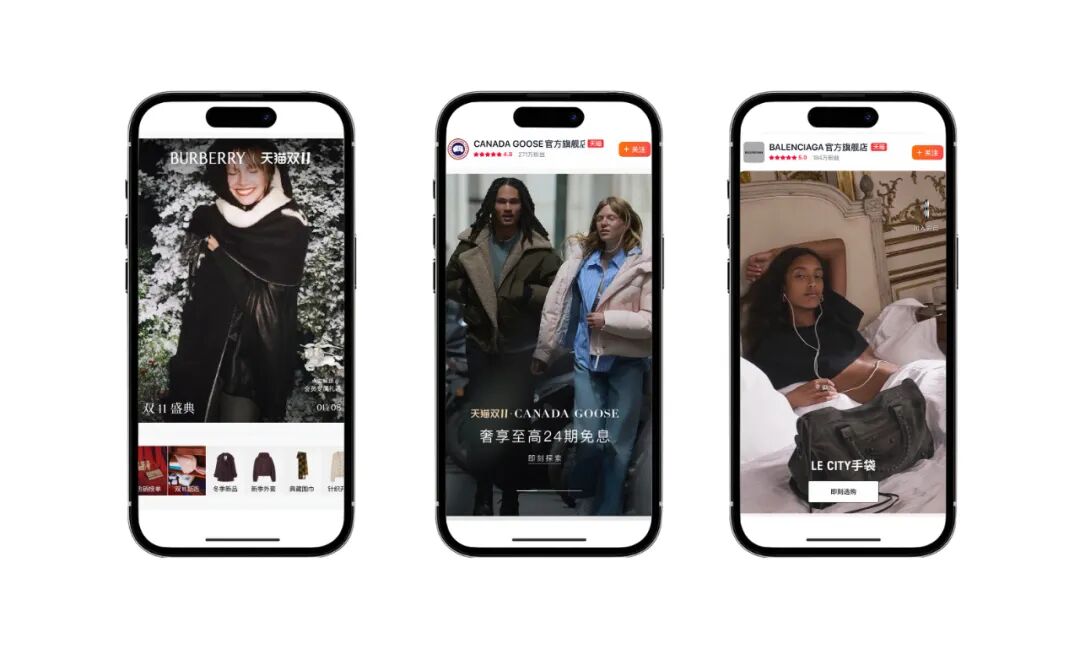
Core Insights - The trend of young consumers increasingly opting for online luxury purchases is reshaping shopping habits, with platforms like Tmall facilitating access to exclusive and diverse luxury products [1][12][16] Group 1: Online Luxury Shopping Trends - More young consumers are choosing to buy luxury goods online, breaking geographical and temporal barriers [1] - During this year's Double 11 shopping festival, brands like Balenciaga, Canada Goose, and Coach saw significant double-digit growth on Tmall, reflecting the rising trend of online luxury shopping [1] - Over 200 luxury brands launched new seasonal products exclusively on Tmall before Double 11, including limited editions and collaborations, enhancing the online shopping experience [1] Group 2: Seasonal and Functional Luxury Products - With the arrival of winter, functional luxury items have become a top choice for consumers, with brands like Moncler and Canada Goose launching new collections on Tmall [3][4] - The winter apparel category has been a significant driver of growth for luxury sales on Tmall, with brands like Ralph Lauren and Max Mara seeing substantial increases in sales [3] Group 3: Brand Strategies and Consumer Engagement - Luxury brands are increasingly focusing on understanding the lifestyle and emotional needs of Gen Z consumers, leading to a surge in sales for brands like Coach, which reported triple-digit growth during Double 11 [9][11] - Tmall's luxury segment is evolving from a mere sales platform to a medium for building long-term relationships with consumers, emphasizing emotional connections and lifestyle alignment [12][16] Group 4: Digital Transformation and Consumer Experience - The luxury industry is entering a new phase of digitalization, moving from basic online sales to a more integrated experience that combines social media, live streaming, and personalized recommendations [20][21] - AI technology is being leveraged to enhance the online shopping experience, with brands like Burberry successfully utilizing AI hosts for live streaming, significantly boosting sales [24] Group 5: Market Dynamics and Consumer Segmentation - The luxury market is becoming more fragmented, with consumers navigating between established brands and niche designers, reflecting a shift in how luxury is perceived [12][17] - Tmall's luxury segment is focusing on high-net-worth individuals, offering tailored experiences and exclusive access to products and events [18][19]

这个双11,线上奢侈品开始抓牢年轻人
36氪· 2025-11-14 09:07
Core Insights - The luxury goods market in China is experiencing a significant shift towards online purchasing, particularly among younger consumers who prefer the convenience and exclusivity of e-commerce platforms [4][5][11] - The 2023 Double 11 shopping festival saw luxury brands like Balenciaga, Canada Goose, and Coach achieve high double-digit growth on platforms like Tmall, indicating a strong demand for luxury items [5][13] - The rise of functional luxury items, particularly winter apparel, has become a key driver of sales, with brands launching exclusive collections tailored for the season [7][8] Group 1: Online Shopping Trends - More young consumers are opting for online purchases of luxury goods, with platforms offering a wide range of exclusive and limited-edition items [4][5] - Over 200 luxury brands launched new collections on Tmall ahead of Double 11, showcasing a trend towards unique and exclusive online offerings [5] - The winter apparel category has become a significant growth driver for luxury sales on Tmall, with brands like Moncler and Canada Goose introducing new lines [7] Group 2: Consumer Behavior and Preferences - The Z generation is purchasing luxury goods at a younger age, integrating them into their self-expression rather than waiting for career stability [11][12] - Brands like Coach have successfully engaged Z generation consumers by understanding their lifestyle and emotional needs, leading to substantial sales growth [12] - The luxury market is shifting from a focus on brand symbols to a more subjective approach based on lifestyle and design details [16][21] Group 3: E-commerce Platform Evolution - E-commerce platforms like Tmall are evolving from mere sales channels to emotional mediators that foster long-term relationships between brands and consumers [21][22] - The platform's role is to help brands convey meaning to the right audience rather than just increasing sales volume [22] - Tmall is implementing a tiered membership structure to enhance the shopping experience for high-net-worth individuals, offering exclusive access to new products and events [23] Group 4: Digital Transformation in Luxury Retail - The luxury industry is entering a new phase of digitalization, focusing on smart and content-driven experiences rather than just product listings [27][28] - Initiatives like the "Little Red Star" and "Red Cat Plan" are helping brands target specific consumer groups more effectively, resulting in significant sales conversions [28] - AI technology is being integrated into luxury retail, with brands utilizing AI hosts for live streaming and personalized shopping experiences, enhancing engagement and reducing costs [30]

Burberry集团2026上半财年营收10.32亿英镑,第二季度可比门店销售增长2%
Cai Jing Wang· 2025-11-14 04:06
Core Insights - Burberry Group reported a 5% year-on-year decline in total revenue to £1.032 billion for the first half of the 2026 fiscal year, with a 3% decline when adjusted for constant currency [1] - Adjusted operating profit stood at £19 million [1] - Comparable store sales increased by 2% in the second quarter, reversing a 1% decline in the first quarter [1] Revenue Performance - EMEIA region revenue grew by 1% year-on-year, with local consumption offsetting declines in tourism spending [1] - The Americas saw a 3% growth driven by new customer acquisition [1] - Greater China experienced a 1% decline, although it rebounded with a 3% growth in the second quarter; the Asia-Pacific region declined by 2% [1] Strategic Initiatives - The company is reinforcing its "Timeless British Luxury" brand positioning and accelerating the narrative around British heritage to enhance brand appeal [1] - Positive market response to the 2025 Autumn/Winter collection, with strong performance in outerwear and scarves extending to other categories; additional demand from core wholesale partners for the 2026 Spring/Summer collection [1] - Store experience optimization is underway, including product display upgrades and cross-category sales enhancements, with over 100 scarf zones opened and plans to reach 200 by year-end [1] Customer Engagement - The company is seeing a gradual improvement in customer growth, with both new and returning customers increasing [1] - Cost efficiency plans are progressing, targeting an annual saving of £8 million by the end of the 2026 fiscal year [1] Leadership Perspective - CEO Joshua Schulman highlighted that the "Burberry Forward" strategy, implemented over the past year, has deepened the brand's expression centered on "Timeless British Luxury," optimizing product supply and driving consumer return, resulting in the first same-store sales growth in two years [2]
港股异动 | 普拉达(01913)跌超4% Prada品牌首次录得负增长 公司称仍计划在意大利作双重上市
智通财经网· 2025-11-14 01:43
Core Viewpoint - Prada's recent performance shows a slowdown in revenue growth, particularly for the Prada brand, which has recorded negative growth for the first time since 2020, while Miu Miu's growth is normalizing despite being faster than peers [1] Group 1: Financial Performance - Prada's stock fell over 4%, currently down 3.32% at HKD 46.6, with a trading volume of HKD 28.27 million [1] - Citigroup noted that revenue growth for the second and third quarters has slowed to unit numbers, indicating a concerning trend for the Prada brand [1] - The group's profit margin is expected to remain at 23.6% in 2024, which is approximately 350 basis points lower than historical highs [1] Group 2: Brand Performance - The Miu Miu brand continues to grow faster than its competitors, but its growth rate is beginning to normalize [1] - Significant investments in advertising, manufacturing, IT infrastructure, and retail network expansion are required for Miu Miu, which may suppress profit margin expansion [1] Group 3: Strategic Outlook - Prada's CFO, Andrea Bonini, stated that the company plans to pursue a dual listing, with a six-month consideration period for the Italian listing, but no commitments have been made yet [1] - The luxury goods market is currently stable, with positive conditions in the U.S. market, although caution is advised due to potential market bubbles fostering overly optimistic sentiments [1]

普拉达仍计划在意大利作双重上市
Ge Long Hui A P P· 2025-11-14 01:13
Core Viewpoint - The company plans to pursue a dual listing, with a six-month timeframe to consider its listing in Italy, without making any immediate commitments [1] Group 1: Market Conditions - The luxury goods market is currently stable, with positive performance in the U.S. market [1] - Overall, it is difficult to criticize the performance in the U.S., although the company remains cautious about potential market bubbles that could foster overly optimistic sentiments [1]
中国市场回暖助推,Burberry Q2业绩扭亏为盈,销售额两年来首次实现季度增长
美股IPO· 2025-11-14 00:37
Core Viewpoint - Burberry has shown signs of recovery with a 2% year-on-year increase in comparable store sales in the second fiscal quarter, ending a seven-quarter decline, driven by a resurgence in demand from the Chinese market [1][3][6]. Financial Performance - The company reported an adjusted operating profit of £19 million (approximately $25 million) for the first half of the year, a significant turnaround from a loss of £41 million in the same period last year [3][6]. - Comparable store sales in regions including China grew by 3% in the last three months, reversing a previous decline of 5% [3][6]. Strategic Changes - Under CEO Joshua Schulman's leadership, Burberry has implemented a revival plan focusing on classic outerwear and cost-cutting measures, which has begun to yield positive results [3][7]. - The strategy emphasizes a return to the brand's roots, highlighting products like trench coats and scarves, contrasting with previous management's focus on expensive handbags [7]. Market Reaction - The positive financial results have boosted market confidence, reflected in a 28% increase in Burberry's stock price year-to-date and its return to the FTSE 100 index [3][6]. - Analysts view Burberry's strategic plan as robust, indicating that all performance indicators have been met and that the execution is on track [8].