家电

Search documents
“彩电大王”康佳暴雷:一次财务大“洗澡”亏掉百亿,9亿转让武汉天源股份回血
Sou Hu Cai Jing· 2026-02-13 01:31
Core Viewpoint - Konka's latest earnings forecast for 2025 indicates a significant decline, raising concerns about potential "financial washing" practices due to substantial impairment provisions on inventory and other assets [2][4][8]. Group 1: Financial Performance - Konka expects 2025 revenue to be between 9 billion and 10.5 billion yuan, representing a year-on-year decline of 5.53% to 19.03% [4]. - The company anticipates a net loss attributable to shareholders of 12.581 billion to 15.573 billion yuan, an increase in losses of 281.75% to 372.54% compared to the previous year [4]. - Konka's net assets attributable to shareholders are projected to be negative, with liabilities ranging from 5.334 billion to 8.01 billion yuan, a decline of 325.09% to 437.64% year-on-year [4][6]. Group 2: Asset Management and Impairments - The significant changes in performance are attributed to impairment provisions on inventory, receivables, and investments in underperforming subsidiaries [5][9]. - In the third quarter, Konka reported asset impairment losses of 17.4 million yuan and credit impairment losses of 10.5 million yuan, totaling 27.9 million yuan [7]. - The company has been actively selling and transferring shares in subsidiaries to recover funds, indicating a strategic shift towards asset liquidation [3][11]. Group 3: Corporate Governance and Strategic Direction - Recent changes in ownership and management, including the transfer of shares to China Resources and the resignation of key executives, have raised questions about the timing of the financial disclosures [10][16]. - Analysts suggest that the new shareholders may be clearing old debts and underperforming assets as part of a strategy to streamline operations and prepare for future restructuring [11][16]. - The focus on core business operations aligns with directives from the State-owned Assets Supervision and Administration Commission (SASAC) to optimize state-owned enterprises [16].



一大波新春消费大礼包来了!请查收
Sou Hu Cai Jing· 2026-02-13 01:27
Core Viewpoint - Recent initiatives by market regulation, commerce, cultural tourism, and consumer organizations aim to enhance consumer confidence and safety during the festive season, providing various subsidies and activities to promote spending and enjoyment [1]. Group 1: Market Regulation Initiatives - The newly revised "Food Recall Management Measures" emphasizes the responsibilities of food producers and market regulators, requiring them to establish and implement food recall management systems [4]. - The revised measures clarify the supervisory responsibilities of market regulation departments at different levels, ensuring effective oversight of food recalls and handling [5]. - The new regulations introduce a tiered recall system based on the severity of food safety hazards, adjusting recall initiation times to 24, 36, and 48 hours to improve risk management [5]. - Increased penalties for non-compliance with recall procedures are included, targeting various stakeholders involved in food distribution and sales [5]. Group 2: Consumer Subsidies in Commerce - The Sichuan Provincial Government announced a vehicle replacement subsidy program for 2026, offering up to 20,000 yuan for consumers who trade in old vehicles [11]. - The subsidy program includes two categories: "scrap replacement" and "trade-in replacement," with specific eligibility criteria for vehicles based on registration dates and types [11][12]. - In addition to vehicle subsidies, a new round of consumer subsidies for home appliances and digital products has been introduced, with specific guidelines for eligible products and subsidy amounts [13][14]. Group 3: Cultural and Tourism Activities - The "Thousand Dragons and Lions Dance for the New Year" cultural event in Sichuan features over 2,000 cultural activities, showcasing traditional performances and local heritage [18][23]. - The event includes a variety of performances from different regions, integrating local cultural elements and promoting community engagement [19][20]. - The cultural activities aim to enhance tourism and consumer engagement during the festive season, with a focus on traditional crafts and local products [22][23]. Group 4: Consumer Safety Tips - Consumer organizations across twelve regions have issued safety tips for the 2026 Spring Festival, advising against excessive packaging and promoting the purchase of safe, quality products [26][27]. - Recommendations include using reputable e-commerce platforms, practicing food safety, and ensuring compliance with travel service regulations to avoid scams [27][28]. - Consumers are encouraged to document transactions and seek assistance in case of disputes, emphasizing the importance of consumer rights protection [28].

优化“两新”政策实施 激发绿色转型新动能
Zhong Guo Huan Jing Bao· 2026-02-13 00:39
Core Viewpoint - The recent optimization of the "Two New" policy aims to systematically integrate green development concepts into the entire policy design, execution, and evaluation process, promoting a comprehensive green transformation of China's economic and social development [1][8]. Group 1: Policy Coverage and Implementation - The optimized policy significantly expands its support boundaries, creating a multidimensional green renewal system that encompasses production, daily life, and public services [2]. - It includes support for upgrading public safety and living conditions, such as installing elevators in old residential areas and upgrading firefighting equipment, which enhances public service quality and promotes low-carbon urban infrastructure [2]. - The policy explicitly supports energy-saving renovations in large commercial facilities, which can lead to substantial energy savings and serve as a model for green operations in the commercial sector [2]. Group 2: Subsidy Mechanism Optimization - The policy emphasizes a refined and differentiated subsidy mechanism, focusing on "rewarding excellence and promoting green" to enhance the environmental efficiency of fiscal funds [3]. - It introduces a more scientific and incentive-based approach to subsidies, such as tiered subsidies for residential elevator upgrades based on building floors and prioritizing electric vehicle replacements for old trucks [3]. - The design aims to lower the cost of green purchases for consumers, thereby stimulating immediate energy savings and sending clear market demand signals to production enterprises [3]. Group 3: Implementation Mechanism Enhancement - The policy aims to simplify processes and lower barriers for small and medium-sized enterprises (SMEs), which are crucial for equipment updates and green production [4]. - It introduces evaluations of local execution and auditing, along with a pre-allocation system for funds, to ensure that financial resources effectively support green transitions [4]. - A unified national standard for key category subsidies is established to maintain fairness and prevent fraudulent practices, ensuring that fiscal funds are used to incentivize green transformation [4]. Group 4: Recycling Network and Circular Economy - The policy emphasizes the importance of a smooth recycling and utilization chain, highlighting the need for a comprehensive management approach to resources [5][6]. - It supports the development of a three-tier recycling system and encourages new models like "Internet + Recycling" to create a convenient and standardized recycling network [6]. - The focus is shifting from mere recycling to high-value reuse and remanufacturing, aiming to maximize the value of "urban minerals" and reduce reliance on primary resources [6]. Group 5: Standards and Industry Upgrade - The policy underscores the role of standards in driving industrial progress and green development, aiming to elevate energy consumption and emission standards in key industries [7]. - It mandates stricter enforcement of vehicle scrappage and environmental inspection standards, promoting the timely update of appliances and combating fraudulent energy efficiency labeling [7]. - This combination of measures is designed to accelerate the elimination of outdated, high-energy-consuming equipment while purifying the market environment for green products [7]. Group 6: Overall Policy Integration - The optimization of the "Two New" policy is characterized by a clear logic: expanding coverage for precise guidance, optimizing subsidies for enhanced incentives, improving mechanisms for fairness, facilitating recycling for a closed loop, and elevating standards to drive upgrades [8]. - The comprehensive policy aims not only to stimulate current demand and industrial upgrades but also to shape long-term green production and consumption patterns, integrating ecological civilization into the entire economic and social development process [8].
中金:另眼看消费
Xin Lang Cai Jing· 2026-02-13 00:23
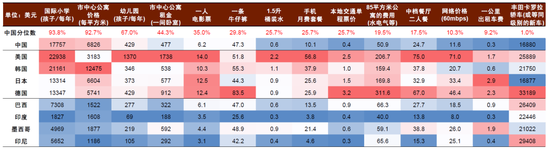
Group 1 - The article discusses the debate surrounding China's consumption rate, suggesting that it may not be as low as commonly perceived when compared internationally [1][18] - It emphasizes the importance of comparing consumption rates with domestic supply capabilities, indicating that improvements in supply capacity due to technological advancements support potential growth [3][19] - The article highlights that weak prices reflect a discrepancy between actual and potential growth, suggesting a need to enhance consumption to align actual growth with potential growth [4][20] Group 2 - Historical context is provided, illustrating that consumer demand evolves over time, with an increasing variety of products available, driven by technological advancements [21][22] - The article notes that even in slowing growth sectors, specific subcategories of consumption, such as premium and low-penetration products, continue to see growth [29][30] - It concludes with the expectation that the "14th Five-Year Plan" aims to significantly increase the household consumption rate, indicating a large potential for growth in China's consumption space [15][34]
中经评论:各地经济增长目标设定更趋务实
Jing Ji Ri Bao· 2026-02-13 00:05
Core Viewpoint - The economic growth targets for 2026 set by 31 provinces in China show a pragmatic approach, with over 70% of provinces aiming for growth rates not lower than "around 5%" [1][2] Group 1: Economic Growth Targets - Tibet has the highest growth target set at "above 7%", continuing its trend of leading national growth for three consecutive years since 2023 [1] - Hainan's target is "around 6%", significantly higher than its actual growth of 4% in 2025 [1] - The majority of provinces, including Beijing, Shanghai, and Henan, have set their targets at "around 5%", with 11 provinces falling into this category [1] Group 2: Characteristics of Growth Targets - The growth targets reflect a more pragmatic and stable approach, with an increase in the number of provinces setting flexible target ranges, now totaling seven [2] - Economic powerhouses continue to play a crucial role, with nine major provinces maintaining growth targets in the "5" range, indicating their importance in driving national economic growth [2] Group 3: High-Quality Development Focus - There is a shift from merely pursuing GDP growth to emphasizing substantial and quality improvements, aligning with national development strategies [3] - Provinces are focusing on expanding domestic demand, with specific initiatives in consumer sectors like automobiles and digital products [3] - Investment strategies are becoming more targeted, with provinces like Jiangxi and Gansu emphasizing effective investment in key areas such as new productivity and urbanization [3] Group 4: Supply Optimization and Innovation - Provinces are promoting the integration of technological and industrial innovation, with a focus on nurturing new productive forces [4] - Emerging industries such as new materials and artificial intelligence are being prioritized, with specific targets for their contribution to industrial output [4] - Local governments are making efforts to improve living standards through job creation and social services, ensuring that high-quality development is tangible and impactful [4]
2026年第5周:跨境出海周度市场观察
艾瑞咨询· 2026-02-13 00:02
Group 1 - Vietnam is identified as the most suitable market for new consumer brands in fast-moving consumer goods (FMCG), with traditional channels dominating at 80%, while modern supermarkets and e-commerce are rapidly growing [3] - E-commerce platforms like TikTok Shop are experiencing explosive growth, but traditional channels remain core to consumer preferences, which favor low-priced, small-sized products [3] - Chinese brands are advised to adopt a phased approach in Vietnam, starting with e-commerce to test products before entering chain supermarkets, emphasizing content marketing and local outreach [3] Group 2 - The article reviews ten cross-border payment institutions, including Ksher, Airwallex, Stripe, Wise, PayPal, and others, highlighting their unique features and suitability for different market needs [4] - Companies are encouraged to select payment platforms based on their target markets and business requirements [4] Group 3 - By 2025, "Chinese good products" are expected to achieve global sales, with a focus on large equipment and consumer electronics, driven by innovation and rapid iteration [5] - A Shenzhen-based 3D printing company exports over 90% of its products to more than 150 countries, benefiting from an efficient supply chain in the Pearl River Delta [5] - High-tech products like panoramic drones are gaining popularity, with over 30,000 units shipped in the first month [5] Group 4 - TP China released a report discussing how Chinese brands can leverage AI, deep localization, and global delivery systems for intelligent operations [6] - The report emphasizes the need for sustainable growth through intelligent operations across various markets, highlighting four key forces: AI-native operations, localization maturity, global compliance complexity, and upgraded customer expectations [6] Group 5 - The Chinese smart electric vehicle industry is rapidly advancing in global markets, with companies like XPeng Motors adapting their products to meet international demands [8] - The shift from "product output" to "system output" reflects the international recognition of Chinese electric vehicle technology [8] - The article notes the increasing delivery volumes and brand influence of Chinese electric vehicle manufacturers, indicating a transition from scale expansion to quality improvement [8] Group 6 - The 2026 CES showcased an upgrade in the globalization of Chinese brands, with 916 participating companies, marking a significant presence [9] - Companies like Insta360 and Trifo demonstrated a shift from cost-effective hardware to brand value and technological scenarios [9] - The article highlights the importance of industry chain collaboration and the transition from "product export" to "ecosystem export" for Chinese brands [9] Group 7 - The article discusses the impact of the US-China tariff dispute on foreign trade, noting an 18.9% decline in exports to the US, while overall exports still grew by 5.4% [10] - Emerging markets in Europe, Latin America, and the Middle East are becoming growth engines for cross-border e-commerce [10] - The end of the global "duty-free era" is prompting e-commerce platforms to accelerate localization and brand strategies [10] Group 8 - The marketing budget for brands is expected to grow by 10% in 2026, with overseas markets accounting for 25% of total spending [11] - AI technology is optimizing marketing strategies, but long-term brand building requires a comprehensive approach [11] - The article discusses the challenges of cultural differences in overseas markets and how the SuperAgent platform can help brands navigate uncertainties [12] Group 9 - The article highlights the continuous growth of China-Africa trade, with trade volume expected to exceed $310 billion in 2025 [13] - The African Continental Free Trade Area (AfCFTA) is facilitating zero-tariff trade for 90% of goods, reducing costs for businesses [13] - Despite the opportunities, challenges such as geopolitical risks and compliance issues remain [13] Group 10 - The report indicates that the overseas revenue of the top 100 Chinese brands reached 24.08%, amounting to 11 trillion yuan [14] - Brands are facing challenges related to emotional demand, media changes, and tariff risks, prompting strategic upgrades [14] - The article emphasizes the importance of AI in enhancing marketing efficiency and the need for localized strategies in emerging markets [14] Group 11 - The article discusses the transformation of Chinese new consumption brands, highlighting the success of products like Bubble Mart and home robots in global markets [15] - The Z generation's preference for interest-based consumption is driving growth in new product categories [15] - The focus on emotional value and digital management is crucial for successful overseas expansion [15] Group 12 - The article notes that the AI hardware sector is becoming a focal point, with rapid industry iteration driven by open-source models and cost reductions [16] - Companies face survival challenges due to limited hardware barriers and the need for deep collaboration with supply chain partners [16] - The importance of diversifying channels and adapting to technological changes is emphasized for success in global competition [16] Group 13 - The article highlights the shift of emerging tech brands in North America from low-cost strategies to high-end, intelligent, and scenario-based positioning [17] - Companies like Trifo and Baseus are meeting diverse market needs through localized marketing and product innovation [17] - The balance between unified core values and localized flexibility is crucial for global brand competitiveness [17] Group 14 - The Chinese short drama market is projected to exceed 100 billion yuan in value by 2025, surpassing film box office revenues [18] - The article discusses the challenges of high investment costs, content homogenization, and insufficient localization in the short drama industry [18] - AI technology is seen as a new engine for short drama exports, enhancing efficiency and reducing production costs [18] Group 15 - The article discusses the explosive growth of China's innovative pharmaceuticals, with overseas licensing amounts exceeding $130 billion [20] - The focus is shifting from "selling products" to "selling capabilities," emphasizing the importance of R&D platforms and clinical development [20] - Chinese pharmaceutical companies are increasingly participating in global layouts through risk-sharing models [20] Group 16 - The Chinese film industry is experiencing significant growth in overseas markets, with total overseas box office revenue exceeding 1 billion yuan [21] - The systematic promotion of co-productions and new-generation directors is broadening international perspectives [21] - The article highlights the importance of overcoming cultural barriers and the need for policy support for further development [21] Group 17 - Southeast Asia and Latin America are emerging as new growth markets, with regional collaboration driving youth trends [22] - AI social applications are gaining traction, but the industry faces risks and challenges [22] - The article emphasizes the need for localized strategies and compliance in the social media landscape [22] Group 18 - The Chinese home appliance manufacturing industry holds a 45% global market share, but retail share of self-owned brands is below 20% [23] - The reliance on OEM and acquisition models is facing challenges, with low profit margins and integration difficulties [23] - The article suggests a shift from "manufacturing export" to "brand export" to enhance international competitiveness [23] Group 19 - Chinese enterprises are moving towards diversified and deep layouts in global markets, requiring higher standards for cross-border financial services [25] - Standard Chartered Bank's report indicates a significant demand for tax and legal consulting among entrepreneurs [25] - The bank is launching a "business overseas concierge" service to support companies in their global expansion efforts [25] Group 20 - The article discusses the five major social media trends driven by AI, emphasizing the transformation of the consumer journey [26] - The Asia-Pacific region has the highest number of social media users, with significant growth in platforms like Facebook and Instagram [26] - Companies are encouraged to integrate AI, social interaction, and humanized experiences for global growth [26] Group 21 - The report indicates that the scale of outbound consumer brands is expected to reach $823.1 billion in 2026, with a growth rate exceeding 10% [27] - Head brands are showing significant globalization characteristics, with the Pearl River Delta and Yangtze River Delta as core regions for expansion [27] - The article emphasizes the need for brands to shift from "opportunity-driven" to "capability-driven" strategies [27] Group 22 - The Chinese robotics industry is transitioning from "following" to "leading" in global technology competition, with significant growth in the Middle East market [29] - The article highlights the importance of technological breakthroughs and global layout for the Chinese robotics industry [29] - Despite challenges, companies are enhancing their global influence through collaborative industry chains and diversified technology routes [29] Group 23 - Xiaomi and Alibaba's AliExpress have formed a strategic partnership to enhance global brand promotion and product distribution [30] - This collaboration aims to leverage both companies' resources to address market saturation and competition pressures [30] - The partnership signifies a new phase of collaboration among Chinese enterprises in their global expansion efforts [30] Group 24 - Yuanji Food has submitted an IPO application, with a focus on expanding its brand in Southeast Asia [31] - The company reported a revenue of 1.982 billion yuan and a GMV of 4.789 billion yuan, with a significant portion coming from takeout [31] - Plans for digitalization and supply chain upgrades are in place to support overseas expansion [31] Group 25 - The app "Demumu" has gained significant traction, addressing safety concerns for young adults living alone [32] - The app's success is attributed to its unique value proposition and viral marketing strategies [32] - However, the app faces competition and uncertainties regarding its long-term sustainability [32] Group 26 - 87% of Amazon sellers are considering AliExpress as a second growth curve for brand expansion [33] - The platform's "super brand export plan" is helping brands expand into new markets at lower costs [33] - AliExpress is enhancing its overseas services to meet the growing demands of merchants [33] Group 27 - Lenovo has been recognized as a global benchmark for Chinese enterprises, with its "China + N" strategy gaining international acclaim [34] - The company has established a robust global presence, with significant production and R&D capabilities concentrated in China [34] - Lenovo's approach to cross-cultural management and brand influence through international partnerships is highlighted as a model for global expansion [34] Group 28 - Yidian Tianxia has achieved stable profitability in the AI industry, with 80% of its revenue coming from overseas [36] - The company focuses on enhancing advertising efficiency through AI and supporting Chinese brands in their global expansion [36] - However, reliance on overseas platforms and policies poses potential risks for the company's future [36] Group 29 - Cloud Whale has transformed from a product exporter to a global brand, achieving significant overseas orders [37] - The company's high-end products leverage AI technology for smart environmental recognition, driving rapid revenue growth [37] - Cloud Whale aims to redefine its role in the smart home sector, moving from manufacturing to defining family intelligence [37] Group 30 - ByteDance is accelerating its overseas AI strategy, launching various AI tools and establishing a data security joint venture [39] - The focus is on Southeast Asia and South America, avoiding competition in the US market [39] - The company's strategy aims to enhance its global AI competitiveness and expand its ecosystem [39] Group 31 - Chinese beauty brands are successfully entering the North American market through partnerships with retailers like ULTA Beauty [40] - The article emphasizes the importance of understanding consumer needs and optimizing brand positioning for successful market entry [40] - The case of ULTA Beauty provides insights into differentiated operations for Chinese brands in global markets [40] Group 32 - TikTok is testing a new short drama application, PineDrama, aimed at capturing the global short drama market [41] - The app focuses on female-centric themes and aims to enhance user engagement through immersive storytelling [41] - However, the company faces challenges in content localization and competition from established players [41] Group 33 - Midea Group's acquisition of Ricoh's medical business marks its entry into the healthcare sector, aiming to create smart hospital solutions [42] - The article discusses the challenges of integrating Midea's efficiency-driven culture with the long cycles of the healthcare industry [42] - The success of this acquisition will depend on effective integration and overcoming competitive pressures [42] Group 34 - Ping An Insurance is providing a comprehensive risk management solution for the Jakarta-Bandung high-speed railway project [44] - The project symbolizes the global reach of Chinese manufacturing and standards [44] - The insurance model combines technology and local support to manage risks effectively [44]

海信推动传统家电产业向智能制造、智慧家居升级 从屏联万物迈向智联生态
Ren Min Ri Bao· 2026-02-12 22:24
Group 1 - The core viewpoint of the articles emphasizes Hisense's strategic shift towards integrating artificial intelligence with display technology, enhancing user experience through innovative products and solutions [1][2]. - Hisense has launched the RGB light color co-control AI image quality chip, XinXin H7, which utilizes built-in algorithms to analyze display scenes in real-time, adjusting brightness and color accuracy to create realistic colors [1]. - The company is committed to a "human-scale" approach, developing a heterogeneous AI computing platform that coordinates computing power, algorithms, and data across the entire process, providing a truly intelligent experience for users [1]. Group 2 - Hisense is leveraging the Xinghai large model to transition display technology from "screen connecting everything" to "intelligent ecological connection," optimizing energy efficiency and providing contextual smart services [2]. - The industrial AI visual inspection system developed by Hisense has improved detection efficiency by ten times, enhancing product performance while contributing to energy conservation and carbon reduction [2]. - The company is actively promoting the upgrade of traditional home appliance industries to smart manufacturing and smart home solutions, while also expanding into strategic sectors such as semiconductors, smart energy, and automotive electronics [2].

海尔深耕六大产业生态 努力创造更美好的生活
Ren Min Ri Bao· 2026-02-12 22:24
Group 1 - The company focuses on six major industrial ecosystems: smart home, health care, digital economy, robotics, new energy, and automotive, while actively developing artificial intelligence technology to enhance the "user-centered" philosophy [1][2] - The key to smart homes is making artificial intelligence more intuitive to daily life, exemplified by the three-tub washing machine, which has sold over 400,000 units online, showcasing user participation in product co-creation [1] - The number of smart terminals linked to the platform has exceeded 100 million, providing users with more convenient smart home services [1] Group 2 - The company leverages the Kaos industrial internet platform to deepen its engagement in the digital economy, having developed the Tianzhi industrial model, which integrates over 4,700 mechanism models and 200 expert algorithms to assist enterprises in digital transformation [2] - The transition from a home appliance company to an ecosystem enterprise is underway, with ongoing expansion into new industries such as robotics, new energy, and automotive [2] - The competition in the future is expected to shift from individual companies to dialogues between ecosystems, as stated by the company's chairman and CEO [2]

内蒙古开启“乐购新春”消费盛宴
Xin Lang Cai Jing· 2026-02-12 20:33
Core Viewpoint - Inner Mongolia Autonomous Region is launching a large-scale consumption promotion event themed "Happy Shopping for the New Year" to stimulate consumer spending during the upcoming Lunar New Year, with an investment of over 65 million yuan in consumer vouchers and nearly 400 promotional activities across various sectors [1] Group 1: Event Overview - The consumption promotion event will focus on key sectors such as department stores, automobiles, home appliances, dining, and cultural tourism [1] - A total of over 65 million yuan will be allocated for the issuance of consumer vouchers [1] - The event aims to create a festive atmosphere for both local residents and visitors, enhancing the overall consumer experience [1] Group 2: Regional Initiatives - Hohhot City offers up to 20,000 yuan off car purchases, 1,500 yuan subsidies for mobile phone purchases, and dining vouchers worth 1 million yuan [1] - Baotou City is distributing 4 million yuan in consumer vouchers across all categories, with over 80 promotional events in major shopping areas [1] - Ordos City has introduced a "trade-in + consumption subsidy + special activities" package to benefit consumers [1] - Hulunbuir City is hosting over 60 promotional events and distributing 8 million yuan in consumer vouchers [1] - Xingan League has issued over 8.5 million yuan in consumer vouchers covering daily consumption [1] - Chifeng City has launched over 8.4 million yuan in consumer subsidies across various sectors including department stores, dining, home appliances, automobiles, and cultural tourism [1] Group 3: Collaborative Efforts - The event involves collaboration among government, banks, and enterprises, promoting a deep integration of online and offline activities [1] - The initiative aims to deliver tangible benefits and a lively festive atmosphere to households, effectively activating the consumption potential in Inner Mongolia [1]

“新国补”点燃消费市场新活力
Xin Lang Cai Jing· 2026-02-12 20:33
Group 1 - The core viewpoint of the article highlights the increasing consumer enthusiasm for the "old-for-new" policy in the context of automobiles, home appliances, digital products, and smart devices, driven by the implementation of the "New National Subsidy" policy [3] - The "old-for-new" policy is aligned with the evolving consumer demand from basic living needs to new intelligent experiences, indicating a significant shift towards quality, intelligence, and health in product offerings [3] - This policy is expected to provide strong support for activating service consumption, thereby stimulating economic growth in related sectors [3]