
超市

Search documents
永辉超市跌2.01%,成交额1.99亿元,主力资金净流出495.36万元
Xin Lang Cai Jing· 2025-10-16 01:59
Core Viewpoint - Yonghui Supermarket's stock price has experienced a decline of 23.19% this year, with a recent drop of 2.01% on October 16, 2023, indicating ongoing challenges in the retail sector [1][2]. Financial Performance - As of June 30, 2025, Yonghui Supermarket reported a revenue of 29.948 billion yuan, a year-on-year decrease of 20.73%, and a net profit attributable to shareholders of -241 million yuan, a significant decline of 187.38% [2]. - The company has not distributed any dividends in the past three years, with a total payout of 7.101 billion yuan since its A-share listing [3]. Stock Market Activity - The stock price was reported at 4.87 yuan per share with a market capitalization of 44.195 billion yuan as of October 16, 2023 [1]. - The stock has seen a trading volume of 199 million yuan and a turnover rate of 0.45% on the same day [1]. - In the past five trading days, the stock has increased by 5.18%, while it has decreased by 5.80% over the last 20 days [2]. Shareholder Information - As of June 30, 2025, the number of shareholders decreased by 6.24% to 359,800, while the average circulating shares per person increased by 6.66% to 25,220 shares [2]. - The top ten circulating shareholders include Hong Kong Central Clearing Limited, which increased its holdings by 11.8954 million shares to 104 million shares [3].

11块30枚鸡蛋背后:大厂超市硬折扣战争
3 6 Ke· 2025-10-15 11:41
Core Viewpoint - The article discusses the emergence of "hard discount" supermarkets in China, highlighting their competitive pricing strategies and operational efficiencies compared to traditional supermarkets [4][16][46]. Group 1: Hard Discount Concept - Hard discount stores like JD Discount Supermarket, Super Box NB, and Happy Monkey are characterized by significant price reductions on quality products, aiming to attract price-sensitive consumers [4][16]. - The term "hard discount" refers to a pricing strategy that offers stable supply and quality products without relying on markdowns from unsold inventory [17][18]. - The model contrasts with "soft discount," which typically involves selling off excess inventory at reduced prices, often leading to unstable supply [6][11][12]. Group 2: Supply Chain and Cost Structure - The supply chain for supermarkets consists of manufacturers, distributors, and retail stores, with each stage contributing to the overall cost structure [21][22]. - Hard discount supermarkets manage to reduce costs by sourcing directly from manufacturers, minimizing the role of distributors, and avoiding additional fees typically charged by traditional retailers [30][31]. - The operational model emphasizes low overhead costs, often featuring minimal store decor and simplified product displays to keep prices low [32][33]. Group 3: Competitive Advantages - Hard discount stores leverage large purchasing volumes to negotiate better prices from suppliers, allowing them to offer lower prices to consumers [36][40]. - The strategy of reducing SKU counts enables these stores to focus on high-demand products, enhancing their bargaining power and operational efficiency [40][42]. - The article notes that the success of hard discount models in China is supported by the strong supply chain capabilities of domestic internet giants, which can utilize data analytics for inventory management and consumer preferences [46][52]. Group 4: Market Dynamics and Consumer Behavior - The article suggests that the hard discount model aligns well with the price-sensitive nature of Chinese consumers, similar to the market dynamics in Germany where this model originated [43][44]. - It emphasizes that low prices do not equate to compromised quality, as consumers still expect reliable products even at discounted rates [58][59][60]. - The ongoing competition among major players in the hard discount sector is expected to continue, driven by the need for efficient supply chains and quality product offerings [56][57].




胖东来公司账上资金有41亿
盐财经· 2025-10-15 09:52
Core Viewpoint - The founder of Pang Donglai emphasizes the importance of social responsibility in business, stating that the focus should be on employee happiness rather than blind expansion or personal gain [2][10]. Group 1: Company Performance - Pang Donglai's total sales have exceeded 18.4 billion this year, surpassing the total sales of the previous year [5][6]. - During the recent National Day and Mid-Autumn Festival holidays, Pang Donglai achieved a total sales of 820 million over eight days, with supermarket sales being the main contributor at approximately 404 million [9][10]. - The company aims to control its sales growth, planning to keep sales within 20 billion this year to avoid overburdening employees [10]. Group 2: Employee Welfare - The average after-tax salary for employees is nearly 10,000, with a low employee turnover rate of only 0.94% [11][12]. - Pang Donglai has recently attracted significant attention for its recruitment efforts, with a recent job posting receiving over 132,000 applications [12]. - The company organizes overseas trips for employees to broaden their horizons, with the intention of covering travel expenses [13].

于东来最新透露:胖东来账上资金41亿元,没有一分钱贷款
Zhong Guo Ji Jin Bao· 2025-10-15 07:47
Group 1 - The founder of Pang Donglai, Yu Donglai, emphasizes that companies should avoid blind expansion and focus on employee happiness and social responsibility [1][2] - Pang Donglai currently has a cash balance of 4.1 billion yuan and operates with zero debt, which distinguishes it in the competitive retail industry [2] - As of October 14, 2025, Pang Donglai's total sales have exceeded 18.5 billion yuan, with sales during the National Day and Mid-Autumn Festival holiday reaching 820 million yuan [2] Group 2 - Yonghui Supermarket, referred to as a "student" of Pang Donglai, has reported an average customer flow increase of 80% in its reformed stores, with over 60% of these stores achieving profitability levels surpassing the highest in the past five years [3][5] - The reform at Yonghui Supermarket began in May 2024, focusing on a "product-centered" strategy, with plans to collaborate with 200 strategic partners to create 100 billion-yuan products over the next three years [3][5] - Despite the positive outcomes from the reform, Yonghui Supermarket faced a revenue decline of 20.73% in the first half of 2025 and closed 227 unprofitable stores [5]
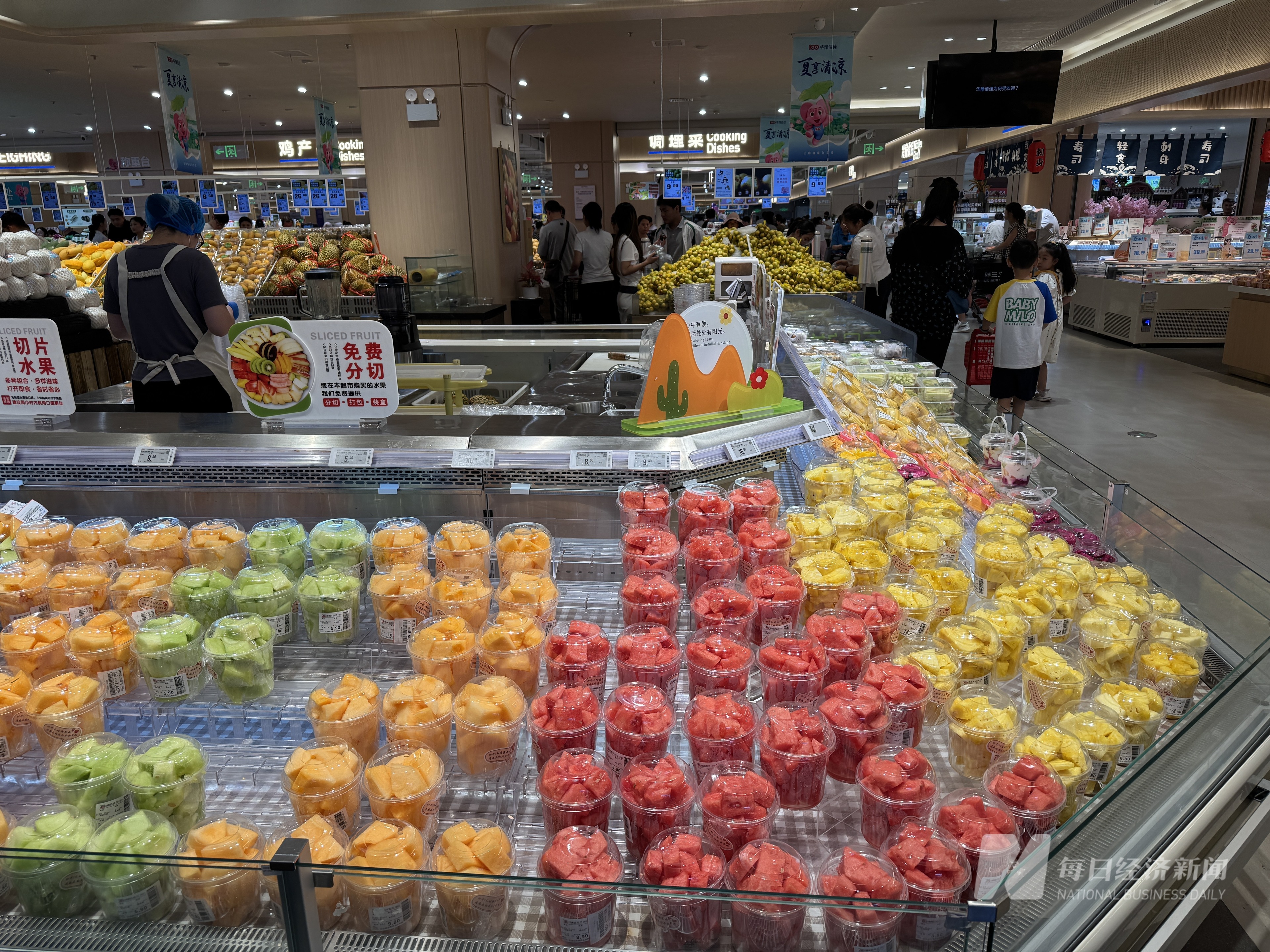
砍中间商推自有品牌,价格战转向“价值战” 河南超市都在打造什么样的新势力?
Mei Ri Jing Ji Xin Wen· 2025-10-15 07:24
Core Insights - The article highlights the rise of "supermarket tourism" in Henan, particularly focusing on the success of the supermarket chain "胖东来" (Pang Dong Lai), which achieved sales of 820 million yuan during the recent holiday period, surpassing its entire 2024 sales in just eight days [1][2] - The overall retail sales in Henan during the holiday reached 3.054 billion yuan, marking a 2.6% year-on-year increase, indicating a positive trend in consumer spending [1] - The emergence of new supermarket players in Henan, such as "华豫佰佳" (Hua Yu Bai Jia) and "淘小胖" (Tao Xiao Pang), is characterized by a focus on quality, service, and the development of private label products, moving away from a price-centric competition model [1][7] Group 1: Market Trends - The "supermarket tourism" phenomenon has gained traction, with consumers viewing supermarkets as attractions, leading to increased foot traffic and sales [1][2] - New supermarket entrants are rapidly expanding, with "淘小胖" planning to open new stores and "华豫佰佳" upgrading existing locations to enhance customer experience [2][3] - The focus has shifted from merely competing on price to emphasizing quality, safety, and customer experience, as consumers are increasingly discerning [7][8] Group 2: Private Label Development - The development of private label products is a key strategy for supermarkets, with "淘小胖" offering over 400 private label items across various categories [4][6] - Private labels are seen as a way to control product quality and reduce costs by eliminating intermediaries, thus providing better value to consumers [5][6] - "华豫佰佳" aims to increase the proportion of private label sales, currently at 15%, as part of its growth strategy [6] Group 3: Consumer Experience and Service - Supermarkets are enhancing their service offerings, such as free seafood processing, to attract and retain customers, reflecting a trend towards more personalized shopping experiences [9] - The integration of dining and entertainment options within supermarkets is becoming common, catering to younger consumers' preferences for a more engaging shopping environment [8][9] - The industry is moving towards a model that prioritizes customer loyalty and service quality over rapid expansion and price competition [7][9]
产业观察丨砍中间商推自有品牌,价格战转向“价值战” 河南超市都在打造什么样的新势力?
Mei Ri Jing Ji Xin Wen· 2025-10-15 07:12
Core Insights - The article highlights the rise of "supermarket tourism" in Henan, particularly focusing on the success of the supermarket chain "胖东来" (Pang Dong Lai), which achieved sales of 820 million yuan during the recent holiday period, surpassing its total sales for the previous year [1] - The overall retail sales in Henan during the holiday reached 3.054 billion yuan, marking a 2.6% year-on-year increase [1] - The article emphasizes a shift in the supermarket industry from price competition to a focus on quality, safety, and customer experience [1][8] Group 1: Industry Trends - The emergence of new supermarket players in Henan, such as "华豫佰佳" (Hua Yu Bai Jia) and "淘小胖" (Tao Xiao Pang), is characterized by their emphasis on quality service and proprietary brand products [1][4] - These new supermarkets are rapidly expanding, with "淘小胖" planning to open new stores and hiring approximately 350 staff for an upcoming location [4][5] - The focus on proprietary brands is becoming a trend, with "淘小胖" offering over 400 proprietary products, aiming for high quality at competitive prices [6][7] Group 2: Consumer Behavior - Consumers are increasingly prioritizing cleanliness and safety over low prices, indicating a shift in purchasing behavior [8][10] - Supermarkets are adapting by enhancing their service offerings, such as free seafood processing services, to attract and retain customers [10] - The integration of dining and entertainment options within supermarkets is becoming a strategy to enhance customer experience and engagement [9][10] Group 3: Competitive Landscape - The competitive landscape is evolving, with a notable decline in traditional price wars as supermarkets focus on value and quality [8] - The industry faces challenges such as declining consumer purchasing power and competition from instant retail platforms [8] - The article notes that while some supermarkets are expanding, others are closing stores, indicating a mixed outlook for the sector [8]
于东来:企业不要去做盲目扩张,胖东来账上资金有41个亿且没有贷款【附超市行业市场分析】
Sou Hu Cai Jing· 2025-10-15 06:26
在同一天,2025中国超市调改大会,于东来表示,胖东来现在现在对标就是像谷歌、亚马逊、苹果这些 世界顶级的公司,像他们那样思考是怎么去为人类带来美好,让顾客的生活变得更加的方便、美好、健 康,而不是我挣多少钱。 (图片来源:摄图网) 10月14日,胖东来创始人于东来,在个人账号分享近日在2025中国超市调改大会上的演讲内容。在谈到 企业价值与规模时,于东来有着深刻且独到的见解。他直言,做企业是社会责任与社会价值,不只是为 了满足家族的私利和体现出自己的身价,在他看来,企业的真正价值在于员工的幸福。这一理念打破了 传统认知中企业以利润最大化为唯一目标的固有思维。 于东来还提到,企业不要去做盲目的扩张,在当前竞争激烈的零售市场中,不少企业为了抢占市场份 额,纷纷通过大规模开店、并购等方式进行扩张,但这种盲目扩张往往导致企业资金链紧张、管理难度 加大,最终陷入困境。 于东来透露目前胖东来账上的资金是41个亿,而且没有贷款。 41亿元现金储备是什么概念?相当于胖东来2024年全年净利润(8.05亿元)的5.1倍,这一规模在零售业中 极为罕见,同期永辉超市、大润发等头部企业均处于亏损或微利状态。 据胖东来官网数据显示, ...
步步高涨2.02%,成交额9.97亿元,主力资金净流出4914.24万元
Xin Lang Cai Jing· 2025-10-15 03:23
Core Viewpoint - The stock of Bubugao has shown significant volatility, with a year-to-date increase of 53.16%, but a recent decline over the past 20 days, indicating mixed investor sentiment and market performance [1][2]. Group 1: Stock Performance - As of October 15, Bubugao's stock price rose by 2.02% to 6.05 CNY per share, with a total market capitalization of 16.267 billion CNY [1]. - The stock has experienced a 5.77% increase over the last five trading days, a 9.30% decrease over the last 20 days, and a 23.72% increase over the last 60 days [1]. - The company has appeared on the trading leaderboard 10 times this year, with the most recent appearance on September 9, where it recorded a net buy of -51.528 million CNY [1]. Group 2: Financial Performance - For the first half of 2025, Bubugao reported a revenue of 2.133 billion CNY, reflecting a year-on-year growth of 24.39%, and a net profit attributable to shareholders of 201 million CNY, which is a substantial increase of 357.71% [2]. - The company has cumulatively distributed 1.677 billion CNY in dividends since its A-share listing, with no dividends paid in the last three years [3]. Group 3: Shareholder Information - As of June 30, 2025, the number of shareholders increased by 96.50% to 88,500, while the average number of circulating shares per person decreased by 49.11% to 17,105 shares [2]. - Hong Kong Central Clearing Limited is the tenth largest circulating shareholder, holding 10.5068 million shares as a new shareholder [3]. Group 4: Business Overview - Bubugao operates primarily in the retail sector, with its main business segments being supermarkets (64.34% of revenue), other retail (27.44%), department stores (6.01%), and logistics and advertising (2.21%) [1]. - The company is categorized under the general retail sector, with concepts including prepared dishes, community group buying, duty-free concepts, new retail, and unified market [2].

红旗连锁涨2.12%,成交额1.12亿元,主力资金净流入1711.47万元
Xin Lang Cai Jing· 2025-10-15 03:23
Core Viewpoint - Hongqi Chain's stock price has shown fluctuations, with a recent increase of 2.12% and a total market capitalization of 7.847 billion yuan, indicating investor interest and potential growth opportunities in the retail sector [1]. Financial Performance - As of September 30, Hongqi Chain reported a revenue of 4.808 billion yuan for the first half of 2025, a year-on-year decrease of 7.30%, while the net profit attributable to shareholders was 281 million yuan, reflecting a year-on-year increase of 5.33% [2]. - The company has cumulatively distributed 1.562 billion yuan in dividends since its A-share listing, with 926 million yuan distributed over the past three years [3]. Shareholder Information - The number of shareholders for Hongqi Chain decreased to 65,100, a reduction of 3.27%, while the average circulating shares per person increased by 3.38% to 17,583 shares [2]. - As of June 30, 2025, Hongqi Chain's top ten circulating shareholders included Hong Kong Central Clearing Limited, which increased its holdings by 9.9326 million shares to 55.2059 million shares [3].

中百集团涨2.07%,成交额1.09亿元,主力资金净流入881.25万元
Xin Lang Cai Jing· 2025-10-15 03:23
Core Points - Zhongbai Group's stock price has decreased by 43.43% this year, with a recent increase of 3.64% over the last five trading days [2] - The company has been active on the trading leaderboard, appearing 18 times this year, with the latest appearance on April 14, where it recorded a net purchase of 53.38 million yuan [2] - As of September 30, the number of shareholders decreased by 9.51% to 90,300, while the average circulating shares per person increased by 10.51% to 7,258 shares [2] Financial Performance - For the first half of 2025, Zhongbai Group reported a revenue of 4.618 billion yuan, a year-on-year decrease of 19.13%, and a net profit attributable to shareholders of -255 million yuan, down 79.50% year-on-year [2] - The company has cumulatively distributed 919 million yuan in dividends since its A-share listing, with no dividends paid in the last three years [3] Market Activity - On October 15, Zhongbai Group's stock rose by 2.07%, reaching 7.40 yuan per share, with a trading volume of 109 million yuan and a turnover rate of 2.27%, resulting in a total market capitalization of 4.903 billion yuan [1] - The net inflow of main funds was 8.8125 million yuan, with large orders accounting for 16.90% of purchases and 14.06% of sales [1]
