
酒店业

Search documents
大和:维持华住集团-S(01179)“跑赢大市”评级 升目标价至36.5港元
智通财经网· 2025-11-18 06:24
Core Viewpoint - Daiwa maintains a "Outperform" rating for Huazhu Group-S (01179) and raises the target price from HKD 30.5 to HKD 36.5, primarily due to a faster-than-expected recovery in average room revenue, leading to an 11% to 13% increase in EBITDA forecasts for 2025 to 2027 [1][1][1] Group 1: Company Performance - In Q3, the company reported robust growth with adjusted EBITDA increasing by 19% year-on-year to RMB 2.513 billion, surpassing market expectations of RMB 2.414 billion [1][1][1] - The adjusted EBITDA margin improved by 3.3 percentage points year-on-year to 36.1% [1][1][1] Group 2: Industry Outlook - The temporary oversupply situation in the Chinese hotel industry has gradually eased over the past two to three months, suggesting a potential recovery in average room revenue [1][1][1]
大行评级丨大和:华住集团第三季业绩稳健增长 目标价上调至36.5港元
Ge Long Hui· 2025-11-18 05:12
该行相信,中国酒店业暂时性的供过于求情况已于过去两至三个月逐渐纾缓,行业的平均客房收益将可 回升。该行表示,由于华住平均客房收益的恢复速度较预期快,因此上调公司2025至27年的EBITDA预 测11%至13%,又将目标价由30.5港元上调至36.5港元,续予"跑赢大市"评级。 大和发表研究报告指,华住集团第三季业绩稳健增长,经调整EBITDA按年增长19%至25.13亿元,高于 市场预测的24.14亿元;经调整EBITDA利润率按年增3.3个百分点至36.1%。 ...
华住三季报,稳住了
Sou Hu Cai Jing· 2025-11-18 03:50
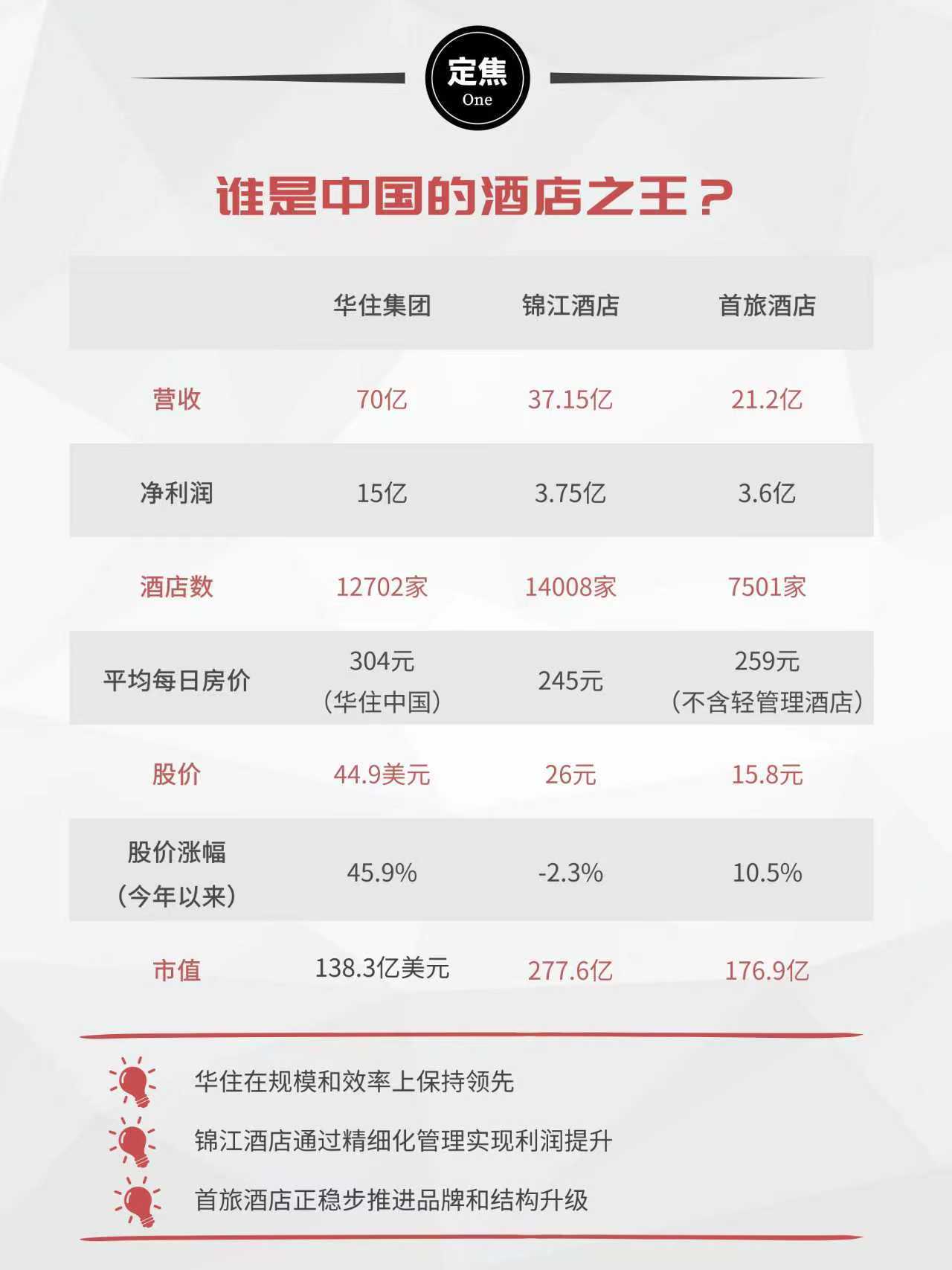
Core Insights - Huazhu Group reported its Q3 financial performance for the period ending September 30, 2025, showing a stable foundation amid moderate macro demand recovery and deepening asset-light strategy [1] - The hotel revenue reached 30.6 billion yuan, a year-on-year increase of 17.5% [1] - Total revenue for the period was 7 billion yuan, up 8.1% year-on-year, exceeding previous performance guidance [1] - Net profit attributable to Huazhu Group was 1.5 billion yuan, reflecting a 15.4% year-on-year growth [1] Financial Performance - Huazhu China's revenue grew by 10.8% to 5.7 billion yuan, while Legacy-DH (European business) revenue was 1.2 billion yuan, down 3.0% due to exchange rate and regional market fluctuations [1] - EBITDA for Q3 was 2.5 billion yuan, remaining stable [1] - The company opened 749 new hotels in Q3, bringing the total number of operating hotels globally to 12,702, with approximately 1.246 million rooms [1] Strategic Outlook - CEO Jin Hui emphasized ongoing optimization of hotel operations, cost reduction, and efficiency improvement, focusing on the continued development of the asset-light portfolio [2] - For Q4 2025, Huazhu expects revenue growth of 2% to 6%, with domestic business remaining the main driver [2] - Management franchise and licensing revenue is projected to grow by 17% to 21% year-on-year, validating the asset-light strategy's contribution to long-term growth [2] Market Position - Huazhu maintains a leading position in scale and efficiency, with a market capitalization of 138.3 billion yuan and a price-to-earnings ratio of 24.84 [5][10] - The company continues to see strong growth in asset-light (management franchise and licensing) operations, while revenue from heavy asset (leased and owned hotels) is declining [7][9] - The occupancy rate for Huazhu China was 84.1%, with an average daily rate (ADR) of 304 yuan, indicating stabilization in market pressures [7][10]

华住集团三季度营业额306亿元,同比增长17.5%
Xin Jing Bao· 2025-11-18 03:08
新京报贝壳财经讯(记者曲筱艺)11月17日,华住集团发布2025年第三季度财务业绩。财报显示,今年 第三季度集团的酒店营业额为306亿元,同比增长17.5%。报告期内,集团收入达70亿元,同比增长 8.1%;经调整净利润15.2亿元,同比增长10.8%;经调整息税折旧及摊销前利润25亿元,同比增长 18.9%。 从经营指标来看,三季度华住中国日均房价、入住率和平均可出租客房收入为304元、84.1%和256元, 均延续回升向好态势,并分别达到2024年同期的100.9%、99.2%和99.9%。 (文章来源:新京报) 三季度,华住中国新开业酒店数为749家,这一数据创下年内单季度新高;截至期末,华住中国在营酒 店总数为12580家,在营客房总数约122万间,待开业酒店数量为2727家。在中高端酒店方面,截至三季 度末,华住在营及待开业的中高端门店数量超1600家,同比增长25.3%。 ...
华住集团:第三季度收入同比增加8.1%至人民币70亿元
Cai Jing Wang· 2025-11-18 03:08
11月17日,华住集团召开2025年第三季度业绩交流会。据悉,2025年第三季度,企业实现收入同比增加 8.1%至人民币70亿元。调整后EBITDA同比增长18.9%至人民币25亿元,利润率扩张至36.1%。 在中国市场,三季度,华住中国新开业酒店数为749家;截至期末,华住中国在营酒店总数为12580家, 在营客房总数为1220297间,待开业酒店数量为2727家。 (Wind数据、新华财经) ...
酒店“跑步前进”产业园区!
3 6 Ke· 2025-11-18 02:34
Core Insights - The article discusses the trend of hotel brands, particularly Huazhu's Meilun, entering industrial parks, marking a shift from traditional city center locations to these emerging areas [1][2][8] - The demand for diverse accommodation options in industrial parks is increasing, as businesses require not only short-term stays but also long-term housing solutions for employees [5][7][14] Group 1: Hotel Development in Industrial Parks - Huazhu Group's Meilun brand has opened its largest hotel in Xiamen's Jimei Software Park, featuring 310 rooms and targeting business and conference clientele [1] - The shift in hotel location strategy reflects a broader trend where hotels are moving from city centers to industrial parks, which are seen as new growth areas with potential [2][8] - Other hotel brands, including Qianxi and InterContinental, are also establishing properties in industrial parks, indicating a growing interest in these locations [3][6] Group 2: Changing Accommodation Needs - The demand for "business + conference + activity" accommodations in industrial parks is being recognized by hotel operators, leading to the inclusion of meeting rooms and dining facilities [2][5] - The combination of hotels and serviced apartments is becoming more common, catering to the long-term needs of professionals in industrial parks [5][6] - Local state-owned enterprises and development platforms are also entering the market, promoting standardized accommodation solutions for employees [6][10] Group 3: Investment and Economic Implications - The investment logic for hotels is changing, with industrial park hotels offering stable clientele and lower land costs, making them attractive for major hotel groups and local investors [7][10] - The trend reflects a redistribution of urban dynamics, where hotels are now following businesses rather than just tourist flows [7][8] - Policies at both national and local levels are encouraging the development of living and service facilities in industrial parks, facilitating the entry of hotels and apartments [9][10] Group 4: Future Outlook - The future of hotels may lie in industrial parks rather than traditional urban centers, as the boundaries between work, life, and leisure continue to blur [11][14] - Hotels in industrial parks are expected to become integral parts of the local ecosystem, serving not just as accommodation but also as cultural and community hubs [12][14] - The concept of "park-customized hotels" is gaining traction, offering both operational returns and cultural value, which could enhance the brand image of the parks [14]

华住三季度酒店营业额超300亿元 会员规模突破3亿
Xin Hua Cai Jing· 2025-11-18 02:07
Core Insights - Huazhu Group reported a hotel revenue of 30.6 billion yuan in Q3 2025, representing a year-on-year growth of 17.5% [2] - The group's total revenue reached 7 billion yuan, an increase of 8.1% year-on-year, with adjusted net profit at 1.52 billion yuan, up 10.8% [2] - Adjusted EBITDA for the quarter was 2.5 billion yuan, reflecting an 18.9% increase compared to the previous year [2] Operational Highlights - In Q3, Huazhu opened 749 new hotels in China, marking a record high for the year, bringing the total operating hotels to 12,580 and total rooms to 1,220,297 [2] - The company maintained a stable occupancy rate while achieving a year-on-year increase in average daily rate (ADR), with Q3 figures at 304 yuan, occupancy rate at 84.1%, and revenue per available room (RevPAR) at 256 yuan [2] - Membership growth was significant, with a 17.3% year-on-year increase, surpassing 300 million members, and member bookings accounted for 74% of total room nights [2] Future Outlook - The company aims to focus on building core competencies, pursuing high-quality network growth, and enhancing market share while strengthening brand positioning and service excellence [3]
华住集团2025年第三季度营业额同比增17.5%至306亿元,全球在营酒店约1.27万家
Cai Jing Wang· 2025-11-17 14:03
Core Insights - Huazhu Group reported strong financial performance for Q3 2025, with hotel revenue reaching 30.6 billion yuan, a year-on-year increase of 17.5% [1] - The company achieved an adjusted net profit of 1.52 billion yuan, up 10.8% year-on-year, and adjusted EBITDA of 2.5 billion yuan, reflecting an 18.9% increase [1] - The CEO emphasized the focus on core competencies, high-quality network growth, and market share enhancement, alongside a strong brand positioning and service improvement strategy [1] Financial Performance - Total hotel revenue for Q3 was 30.6 billion yuan, a 17.5% increase year-on-year [1] - Revenue reached 7 billion yuan, marking an 8.1% year-on-year growth [1] - Adjusted net profit stood at 1.52 billion yuan, up 10.8% year-on-year [1] - Adjusted EBITDA was 2.5 billion yuan, reflecting an 18.9% increase [1] Operational Metrics - As of the end of Q3, Huazhu operated 12,702 hotels globally, a 17.1% increase year-on-year [1] - The total number of rooms in operation reached 1,246,240, up 17.3% year-on-year [1] - In Q3, Huazhu opened 749 new hotels, the highest quarterly figure for the year [1] - The average daily room rate (ADR) was 304 yuan, with an occupancy rate of 84.1% [1] Membership and Brand Development - The membership program, Huazhu Club, surpassed 300 million members, a 17.3% year-on-year increase [2] - In Q3, member booking nights exceeded 66 million, up 19.7%, accounting for 74% of total bookings [2] - The launch of the mid-to-high-end brand "All Seasons Grand" expanded the brand matrix, with over 1,600 mid-to-high-end stores in operation or under development, a 25.3% increase [2]
华住集团2025年三季度收入70亿元,同比增长8.1%
Bei Jing Shang Bao· 2025-11-17 13:27
从经营指标来看,报告期内,华住中国日均房价(ADR)、入住率(OCC)和平均可出租客房收入(RevPAR) 分别为304元、84.1%和256元,均延续回升向好态势,并分别达到2024年同期的100.9%、99.2%和 99.9%,显示出华住中国在规模化与精益增长间取得了平衡。 财报显示,报告期内,华住中国新开业酒店数为749家,这一数据创下年内单季度新高;截至期末,华 住中国在营酒店总数为12580家,在营客房总数为1220297间,待开业酒店数量为2727家。在中高端酒店 方面,截至三季度末,华住在营及待开业的中高端门店数量已成功突破1600家,同比增长25.3%。 北京商报讯(记者吴其芸)11月17日,华住集团发布2025年三季度财务业绩。财报显示,2025年三季度, 华住集团酒店营业额为306亿元,同比增长17.5%;收入达70亿元,同比增长8.1%;经调整净利润15.2亿 元,同比增加10.8%。截至三季度末,华住集团全球在营酒店总数为12702家,同比增长17.1%;在营客 房总数为1246240间,同比增长17.3%。 ...
华住集团三季度营业额增长17.5%至306亿元 全球在营酒店突破1.27万家
Zheng Quan Shi Bao Wang· 2025-11-17 13:27
Core Insights - H World Group reported a strong Q3 2025 performance with hotel revenue reaching 30.6 billion yuan, a year-on-year increase of 17.5% [1] - The group’s revenue for the period was 7 billion yuan, up 8.1% year-on-year, while adjusted net profit rose to 1.52 billion yuan, reflecting a 10.8% increase [1] - Adjusted EBITDA for the quarter was 2.5 billion yuan, marking an 18.9% year-on-year growth [1] Group Performance - As of the end of Q3, H World Group operated a total of 12,702 hotels globally, representing a 17.1% year-on-year increase, with 1.246 million rooms available, up 17.3% [1] - In Q3, H World China opened 749 new hotels, the highest quarterly figure for the year, bringing the total operational hotels in China to 12,580 and available rooms to 1.22 million [1] Market Strategy - The company focuses on an asset-light model for strong network expansion and stable average daily room revenue, which has driven revenue beyond guidance limits [1] - H World Group aims to enhance core competitiveness, pursue high-quality network growth, and strengthen brand positioning and service excellence [1] Membership Growth - H World China saw a 17.3% year-on-year increase in membership, surpassing 300 million members, with a 19.7% growth in member bookings, totaling over 66 million room nights [2] - The company plans to improve member benefits, expand points application scenarios, and deepen cross-industry collaborations to enhance direct sales capabilities and member loyalty [2] Industry Opportunities - The hotel industry is experiencing unprecedented opportunities, driven by increased market pressure, supply-side reforms through franchising, advancements in AI technology, and significant potential in county markets [3] - H World Group introduced a new mid-to-high-end brand "All Seasons Grand" to enhance its brand matrix, with over 1,600 mid-to-high-end stores in operation or planned, a 25.3% year-on-year increase [3]