
智能网联汽车

Search documents
雷军称小米汽车交付量达40万台
21世纪经济报道· 2025-10-16 14:08
Core Viewpoint - The development of intelligent connected vehicles is at a historical opportunity period, requiring industry-wide collaboration to build a new ecosystem for shared growth [1]. Group 1: Industry Development - Xiaomi has delivered approximately 400,000 vehicles since announcing its entry into the automotive sector four and a half years ago, with one and a half years since product launch [2]. - The first half of the intelligent connected vehicle development has seen initial completion in electrification, while the second half is focusing on deepening intelligence, with innovations reshaping product definitions, production models, business models, and user experiences [2]. - The combination of advanced driver assistance systems is a focal point for the industry, with rapid development and significant improvements in experience and safety [2]. Group 2: Technological Innovations - AI large models are expected to provide limitless possibilities for intelligent connected vehicles, enhancing user experience without the need for internet connectivity [2]. - Voice control experiences are being improved through emotion recognition, optimized algorithms, and multi-modal interaction capabilities, allowing vehicles to recognize users and their environments [2]. - The voice synthesis technology is becoming more human-like, capable of learning and optimizing based on user habits and preferences [2]. Group 3: Strategic Vision - The long-term vision positions vehicles as intelligent mobile spaces, with Xiaomi's overall strategy encompassing a holistic ecosystem of people, vehicles, and homes [3]. - The interconnectedness of different scenarios and terminals within the smart ecosystem will enable vehicles to leverage AI computing power, creating vast application opportunities [3]. - The intelligent connected vehicle industry is complex and requires a collaborative ecosystem transformation rather than a single-point breakthrough [3].


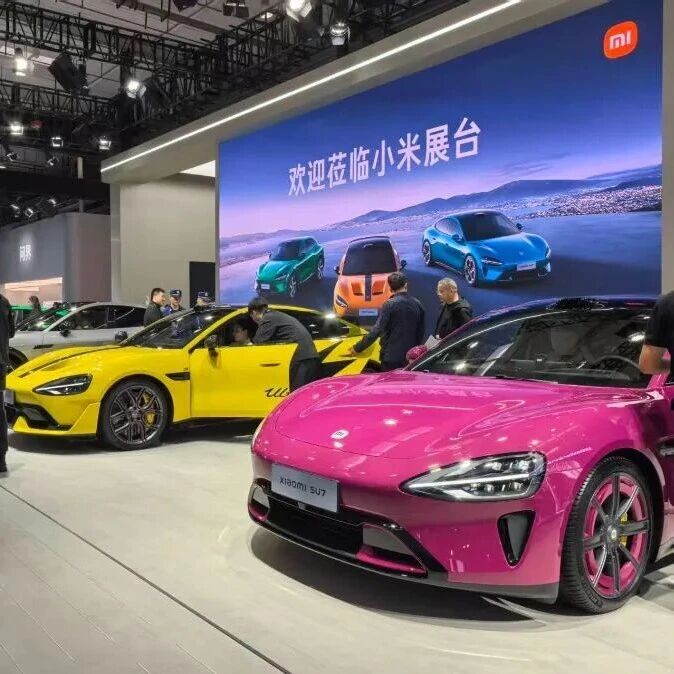
工业和信息化部:加快组合驾驶辅助、自动驾驶等相关标准制定
Xin Hua She· 2025-10-16 13:45
Core Viewpoint - The Chinese government is accelerating the development of standards for advanced driving assistance and autonomous driving, aiming to deeply integrate artificial intelligence with the automotive industry, as highlighted during the 2025 World Intelligent Connected Vehicles Conference in Beijing [1][2] Group 1: Industry Development - The smart connected vehicle industry in China has made significant progress, establishing a complete industrial system that includes smart cockpits, autonomous driving, and connected cloud control [1] - The sales proportion of new passenger cars equipped with advanced driving assistance features has exceeded 60% [1] Group 2: Future Initiatives - The Ministry of Industry and Information Technology plans to position smart connected vehicles as a key driver for new industrialization and the development of new productive forces, focusing on technological breakthroughs and application promotion [1] - There will be a high-level construction of artificial intelligence pilot bases in the automotive sector, supporting the development of large model applications across various stages of the automotive supply chain [1] Group 3: Cross-Industry Integration - The initiative includes promoting integrated applications of "vehicle-road-cloud" and supporting collaboration among automotive, information communication, energy, and transportation sectors to build a trustworthy data space [1] Group 4: Policy and Cooperation - The government is working on a comprehensive policy framework and enhancing open cooperation, including the development of the "14th Five-Year" plan for the smart connected new energy vehicle industry [2] - There will be optimization of production access management systems and regulation of industry competition to support practical cooperation between domestic and foreign enterprises [2]
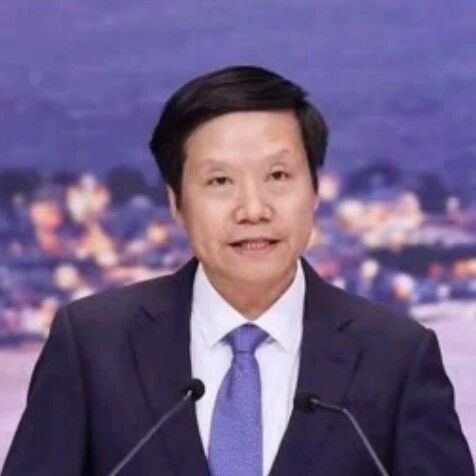
雷军:智能网联汽车行业要以安全为基础,共同抵制黑公关等网络乱象
Zhong Guo Qing Nian Bao· 2025-10-16 13:25
在他看来,AI大模型就是智能网联汽车的未来发展趋势,蕴藏着巨大创新机遇。比如,端侧AI模型无 需联网,就可以整合车内外摄像头、麦克风等多传感器信号,实现拟人化语音控车,且本地算力调用可 保障数据隐私安全。 来源:中国青年报客户端 中国青年报客户端北京10月16日电(中青报·中青网记者 贾骥业)今天下午,小米集团创始人、董事长 兼CEO(首席执行官)雷军在"2025世界智能网联汽车大会"上发言时表示,当前智能网联汽车的发展正 处于历史机遇期,不是零和博弈,需要全行业团结一致,共建共享智能网联汽车的新生态,共同推进行 业的发展。 他在大会现场呼吁,全行业要在政府的指导下,以安全为基础,质量为根本,创新为方向,携手围绕重 要底层技术和研发领域,把资源和精力集中到科技创新和技术研发上,共同抵制水军、黑公关等网络乱 象,一起营造积极向上、文明有序的产业发展环境。 雷军说,如今,智能网联汽车上半场"电动化"已初步完成,下半场"智能化"正逐步深入,"智能化一系 列的创新技术正在重塑汽车的产品定义、生产模式、商业模式和用户体验"。 ...
关于智能网联汽车,雷军最新发声
2 1 Shi Ji Jing Ji Bao Dao· 2025-10-16 13:16
对于智能网联汽车的产业生态,雷军也提到,智能网联汽车行业非常复杂,涉及领域也非常广泛,这不 是一个单点突破的竞赛,而是一个需要全行业共建共享的生态变革。 同时,雷军提到,AI大模型将给智能网联汽车无限的想象空间。首先端侧的模型不需要联网,就可以 大幅度改善整个人工自研的体验。比如语音控车的体验,通过整合情绪识别计算、优化算法多模态的交 互能力,车内外的摄像头、麦克风、屏幕和各类整车传感器的信号,都能被模型识别,并且纳入思考的 范畴,就能做到认识人、看世界、懂屏幕。语音合成也更拟人,有语气和情绪,而且智能化程度相当 高,可以根据用户的使用习惯和偏好进行学习和优化。 "长期看,我们把汽车理解成一个智能的移动空间,小米的总体战略就是人车家全生态,汽车是其中一 个重要的节点。"雷军表示,通过智能生态中不同的场景、不同终端之间的互联互通,汽车将可以调用 整个生态的AI算力,提供丰富的场景应用,其中的产业机会有着巨大的应用空间。 21世纪经济报道记者周潇枭 见习记者冉黎黎 北京报道 10月16日,2025世界智能网联汽车大会在北京亦 庄开幕。小米集团创始人、董事长兼CEO雷军在大会上表示,智能网联汽车的发展处于历史的机遇 ...
雷军最新发声
证券时报· 2025-10-16 13:14
Core Viewpoint - The CEO of Xiaomi, Lei Jun, emphasized the importance of industry unity in the development of intelligent connected vehicles, advocating for a collaborative ecosystem that focuses on safety, quality, and innovation [1]. Group 1: Industry Collaboration - Lei Jun called for the entire industry to work together under government guidance to foster a positive and orderly development environment, resisting negative online behaviors such as cyberbullying and black public relations [1]. - Xiaomi is willing to adopt a more open approach to collaborate with peers and partners to advance industry development [1]. Group 2: Recent Incident - A serious accident involving a Xiaomi vehicle occurred on October 13, resulting in the death of the driver, who was found to be driving under the influence [1]. - The vehicle involved in the accident was identified as the Xiaomi SU7 Ultra [2].

雷军发出呼吁
中国基金报· 2025-10-16 13:12
Core Viewpoint - The development of intelligent connected vehicles is at a historical opportunity period, requiring industry unity to build and share a new ecosystem for the sector [1] Group 1: Industry Development - The first half of the intelligent connected vehicle evolution, focusing on electrification, has been initially completed, while the second half, emphasizing intelligence, is gradually deepening [1] - Innovative technologies in intelligence are reshaping product definitions, production models, business models, and user experiences in the automotive sector [1] Group 2: Industry Collaboration - The industry is called to focus on safety as a foundation, quality as a fundamental aspect, and innovation as a direction, concentrating resources and efforts on technological innovation and research and development [1] - There is a collective call to resist negative online phenomena such as internet trolls and black public relations, fostering a positive, civilized, and orderly development environment for the industry [1]
【财闻联播】雷军最新发声!时隔七个月,阿里系再度出手
券商中国· 2025-10-16 12:55
Macro Dynamics - The Chinese Ministry of Commerce will continue litigation against the U.S. for its clean energy subsidies that discriminate against Chinese products, despite the U.S. terminating certain provisions of the Inflation Reduction Act [2] - The People's Bank of China and the Central Bank of Iceland have renewed a bilateral currency swap agreement worth 35 billion RMB (700 million Icelandic króna) to enhance financial cooperation [3] - China expresses strong dissatisfaction with the UK's unilateral sanctions against Chinese companies, emphasizing the need to protect legitimate rights and interests [4] Market Data - A-shares experienced a collective pullback with total market turnover falling below 2 trillion RMB, marking a decrease of 141.7 billion RMB from the previous trading day [7][8] - The financing balance in the two markets increased by 2.3 billion RMB, with the Shanghai Stock Exchange reporting a balance of 1.236 trillion RMB and the Shenzhen Stock Exchange at 1.189 trillion RMB [9] Company Dynamics - Xiaomi's founder, Lei Jun, stated that AI models are the future of smart connected vehicles, with the company having delivered approximately 400,000 vehicles in a year and a half [11] - YTO Express announced that its third-largest shareholder, Hangzhou Haoyue, plans to transfer up to 2% of its shares through block trading, continuing a trend of share reduction [12] - Changan Automobile's Zhu Huarong revealed plans to mass-produce humanoid automotive robots by 2028 and flying cars by 2030 [13][14] - Guangsheng Nonferrous Metals expects a net profit of 100 to 130 million RMB for the first three quarters of 2025, marking a turnaround from losses due to improved market conditions in rare earths [16]


世界智能网联汽车大会开幕,中欧“汽车人”热议智驾规则全球协同
2 1 Shi Ji Jing Ji Bao Dao· 2025-10-16 12:54
Core Viewpoint - The global development of intelligent connected vehicles is driven by globalization and safety, with a focus on regulatory coordination and technological integration [1][2][4] Group 1: Industry Trends - Intelligent connected vehicles are transitioning from laboratory concepts to commercial applications, with significant discussions on technology evolution, regulatory alignment, and safety challenges at the World Intelligent Connected Vehicle Conference [1] - The European Union is actively working on regulatory frameworks for the automotive industry, including plans for a "European Connected and Automated Driving Alliance" by 2025 and a large-scale cross-border testing platform for autonomous vehicles [2][3] Group 2: Regulatory and Standardization Efforts - The EU's "General Artificial Intelligence Code of Conduct" will impact the development costs of L2+ autonomous driving systems, potentially increasing costs by 15%-20% due to required transparency and safety assessments [3] - Chinese companies, such as Changan Automobile, are advocating for global standardization to reduce redundant development costs and improve cross-border mobility experiences [4] Group 3: Technological Integration - The integration of AI, low-orbit satellite communication, and vehicle-road-cloud collaboration is leading to a new era of "collective intelligence" in intelligent connected vehicles [5][6] - China Mobile has established the world's largest 5G network and is accelerating the deployment of 5G+V2X technology, which supports high-precision positioning and enhances vehicle capabilities [6] Group 4: Safety and Commercialization Challenges - The industry is facing challenges in balancing safety and commercialization, with discussions highlighting the need for strong standards and safety protocols following recent autonomous driving incidents [7][8] - Industry leaders emphasize the importance of achieving a balance between innovation and safety to build consumer trust and ensure the successful adoption of intelligent connected vehicles [8]
安全是重中之重!行业大咖热议智驾未来发展趋势:不能“因噎废食”,停止智驾技术发展
Mei Ri Jing Ji Xin Wen· 2025-10-16 12:49
Core Insights - The advantages of machine driving over human driving include strict adherence to regulations, immunity to physiological and emotional factors, and the potential for data-driven evolution. However, inherent limitations exist, such as insufficient capability to handle long-tail scenarios and the risks associated with the black box effect [1] Industry Trends - The global automotive industry is undergoing a profound transformation, with China's new energy vehicle market leading the electric transformation through policy guidance and technological iteration. The commercialization of intelligent driving technology has reached a critical turning point since 2025, with increasing emphasis on safety [1] - The intelligent wave is reshaping the competitive landscape of the global automotive industry, with artificial intelligence evolving from an optional technology to a core variable affecting enterprise survival and development [1] Safety Emphasis - Safety is a consensus among industry professionals, with Momenta's CEO emphasizing that without safety, there can be no development in intelligent driving systems. Recent national efforts in establishing strong standards are expected to significantly regulate the development of the intelligent assistance market [2] - Geely's chairman highlighted that user safety must remain paramount in the development of intelligent networked technologies, which should address real user pain points rather than merely existing as concepts [2] Investment and Development - Xiaomi has committed a total investment of 5.79 billion yuan in combined auxiliary driving, with a dedicated R&D team exceeding 1,800 personnel. The focus is on reducing accidents as a primary goal of autonomous driving [3] - The industry is urged not to halt the development of intelligent driving technologies due to safety concerns. The balance between innovation and safety is crucial, as blind innovation can lead to accidents, undermining the purpose of intelligent driving [5] Collaboration and Responsibility - Industry players are encouraged to collaborate in promoting safety within the sector, with a commitment to addressing any safety issues that arise [5] - The importance of clearly defining responsibilities among various technology partners in the automotive supply chain is emphasized to ensure the safety and reliability of vehicles [4]
中国工信部副部长:加快高级别自动驾驶技术突破
Zhong Guo Xin Wen Wang· 2025-10-16 12:40
Core Insights - The 2025 World Intelligent Connected Vehicles Conference opened in Beijing, highlighting China's advancements in the intelligent connected vehicle industry and the establishment of a complete industrial system [1][2] - The Chinese Ministry of Industry and Information Technology (MIIT) aims to accelerate breakthroughs in high-level autonomous driving technology through the integration of artificial intelligence and the automotive industry [2] Industry Developments - China's intelligent connected vehicle technology has significantly improved, with a complete industrial system that includes smart cockpits, autonomous driving, and cloud control [1] - New passenger cars equipped with combined driving assistance features account for over 60% of new car sales [1] - The country has initiated "vehicle-road-cloud integration" application trials in 20 cities, enhancing infrastructure such as roadside units and cloud control platforms [1] Infrastructure and Testing - Over 35,000 kilometers of testing demonstration roads have been opened nationwide, with more than 11,000 intelligent roadside units deployed [1] - The MIIT plans to deepen the integration of artificial intelligence technology with the automotive industry, supporting the development of vertical large models and specialized models across the entire supply chain [2] Future Plans - The MIIT will advance the "vehicle-road-cloud integration" application trials to improve the safety and efficiency of autonomous driving through traffic and roadside information [2] - A development plan for the intelligent connected new energy vehicle industry during the 14th Five-Year Plan period will be compiled, along with the establishment of standards for combined driving assistance and autonomous driving [2]