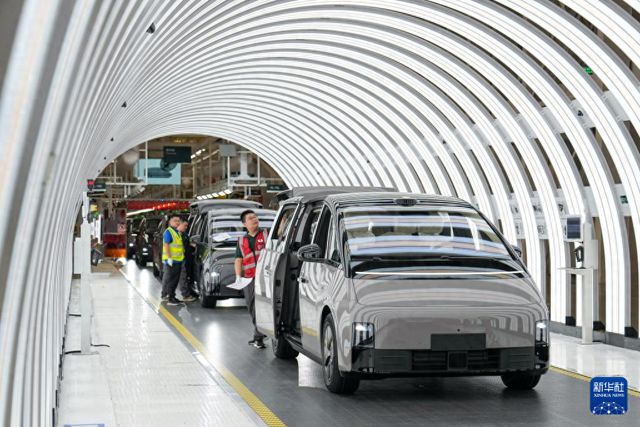
高级别自动驾驶技术

Search documents
长安刘玉清:协同研发、产业联动是高级别自动驾驶技术快速发展关键
Zhong Guo Qi Che Bao Wang· 2026-02-13 07:24
Core Insights - The core viewpoint of the articles emphasizes the rapid development of Level 3 (L3) autonomous driving technology by Changan Automobile, which is set to begin large-scale pilot operations by the end of 2025 in Chongqing, showcasing the company's advancements in autonomous driving technology [1][2]. Group 1: Development and Implementation - Changan Automobile's L3 autonomous vehicles are transitioning from single technology breakthroughs to a collaborative research and development model that emphasizes compliance and industry linkage, which is crucial for the rapid advancement of high-level autonomous driving technology in China [2][3]. - The company has expanded its safety requirements beyond the product itself to include functional safety, network security, data security, and risk prevention throughout the entire process, leading to recognition from regulatory bodies and the acquisition of the first batch of licenses [2][3]. Group 2: Collaborative Research and Industry Linkage - The rapid development of Changan's L3 autonomous driving technology demonstrates the feasibility of a collaborative research and development model that not only aids in the design and compliance of high-level autonomous driving but also supports the cultivation of interdisciplinary technical talent within the industry [3][4]. - The collaborative approach involves engineers from various disciplines working together to solve unknown problems, thereby enhancing their knowledge and skills in a cross-disciplinary context, which is essential for the advancement of autonomous driving technology [3][4]. Group 3: Problem-Solving in R&D - The development of autonomous driving technology faces numerous unknown factors, necessitating bold innovation and collaborative efforts to address these challenges. For instance, Changan's team innovatively proposed using elastic wave sensors to identify micro-collision events, a solution that had not been attempted in the industry [4][5]. - The team designed over 100 diverse data collection scenarios to ensure accurate sensor data collection under various conditions, overcoming challenges such as data distortion and adaptability to different weather conditions [5][6]. Group 4: Execution and Collaboration - The successful implementation of the collaborative research and development model requires strong execution capabilities, which Changan has established through a joint development mechanism with core suppliers to ensure performance consistency and compliance [6][7]. - During testing, the team identified a critical delay in the vehicle's response to sudden braking by preceding vehicles, leading to a collaborative effort with radar suppliers to enhance the system's performance [6][7]. Group 5: Industry Ecosystem and Future Outlook - The key to the rapid realization of high-level autonomous driving technology lies in technological advancements and reduced hardware costs, necessitating a collaborative approach among industry policies, technologies, and ecosystems to create a safe and reliable environment for autonomous driving [8].


北汽蓝谷2025年预亏至少43亿元,同比收窄超32%
Guan Cha Zhe Wang· 2026-01-20 11:08
Core Viewpoint - Beiqi Blue Valley has announced a projected net loss for 2025, indicating a strategic focus on long-term investments in the new energy sector despite short-term financial pressures [1][3]. Financial Performance - The company expects a net profit attributable to shareholders of between -46.5 billion to -43.5 billion yuan for 2025, and a net profit excluding non-recurring losses of between -49.5 billion to -46.5 billion yuan [1]. - For 2024, the projected net loss is -69.48 billion yuan, with a net profit excluding non-recurring losses of -73.23 billion yuan, indicating an expected reduction in losses of at least 32% for 2025 [1]. Strategic Initiatives - Beiqi Blue Valley is implementing a "three-year leap" strategy, focusing on product development, brand enhancement, and sales channel expansion, which are seen as essential for building long-term competitiveness [3]. - The company anticipates a sales volume exceeding 200,000 units in 2025, representing a year-on-year increase of 84.06%, marking a significant milestone in its dual-brand strategy [3]. Technology and Innovation - The company is converting technological investments into competitive advantages, with the Alpha S (L3 version) undergoing large-scale road trials and plans for user access soon [3]. - A strategic partnership with Pony.ai is aimed at accelerating the commercialization of advanced autonomous driving technologies [3]. Future Outlook - Beiqi Blue Valley expects systematic improvement in profitability as new products are launched, cost reduction measures are implemented, and smart technologies enter the commercialization phase [5]. - The company emphasizes that achieving profitability is a systemic result driven by scale expansion, structural optimization, and operational quality improvements [5]. Operational Efficiency - The company reported a revenue of 5.87 billion yuan for Q3 2025, with a positive gross margin of 1.8%, and has seen revenue growth for three consecutive quarters [7]. - The ongoing improvement in profitability is attributed to steady sales growth, a shift towards higher-end product structures, and enhanced operational efficiencies [7].

中国工信部副部长:加快高级别自动驾驶技术突破
Zhong Guo Xin Wen Wang· 2025-10-16 12:40
Core Insights - The 2025 World Intelligent Connected Vehicles Conference opened in Beijing, highlighting China's advancements in the intelligent connected vehicle industry and the establishment of a complete industrial system [1][2] - The Chinese Ministry of Industry and Information Technology (MIIT) aims to accelerate breakthroughs in high-level autonomous driving technology through the integration of artificial intelligence and the automotive industry [2] Industry Developments - China's intelligent connected vehicle technology has significantly improved, with a complete industrial system that includes smart cockpits, autonomous driving, and cloud control [1] - New passenger cars equipped with combined driving assistance features account for over 60% of new car sales [1] - The country has initiated "vehicle-road-cloud integration" application trials in 20 cities, enhancing infrastructure such as roadside units and cloud control platforms [1] Infrastructure and Testing - Over 35,000 kilometers of testing demonstration roads have been opened nationwide, with more than 11,000 intelligent roadside units deployed [1] - The MIIT plans to deepen the integration of artificial intelligence technology with the automotive industry, supporting the development of vertical large models and specialized models across the entire supply chain [2] Future Plans - The MIIT will advance the "vehicle-road-cloud integration" application trials to improve the safety and efficiency of autonomous driving through traffic and roadside information [2] - A development plan for the intelligent connected new energy vehicle industry during the 14th Five-Year Plan period will be compiled, along with the establishment of standards for combined driving assistance and autonomous driving [2]
景旺电子(603228):汽车领域优势持续扩大,聚焦AI不断拓展高端项目
Ping An Securities· 2025-09-01 07:31
Investment Rating - The report maintains a "Recommended" investment rating for the company [1][4]. Core Views - The company continues to expand its advantages in the automotive sector while focusing on AI to develop high-end projects, which is expected to enhance profitability [4][9]. - In the first half of 2025, the company achieved a revenue of 7.095 billion yuan, a year-on-year increase of 20.93%, and a net profit attributable to shareholders of 650 million yuan, a slight decrease of 1.06% year-on-year [4][8]. - The company has become the world's largest automotive PCB supplier as of 2024, leveraging its extensive industry experience and a strong customer base [8][9]. - The company is actively embracing opportunities in AI, with ongoing advancements in high-end PCB products for data centers and AI servers [9]. Financial Performance Summary - Revenue projections for the company are as follows: 2024A: 12.659 billion yuan, 2025E: 15.055 billion yuan, 2026E: 17.774 billion yuan, and 2027E: 20.863 billion yuan, with year-on-year growth rates of 17.7%, 18.9%, 18.1%, and 17.4% respectively [7][10]. - Net profit projections are: 2024A: 1.169 billion yuan, 2025E: 1.433 billion yuan, 2026E: 1.830 billion yuan, and 2027E: 2.246 billion yuan, with year-on-year growth rates of 24.9%, 22.6%, 27.7%, and 22.7% respectively [7][10]. - The company's gross margin is expected to improve from 22.7% in 2024 to 24.6% in 2027, while the net margin is projected to increase from 9.2% to 10.8% over the same period [11]. Market Position and Strategy - The company has established itself as a leading supplier in the automotive PCB market, with a focus on high-end projects such as laser radar boards and domain controller boards, which are in the process of mass production [8][9]. - The company is also enhancing its production capabilities for high-end HDI boards and is investing in technology upgrades at its manufacturing facilities to support AI and data center applications [9].

(活力中国)智能工厂成标配 京车智造驶入“快车道”
Zhong Guo Xin Wen Wang· 2025-06-19 12:36
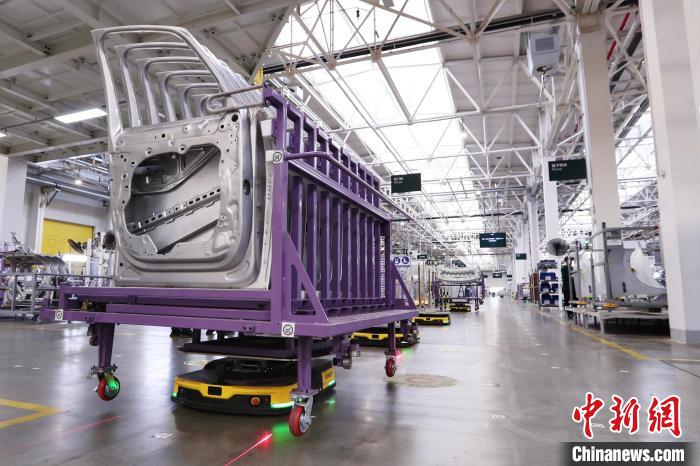
Group 1: Industry Overview - The automotive industry in Beijing is experiencing rapid growth, with a projected production of 1.145 million vehicles in 2024, representing a 13% year-on-year increase, and nearly 294,000 of these being new energy vehicles, which is a nearly threefold increase [4] - Beijing has become a significant automotive manufacturing base in China, focusing on the development of intelligent connected new energy vehicles and advanced autonomous driving technologies [4] Group 2: Company Developments - Xiaomi's automotive factory in Beijing has achieved a 100% automation rate in key processes, with a significant reduction in production time by 74% through the use of a large die-casting machine that consolidates 72 parts into one [1] - Ideal Automotive has implemented a digital manufacturing system called Li-Mos, which enhances efficiency and precision in production through automated processes and real-time quality monitoring [2] - Both Xiaomi and Ideal Automotive are investing heavily in research and development, with Xiaomi committing to an additional 200 billion RMB over the next five years, while Ideal Automotive has maintained over 10 billion RMB in annual R&D spending [2][4] Group 3: Technological Innovations - Xiaomi's factory utilizes an AI-based detection system called "X-Eye," achieving a quality inspection accuracy rate exceeding 99.9% [1] - Ideal Automotive's production line benefits from automated guided vehicles (AGVs) and intelligent robotic arms that streamline various manufacturing processes, contributing to a smarter production environment [2] Group 4: Environmental Initiatives - Both companies are adopting green manufacturing practices, including the use of renewable energy, recycled materials, and measures to reduce energy consumption and pollution emissions [2]

活力中国调研行丨感受北京新能源汽车生产脉动
Huan Qiu Wang Zi Xun· 2025-06-19 01:49
Core Insights - The automotive industry is the largest manufacturing sector in Beijing, with an expected output value exceeding 440 billion yuan in 2024, representing a year-on-year growth of over 15% [2][4][6][10][15] - Since the 14th Five-Year Plan, Beijing has focused on developing a smart connected new energy vehicle ecosystem, advancing high-level autonomous driving technology, and promoting the transformation of traditional car manufacturers while introducing new players [2][4][6][10][15] - In 2024, eight vehicle manufacturers, including Xiaomi and Li Auto, are projected to produce 1.145 million vehicles in Beijing, marking a 13% increase year-on-year, with new energy vehicle production reaching 294,000 units, a nearly threefold increase [2][4][6][10][15]