
种植业

Search documents
温室农业成为利比里亚应对气候危机与粮食安全的关键希望
Shang Wu Bu Wang Zhan· 2026-01-07 05:50
Core Viewpoint - Liberia is exploring greenhouse agriculture as a solution to the devastating impacts of climate change, extreme weather, and pests on traditional farming, aiming to ensure food security and create jobs while training young farmers [1] Group 1: Climate Impact and Agricultural Challenges - The country is facing severe climate impacts, with a significant number of subsistence farmers considering abandoning farming due to sharp declines in harvests [1] - The national malnutrition rate is alarmingly high, with pests identified as one of the most serious disasters affecting agriculture [1] Group 2: Greenhouse Agriculture Initiatives - The private Wungko farm is a pioneer in demonstrating how controlled environments can achieve stable year-round production to secure food supply and create employment [1] - The government has developed an ambitious modern agriculture plan that includes greenhouses, but the high initial cost of approximately $10,000 per greenhouse deters most small farmers [1] Group 3: Funding and Investment Challenges - The future promotion of greenhouse agriculture heavily relies on the government's ability to fulfill commitments and attract private investment to fill the funding gap [1] - The withdrawal of international aid poses a significant challenge to the nationwide promotion of this critical but expensive technology to address the growing food insecurity crisis [1]
数智赋能农业新质生产力发展的南充实践
Sou Hu Cai Jing· 2026-01-07 05:45
Core Viewpoint - The article discusses the implementation of smart agriculture in Nanchong, emphasizing the integration of technology and agriculture to enhance productivity and efficiency, aligning with national strategies for rural revitalization and digital transformation [2][3]. Group 1: Smart Agriculture Development - The Chinese government prioritizes smart agriculture as a key driver for rural revitalization, with various action plans established for its development from 2024 to 2028 [3]. - Nanchong has adopted four measures to develop smart agriculture, focusing on maximizing agricultural data value and cultivating new productive forces in agriculture [3]. Group 2: Blockchain and Data Utilization - The integration of AI, blockchain, and IoT technologies into the entire agricultural production process is being promoted, including the establishment of a traceability system for late-maturing citrus [6]. - Nanchong launched China's first late-maturing citrus price index, which provides real-time price updates every 3-5 days, enhancing the pricing power and brand value of "Nanchong Citrus" [6][9]. Group 3: Financial Innovation - The "Two Rights and One Product" geographical indication financial innovation has transformed intangible data assets into tangible financial capital, allowing for the monetization of agricultural data [7][9]. - A total of 1.1 billion yuan has been pre-approved for credit to 27 related enterprises in Nanchong through a new financial model that combines trademark usage rights, data intellectual property, and data products [9]. Group 4: Smart Supervision Platform - Nanchong is developing a "One Network Measurement" smart supervision platform to address challenges in data integration and multi-point supervision, initially applied to pig production [13][15]. - The platform includes various features such as environmental monitoring and health status alerts, significantly improving efficiency and reducing production costs by over 5% [15]. Group 5: E-commerce and Market Expansion - Nanchong has established a comprehensive operational model for agricultural products using Douyin (TikTok) technology, creating the first official live-streaming base for agricultural products in Western China [16]. - Collaborations with external suppliers and large enterprises are being pursued to ensure a stable supply of local agricultural products for live-streaming and bulk sales [18]. Group 6: Support Services - The city is providing extensive financial, technical, and service support to enhance the operational efficiency of agricultural bases, aiming for a total e-commerce sales volume of 2 billion yuan for the year [19].


金融之力 破瘠成沃
Jin Rong Shi Bao· 2026-01-07 01:46
Core Viewpoint - The article highlights the transformation of rural assets in Guangxi through financial innovation and technology, addressing the challenges faced by the agricultural sector and promoting sustainable development in rural areas [1][11][21]. Group 1: Challenges in Rural Development - Rural areas in Guangxi face multiple challenges, including asset dormancy and industry shackles, which hinder development [4]. - The lack of standardized valuation systems for livestock and other agricultural assets makes it difficult for farmers to secure loans from traditional banks [5]. - Natural and market risks, such as flooding and price volatility, further exacerbate the vulnerability of agricultural production [6][8]. Group 2: Financial Innovations and Solutions - Financial institutions are innovating by developing policy insurance for local agricultural products, such as the "富硒星油藤" brand, which has secured insurance coverage of 4.1592 million yuan for 1,040 acres [3]. - The introduction of property rights certificates for aquaculture has allowed farmers to convert their rights into collateral, facilitating access to credit [11][12]. - Advanced technologies, such as AI facial recognition for livestock, have improved the efficiency of insurance and loan processes, enabling better risk management [12]. Group 3: Collaborative Financial Ecosystem - A collaborative model involving insurance, credit, and government support has been established to address financing challenges in the agricultural sector [12][21]. - The implementation of tailored financial products, such as marine carbon sink loans and index insurance for aquaculture, has been initiated to support specific agricultural needs [15][21]. - The establishment of e-commerce platforms and training programs for local farmers aims to enhance market access and sales of agricultural products [16][18]. Group 4: Systematic Policy Support - The People's Bank of China has implemented policies to provide financial resources to the agricultural sector, including fiscal subsidies and risk compensation mechanisms [19]. - The promotion of digital credit profiles for farmers has facilitated access to unsecured loans, significantly increasing loan amounts for agricultural projects [20]. - The establishment of a financial service command center for the sugar industry has led to the development of specialized financing models that support the entire supply chain [21].

好地好种出好粮
Liao Ning Ri Bao· 2026-01-07 01:07
内容提要 2025年,辽宁粮仓实现高位增产,粮食总产量为515.56亿斤,增速位居全国粮食主产省第一位;单 产959.52斤,居全国第二位。令人惊喜的数字里,隐藏着什么样的丰收密码?扛牢国家粮食安全之责, 辽宁做对了什么? 要想多产粮,就得多养地 黑土地的肥沃不会一成不变,如何提升地力,各有各的绝招。 刚过去的一年,对于沈阳市沈北新区孟家台村来说,是特殊的一年。村里5600亩的高标准农田当年 建、当年用、当年见效,通过"小田并大田",修建灌渠及智慧灌溉系统、作业道、排水沟等设施,实 现"田成方、路相通、渠相连、旱能灌、涝能排"。村民们感慨:"全程机械化腿不沾泥,产量还比往常 高。" 持续推进高标准农田建设,通过实施田块整治、土壤改良、灌溉排水等措施,让过去一些中低产田 变成了稳产田。像孟家台村这样,辽宁聚焦"产能提升重点县"和"典型黑土区县",建设高标准农田476 万亩,使高标准农田总面积达4296万亩。 持续高质量开展保护性耕作,有力推进黑土地保护,是实现粮食丰收的关键举措。2025年,辽宁实 施黑土地保护1000万亩,尤其在农业科研机构的支持下,各地集成应用秸秆还田、禽畜粪污利用、深松 整地等技术,滋养农 ...

让田园与都市相映生辉
Xin Lang Cai Jing· 2026-01-06 21:35
Core Viewpoint - The article highlights the development of modern agriculture in the Wudang District, focusing on the transformation of traditional farming into efficient, technology-driven family farms and shared agricultural experiences, thereby enhancing rural economic growth and urban-rural connections [3][4][6]. Group 1: Family Farms - The Jinju Linmu Planting Farm, established in 2013, transitioned to a comprehensive family farm in 2020, cultivating 4 hectares of land with various agricultural activities, including vegetable planting and livestock raising [4]. - The farm's revenue is projected to reach approximately 1 million yuan by 2025, with plans for upgrades to incorporate local cultural elements and new recreational activities [4][6]. - The Xinghui Strawberry Garden, a provincial-level demonstration family farm, spans 5.33 hectares and employs over 70 local workers during peak seasons, contributing to local employment and income [5][6]. Group 2: Shared Agriculture - The "Hepan Lezhuang" shared farm features 85 plots of vegetable gardens, all of which have been claimed by urban residents, promoting a new model of urban-rural interaction [7][8]. - The farm has attracted over 100,000 visitors since its inception in 2024, becoming a popular destination for urban tourists seeking rural experiences [7]. - The shared farm model has revitalized previously idle resources, creating job opportunities for over 60 local residents and enhancing community income [8]. Group 3: Vegetable Supply Bases - The Wangba Village vegetable industry has expanded to approximately 146.67 hectares, significantly increasing local farmer participation and average annual income by over 20,000 yuan per household [9][10]. - The district has established over 10 large-scale vegetable supply bases, with a total planting area exceeding 10,000 hectares and a total output surpassing 250,000 tons, playing a crucial role in ensuring vegetable supply for Guiyang [10]. - The district's proactive measures include providing technical support to farmers for winter vegetable cultivation, ensuring consistent supply and marketability [10].
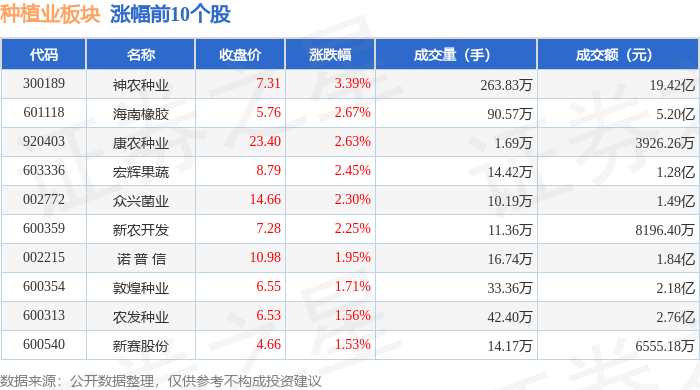
种植业板块1月6日涨1.51%,神农种业领涨,主力资金净流入1.48亿元
Zheng Xing Xing Ye Ri Bao· 2026-01-06 08:56
Core Insights - The planting industry sector experienced a rise of 1.51% on January 6, with Shennong Seed Industry leading the gains [1] - The Shanghai Composite Index closed at 4083.67, up by 1.5%, while the Shenzhen Component Index closed at 14022.55, up by 1.4% [1] Sector Performance - Shennong Seed Industry (681006) closed at 7.31, with a gain of 3.39% and a trading volume of 2.6383 million shares, amounting to a transaction value of 1.942 billion [1] - Hainan Rubber (601118) closed at 5.76, up by 2.67%, with a trading volume of 905,700 shares, resulting in a transaction value of 520 million [1] - Other notable performers include Kangnong Seed Industry (920403) with a closing price of 23.40, up by 2.63%, and Honghui Fruits and Vegetables (603336) at 8.79, up by 2.45% [1] Capital Flow - The planting industry sector saw a net inflow of 148 million from institutional investors, while retail investors experienced a net outflow of 118 million [2] - The main capital inflow was led by Shennong Seed Industry, which had a net inflow of 139 million, representing 7.18% of its trading volume [3] - Hainan Rubber had a net inflow of 18.55 million, while retail investors showed a net outflow of 540,410 [3]


我国科学施肥水平提升 肥水管理向精准化、绿色化、专业化全面升级
Yang Shi Wang· 2026-01-06 06:10
Core Insights - The utilization rate of fertilizers for the three major grain crops in China (wheat, corn, and rice) is projected to reach 43.3% by 2025, an increase of 3.1 percentage points compared to 2020 [1][3][8] - The "14th Five-Year Plan" has initiated actions to reduce fertilizer usage while increasing efficiency, leading to a steady improvement in fertilizer utilization rates for these crops [3][8] Group 1 - By 2025, the coverage rate of soil testing and formula fertilization technology for the three major grain crops is expected to exceed 95% [4] - The area for deep fertilization in rice has surpassed 26 million mu, with nitrogen fertilizer utilization increasing by 2.1 percentage points [4] - The integration of water and fertilizer for corn and wheat has increased by over 20 million mu compared to the previous year, supporting an average yield increase of over 100 kg per mu in demonstration areas [4] Group 2 - The increase in fertilizer utilization rates signifies an advancement in scientific fertilization levels, which is crucial for ensuring grain production capacity, promoting a comprehensive green transformation in agriculture, and enhancing farmers' income [8][10] - Currently, the fertilizer utilization rates for the three major grain crops have entered the international upper-middle level range of 40%-50% [10] - The Ministry of Agriculture and Rural Affairs plans to accelerate the establishment of a modern scientific fertilization technology system, policy management system, and social service system to promote precision, greening, and professional upgrades in fertilizer and water management [11]
淄博市科技特派员示范推广农业科技成果74个,解决技术难题81个
Da Zhong Ri Bao· 2026-01-06 03:11
Core Viewpoint - The integration of technology in agriculture through the efforts of the Zibo City Technology Special Commissioner team has significantly improved agricultural practices and productivity, addressing various technical challenges faced by farmers [1][2][3] Group 1: Technology Integration in Agriculture - Zibo City has established a specialized agricultural technology service system, forming seven service teams focused on various sectors such as edible fungi, traditional Chinese medicine, and agricultural machinery [1] - The technology special commissioners provide tailored solutions to farmers, enhancing their confidence and addressing specific agricultural issues effectively [2] Group 2: Impact on Agricultural Productivity - The introduction of smart machinery and precise agricultural practices has led to improved crop resilience and higher quality produce, exemplified by the successful sale of high-protein selenium-enriched flour [3] - The technology special commissioners have conducted 265 training sessions, provided 2,253 on-site guidance instances, trained over 4,500 individuals, promoted 74 agricultural technology achievements, and resolved 81 technical challenges [3]
伊春 精准培育新农人 服务赋能新乡村
Xin Lang Cai Jing· 2026-01-05 22:49
Core Viewpoint - The article highlights the innovative training programs in Yichun City aimed at enhancing the skills of farmers and promoting rural revitalization through targeted education and support systems [3][7]. Group 1: Training Programs - Yichun City has initiated high-quality farmer training programs focusing on brand positioning and online marketing for rural businesses, particularly in the homestay sector [3]. - The training covers various agricultural topics, including rice and corn yield improvement, standardized mushroom production, specialty beekeeping techniques, and rural homestay management, addressing key agricultural development areas and farmers' pain points [4]. - The training combines theoretical knowledge with practical experience, featuring experts from universities and local practitioners, ensuring that the content is relevant and applicable [4]. Group 2: Practical Learning Approach - The training extends beyond traditional classrooms to hands-on experiences in real production settings, allowing participants to learn about room arrangement, service etiquette, and promotional photography in homestay operations [5]. - This immersive and scenario-based teaching method enables participants to acquire knowledge and skills that are immediately applicable [5]. Group 3: Ongoing Support and Financial Assistance - Yichun City has established a "1+N" long-term tracking service mechanism, where one expert provides ongoing support to multiple trainees through platforms like WeChat, ensuring continuous technical guidance and information sharing [6]. - To address financial constraints faced by trainees, the local agricultural bureau has introduced financial services directly in training sessions, offering tailored credit solutions and explaining favorable loan products [6]. - Graduates of the training are increasingly becoming proactive knowledge disseminators, sharing their experiences and attracting more community members to learn new skills through social media platforms [6]. Group 4: Future Plans - The Yichun City Agricultural and Rural Bureau aims to expand the scale of training and optimize the service system to cultivate more high-quality farmers who are knowledgeable in agriculture, technology, and business management [7].
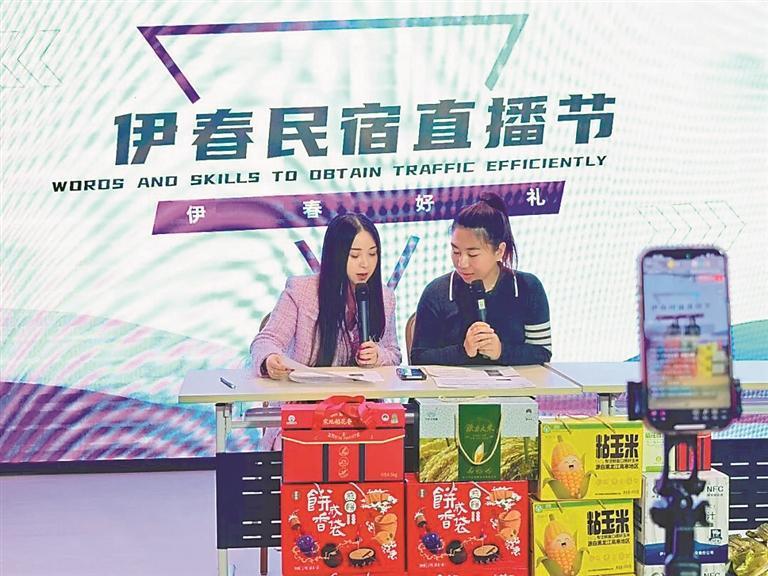
南华浩淞大豆气象分析报告:巴西产区开启籽粒灌浆,阿根廷进入需求关键期
Nan Hua Qi Huo· 2026-01-05 12:24
1. Report Industry Investment Rating - Not mentioned in the provided content 2. Core Viewpoints of the Report - Brazil's soybean is in a critical water - demand period, with 22.6% in the flowering stage, 38.5% in the vegetative growth stage, and 37.3% in the grain - filling stage, and some early - sown soybeans are in the mature harvest stage [1][20]. - Argentina's soybean planting area has increased by 6.5% week - on - week to 82%, with 97% of the sown area having suitable or better water conditions, and 17.3% of the first - season soybeans in the reproductive growth stage. The sowing of late - sown soybeans is 71.9% complete [1][41]. 3. Summary by Relevant Categories Brazil's Regional Conditions - **Mato Grosso**: The field growth is good, having overcome the negative impact of uneven rainfall in November. The replanting area is within the historical average range, and the harvest is about to start [1][20]. - **Goias**: Sowing is nearing completion. Rainfall has become regular, and the phenomena of missing seedlings and uneven growth in the fields have significantly reduced [1][20]. - **Mato Grosso do Sul**: Continuous rainfall continues to benefit the crops, with most plots in the reproductive growth stage and high - yield potential [1][20]. - **Minas Gerais**: Sowing has been completed, and the recent decrease in rainfall is conducive to pesticide spraying [1][20]. - **Bahia**: Alternating sunny and rainy weather is conducive to crop growth and the last - stage sowing operations [1][20]. - **Parana**: The harvest has started, about 1/3 of the area is in the grain - filling stage, and most crops are developing well [1][21]. - **Rio Grande do Sul**: Recent rainfall has restored the previously drought - hindered vegetative growth, provided germination conditions for the plots sown in early December, and promoted the smooth continuation of sowing work [1][21]. Argentina's Regional Conditions - **Buenos Aires**: The soybean growth in the two core production areas and the western part of Buenos Aires is more rapid, and the area is expected to receive rainfall to meet the critical water - demand period of the crops. The sowing of late - sown soybeans is 71.9% complete, and the overall emergence is good [41]. International Soybean Annual Focus Points - **January**: U.S. soybean export volume, South American production, global soybean ending stocks, and Chinese imports [59]. - **February**: U.S. export volume, Chinese import volume, Chinese stocks, and (planting intention forecast) [59]. - **March**: Brazilian export volume, South American production, and U.S. sowing area [59]. - **April**: South American production, U.S. sowing area, and Brazilian export volume [59]. - **May**: U.S. sowing area, Chinese sowing area, and Brazilian export volume [59]. - **June**: U.S. yield level and Brazilian export volume [59]. - **July - September**: U.S. yield level [59]. - **October**: U.S. yield level, production, and South American planting area [59]. - **November**: U.S. production and South American planting area [59]. - **December**: U.S. production, South American planting area, and U.S. export volume [59]. Soybean Growth Cycle and Weather Requirements - **Planting Period**: The average daily temperature of the 5 - cm soil layer at the initial sowing stage should reach 10 - 12°C. After germination, the suitable temperature for seedling growth is 15 - 25°C, and the water content should be maintained at 60% - 70%. Disaster risks include floods and extreme drought [67]. - **Flowering Period**: The suitable temperature is 20 - 28°C, and the soil water content should be 70% - 80%. Disaster risks include floods (continuous rain), drought [67]. - **Growth Period**: The suitable temperature is 21 - 23°C, and the soil field water - holding capacity should be about 70%. Disaster risks include heatwaves, drought, and pests [67]. - **Harvest Period**: The suitable temperature is 15 - 25°C, the relative air humidity should be 50% - 60%, and the soil humidity should be 40% - 50%. Disaster risks include continuous rainfall and storms [67].