零食

Search documents
有友食品跌2.02%,成交额2234.20万元,主力资金净流出160.37万元
Xin Lang Zheng Quan· 2025-09-22 02:03
Core Viewpoint - Youyou Food's stock price has shown volatility, with a year-to-date increase of 16.85% but recent declines over various trading periods, indicating potential market fluctuations and investor sentiment changes [2]. Group 1: Stock Performance - On September 22, Youyou Food's stock fell by 2.02%, trading at 11.65 CNY per share, with a total market capitalization of 4.983 billion CNY [1]. - Year-to-date, Youyou Food's stock has increased by 16.85%, but it has decreased by 4.12% over the last five trading days, 12.41% over the last 20 days, and 11.68% over the last 60 days [2]. Group 2: Financial Performance - For the first half of 2025, Youyou Food reported a revenue of 771 million CNY, representing a year-on-year growth of 45.59%, and a net profit attributable to shareholders of 108 million CNY, up 42.47% year-on-year [2]. - Since its A-share listing, Youyou Food has distributed a total of 925 million CNY in dividends, with 547 million CNY distributed over the past three years [3]. Group 3: Shareholder and Institutional Holdings - As of June 30, 2025, Youyou Food had 16,800 shareholders, an increase of 2.02% from the previous period, with an average of 25,533 circulating shares per shareholder, a decrease of 1.98% [2]. - New institutional shareholders include Yin Hua Sheng Shi Flexible Allocation Mixed Fund, holding 1.9993 million shares, and Peng Hua Consumer Preferred Mixed Fund, holding 1.9178 million shares, both entering the top ten circulating shareholders [3].

解码食饮:迎又一年双节,如何展望旺季行情
2025-09-22 01:00
Summary of the Conference Call on the Baijiu Industry Industry Overview - The overall sales volume in the baijiu industry has declined, with distributors expecting a 20%-30% drop in sales during the upcoming double festival period. Sales volume decreased by 40%-50% in July and August [1][2] - High-end baijiu wholesale prices are weak, with Feitian Moutai priced around 1,780 RMB. Demand for baijiu in banquet scenarios remains stable, while mid-range products perform more consistently [1][4] Key Points and Arguments - **Sales Performance**: The baijiu industry is facing significant sales pressure, with actual sales declines exceeding previous market expectations. Most regions, except for Henan, are experiencing sales drops greater than anticipated [2] - **Inventory Levels**: From June to August, the average sales volume decreased by 50%, leading to a slight increase in inventory levels compared to last year. Most distributors have higher inventory levels than the same period last year [3] - **Price Trends**: High-end baijiu products like Feitian Moutai and Wuliangye are experiencing weak wholesale prices. Feitian Moutai's price is expected to fluctuate between 1,700 and 1,800 RMB during the double festival period [4][8] - **Company Performance Adjustments**: Guizhou Moutai has lowered its annual growth target but maintains a steady collection rate compared to last year. Wuliangye is also expected to adjust its growth target due to market conditions [6][9] Company-Specific Insights - **Guizhou Moutai**: The company is increasing promotional activities for its series of products and expects a slight downward adjustment in annual growth targets, which may benefit investors by releasing risks [8] - **Wuliangye**: The company is shifting its focus from absolute growth to long-term competitiveness, with a return rate of approximately 60%-70% [9][10] - **Luzhou Laojiao**: The company is implementing a price stabilization strategy and focusing on expanding its terminal market through targeted promotions [11] - **Shanxi Fenjiu**: The company is facing significant sales declines but is maintaining a stable price point due to good relationships with distributors [13] Investment Recommendations - The report suggests focusing on companies with potential for policy-driven growth and those that can adapt to market changes, such as Jiu Gui, She De, and Shui Jing Fang. Mid-range products like Gu Qing Gong and Ying Jia Gong are also highlighted for their recovery potential [5][7] - The overall sentiment is that the baijiu industry is currently at a low point, but there are opportunities for recovery and growth in specific segments and companies [27] Additional Considerations - The impact of external factors, such as government inspections and coal supply pressures, has affected consumption patterns in various regions [12][14] - The performance of next-tier baijiu products is weaker compared to high-end and mid-range products, indicating a need for careful monitoring of new product launches [21] This summary encapsulates the key insights and trends discussed in the conference call regarding the baijiu industry, highlighting both challenges and potential investment opportunities.






白酒近况更新
2025-09-22 01:00
Summary of Conference Call Notes Industry Overview - The conference call primarily discusses the liquor industry, particularly focusing on the performance and strategies of major companies like Guizhou Moutai and Wuliangye during the recent sugar and liquor fair [1][2][3][4]. Key Points and Arguments 1. **Market Feedback from the Sugar and Liquor Fair**: Overall feedback from the fair was in line with expectations, with some channel operations exceeding expectations. Most liquor companies emphasized price stability in their channel operations [1]. 2. **Valuation Changes**: Post-Spring Festival, the market's perception of real estate stability has led to an increase in Guizhou Moutai's valuation from 18x to 22x, with many other stocks also experiencing valuation upgrades [2]. 3. **Seasonal Performance**: Despite being the off-season, banquet consumption has continued to show growth similar to the Spring Festival, with business consumption also receiving positive feedback due to a more favorable operating environment for private enterprises [3]. 4. **Confidence in Price Recovery**: There is a growing confidence in price recovery, although it remains untested during the off-season. The overall sentiment is that the liquor sector is not facing a downturn but is on an upward trend [4][7]. 5. **Foreign Investment Interest**: Foreign investors are likely to increase their allocation in liquor stocks, particularly Guizhou Moutai, due to strong earnings growth and attractive dividend yields. In contrast, domestic investors are more cautious due to previous significant gains in other sectors [5][6]. 6. **Inventory and Pricing Strategies**: Most liquor companies are maintaining stable prices and avoiding aggressive discounting to ensure natural sales growth. This strategy is crucial for maintaining market share in the mid-to-high price segments [14][15]. 7. **Channel Operations**: Wuliangye is undergoing significant channel reforms, focusing on reducing traditional channel volumes while enhancing direct sales and new market channels. The success of these reforms depends heavily on management execution [19][20][21]. 8. **Sales and Payment Trends**: The first quarter's sales performance is expected to show a mid-single-digit growth rate, with most companies nearing completion of their payment collection for the quarter [18][39]. 9. **Consumer Behavior Insights**: There is a notable recovery in consumer demand, particularly in banquet and business settings, although the overall market remains cautious about confirming a definitive recovery point [10][11][12]. Additional Important Insights - **Regional Performance Variations**: The performance of liquor sales varies significantly by region, with southern regions showing stronger recovery compared to northern areas [27]. - **Emerging Trends in Consumer Preferences**: There is a shift towards premium products, with some companies reporting substantial growth in high-end liquor sales [10][11]. - **Future Outlook**: The overall sentiment is cautiously optimistic, with expectations of gradual recovery in consumer demand and potential for further valuation increases in the liquor sector [6][12][13]. This summary encapsulates the key discussions and insights from the conference call, providing a comprehensive overview of the current state and future outlook of the liquor industry.
智利领事馆推荐!高端西梅西梅纤生让健康与美味不再二选一
Zhong Guo Shi Pin Wang· 2025-09-19 09:59
Core Viewpoint - The introduction of Chilean seedless prunes by Prune Knight highlights the brand's commitment to health-focused food innovation, emphasizing a "global selection of ingredients + zero additive formula" as a dual driving force for product development [1][6]. Group 1: Product Innovation - Prune Knight launched a new product, the Chilean seedless prune, during the Chilean National Day celebration, showcasing its innovative approach to health foods [1]. - The product features a pure ingredient list with only "Chilean prunes," achieving "0 additives, 0 sugar, 0 fat," making it an ideal choice for health-conscious consumers [6]. Group 2: Market Demand and Consumer Trends - The Chilean seedless prune aligns perfectly with the growing demand for healthy snacks in the multi-billion yuan health food market, catering to various consumption scenarios from breakfast to outdoor snacks [6]. - The product's appeal is enhanced by its rich nutritional profile, including dietary fiber, iron, potassium, and vitamin B6, positioning it as a top choice for "light health" [6]. Group 3: Supply Chain and Quality Assurance - Chile is a core production area for high-quality prunes, benefiting from favorable natural conditions, which ensures the rich taste and nutritional value of the prunes [5]. - Prune Knight's collaboration with top Chilean farms establishes a "farm-to-table" supply chain, guaranteeing that every prune is of premium quality [5]. Group 4: Brand Strategy and Market Positioning - Prune Knight's strategy of "buying globally and selling globally" integrates high-quality ingredients while adhering to health standards, aiming to elevate industry benchmarks [6]. - The brand is positioned to merge Chilean prunes with Chinese snack preferences, setting a new standard for healthy snacks and addressing the question of whether deliciousness and health can coexist [8].


薛记炒货的“高价困局”
3 6 Ke· 2025-09-19 01:25
Core Viewpoint - The article discusses the challenges faced by Xueji Fried Goods, highlighting its high pricing strategy amidst a backdrop of consumer spending pressure and a shift towards more value-oriented purchasing behavior in the snack industry [1][5][12]. Company Overview - Xueji Fried Goods was once a darling of the capital market, completing a significant A-round financing of 600 million yuan in September 2022, aimed at expanding its store network and enhancing digital capabilities [8][9]. - The company has expanded its store count from 736 at the end of 2022 to 920 by the end of 2023, with plans to exceed 1,000 stores in 2024 [9][12]. Pricing Strategy - The pricing strategy of Xueji Fried Goods has been characterized by high prices for its products, with nuts often exceeding 100 yuan per kilogram and popular items priced around 50-60 yuan per unit [3][5]. - Consumers have begun to resist these high prices, leading to a decline in foot traffic and average transaction values at stores [12][22]. Market Trends - The snack industry in China is projected to reach a market size of approximately 1.4 trillion yuan in 2024, growing at 5.3% year-on-year, with expectations to surpass 1.8 trillion yuan by 2030 [5]. - The industry is experiencing a "mixed battle" as competition intensifies, with a clear divide between high-priced and low-priced products becoming more pronounced [5][12]. Competitive Landscape - Xueji Fried Goods faces significant competition from traditional snack giants and similar brands that offer lower-priced alternatives, which has eroded its market share [20][22]. - The company is also dealing with internal competition due to the high density of its stores in certain areas, which has led to increased competition among its own outlets [22]. Strategic Adjustments - In response to declining performance, Xueji Fried Goods has begun to close several of its direct-operated stores and is shifting towards a franchise model to expand its market presence [13][15]. - The company is adjusting its product positioning from high-end to a more value-oriented approach, aiming to enhance its competitiveness in a changing market [17][23]. Future Outlook - The snack industry is expected to undergo significant adjustments in 2025, with a shift towards a balance of quality and price becoming essential for survival [23]. - Xueji Fried Goods must navigate its high-cost structure and brand repositioning challenges to remain viable in a market increasingly driven by consumer value [25][26].
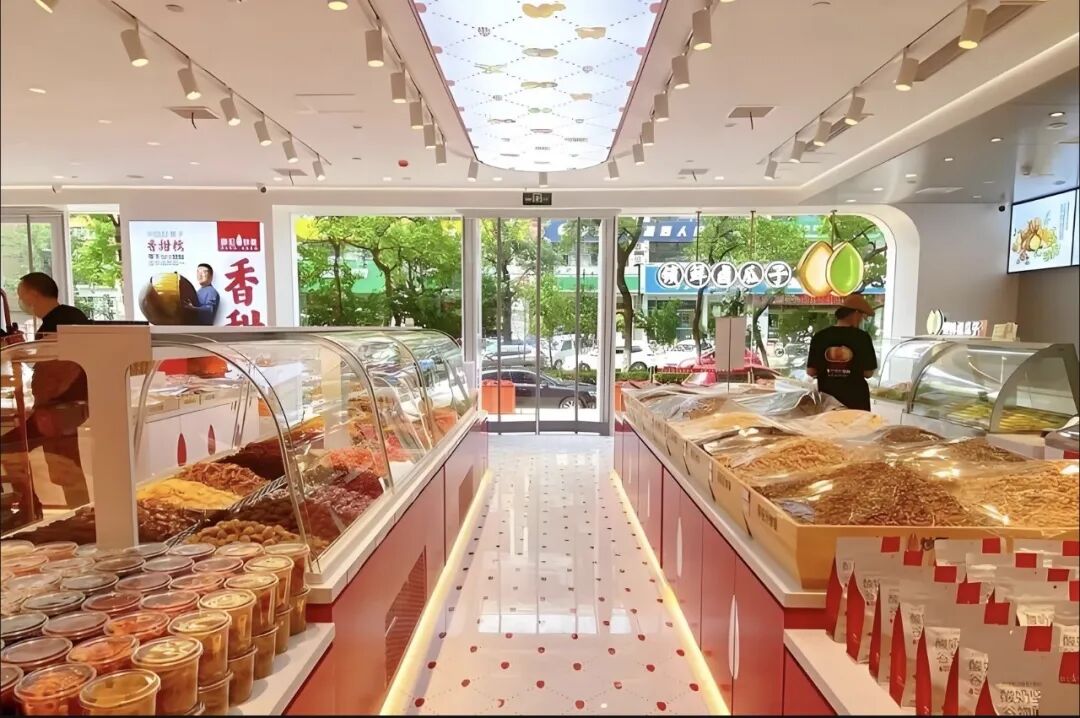
良品铺子跌2.10%,成交额6465.52万元,主力资金净流出94.62万元
Xin Lang Cai Jing· 2025-09-18 06:21
Core Viewpoint - The stock price of Liangpinpuzi has experienced a decline of 6.67% year-to-date, with a notable drop of 5.44% in the last five trading days, indicating a bearish trend in the market [2]. Group 1: Stock Performance - As of September 18, Liangpinpuzi's stock price fell by 2.10% to 13.03 CNY per share, with a trading volume of 64.65 million CNY and a turnover rate of 1.22%, resulting in a total market capitalization of 5.225 billion CNY [1]. - The stock has seen a net outflow of 946,200 CNY from major funds, with large orders accounting for 11.08% of total purchases and 12.54% of total sales [1]. - The stock has fluctuated with a 60-day increase of 11.37%, contrasting with the recent declines [2]. Group 2: Financial Performance - For the first half of 2025, Liangpinpuzi reported a revenue of 2.829 billion CNY, reflecting a year-on-year decrease of 27.21%, while the net profit attributable to shareholders was -93.55 million CNY, a significant decline of 491.59% [3]. - The company has distributed a total of 680 million CNY in dividends since its A-share listing, with 391 million CNY distributed over the past three years [4]. Group 3: Shareholder Information - As of June 30, 2025, the number of shareholders for Liangpinpuzi was 38,900, a decrease of 8.89% from the previous period, while the average circulating shares per person increased by 9.75% to 10,313 shares [3]. - Among the top ten circulating shareholders, Hong Kong Central Clearing Limited holds 2.6807 million shares, an increase of 492,400 shares compared to the previous period [4].

好想你跌2.09%,成交额1.03亿元,主力资金净流出805.05万元
Xin Lang Cai Jing· 2025-09-18 06:06
Core Viewpoint - The stock of Haoxiangni has experienced fluctuations, with a year-to-date increase of 34.38% but a recent decline in the last five trading days by 5.12% [2] Group 1: Stock Performance - On September 18, Haoxiangni's stock price fell by 2.09%, trading at 9.83 CNY per share with a total market capitalization of 4.401 billion CNY [1] - The stock has seen a net outflow of 8.0505 million CNY in principal funds, with significant selling pressure from large orders [1] - Year-to-date, the stock has been on the龙虎榜 (top trading list) 16 times, with the most recent appearance on March 11, where it recorded a net buy of 104 million CNY [2] Group 2: Company Overview - Haoxiangni Health Food Co., Ltd. was established on September 24, 1997, and went public on May 20, 2011, focusing on the production, processing, and sales of jujube-related products and nut snacks [2] - The company's revenue composition includes 72.66% from jujube products, 16.54% from other categories, and smaller contributions from health preservation products and non-food sectors [2] - The company operates within the food and beverage industry, specifically in the snack food sector, and is associated with concepts like new retail and e-commerce [2] Group 3: Financial Performance - For the first half of 2025, Haoxiangni reported a revenue of 689 million CNY, a year-on-year decrease of 15.64%, while the net profit attributable to shareholders was -19.8388 million CNY, an increase of 45.25% year-on-year [2] - The company has distributed a total of 1.638 billion CNY in dividends since its A-share listing, with 921 million CNY distributed in the last three years [3] - As of June 30, 2025, the number of shareholders decreased by 28.76% to 58,600, while the average number of circulating shares per person increased by 40.45% to 5,875 shares [2]

盐津铺子跌2.01%,成交额1.07亿元,主力资金净流出564.96万元
Xin Lang Cai Jing· 2025-09-18 03:35
Group 1 - The stock price of Yanjinpuzi fell by 2.01% on September 18, reaching 70.23 CNY per share, with a total market capitalization of 19.157 billion CNY [1] - The company has seen a year-to-date stock price increase of 14.01%, but a decline of 2.90% over the past 20 days and 11.39% over the past 60 days [1] - Yanjinpuzi's main business includes research, production, and sales of leisure food and deep processing of agricultural products, with revenue composition as follows: spicy snacks 44.91%, baked potato products 15.61%, dried fruits and jellies 14.56%, deep-sea snacks 12.33%, egg snacks 10.52%, and others 2.06% [1] Group 2 - As of June 30, the number of shareholders for Yanjinpuzi increased by 21.92% to 10,900, while the average circulating shares per person decreased by 17.65% to 22,561 shares [2] - For the first half of 2025, Yanjinpuzi reported a revenue of 2.941 billion CNY, a year-on-year increase of 19.58%, and a net profit attributable to shareholders of 373 million CNY, up 16.70% year-on-year [2] Group 3 - Since its A-share listing, Yanjinpuzi has distributed a total of 1.318 billion CNY in dividends, with 923 million CNY distributed over the past three years [3] - As of June 30, 2025, the top ten circulating shareholders include Hong Kong Central Clearing Limited as the third-largest shareholder, increasing its holdings by 1.0793 million shares, while several new shareholders entered the top ten list [3]

满足消费者健康需求情感需求 龚正会见美国亿滋国际董事会主席兼首席执行官冯朴德一行
Jie Fang Ri Bao· 2025-09-18 01:40
Group 1 - Shanghai is focusing on high-quality development and aims to become a world-class modern international metropolis, enhancing its appeal for global goods, especially high-quality and diverse food products [1] - The city welcomes global food companies like Mondelēz International to participate in the development of Shanghai's food industry, improve their headquarters capabilities, and integrate deeply into local supply chains [1] - Mondelēz International, ranked 436th in the Fortune Global 500, is a leader in the global snack industry and has established its Greater China headquarters in Shanghai [2] Group 2 - The CEO of Mondelēz International expressed that Shanghai represents future trends and is often ahead of the global curve, making each visit a learning experience [1] - The company aims to seize growth opportunities in the Chinese market, enhance consumer experiences, and share insights from China with the global market [1]

食品饮料行业跟踪报告:阿里重发力到店业务,线下餐饮活力有望提升
Shanghai Aijian Securities· 2025-09-16 10:06
Investment Rating - The report rates the industry as "Outperform the Market" [3][20]. Core Insights - The white liquor sector is expected to see a weak recovery in demand as policy pressures ease, with a notable narrowing of year-on-year declines anticipated during the upcoming double festival sales [2]. - The food and beverage industry is currently at a low valuation, with pessimistic expectations fully priced in, and the release of interim results is expected to alleviate performance pressures [2]. - The report highlights the potential for premium liquor companies like Kweichow Moutai, Wuliangye, and Shanxi Fenjiu, which have stable pricing and attractive dividend yields, to be favored during this adjustment period [2]. - In the mass consumer goods segment, companies like Nongfu Spring and Dongpeng Beverage are recommended due to their strong growth trajectories and the market's willingness to assign valuation premiums to "scarce" growth stocks [2]. Summary by Sections Weekly Tracking - The food and beverage industry increased by 1.08% in the week of September 8-12, underperforming the Shanghai Composite Index, which rose by 1.52% [3][4]. - Among sub-sectors, meat products led with a gain of 2.99%, while snacks saw a decline of 4.60% [3][6]. Dairy Sector - The nationwide rollout of childcare subsidies is expected to boost demand for dairy products, particularly infant formula, benefiting leading companies with strong brand advantages and diversified distribution channels [3]. Snack Sector - The rapid expansion of the snack chain "Mingming Hen Mang" has surpassed 20,000 stores, indicating a shift towards a more competitive and cost-effective sales model that aligns with current consumer trends [3]. Restaurant Sector - The launch of the "Gaode Street Ranking" by Gaode Map is anticipated to enhance the vitality of offline dining by leveraging user behavior data for merchant evaluations, which may benefit restaurant supply chain companies [3].