
预制菜

Search documents
创业板涨超2%,新能源产业链爆发,“宁王”大涨10%,恒科指涨1%,半导体芯片活跃,国债、商品齐涨
Sou Hu Cai Jing· 2025-09-15 02:10
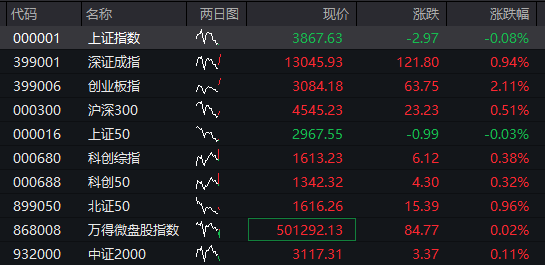
Market Overview - A-shares experienced fluctuations with the ChiNext index rising by 2.11%, driven by strong performances in solid-state batteries and energy storage sectors, particularly with CATL surging by 10.15% [1][10][15] - The Hong Kong market also saw gains, with the Hang Seng Index up by 0.20% and the Hang Seng Tech Index increasing by 1.04% [3][24] - The bond market showed a positive trend, with government bond futures rising across the board [3][4] Sector Performance - The solid-state battery and energy storage sectors witnessed significant growth, with CATL's stock price increasing by 10.15% and a trading volume exceeding 10 billion yuan [10][12] - Semiconductor stocks were notably active, with several companies like Sanan Optoelectronics and Shanghai Belling hitting their daily price limits [20][21] - The pre-made food sector also saw a surge, with companies like DeLis and Huihua Foods reaching their daily price limits [6][7] Commodity Market - Domestic commodity futures mostly rose, with coking coal and coke prices increasing by over 2% [1][27] - Lithium carbonate prices also saw a rise, reflecting the ongoing demand in the battery sector [4][27] Financing and Investment Trends - As of September 12, the financing balance on the Shanghai Stock Exchange reached 1.183985 trillion yuan, an increase of 7.544 billion yuan from the previous trading day [5]



预制菜板块震荡走强,惠发食品、得利斯双双涨停
Mei Ri Jing Ji Xin Wen· 2025-09-15 02:09
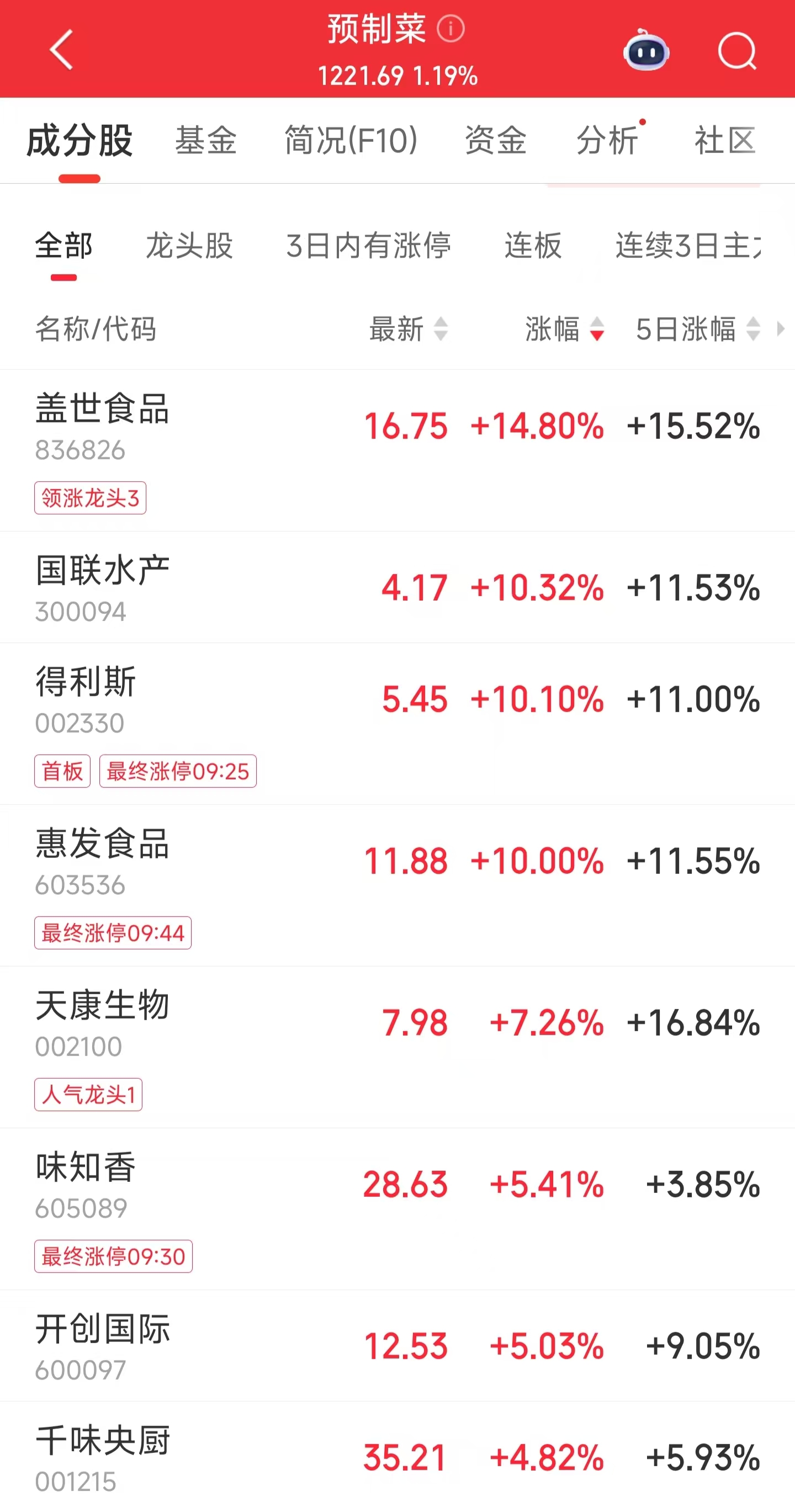
Group 1 - The prepared food sector is experiencing a strong rebound, with companies like Huifa Food and Delisi both hitting the daily limit up [1] - Gaisi Food has seen an increase of over 15%, while Guolian Aquatic has risen by more than 10% [1] - Other companies such as Haixin Food, Qianwei Central Kitchen, Weizhi Xiang, and Yike Food are also among the top gainers in this sector [1]


预制菜板块盘初走强,得利斯涨停,多家上市公司回应
Di Yi Cai Jing· 2025-09-15 02:07
| 味知香被称为A股"预制菜第一股",半年报显示:上半年,味知香归属净利润同比下滑了24.46%。 | | | --- | --- | | 对于预制菜行业所面临的挑战,味知香董事长、总经理夏靖此前在业绩发布会上表示,预制菜行业的繁荣与挑战并存,在市场规模快速增长的同时,消费者 | 需求的多元化和行业竞争的加剧也为预制菜企业提出更高的要求,同时,预制菜行业也面临了标准不一、食品安全、监管标准等问题,随着相关标准的逐步 | 千味央厨在互动平台回答投资者关于如何应对公众对预制菜行业的信任危机时表示,其深刻理解并高度重视当前市场对预制菜行业存在的信任挑战,并采取 了多项应对措施,包括源头严控与供应链升级,公司始终将保障原料的稳定供应与卓越质量视为重中之重;构建严密的质量监控体系,针对不同业务环节制 定了质量管理制度等。 出台,从长期来看,优质的品牌力将会是人们的消费选择, 9月15日,预制菜概念盘初走强,得利斯(002330.SZ)、惠发食品(603536.SH)涨停,味知香(605089.SH)、国联水产(300094.SZ)、千味央厨 (001215.SZ)、盖世食品(836826.BJ)、益客食品(301116 ...
预制菜概念股活跃,得利斯、味知香涨停
Mei Ri Jing Ji Xin Wen· 2025-09-15 02:06
Core Viewpoint - The pre-made food concept stocks have shown active performance, with notable gains in specific companies such as Delisi and Weizhi Xiang reaching their daily limit up [1] Group 1: Company Performance - Delisi and Weizhi Xiang both hit the daily limit up, indicating strong investor interest and market confidence in these stocks [1] - Other companies in the pre-made food sector, including Qianwei Yangchu and Guolian Aquatic Products, also experienced upward movement in their stock prices [1] - Gais Food also participated in the upward trend, reflecting a broader positive sentiment in the pre-made food industry [1]


预制菜与中国连锁餐饮行业发展
2025-09-15 01:49
Summary of Conference Call on Prepared Dishes and the Development of China's Chain Restaurant Industry Industry Overview - The conference discusses the prepared dishes sector within the Chinese chain restaurant industry, highlighting the differences in definitions at consumer, industry, and national levels [1][2][3]. Key Points and Arguments - **Definition Discrepancies**: Prepared dishes are defined differently across various levels. National definitions exclude staple foods and dishes made in central kitchens, and prohibit preservatives [1][2]. - **Central Kitchen Benefits**: Chain restaurants utilize central kitchens to lower costs, ensure product quality consistency, standardize operations, and enhance food safety. However, initial processing or semi-finished products from central kitchens are not classified as prepared dishes under national definitions [1][3]. - **Japanese Influence**: The Japanese restaurant industry has optimized supply chains and food safety standards, establishing a robust system for central kitchens and cold chain logistics, which serves as a model for China's restaurant sector [1][4]. - **Consumer Expectations**: Chinese consumers expect healthy, safe, and innovative menu options from Chinese cuisine. Chain restaurants should enhance supply chain management, improve service levels, develop new products, and focus on brand building to meet these expectations [1][5]. - **Impact of Central Kitchens**: Central kitchens significantly influence the Chinese restaurant industry by improving efficiency and enabling standardized processes, making it easier for new brands to emerge [1][7]. - **Prepared Dishes Classification**: Prepared dishes are categorized into four types: pre-processed ingredients, ready-to-cook, semi-finished products requiring heating, and fully cooked dishes. Central kitchen products do not fall under the prepared dishes category as per the latest regulations [2][6]. - **Market Changes Post-Regulation**: Following new regulations in March 2024, which excluded central kitchen products from the prepared dishes category, consumer confidence in non-central kitchen prepared dishes declined, leading to a rebranding of some products as "quick dishes" [2][13]. Additional Important Insights - **Central Kitchen Types**: There are two main types of central kitchens: those with production licenses that can supply third-party restaurants and those that only supply their own outlets [8][12]. - **Future Trends**: The trend towards central kitchens and prepared dishes is expected to grow, especially as family sizes decrease and younger parents may prefer convenient meal options. Ensuring safety and taste will be crucial for market acceptance [16][17]. - **Technological Integration**: The use of cooking robots is anticipated to enhance the quality of prepared dishes while maintaining standardization, addressing the challenge of flavor consistency in mass production [19]. - **Profitability Comparison**: The profit margins in the Japanese restaurant industry are generally lower than those in China, suggesting that Chinese restaurants have room to balance pricing while maintaining profitability through central kitchen efficiencies [20][21].
千万不要白白浪费一次危机!西贝事件应成为预制菜产业转型发展的新起点
Mei Ri Jing Ji Xin Wen· 2025-09-15 01:45
Core Viewpoint - The ongoing debate between Luo Yonghao and Xibei highlights the urgent need for standardization, transparency, and quality improvement in the prepared food industry, which is crucial for its healthy development [1][2][3][4][5][6] Group 1: Industry Context - The prepared food market in China is projected to exceed 600 billion yuan by 2025 and may reach a trillion yuan by 2026 [2] - The penetration rate of prepared food in chain restaurants has reached 80%, with 42% of takeout orders consisting of prepared dishes [2] Group 2: Standardization - Standardization is essential for establishing a unified language and rules within the prepared food sector, as the lack of standards leads to confusion among consumers and businesses [3] - A draft for the national food safety standards for prepared food is set to be publicly reviewed, which could help clarify the identity of prepared food [3] Group 3: Transparency - Transparency is vital for restoring consumer trust, as the lack of clear definitions and information about prepared food has led to consumer dissatisfaction [4] - Companies that openly disclose their food preparation methods, like Laoxiangji, have received positive feedback, indicating that transparency can enhance consumer confidence [4] Group 4: Quality - Quality is the core of the prepared food industry's survival, as consumer anxiety over quality issues has been a significant concern [5] - Prepared food must evolve from merely meeting basic needs to becoming a valued choice for consumers, necessitating a focus on safety, health, and quality [5] Group 5: Future Implications - The Xibei incident should serve as a catalyst for self-reform within the restaurant industry, promoting the prepared food sector's growth and maturity [6] - Companies that prioritize standardization and transparency are likely to gain market respect and consumer loyalty [6]
不要白白浪费一次危机!西贝事件应成为预制菜产业转型发展的新起点
Mei Ri Jing Ji Xin Wen· 2025-09-15 01:44
Core Viewpoint - The ongoing debate between Luo Yonghao and Xibei highlights the urgent need for standardization, transparency, and quality improvement in the prepared food industry, which is crucial for its healthy development [1][2][3][4][5][6] Group 1: Industry Context - The prepared food market in China is projected to exceed 600 billion yuan by 2025 and may reach a trillion yuan by 2026 [2] - The penetration rate of prepared food in chain restaurants has reached 80%, with 42% of takeout orders consisting of prepared dishes [2] Group 2: Standardization - Standardization is essential for establishing a common language and rules within the prepared food sector, as the lack of standards leads to confusion among consumers and businesses [3] - A draft for the national food safety standards for prepared food is set to be publicly reviewed, which could unify the definition and standards for prepared food [3] Group 3: Transparency - Transparency is vital for restoring consumer trust, as the lack of clear information about prepared food has led to consumer dissatisfaction [4] - Companies that openly disclose their food preparation processes, like Laoxiangji, have received positive feedback, indicating that transparency can enhance consumer confidence [4] Group 4: Quality - Quality is the core of the prepared food industry's survival, as consumer anxiety over quality issues has been a significant concern [5] - The industry must shift from being perceived as merely convenient to being recognized for safety, health, and quality, making quality a competitive advantage [5] Group 5: Future Implications - The Xibei incident should serve as a catalyst for self-reform within the restaurant industry, promoting the prepared food sector's evolution [6] - Legal standards should be established to ensure consumer rights, while companies that prioritize honesty and transparency will gain market respect [6]
预制菜概念盘初表现活跃 得利斯涨停
Zheng Quan Shi Bao Wang· 2025-09-15 01:42
Group 1 - The pre-prepared food concept is showing active performance in the market, with companies like Delisi reaching the daily limit increase, and Guolian Aquatic Products and Gais Food also experiencing gains [1] - The National Health Commission has led the drafting of the "National Standards for Food Safety of Pre-prepared Dishes," which has passed expert review and is set to be publicly solicited for opinions [1]
谁说中国人反对预制菜?
3 6 Ke· 2025-09-15 01:37
Core Viewpoint - The controversy surrounding "pre-prepared meals" in China stems from a significant trust deficit among consumers, despite the potential for a win-win situation for producers, restaurants, and consumers [1][2] Group 1: Industry Context - The pre-prepared meal industry in China is facing challenges due to a mismatch between industry supply and local consumer demand, necessitating innovation in product, technology, and marketing [2][12] - The concept of pre-prepared meals entered the Chinese market during the pandemic, which created a false sense of security regarding consumer acceptance, leading to a backlash once normalcy returned [7][8] - Unlike Japan, where pre-prepared meals gained acceptance through historical context and societal needs, China's rapid introduction during a crisis did not allow for the same level of consumer trust to develop [4][5][8] Group 2: Consumer Concerns - Chinese consumers are primarily concerned about the safety, health, and transparency of pre-prepared meals, questioning the presence of preservatives and additives, as well as the overall quality and taste [10][12] - There is a strong demand for clarity regarding the use of pre-prepared meals in restaurants, with consumers wanting to know if they are receiving fresh ingredients and the right to make informed choices [10][12] - The lack of standardized regulations and definitions for pre-prepared meals in China has contributed to consumer skepticism, although recent efforts are being made to establish clearer guidelines [12][13] Group 3: Regulatory Developments - The Chinese government is moving towards establishing a unified standard for pre-prepared meals, which will include definitions, classifications, and safety regulations, aimed at enhancing consumer trust [12][13] - The upcoming national standards will require restaurants to disclose information about their use of pre-prepared meals, which is expected to improve transparency and consumer confidence [13]
预制菜概念盘初走强,得利斯涨停
Xin Lang Cai Jing· 2025-09-15 01:33
Core Viewpoint - The pre-made food concept is gaining strength in the market, with several companies experiencing significant stock price increases, indicating a growing interest in this sector [1] Company Performance - Delisi has reached its daily limit increase in stock price, reflecting strong market confidence [1] - Other companies such as Weizhi Xiang, Guolian Aquatic Products, Qianwei Yangchu, Gais Food, Yike Food, and Huifa Food have also seen their stock prices rise in response to the trend [1]