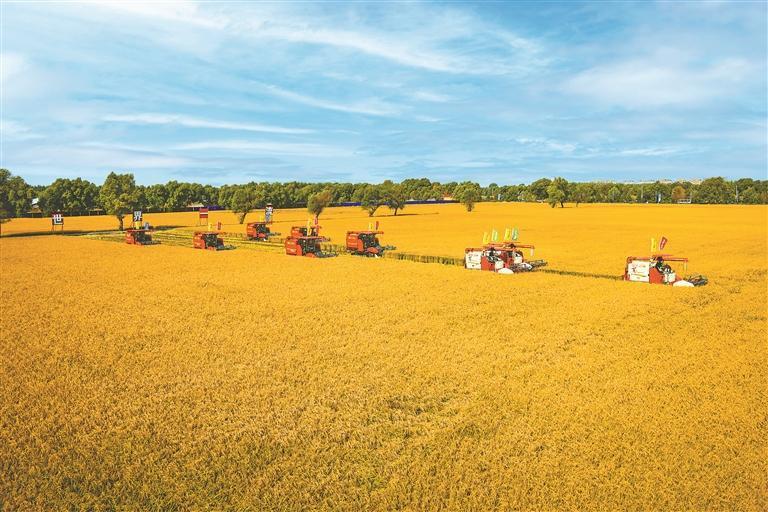
农业种植

Search documents
各地全力以赴做好抢收抢烘工作 确保秋粮应收尽收
Yang Shi Wang· 2025-10-09 16:08
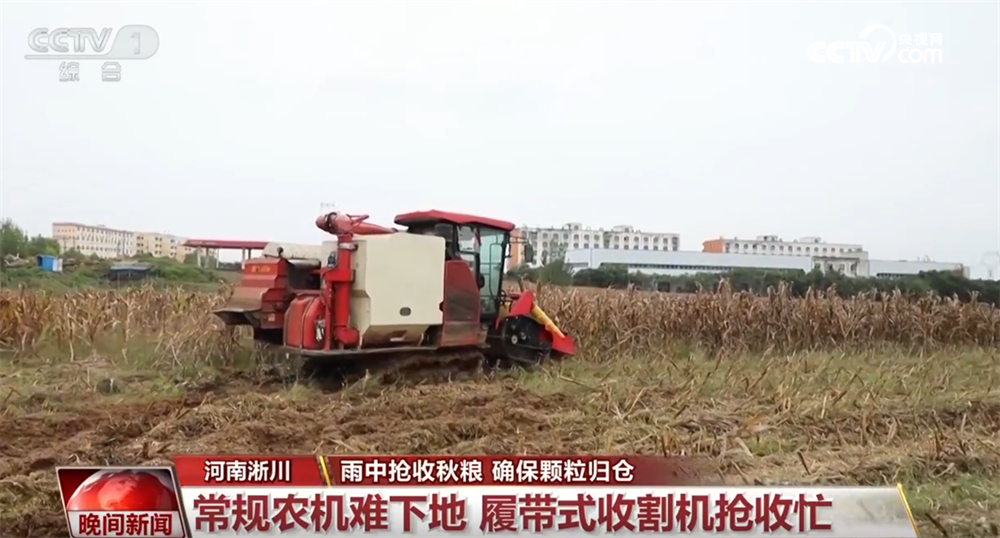
Core Insights - Continuous rainfall is putting pressure on the autumn harvest in the Huanghuaihai region of China, with the Ministry of Agriculture and Rural Affairs reporting that nearly 40% of the national autumn grain has been harvested [1] Group 1: Harvesting Challenges - In Henan Province, conventional agricultural machinery is struggling to operate due to saturated soil from continuous rainfall, leading to the use of high-performance tracked harvesters for urgent harvesting [2] - In Hebei Province, over 60% of autumn grain has been harvested, with local agricultural departments coordinating the use of tracked harvesters and modifying conventional harvesters to improve their efficiency in wet conditions [4][6] Group 2: Innovative Solutions - In Shandong Province, drones typically used for spraying and fertilizing are being repurposed as efficient "airborne heroes" to transport harvested corn [7] - Shandong has updated information on over 1,800 grain drying service points to facilitate emergency drying operations and mitigate the impact of rainy weather on grain storage [9][11] Group 3: Government Support - The National Food and Strategic Reserves Administration has deployed measures for post-harvest services and grain purchasing, emphasizing the importance of grain drying and scientific storage while coordinating drying facility resources [12]

保障黄淮地区秋粮抢收抢烘(秋收进行时)
Ren Min Ri Bao· 2025-10-08 22:11
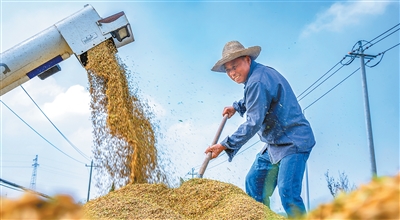
下一步,农业农村部将密切与河北、山西、江苏、安徽、山东、河南、湖北、陕西等黄淮8省沟通协 调,根据最新灾情形势进一步调度救灾机具应急作业需求,积极协调相关地方和企业单位,努力满足救 灾机具需要。 10月8日,在安徽省芜湖市繁昌区峨山镇城东村,农民在 收获水稻。 肖本祥摄(影像中国) 本报北京10月8日电 (记者郁静娴)近期黄淮地区特别是河南、山东、安徽等地受持续阴雨影响,秋收 进度偏慢,为做好抗灾救灾机具保障,农业农村部强化农机应急救灾响应,在持续指导河南、山东、安 徽等地做好秋粮机械化抢收的同时,央地协同联动加力优化调度服务、调集救灾机具、开展应急作业, 支持灾区集中力量尽快抢收抢烘,确保秋粮应收尽收、确保质量。 (责编:牛镛、岳弘彬) 关注公众号:人民网财经 10月7日,在山东省枣庄市市中区孟庄镇焦庄村,农民将 收获的玉米装车。 孙中喆摄(人民视觉) 《 人民日报 》( 2025年10月09日 02 版) ...
中方不买大豆,美方开始自救,特朗普犯下大忌,王毅将奔赴欧洲
Sou Hu Cai Jing· 2025-10-07 05:42
Core Insights - The current harvest season in the U.S. has led to a surplus of soybeans, with American farmers facing anxiety due to a lack of orders from China, prompting the Trump administration to seek solutions [1][3] Group 1: Government Response - The Trump administration is considering using $10 billion to $14 billion in funds to subsidize struggling farmers, sourced from tariff revenues, which were originally paid by American consumers [3] - Trump's focus on agricultural states as key voter bases drives his urgency to implement subsidy policies and promises to address soybean export issues in upcoming meetings with China [3][9] Group 2: China's Strategy - China's decision to not purchase U.S. soybeans is based on rational considerations, as it diversifies its supply sources by increasing imports from Brazil and Argentina, thus stabilizing its soybean supply [5][8] - The Chinese government has invested in infrastructure improvements and expanded its storage systems to reduce reliance on U.S. soybeans, making it less vulnerable to U.S. trade policies [5][8] Group 3: Market Dynamics - The U.S. Department of Agriculture reports that there have been zero orders for U.S. soybeans from China since the start of the new sales season, marking the first occurrence of "zero orders" since 1999 [7] - Last year, China accounted for approximately $12 billion of U.S. soybean exports, representing half of the total exports, highlighting the significant market loss for American farmers [7] Group 4: Political Implications - The soybean issue reflects broader U.S.-China relations, where the agricultural economy's fluctuations directly impact political outcomes, particularly for Trump [9][12] - Trump's reliance on outdated trade war tactics, such as tariffs and subsidies, may not effectively address the underlying issues, as China has adapted its strategies to counter U.S. pressures [9][12] Group 5: Future Outlook - The ongoing negotiations and upcoming APEC meetings may provide further clarity, but China is unlikely to change its stance easily, having transitioned from a passive trade dependent to an active market leader [11][12] - The soybean situation serves as a catalyst for broader changes in global supply chains and political-economic dynamics, indicating a shift in the rules of engagement in international trade [12]

国庆见闻这一轮赚钱了但上一轮买的基金还没解套
Sou Hu Cai Jing· 2025-10-06 15:53
Group 1: Stock Market Insights - The current stock market has seen profits since September 2022, but many investors from the previous bull market have not yet recovered their investments [2][3] - There is a general sentiment among the public that the stock market is a good place for wealth accumulation, despite concerns about volatility [4] - A stable upward trend in the stock market, with some sectors performing well, is preferred over large fluctuations [4] Group 2: Agricultural Challenges - Recent weather conditions, including drought and flooding, have significantly impacted agricultural production in key regions like Shandong and Henan [5][6] - The unpredictability of agricultural yields poses risks for investment, as production is heavily dependent on weather [12] Group 3: Consumer Behavior and Pricing - Prices for agricultural products, such as grapes, have decreased significantly, with some selling for as low as 1.98 yuan per jin [7][11] - The influx of brands from first-tier cities into lower-tier cities indicates a growing market opportunity [14][17] Group 4: Tourism Trends - There is a noticeable increase in domestic tourism during the National Day holiday, with many travelers opting for destinations like Xinjiang and Qinghai [22] - Travelers are becoming more aware of the challenges abroad, such as theft and infrastructure issues, leading to a shift in perception about international travel [24]

我国黑土地“变薄、变瘦、变硬”趋势得到初步遏制
Xin Hua Wang· 2025-10-06 05:11
Core Insights - The trend of "thinning, shrinking, and hardening" of black soil in China has been initially curbed during the 14th Five-Year Plan period [1] Group 1: Black Soil Protection Measures - The Ministry of Agriculture and Rural Affairs has implemented various measures including infrastructure construction, protective tillage, soil erosion prevention, and fertile layer cultivation [1] - Over 400 million acres of black soil have been protected cumulatively during this period [1] - A total of 33,000 erosion gullies have been treated as part of the black soil protection efforts [1]
黄河落日处 故城焕新颜
Ren Min Wang· 2025-10-05 09:20
Core Insights - The article highlights the development of the ancient village of Gucheng, located in Baode County, which is leveraging its unique cultural and agricultural resources to promote rural tourism along the Yellow River [1][2]. Group 1: Development Strategy - Gucheng village is focusing on integrating agriculture, culture, and tourism, creating a distinctive scenic system with 18 attractions under the brand "Yellow River Ancient City: Impression Gucheng" [1]. - The village has seen a significant increase in collective economic income, reaching 1.05 million yuan in 2024, with per capita disposable income for farmers at 17,038 yuan [2]. Group 2: Tourism and Attractions - The village features a hundred-acre picking garden, with 70 acres dedicated to economic forests, equipped with modern irrigation and monitoring systems, enhancing the visitor experience through seasonal festivals [2]. - A key project, the Yellow River Wharf, is planned to include various cultural and recreational activities, such as a restaurant, adventure park, and RV camping, covering an area of approximately 6.4 hectares [3]. Group 3: Future Prospects - The ongoing rural tourism enhancement project aims to create three main areas focused on folk customs, wharf activities, and pastoral experiences, which will include agricultural education bases [2][3]. - The village is positioned to attract more visitors by offering rich cultural experiences and traditional Yellow River cuisine, thereby boosting the local tourism industry [3].

天下梯田何其多,紫鹊界梯田有啥特殊?
Ren Min Ri Bao· 2025-10-05 07:19
Core Insights - The article highlights the unique characteristics of the Ziqiao Jie terraced fields in Hunan, emphasizing their historical significance, scale, and advanced irrigation techniques developed over 2000 years [1][2]. Group 1: Historical and Cultural Significance - The Ziqiao Jie terraced fields have a history dating back to the pre-Qin period and reached their peak during the Song and Ming dynasties, showcasing a blend of southern rice cultivation and mountain hunting cultures [1]. - The terraced fields cover over 80,000 acres, with the core scenic area exceeding 20,000 acres, featuring over 1,100 layers at its highest point [1]. Group 2: Irrigation and Ecological Management - A unique natural self-flow irrigation system has been developed, relying on forest conservation, soil water retention, and the terraced structure, allowing for sustainable water resource utilization [1]. - Local management has been improved by establishing a dedicated management body for the terraced fields, ensuring integrated protection, planning, and utilization [2]. - Restoration efforts include repairing 46 small water channels totaling 16,000 meters and rehabilitating 1,500 acres of abandoned terraced fields, enhancing the ecological capacity of the area by 35% [2]. Group 3: Tourism and Community Engagement - The Ziqiao Jie has introduced an "immersive farming experience" for tourists, allowing them to participate in activities like planting and harvesting, thus promoting agricultural education [3]. - A "Terraced Field Guardian" program has been launched, enabling individuals to adopt sections of the terraced fields and monitor their growth through a mobile application, fostering a connection between consumers and agriculture [3]. - The upcoming harvest season is expected to bring joy to families as the terraced fields turn golden with ripe rice [3].
秋收进度近三成 现代化农机助丰收
Yang Shi Wang· 2025-10-04 22:37
Core Insights - The Ministry of Agriculture and Rural Affairs reports that nearly 30% of the national autumn grain harvest has been completed, indicating significant progress in the agricultural sector [1] Group 1 - The influx of various modern agricultural machinery is aiding in the efficient harvesting of grain and oil crops, contributing to the successful collection of produce [1]
山地农业“飞”起来 !贵阳贵安依托低空经济赋能“三农”高质量发展
Jing Ji Guan Cha Bao· 2025-10-04 03:59
Core Insights - The integration of drone technology in agriculture is significantly enhancing efficiency and reducing costs in mountainous regions, particularly in Guiyang and Gui'an [1][2][3] - Drones are transforming agricultural practices from traditional methods to data-driven decision-making, marking a shift towards smart agriculture [1] - The demand for drone services in rural areas is increasing, leading to a shortage of qualified drone operators [3] Group 1: Agricultural Efficiency - Drones have improved operational efficiency in agricultural tasks, such as pesticide application, with efficiency increasing by 20% and pesticide usage decreasing by 20% [1] - The transportation of perishable goods like peaches and kiwis has seen a cost reduction of over 50% due to drone delivery, which also minimizes product damage [2] - The use of drones has reduced the loss rate of products, such as the cracking rate of watermelons from 15% to 3% [2] Group 2: Data-Driven Agriculture - The implementation of a monitoring system in fields allows for real-time data collection on environmental conditions, which aids in risk prediction and management [1] - The transition from experience-based management to data-driven decision-making signifies a major advancement in agricultural practices [1] Group 3: Industry Growth and Training - The establishment of cooperative networks utilizing drones for agricultural services is expanding, with significant transportation volumes reported [3] - There is a growing interest in drone operation training, with nearly 800 participants in recent training sessions, indicating a strong demand for new technology in rural areas [3]
北大荒集团成果平移牵手地方共筑大国粮仓
Xin Lang Cai Jing· 2025-10-03 22:33
Core Viewpoint - The article highlights the collaborative efforts of Beidahuang Group in enhancing agricultural productivity through innovative models and technology integration, aiming to improve grain production in Heilongjiang province [5][8]. Group 1: Collaboration and Innovation - Beidahuang Group has established a cooperative model involving local governments and enterprises to enhance agricultural productivity, focusing on the integration of resources and technology [6][7]. - The partnership between Changshui River Farm and Beian City has evolved from a pilot project of 1,200 acres to a comprehensive collaboration involving multiple stakeholders [6][7]. - The "four-party collaboration" model aims to provide full-service guidance throughout the agricultural production process, ensuring effective implementation of advanced agricultural practices [6][7]. Group 2: Technological Integration - The use of modern technology in agriculture, such as high-standard soybean planting and digital management systems, has led to significant yield improvements, with average soybean yields reaching 534 jin per acre [7][8]. - Techniques like dual-layer fertilization and digital monitoring have been implemented to enhance crop yields by 10% to 20%, translating to an increase of 120 to 150 jin per acre [8]. - The integration of IoT and big data in agricultural practices has enabled precise management of farming operations, contributing to higher productivity and efficiency [8]. Group 3: Economic and Community Impact - Beidahuang Group's initiatives have not only focused on agricultural productivity but also on transforming local economies through tourism and community engagement, exemplified by the establishment of a rural revitalization tourism park [8][9]. - The investment of 8.3 million yuan in the tourism park aims to create a unique blend of agricultural experience and cultural tourism, potentially generating additional revenue for the local community [8]. - The collaboration has resulted in a holistic approach to rural development, combining agricultural enhancement with tourism and community services to drive economic growth [8].