
数字货币

Search documents
比特币价格攀升,特朗普加码加密货币,暴涨背后的暗潮涌动
Sou Hu Cai Jing· 2025-07-14 06:25
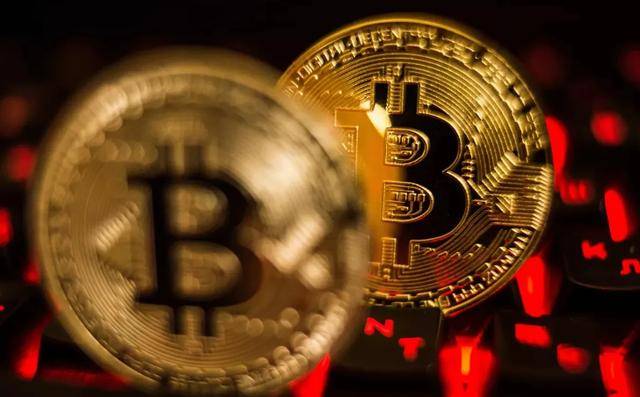
《天才法案》及其相关监管措施的推出,标志着美国数字货币政策逐渐走向规范和制度化。稳定币作为 连接传统金融与数字货币的重要桥梁,其监管框架的确立有助于消除市场对加密货币安全性的疑虑,促 进更多机构投资者参与市场,从而带动资金进一步涌入比特币及其他数字资产。众议院即将审议该法 案,表明美国政府希望借助立法手段引导数字货币健康发展,力图在维护消费者权益的同时,提升美国 在全球数字金融领域的竞争力。这对于加密货币市场的未来走势具有关键影响,投资者必须密切关注政 策动态,以调整投资策略,规避潜在法律和市场风险。 文︱陆弃 昔日被质疑和排斥的数字货币,比特币在2025年7月迎来了历史性的突破,价格首次冲破11.8万美元关 口,刷新全球最高纪录。这不仅是数字货币市场的又一里程碑,也是在全球经济动荡与金融创新交织下 的重要信号。比特币的暴涨背后,是复杂的政治博弈、资本流动和技术革新所构成的多重因素的叠加, 这场数字资产风暴正深刻地影响并重塑着世界金融格局。 特朗普政府态度的大转变成为推动比特币飙升的重要推手。曾经对加密货币持怀疑态度的特朗普,在去 年的总统竞选期间转变立场,成为数字货币的积极支持者,并通过其媒体科技集团谋求推 ...

警惕利用“稳定币”概念实施非法集资 深圳、北京发布风险提示
Zhong Guo Jing Ying Bao· 2025-07-13 03:58
中经记者郑瑜北京报道 今年5月,中国香港通过《稳定币条例草案》,在香港设立法币稳定币发行人的发牌制度,引发稳定币 概念走热。 需要指出的是,在中国内地市场,目前开展任何形式的虚拟货币业务和相关投资均被禁止。而截至目 前,香港稳定币发行人沙盒计划还在测试阶段,因此还未有成功发行的稳定币项目。 真正的稳定币发行、运营需符合严格监管,而市场上许多"伪币"只是借壳行骗。密码学博士、安徽栈谷 科技有限公司董事长高承实向《中国经营报》记者强调,除了机构,稳定币对个体来讲不具有投资价 值。所谓高收益稳定币、区块链互助基金等项目,基本可以判断其为骗局。 事实上,对于当前不法机构和个人的炒作,北京互金协会指出,已经具有显著的非法集资风险特征: 一是资质缺失。这些机构或个人未经国务院金融管理部门依法批准或备案,不具备面向社会公众吸收存 款、销售理财产品或发行证券的合法资质。 近期,以稳定币为代表的数字货币受到市场广泛关注,但相关骗局也有抬头迹象。 继深圳市防范和打击非法金融活动专责小组办公室发布《关于警惕以稳定币等名义实施非法集资的风险 提示》后,日前,北京市互联网金融行业协会(以下简称"北京互金协会")也发布《关于警惕利用"稳 ...
数字人民币东风起,XBIT乘势布局全球支付最新航道
Sou Hu Cai Jing· 2025-07-12 09:48
Group 1 - South Korean financial giant Shinhan Financial Group's subsidiary Shinhan Investment Corp has applied for seven trademarks related to Korean won stablecoins, marking a significant move in the stablecoin market following NH Investment & Securities [1] - The competition for digital currency positioning in South Korea is intensifying, with Shinhan Card and Jeju Bank already making strategic moves in this area [1] - The digital currency landscape in East Asia is evolving, with Japan and China also advancing their central bank digital currency (CBDC) initiatives, indicating a regional push towards digital currency ecosystems [2] Group 2 - The U.S. is experiencing a breakthrough in digital asset tax reform, with a new proposal aimed at eliminating double taxation on digital assets, aligning their tax treatment with traditional assets like gold and livestock [3] - The proposed legislation includes a $5,000 annual tax exemption for small transactions, which could facilitate the use of cryptocurrencies for small payments [3] - The EU's decision to remove the digital tax option from its 2028 fiscal plan is seen as a significant victory for U.S. tech giants, reflecting a shift in global tax policy [2][6] Group 3 - The competition for digital asset infrastructure is intensifying globally, with the EU's concession on digital tax seen as a move to avoid trade tensions with the U.S., thereby creating more policy space for digital asset innovation [6] - XBIT, a decentralized exchange platform, is emerging as a key player in connecting traditional finance with the digital currency ecosystem, offering efficient cross-border settlement channels [6][10] - The surge in cross-border payment transactions using the digital yuan, particularly with oil-exporting countries and ASEAN members, highlights the growing demand for agile digital asset exchange hubs like XBIT [7]

【广发宏观陈礼清】重设相关锚,布局下阶段:2025年中期大类资产展望
郭磊宏观茶座· 2025-07-12 02:05
Group 1 - The core viewpoint of the article indicates that the performance of major asset classes in the first half of 2025 is expected to follow a pattern of "reversal—reversal—reversal," with gold leading the pack, followed by European stocks, Hong Kong stocks, and others, while the US dollar shows a consistent weakening trend [1][16]. - The article highlights that the rotation index for major assets and A-share industries has accelerated, particularly in the first quarter and May-June, with the total ranking changes of 19 major asset classes increasing from 116.7 in late December 2014 to 134.7 in March 2025, before dropping to 115 in April and rebounding to 133.8 in May-June [1][16]. - The article discusses the "odds" playing a crucial role in reversal trading, where economic expectations and event-driven risks can trigger rapid reversals, leading to new trading opportunities [1][16]. Group 2 - The article notes a significant change in the correlation between US stocks, bonds, and the dollar, leading to increased risks and vulnerabilities in dollar-denominated assets, with four instances of simultaneous declines in stocks, bonds, and the dollar occurring in 2025 [2][19]. - It explains that the weakening correlation between US and Chinese assets has resulted in a low correlation between the two stock markets, with the DCC correlation dropping to nearly zero in 2025 [3][27]. - The article emphasizes that the overall relationship between Chinese stocks and the US dollar has become more negative, indicating potential disturbances in the Chinese stock market if the dollar experiences a rebound [3][29]. Group 3 - The article highlights that alternative assets like gold have shown a negative correlation with the dollar and a flat relationship with US bonds, while Bitcoin and stablecoins have performed well due to rising macro uncertainties and diversified hedging demands [4][31]. - It discusses the long-term narrative that Bitcoin and gold are resonant assets, although their daily return correlations are low, indicating different risk-return characteristics [4][35]. - The article suggests that the recent performance of Bitcoin is linked to the "de-dollarization" trend and macro uncertainties, with Bitcoin's price movements showing a significant divergence from the dollar's performance [4][33]. Group 4 - The article proposes a recalibration of traditional indicators due to the emergence of new patterns, suggesting a combination of high-frequency data and soft-hard data indices to better understand economic conditions [5][6]. - It discusses the challenges posed by macro events and geopolitical risks to traditional asset allocation strategies, emphasizing the need for models that can account for these uncertainties [14][36]. - The article indicates that the traditional "trend-following" strategies may lose effectiveness in the face of frequent macro events, necessitating a shift towards "reversal" strategies [14][36].


西安交大:2025年稳定币十问-数字金融时代的规则重构与中国机遇
Sou Hu Cai Jing· 2025-07-12 00:24
Group 1 - Hong Kong's Stablecoin Regulation is the first comprehensive framework globally focused on fiat-backed stablecoins, excluding algorithmic stablecoins, and supports multi-currency issuance to aid in the internationalization of the Renminbi [1][16][21] - The regulatory model involves a unified licensing system by the Monetary Authority, with strict entry and reserve requirements, while also allowing for an "elastic sandbox" mechanism to foster innovation [1][18][20] - The issuance of Hong Kong Dollar stablecoins does not threaten the monopoly of traditional note-issuing banks, as stablecoins must be backed by Hong Kong Dollar reserves and are subject to monetary policy constraints [2][23][25] Group 2 - Stablecoins can drive financial innovations such as Real World Asset (RWA) tokenization, enhanced cross-border payments, DeFi, and on-chain credit, but large-scale issuance of offshore Renminbi stablecoins may weaken domestic monetary policy effectiveness [3][26][28] - The relationship between stablecoins and the digital Renminbi (e-CNY) can be complementary, with stablecoins focusing on offshore markets while the digital Renminbi targets domestic retail payments [4][32][35] - The potential for the legalization of Renminbi stablecoins exists, particularly in offshore markets like Hong Kong, to explore compliance and innovation while maintaining strict regulatory oversight [5][39][41] Group 3 - The investment value of stablecoins lies in their hedging and payment functionalities, with increasing demand in DeFi and cross-border trade, although risks such as de-pegging and regulatory uncertainty exist [7][50] - Stablecoins are primarily used in cross-border payments, inclusive finance, corporate treasury management, and as collateral in DeFi, enhancing transaction efficiency and reducing costs [8][30] - The challenges posed by stablecoins to financial regulation include cross-border anonymity, regulatory fragmentation, and the potential for systemic risks due to reserve asset liquidation [9][30][47] Group 4 - The future of stablecoins may see the emergence of various financial products, including derivatives and enhanced cross-border payment solutions, which could significantly impact domestic monetary policy and financial regulation [26][28][30] - If Renminbi stablecoins are legalized, they could enhance cross-border payment efficiency and expand the use of Renminbi in international trade, while also posing risks related to credit expansion and capital outflow [44][46][48] - The development of stablecoins presents both challenges and opportunities for the digital Renminbi, necessitating a balanced approach to ensure financial stability while promoting internationalization [32][35][49]
A股数字货币概念短线走高,古鳌科技20cm涨停,绿地控股涨停,吉大正元涨超9%,华峰超纤、恒宝股份、星网锐捷等个股跟涨。比特币日内涨4.3%,现报115984美元/枚。
news flash· 2025-07-11 01:59
Group 1 - The A-share digital currency concept stocks experienced a short-term surge, with Guoao Technology hitting the daily limit up of 20% [1] - Greenland Holdings also reached the daily limit up, while Jida Zhengyuan increased by over 9% [1] - Other stocks such as Huafeng Superfiber, Hengbao Co., and StarNet Ruijie also saw gains [1] Group 2 - Bitcoin rose by 4.3% within the day, currently priced at $115,984 per coin [1]





参考互金与数币,稳定币行情当下在哪个阶段
2025-07-11 01:13
Summary of Stablecoin Market Conference Call Industry Overview - The stablecoin market is currently in its early stages, with significant growth potential in both time and space, similar to the development of internet finance and digital currencies [1][2] - Financial innovation policies are the core driving force behind the development of stablecoins, with Hong Kong's policy advantages providing opportunities for related companies in the Hong Kong stock market [1][3] Key Insights and Arguments - The stablecoin market is expected to reshape the cross-border payment system and other trillion-dollar industries, indicating a potential for explosive revenue and profit growth [1][4] - Current market focus is on bank IT and card business companies, but payment scenarios, supply chain finance, and licensed entities in Hong Kong are anticipated to be the next areas of significant growth [1][8] - The stablecoin industry chain includes issuers, exchanges, and wallets, with key players concentrated in Hong Kong, such as JD.com, ZARA Yuan Coin, and Ant Group [1][9] Market Dynamics - The current stablecoin market is still in a very preliminary stage, with institutional-led stock price increases not exceeding three times, compared to previous surges in internet finance and digital currencies [2] - The last rounds of digital currency and internet finance booms were driven by relaxed financial innovation policies, which are also the foundation for the current stablecoin development [2][3] Potential Companies and Sectors - Key players in the stablecoin infrastructure include issuers like JD.com, ZARA Yuan Coin, and Ant Group, with significant opportunities in supply chain finance and trading platforms like OSL Group [10][11] - In the wallet sector, companies such as WeChat, Alipay, Zhong'an Bank, and Yao Cai Securities are noteworthy [9][12] Application Scenarios - Stablecoin applications include cross-border trade payments, RWA (Real World Assets) tokenization, supply chain finance, and stock tokenization, with cross-border payment being the most critical area [12] - Companies like New Guodu, New Continent, and Lakala have substantial growth potential in international cross-border trade payment due to exchange rate fluctuations and currency conversion costs [12] Investment Strategy - The stablecoin market is still in its early stages, and investors are encouraged to actively position themselves in related stocks, particularly in the Hong Kong market focusing on infrastructure, while in the A-share market, emphasis should be on application scenario-related stocks [14] - The overall market is expected to have significant explosive potential, but investment strategies should be based on individual judgment due to high volatility and the time required for profit realization [14]
复旦大学许多奇:稳定币的法律本质、全球监管实践及趋势
Sou Hu Cai Jing· 2025-07-10 23:55
Core Viewpoint - The discussion on stablecoins highlights the need for a comprehensive regulatory framework to address their unique legal attributes and risks, as well as the ongoing global efforts to establish such regulations [1][2][4]. Regulatory Landscape - Stablecoins are defined as digital assets that maintain value stability by being pegged to fiat currencies, yet their legal classification remains ambiguous, leading to regulatory gaps and risks [1][3]. - Major jurisdictions are accelerating legislation on stablecoins, with the U.S. pushing the GEIUS Act to bring stablecoin issuance under Federal Reserve oversight, while the EU has enacted the MiCA regulation for unified licensing and cross-border oversight [1][6][7]. - China is testing stablecoin regulations in Hong Kong, with a draft law set to be implemented in May 2025, while the mainland has yet to establish a systematic response to stablecoin regulation [4][7]. Trends in Global Regulation - Three key trends in global stablecoin regulation are emerging: 1. Homogeneity in regulation based on function rather than entity to prevent regulatory arbitrage [8]. 2. Emphasis on technology neutrality and functional penetration in regulatory frameworks [8]. 3. Recognition of the cross-border nature of stablecoins, necessitating international cooperation and coordination [9]. Risks and Challenges - Stablecoins face various risks, including credit, liquidity, and market manipulation risks, as well as significant de-pegging risks, as evidenced by the USDC incident during the Silicon Valley Bank crisis [3][4]. - The current market for stablecoins is characterized by a speculative mentality among participants, with a notable portion of the virtual currency market being driven by the pursuit of high returns [3].
上海市国资委围绕加密货币与稳定币的发展趋势及应对策略召开中心组学习会
财联社· 2025-07-10 16:33
Core Viewpoint - The Shanghai State-owned Assets Supervision and Administration Commission emphasizes the importance of innovation and research in digital currencies and blockchain technology to enhance the integration of technology, finance, and industry for the development of Shanghai's "five centers" [1] Group 1 - The meeting highlighted the need for a comprehensive implementation of the spirit of the 12th Municipal Party Committee's 7th Plenary Session, focusing on innovation-driven strategies [1] - The commission aims to strengthen research and exploration of digital currencies while maintaining a keen awareness of emerging technologies [1] - There is a commitment to explore the application of blockchain technology in areas such as cross-border trade, supply chain finance, and asset digitization [1] Group 2 - The commission stresses the importance of enhancing strategic agility and proactivity to better integrate technology, finance, and industry [1] - The role of state-owned enterprises in supporting technological innovation, industry control, and security is underscored [1] - The initiatives are aimed at contributing significantly to the construction of Shanghai's "five centers" [1]

警惕“蹭热度”爆炒稳定币概念
Zheng Quan Shi Bao Wang· 2025-07-10 10:23
Core Viewpoint - The Hong Kong stock market is witnessing a surge in interest towards companies announcing involvement in the stablecoin sector, driven by the upcoming implementation of the Stablecoin Regulation on August 1, which provides a clear regulatory framework for issuers [1][2]. Group 1: Market Dynamics - Companies announcing their entry into the stablecoin or digital currency space have seen their stock prices soar, with some experiencing multiple-fold increases in a single trading day [1]. - The hype around stablecoins is largely fueled by the regulatory changes in Hong Kong, which are perceived as a policy boon for the market [1][2]. - Despite the excitement, there is a risk that some companies are merely capitalizing on the trend without substantial business developments or profitability in the stablecoin area [1][2]. Group 2: Investor Caution - Investors should be wary of companies that are not genuinely involved in the stablecoin sector but are instead using announcements to attract market attention and inflate stock prices [2]. - The Financial Secretary of Hong Kong has indicated that the first batch of stablecoin licenses will be strictly limited, with high barriers to approval, emphasizing the risks associated with this emerging product [2]. - Historical instances show that companies attempting to ride the hype often see their stock prices revert to fundamental values, leading to potential losses for investors who buy in at inflated prices [2][3]. Group 3: Investment Strategy - Investors are advised to focus on the fundamental aspects of companies, assessing their actual business connections to the stablecoin sector and the potential benefits it may bring [3]. - Companies entering the stablecoin market should provide clear disclosures regarding their technological capabilities, partner qualifications, and profit models to avoid misleading investors [3].