
智能电动汽车

Search documents
小鹏汽车上涨2.58%,报19.88美元/股,总市值189.51亿美元
Jin Rong Jie· 2025-08-15 13:54
Core Viewpoint - XPeng Motors (XPEV) shows a significant increase in revenue and a notable rise in net profit, indicating strong growth potential in the smart electric vehicle market [1] Financial Performance - As of March 31, 2025, XPeng Motors reported total revenue of 15.811 billion RMB, representing a year-on-year growth of 141.45% [1] - The company's net profit attributable to shareholders was -664 million RMB, which reflects a year-on-year improvement of 51.45% [1] Upcoming Events - XPeng Motors is scheduled to release its fiscal year 2025 interim report on August 19, before the market opens in the Eastern Time zone [1] Company Overview - XPeng Motors is a leading smart electric vehicle company in China, focusing on the design, development, manufacturing, and marketing of smart electric vehicles aimed at tech-savvy middle-class consumers [1] - The company's mission is to drive the transformation of smart electric vehicles through technology and to lead the future of mobility [1] - XPeng Motors has developed its own full-stack intelligent driving assistance technology and in-car smart operating system, along with core vehicle systems including powertrains and electronic architectures [1] - The company is headquartered in Guangzhou, China, with major offices in Beijing, Shanghai, Silicon Valley, San Diego, and Amsterdam [1] - The smart electric vehicles are primarily produced in factories located in Zhaoqing and Guangzhou, Guangdong Province [1]
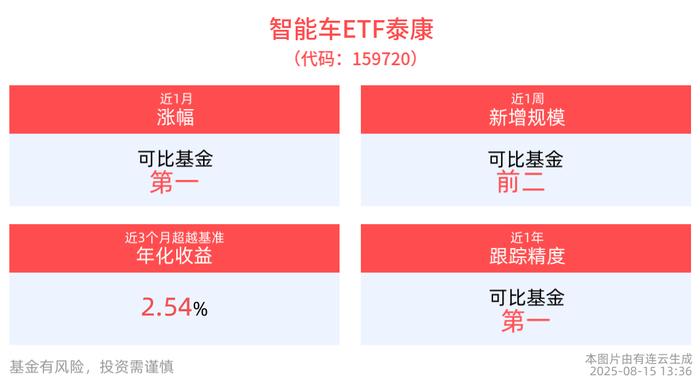
中证智能电动汽车指数上涨1.29%,智能车ETF泰康(159720)近1周涨幅排名可比基金首位
Xin Lang Cai Jing· 2025-08-15 06:01
Core Viewpoint - The smart electric vehicle sector is experiencing significant growth, as evidenced by the performance of the Zhongzheng Smart Electric Vehicle Index and the related ETF, indicating strong investor interest and market momentum [2][3]. Performance Summary - As of August 15, 2025, the Zhongzheng Smart Electric Vehicle Index (H11052) rose by 1.29%, with key stocks such as Yinlun Co., Ltd. (002126) increasing by 6.52% and Keda Li (002850) by 6.00% [2]. - The Smart Car ETF Taikang (159720) saw a 0.90% increase, with a recent price of 0.68 yuan. Over the past week, it has accumulated a 2.60% increase, ranking 1/4 among comparable funds [2]. - The trading volume for the Smart Car ETF Taikang was 139.85 million yuan, with a turnover rate of 2.7%. The average daily trading volume over the past year was 156.28 million yuan [2]. Fund Performance Metrics - The net value of the Smart Car ETF Taikang increased by 38.85% over the past year. The highest monthly return since inception was 27.78%, with the longest consecutive monthly gain being 3 months and an average monthly return of 7.95% [3]. - The fund's Sharpe ratio was 1.16 as of August 8, 2025, indicating strong risk-adjusted returns [3]. - The fund's management fee is 0.50%, and the custody fee is 0.10% [3]. Tracking and Composition - The Smart Car ETF Taikang closely tracks the Zhongzheng Smart Electric Vehicle Index, which includes companies involved in various aspects of the smart electric vehicle industry, reflecting the overall performance of listed companies in this sector [3]. - As of July 31, 2025, the top ten weighted stocks in the Zhongzheng Smart Electric Vehicle Index accounted for 60.99% of the index, with companies like CATL (300750) and BYD (002594) being the largest contributors [4]. Top Holdings Performance - The top ten holdings of the Smart Car ETF Taikang and their respective performance include: - CATL (300750): +0.24%, 14.97% weight - BYD (002594): -0.17%, 13.89% weight - Luxshare Precision (002475): +0.05%, 7.13% weight - Huichuan Technology (300124): +1.01%, 4.94% weight - Omnivision Technologies (603501): +1.17%, 4.42% weight - Great Wall Motors (601633): +2.66%, 3.80% weight - iFlytek (002230): +0.66%, 3.15% weight - Changan Automobile (000625): +0.54%, 3.00% weight - Sanhua Intelligent Control (002050): +4.42%, 2.80% weight - EVE Energy (300014): +2.88%, 2.66% weight [6].







理想汽车纯电战略深度分析:认知型创业的颠覆与重构
混沌学园· 2025-08-14 12:07
Core Viewpoints - Li Auto's strategic transformation from range-extended technology expert to pure electric market player represents a typical practice of "cognitive entrepreneurship," involving a systemic change to rebuild competitive advantages based on foresight of the smart automotive future [2][3] - The success of this transformation is critical for Li Auto, as it faces significant challenges that will directly impact the future landscape of China's smart electric vehicle industry [2][3] Group 1: Strategic Analysis - Li Auto is constructing an "AI-native family smart energy ecosystem" to avoid direct competition with mainstream companies, focusing on finding the best balance between technological foresight and commercial viability [2][3] - The company is undergoing a critical test in its development journey, with the success or failure of its strategy having far-reaching implications for the industry [2][3] Group 2: Market Positioning - The combination of family all-scenario and the convenience of pure electric conversion allows Li Auto to avoid direct competition with Tesla, BYD, and NIO, while facing multidimensional competition from brands like AITO and Leap Motor [3] - Li Auto's strategic clarity includes a three-phase strategy from family segmentation to technology leadership and then to ecosystem operator, but the range-extended model's market adjustment and increasing financial pressure pose severe execution challenges [3] Group 3: Technological Insights - Li Auto's investment in the VLA (Vision-Language-Action) model reflects a deep insight into the future of smart driving, with the potential to redefine industry standards [3][11] - The VLA model's capabilities include a 22 billion parameter end-to-end intelligent driving model, 3D spatial understanding, and game-theoretic decision-making abilities, showcasing Li Auto's engineering advantages [11][12][13] Group 4: User Demand and Market Trends - The penetration rate of new energy vehicles reached 54.0% by July 2025, indicating a shift from emerging to mainstream markets, necessitating a deep cognitive reconstruction of user needs, technological evolution, and business models [6][36] - Li Auto's target family user group shows unique demand characteristics, prioritizing safety, space quality, and all-scenario adaptability, which are critical for the success of the i8 model [31][32] Group 5: Competitive Landscape - The competitive landscape is characterized by significant pressure from AITO and Leap Motor, with AITO leveraging Huawei's brand strength in the high-end family market and Leap Motor capturing budget-conscious users through competitive pricing [40][56] - Li Auto's market positioning may face risks of brand dilution amid the competitive advantages of AITO's technology and Leap Motor's cost-effectiveness [66] Group 6: Strategic Recommendations - Li Auto should maintain strategic determination while adopting a pragmatic attitude towards the VLA technology path, accelerating engineering implementation, and reassessing competitive strategies in the range-extended market [3] - The company must enhance cost control capabilities to respond to market competition from AITO and Leap Motor, transitioning from a follower to a leader through continuous cognitive iteration [3]

信达国际控股港股晨报-20250814
Xin Da Guo Ji Kong Gu· 2025-08-14 01:56
Group 1: Company Insights - Xiaopeng Motors (9868) is recommended for purchase with a target price of HKD 89.00, indicating a potential upside of 15.6% from the current price of HKD 79.80 [10][11] - The company launched its new sedan, The Next P7, in early August, achieving over 10,000 pre-orders within 7 minutes of the announcement, indicating strong market interest [11] - In July, Xiaopeng Motors delivered 36,717 smart electric vehicles, a year-on-year increase of 229%, and has achieved a cumulative delivery of 233,906 vehicles in the first seven months of 2025, up 270% year-on-year [11] Group 2: Industry Trends - The Hang Seng Index is expected to challenge the 26,000-point mark, supported by improved corporate earnings and a favorable risk appetite in the market [3][7] - The technology sector is anticipated to see valuation increases due to strong earnings from leading companies, which may drive overall market momentum [8] - The Chinese government plans to strengthen regulations on smart connected vehicles, focusing on software upgrades and advertising practices to ensure consumer safety and accurate information [12]
中银国际:微降小米目标价至74.4港元 下调次季营收预测至1140亿元
Cai Jing Wang· 2025-08-13 15:28
Core Viewpoint - The report from Zhongyin International indicates a slight downward adjustment in Xiaomi Group's Q2 revenue forecast from 123 billion to 114 billion yuan, and a reduction in adjusted net profit forecast from 10.9 billion to 10.4 billion yuan, primarily due to increased low-end product sales and rising storage costs, along with the suspension of mobile and IoT subsidies in certain domestic provinces during Q2 [1] Group 1 - Xiaomi's smartphone shipments are expected to reach 42.5 million units, showing a slight quarter-on-quarter increase, but the gross margin is anticipated to decline slightly due to a higher proportion of low-end products and increased storage costs [1] - The company is expected to further reduce losses in its smart electric vehicle and AI innovation business segments in Q2, with a potential for profitability in the second half of the year [1] - The forecast for 2025 sales has been slightly adjusted down to 400,000 units due to a delay in the production timeline of the second-phase factory, while the 2026 forecast of 700,000 units has potential for upward adjustment [1] Group 2 - Following a 16% pullback from recent highs, Xiaomi's current valuation is considered highly attractive, and the medium-term growth outlook for the company remains unchanged [1] - The rating for Xiaomi is maintained as "Buy," with a slight adjustment in the target price from 75.25 HKD to 74.4 HKD based on operational changes [1]

中银国际:维持小米集团-W“买入”评级 为行业首选 目标价下调至74.4港元
Zhi Tong Cai Jing· 2025-08-13 09:49
Group 1 - The core viewpoint of the reports indicates that Xiaomi Group's valuation has become attractive after a 16% pullback from recent highs, with a maintained "buy" rating and a slight target price adjustment from HKD 75.25 to HKD 74.4 [1] - The revenue forecast for Xiaomi for Q2 2025 has been slightly reduced from RMB 123 billion to RMB 114 billion, and the adjusted net profit forecast has been lowered from RMB 10.9 billion to RMB 10.4 billion, reflecting factors such as a slight increase in smartphone shipments to 42.5 million units but a decrease in gross margin due to a higher low-end product mix and rising storage costs [1] - The expectation is that Xiaomi's innovative business segments, including smart electric vehicles and AI, will further reduce losses in Q2 and are anticipated to become profitable in the second half of the year, although the sales forecast for 2025 has been slightly adjusted down to 400,000 units due to delays in factory production [1] Group 2 - Despite the expectation that Xiaomi's smart electric vehicle business will enter a profitable phase in the second half of 2025, the valuation method for this segment will continue to use the price-to-sales (P/S) ratio due to capacity constraints and investments in AI and other new businesses, which may not fully reflect the profitability and growth prospects [2] - Based on a P/S ratio of 4 times for 2026, the valuation for the electric vehicle segment is maintained at HKD 30.4 per share [2]
大行评级|中银国际:微降小米目标价至74.4港元 下调次季营收预测至1140亿元
Ge Long Hui· 2025-08-13 07:48
Core Viewpoint - The report from Zhongyin International indicates a slight downward adjustment in Xiaomi Group's Q2 revenue forecast from 123 billion to 114 billion yuan, reflecting various factors impacting the company's performance [1] Revenue and Profit Forecast - The adjusted net profit forecast for Xiaomi is lowered from 10.9 billion to 10.4 billion yuan, primarily due to an increase in low-end product sales and rising storage costs, which are expected to slightly decrease the gross margin [1] - Xiaomi's smartphone shipments are projected at 42.5 million units, showing a minor quarter-on-quarter increase [1] Market Conditions and Innovations - The report notes that certain provinces in China have suspended subsidies for mobile phones and IoT products in Q2, impacting sales [1] - The company anticipates further reduction in losses from its smart electric vehicle and AI segments in Q2, with expectations of profitability in the second half of the year [1] Production and Sales Projections - Due to a slight delay in factory production timelines, the sales forecast for 2025 has been adjusted down to 400,000 units, while the 2026 forecast of 700,000 units has potential for upward revision [1] Valuation and Investment Rating - Following a 16% pullback from recent highs, Xiaomi's current valuation is considered attractive, maintaining a positive outlook on the company's medium-term sustainable growth [1] - The investment rating remains "Buy," with a target price adjusted from 75.25 HKD to 74.4 HKD based on operational changes [1]
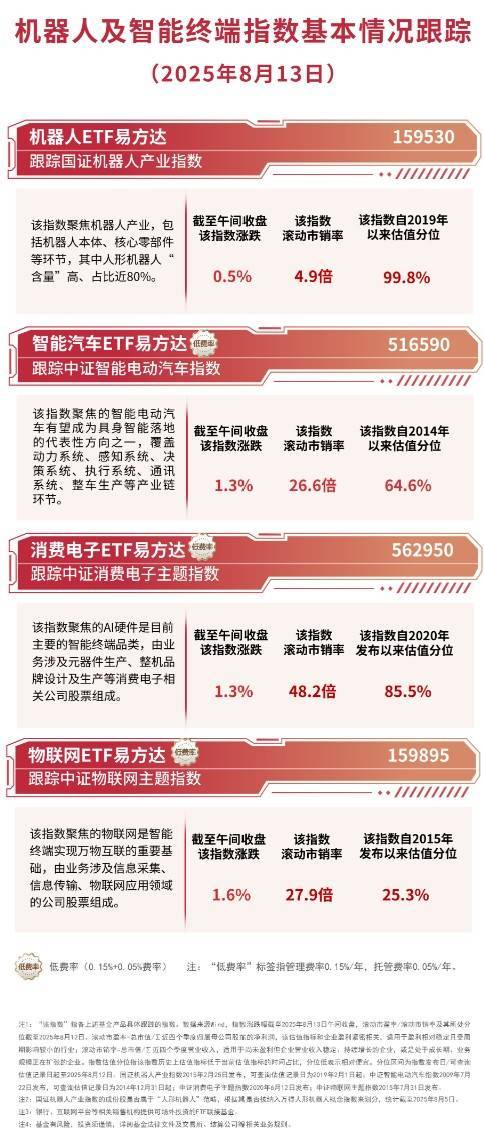
机器人板块探底回升获资金关注,机器人ETF易方达(159530)半日净申购达2500万份
Sou Hu Cai Jing· 2025-08-13 05:19
Group 1 - The National Robot Industry Index rose by 0.5% at midday, indicating positive market sentiment towards the robotics sector [1] - The CSI Intelligent Electric Vehicle Index and the CSI Consumer Electronics Theme Index both increased by 1.3%, reflecting growing investor interest in these industries [1] - The CSI Internet of Things Theme Index saw a rise of 1.6%, suggesting a strong performance in the IoT sector [1] Group 2 - The robot ETF managed by E Fund (159530) recorded a net subscription of 25 million units in half a day, highlighting significant capital inflow into the robotics investment products [1]

小鹏汽车上涨4.98%,报21.205美元/股,总市值202.14亿美元
Jin Rong Jie· 2025-08-11 15:01
Core Viewpoint - XPeng Motors (XPEV) shows a significant increase in stock price and strong revenue growth, indicating positive market sentiment and financial performance [1] Financial Performance - As of March 31, 2025, XPeng Motors reported total revenue of 15.811 billion RMB, representing a year-on-year growth of 141.45% [1] - The net profit attributable to shareholders was -664 million RMB, which is an improvement with a year-on-year increase of 51.45% [1] Upcoming Events - XPeng Motors is scheduled to disclose its fiscal year 2025 interim report on August 19, before the market opens in the Eastern Time zone [1] Company Overview - XPeng Motors is a leading smart electric vehicle company in China, focusing on the design, development, manufacturing, and marketing of smart electric vehicles for tech-savvy middle-class consumers [1] - The company's mission is to drive the transformation of smart electric vehicles through technology and to lead the future of mobility [1] - XPeng Motors has developed its own full-stack intelligent driving assistance technology and in-car smart operating system, along with core vehicle systems including powertrains and electronic architectures [1] - The company is headquartered in Guangzhou, China, with major offices in Beijing, Shanghai, Silicon Valley, San Diego, and Amsterdam [1] - The smart electric vehicles are primarily produced in factories located in Zhaoqing and Guangzhou, Guangdong Province [1]
小鹏汽车上涨6.78%,报21.57美元/股,总市值205.62亿美元
Jin Rong Jie· 2025-08-11 13:48
本文源自:金融界 作者:行情君 8月11日,小鹏汽车(XPEV)开盘上涨6.78%,截至21:30,报21.57美元/股,成交2069.92万美元,总市值 205.62亿美元。 财务数据显示,截至2025年03月31日,小鹏汽车收入总额158.11亿人民币,同比增长141.45%;归母净 利润-6.64亿人民币,同比增长51.45%。 大事提醒: 8月19日,小鹏汽车将于(美东)盘前披露2025财年中报(数据来源于纳斯达克官网,预计披露日期为美 国当地时间,实际披露日期以公司公告为准)。 资料显示,小鹏汽车有限公司是中国领先的智能电动汽车公司,设计、开发、制造及营销吸引庞大且不 断增长的热衷科技的中产阶层消费者的智能电动汽车。其使命为通过科技驱动智能电动汽车的变革,引 领未来出行方式。为优化客户的出行体验,小鹏汽车自主研发其全栈式智能辅助驾驶技术和车载智能操 作系统,以及包括动力总成和电子电气架构在内的核心车辆系统。小鹏汽车总部位于中国广州,并在北 京、上海、硅谷、圣地亚哥和阿姆斯特丹设有主要办事处。本公司的智能电动汽车主要于广东省肇庆市 和广州市的工厂生产。 ...