
中式快餐

Search documents
袁记云饺自称“中国及全球最大的中式快餐企业” 有依据吗?
Xin Lang Cai Jing· 2026-01-15 14:12
Core Viewpoint - Yuanji Food has submitted an application for listing on the Hong Kong Stock Exchange, highlighting its related party transactions and financial performance [1][3]. Financial Performance - Yuanji Food achieved revenue of RMB 2.026 billion in 2023 and RMB 2.561 billion in 2024, with adjusted net profits of RMB 179 million and RMB 180 million respectively, showing a year-on-year increase [5][6]. - For the first nine months of 2025, the company reported revenue of RMB 1.982 billion, up from RMB 1.786 billion in 2024, with an adjusted net profit of RMB 192 million, reflecting a 31.2% year-on-year growth [5][6]. Business Operations - The total number of Yuanji Food stores reached 4,266, doubling from 1,990 stores in 2023, positioning the company as one of the largest Chinese fast-food enterprises [5][6]. - Yuanji Food operates under two main brands: "Yuanji Cloud Dumplings" and "Yuanji Flavor Enjoyment" [5]. Related Party Transactions - Yuanji Food has engaged in multiple ongoing related party transactions, including purchasing soup bases and sauce packages from Fanlaizhiwei, totaling RMB 67.26 million from 2023 to the first nine months of 2025 [3][4]. - The controlling shareholder, Yang Yu, who holds 95% of the shares in Qiaoyuan, is also the spouse of Yuanji Food's founder, Yuan Lianghong, indicating a significant overlap in ownership and business dealings [3][4].

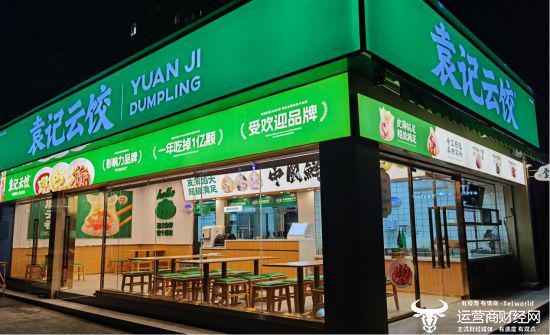
消费观察|袁记云饺赴港递表:中式快餐巨头的“手工”逻辑与资本进阶
Sou Hu Cai Jing· 2026-01-15 08:05
Core Viewpoint - Yuanji Cloud Dumpling, a fast-food company originating from Guangdong, is attempting to leverage its market position by filing for an IPO on the Hong Kong Stock Exchange, aiming to expand its influence in the competitive Chinese fast-food sector [1][3]. Group 1: Company Overview - As of September 30, 2025, Yuanji Cloud Dumpling operates 4,266 stores, making it the largest Chinese and global fast-food enterprise by store count [1]. - The company has established a unique business model that integrates dining and retail, offering both dine-in and takeaway options, as well as fresh food retail, catering to various consumer needs [4]. Group 2: Financial Performance - In 2023 and 2024, the company's revenues were approximately 2.026 billion and 2.561 billion yuan, respectively, with a year-on-year growth of 26.4% in 2024 [7]. - Despite a slight decline in net profit from 166.7 million yuan to 142 million yuan in 2024 due to increased share-based payment expenses, the adjusted net profit for the first nine months of 2025 reached 192 million yuan, reflecting a year-on-year growth of 31.2% [7]. Group 3: Market Strategy - The company is shifting its focus towards lower-tier cities, with the proportion of stores in first-tier cities decreasing from 58.1% in early 2023 to 51.0% by September 2025, while the share in third-tier and below cities increased from 19.8% to 26.6% [7]. - This strategy aims to avoid high rental and labor costs in first-tier cities and aligns with the consumption upgrade trend in county-level economies [7]. Group 4: Supply Chain and Operational Challenges - Yuanji Cloud Dumpling relies heavily on a large franchise system, with over 90% of its revenue coming from franchisees, which poses governance challenges as the number of stores exceeds 4,000 [9]. - The company operates five self-owned factories and a network of 24 cold chain warehouses, ensuring that over 86% of its stores receive fresh ingredients within a 200-kilometer radius [4][10]. - The reliance on a complex supply chain makes the company vulnerable to fluctuations in raw material prices and logistics costs, which could impact profitability [10]. Group 5: Competitive Landscape - The company faces intense competition from prepared food brands and other fast-food chains as the Chinese fast-food market becomes increasingly saturated [10]. - Maintaining price competitiveness while ensuring quality and profitability for franchisees will be crucial for the company's future success [10].
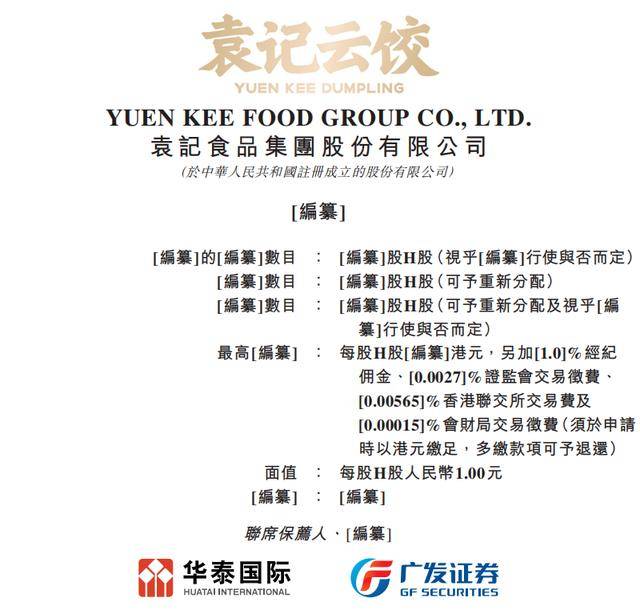
街边崛起:小面、饺子、钱大妈纷纷冲刺上市
Sou Hu Cai Jing· 2026-01-14 13:15
Group 1 - The core viewpoint of the article highlights the recent IPO applications of two street-side enterprises, Qian Dama and Yuanji Food, in Hong Kong, following the successful listing of "Yujian Xiaomian" [2][3] - Qian Dama is identified as the largest community fresh food chain in China, with a network of 2,938 community stores across 14 provinces and municipalities, and a projected GMV of 14.8 billion yuan for 2024 [2] - Yuanji Food claims to be the largest Chinese fast-food enterprise globally by store count, with 4,266 stores across over 200 cities, and emphasizes its focus on handmade dumplings and wontons [2] Group 2 - Yuanji Food is constructing a new factory in Chengdu, leveraging the local Sichuan cuisine industry cluster for its operations, which includes everything from chili planting to logistics [3] - The surge in listings of consumer enterprises is attributed to supportive government policies aimed at boosting consumption, including measures from the China Securities Regulatory Commission and a focus on expanding domestic demand [3] - Hong Kong's stock market is becoming a preferred choice for companies that previously attempted to list on A-shares but were unsuccessful, creating a favorable environment for new consumer listings [3]

袁记云饺递表港交所 食品安全与加盟管理是挑战
Xin Lang Cai Jing· 2026-01-14 12:26
Core Viewpoint - Yuanji Yunjiao has rapidly expanded to become the largest Chinese fast-food chain globally, with 4,266 stores in less than nine years, and is now pursuing an IPO on the Hong Kong Stock Exchange to further accelerate its growth [3][4][6]. Company Overview - Founded in April 2017 by Yuan Lianghong in Foshan, Guangdong, with an initial capital of 100,000 yuan, Yuanji Yunjiao quickly established itself in the Chinese fast-food market by focusing on "handmade fresh dumplings" [3][4]. - The company has adopted a dual-brand strategy with "Yuanji Yunjiao" for dining and "Yuanji Weixiang" for retail, creating an integrated business model that covers various consumer scenarios [5][6]. Expansion and Growth - Key milestones include surpassing 100 stores in 2018, launching production at the Suzhou factory, and achieving over 1,000 stores by 2021, transitioning from a regional to a national brand [4][5]. - By September 30, 2025, the total number of stores increased from 1,990 to 4,266, with 4,213 in mainland China and 53 in Hong Kong, Macau, and Southeast Asia [6]. - The company reported revenues of 2.026 billion yuan in 2023, increasing to 2.561 billion yuan in 2024, representing a year-on-year growth of 26.4% [6]. Business Model and Strategy - The franchise model accounts for over 95% of the stores, allowing rapid expansion without heavy capital investment in direct ownership [5][7]. - The company emphasizes community-based stores and the appeal of fresh, handmade products, which contribute to customer loyalty and lower marketing costs [7][8]. Market Position and Competitiveness - As of September 30, 2025, Yuanji Yunjiao is the largest Chinese and global fast-food chain by store count, and the leading dumpling and wonton brand in terms of GMV in the retail and dining sectors [6][11]. - The company plans to focus on Southeast Asia for international expansion, leveraging the region's cultural affinity for Chinese cuisine [11][12]. Future Plans and Funding - The IPO aims to raise funds for digitalization, overseas market expansion, supply chain development, brand building, and general corporate purposes [11][12]. - Establishing a global supply chain is crucial for supporting overseas operations and ensuring the timely delivery of quality ingredients [12].
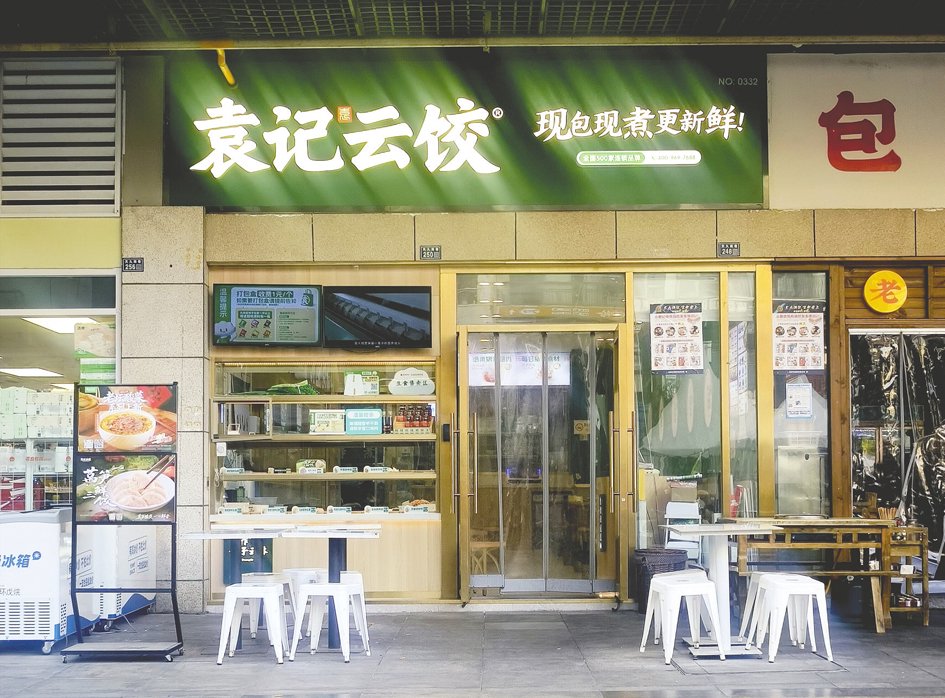
4266家店撑起“饺子帝国”!袁记食品冲刺港股,靠卖食材给加盟商年入25亿
Guo Ji Jin Rong Bao· 2026-01-14 11:40
Core Viewpoint - Yuanji Food Group Co., Ltd. is preparing for an IPO on the Hong Kong Stock Exchange, aiming to expand its market presence and enhance its supply chain capabilities, while also addressing food safety concerns arising from its rapid franchise growth [1][3]. Group 1: Company Overview - Yuanji Food operates over 4,266 stores globally, making it the largest Chinese fast-food enterprise and the largest dumpling and wonton company in China by GMV [1][2]. - The company has two brands: "Yuanji Wontons" focusing on community stores and "Yuanji Weixiang" targeting retail scenarios [2]. - The company plans to deepen its domestic market presence and expand into low-density markets, recognizing significant growth potential in these areas [2]. Group 2: Expansion Plans - Yuanji Food has begun its overseas expansion, with 53 stores outside mainland China, primarily in Hong Kong and Macau, and plans to open stores in Singapore and Thailand [3]. - Part of the IPO proceeds will be allocated to enhancing overseas supply chain construction and exploring potential investments and acquisitions in international markets [3]. Group 3: Financial Performance - The total number of orders increased from 183 million in 2023 to 253 million in 2024, with GMV rising from 4.772 billion yuan to 6.248 billion yuan, a growth of 30.9% [3]. - For the first nine months of 2025, the company reported 210 million orders and a GMV of 4.789 billion yuan, reflecting a year-on-year growth of 6.4% [3]. - Revenue for 2023 and 2024 was 2.026 billion yuan and 2.561 billion yuan, respectively, with a year-on-year growth of 26.4% [7]. Group 4: Food Safety Issues - The company faced food safety issues, highlighted by a consumer finding a worm in a dish, which raised public concern and criticism regarding its food safety management [4][5]. - Complaints about food safety, including foreign objects and hygiene issues, have been reported, prompting the company to enhance its food safety measures and management of franchise stores [5]. Group 5: Supply Chain and Cost Structure - Yuanji Food operates five self-owned factories and a comprehensive cold chain storage network, ensuring efficient supply chain management [6]. - The company’s sales costs are significantly driven by ingredient procurement, with sales costs for 2023, 2024, and the first nine months of 2025 being 1.5 billion yuan, 1.973 billion yuan, and 1.492 billion yuan, respectively [7]. - The gross profit margin has shown some fluctuations, with rates of 25.9%, 23%, and 24.7% for the respective periods [7]. Group 6: Ownership and Control - Despite external financing from various investors, the founding family retains over 82% of the voting rights, indicating a high concentration of ownership [8].
五战IPO!老乡鸡这次会赢?
Sou Hu Cai Jing· 2026-01-14 10:32
Core Viewpoint - The company Lao Xiang Ji is making its third attempt to list on the Hong Kong Stock Exchange after multiple failed attempts, reflecting its strong desire to go public despite facing significant challenges and setbacks [1][3]. Group 1: IPO Attempts - Lao Xiang Ji submitted its latest IPO application to the Hong Kong Stock Exchange on January 8, marking its fifth attempt in four years [1]. - Previous attempts included two failed submissions in 2025 and two attempts to list on the A-share market in 2022 and 2023 [1][3]. - The company's valuation has significantly decreased from a peak of 180 billion to 90 billion, indicating a "halving" of its value [3]. Group 2: Compliance and Operational Issues - The company has faced numerous compliance issues, with the regulatory body issuing 45 feedback comments on its prospectus, highlighting concerns over bribery risks, food safety, and employee social insurance contributions [4][5]. - Lao Xiang Ji has reported a total shortfall of over 100 million in social insurance and housing fund contributions from 2022 to 2025 [5]. - Food safety incidents have also been a concern, with 13 administrative penalties issued for various violations affecting approximately 676 customers [8][9]. Group 3: Financial Performance - For the first eight months of 2025, the company's revenue grew by 10.90% to 4.578 billion, and net profit increased by 12.05% to 372 million [9]. - The company operates 1,658 stores, including 925 direct-operated and 733 franchised, with a notable shift from direct-operated to franchised stores [9][10]. - Despite a lower gross margin compared to competitors, the company has seen an increase in gross margin from 20.3% in 2022 to 24.6% in 2025 [10]. Group 4: Market Position and Growth Potential - Lao Xiang Ji holds a 0.9% market share in the Chinese fast food sector, ranking first in the Chinese fast food market and eighth overall in the fast food industry [13]. - The company is expanding its infrastructure, including central kitchens and regional distribution centers, to support its growth strategy [13][14]. - The increasing share of raw materials and consumables in revenue has put pressure on the company's debt structure, although recent improvements have been noted [14]. Group 5: Future Outlook - The company is leveraging digital systems for operational efficiency, with over 23.7 million registered members and advanced supply chain management [14][15]. - The market sentiment appears to be improving, which may positively influence the company's upcoming IPO prospects [15].

袁记食品冲刺港股IPO | 佛企风采
Sou Hu Cai Jing· 2026-01-14 10:27
Group 1 - Yuanji Food Group Co., Ltd. submitted an application for listing on the Hong Kong Stock Exchange on January 12, aiming for a main board listing [1] - As of September 30, 2025, Yuanji Food is projected to have 4,266 stores, with total GMV increasing by 31% from 4.772 billion yuan in 2023 to 6.248 billion yuan in 2024 [3] - The company operates in 32 provinces, autonomous regions, special administrative regions, and municipalities in China, as well as five stores in Singapore [3] Group 2 - In 2023 and 2024, Yuanji Food achieved revenues of 2.026 billion yuan and 2.561 billion yuan, respectively, with a revenue of 1.982 billion yuan for the first nine months of 2025, reflecting an 11% year-on-year growth [4] - The adjusted net profit for the first nine months of 2025 was 192 million yuan, a 31% increase compared to the same period in 2024 [4] - The company has completed three rounds of financing, raising a total of 4.6 billion yuan, with major investors including Black Ant Capital and Qicheng Capital [4] Group 3 - The funds raised from the IPO will primarily be used for digital and intelligent construction, expanding overseas supply chains, brand building, product research and development, supply chain upgrades, and general corporate purposes [4]
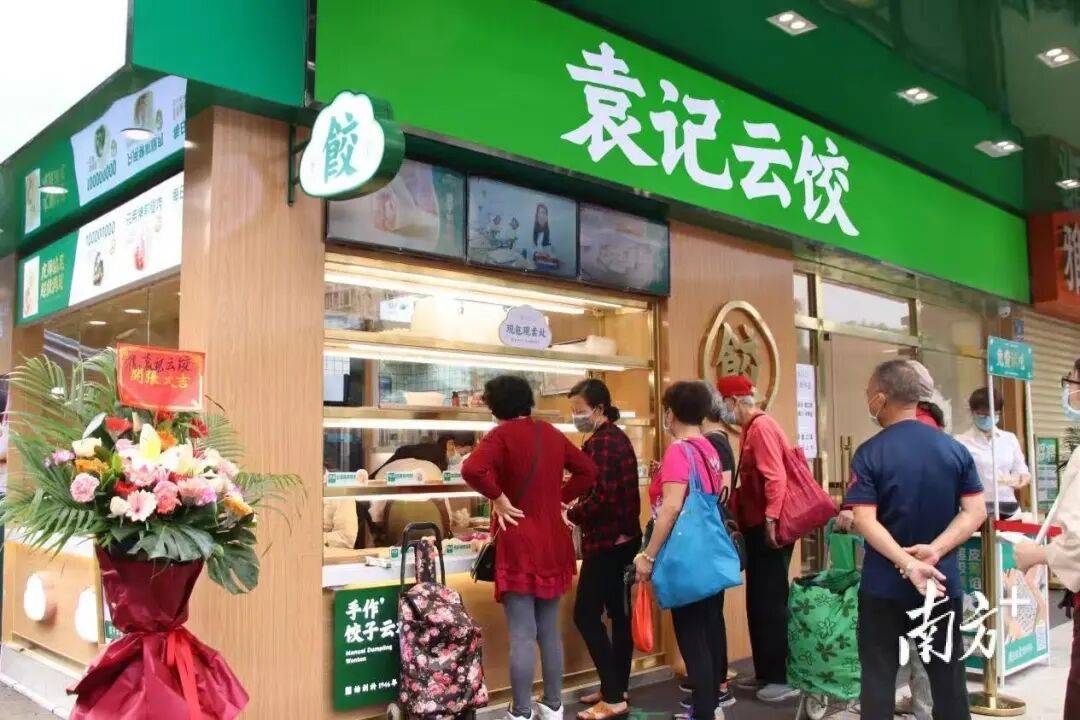
年度复盘:2025年零售圈十大出海事件发布
3 6 Ke· 2026-01-14 08:40
Core Insights - In 2025, the globalization of China's retail industry entered a deeper development stage, with various Chinese brands successfully entering overseas markets, showcasing a shift from "Made in China" to "Chinese brands" [1] - The trend of going global is no longer exclusive to leading brands but has become a strategic choice for mid-tier companies seeking growth, expanding their reach from traditional Southeast Asian markets to core business districts in Europe and North America, as well as emerging markets in South America and high-potential regions in the Middle East [1] Group 1: Key Events in Retail Expansion - Bawang Chaji opened its first North American store in Los Angeles, achieving a monthly GMV of $800,000, with an average customer spend of $6.5, surpassing local competitors [2][3] - Mixue Ice Cream and Tea launched its first store in Hollywood, Los Angeles, marking a significant step in its global strategy, with plans for further expansion in the Americas [4][5] - Meituan's Keemart launched in Doha, Qatar, as part of its international strategy, leveraging its existing delivery network to enter the instant retail market [6][7] Group 2: Brand Strategies and Market Adaptation - Ningji adopted a new brand "BOBOBABA" for its U.S. entry, focusing on bubble tea and adjusting its product offerings to cater to local tastes, while also expanding rapidly in Southeast Asia [8][9] - Chen Xianggui opened its first overseas store in Berlin, maintaining its original flavor profile and leveraging a high-standard supply chain to ensure product consistency [10][11] - Miniso expanded its presence in the UK, surpassing 50 stores, with overseas revenue contributing significantly to its overall growth [12][13] Group 3: Innovative Approaches to Market Entry - Chayan Yuese announced an online e-commerce strategy for its overseas expansion, focusing on retail products rather than its signature tea, to mitigate risks associated with physical store operations [14][15] - Yuanji Yun Jiao opened its first overseas store in Singapore and is now expanding through a franchise model, supported by its established supply chain and operational experience [16][17] - Genki Forest successfully entered the UK mainstream retail market by launching its products in Tesco, marking a significant milestone in its global strategy [18][19] Group 4: Overall Trends and Future Outlook - The year 2025 witnessed a transformation in Chinese consumer brands' approach to globalization, moving from simple product exports to localized operations and supply chain integration [23] - The success of various brands illustrates the adaptability and flexibility of Chinese retail models in addressing diverse market needs and challenges [23][24]

袁记水饺冲刺港交所主板上市:中国及全球最大中式快餐企业
Sou Hu Cai Jing· 2026-01-14 01:24
Core Viewpoint - Yuanji Dumplings has officially submitted its IPO application on January 12, with Huatai International and GF Securities as joint sponsors. The company is positioned as the largest Chinese fast-food enterprise globally by store count as of September 30, 2025 [1][5]. Business Overview - The main business of Yuanji Dumplings focuses on Chinese fast food, particularly dumplings and wontons, operating under a "restaurant + retail" dual-driven model with two brands: "Yuanji Cloud Dumplings" for dining and "Yuanji Weixiang" for retail [2][4]. - The company has established a "handmade, freshly wrapped and cooked" operational philosophy, providing both cooked and raw dumplings, wontons, and related products [4]. Financial Performance - Revenue for Yuanji Dumplings is projected to grow from 2.026 billion yuan in 2023 to 2.561 billion yuan in 2024, representing a year-on-year increase of 26% [2][8]. - The company reported a total GMV of 4.772 billion yuan in 2023, increasing to 6.247 billion yuan in 2024, a growth of 30.9% [8]. Store Network Expansion - From January 1, 2023, to September 30, 2025, the total number of stores increased from 1,990 to 4,266, covering 32 provinces, autonomous regions, special administrative regions, and municipalities in over 200 cities [4][5]. - As of September 30, 2025, the distribution of stores includes 2,150 in first-tier cities (51%), 942 in second-tier cities (22.4%), and 1,121 in third-tier and below cities (26.6%), with the latter's share increasing significantly from 19.8% in 2023 [4][6]. International Expansion - Yuanji Dumplings is accelerating its international market expansion, with its first overseas store opening in Singapore by the end of 2024 and plans for further growth in Southeast Asia [7][8]. - As of September 30, 2025, the company operates five overseas stores in Singapore, with plans to increase this number [6]. Future Development Plans - The IPO proceeds will primarily be used for digitalization and smart construction, expanding the overseas supply chain, brand building, product research and development, and supply chain upgrades [12]. - The company aims to enhance operational efficiency and customer experience through digital strategies, while also focusing on maintaining its competitive edge through brand development and product innovation [12].
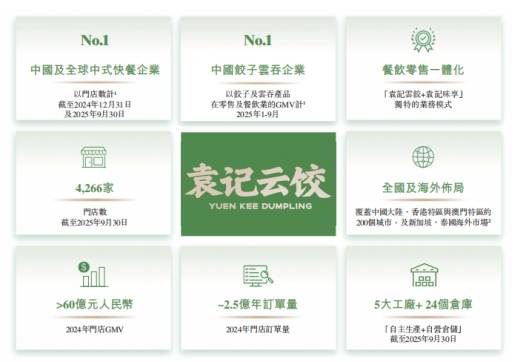
袁记水饺冲击港股IPO:超95%门店是加盟店,去年前9个月已近20亿
Sou Hu Cai Jing· 2026-01-14 01:17
Core Viewpoint - Yuanji Food Group Co., Ltd. is preparing for an IPO on the Hong Kong Stock Exchange, aiming to leverage its rapid expansion and strong market position in the Chinese fast-food sector, particularly in dumplings and wontons [1][4]. Company Overview - As of the third quarter of last year, Yuanji Food operates 4,266 stores, with over 95% being franchise outlets, and reported a revenue of nearly 2 billion yuan and an adjusted net profit of 192 million yuan [1][4]. - The company is positioned as the largest Chinese fast-food enterprise globally by store count, with its dumpling and wonton products leading the market in retail and dining sectors [4]. Business Model and Product Offering - Yuanji Food focuses on five core product categories: dumplings, wontons, noodles, snacks, and beverages, with approximately 350 SKUs contributing to 97.4% of revenue in 2024 [4]. - The company has also entered the retail sector with 34 SKUs of pre-packaged products, which are expected to account for 2.5% of revenue in 2024 [4]. Expansion and Market Presence - The company has seen rapid growth in its franchise business, doubling its store count from 1,990 at the beginning of 2023 to 4,266 by September 30, 2023, covering 32 provinces and cities in China and entering international markets like Singapore and Thailand [4][5]. - The geographical distribution of stores shows a significant presence in first-tier cities (51%), with a majority of stores being dine-in (78.1%) [5]. Financial Performance - Revenue is projected to continue rising, reaching 2.026 billion yuan in 2023 and 2.561 billion yuan in 2024, with an adjusted net profit of 179 million yuan and 180 million yuan for the respective years [5]. - The total GMV for stores is expected to reach 6.248 billion yuan in 2024, with an average annual GMV of approximately 1.88 million yuan per store [6]. Management Team - The management team is led by Yuan Lianghong, the founder and chairman, who has over 12 years of experience in the food industry [8]. - The team includes experienced executives with diverse backgrounds in operations, supply chain, finance, and marketing, contributing to the company's strategic growth [8][9]. Supply Chain and Quality Control - The company emphasizes its "handmade, freshly made" philosophy, supported by a robust supply chain and logistics system that ensures product quality and freshness [13][14]. - The main supplier, Bayannur, accounts for 9.9% of procurement, providing pork, and the company holds a 10% stake in this supplier [14]. IPO Fund Utilization - The IPO proceeds will be allocated to five key areas: digital and intelligent construction, overseas market expansion, brand building and product development, supply chain upgrades, and general working capital [15].
